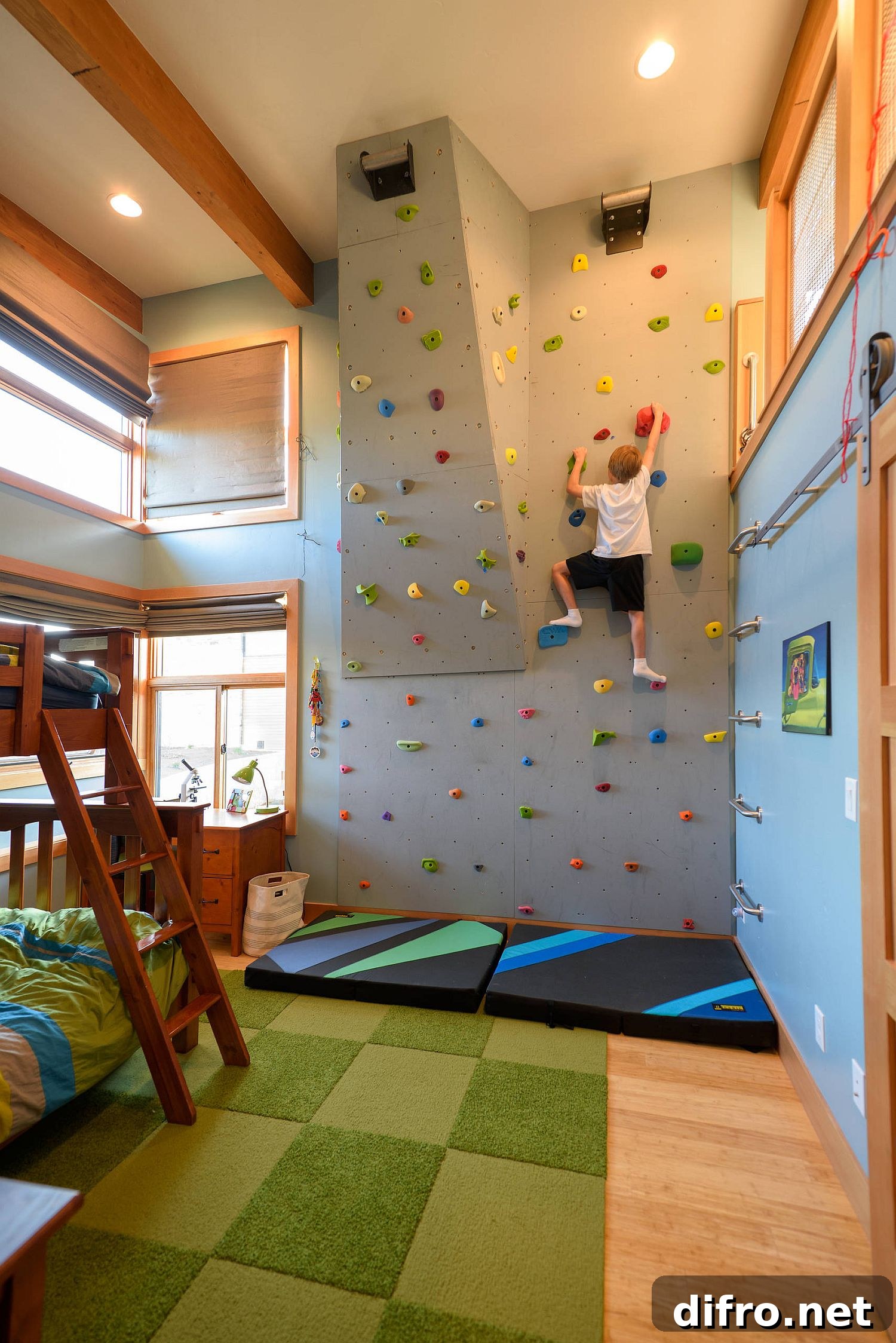
Photos inspire design ideas. This article may reference products and suggestions to help you plan a kids’ climbing wall for the bedroom.
Modern life encourages more sitting and screen time, and children are no exception. While technology brings many benefits, it has also contributed to a decline in daily physical activity. Neck, shoulder and back issues are becoming more common, and rising childhood obesity underscores the need for an easy, enjoyable way to get kids moving. Introducing active elements into a child’s bedroom is one practical solution: a climbing wall encourages movement, improves coordination and makes indoor play far more engaging.
Installing a climbing wall in a bedroom can be surprisingly affordable and straightforward. A basic set of climbing holds and a knotted rope, along with a simple hardware kit, can create a safe, fun climbing surface. For added protection beneath the climbing area, use a foldable tumbling mat that can be stored when not in use. These simple items let you create a space that invites activity without a large budget or major renovation.
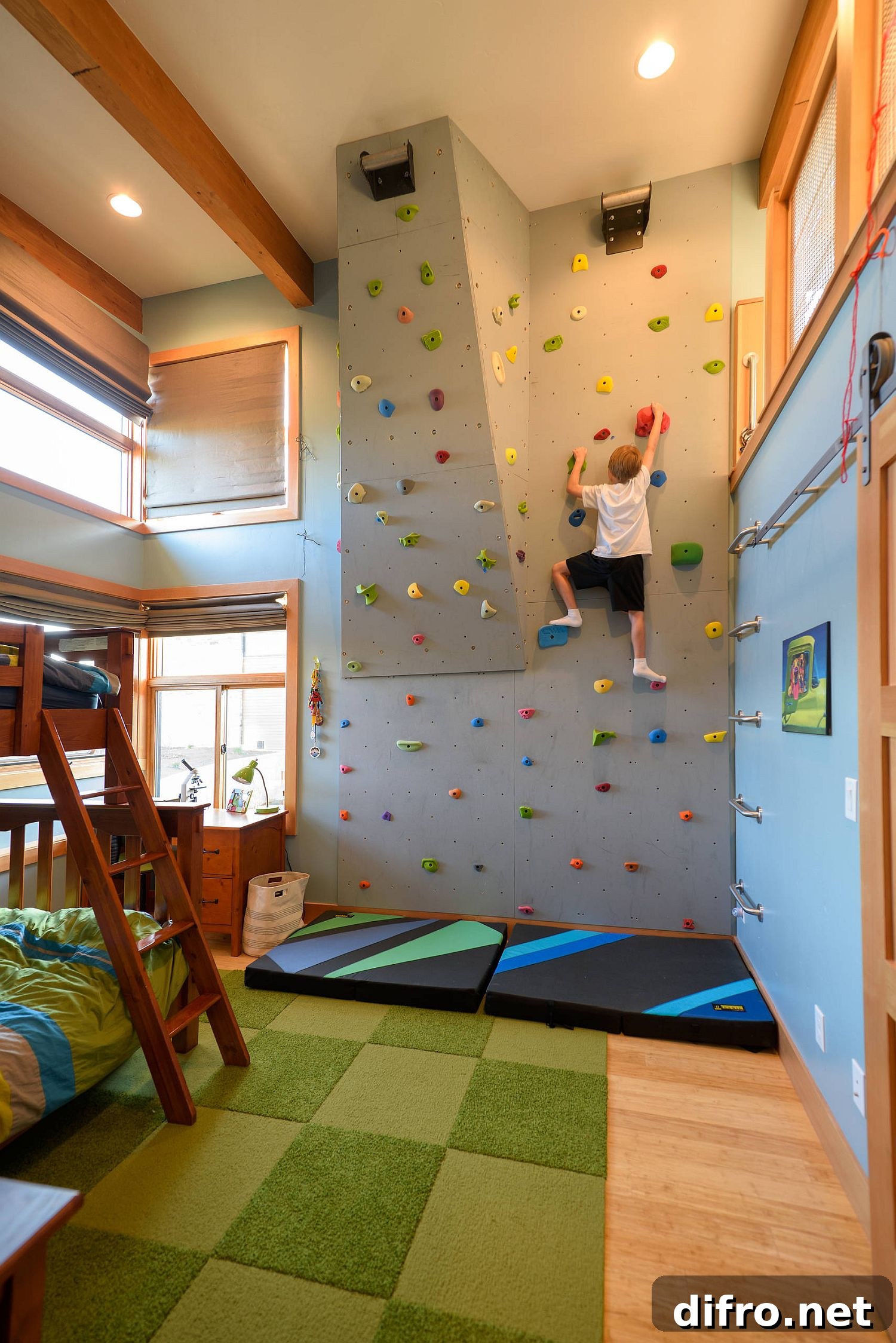
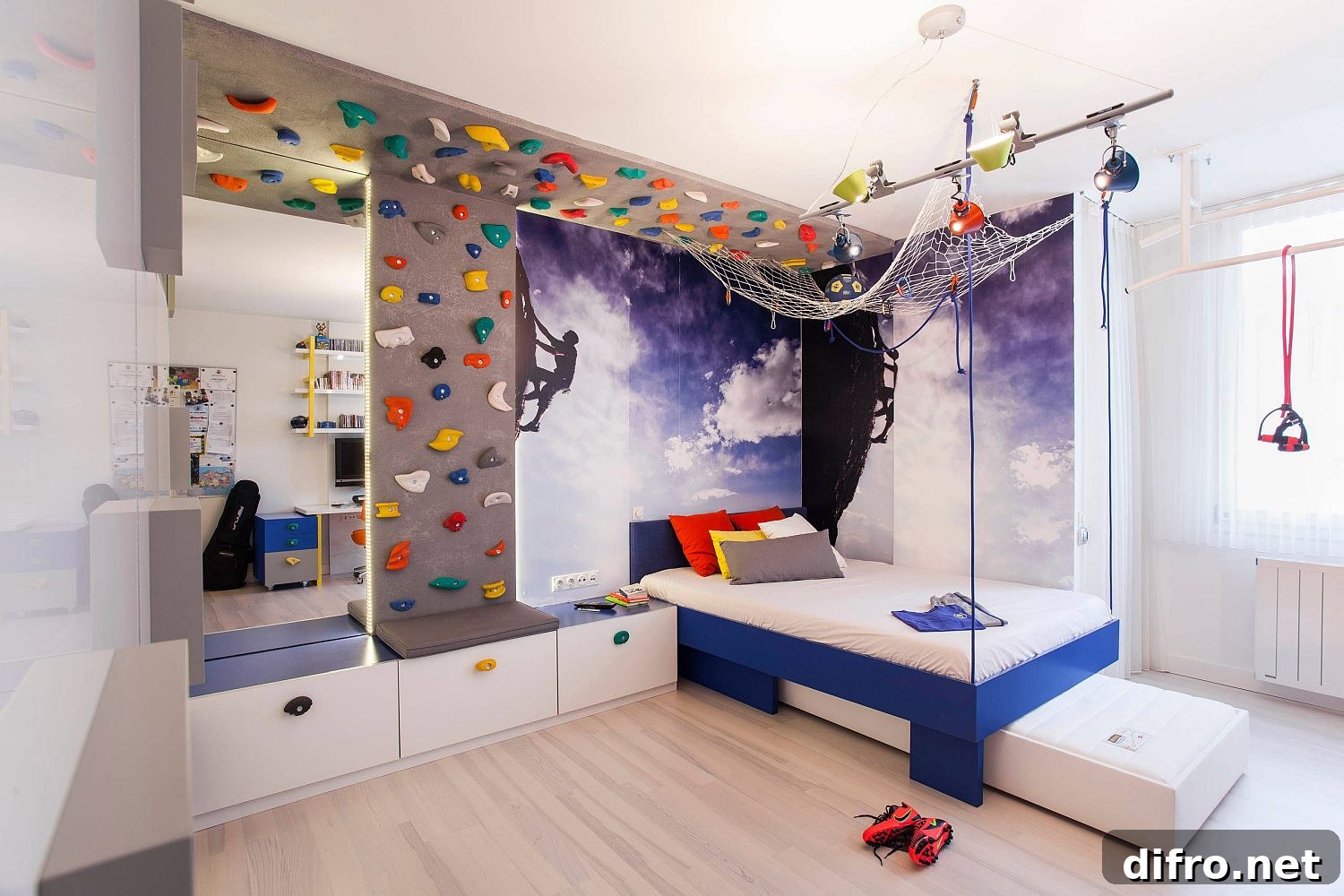
One of the best ways to encourage a more active lifestyle is by bringing a climbing wall into the kids’ bedroom. A climbing wall not only promotes physical activity but also reduces boredom and makes indoor play more dynamic. It can fit into surprisingly small rooms and be tailored to different ages and skill levels. Whether you want a colorful feature or a more challenging route, a bedroom climbing wall is a versatile addition that works equally well for boys and girls.
Making the Most of Limited Space
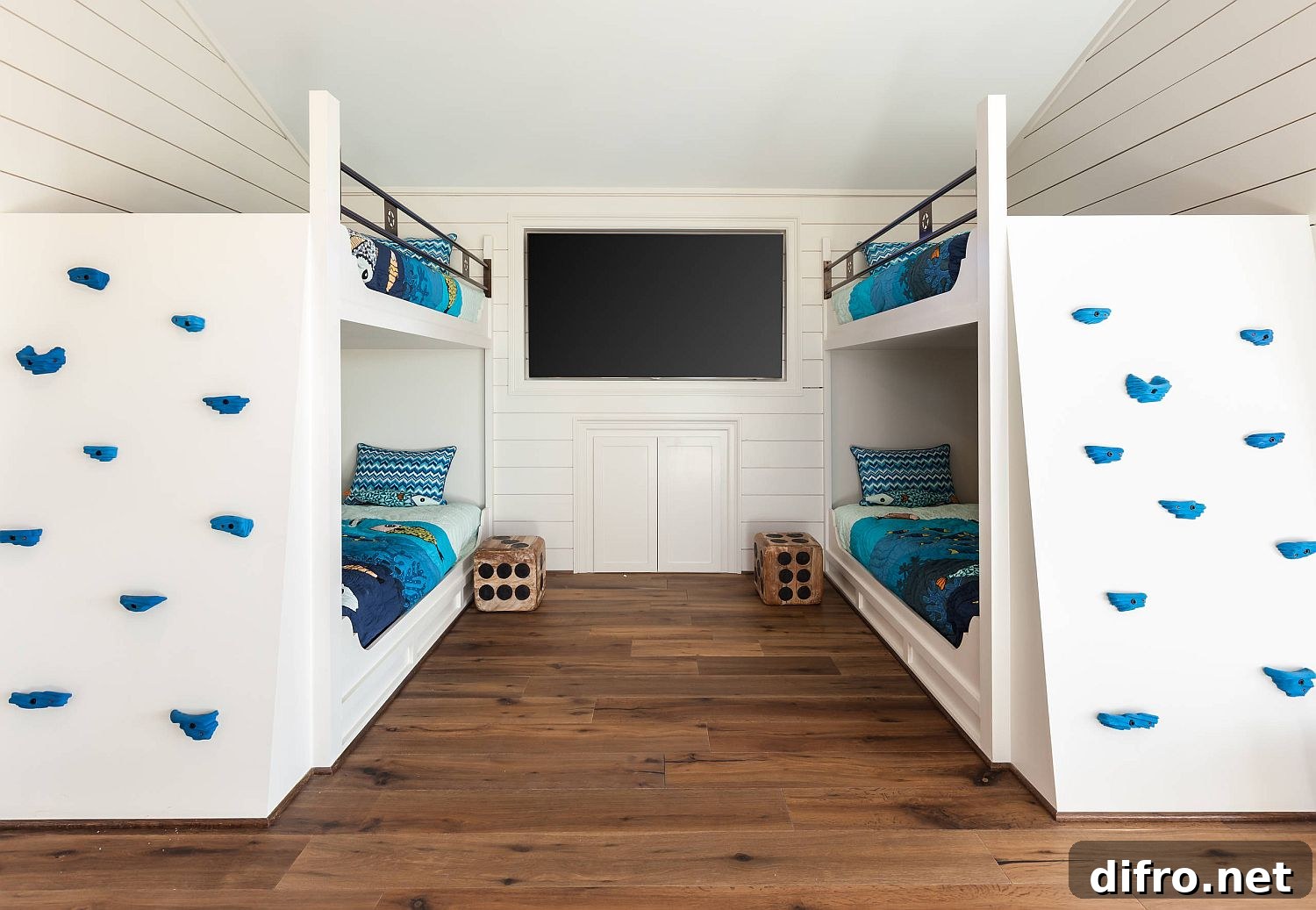
Space is often the biggest constraint in children’s rooms. Even in compact bedrooms, a climbing wall can make efficient use of overlooked vertical space. A narrow wall, a section beside bunk beds, or the area above a desk can all accommodate climbing holds without taking up precious floor space. These installations are typically low-cost and durable. Children of various ages will use them, and you don’t need a large footprint to create a stimulating climbing area.
RELATED: Colorful Zest — 25 Eye-Catching Rug Ideas for Kids’ Rooms
Creative Kids’ Rooms with a Difference
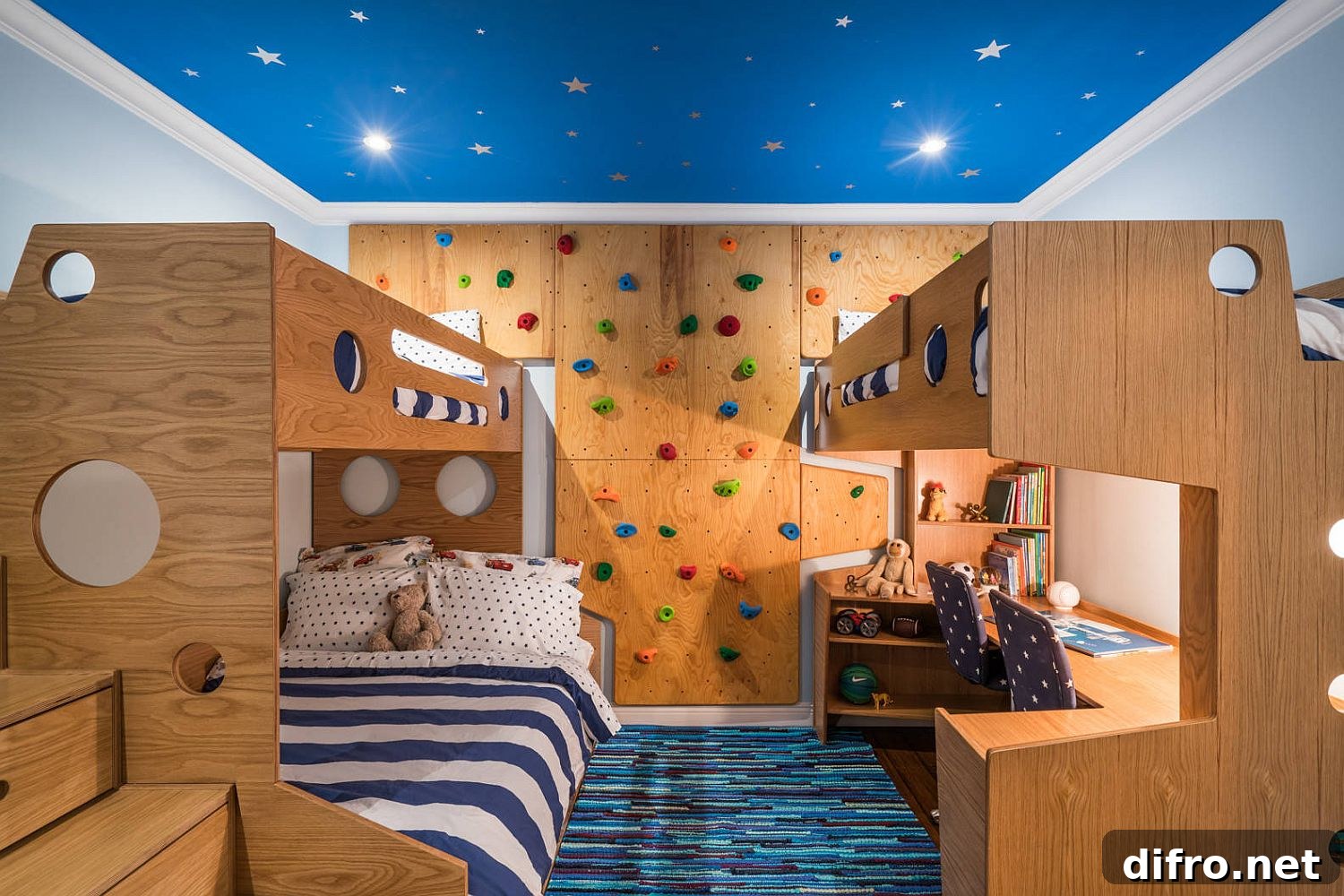
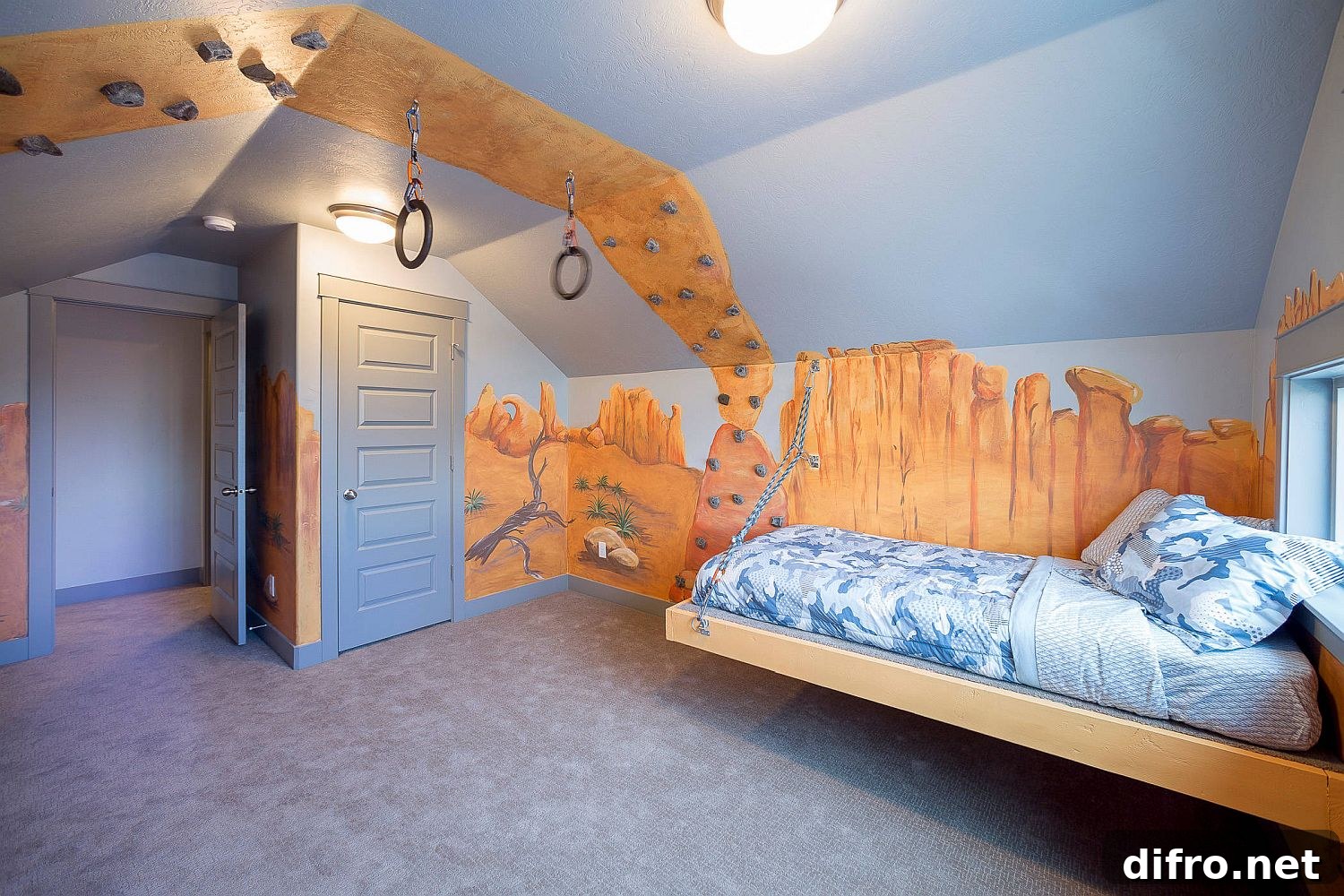
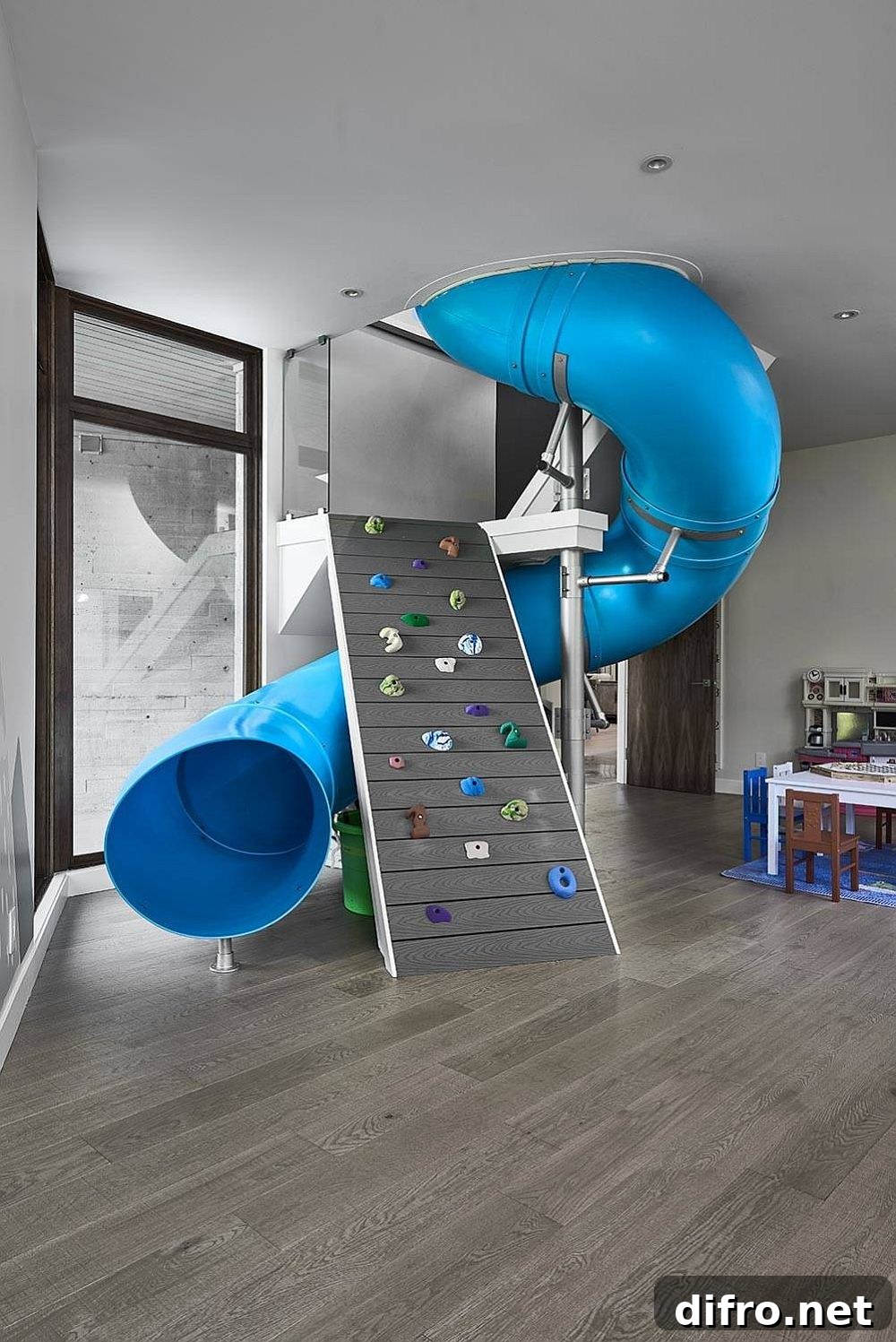
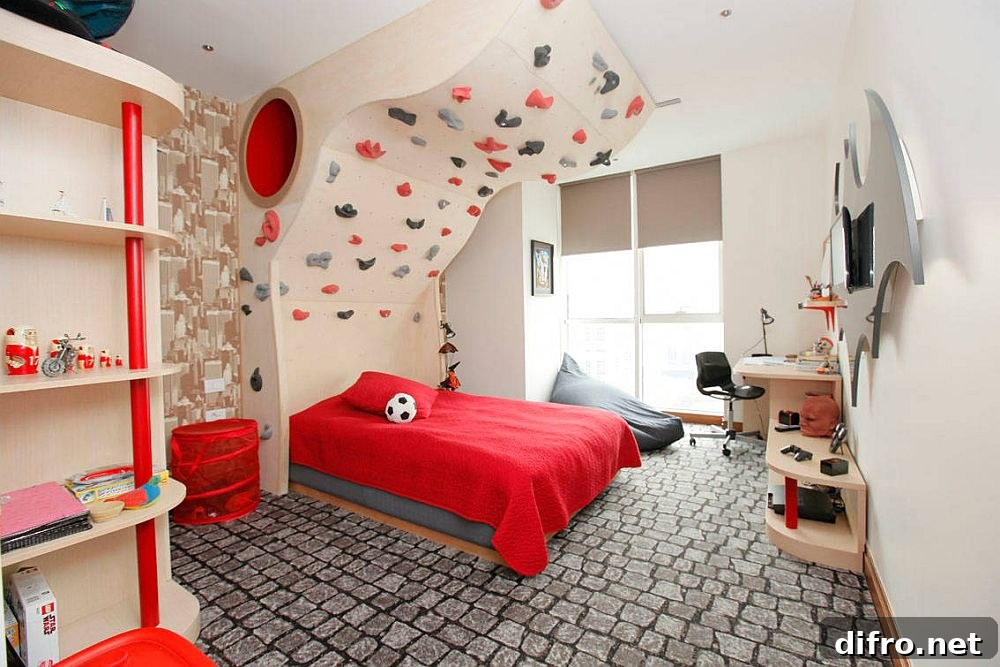
Combining a climbing wall with other playful features — such as a slide or climbing rings — creates multiple ways for children to move through their room. Integrating a climbing wall into a bunk bed design saves space and eliminates the need for a staircase. You can vary the route by adding curves or overhangs to provide extra challenge. A cozy nook or small reading space at the top of the climbing route rewards effort and turns climbing into a complete imaginative experience.
RELATED: 27 Creative Kids’ Rooms with Space-Savvy Sliding Barn Doors
Pops of Color and a Bit of Pattern
A custom climbing wall can be both affordable and highly decorative. Combining the climbing surface with storage—such as a bookshelf behind a freestanding climbing panel or shelving integrated beneath the route—adds everyday usefulness to the feature. A wooden climbing wall can bring warmth and subtle color to a room while doubling as display space for books or toys. Keep the surrounding backdrop neutral to let the climbing wall stand out, then add colorful holds or patterned accents to inject personality.
RELATED: Inspired Displays — 20 Unique Shelves for a Creative Kids’ Room
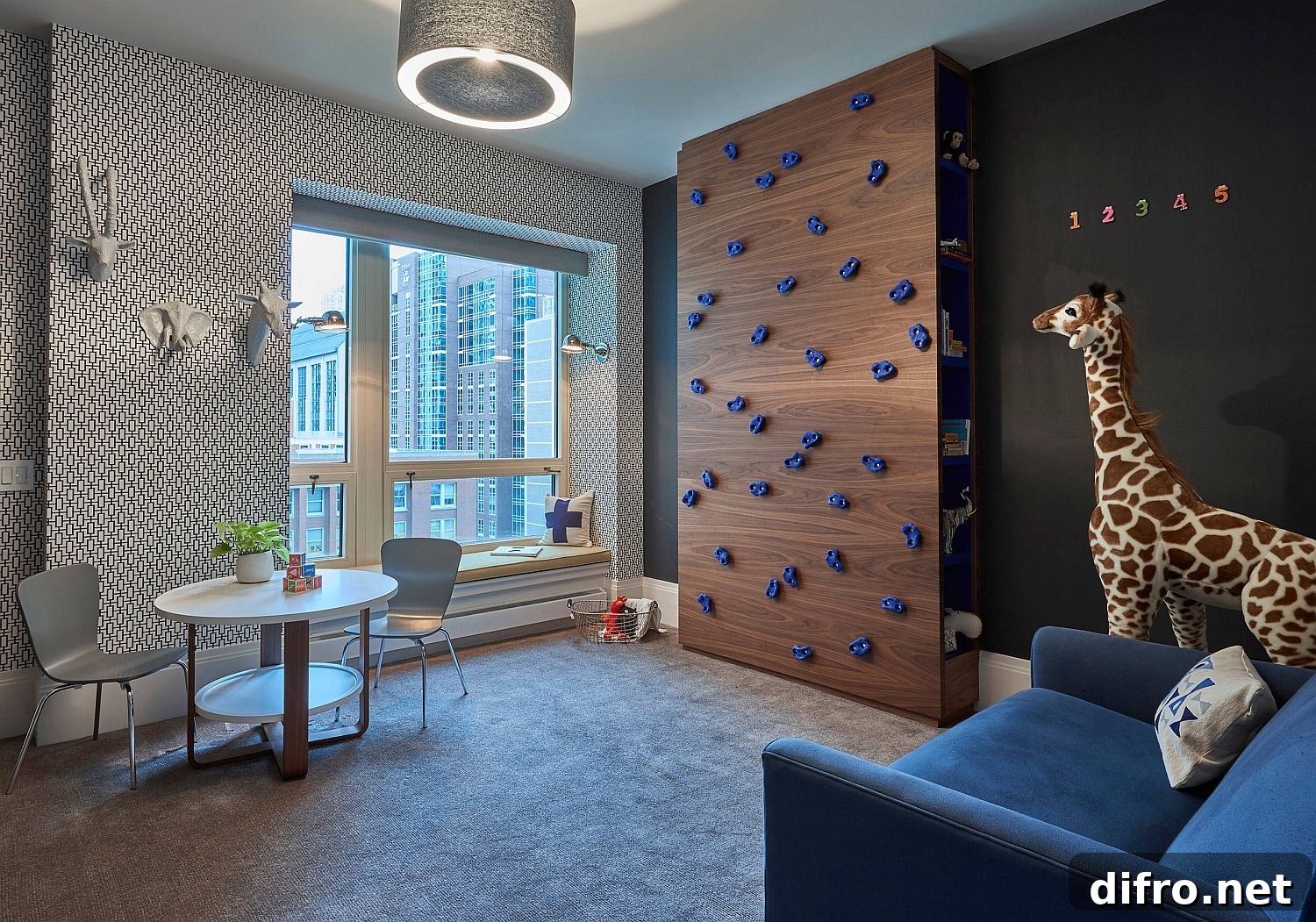
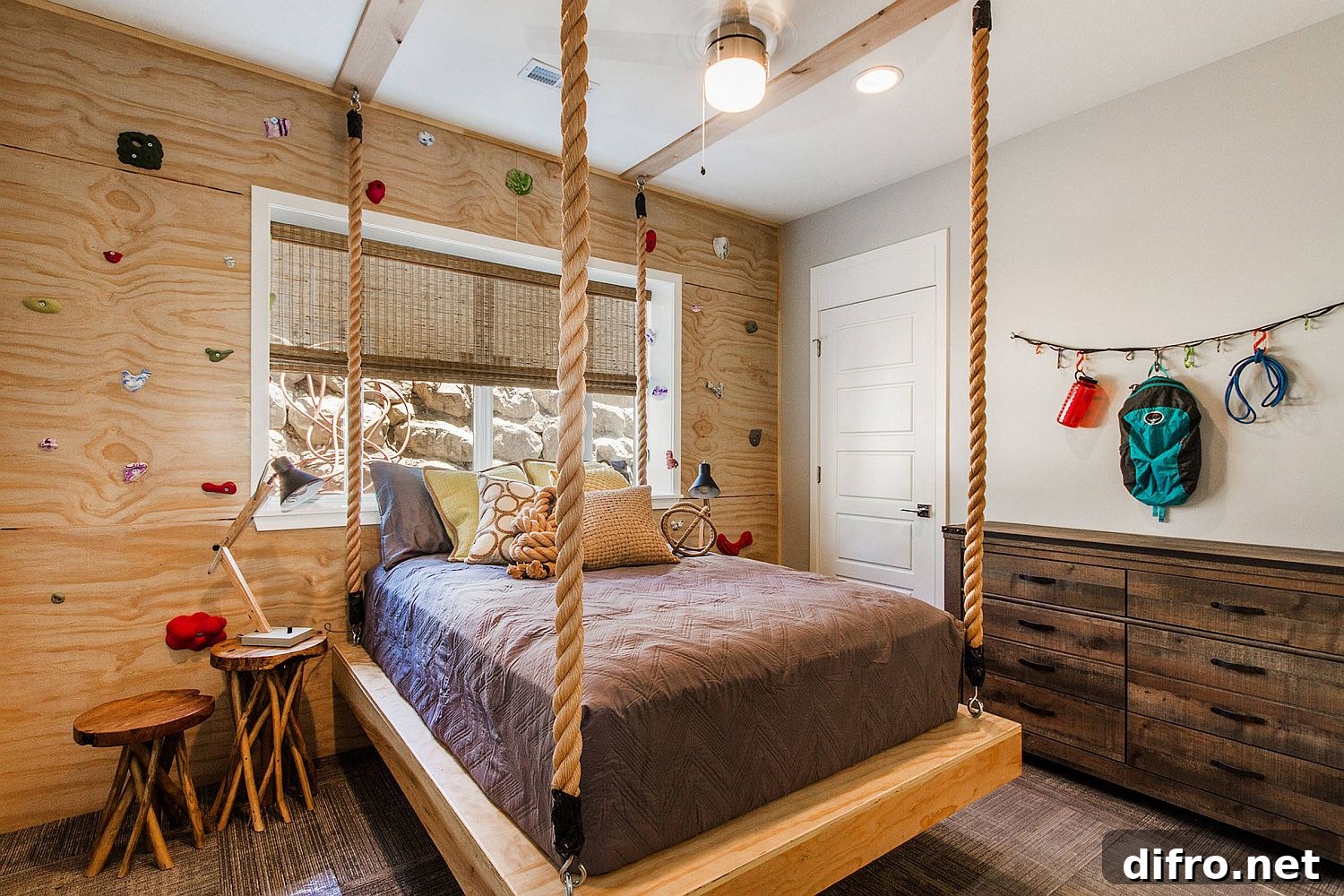
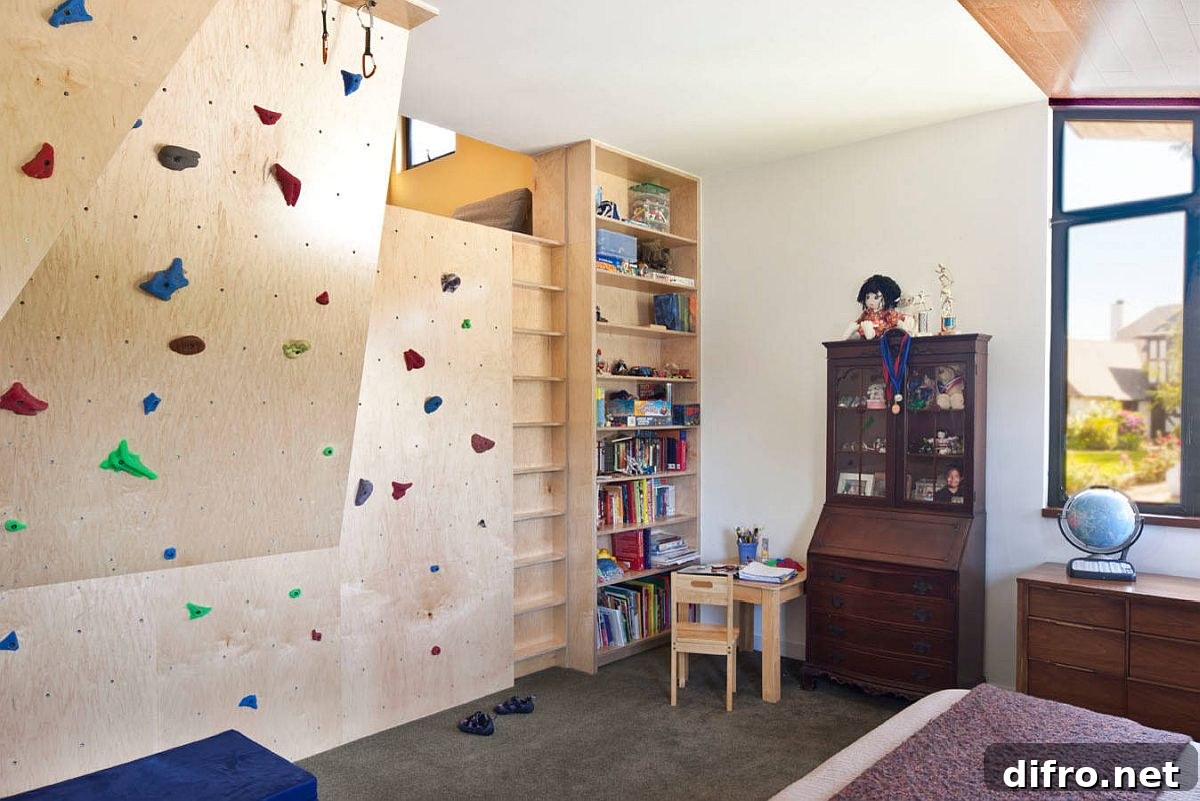
Whether you aim for a minimalist wall with neutral tones and bright holds or a fully integrated wooden unit that doubles as storage and structure, a climbing wall can transform a child’s bedroom into an active, creative space. Prioritize safety by anchoring panels securely, spacing holds appropriately for the child’s age, and providing padded flooring beneath the climbing area. With thoughtful planning, a bedroom climbing wall becomes a daily invitation to move, explore and play.