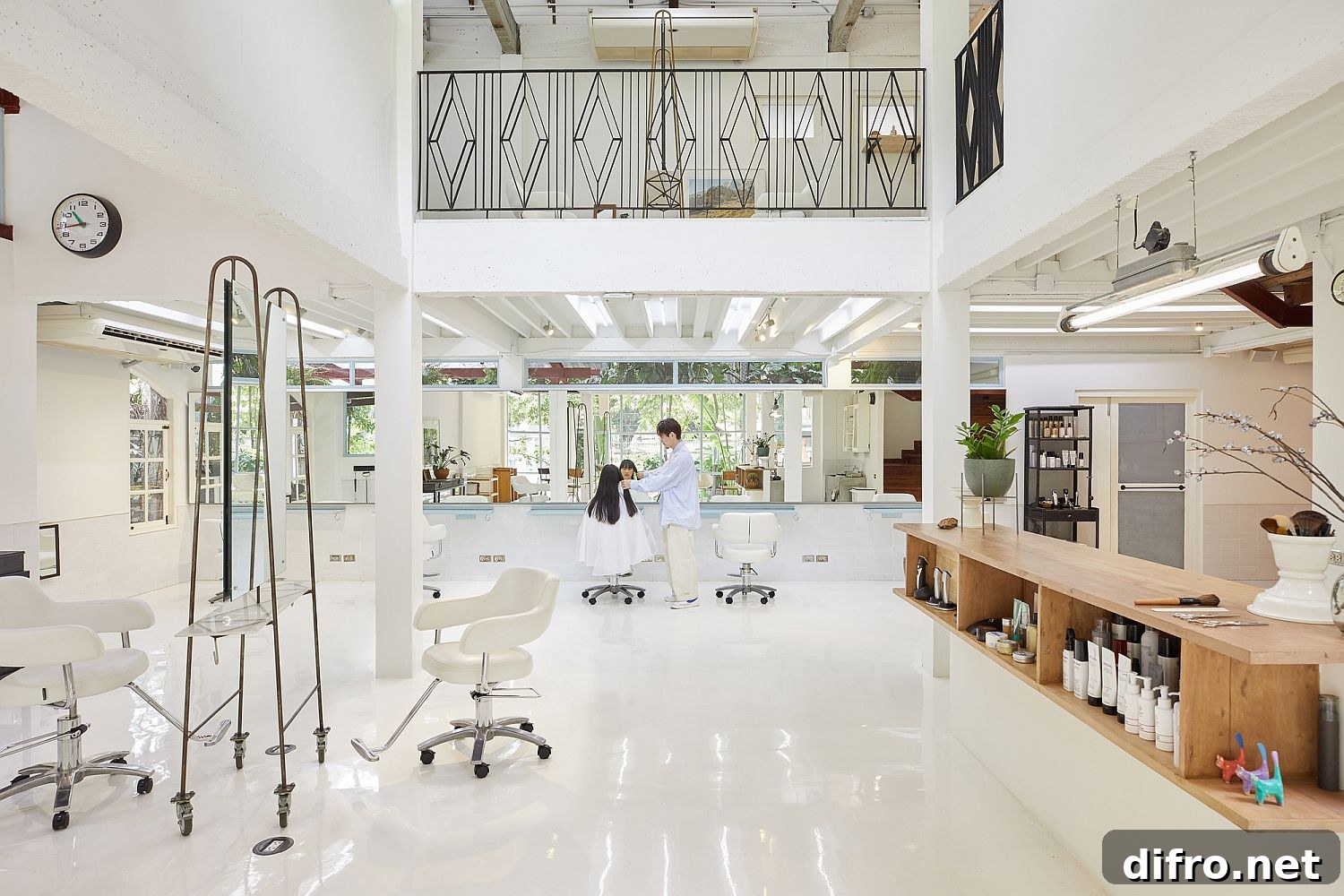
Adaptive reuse often transforms old industrial and commercial buildings into contemporary homes, and in some cases even churches and castles find new life as modern residences. This project takes the opposite route: a two‑storey, multi‑generational house in Bangkok has been reinvented as an elegant salon. The space, now known as Rikyu by boy Tokyo, was reimagined by Bangkok Tokyo Architecture and converted into a refined, welcoming salon with a striking all‑white interior that elevates both its look and function.
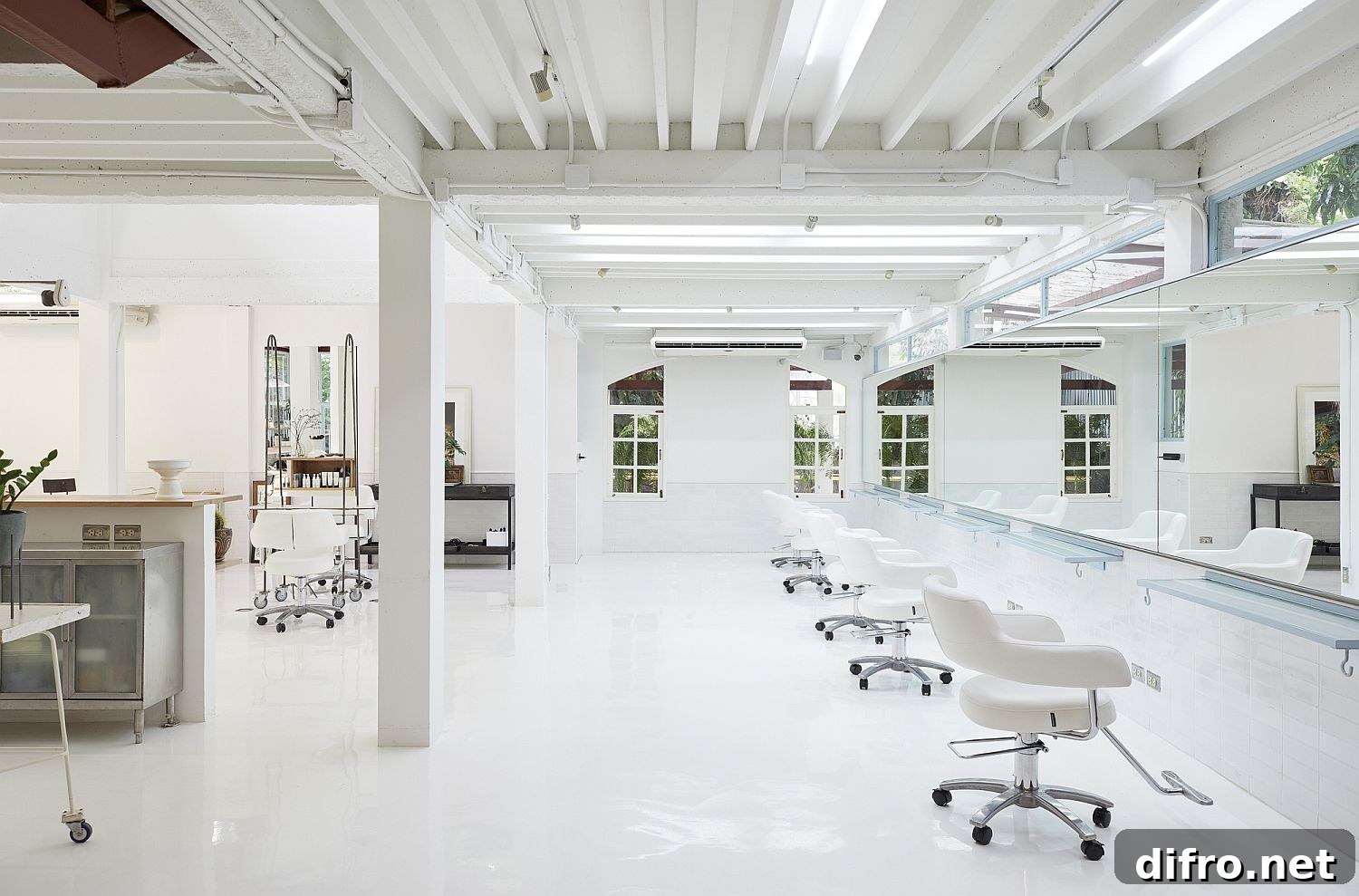
The redesign carefully balances aesthetic refinement with practical ergonomics. The original two levels were adapted to meet salon needs while preserving the building’s character. A consistent monochromatic palette—dominated by white—creates a serene, airy backdrop that visually enlarges the interior and gives it a sophisticated, boutique feel. The restrained color scheme also allows furniture, finishes and the surrounding greenery to stand out subtly against the neutral canvas.
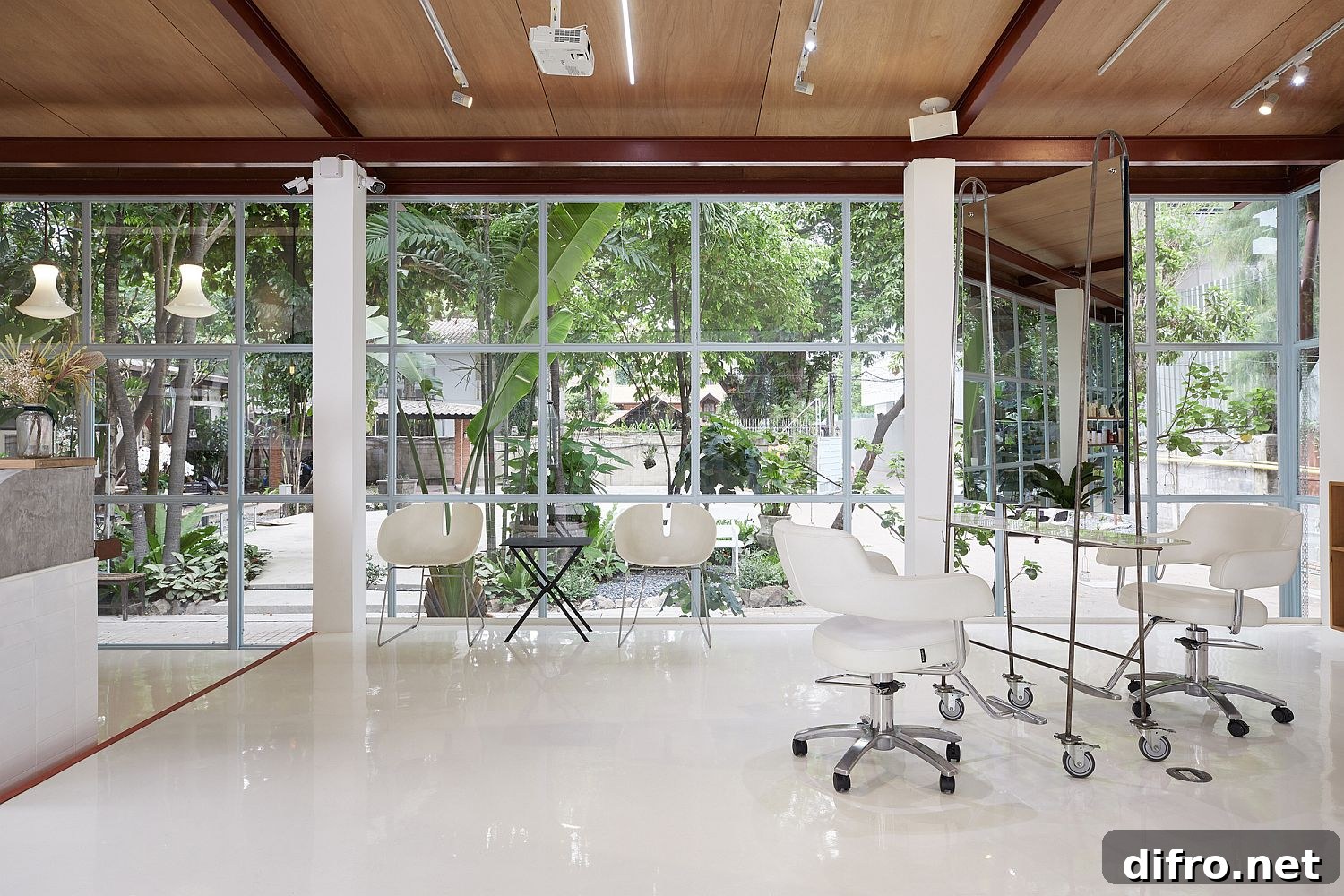
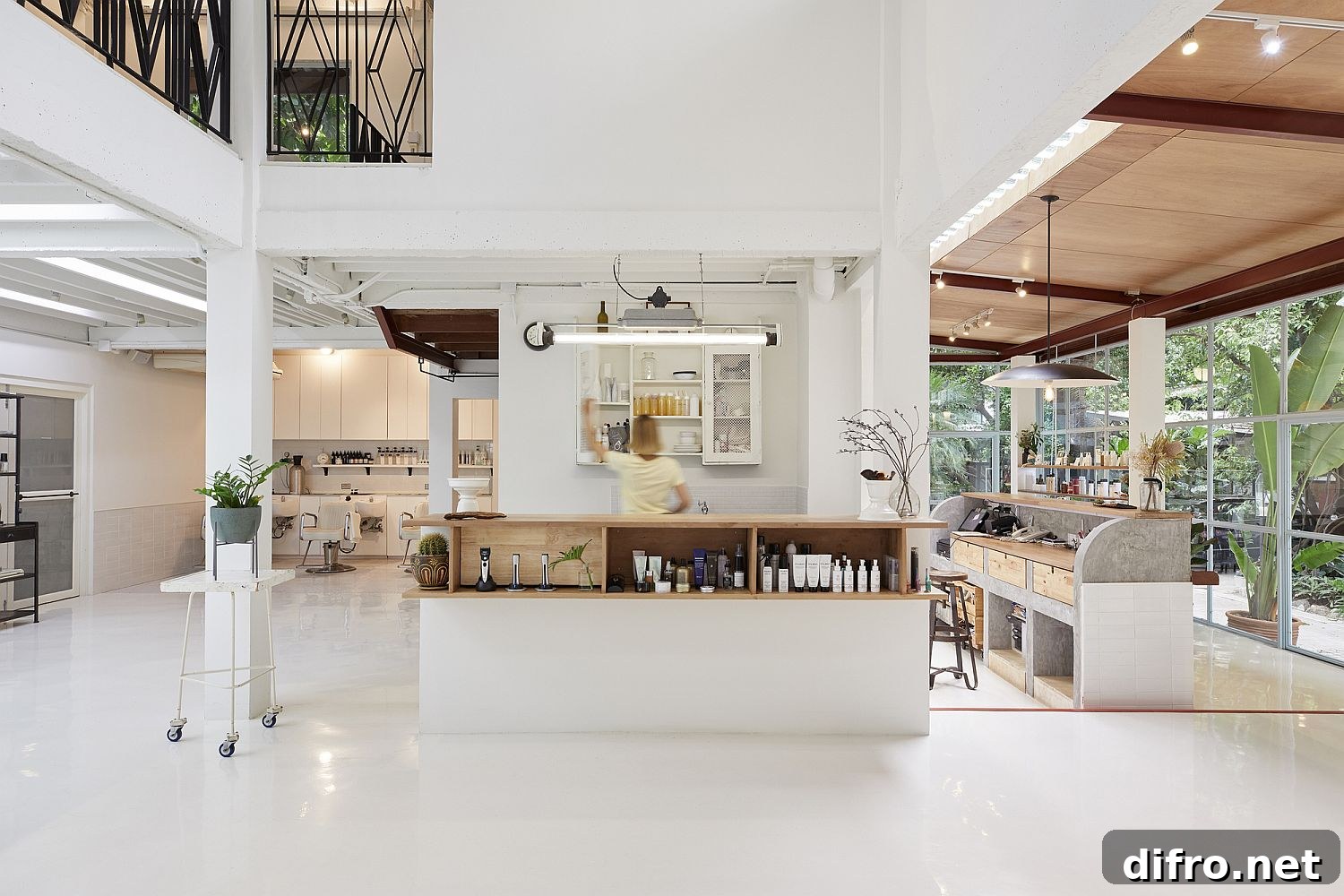
Glass partitions and framed openings play a major role in the conversion. Large panes and interior glass walls visually connect the salon to the garden and each of the treatment and styling areas, enhancing sightlines and creating a continuous flow of daylight throughout the space. These transparent elements also establish a relationship between inside and outside, so the lush greenery surrounding the building becomes a living feature of the salon experience.
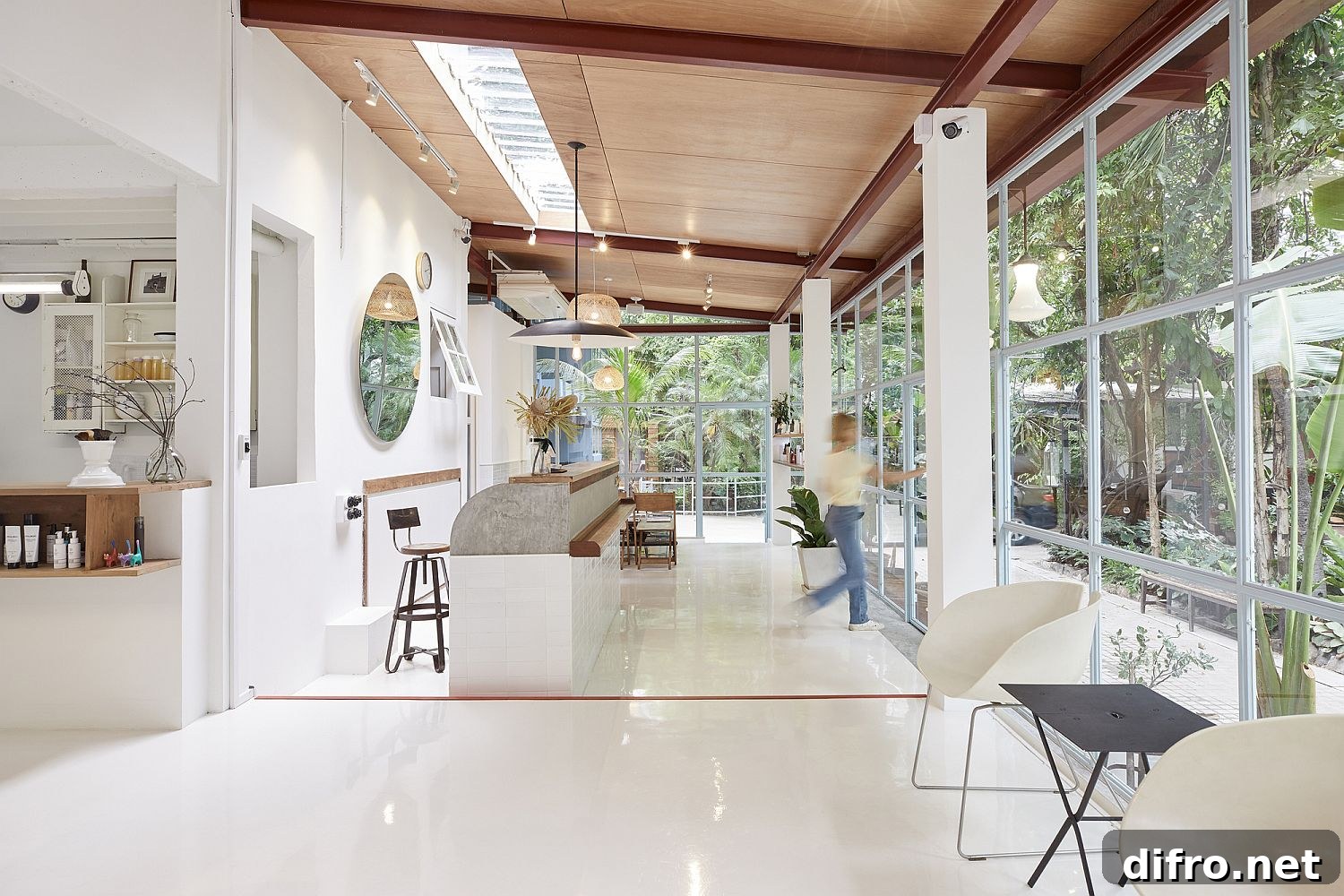
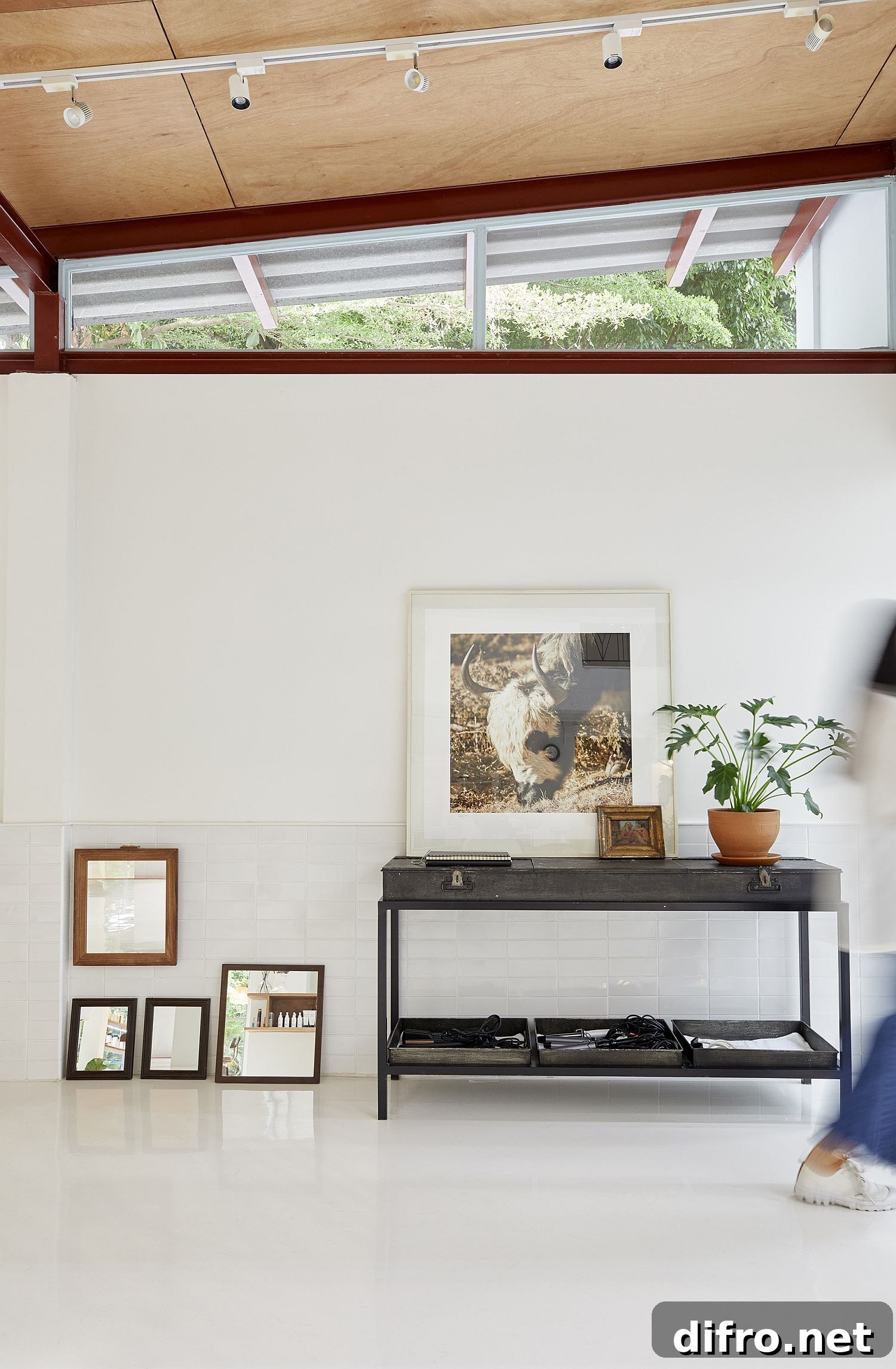
Natural light is maximized through careful placement of clerestory windows, gaps between roof and walls, and reflective surfaces such as mirrors and light‑colored flooring. Sunlight filters into the interior, bouncing across surfaces to create a bright, evenly lit environment that feels both comfortable and energizing. The resulting atmosphere is ideal for a salon, where good light improves the quality of service and the overall customer experience.
The renovation also repositions windows and doors, updates the entry sequence and repaints ceilings to create a cohesive, contemporary look. By reusing and relocating openings from the original house, the design composes a series of framed views toward landscaped areas, effectively turning fragments of the exterior into curated vignettes visible from inside the salon.
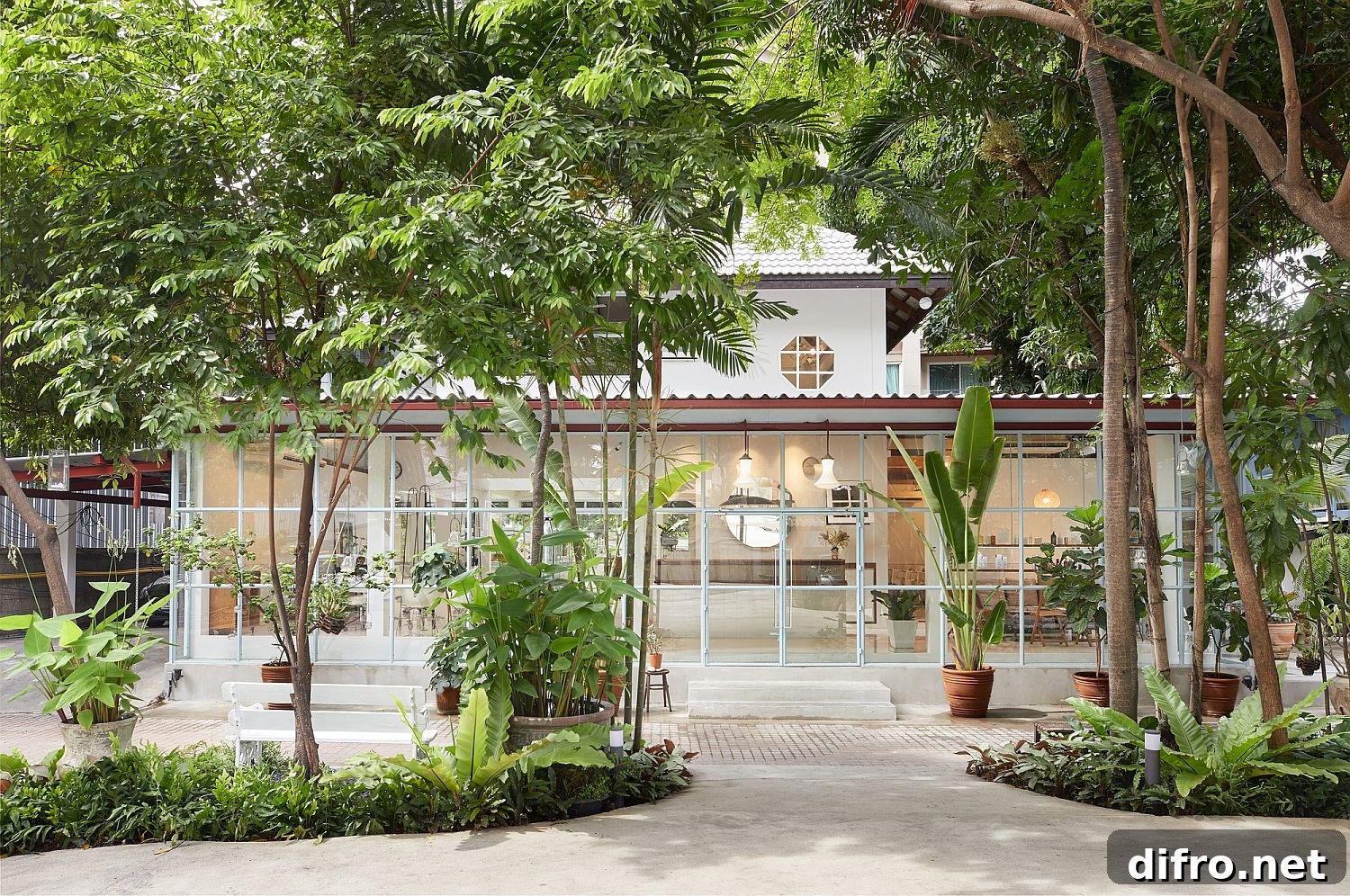
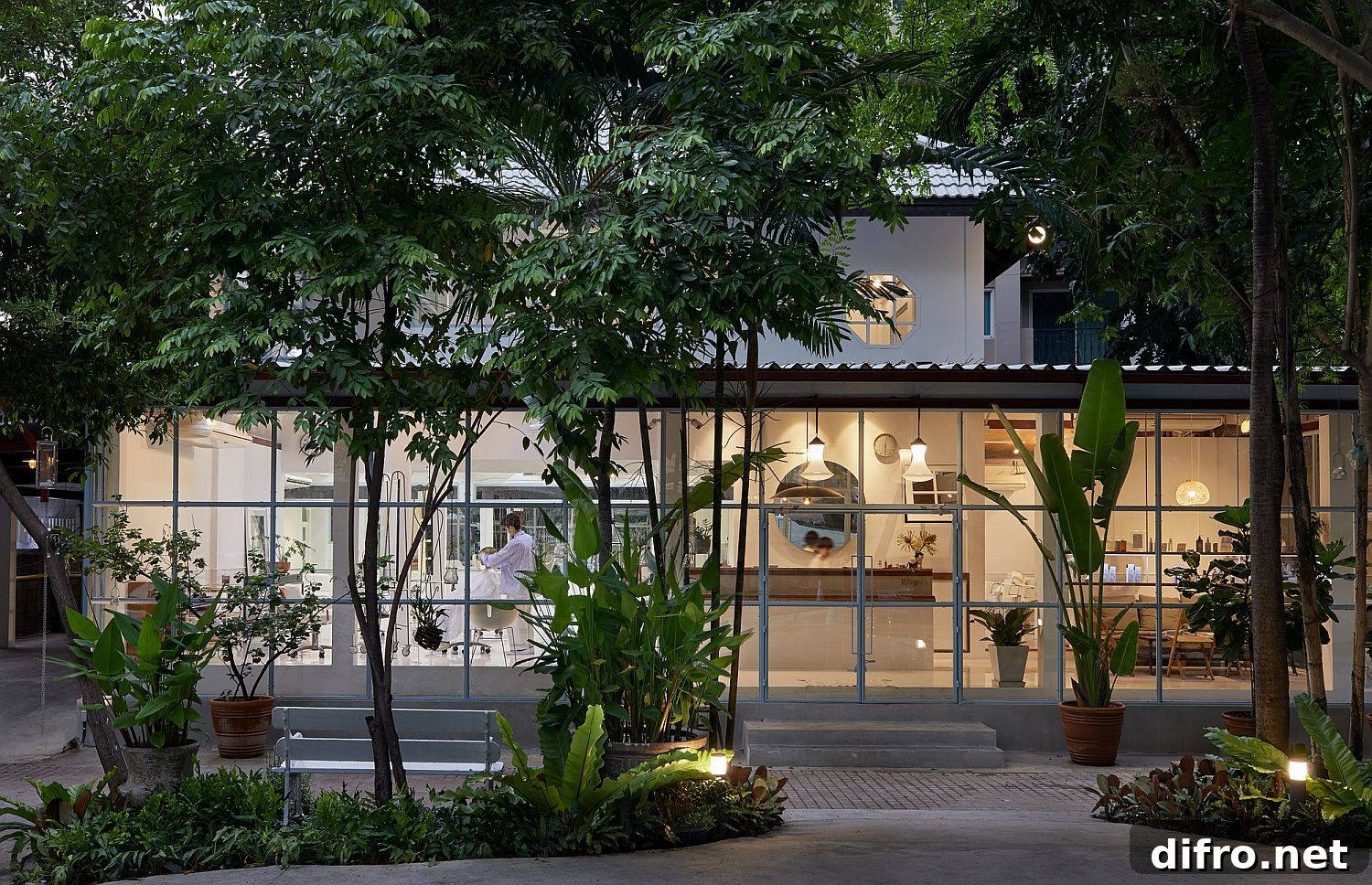
From the street, the salon presents a calm, understated façade that hints at the luminous interior. The building reads as both familiar and refreshed: a domestic scale preserved from its residential origins, but with a refined, minimalist language that signals its new commercial function.
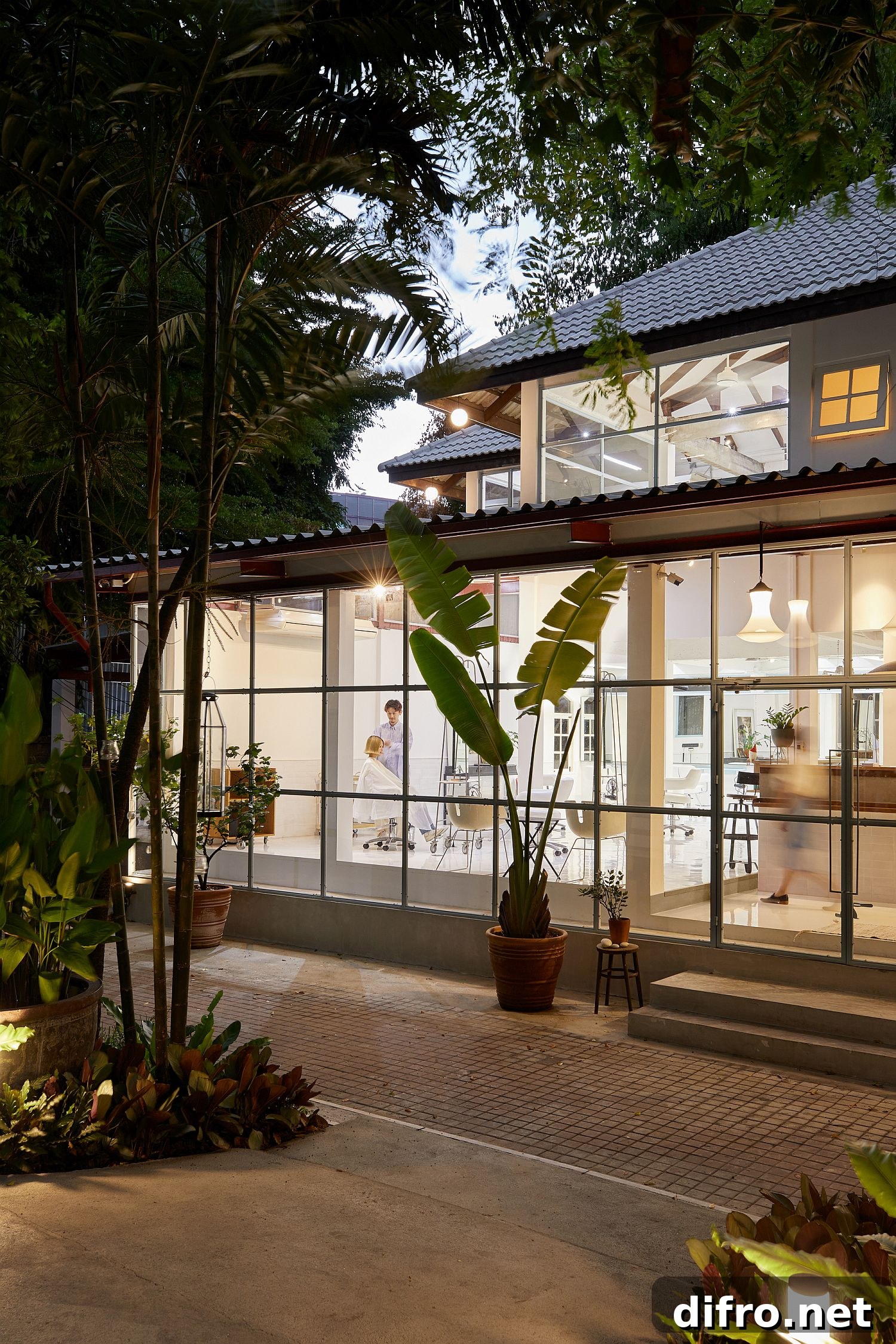
Light enters through the gaps between roof and walls and reflects off floors and mirrors, filling the interior with a soft, natural glow. The juxtaposition of original and relocated windows creates framed views of greenery, and the single, interlinked interior yields a variety of atmospheres and functions within one cohesive volume.
The upper level has been adapted into a stylish, more private area that complements the open plan on the ground floor. A warm wood ceiling adds texture and subtle contrast to the predominantly white scheme, introducing a tactile material that softens the minimal palette while maintaining the overall brightness. Clerestory windows and carefully positioned skylights further enhance daylighting, ensuring even the deeper interior corners receive natural light.
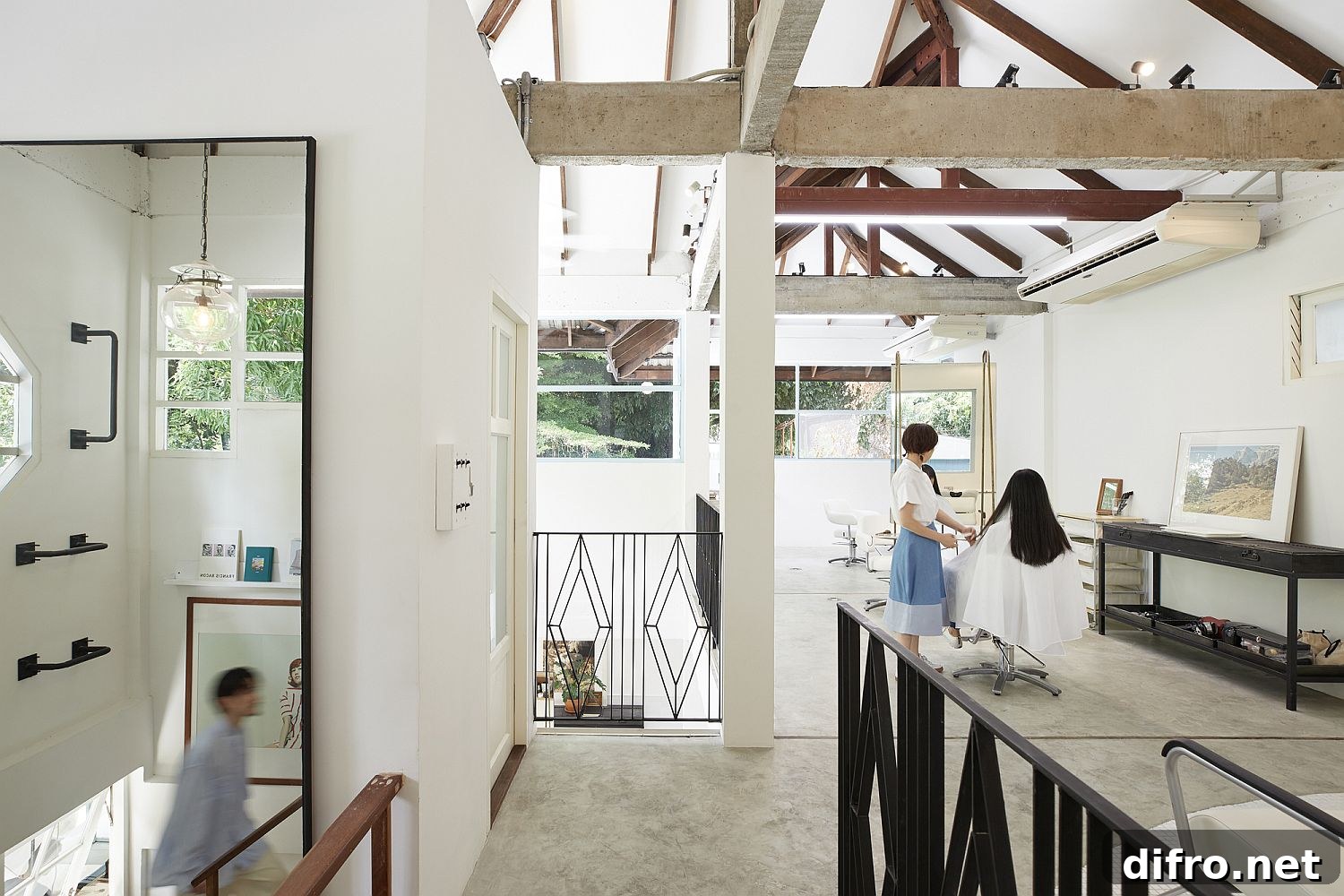
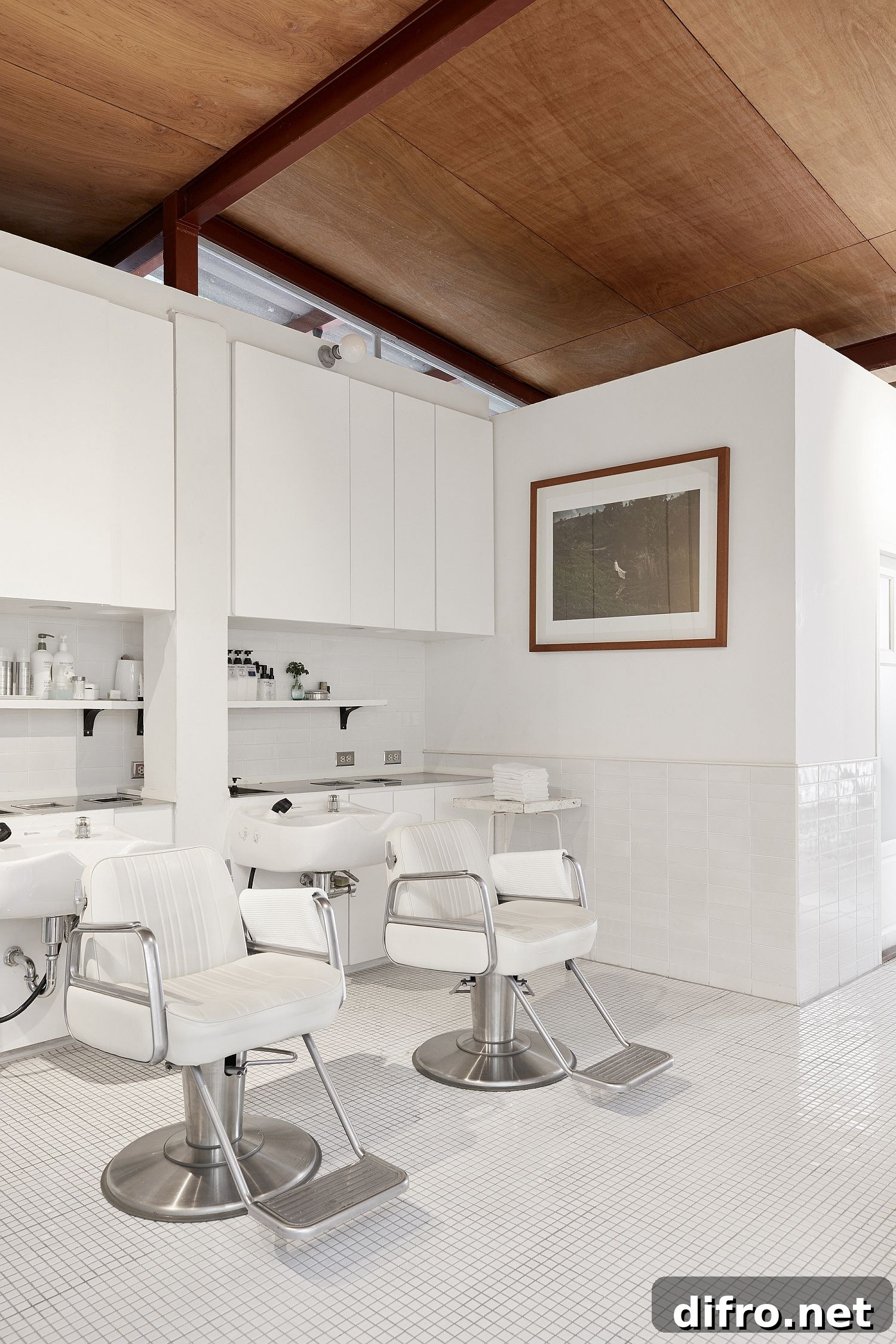
Overall, the conversion of this multi‑generational house into Rikyu by boy Tokyo demonstrates how adaptive reuse can produce a modern, luminous commercial space while respecting the integrity of the original building. Thoughtful interventions—relocated openings, glass partitions, a neutral palette and strategic daylighting—create an elegant salon that is both functional and visually compelling.