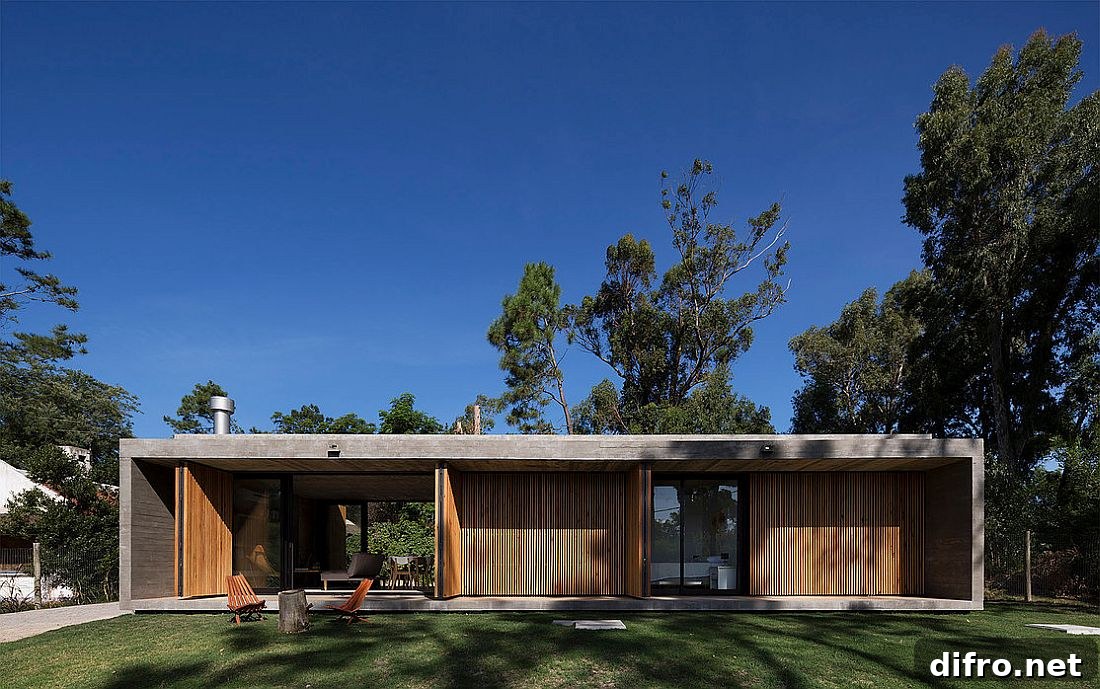
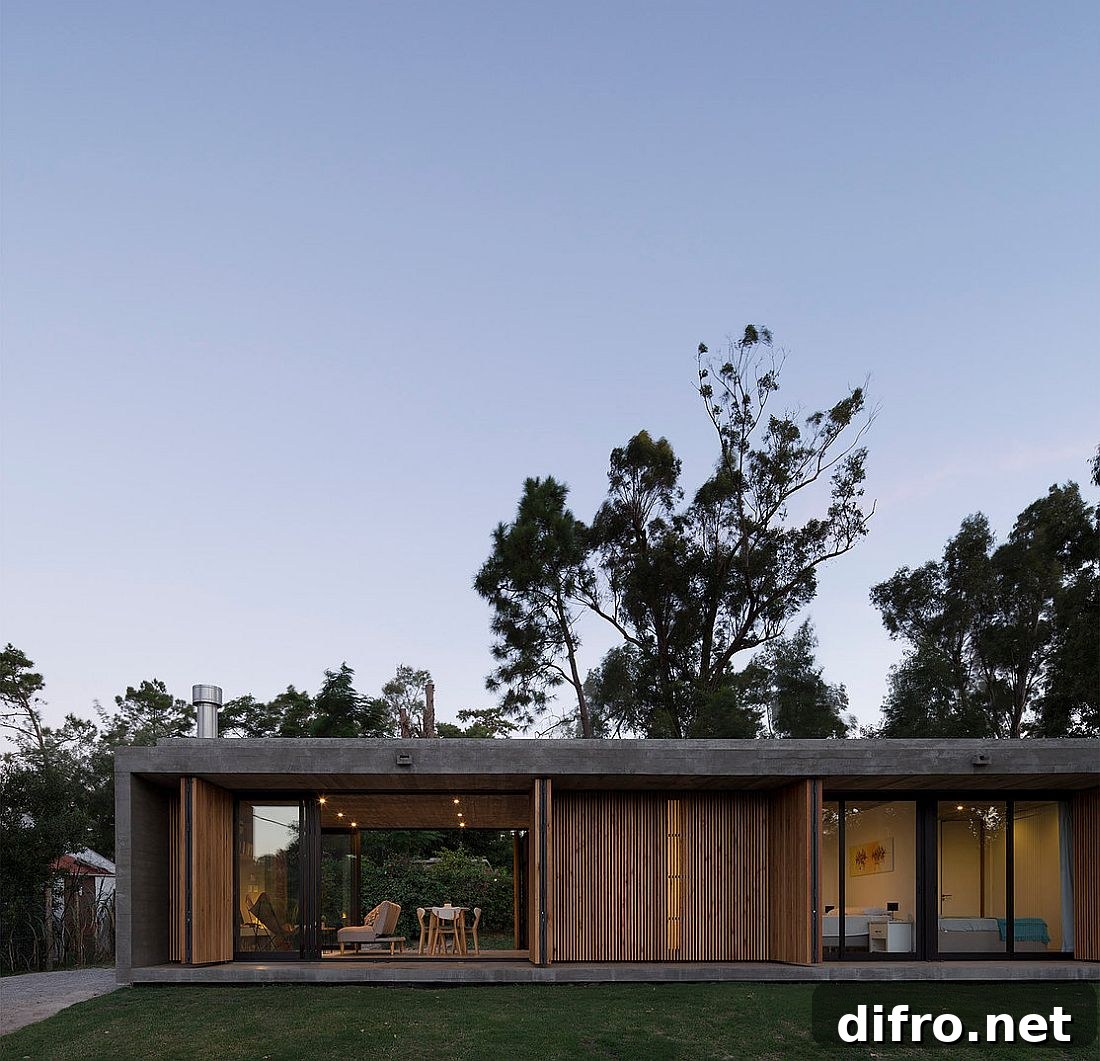
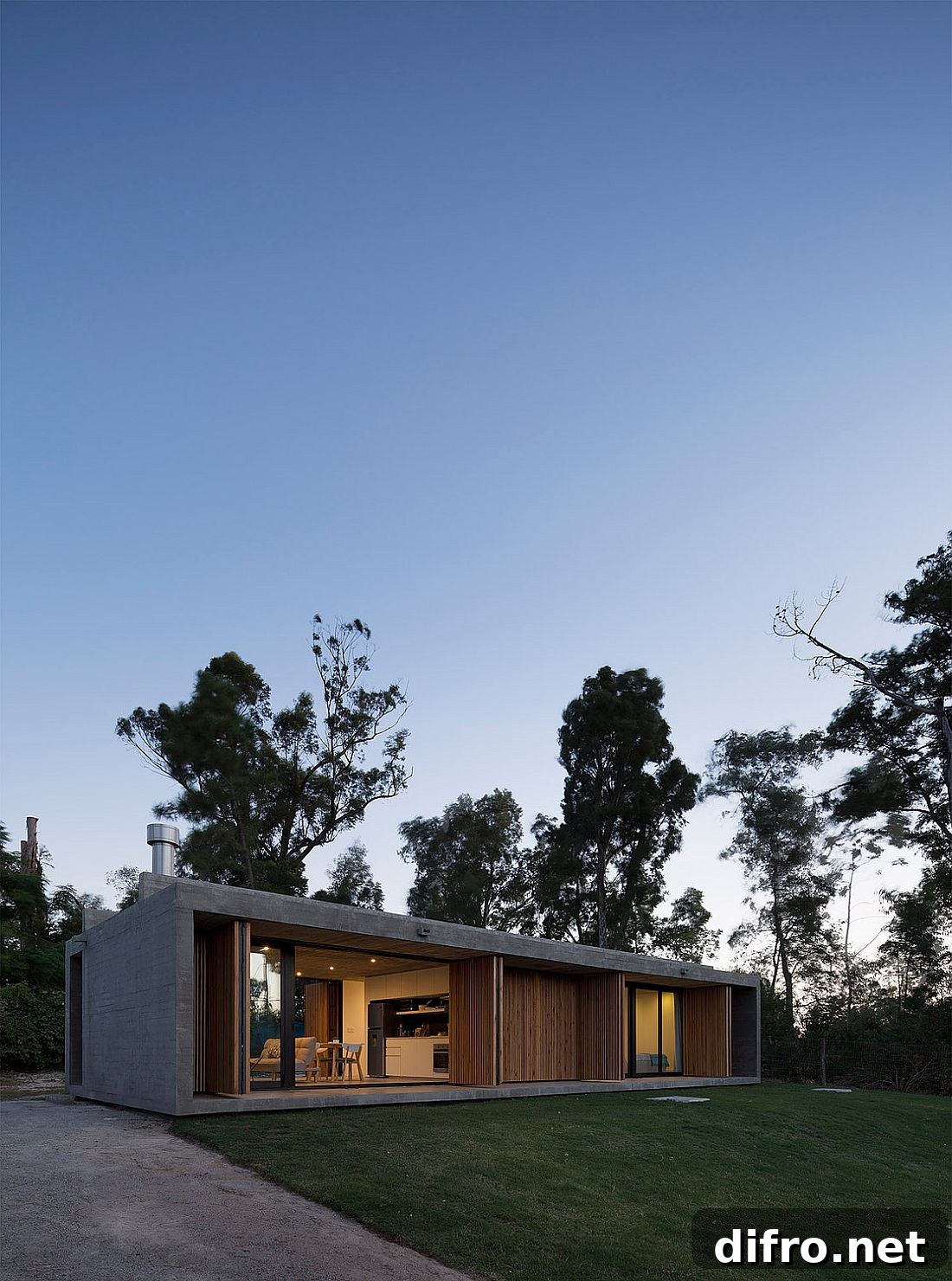
Marindia House in Montevideo, Uruguay strikes a thoughtful balance between absolute privacy and an open, landscape-driven living experience. Designed by MASA arquitectos, the house uses a sequence of movable, foldable walls clad in wooden slats to transform the interior from a closed, intimate home into a pavilion-like space that flows seamlessly into its surroundings. The wooden slat system gives the residence a distinctive facade, while also controlling daylight and ventilation so the interior remains bright yet comfortable throughout the day.
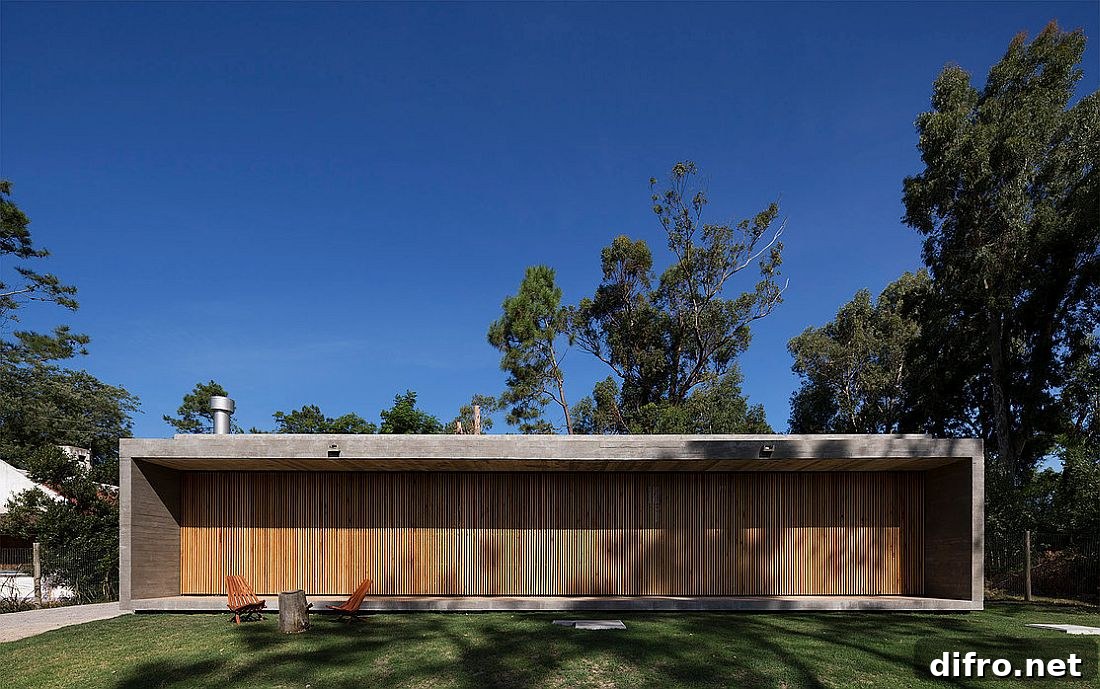
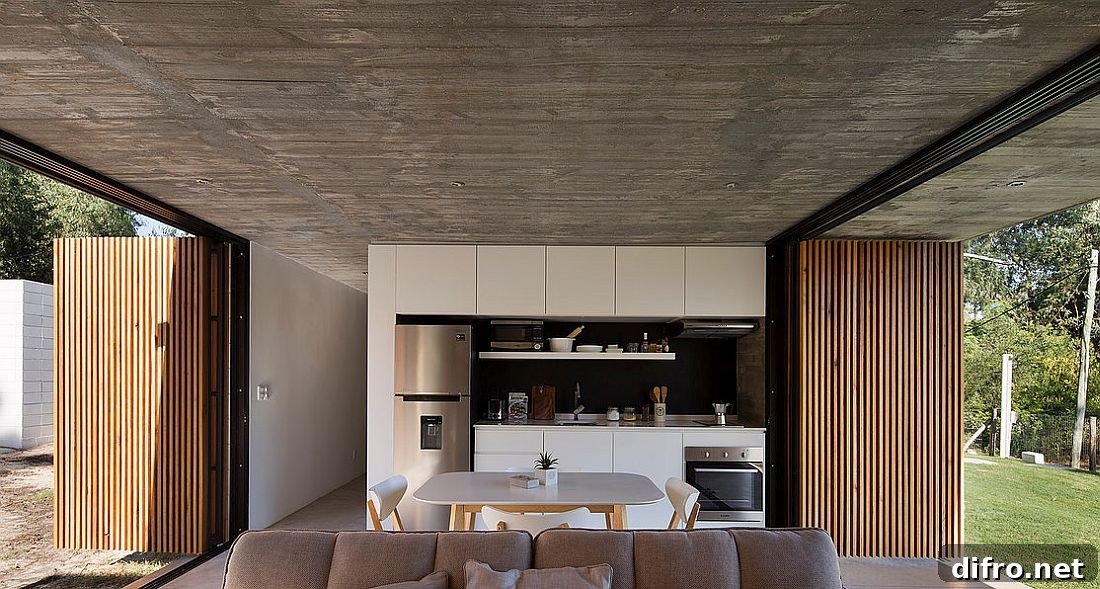
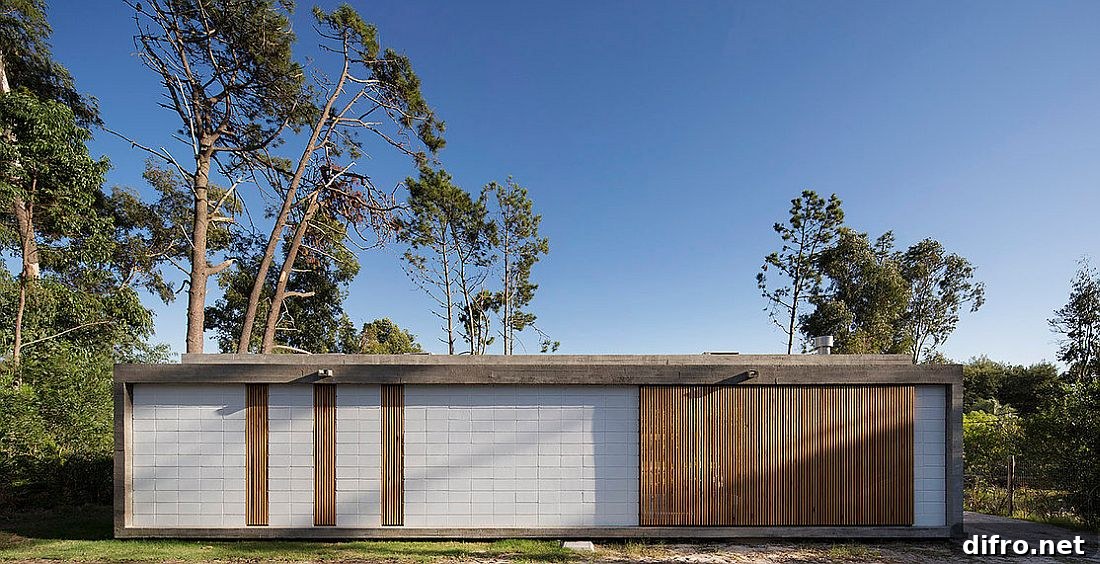
The street-facing side of the house features large panels of glass combined with wooden-slat screens that can be folded or closed, creating an adaptable envelope. In contrast, the southern rear facade remains mainly closed and protective, prioritizing privacy and thermal performance. Inside, the layout favors modern simplicity: an open living area, a compact single-wall kitchen in white, and a modest dining space that together form an efficient social core. The rooms receive filtered morning light and ventilating breezes, and the bedrooms offer tranquil retreats for rest and privacy.
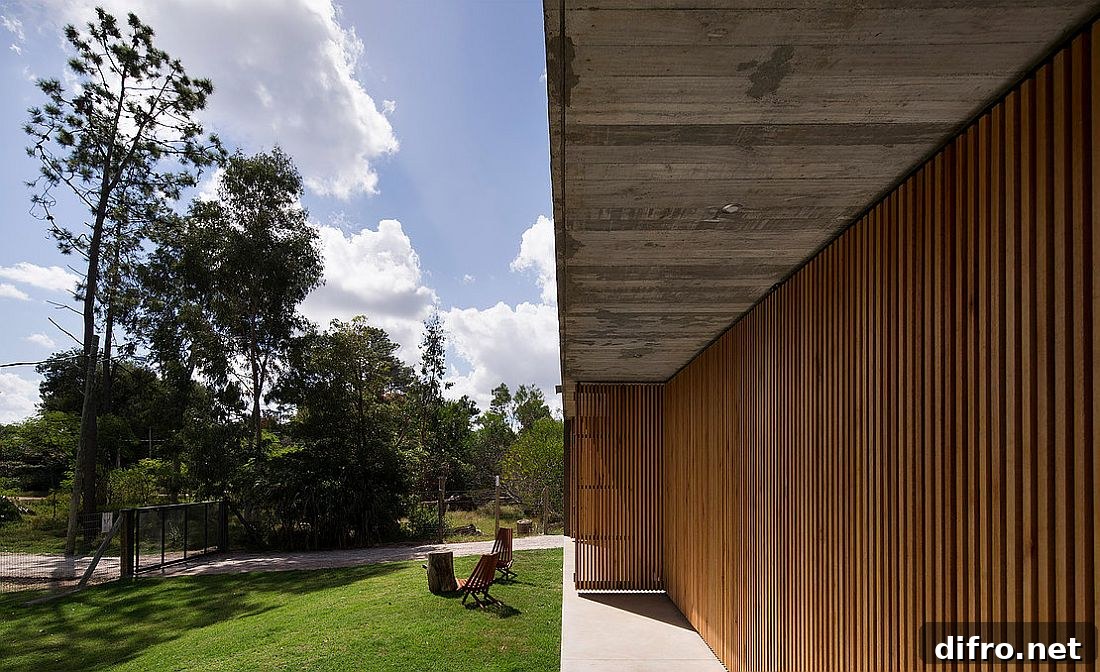
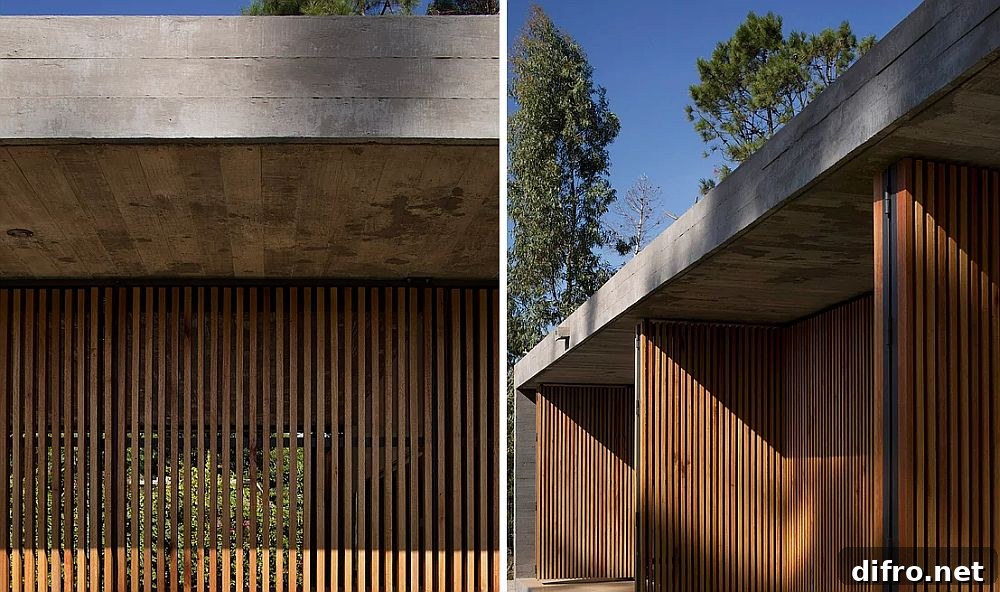
The wooden slat walls act as a filter: they diffuse direct sunlight, reduce glare, and create a pattern of light and shadow that changes throughout the day. This approach reduces the need for heavy curtains and mechanical cooling while retaining a strong visual connection to the landscape. The slats also lend the home a refined texture from the outside, helping it sit comfortably within the surrounding natural setting.
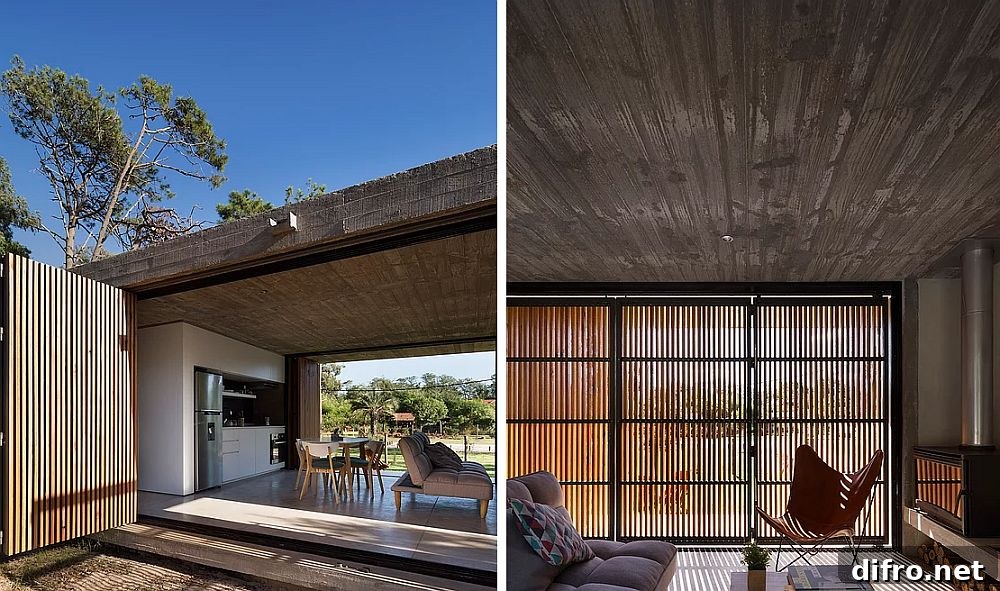
Interior finishes are deliberately restrained and modern. Smooth white surfaces, minimalist cabinetry and clean lines create a light, airy atmosphere. These refined finishes are balanced with rawer elements, such as an exposed concrete ceiling that brings tactile contrast and architectural interest. Together, the materials form a neutral backdrop that highlights the changing light and the framed views to the outdoors.
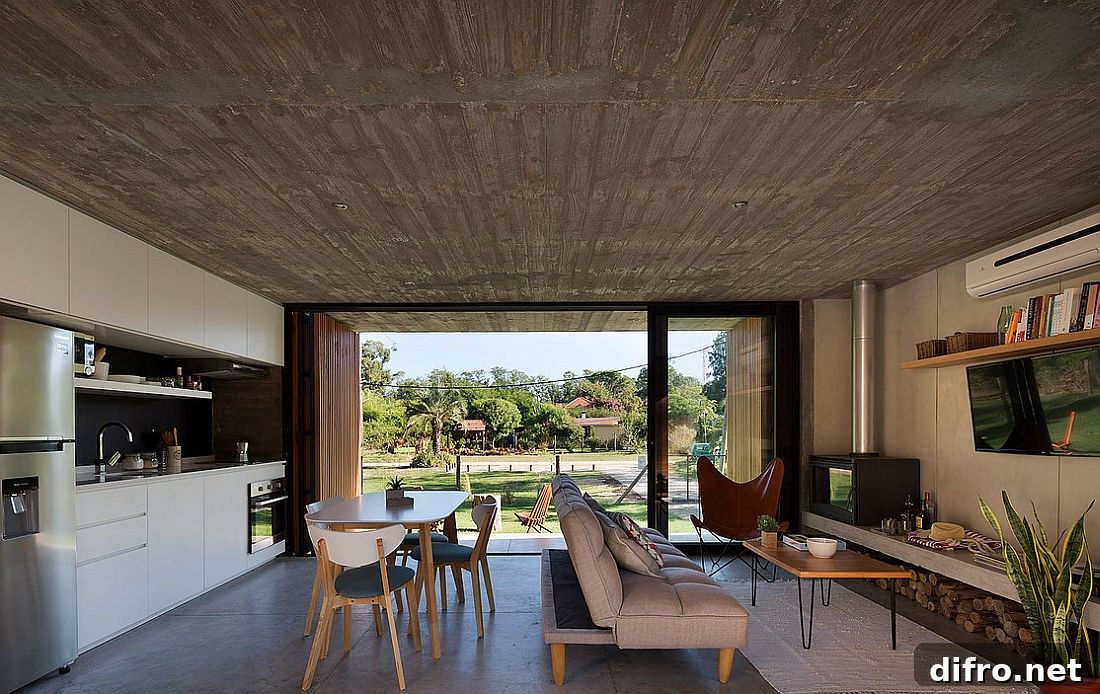
Functionally, the folding doors and panels enable the house to operate in multiple modes: fully closed and secure when needed, semi-open to admit light and filtered views, or completely open to create a single extended living pavilion that embraces the exterior. This flexibility makes the home well suited to changing weather and daily routines, from quiet, private evenings to lively, outdoor-focused gatherings.
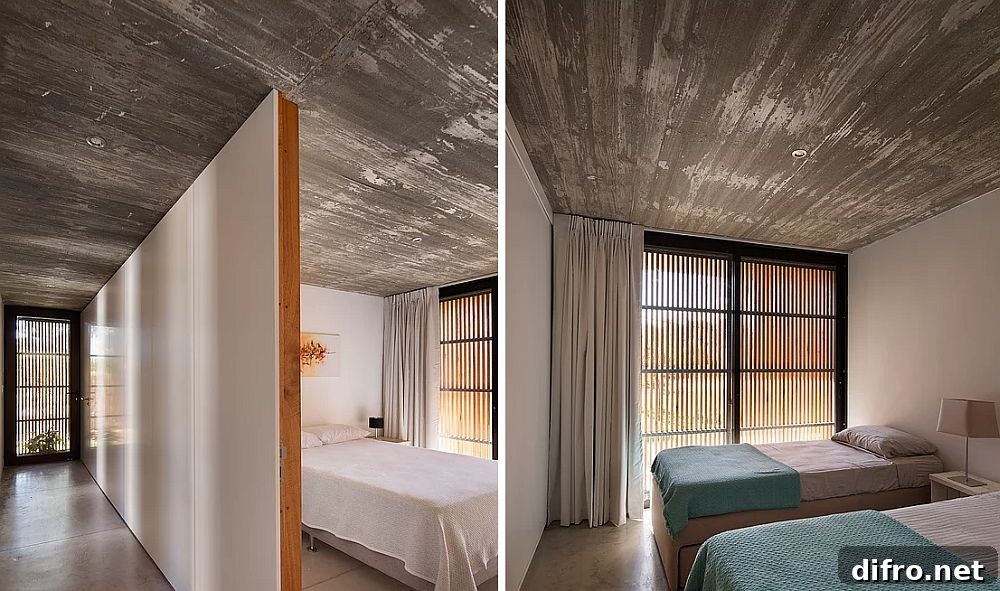
The sleeping areas are designed as calm, breezy sanctuaries. Large windows and the slatted screens ensure cross-ventilation and generous natural light at sunrise, while the layout preserves personal privacy. Overall, the house reads as both protective and porous: a domestic refuge that can open to welcome nature or close to shelter its occupants.
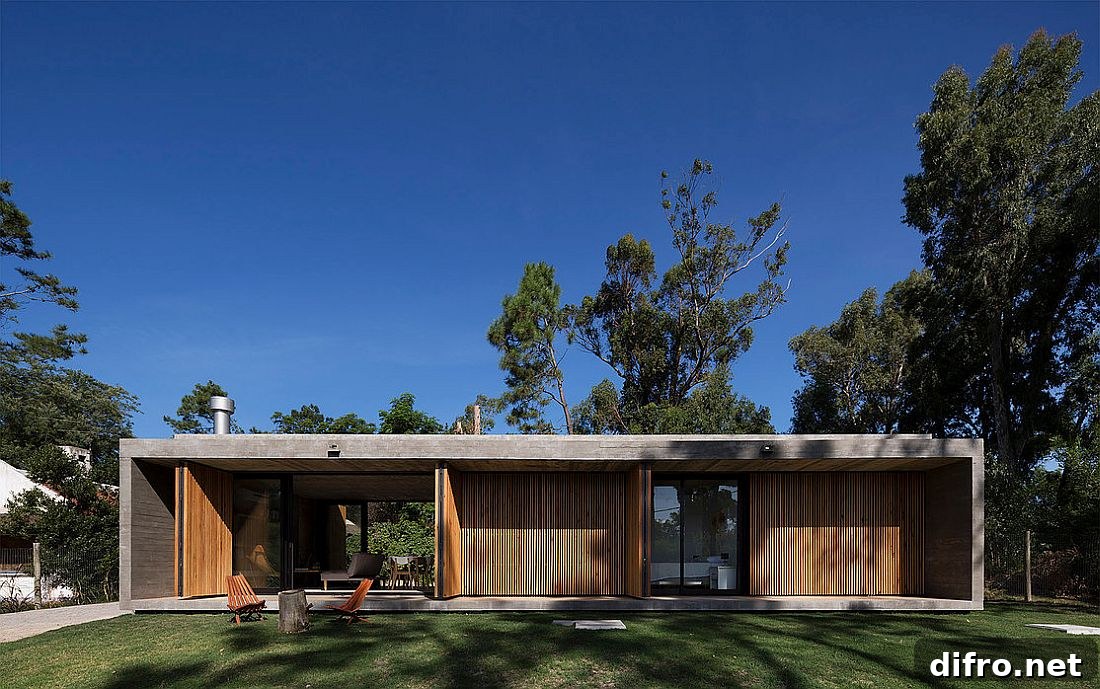
The natural landscape is enhanced with the geometry of the construction, and the house, it seems more habitable and protective in the presence of a wilder and more virgin natural landscape. The envelope is posed as a filter that diffuses the edges, a veil, capable of being opened wide, allowing nature to enter the domesticity of the home.
The project demonstrates how a thoughtfully designed building envelope—here, a system of folding wooden-slat walls—can mediate between interior comfort and the desire to connect with place. Marindia House is a clear example of contemporary residential design that prioritizes adaptability, daylight control and the visual harmony between architecture and landscape.
RELATED: Wooden Slats, Glass Walls and Modern Grandeur: Gallery House in India
Photography: Federico Cairoli