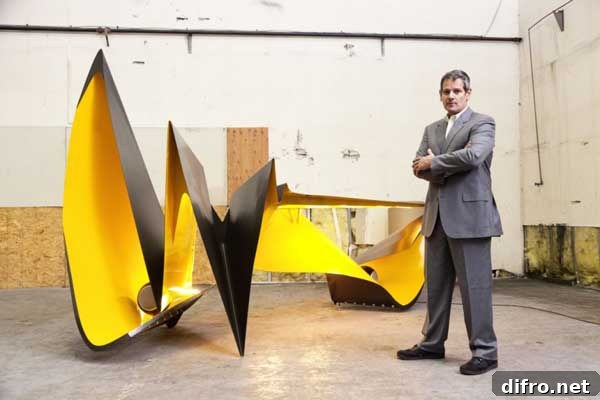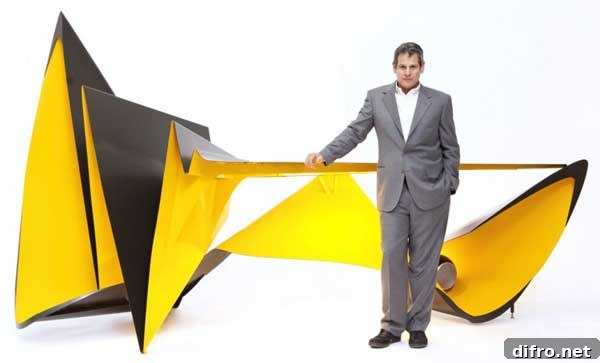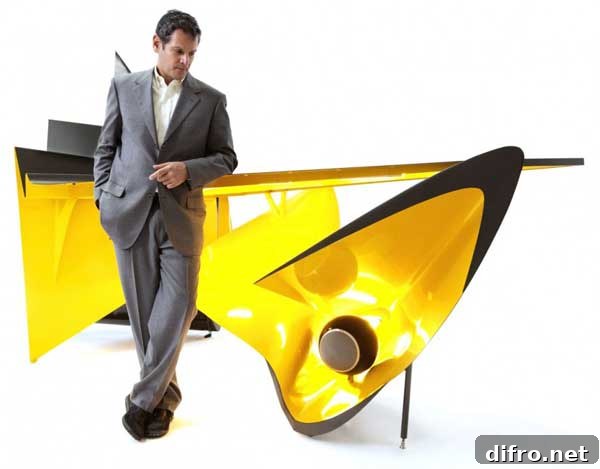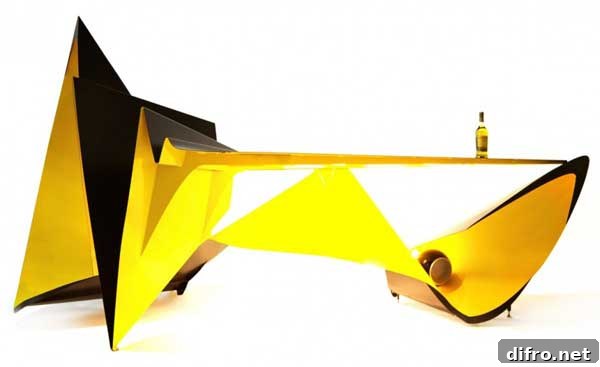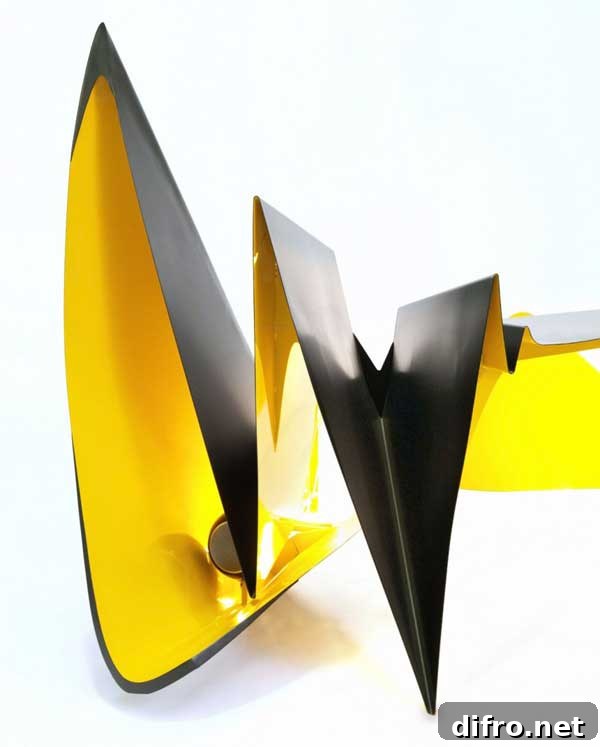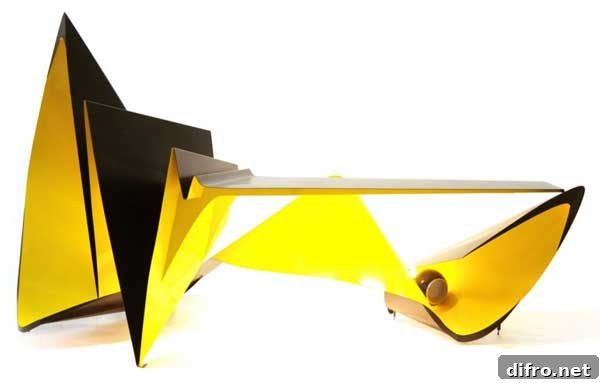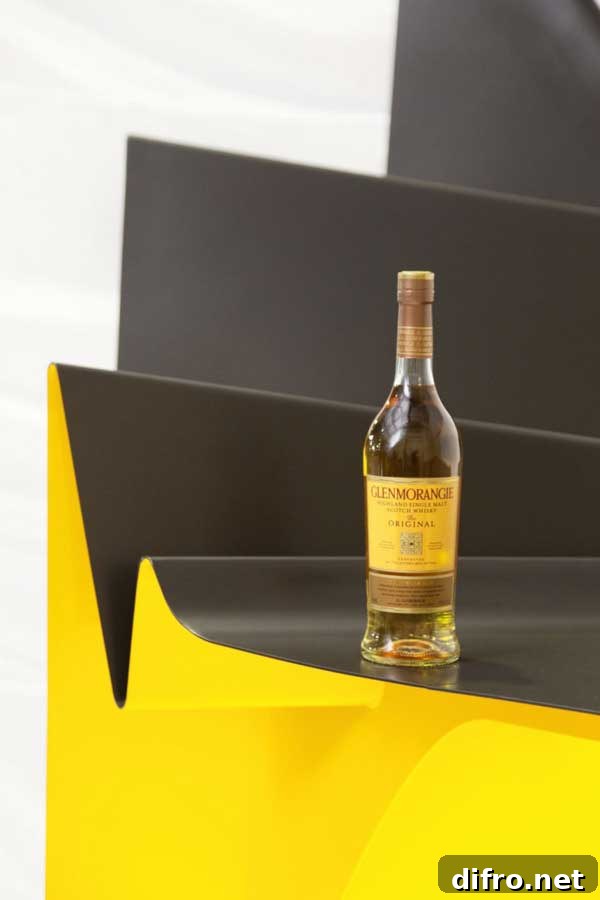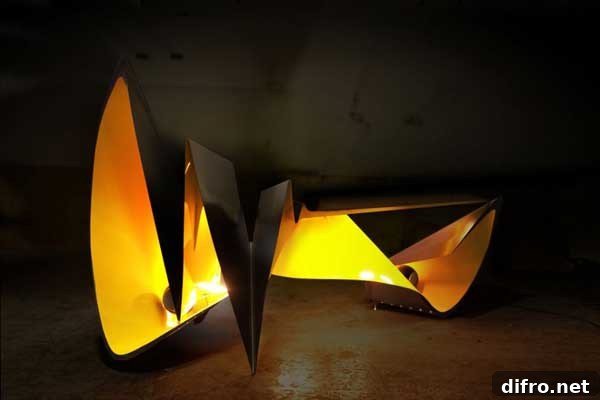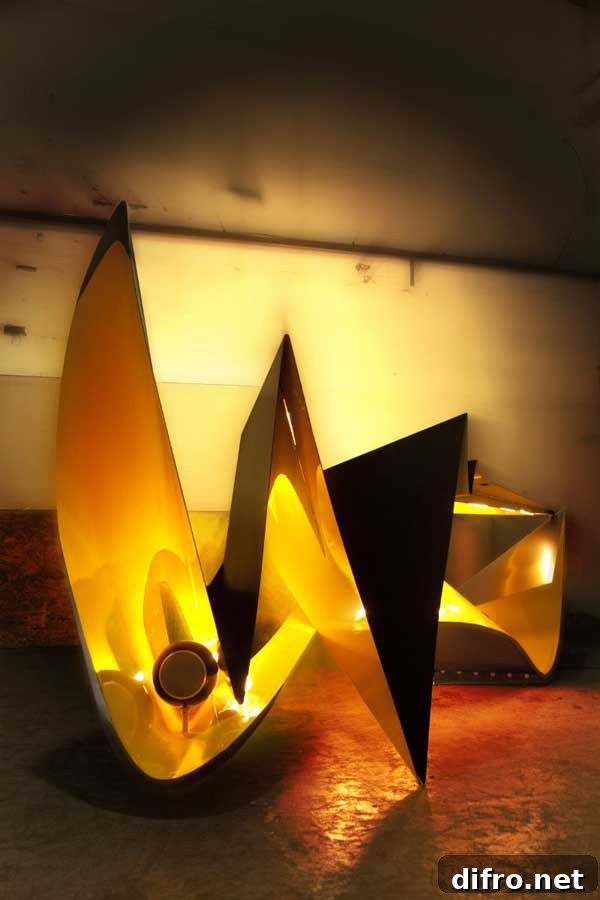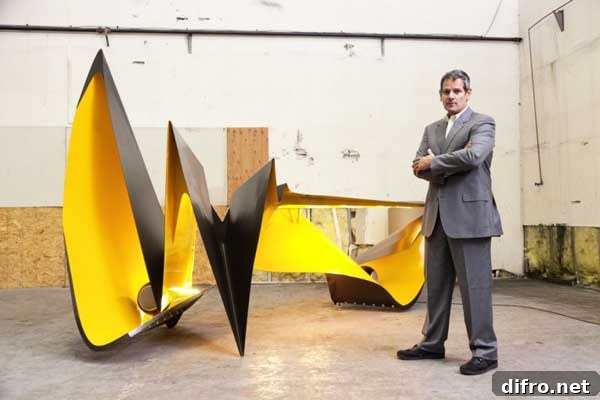
Philip Michael Wolfson designed the SoundForm FLUID, a striking decorative sculpture created for the launch of Glenmorangie Scotch Whisky. The piece translates an ephemeral moment—the precise sound produced when liquid pours into a crystal glass—into a vivid, tangible form. Conceived as a concrete visualization of the waveform generated during pouring, the work blends experimental sound research, sculptural design and industrial finishing techniques into an arresting display object for the brand’s events in Taiwan and China.
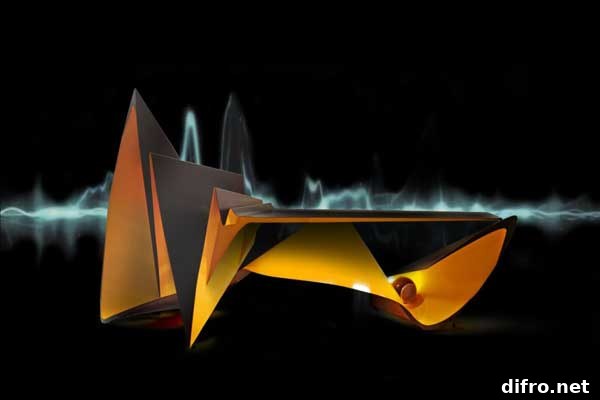
The SoundForm FLUID began with a simple question: how can sound be made visible and tactile? To answer it, Wolfson recorded the acoustic event of a liquid being poured into crystal and then analyzed that recording to produce a sonogram, a visual representation of the sound’s frequency content over time. From this sonogram he derived a three-dimensional profile that became the foundation for a sculptural volume. The resulting form retains the organic undulations and complex compound curves that characterize sound waves, shaped here into a bold, colorful object that reads equally well as art, display architecture and brand storytelling.
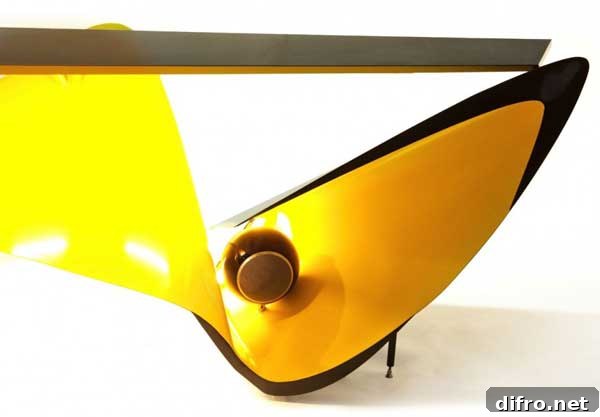
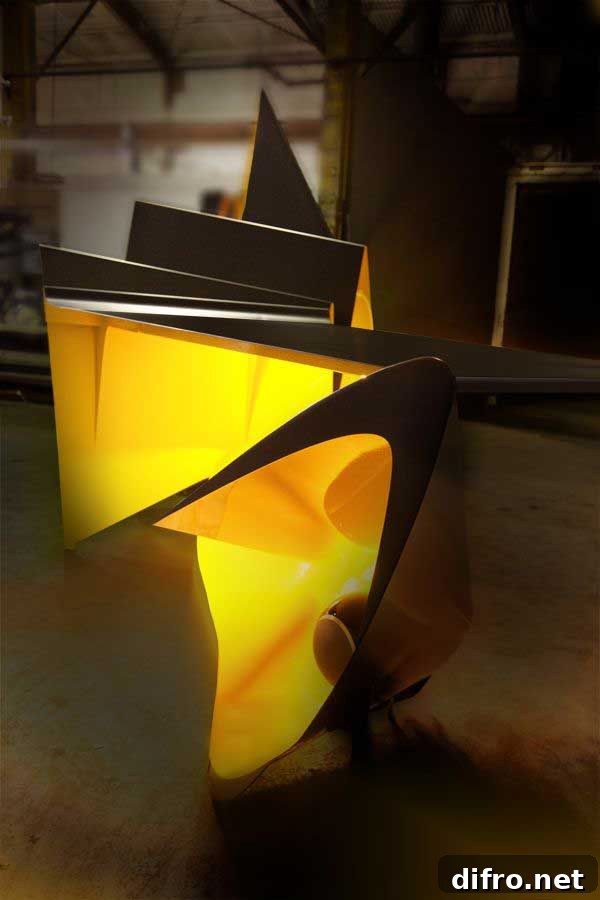
Physically, the object was engineered to capture the fluidity implied by its name. The flowing contours and layered surfaces create a sense of motion even when the piece is stationary. The sculpted curves were executed with high precision and then finished in powder coat, using two complementary colors to emphasize depth and surface transitions. This choice of finishing not only enhances durability for event use but also reinforces the visual metaphor of liquid and light interacting across the form.
As a display element for a premium whisky launch, the SoundForm FLUID functions on multiple levels. At first glance it is a decorative sculpture that attracts attention through color, scale and silhouette. At closer range, viewers can appreciate the conceptual rigour behind the form—how an audio trace was translated into a three-dimensional object, and how the finished surface amplifies the idea of poured whisky through layered color and seamless curves. The piece therefore works both as an eye-catching installation and as a physical narrative that connects product, process and perception.
The project also demonstrates a thoughtful integration of creative research and practical production. Transforming a sonogram into a manufacturable object requires careful consideration of proportion, structural integrity and surface treatment. Wolfson’s process preserved the integrity of the acoustic data while adapting it to the constraints of production, ensuring the sculpture could be fabricated, transported and installed reliably for events in Asia. Powder coating in two tones provided a refined, long-lasting finish that resisted scuffs and maintained color intensity under exhibition lighting.
Beyond its immediate use at the Glenmorangie launch, SoundForm FLUID stands as an example of how designers can bridge sensory disciplines—sound, sight and touch—to produce compelling brand experiences. The piece invites viewers to reflect on how everyday sensory events, like the simple act of pouring a drink, can be reinterpreted as material form. It also highlights how contemporary design can employ digital capture and analysis—sonogram mapping, surface modelling and precision finishing—to create new kinds of sculptures that are at once conceptually rich and visually accessible.
For curators and brands seeking memorable installation pieces, SoundForm FLUID illustrates a clear path: start with a distinctive sensory idea, translate it through rigorous media conversion (audio to visual to physical), and refine the outcome with materials and finishes that support longevity and aesthetic clarity. With its flowing lines, vivid powder-coated colors and story-driven origin, the object succeeds as both a decorative focal point and a demonstration of cross-disciplinary design thinking.