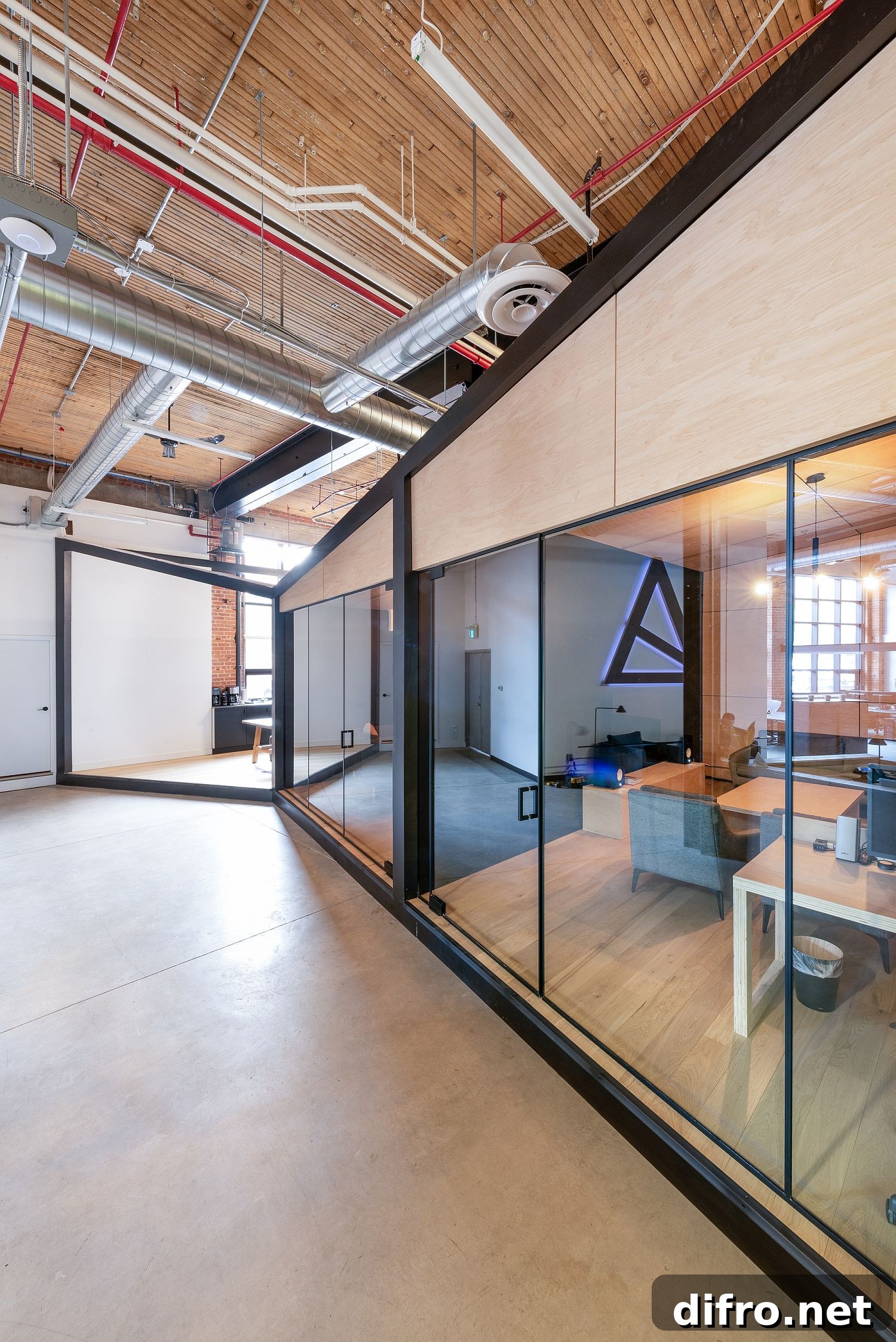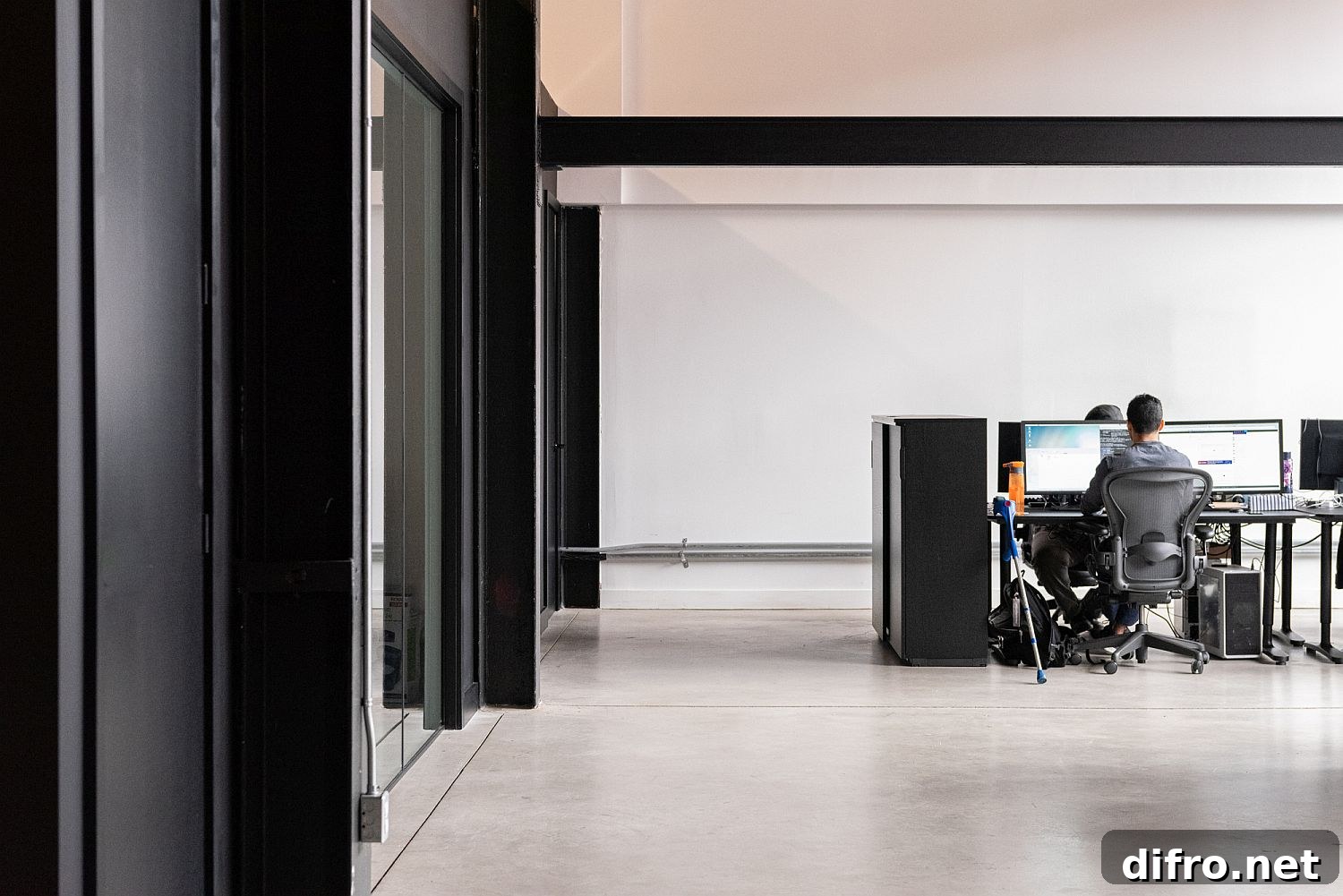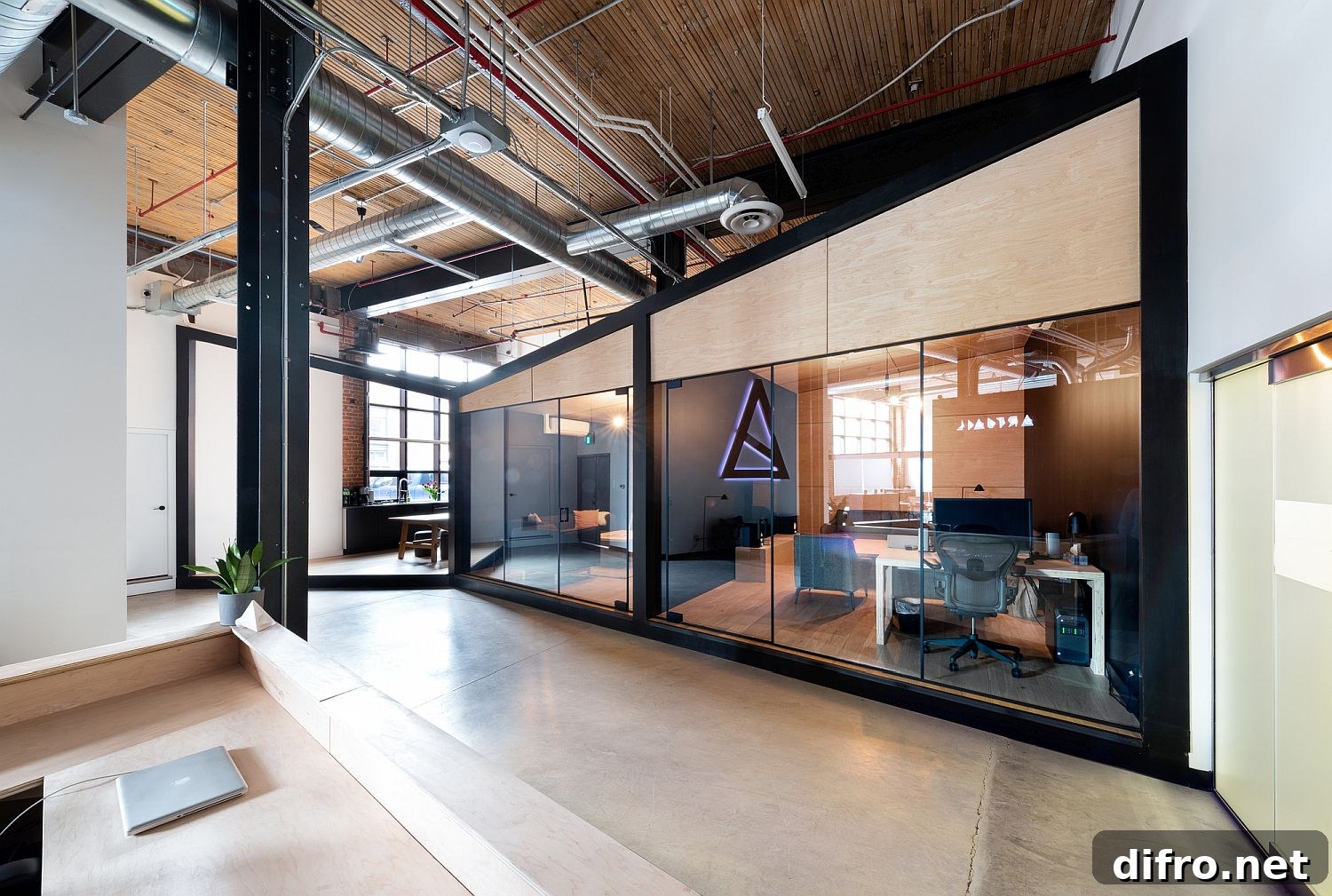
A high-end VFX design studio requires an architectural approach that balances technical functionality with refined aesthetics, and StudioAC achieves that balance with the ARTJAIL Offices in Toronto. The renovated space preserves the building’s original industrial bones—brick walls, exposed timber ceilings and structural metal—while layering contemporary finishes and thoughtful detailing. New volumes were introduced into the floorplate to create enclosed VFX suites and meeting rooms, which are separated from open-plan work areas by full-height glass partitions that maintain visual connectivity while providing acoustic privacy.
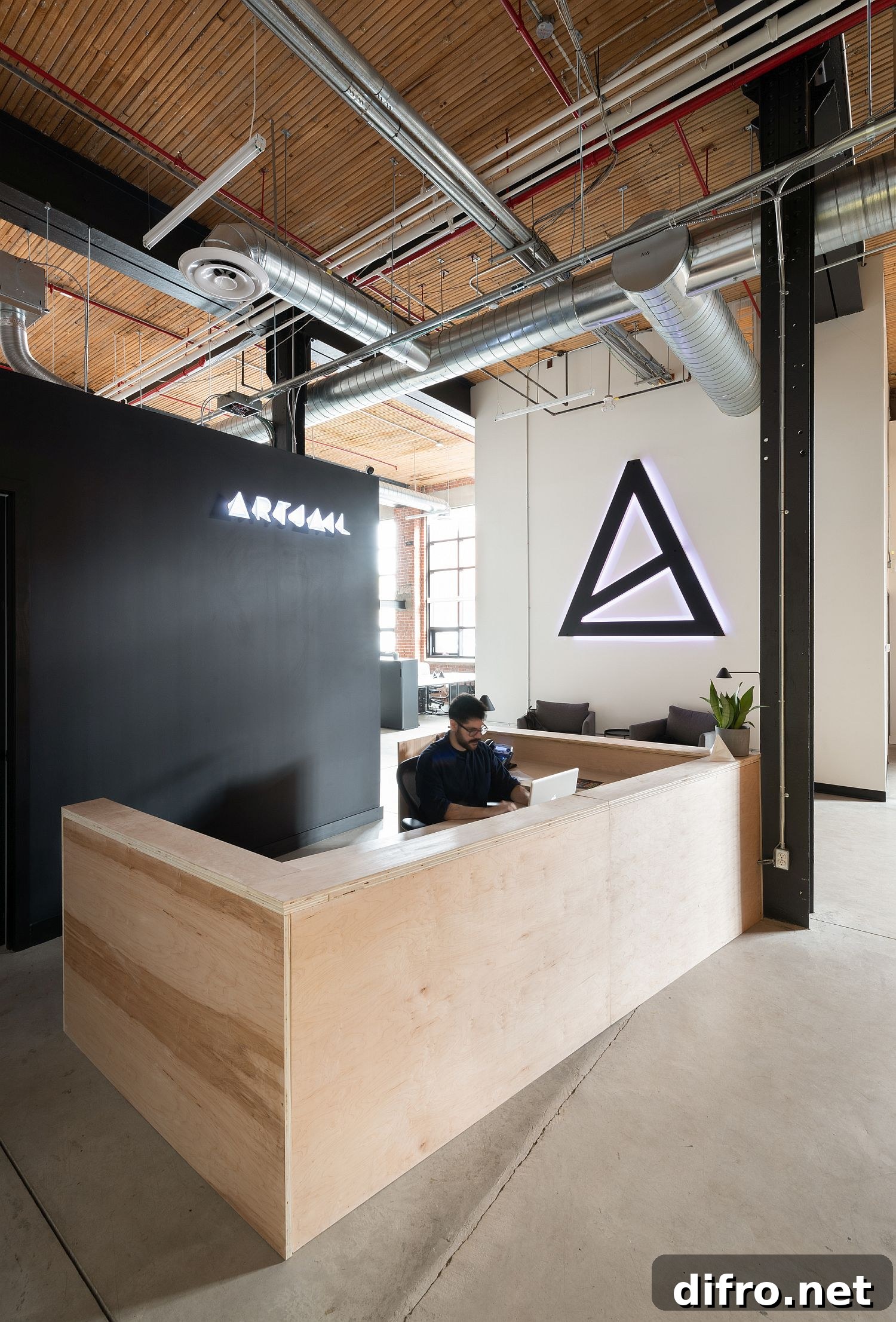
The interior palette relies on a restrained contrast of white and dark gray tones, anchored by black accents and the warm texture of natural wood and exposed brick. Large, strategically placed windows flood workstations and communal areas with daylight, reducing the need for artificial lighting and reinforcing the studio’s focus on visual clarity. Custom reception elements and backdrop installations provide a strong identity on arrival, while modular furniture and flexible layouts support the collaborative workflows typical of a VFX studio.
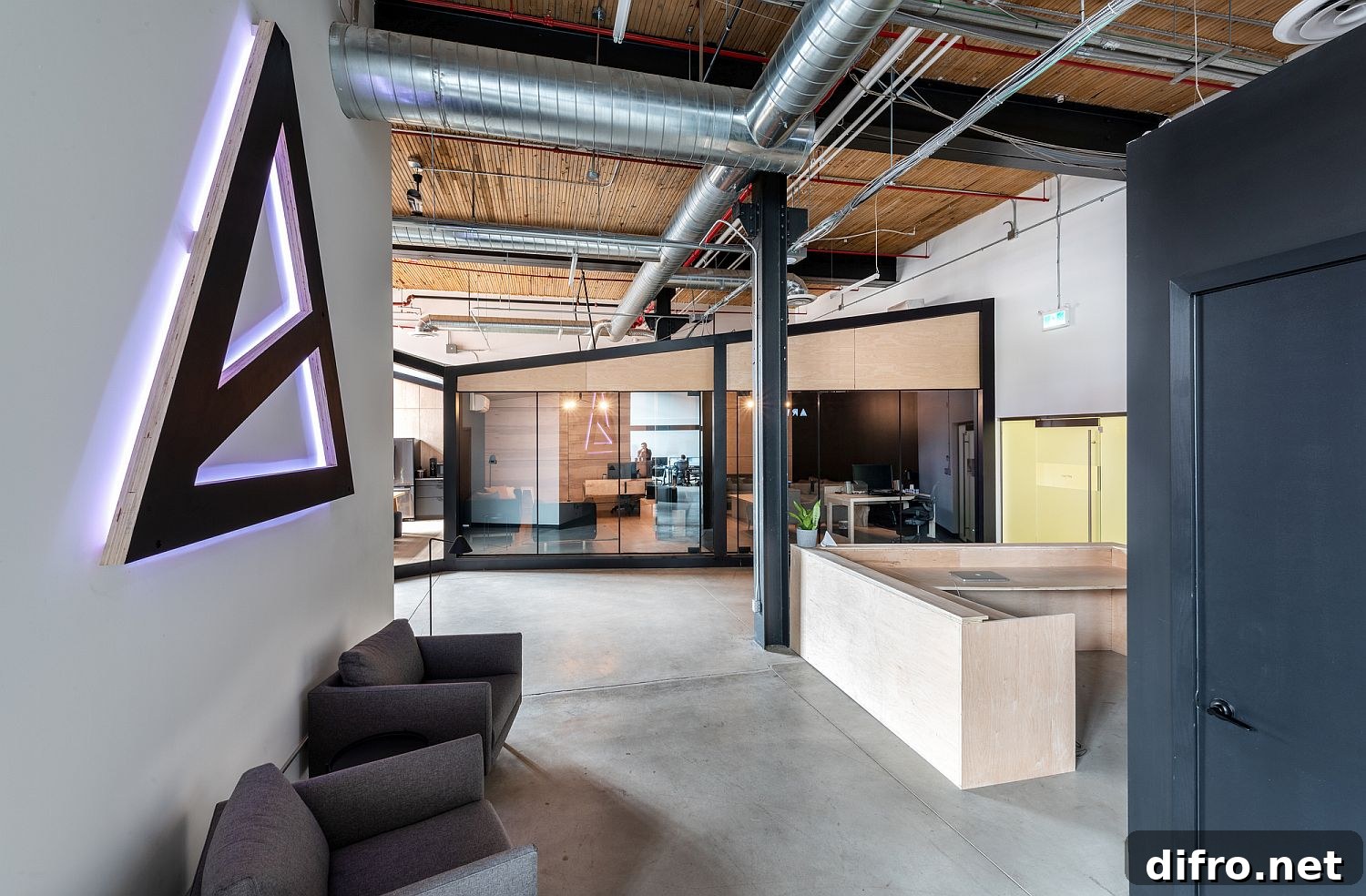
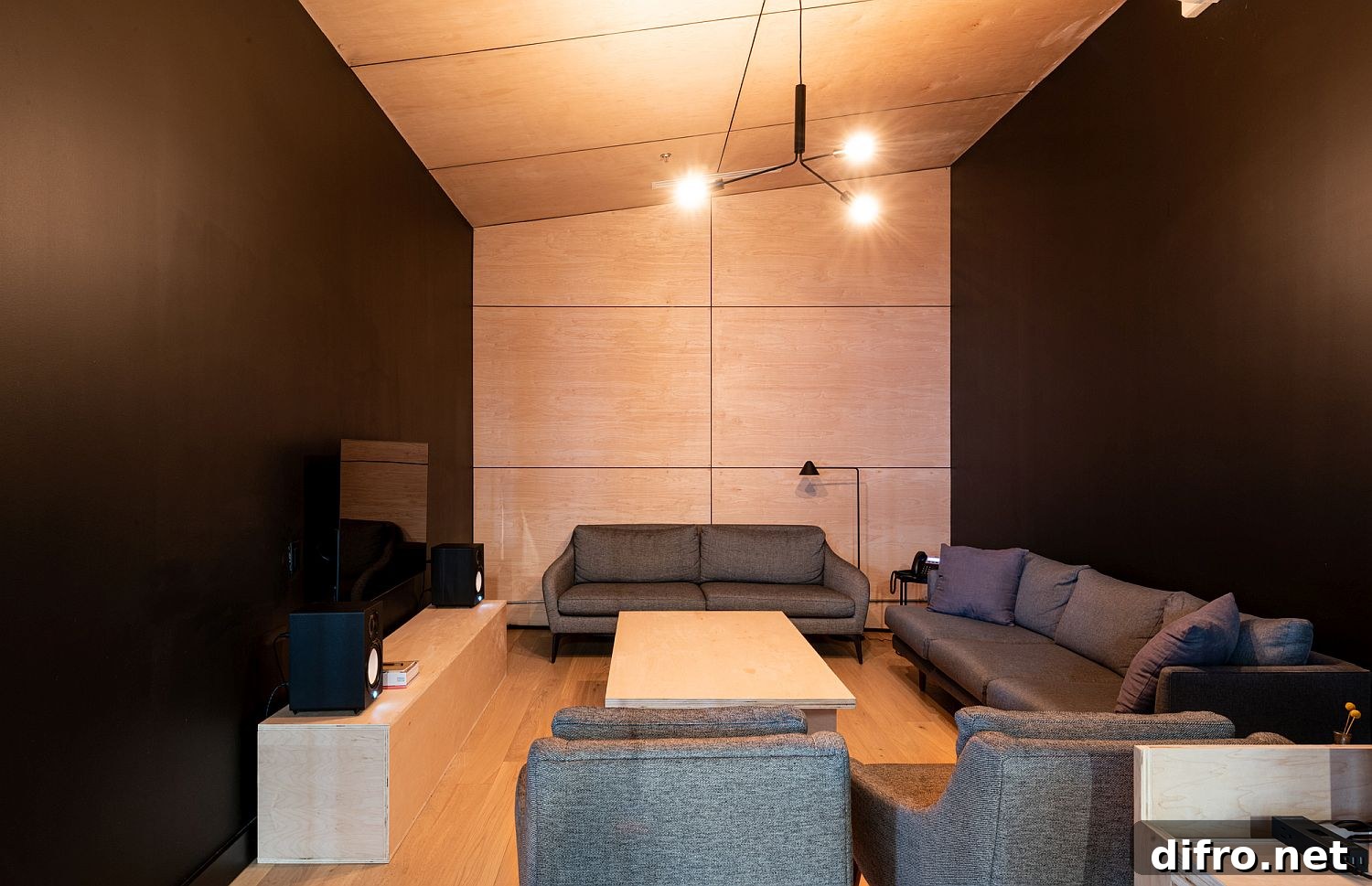
The designers integrated bespoke VFX suites directly into the architecture, treating them as sculptural elements that contain technical infrastructure while contributing to the overall composition. Sliding glass doors and glazed partitions create a sequence of transparent thresholds that allow daylight to travel deep into the plan, and they also allow supervisors and artists to maintain sightlines between separate working zones. The result is a workplace that feels open and connected without sacrificing the controlled environments required for color-critical and technical tasks.
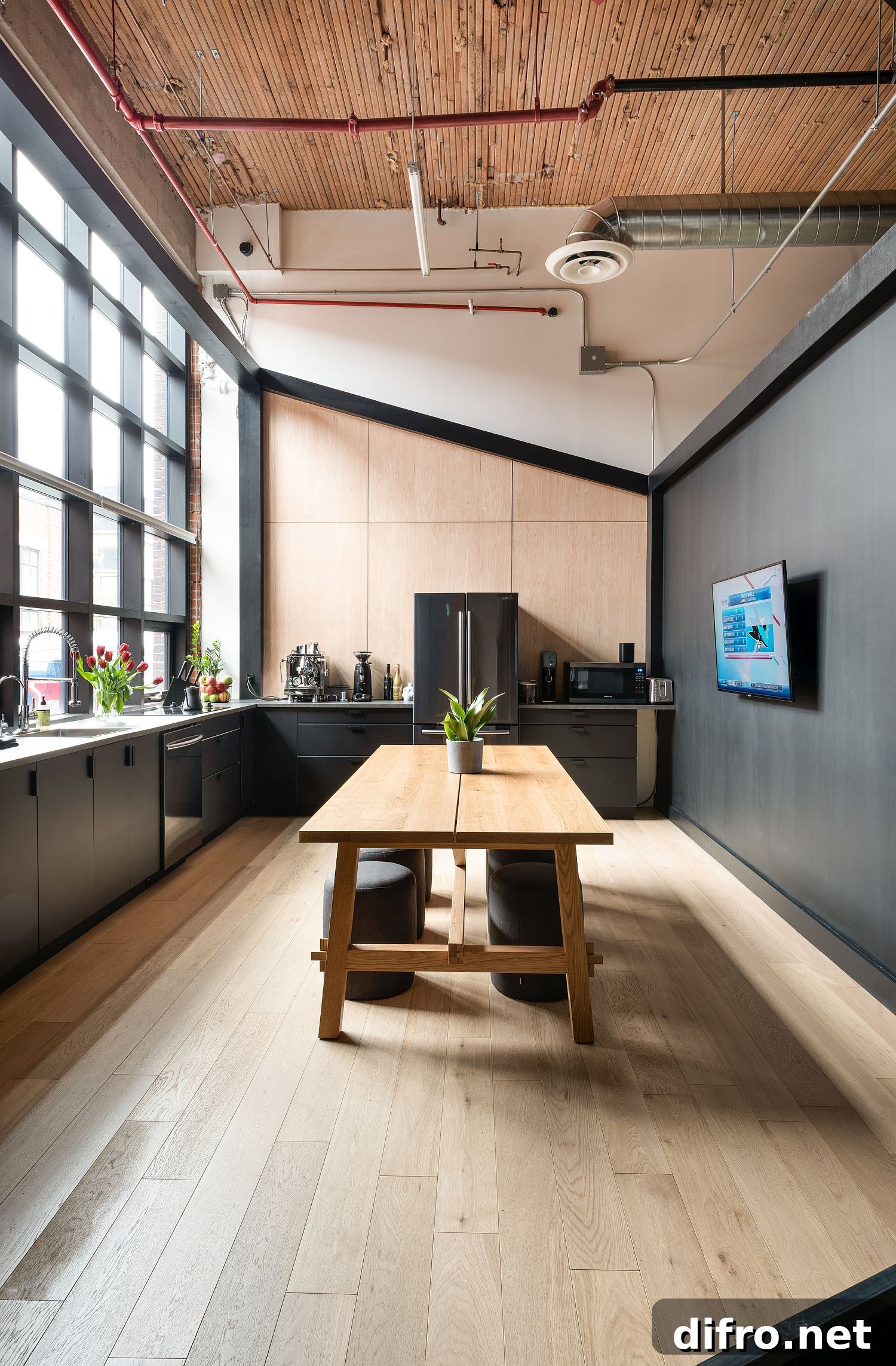
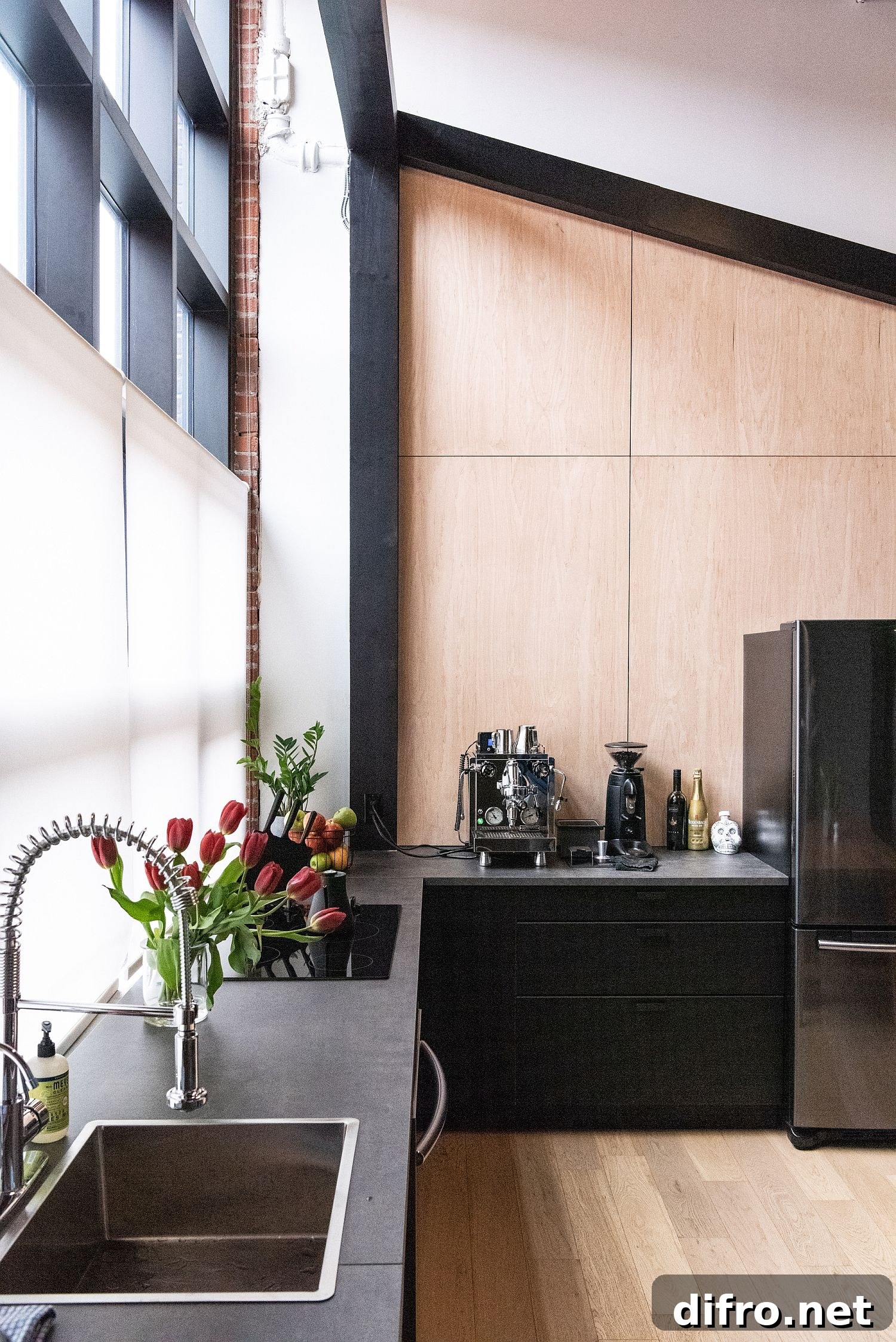
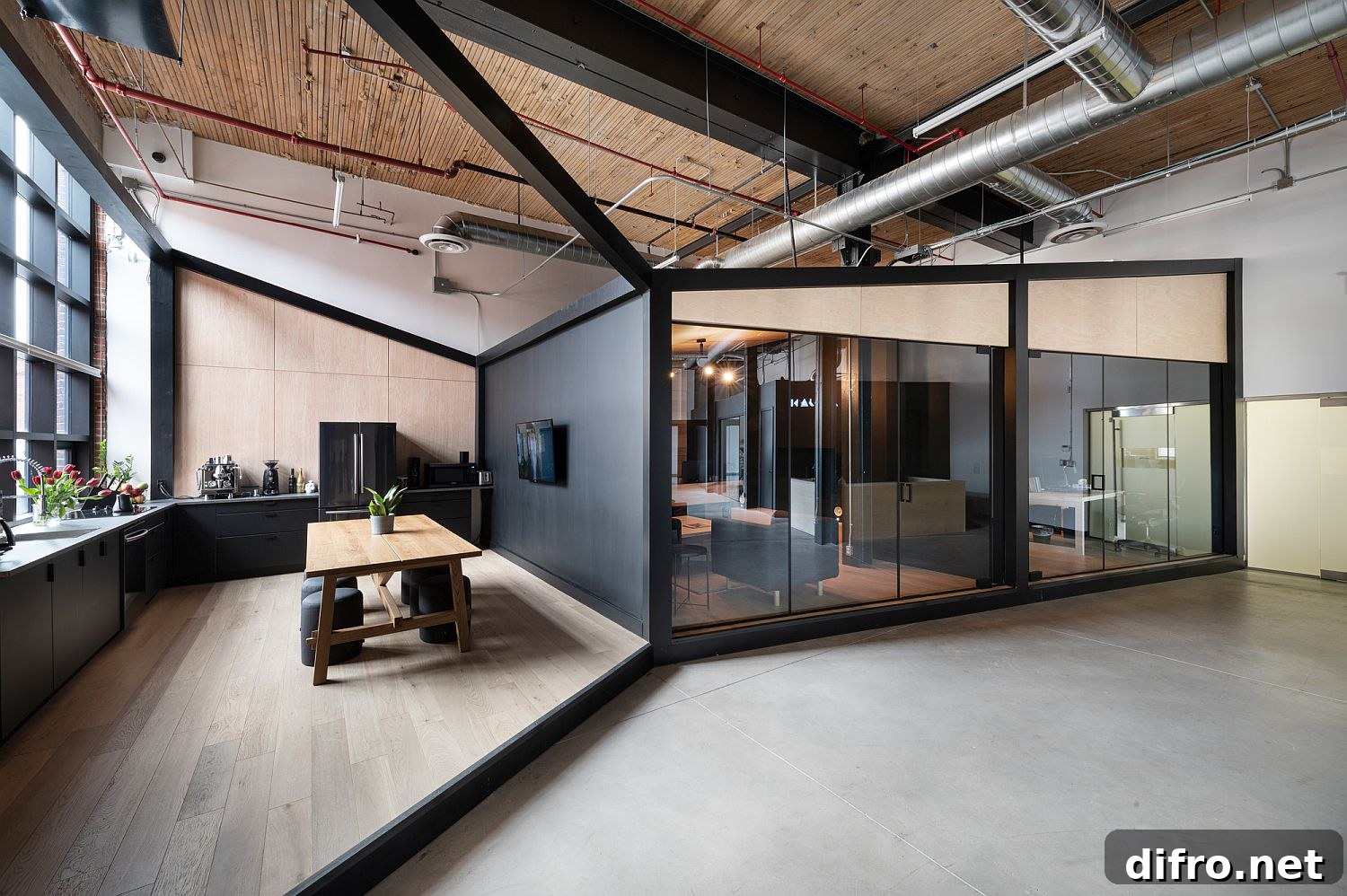
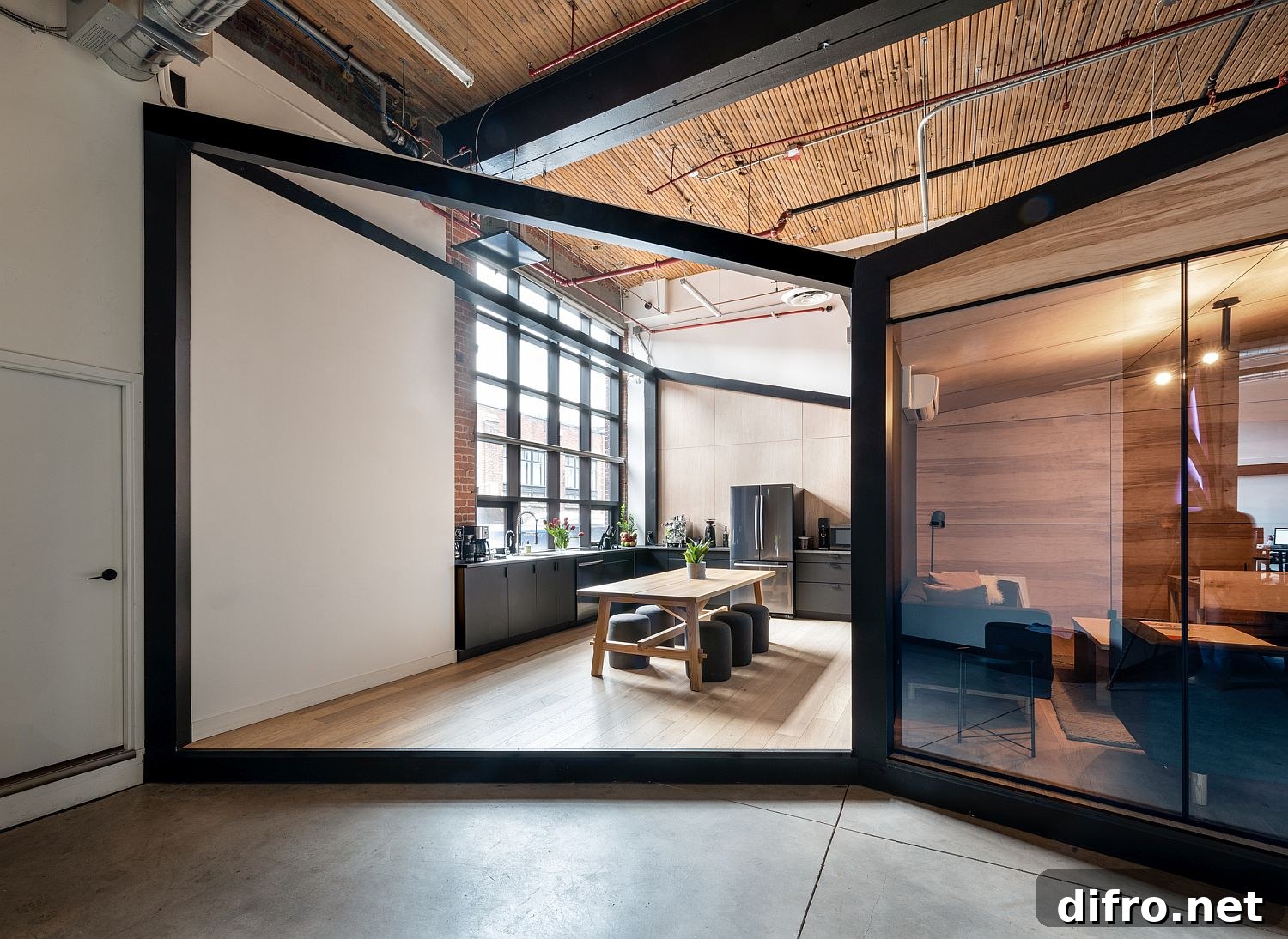
The kitchen and meeting area form a multi-purpose hub where informal gatherings, production reviews and client meetings can take place. Designed to match the office’s darker tonal accents, the kitchen combines clean cabinetry with durable surfaces and generous daylight. This central “social” space reinforces team culture and provides a comfortable setting for creative exchange, while carefully placed acoustic treatments help contain noise from collaborative activity.
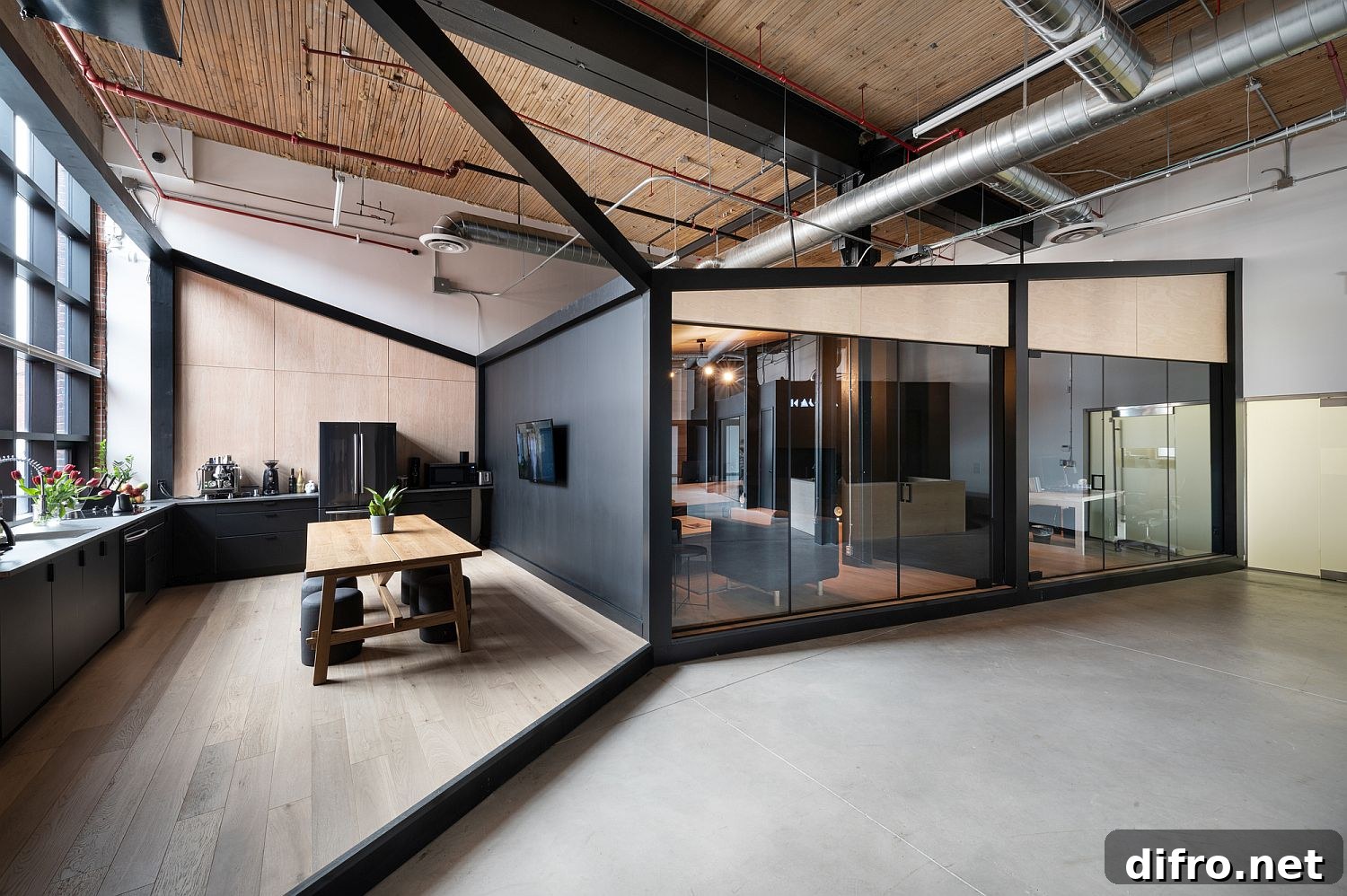
Through a rigorous study of plan, function and form a concept that housed two of the VFX suites and a kitchen/meeting space into one architectural gesture was chosen. This element presents itself immediately when guests and staff enter the space acting as the functional and visual identity of the space.
Materiality plays a central role in communicating the studio’s character. Raw brick and warm timber surfaces contrast with painted metal and dark millwork to create a layered, tactile environment. Black fixtures and trim provide definition and help visually organize the open plan, while the use of glass and light finishes keeps the overall atmosphere bright and professional. These choices emphasize both the building’s industrial heritage and the studio’s contemporary technical demands.
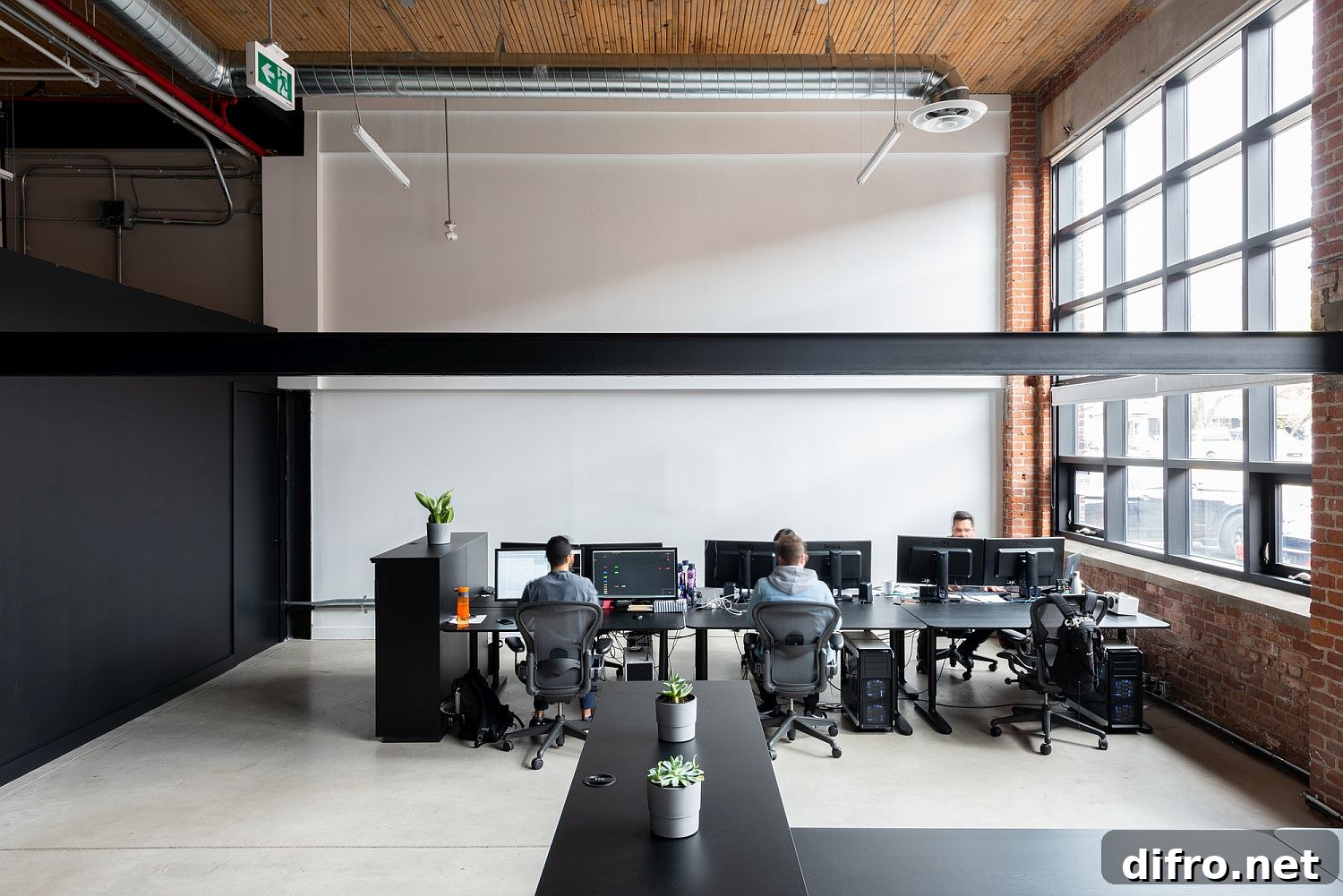
Functionally, the layout supports the specialized needs of a visual effects workflow: clear zones for focused, technical work; collaborative bays for creative reviews; and private rooms for client meetings or color grading. Thoughtful lighting design and daylight integration help ensure consistent color perception, while acoustic planning preserves concentration without isolating teams. The project demonstrates how careful architectural gestures—integrating form, function and material—can transform an industrial shell into a refined, highly functional creative workplace.
Photography: Jeremie Warshafsky
RELATED: A World of Color and Creative Design: Modern Industrial Office in Armenia
RELATED: Polished Minimalism Meets Rugged Industrial Past Inside this Vancouver Office