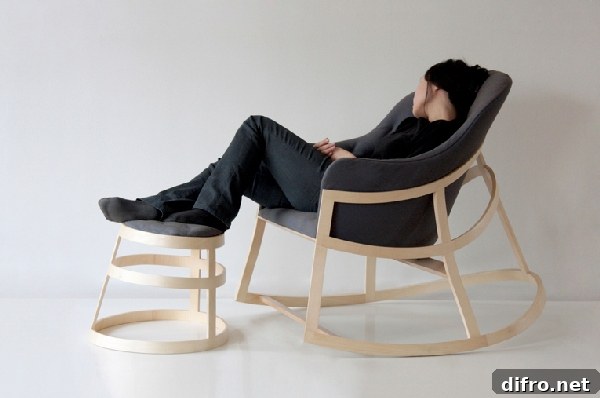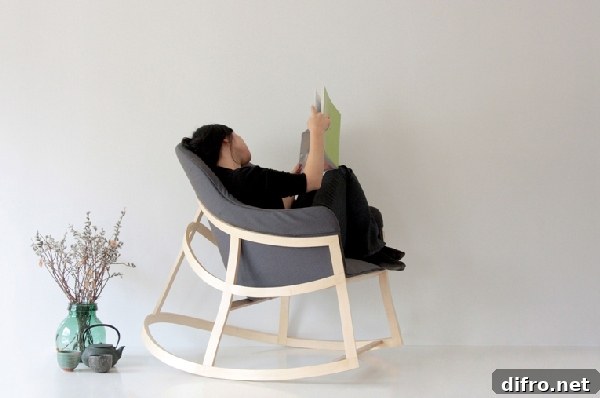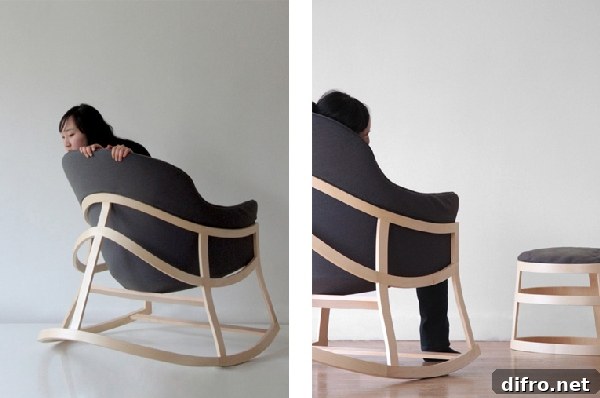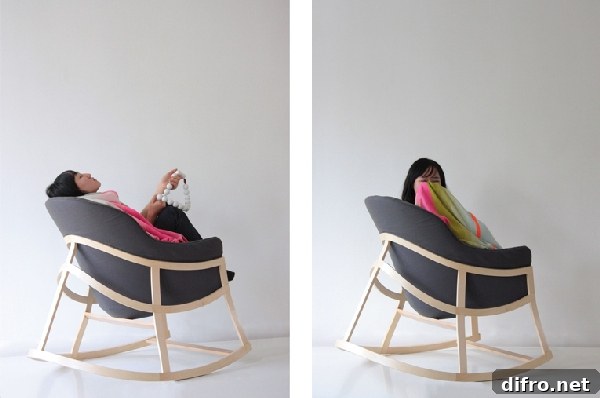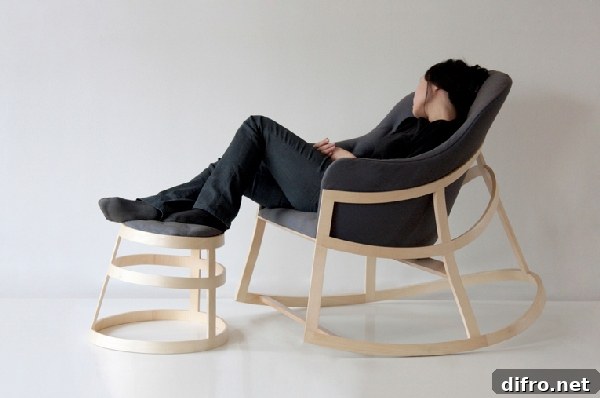
Constance Guisset’s Dancing Chair is a contemporary reinterpretation of the classic rocking chair, combining the comfort of a lounge seat with a sculptural, dynamic aesthetic. This piece translates movement into form: sweeping lines and subtly curved elements create the impression that the chair is poised to sway, lending both visual energy and a relaxed, inviting presence. Accompanied by a small, slightly slanted stool that complements the overall silhouette, the Dancing Chair reads as a coherent design ensemble that balances functionality and visual poetry.
Design and Construction
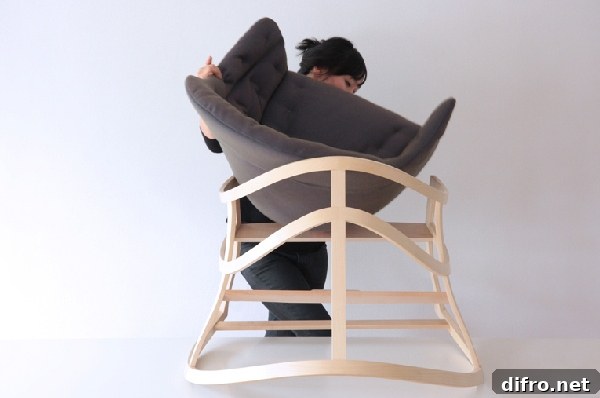
The lower structure of the chair is defined by gently bent wooden elements that form a rhythmic, undulating base. These curved supports are not merely decorative; they supply the piece with its characteristic motion and stability, allowing the seat to cradle the sitter while suggesting momentum. The upholstered seating unit rises from this wooden foundation as a soft, shell-like form, enveloping the occupant with a sense of cocooning comfort. Together, the wooden base and the padded shell create a harmonious contrast of hard and soft materials, of structural clarity and tactile warmth.
Comfort and Experience
At its core, the Dancing Chair is designed to offer restful moments. The enveloping upholstery and ergonomic lines invite long periods of sitting, whether for reading, relaxing or quiet conversation. The stool, integrated into the overall composition through its matching angle and proportion, provides an additional point of repose for the feet or can serve as a compact side seat. The overall effect is calming and elegant: the chair provides support without visually dominating a room, and the slight inclination of the stool reinforces the sense that its motion is part of the design language.
Where to Place the Dancing Chair
This armchair adapts well to a variety of interiors. Its refined silhouette suits a minimalist living room or a contemporary bedroom corner, while its expressive lines can also become a focal point in an eclectic space. Consider placing it near a window, beside a low bookshelf, or in a reading nook where the shell-like seat can create a private, comfortable alcove. If floor space is limited, the chair’s compact footprint and the small accompanying stool mean it can fit comfortably into cozy apartments without sacrificing style or comfort.
Styling Tips
Because of its sculptural quality, the Dancing Chair works well with both neutral and bold palettes. In a neutral interior, it will emphasize form and texture—let the upholstery and wood grain take center stage. In a more colorful setting, the chair can either blend as an understated anchor or stand out as a signature piece when finished in a contrasting tone. Textural accents such as a soft throw or a small cushion can enhance comfort while preserving the clean lines of the design. Placing a discreet floor lamp or a small side table nearby will complete a practical, attractive seating area.
Practical Considerations and Care
To maintain the chair’s appearance and function, treat the upholstery and wooden elements according to their material specifications. Regular dusting and gentle cleaning will preserve the surface finish; use appropriate upholstery cleaners for occasional stains and follow any manufacturer guidelines for fabric care. For the wooden base, avoid prolonged exposure to direct sunlight and excessive moisture to prevent warping or finish degradation. When moved, lift rather than drag to protect both the chair’s structure and flooring.
Why the Dancing Chair Resonates
This design captures a delicate balance: it is at once modern and approachable, artistic yet practical. Its fluid lines evoke a sense of motion without compromising comfort or stability, making it an appealing choice for anyone seeking a distinctive armchair that supports daily use. The small matching stool reinforces the intentionality of the design and enhances functionality, turning the Dancing Chair into a versatile element for contemporary interiors.