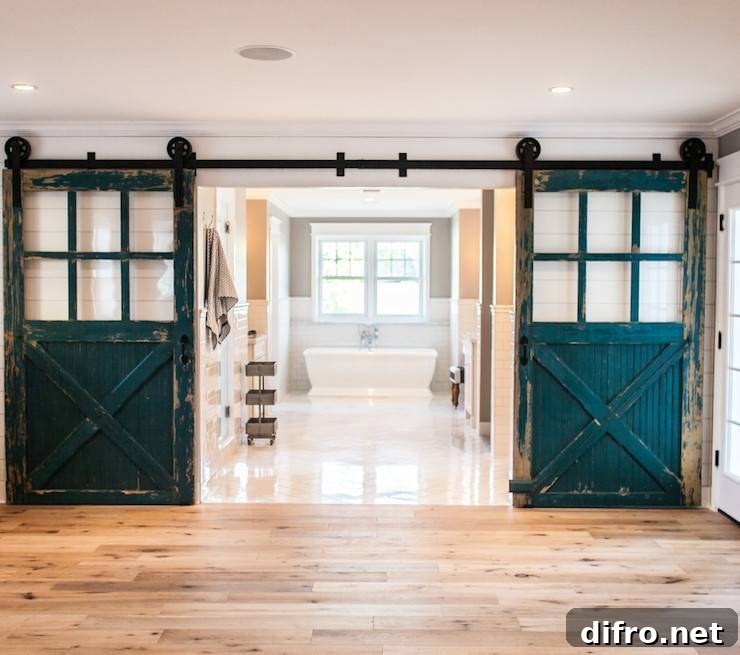
Are you frustrated with conventional bathroom doors that swing awkwardly, take up floor space, or interrupt the flow of your design? Barn doors for bathrooms offer a practical, stylish solution. Once limited to farm buildings, sliding barn doors now appear in contemporary homes as a way to add personality, save space, and create a focal point. Whether your goal is a cozy farmhouse look or a streamlined modern aesthetic, a barn door can instantly elevate your bathroom without a full renovation.
This guide explains the benefits, styles, installation considerations, privacy options, maintenance, cost factors, and creative ideas for incorporating a barn door into your bathroom design. You’ll learn how to choose the right door, measure for a proper fit, and keep it functioning and looking great for years.
Benefits of a Barn Door for Your Bathroom
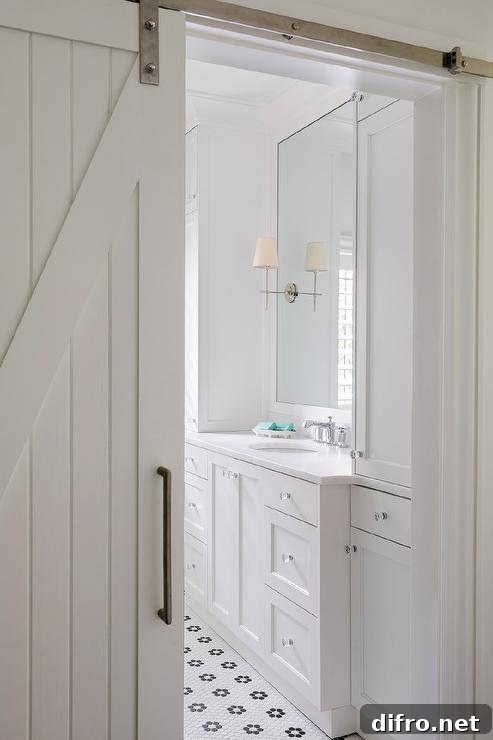
Barn doors bring several advantages compared with standard hinged doors. They save floor space because they slide along the wall rather than swinging into the room, making them especially useful in small bathrooms, tight hallways, or where a swinging door would conflict with fixtures. Beyond practicality, barn doors add visual interest and character—available in finishes that range from reclaimed wood and distressed paint to sleek metal and frosted glass. They can also improve accessibility, as sliding doors are easier to operate for people with limited mobility when fitted with smooth rollers and properly aligned hardware.
Choosing the Right Barn Door Style
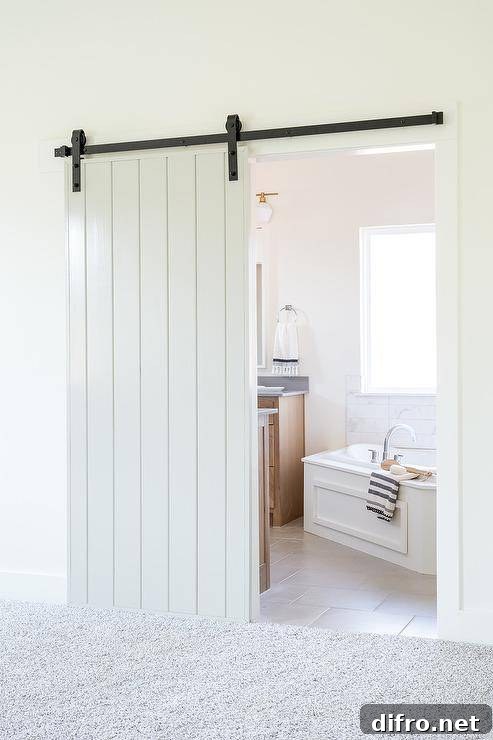
Select a style and material that complements your home and withstands bathroom conditions. Common options include:
- Reclaimed or solid wood for a warm, rustic feel—choose a moisture-resistant finish for bathrooms.
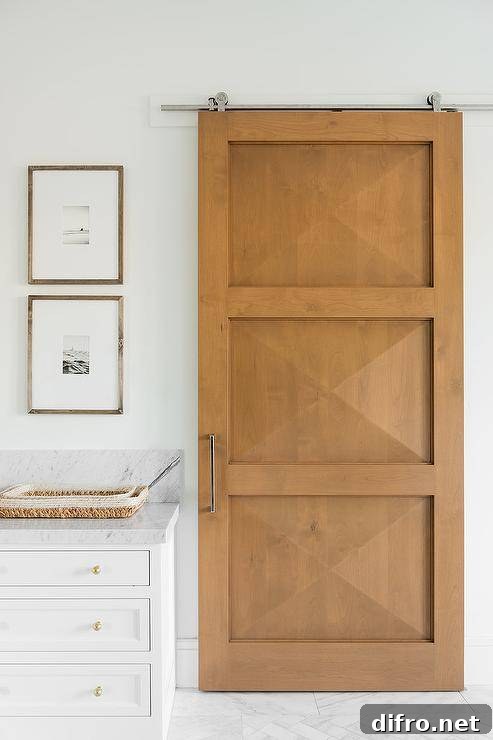
- Painted or stained smooth panels for a contemporary or farmhouse look.
- Metal-framed doors or all-metal panels for industrial or minimalist interiors.
- Doors with glass inserts—clear, frosted, or textured glass—to let light pass while maintaining a degree of privacy.
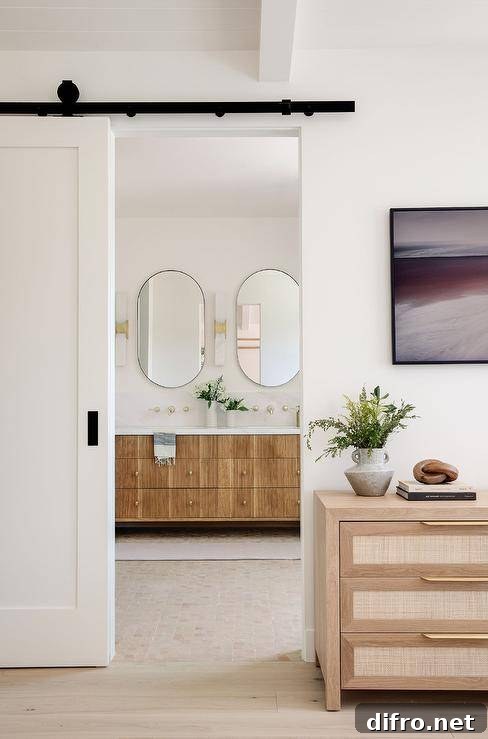
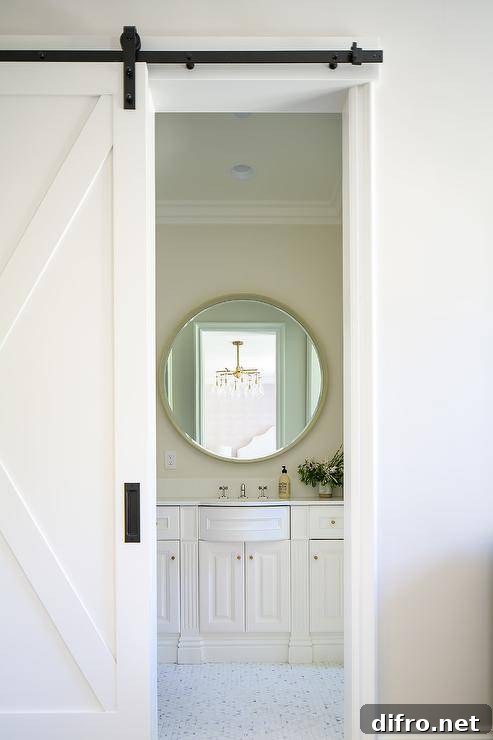
Consider the hardware finish (black steel, brass, oil-rubbed bronze) and whether you want exposed track hardware for a statement or a concealed track for a cleaner look.
Measuring for a Barn Door Installation
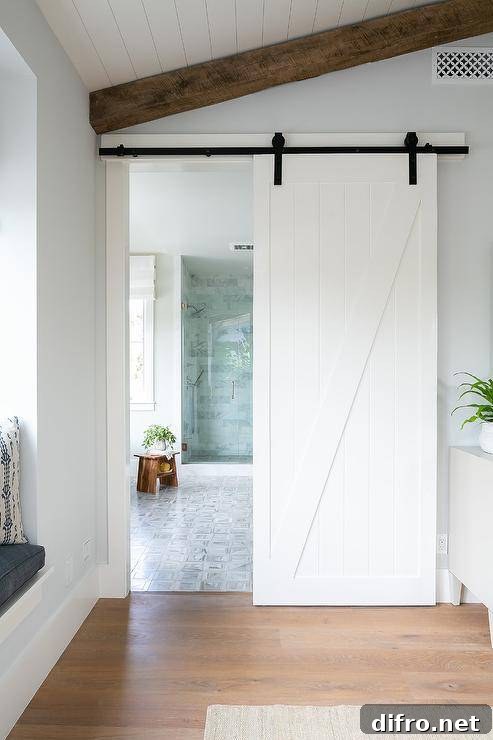
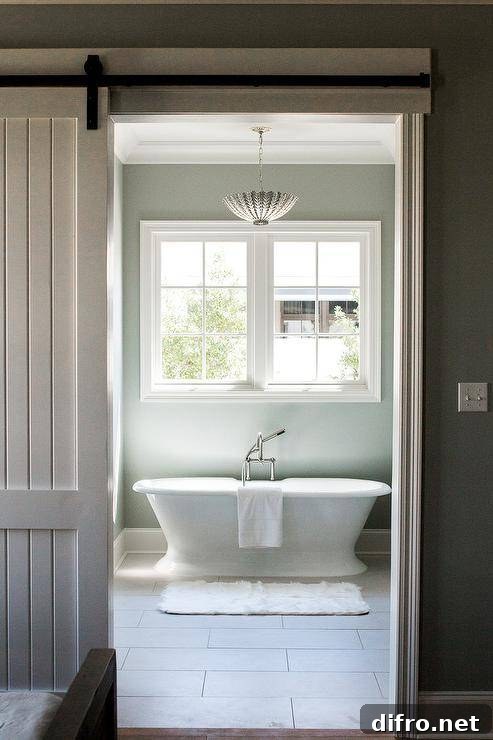
Accurate measurements are essential for a smooth installation. Measure the doorway width and height, then size the door so it overlaps the opening by at least 1 to 2 inches on each side—this helps with light and sound control. Ensure you have sufficient wall space beside the opening for the door to slide fully open; typically you need a clear wall area equal to the door’s width. Check the wall structure where you’ll mount the track—solid blocking or a header is necessary to support the door’s weight, especially for heavier wood panels. Also plan for a floor guide to prevent the door from swinging.
Privacy Considerations for Barn Doors
Because barn doors typically don’t form a tight seal, privacy and sound control can be concerns in bathrooms. Practical ways to increase privacy include adding weather stripping or felt along the vertical edges, choosing a solid or frosted door, and installing a floor sweep or threshold to reduce gaps at the bottom. You can also select a soft-close kit to prevent slamming and add a privacy latch or mortise lock designed for sliding doors.
Enhancing the Aesthetic Appeal
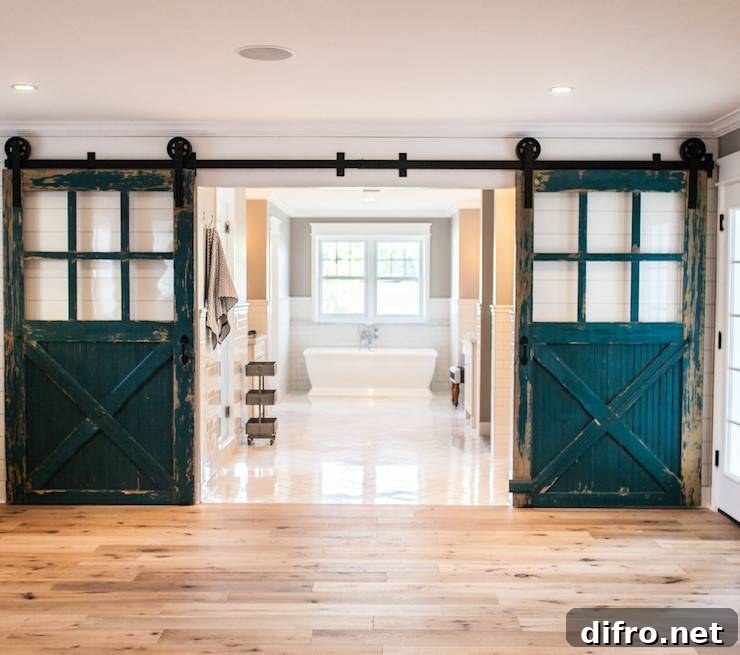
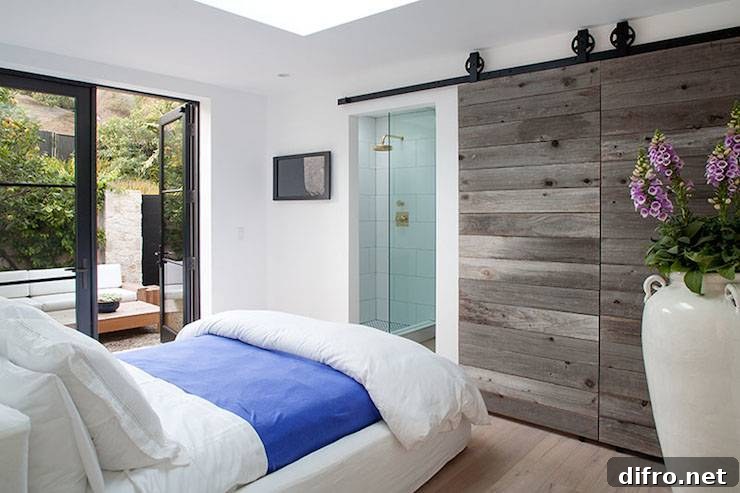
Barn doors are opportunities to make a design statement. Consider decorative hardware like oversized pull handles, strap hinges, or a contrasting track finish to complement other fixtures. Paint or stain the door to harmonize with tiles, cabinetry, or vanity finishes. For a unique look, use glass panels, inlays, or patterned veneers. A well-chosen barn door can become a focal point that ties the bathroom to the rest of the home’s style.
Maintenance Tips for Barn Doors
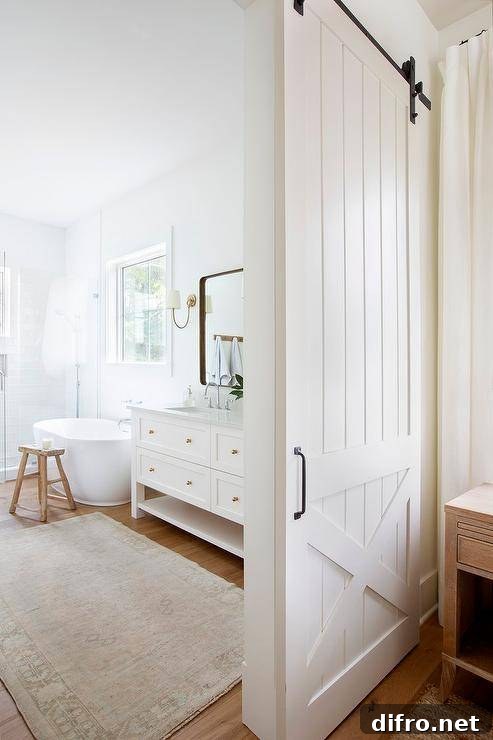
Regular maintenance keeps a barn door operating smoothly. Clean the track and rollers to remove dust and grit, inspect and tighten mounting hardware occasionally, and apply a silicone-based lubricant to rollers if movement feels stiff. In humid bathrooms, choose rust-resistant hardware and sealed finishes, and address any water exposure quickly to prevent warping or finish damage.
Cost Considerations
Costs vary based on materials, door size, hardware quality, and whether you hire a professional for installation. Ready-made kits and DIY doors are typically more affordable, while custom-made doors, high-end hardware, and professional mounting add to the expense. Factor in the cost of wall reinforcement, special finishes for humidity resistance, and any privacy-enhancing additions like seals or frosted glass.
Creative Design Ideas
Some creative ways to use barn doors in bathrooms:
- Pair matching barn doors for a double entry to a master bathroom or closet.
- Combine glass panels with wood frames for light-filled spaces that still feel private.
- Use a contrasting door color to create a bold accent wall.
- Install a pocket-style barn door that tucks behind a wall panel when open for a hybrid look.
Related Articles
- Dreamy doorless walk-in shower ideas
- Stylish half-bathroom decor to maximize space
- En suite bathroom essentials and design trends
Incorporating a barn door into your bathroom is a practical, design-forward choice that can conserve space, add character, and improve functionality when chosen and installed thoughtfully. With the right materials, hardware, and maintenance, a barn door can be a long-lasting and attractive part of your home.
Subscribe to a newsletter for curated design tips, trends, and project ideas to help refresh your home.
Frequently Asked Questions (FAQs)
Can I install a barn door in a small bathroom?
Yes. Because barn doors slide along the wall instead of swinging open, they free up floor space and work well in compact bathrooms.
How do I ensure privacy with a barn door?
Add weather stripping or felt to the door edges, install a floor sweep, choose frosted or solid materials, and consider a sliding door latch or lock designed for privacy.
Are barn doors difficult to install?
Installation requires accurate measurements, wall reinforcement where the track mounts, and the right tools. Many homeowners succeed with DIY kits, but professional installation reduces the risk of alignment problems.
What materials are best for a bathroom barn door?
Wood, metal, and glass are common choices. For humid bathrooms, use sealed or engineered wood, rust-resistant hardware, or glass panels to ensure longevity.
How much does a barn door cost?
Costs vary widely depending on material, hardware, size, and installation. DIY solutions are typically less expensive; custom doors and professional installation increase the price but offer tailored results.
How do I maintain a barn door?
Keep the track clean, inspect and tighten hardware regularly, lubricate rollers as needed, and protect the finish from moisture. Routine care will keep the door operating smoothly for years.