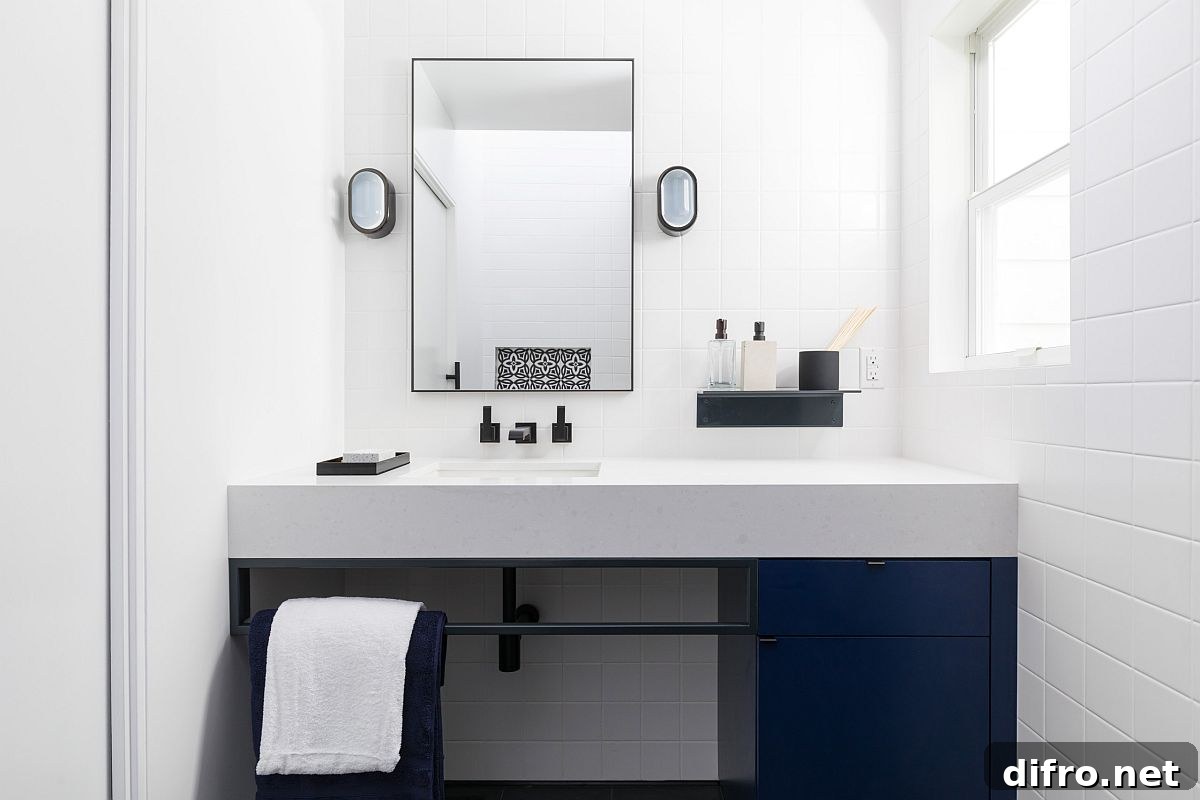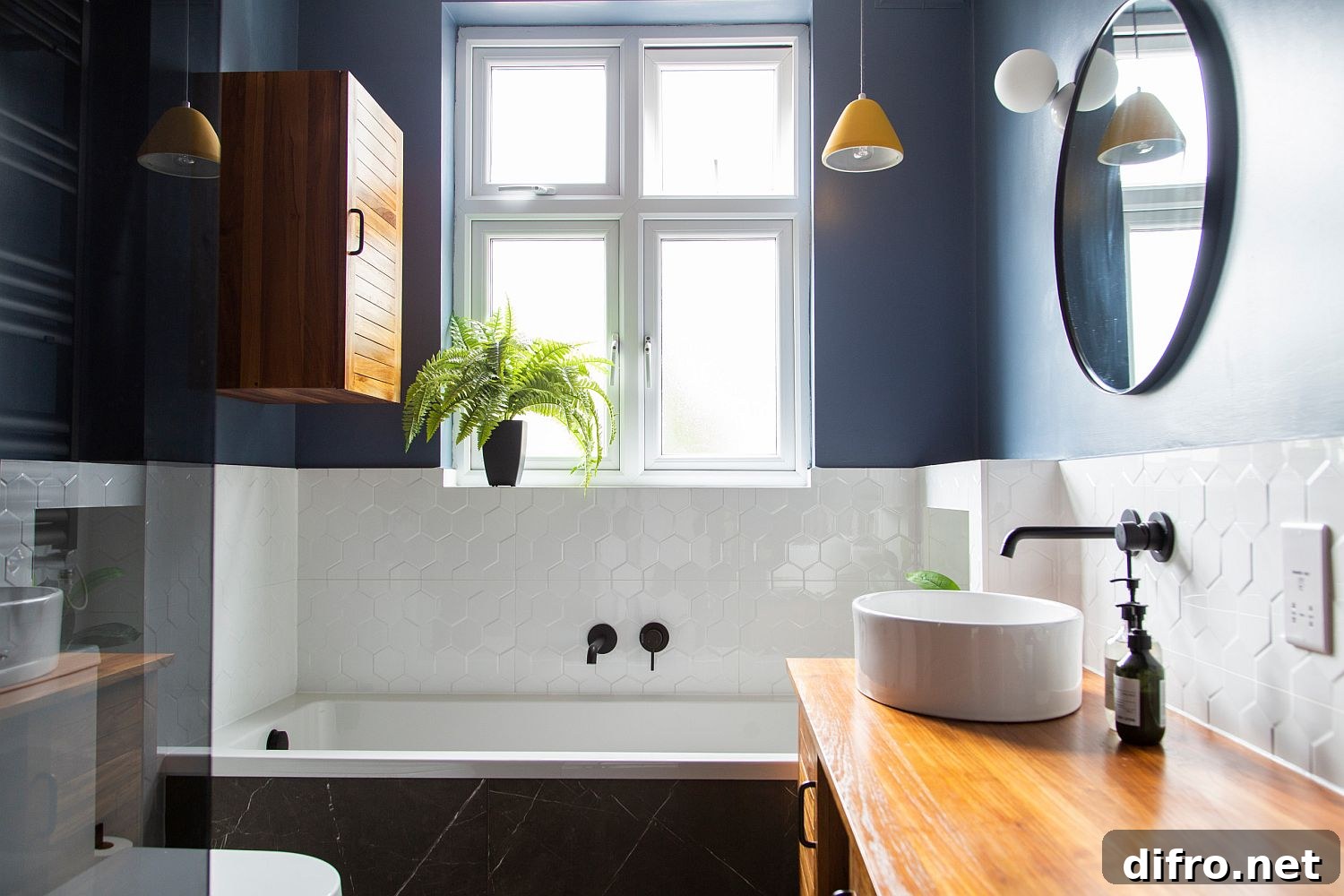
Some color combinations ebb and flow with trends, while others remain timeless. If you had to pick a pairing that consistently transcends styles and eras, blue and white would top the list. Each season brings new palettes and finishes, but blue’s popularity across bathrooms, kitchens and living areas persists year after year. White provides a natural, neutral balance to blue and together they form a versatile scheme that adapts to nearly any design direction.
It’s easy to see why blue and white resonate so widely: the combination mirrors elements we associate with calm and clarity — clear skies, open water and sunlit sand. Beyond the emotional appeal, the pairing is highly adaptable. In small bathrooms, blue and white can make a compact space feel fresh, light and expanded when used thoughtfully. Below we explore practical approaches and inspirational ideas for creating beautiful small bathrooms in blue and white.
A Balance between the Two
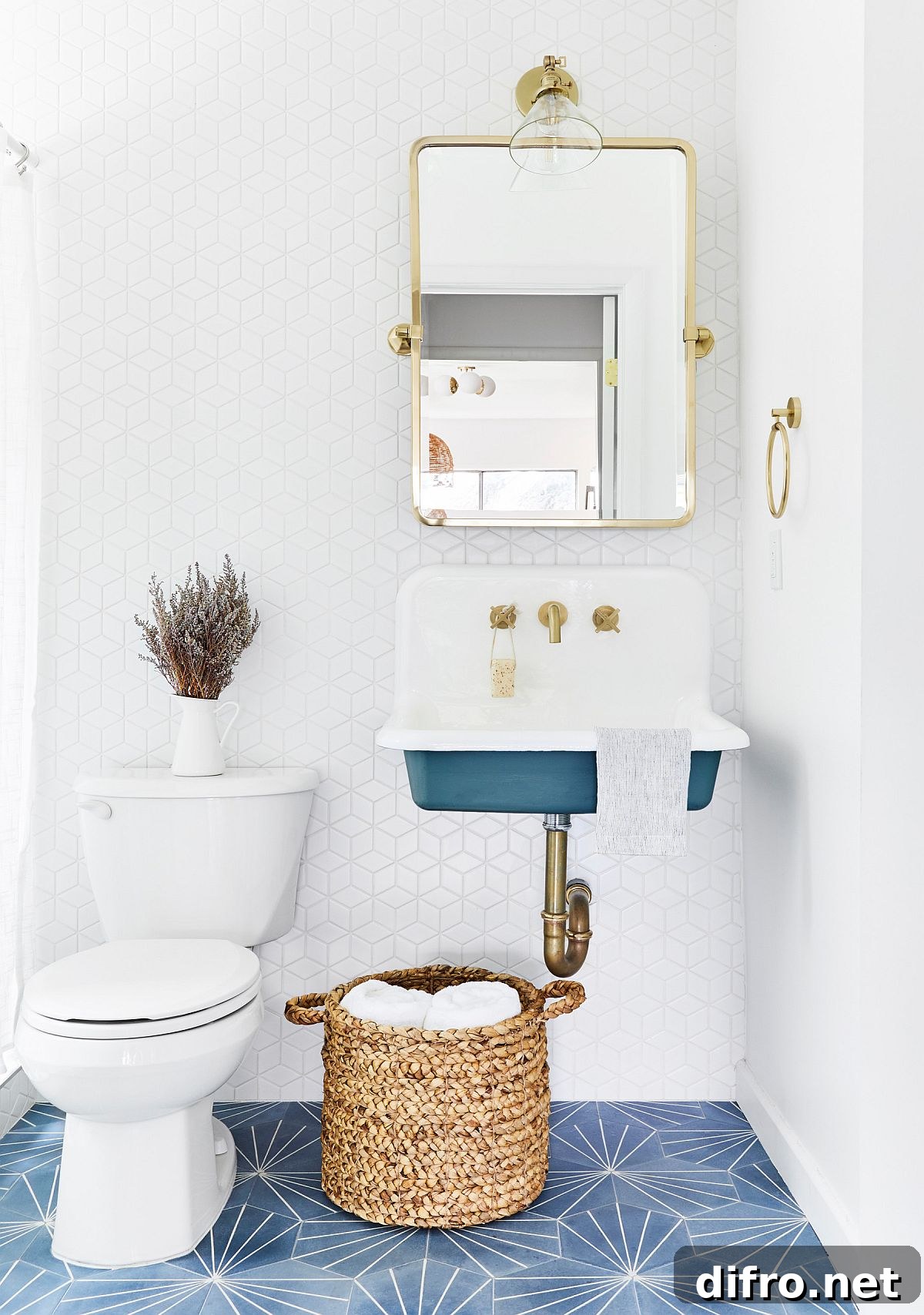
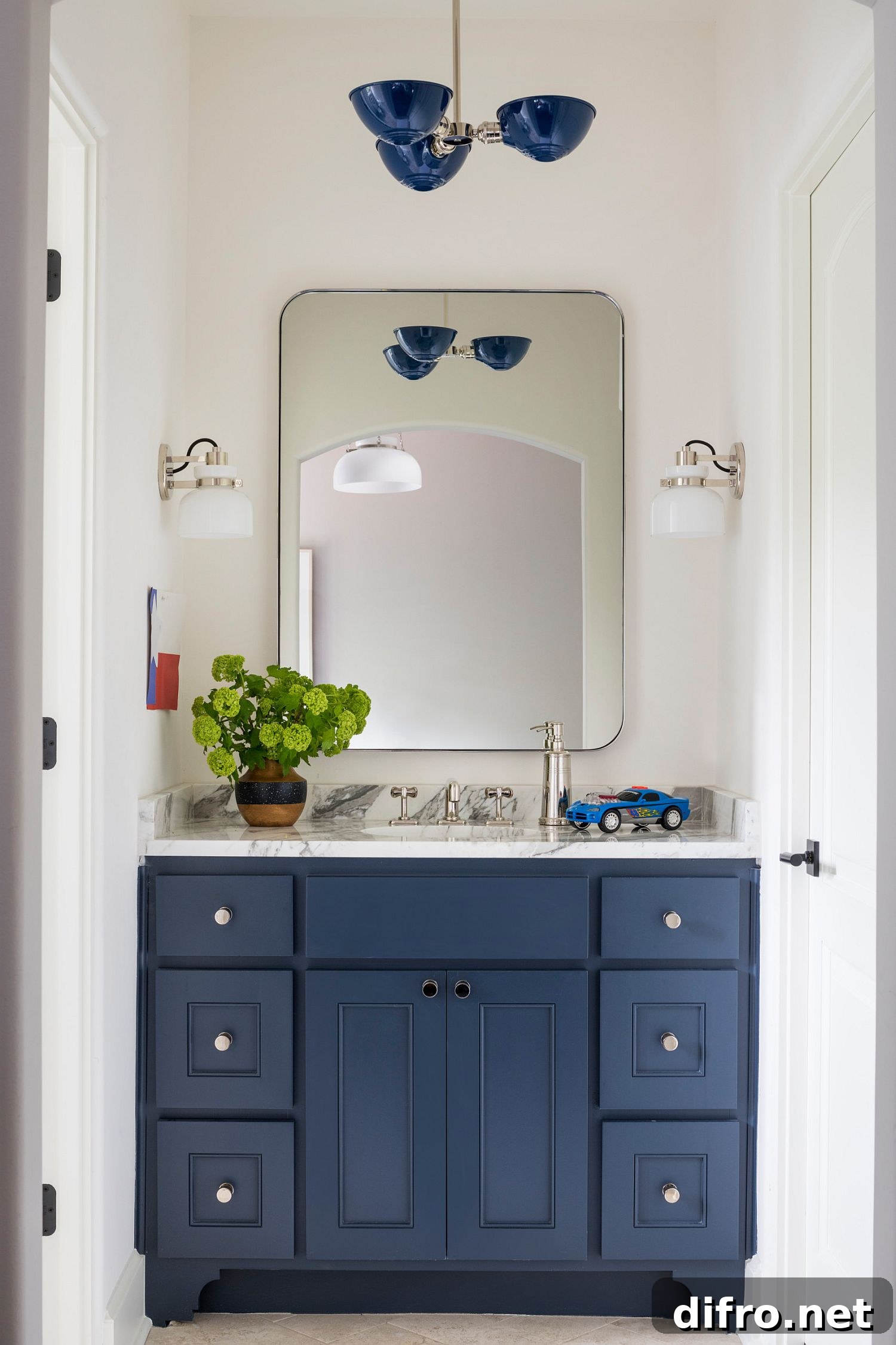
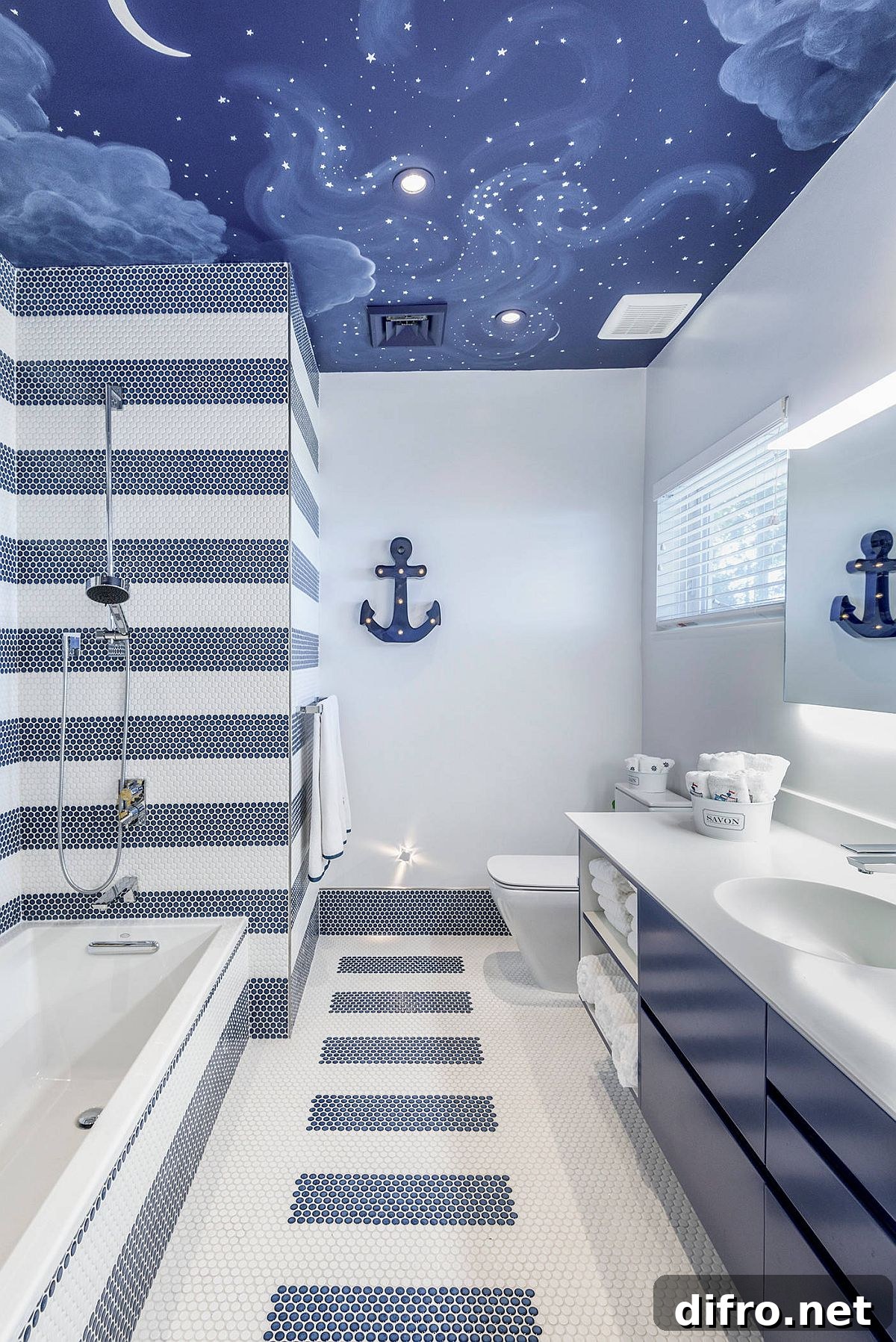
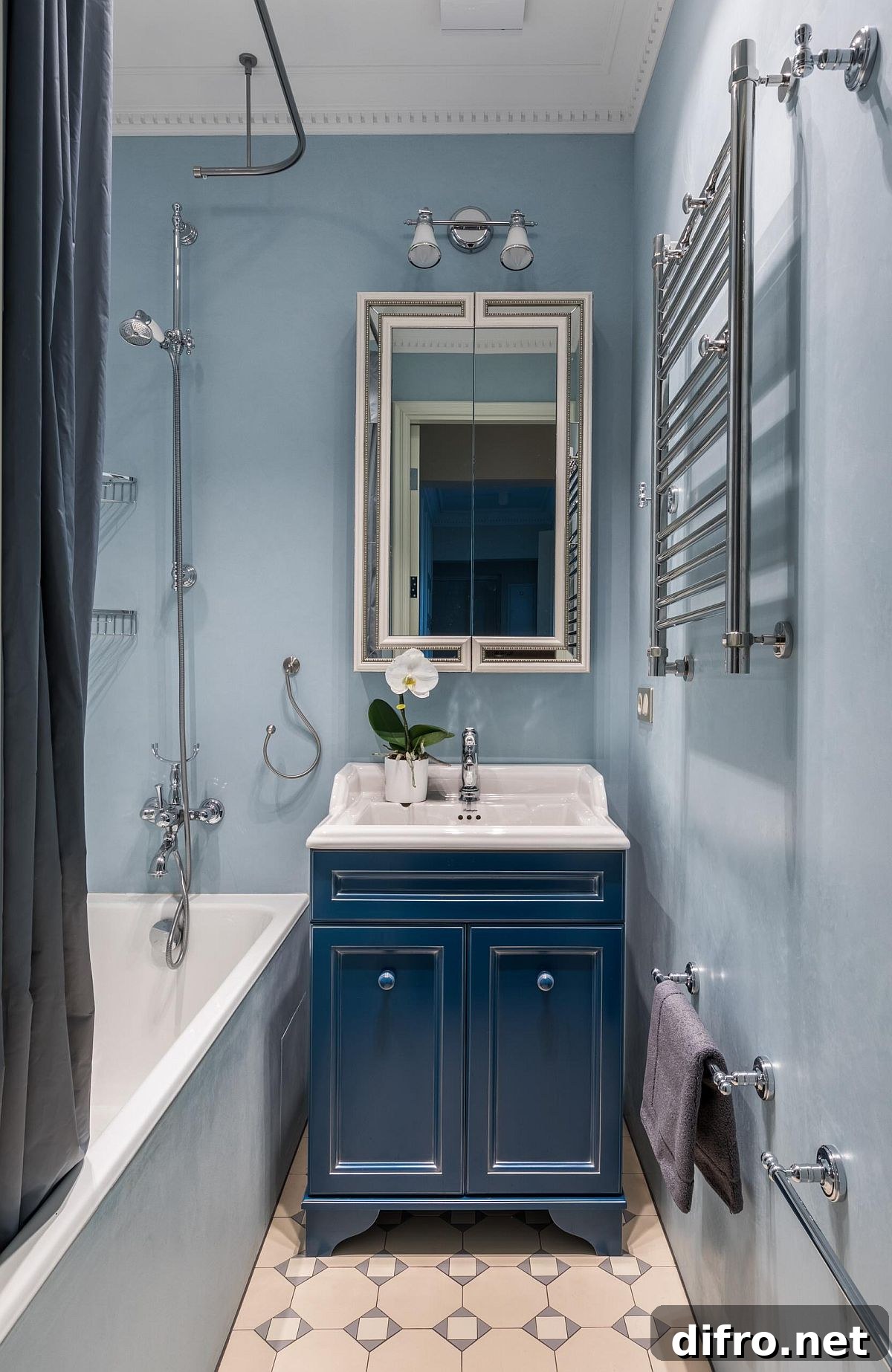
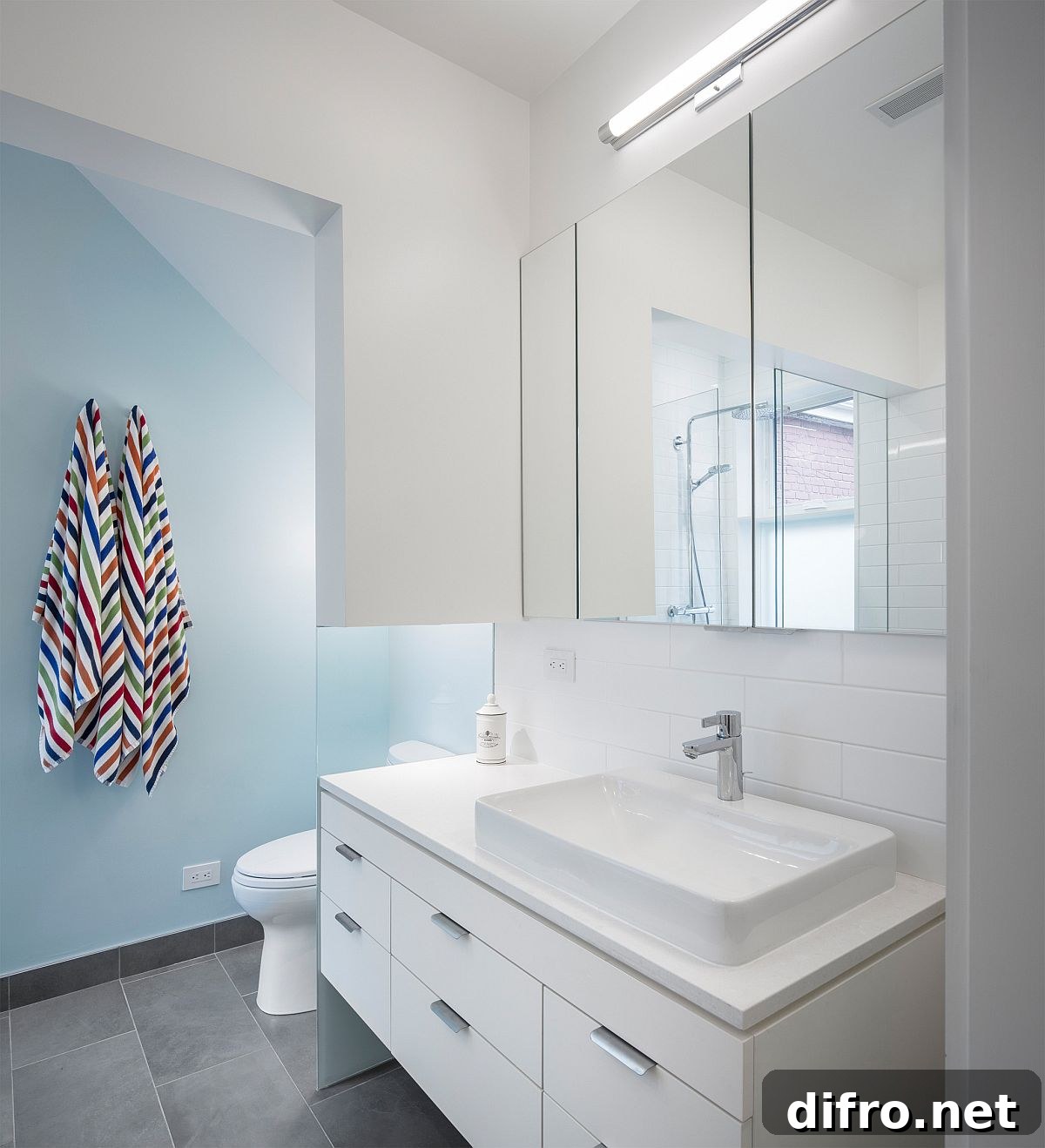
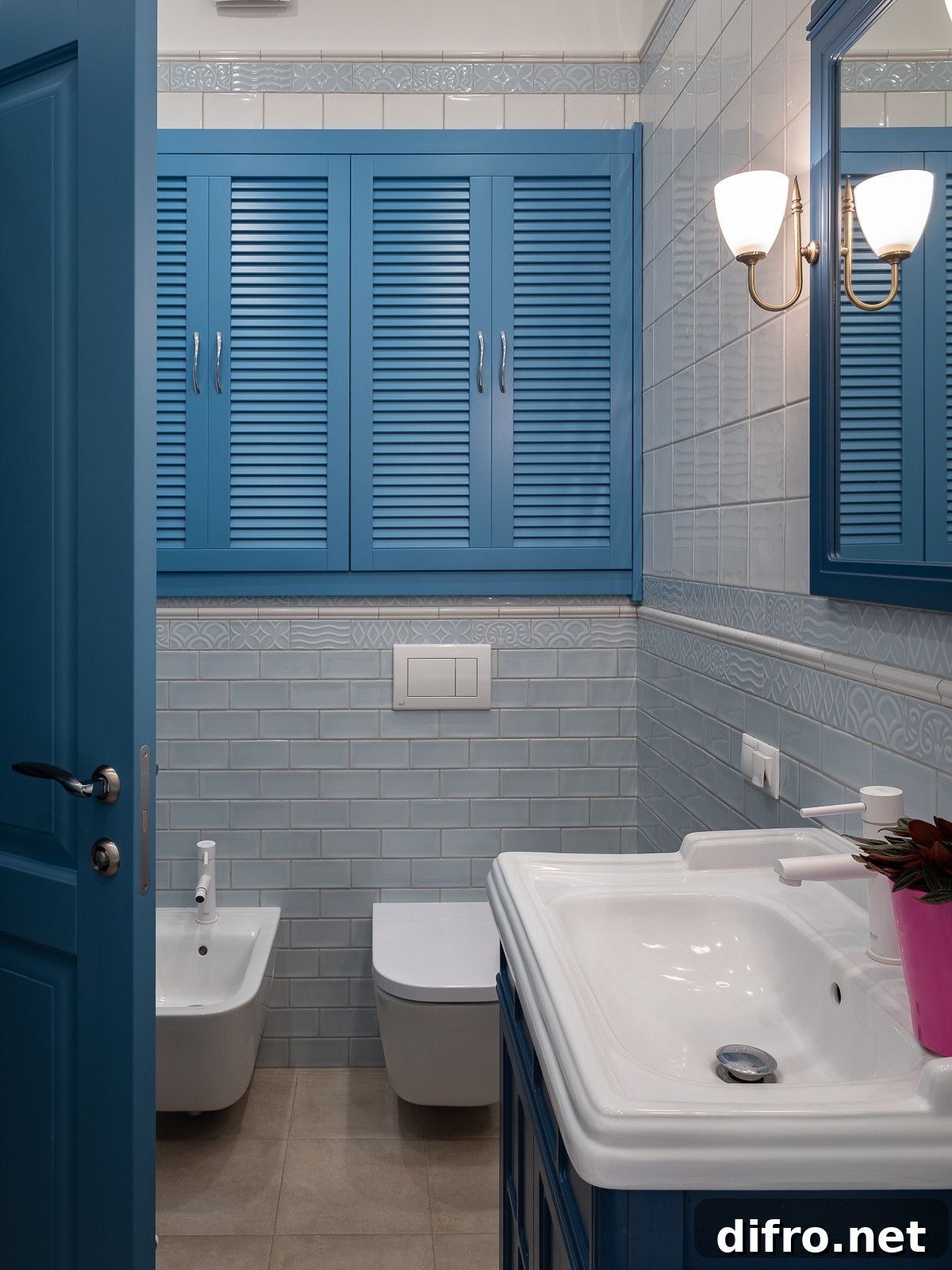
Start by deciding the overall relationship between the two colors. If your bathroom is primarily white, introduce blue as accents — towels, a vanity, trim, or a single tiled wall — to achieve visual interest without overwhelming the space. When the backdrop is predominantly blue, use white to highlight fixtures, trim, and architectural details so they stand out and keep the space feeling airy.
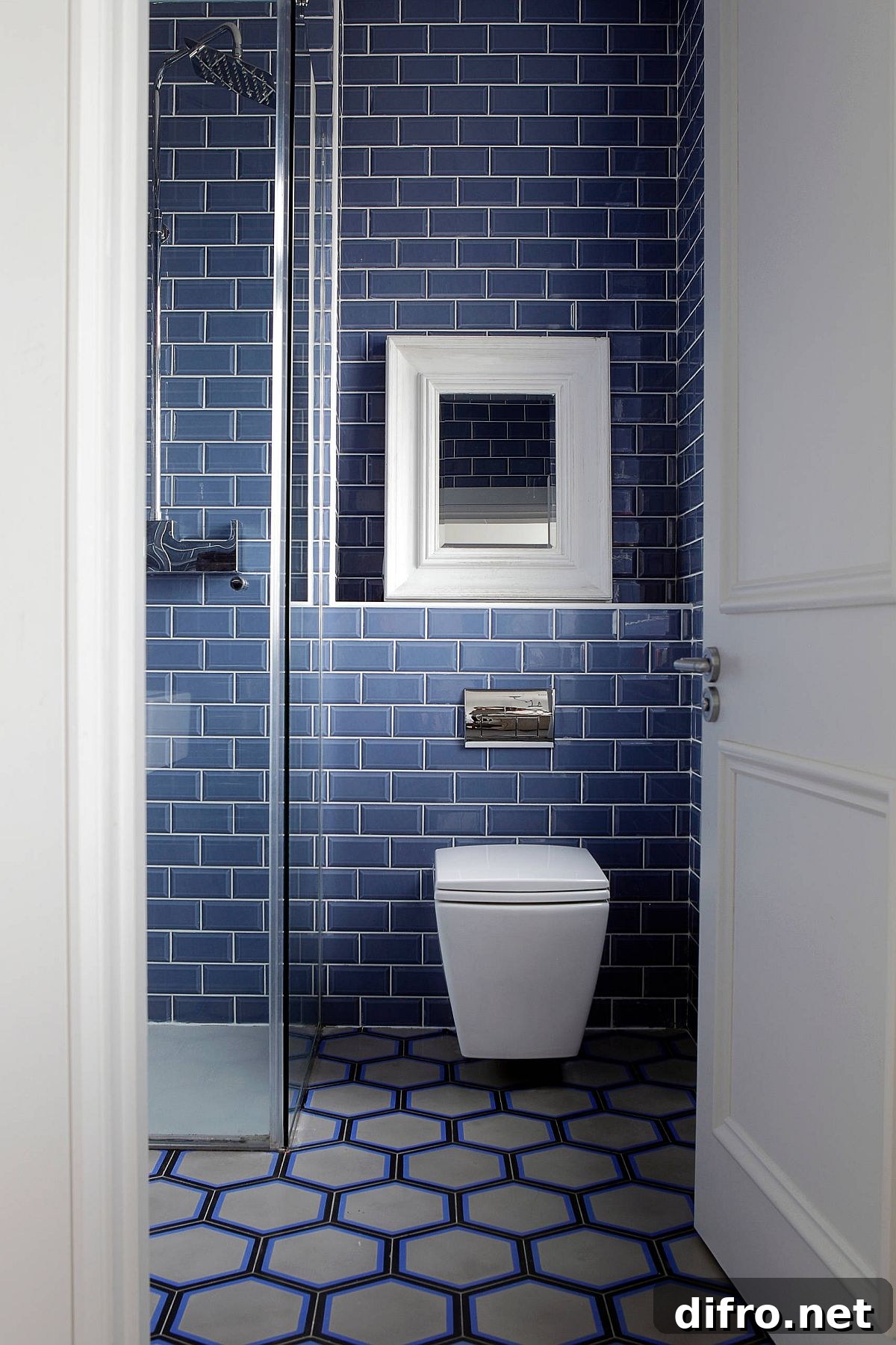
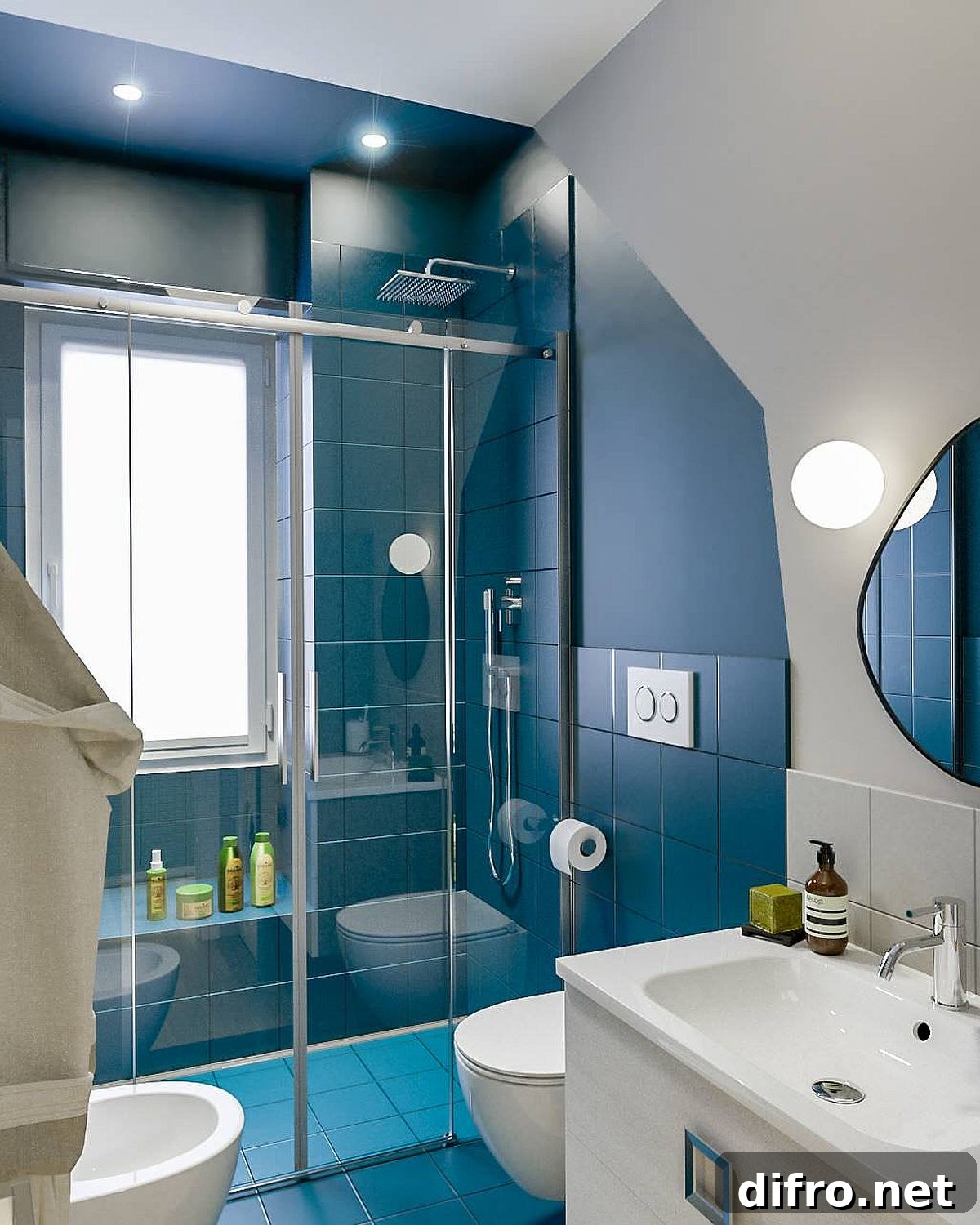
For new or renovated small bathrooms, the half-and-half approach is particularly effective: tiles or paint on one half of the wall in blue with white on the other creates a curated, intentional contrast. If you prefer a subtler look, pick one statement item — a freestanding tub, a vanity, or a bathroom stool — in blue while keeping the rest white. This balances personality with calm and makes the room feel well composed rather than cluttered.
Many Shades of Blue
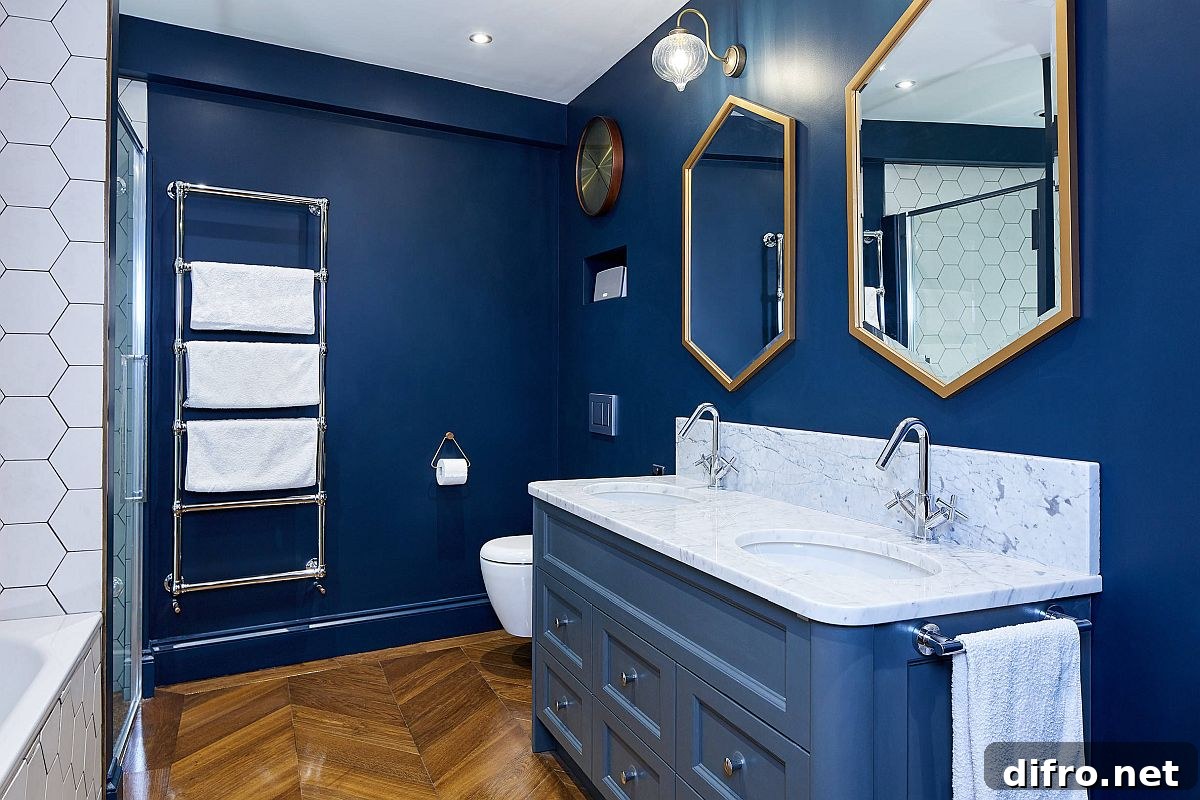
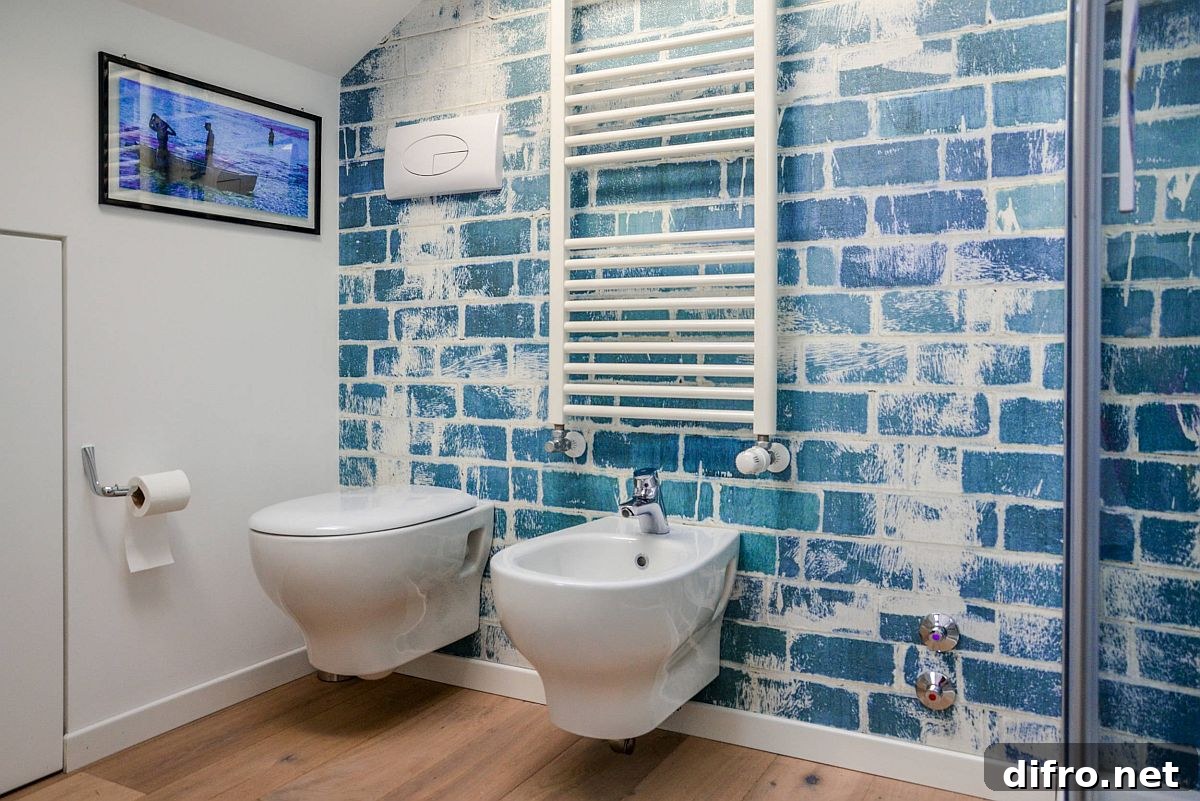
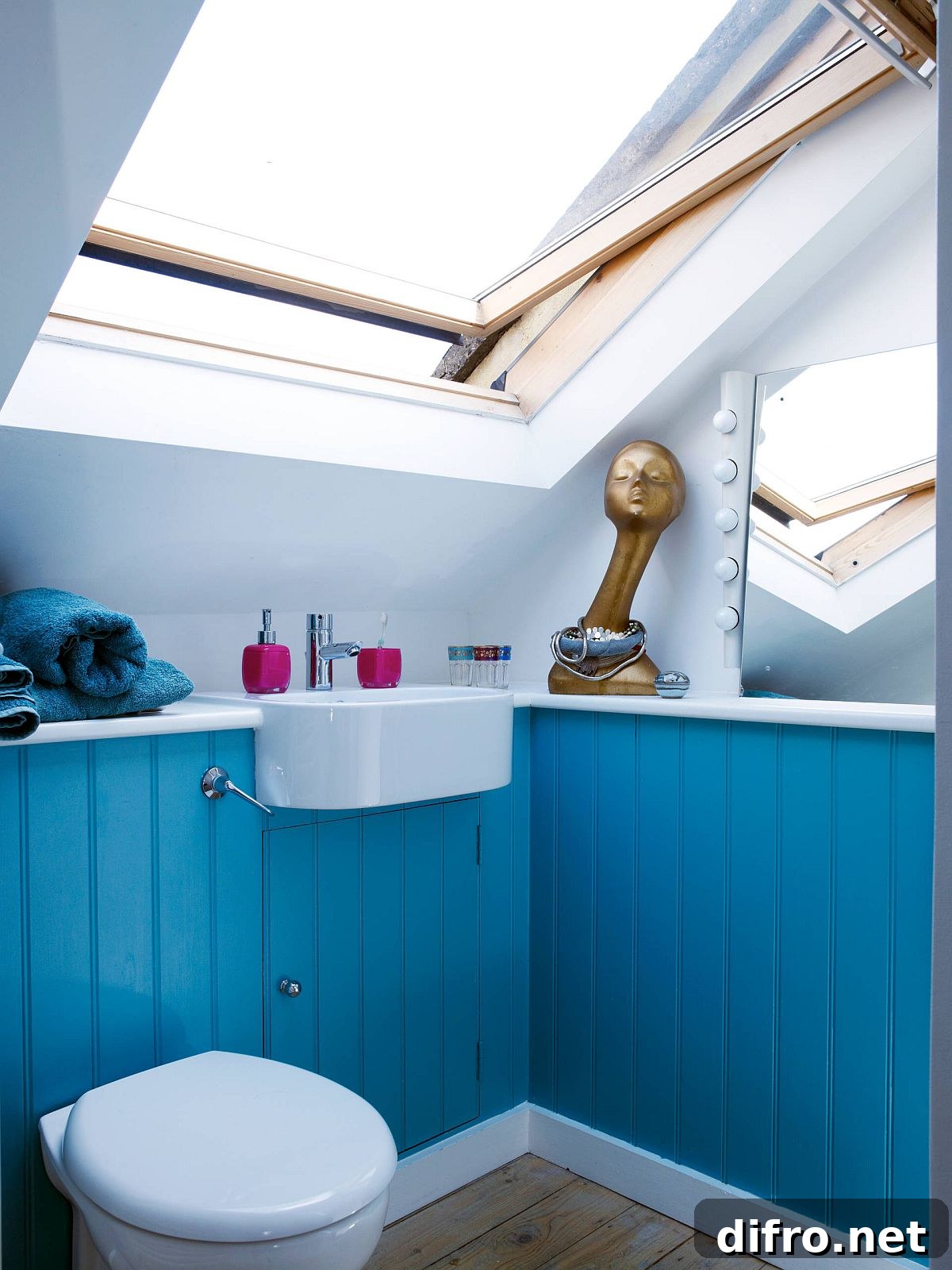
Blue is not a single look — its many tones offer very different moods. Classic Blue, widely recognized as a timeless, deep shade, pairs beautifully with white to create a crisp, refined look that suits modern, minimal and contemporary bathrooms. Lighter blues and pastels read as soft and breezy, ideal for coastal, Mediterranean or shabby chic interiors. Turquoise and aqua introduce a blue-green vibrancy that can feel exotic or beach-inspired depending on finishes and materials.
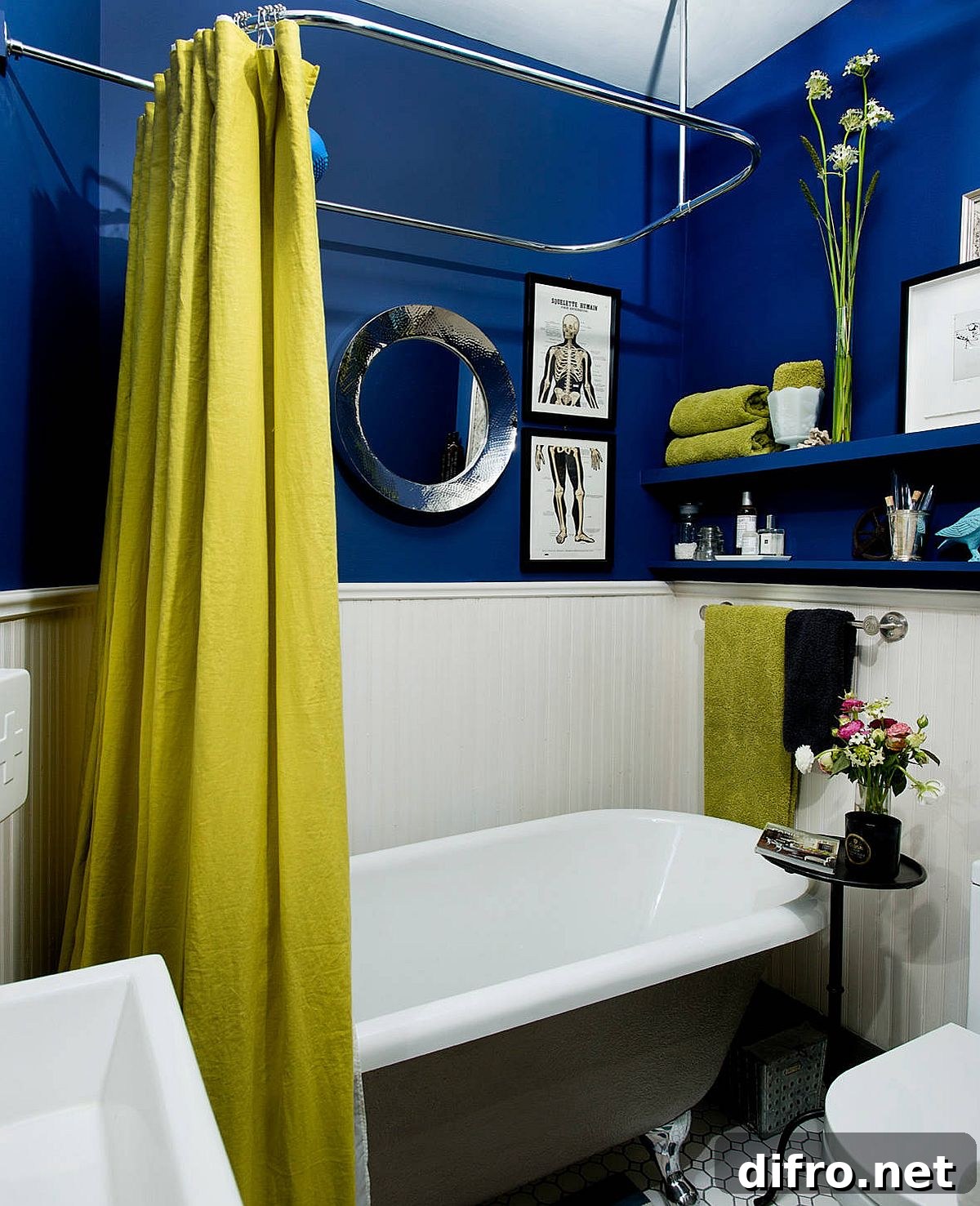
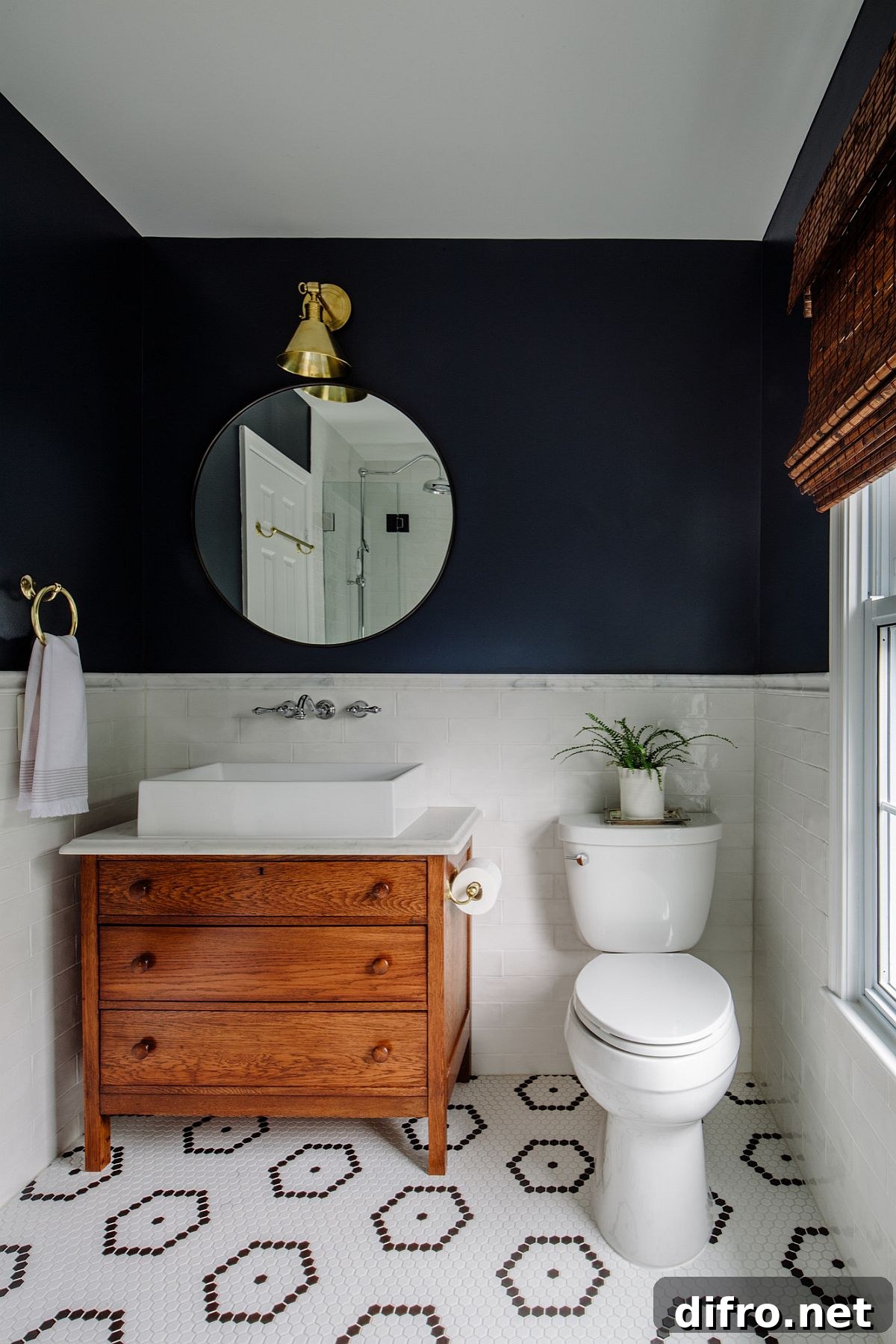
When choosing a shade, consider the bathroom’s light and scale. Darker blues create drama and a cozy, intimate atmosphere but work best when balanced by plentiful white and reflective surfaces to avoid feeling cramped. Pale blues and soft tones open up the space and enhance natural light, making them especially effective in very small rooms or those with limited windows.
Metallics, Accents and Other Colors
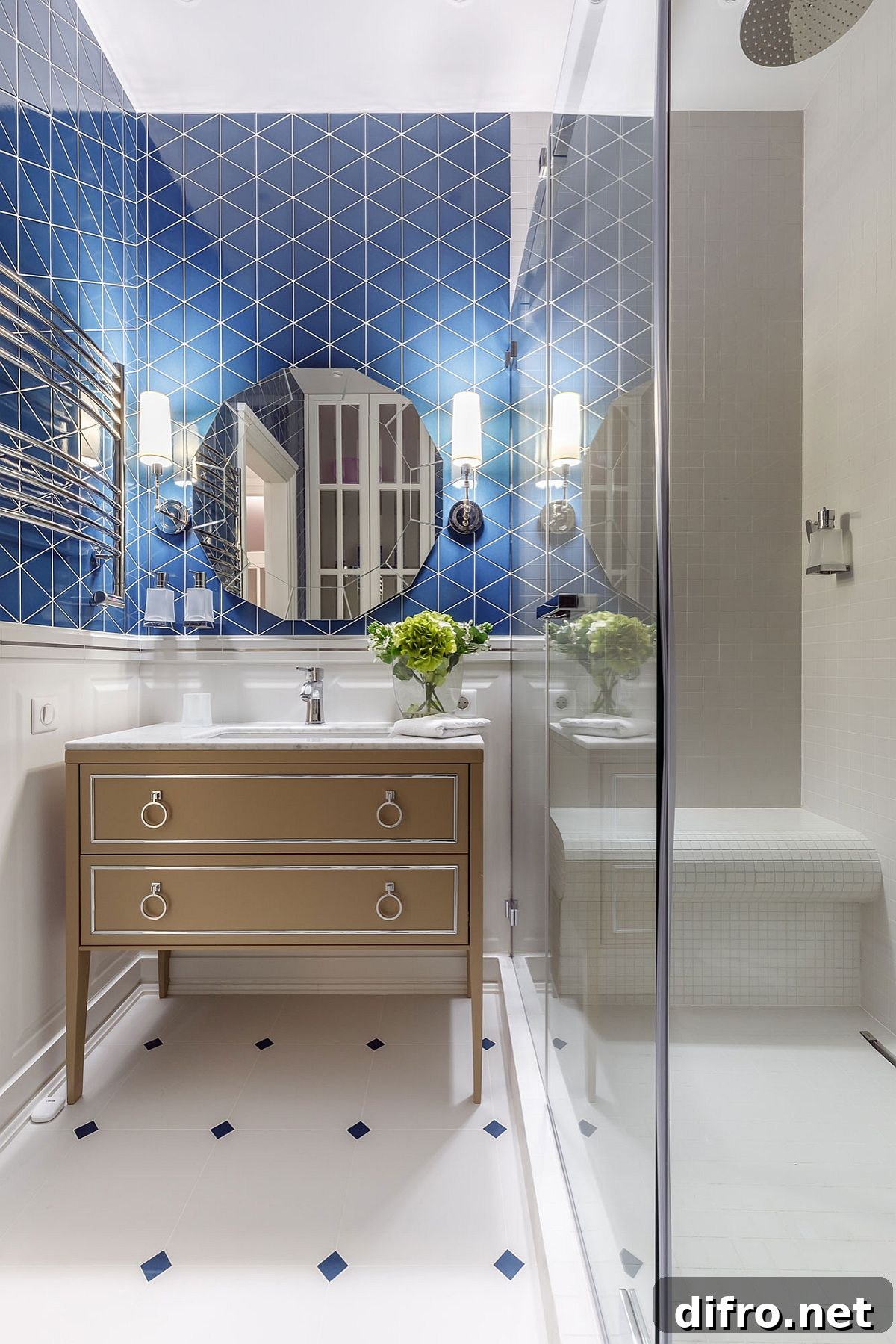
Blue and white make a strong foundation, but small injections of complementary tones and metallics can elevate the design. Keep accent colors minimal in compact bathrooms — one or two additional hues at most — so the palette stays cohesive. Brass or warm gold fixtures add a touch of luxury and reflect light, while black or matte hardware can introduce a modern, graphic edge.
Consider using patterned floor tiles, a colorful backsplash or a single accent wall to bring texture and character without crowding the room. Mirrors with metallic frames, hexagonal or geometric tiles, and textured textiles are small, high-impact choices that add depth. Natural elements—wood vanities, woven baskets and a small plant—soften the scheme and introduce warmth that complements both blue and white.
Finally, maximize light: skylights, large mirrors and well-placed windows enhance brightness and make deeper blue tones feel more open. With careful balance and a focus on proportion, blue and white remain one of the most effective and enduring combinations for small bathrooms, delivering freshness, elegance and a sense of calm.