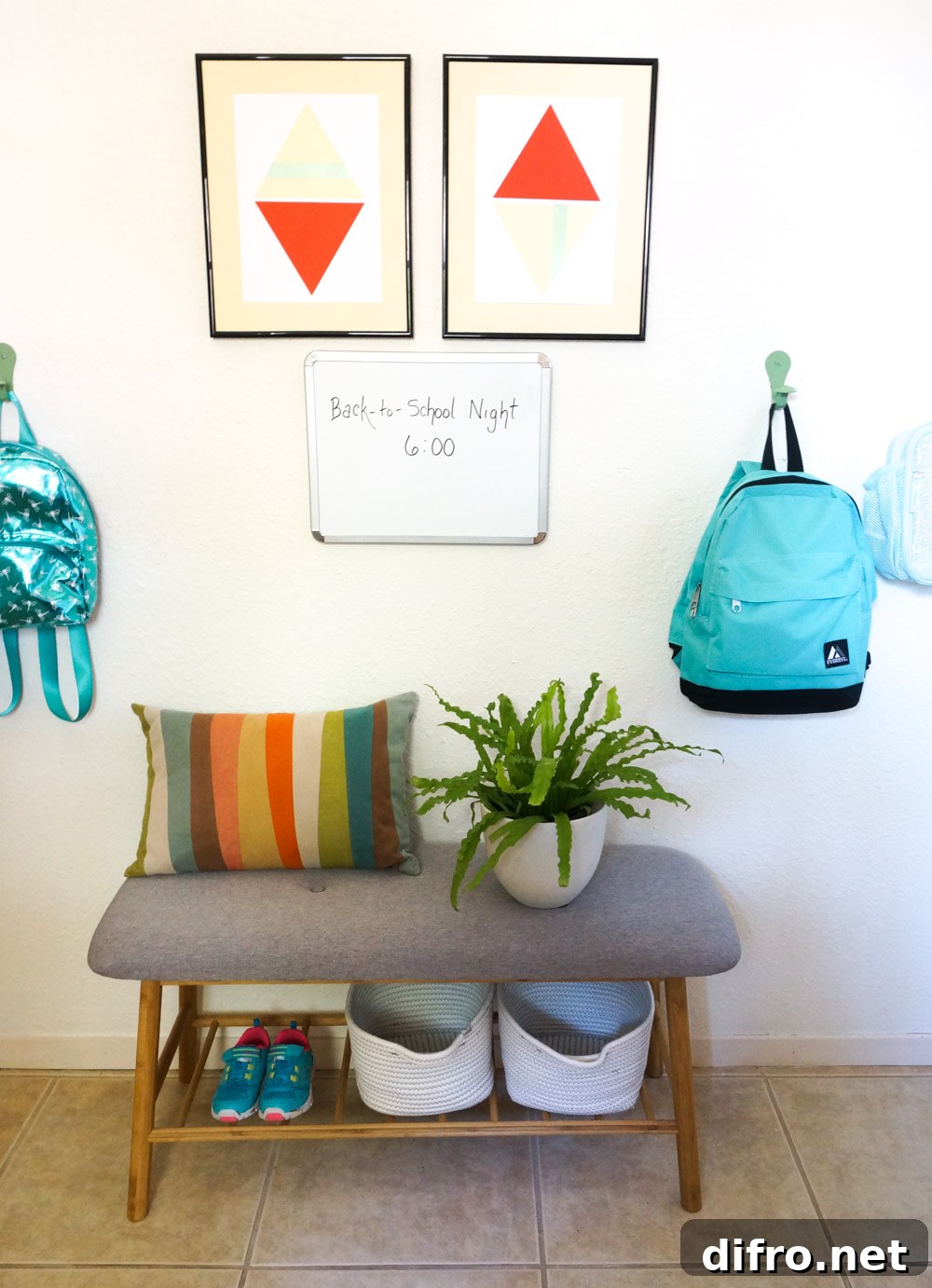
The importance of an organized entry often becomes clear only after a few busy weeks of drop-offs, pickups, appointments and playdates. When everyone is constantly coming and going, tossing purses, backpacks and shoes by the door quickly creates chaos. Turning that transition zone into a functional, attractive family entryway — or mudroom — saves time and stress while reflecting your style.
*Photos and styling by Kate Simmons for Decoist
Designating a Spot
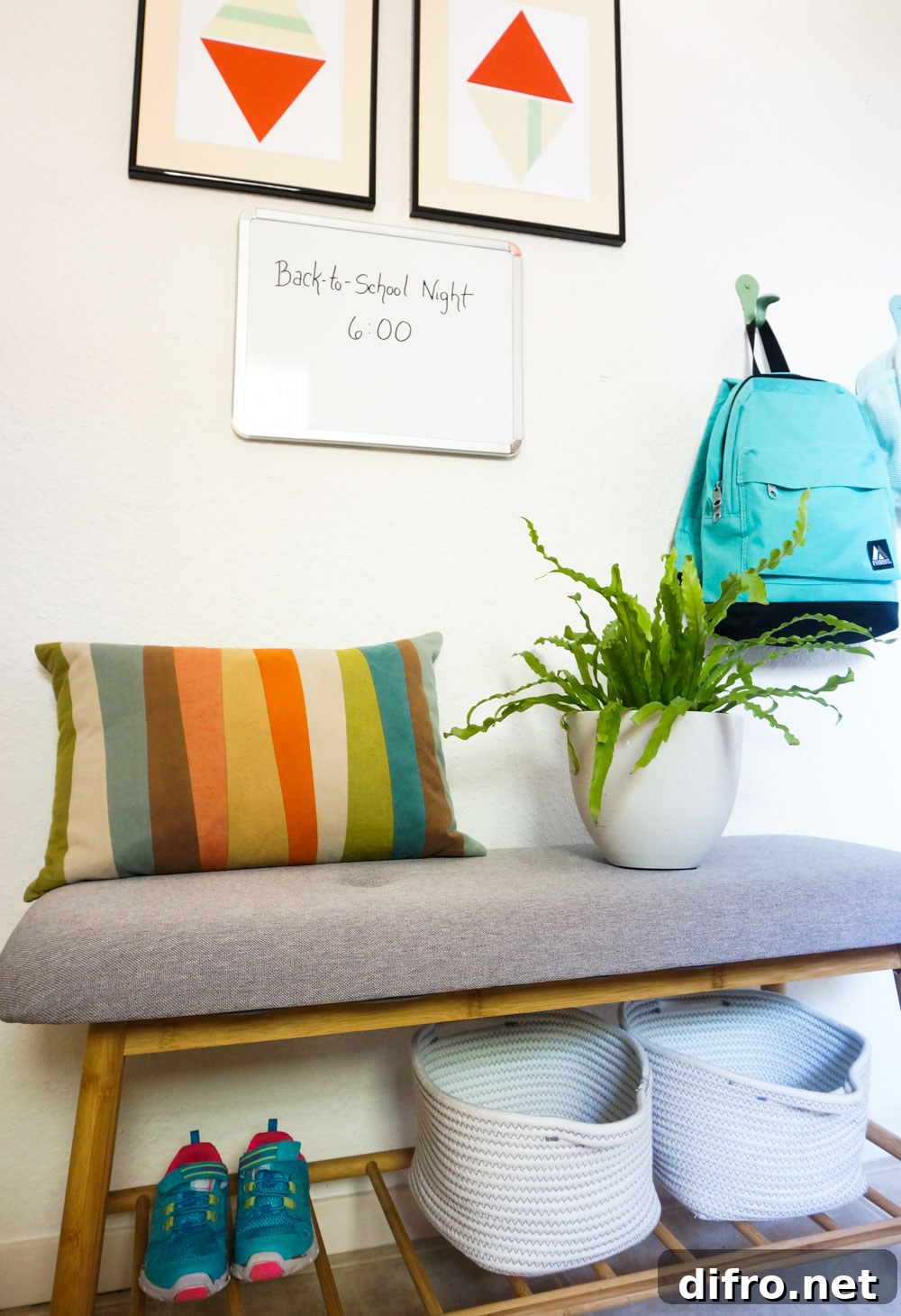
You don’t need a dedicated room to create an efficient family entryway. A short stretch of wall, a corner in the laundry room by the back door, or a small alcove near the garage can all be transformed into a practical mudroom. Begin by selecting the most convenient spot for daily comings and goings, then visualize how that area will function for every family member.
Measure the available space before you shop. Knowing the width and depth you have to work with determines whether a bench fits comfortably, where hooks can be placed, and if there’s room for larger items like an umbrella stand or coat rack. Accurate measurements prevent awkward layouts and help you prioritize storage solutions that fit the footprint.
A Few Key Ingredients for an Organized Entryway
With your space defined, focus on practical pieces that simplify daily routines. Consider these staples when planning your family entryway:
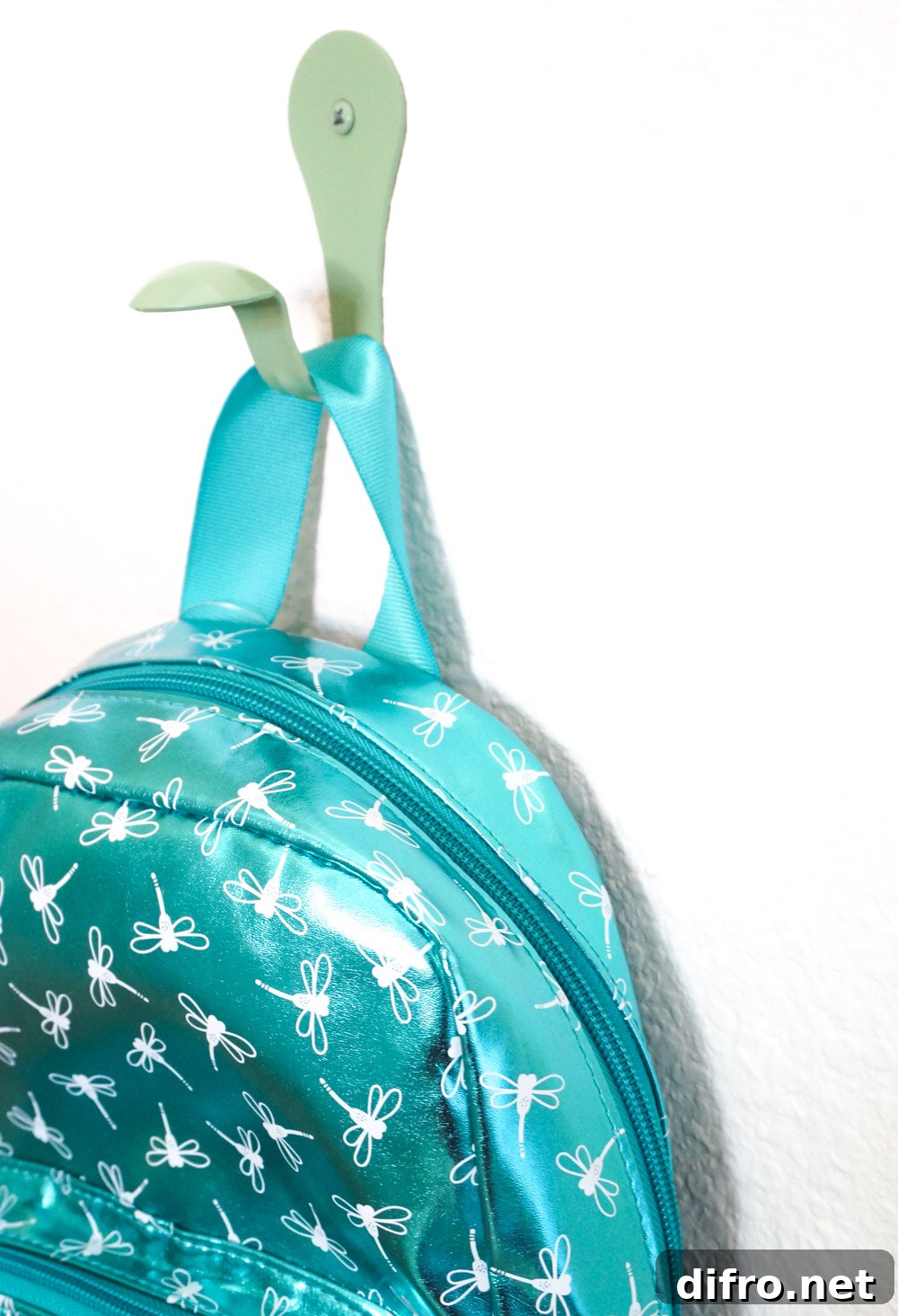
- Wall hooks: easy access for coats, backpacks and hats.
- A bench: a comfortable spot to sit while putting on shoes, with potential storage underneath.
- Storage baskets: concealed bins for mittens, scarves, reusable bags and pet leashes.
- A console table: for keys, incoming mail and a catch-all tray.
- An umbrella stand: keeps drips and wet umbrellas contained.
- A coat rack: free-standing option when wall space is limited.
- Wall shelves: for small items, display and extra storage.
- A bulletin board or calendar: centralize schedules, permission slips and reminders.
- A mirror: quick appearance check and a way to visually enlarge the space.
- Houseplants and artwork: add warmth, color and personality.
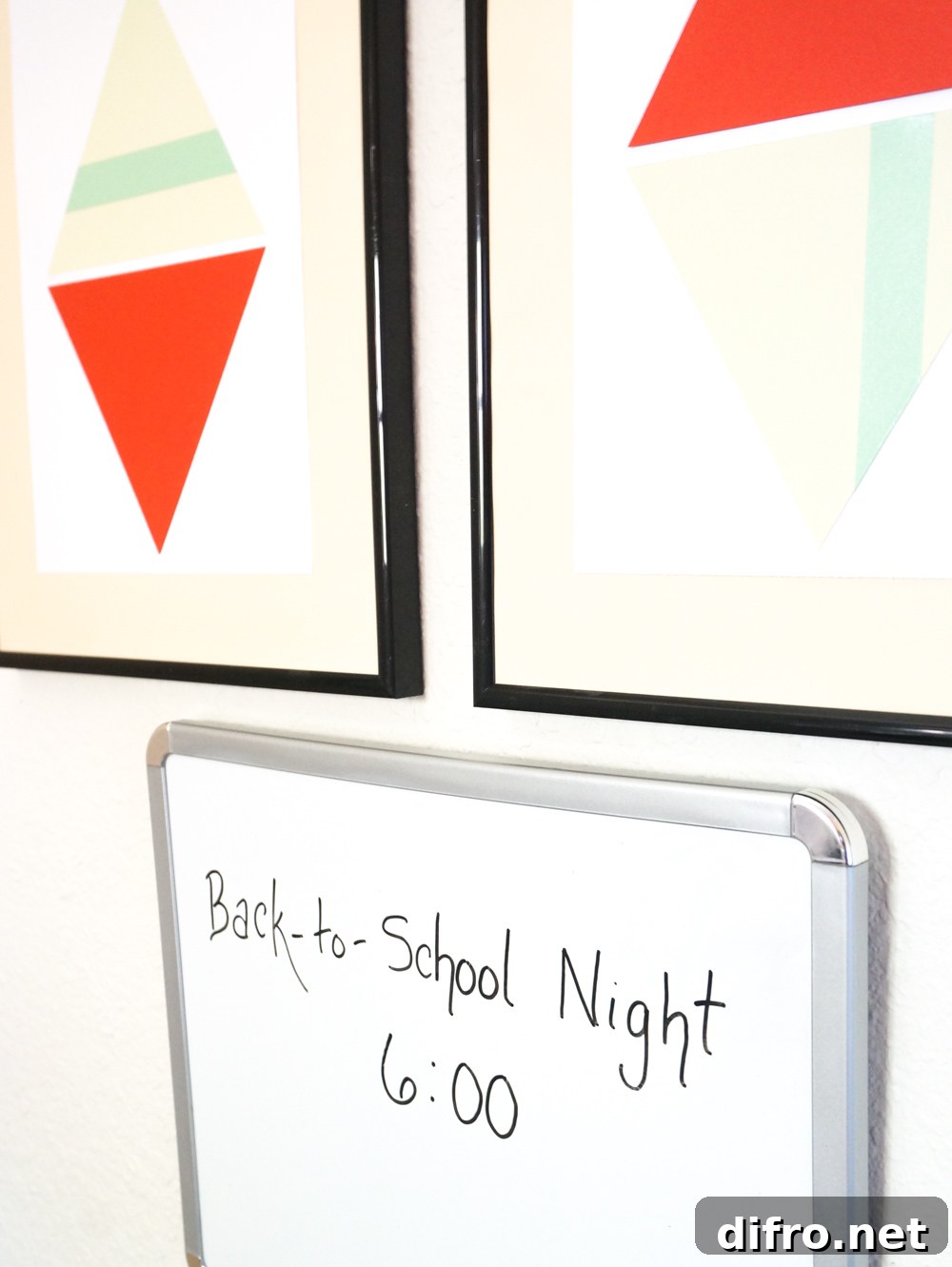
Prioritize convenience: if the entryway is where shoes go on and off, a sturdy bench with storage beneath is invaluable. For narrow spaces, vertical solutions such as wall hooks, narrow shelves, or a slim console table maximize utility without crowding the walk-through. Even the smallest entryway can feel stylish with thoughtful accessories swapped from other rooms.
Putting It All Together: Layout, Function and Style
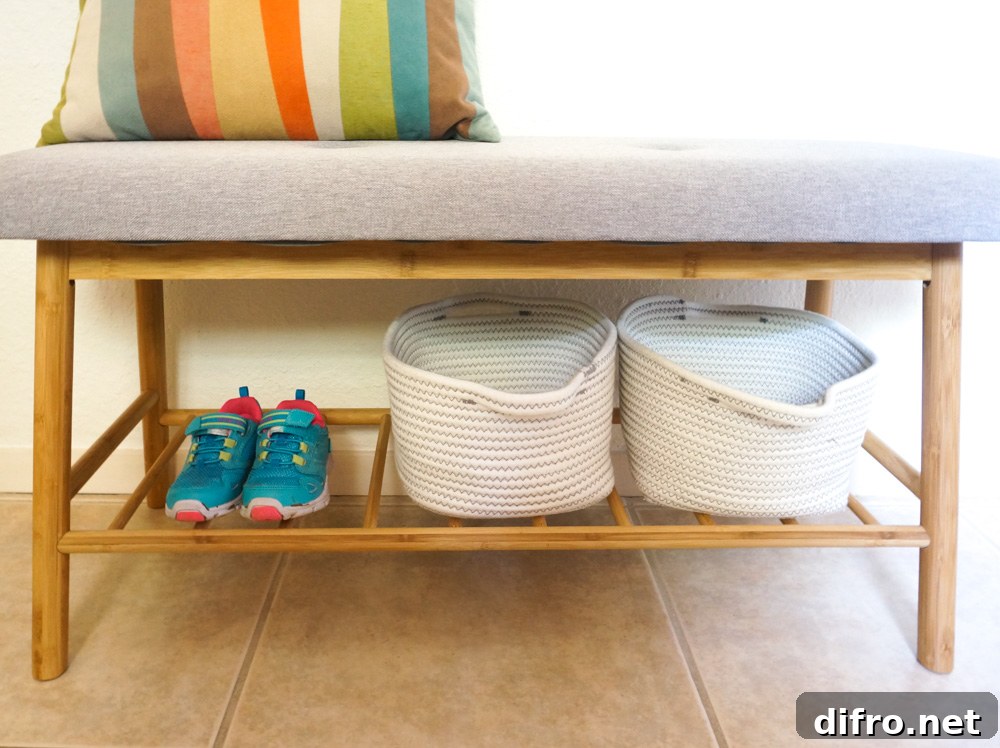
Start with the essentials: place bulky storage and seating first, then layer in functional accessories like baskets, an umbrella stand and hooks. Think about how the family moves through the space — hooks should be reachable for kids, but not so low that bags hang where people sit. Stagger hook heights if multiple children will use them.
After arranging the main elements, add finishing touches that increase organization and uplift the look. A message board or calendar helps coordinate school and after-school activities. A mirror reflects light and makes a tight entryway feel larger, while a plant or two soften the space and add life. A well-placed throw pillow or a small rug can introduce color and texture without cluttering the area.

Be prepared to experiment: live with a layout for a few days and make adjustments based on how the family actually uses the space. Sometimes moving a basket or lowering a hook makes a big difference in daily efficiency. Seasonal swaps — switching a basket of gloves in winter for sunglasses and sunscreen in summer — help keep the entryway relevant year-round.
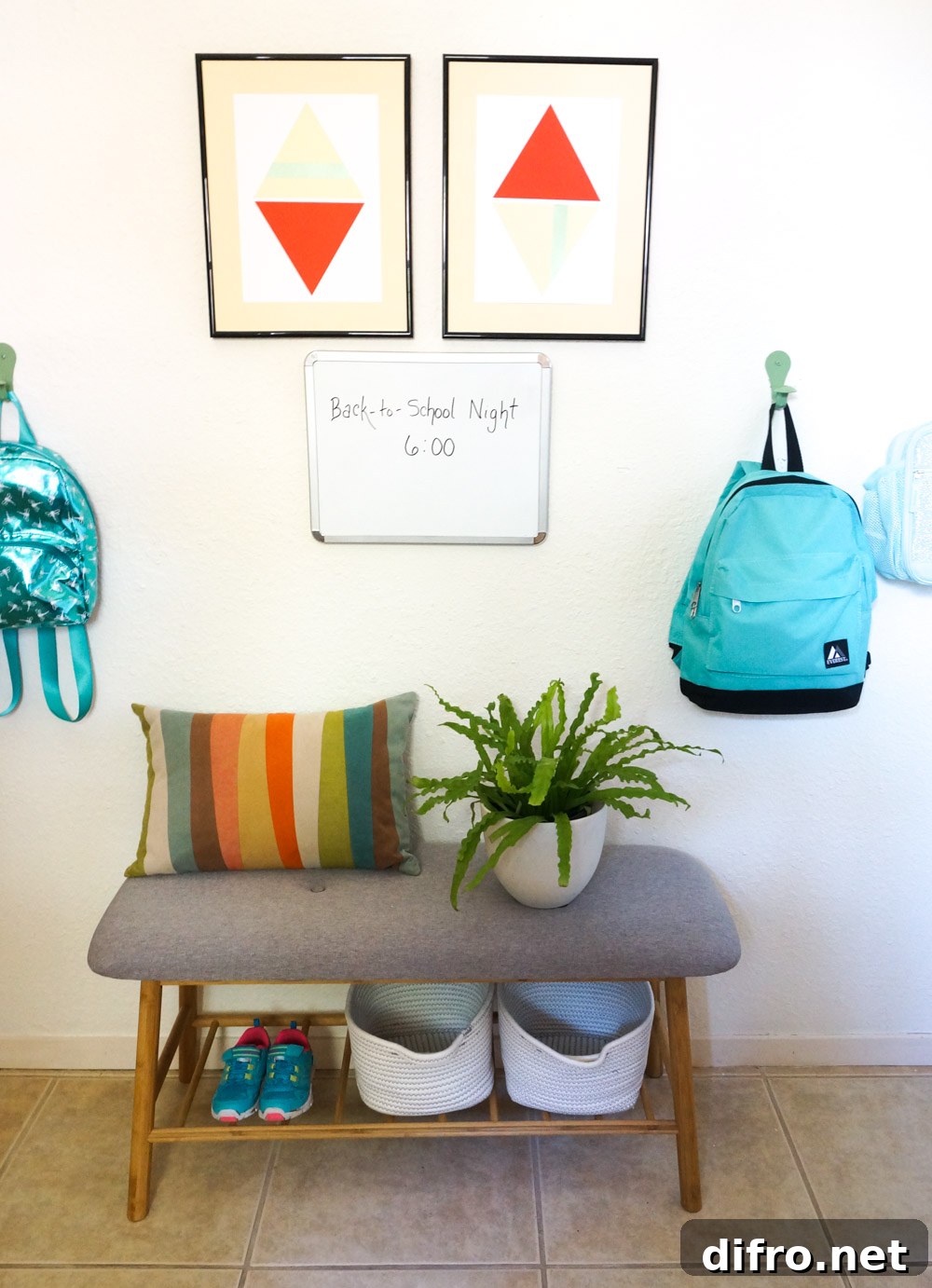
An organized family entryway makes busy mornings smoother, keeps clutter under control, and creates a welcoming transition between home and the outside world. With a measured plan, a few thoughtful furnishings and a touch of personal style, your entry can become both practical and beautiful — a small project that pays off every single day.
We at Decoist wish you and your family a wonderful school year ahead! Thanks for reading.