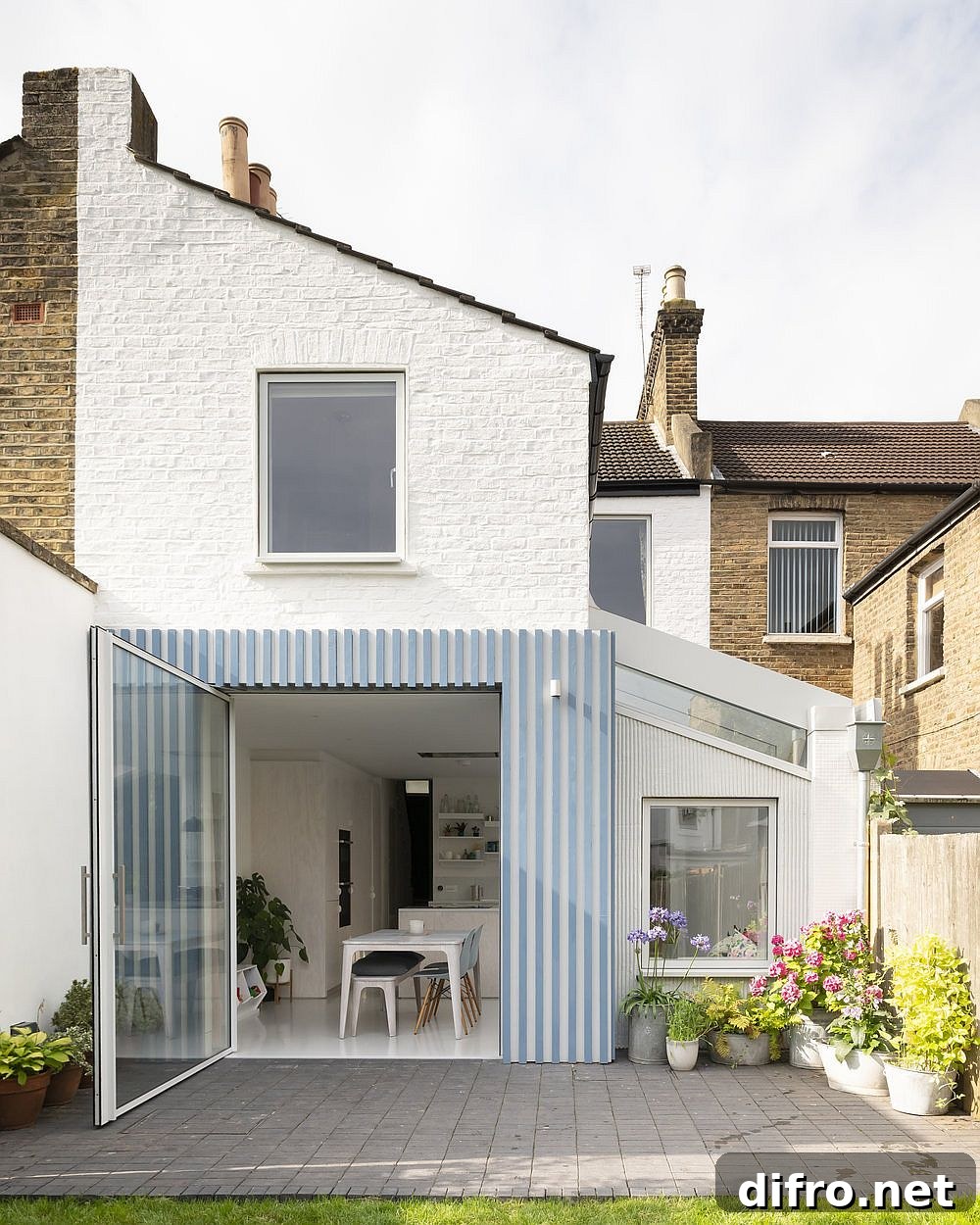
We are enthusiastic about rear extensions that introduce natural light into darker, older homes while adding living space that respects the original architecture. This Victorian terrace has been carefully revamped and renovated by CAN Architects with a rear and side extension that blends contemporary interventions with the historic fabric in a restrained, elegant manner. To prevent the new addition from feeling confined, the floor level was slightly lowered and a new timber structure was inserted to define a flowing social zone that combines dining and kitchen areas, maintaining a constant visual connection with the rear garden.
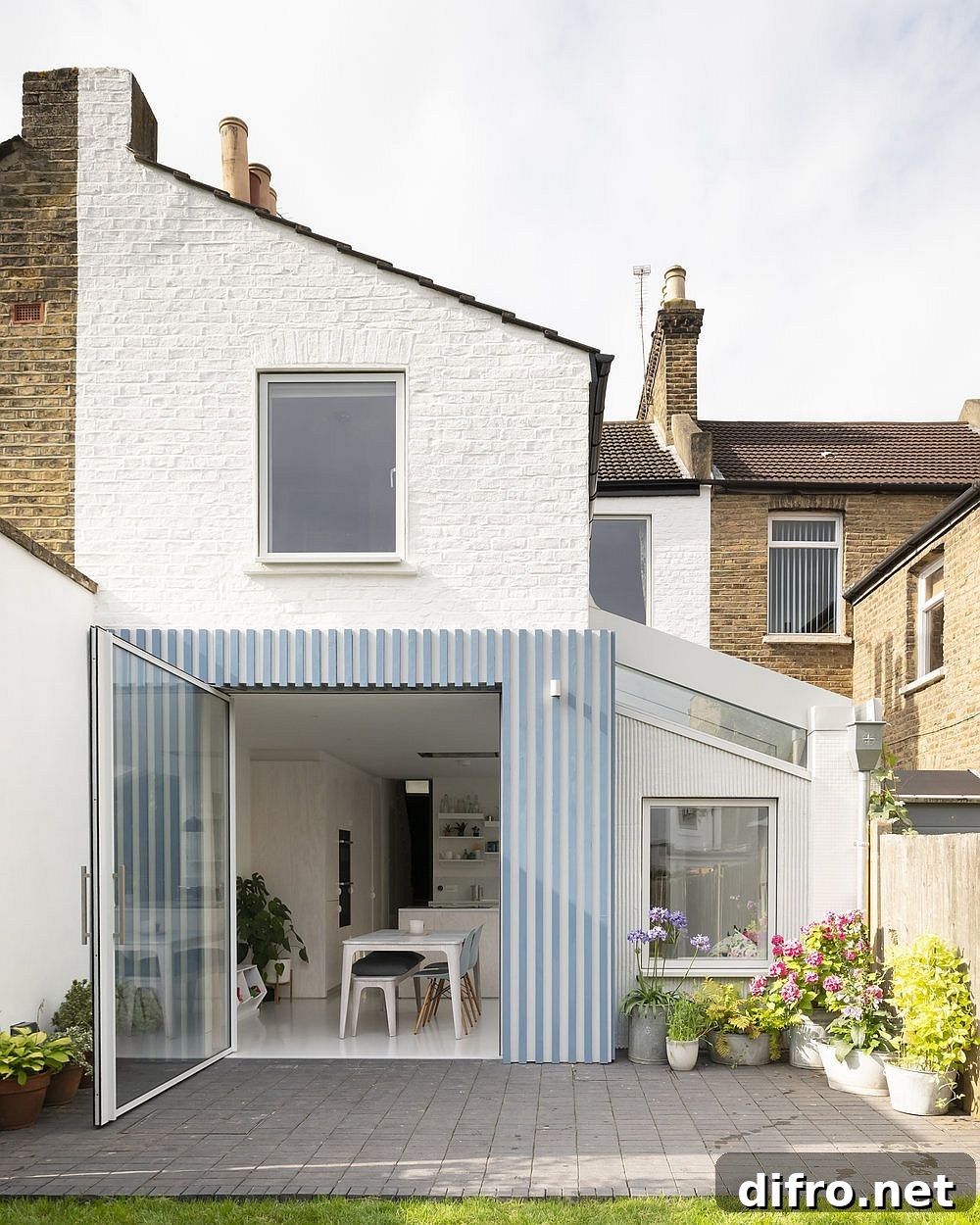
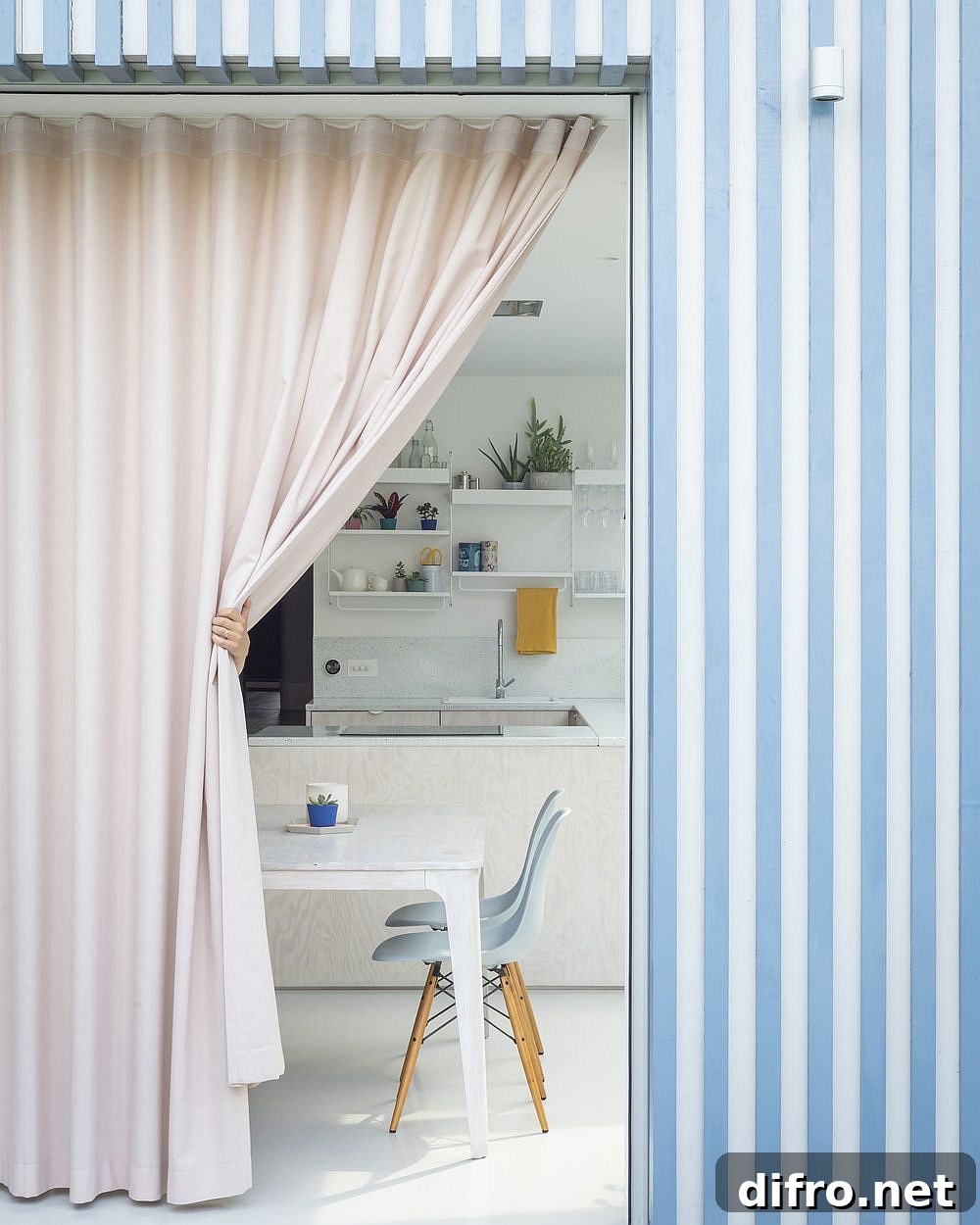
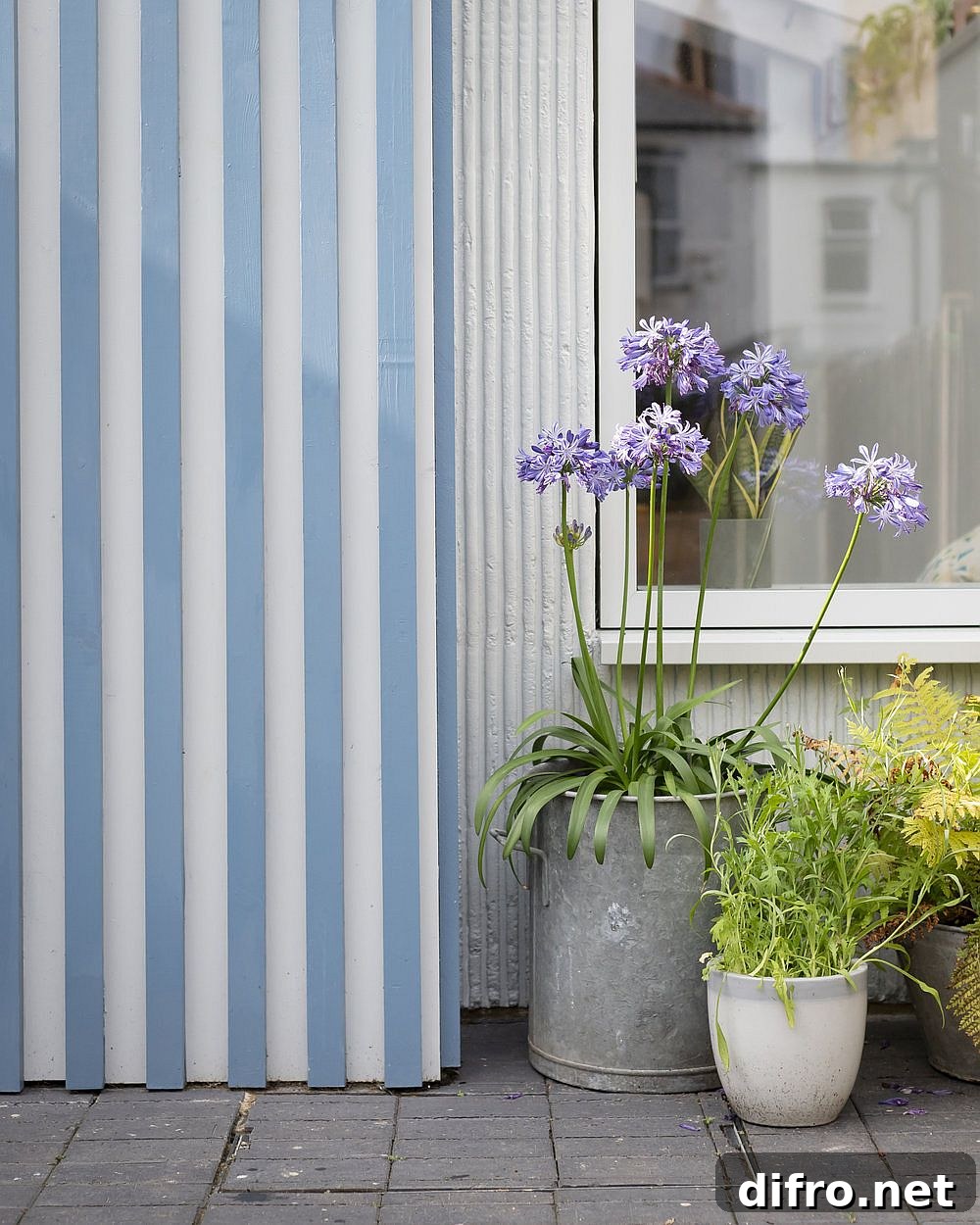
A pivoting glazed door creates a direct, fluid link between the interior and the garden, allowing the outside to feel like an extension of the living space. A bold blue-and-white striped timber wall becomes a key visual feature, adding personality to the exterior facade without overpowering the original Victorian character. Upstairs, the existing brickwork is painted white to create a gentle transition between historic and contemporary surfaces, helping to unify the two parts of the house.
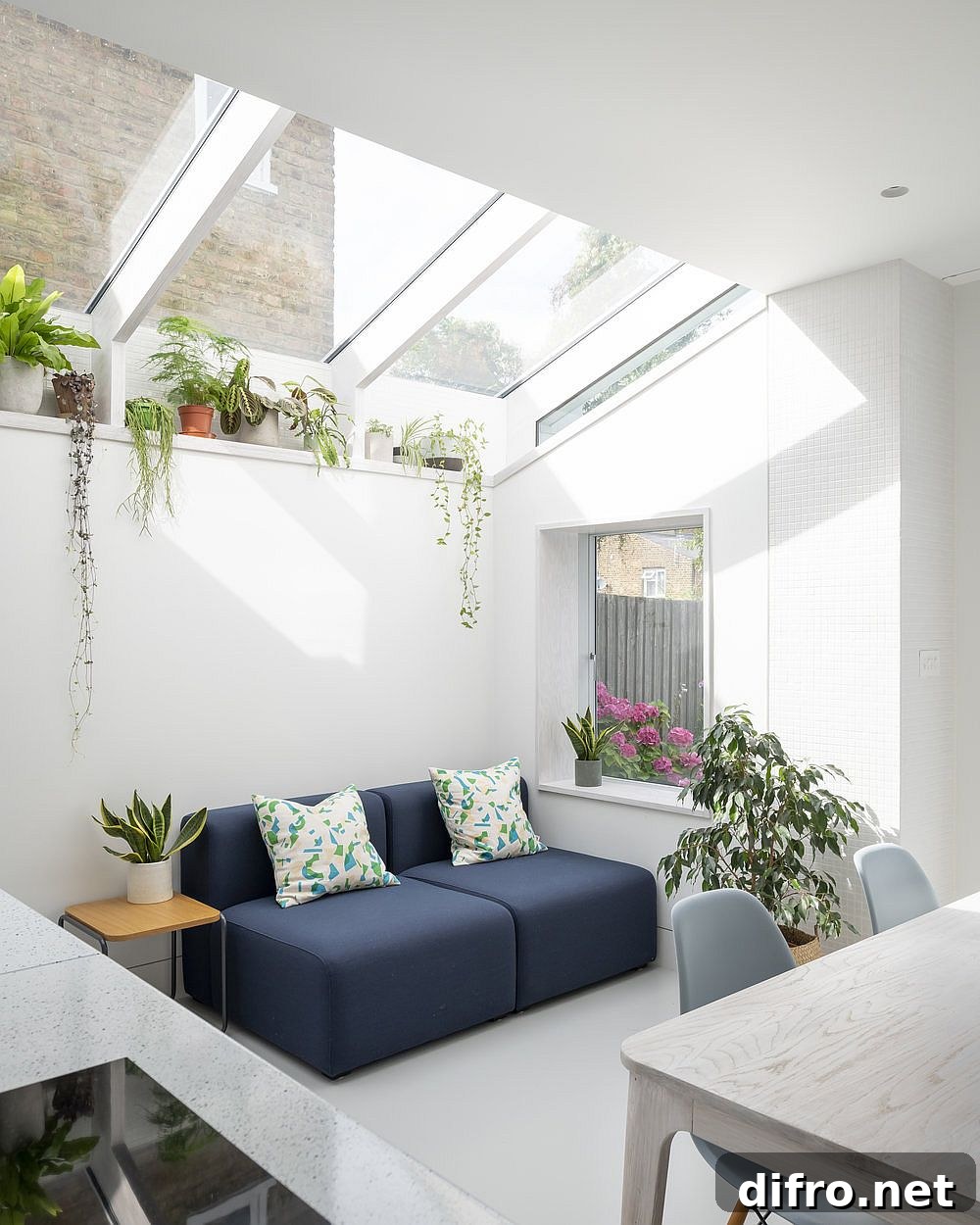
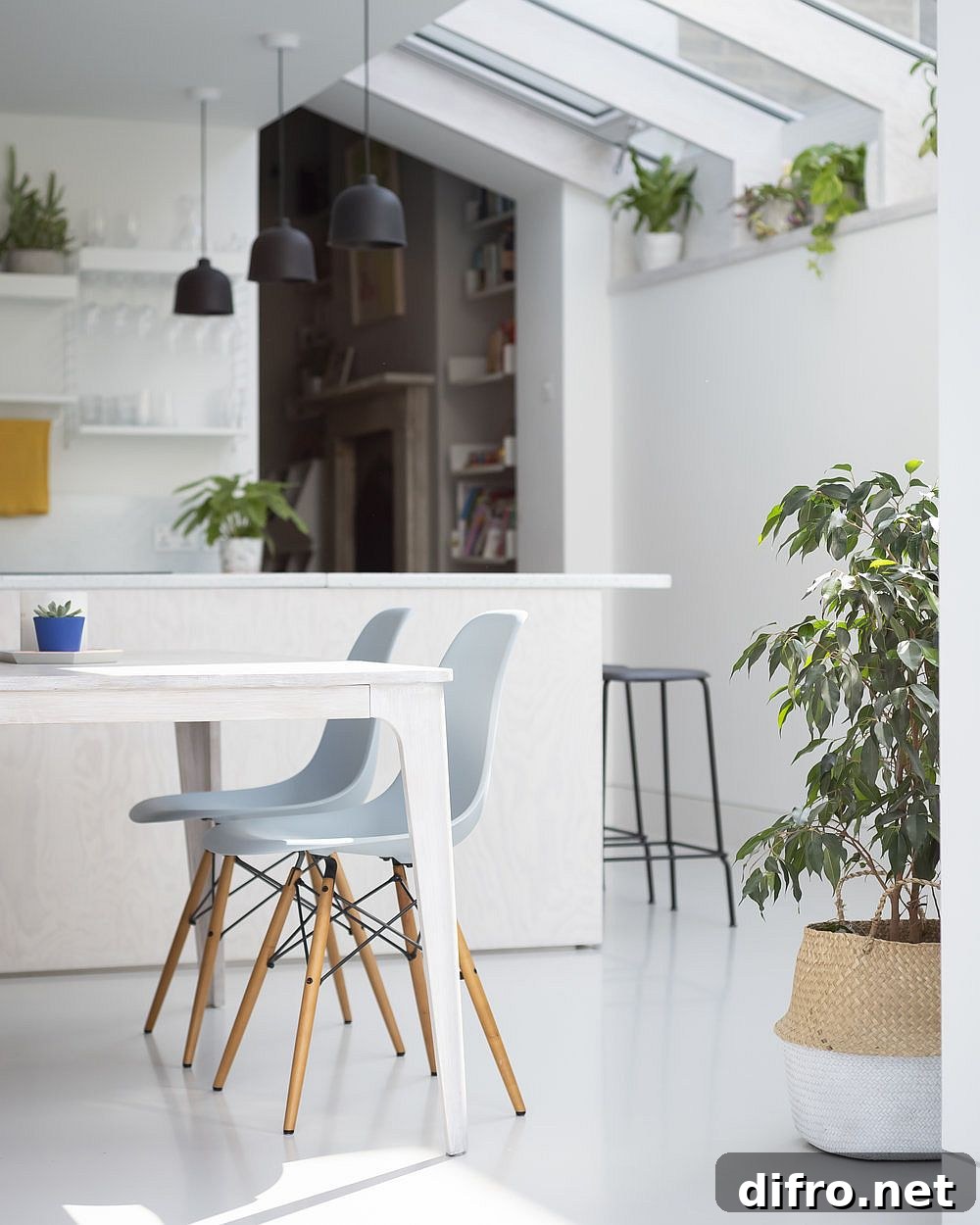
Inside the extension, white dominates the palette, creating a bright, calm backdrop for daily life. A seamless white resin floor and pristine white walls amplify natural light and produce a contemporary, uncluttered interior. The clean surfaces act as a neutral canvas that allows carefully chosen accents—lighting, greenery and a few textured finishes—to stand out. The kitchen and dining area embrace a minimal aesthetic, where functionality meets refined simplicity.
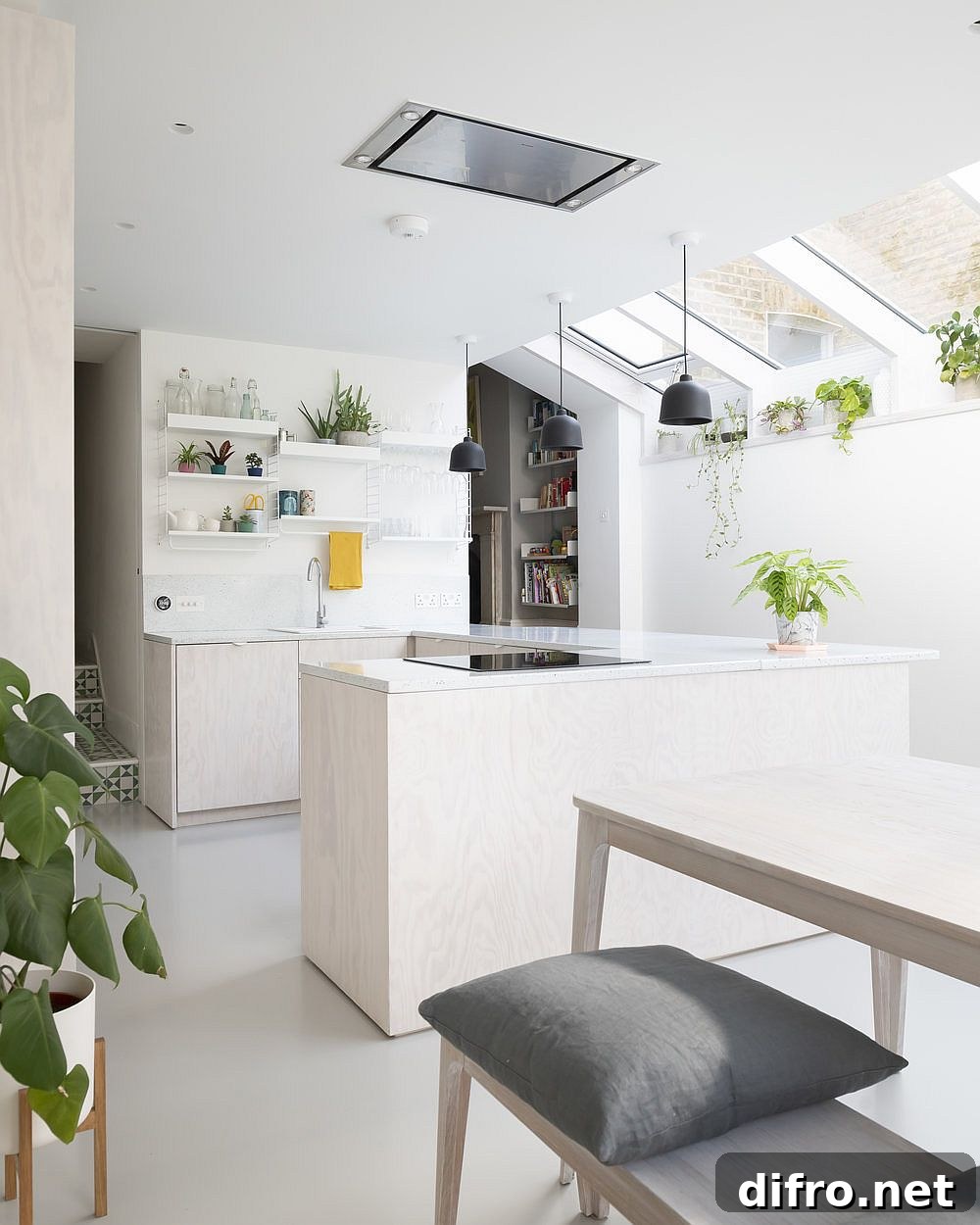
The plan emphasizes openness and flow: a generous family area that incorporates cooking, dining and relaxed seating forms the heart of the home, bridging the older rooms at the front with the garden at the back. Natural materials and restrained detailing help the new structure feel both modern and sympathetic to the original house. The lowered floor level creates a subtle spatial change that increases perceived volume without compromising the scale of the existing building.
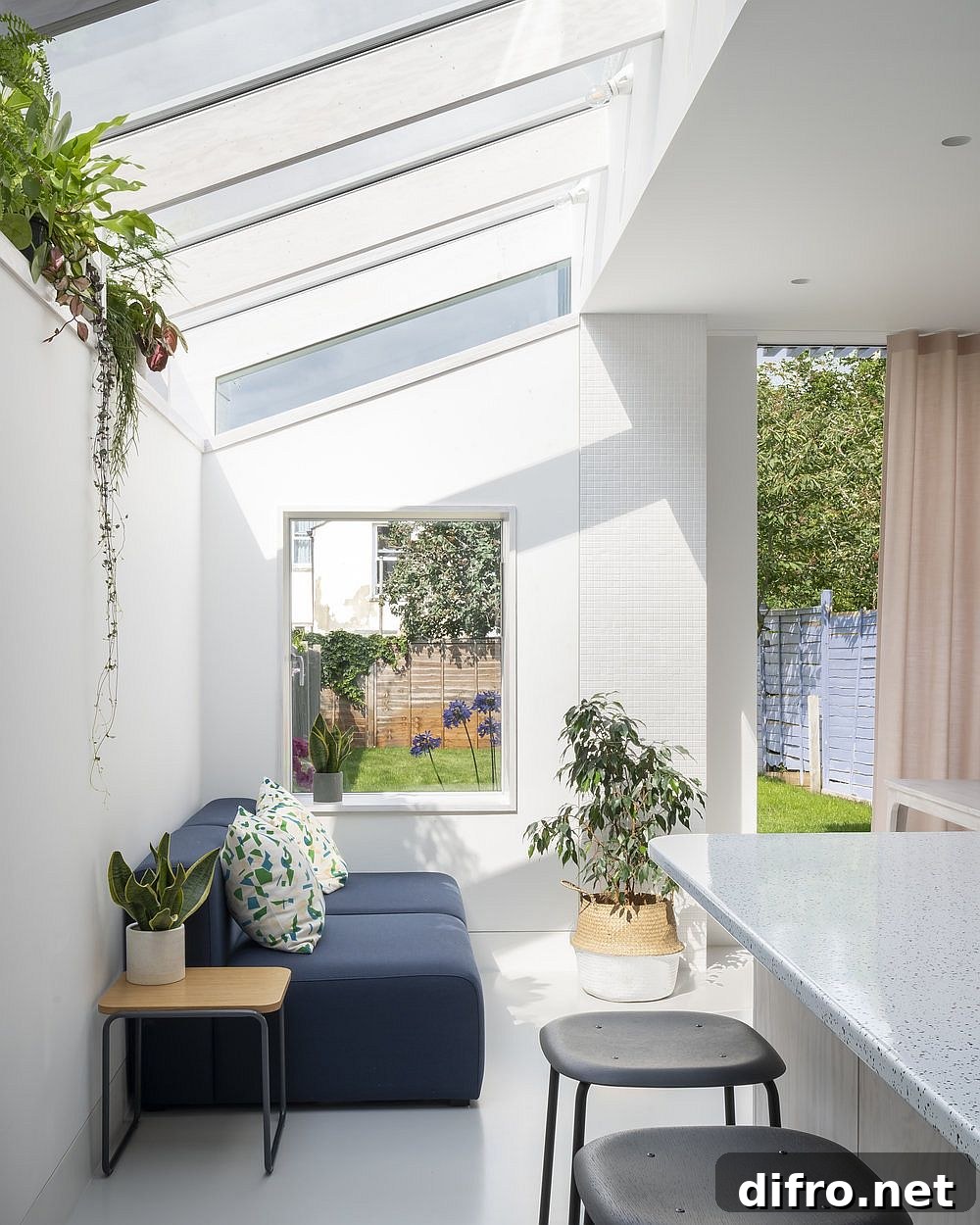
A soft pastel-pink curtain provides a gentle separation between the interior and the external area when privacy or shading is required, while dark pendant lights and subtle color accents introduce contrast and depth against the white backdrop. A glazed roof or large rooflight floods the central space with daylight throughout the day, reducing the need for artificial light and reinforcing the strong connection to the outdoors.
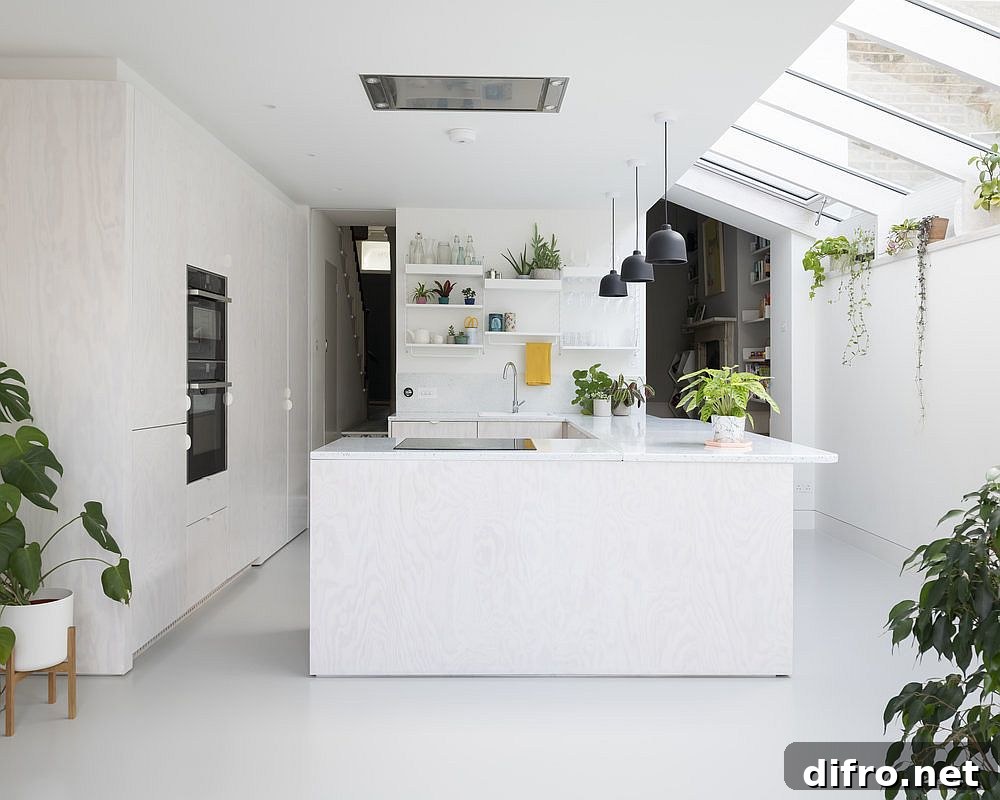
Careful material choices—resin flooring for continuity, timber for warmth and texture, touches of marble for a subtle sense of luxury—offer a layered, tactile quality to the interior without disrupting the calm white scheme. Indoor plants and select green accents bring life into the space, introducing natural color and a softer transition between the built environment and the garden beyond.
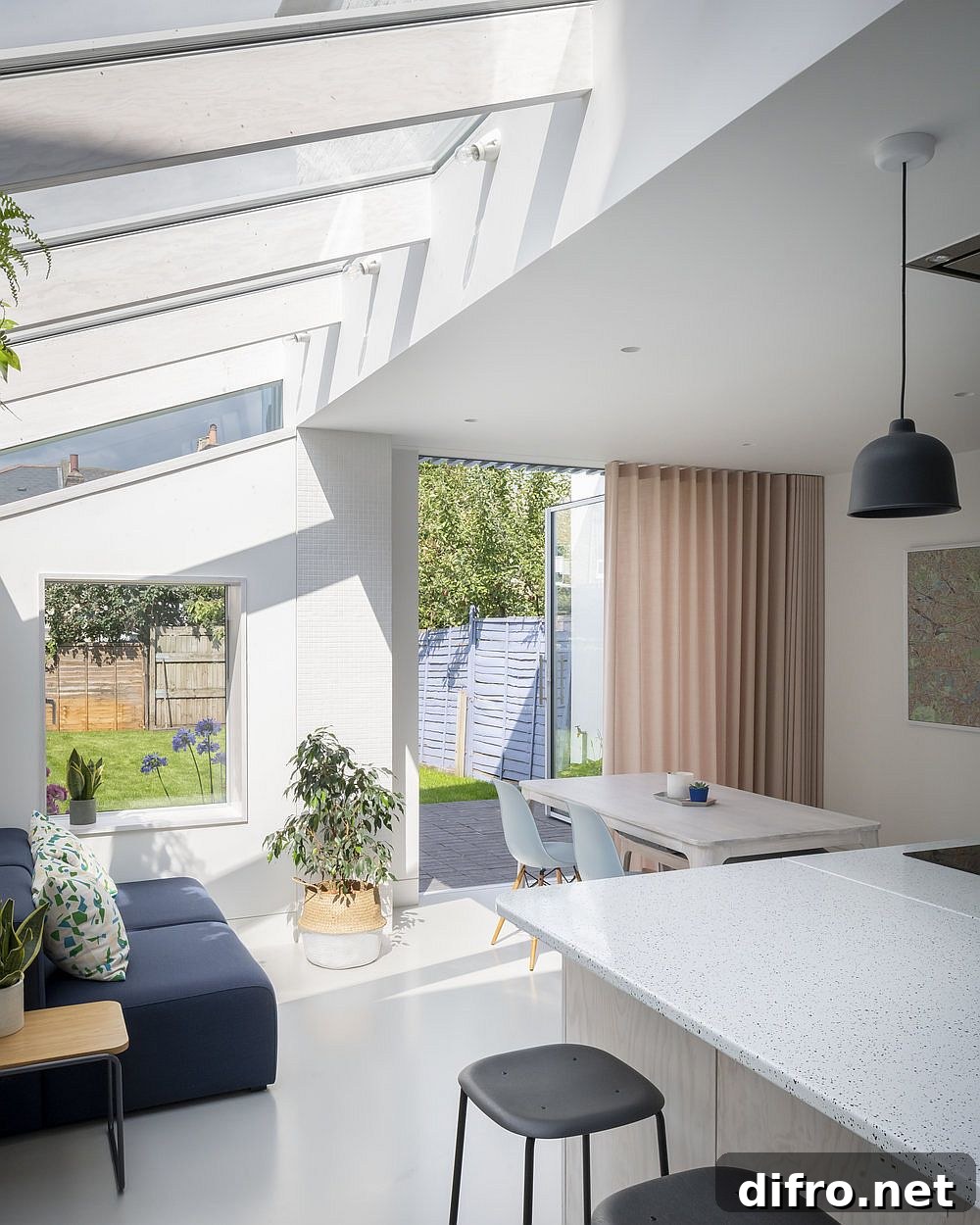
The result is a successful balance between old and new: the period character of the Victorian terrace is preserved and respected, while the extension provides a bright, functional family space that meets contemporary living needs. By using restrained colors, honest materials and considered detailing, the architects have created an extension that enhances the home’s livability without erasing its heritage.
This project demonstrates how a sensitive, well-executed rear extension can rejuvenate a classic British home: improving daylight, increasing usable space, and strengthening the relationship between interior and garden. Thoughtful interventions—lowered floor level, timber framing, glazed roofing, and a restrained white palette—allow the house to function comfortably for contemporary family living while honoring its original Victorian identity. [Photography: Jim Stephenson]