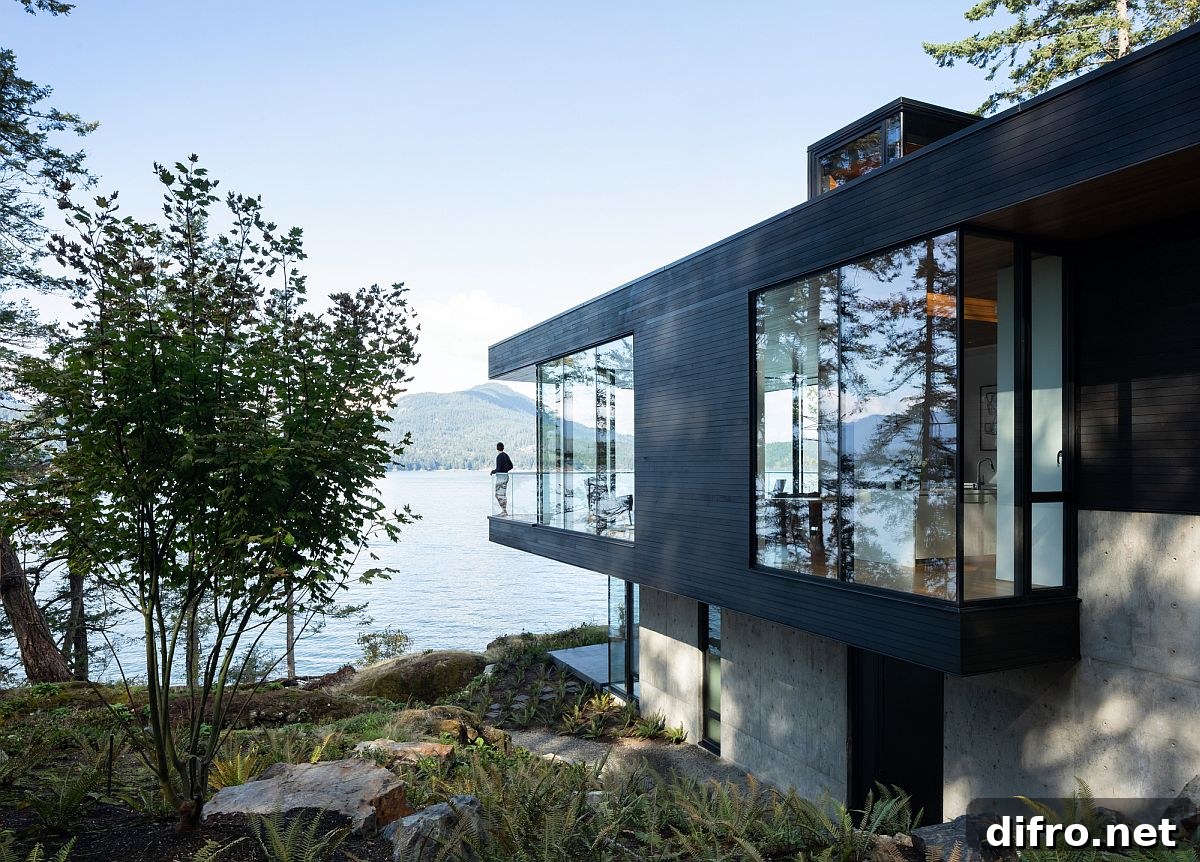
Bowen Island House — A Sustainable Modern Cabin on Bowen Island, BC
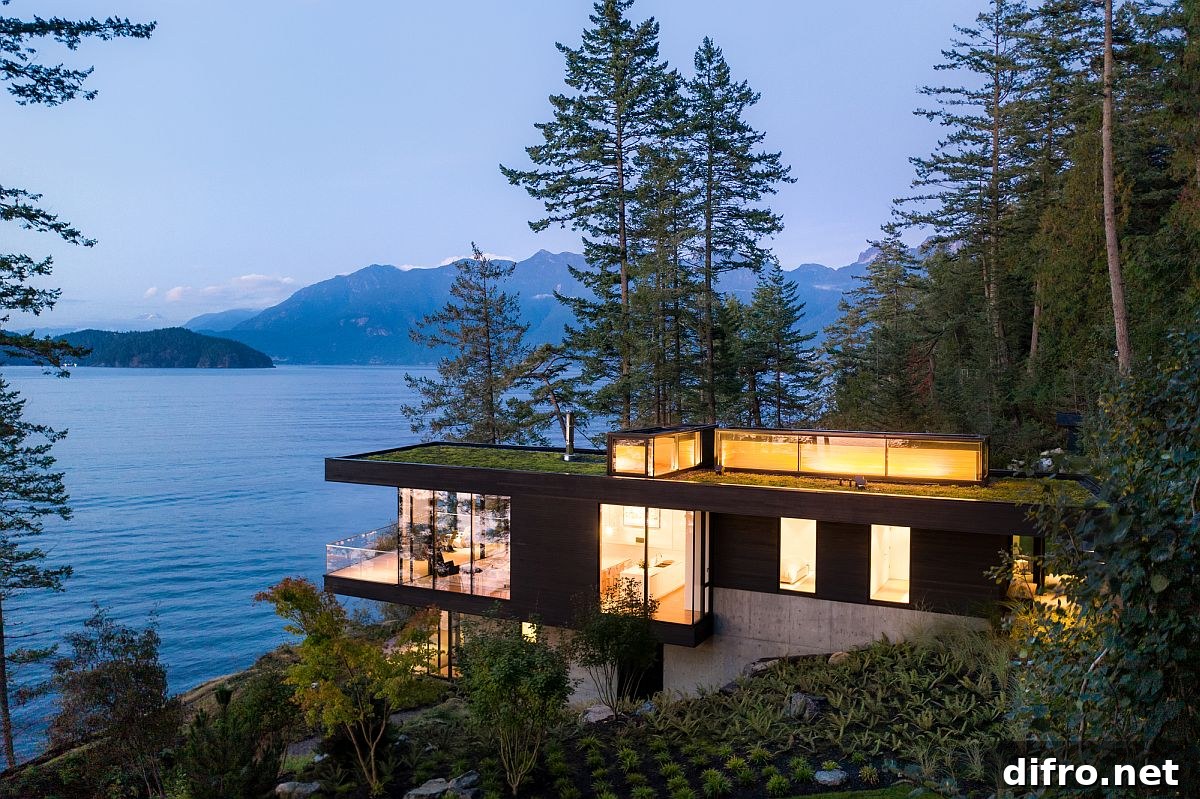
A weekend retreat, a second home or a full-time residence that offers escape from the urban rush, the Bowen Island House designed by Office of McFarlane Biggar Architects + Designers combines contemporary comfort with thoughtful sustainable design. Located on Bowen Island in British Columbia, Canada, this modern cabin is cloaked in black-stained cedar and topped with a living green roof, allowing the building to recede into the surrounding forest while offering breathtaking views of the ocean and distant mountains.
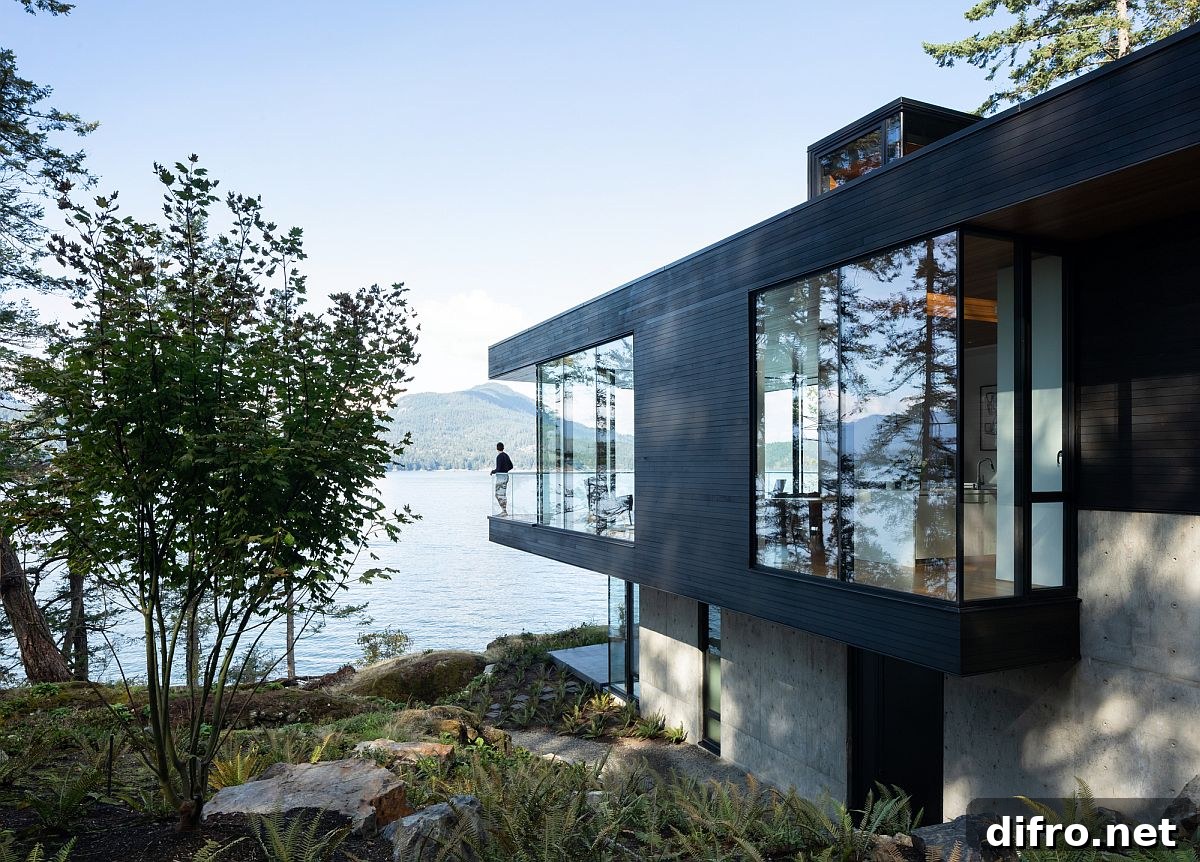
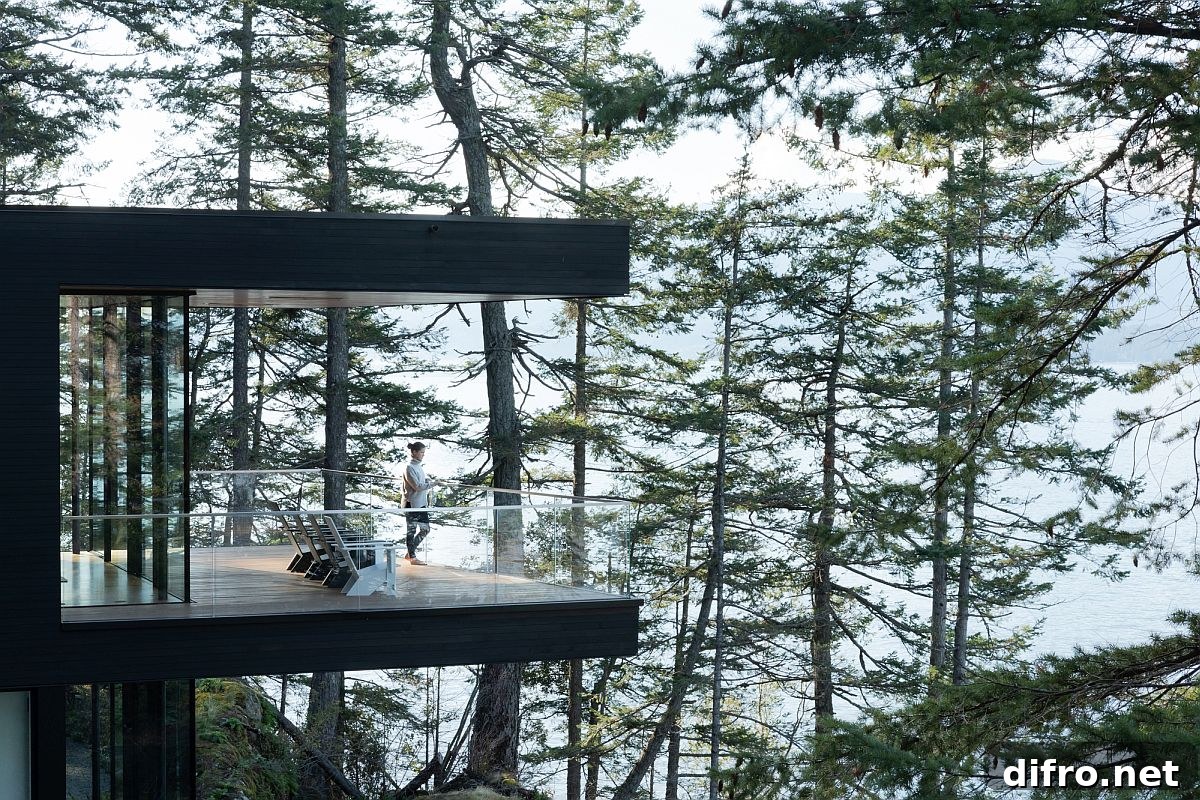
From a distance the house is easy to miss: the dark, weathered cedar siding and the planted roof create a natural camouflage that visually integrates the building with the trees and shoreline. Up close, the composition of the home is both deliberate and restrained. The primary living spaces—open-plan living room, dining area and kitchen—occupy the top level, where large sliding glass doors, floor-to-ceiling glazing and well-placed skylights dissolve the boundary between interior and exterior. These glazed openings frame sweeping ocean panoramas while bringing abundant daylight deep into the plan.
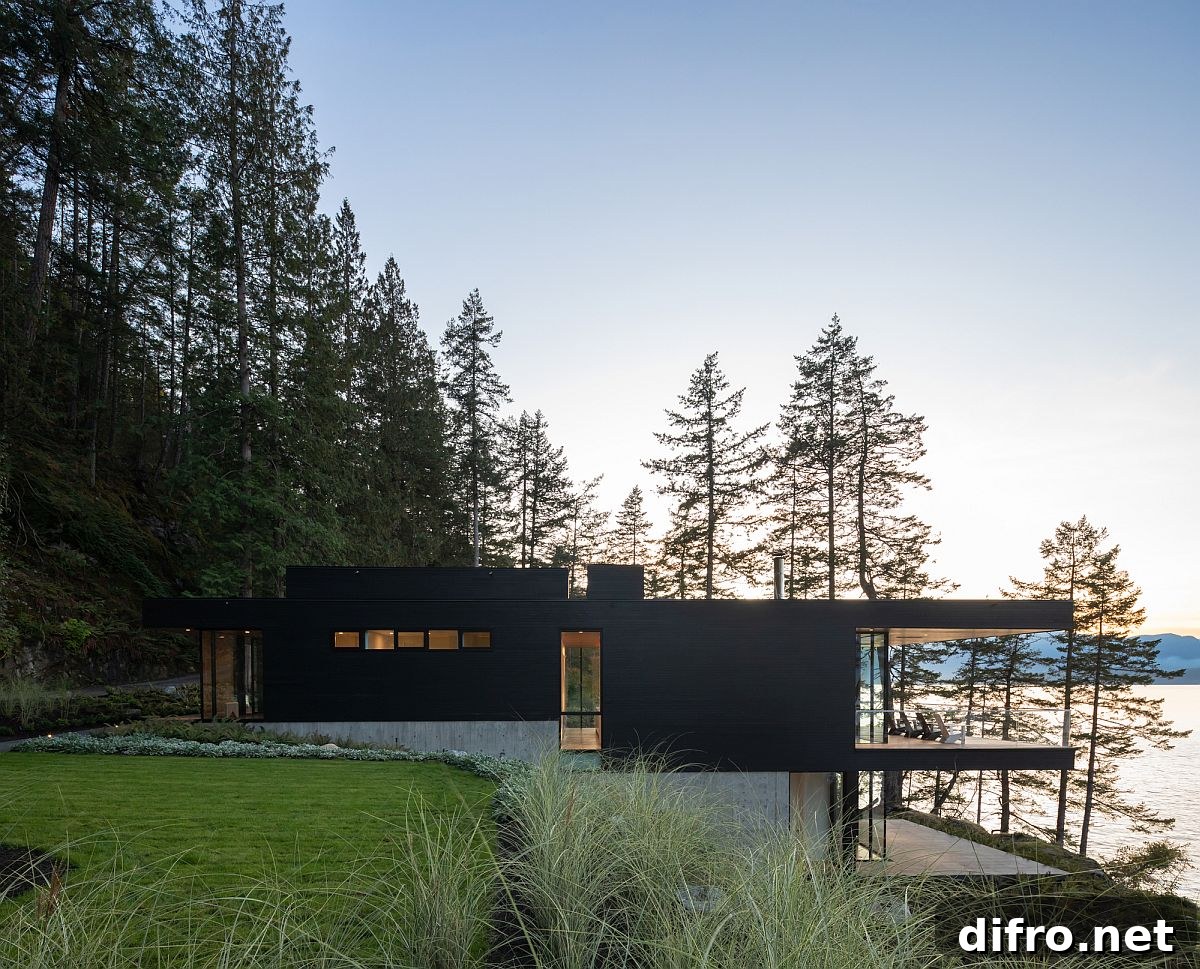
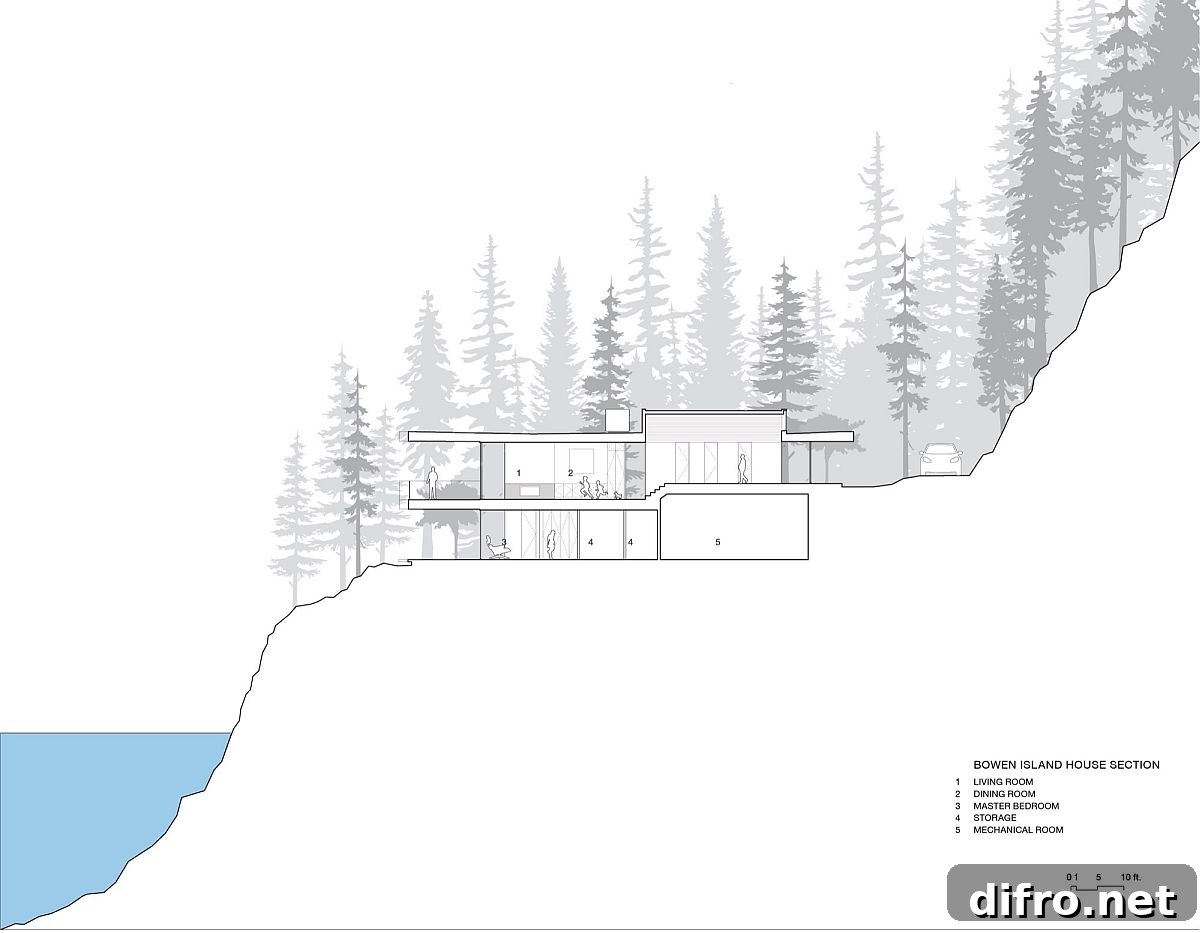
The house’s form responds to the steep, rugged coastline. A cantilevered upper level and an extended timber deck project above the treetops, offering unobstructed views and outdoor living opportunities. On the lower level, bedrooms and utility spaces are deliberately tucked away, creating a calm, private zone separate from the social areas above. Small, carefully framed windows provide intimate views to the forest and rocky cove, while larger expanses of glass capture the broad seascape.
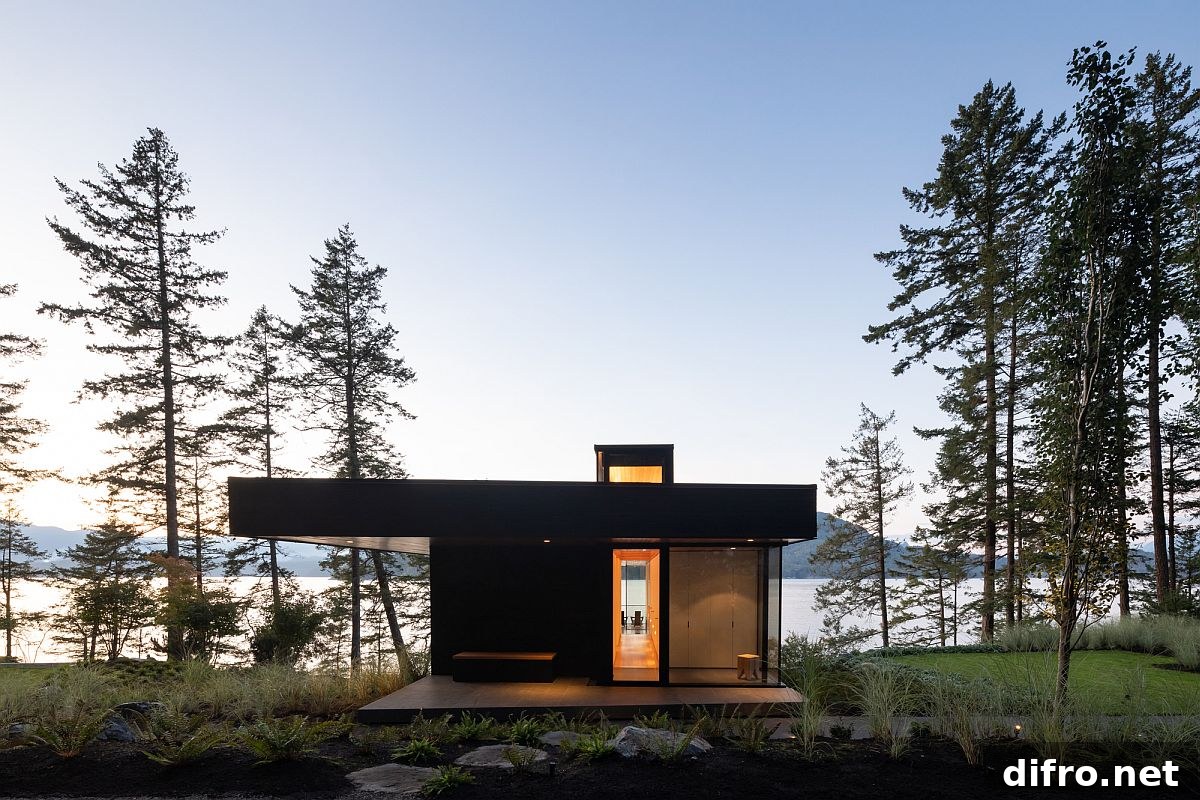
Environmental performance is a central theme of the design. The house employs passive heating and cooling strategies, a planted roof that adds insulation and stormwater management benefits, and renewable energy systems that enable extended off-grid operation. Together these features keep the home’s carbon footprint low while maintaining comfort year-round. The combination of thermal design, daylighting and natural ventilation reduces reliance on mechanical systems and aligns the project with sustainable living principles.
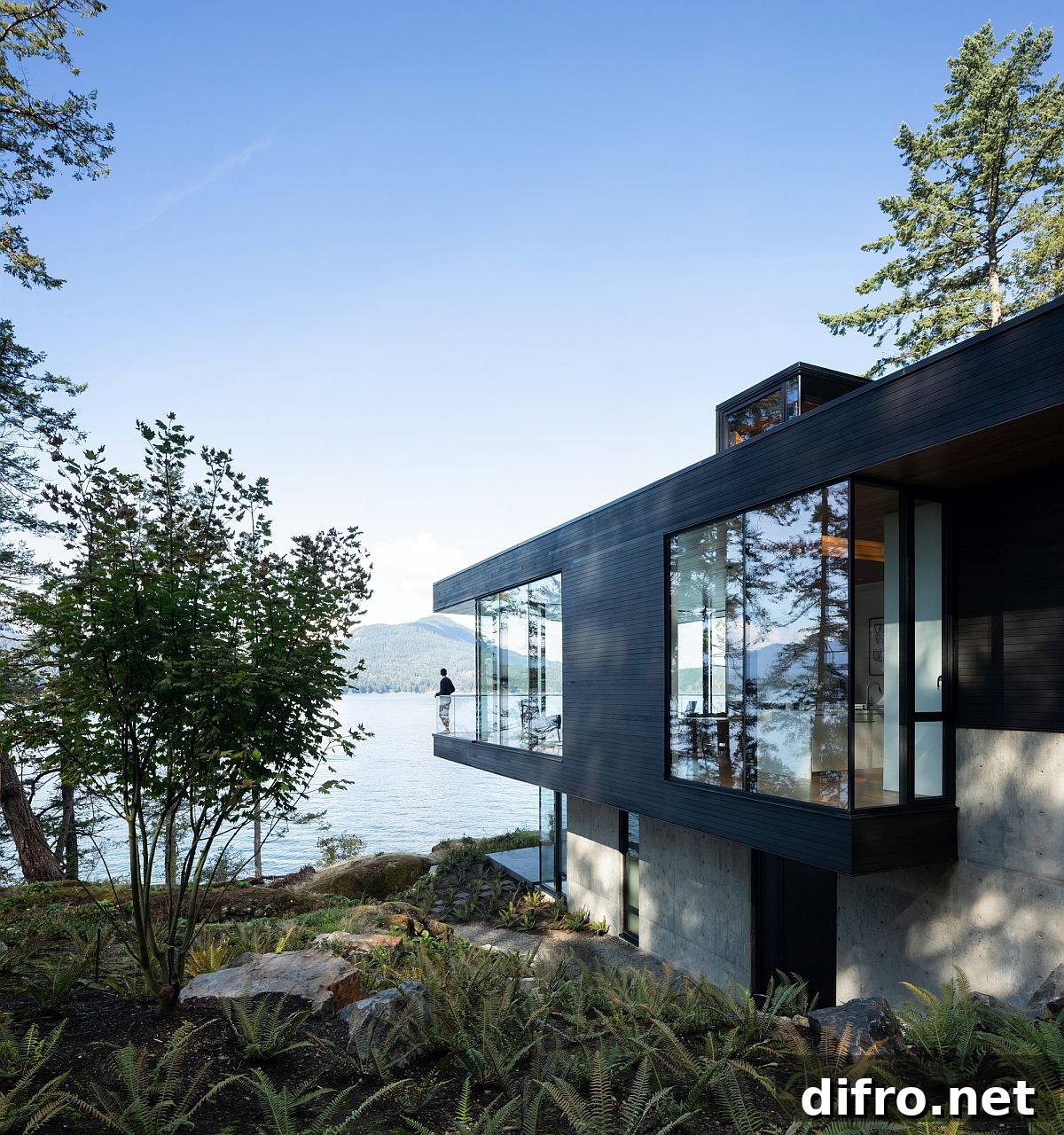
Materiality is intentional and restrained. The exterior’s dark-stained cedar offers durability and a low-reflective finish that reduces the building’s visual presence, while timber detailing on the deck and interior contributes warmth and a human scale. Inside, minimal contemporary finishes emphasize clean lines and daylight, supporting an architecture that highlights the surrounding landscape rather than competing with it.
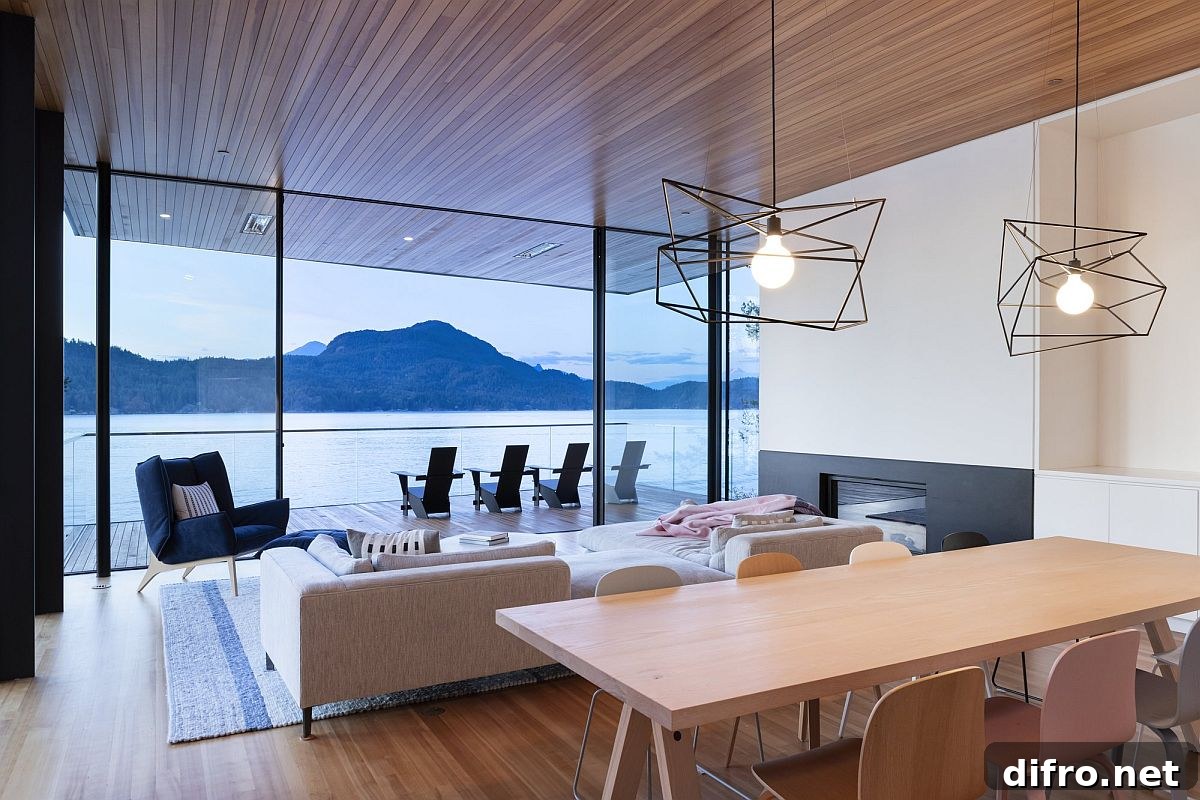
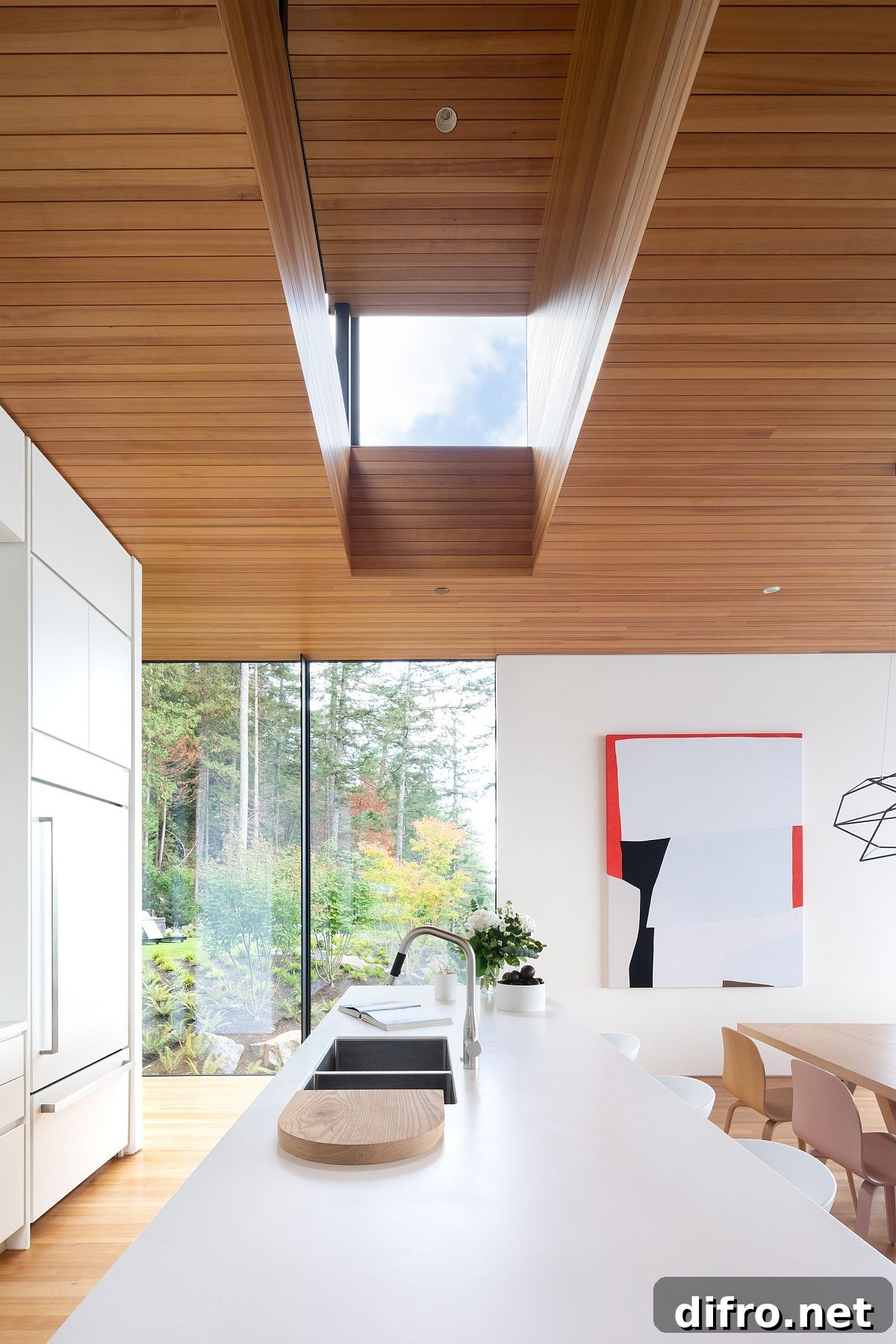
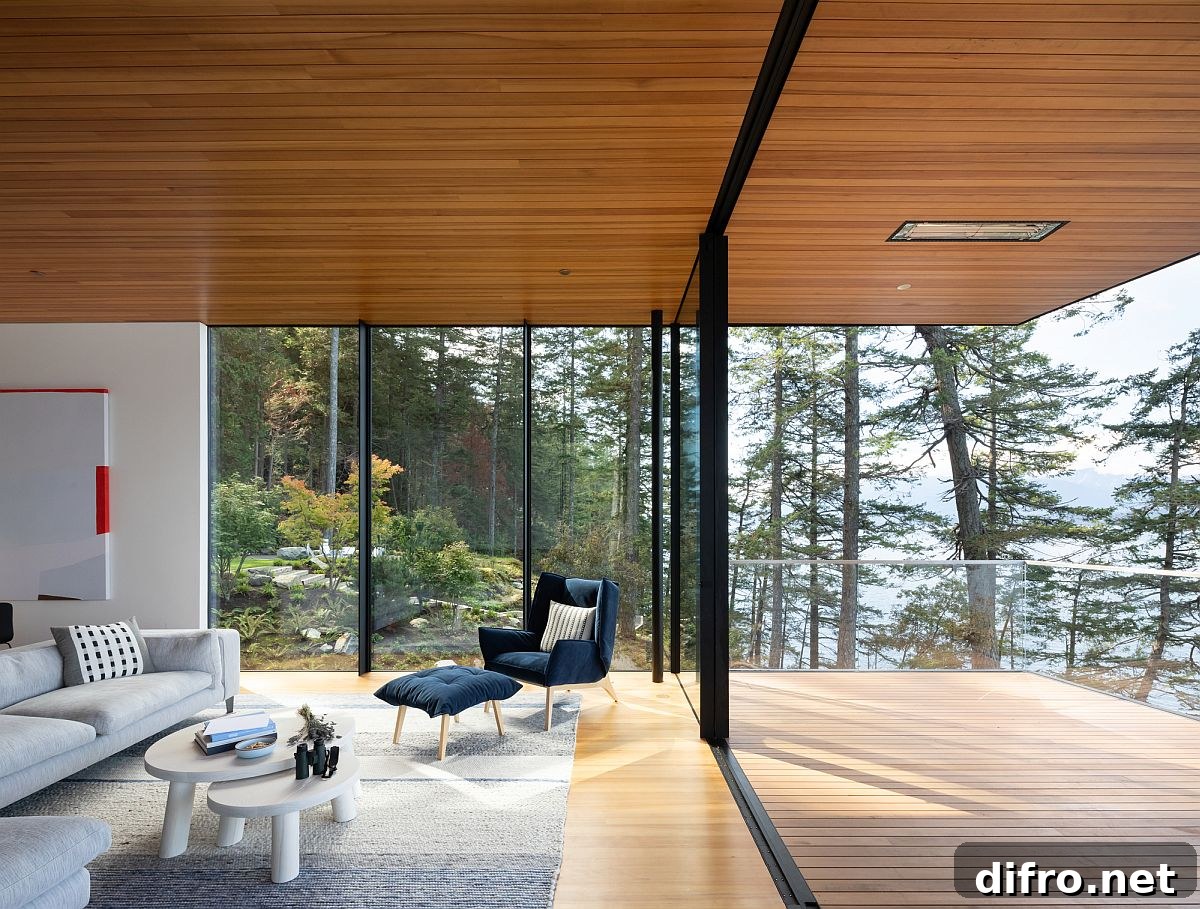
The succinct spatial sequence through the house orchestrates a path from the forest floor to floating above the rugged shore. Connecting the architecture and nature, windows offer intimate views differing distinctively from the expansive views of the ocean; minimal frames help dematerialize the building skin while maximizing views and daylight. The children’s bedrooms and kitchen enjoy framed views of the rocky cove to the west.
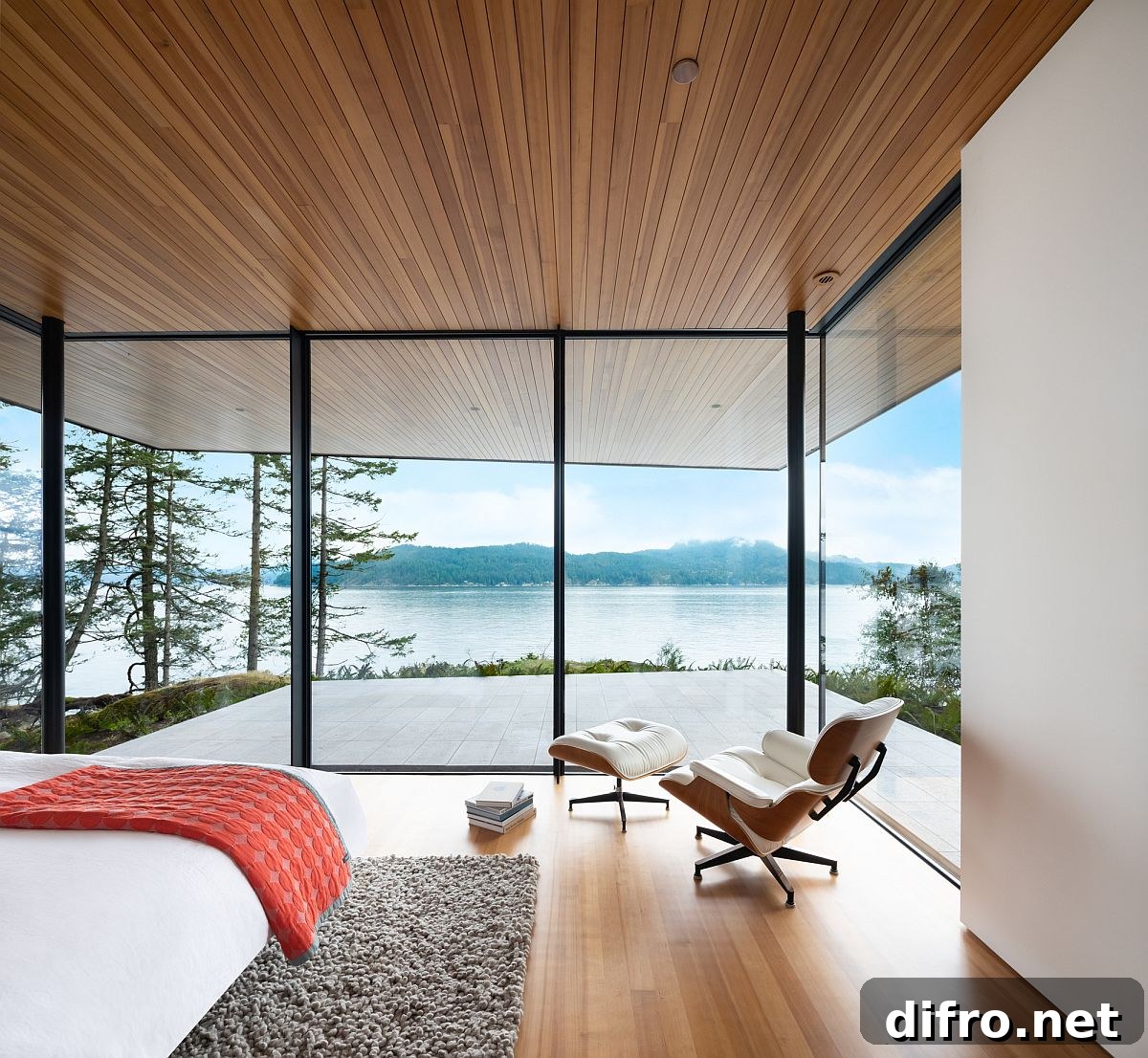
Thoughtful siting, simple material choices and energy-conscious systems work together to make the Bowen Island House a model of restrained coastal architecture. It offers a contemplative connection to the natural setting—an architecture of views, daylight and texture that invites occupants to slow down, enjoy the changing seasons and live lightly on the land. Photography: Ema Peter Photography.