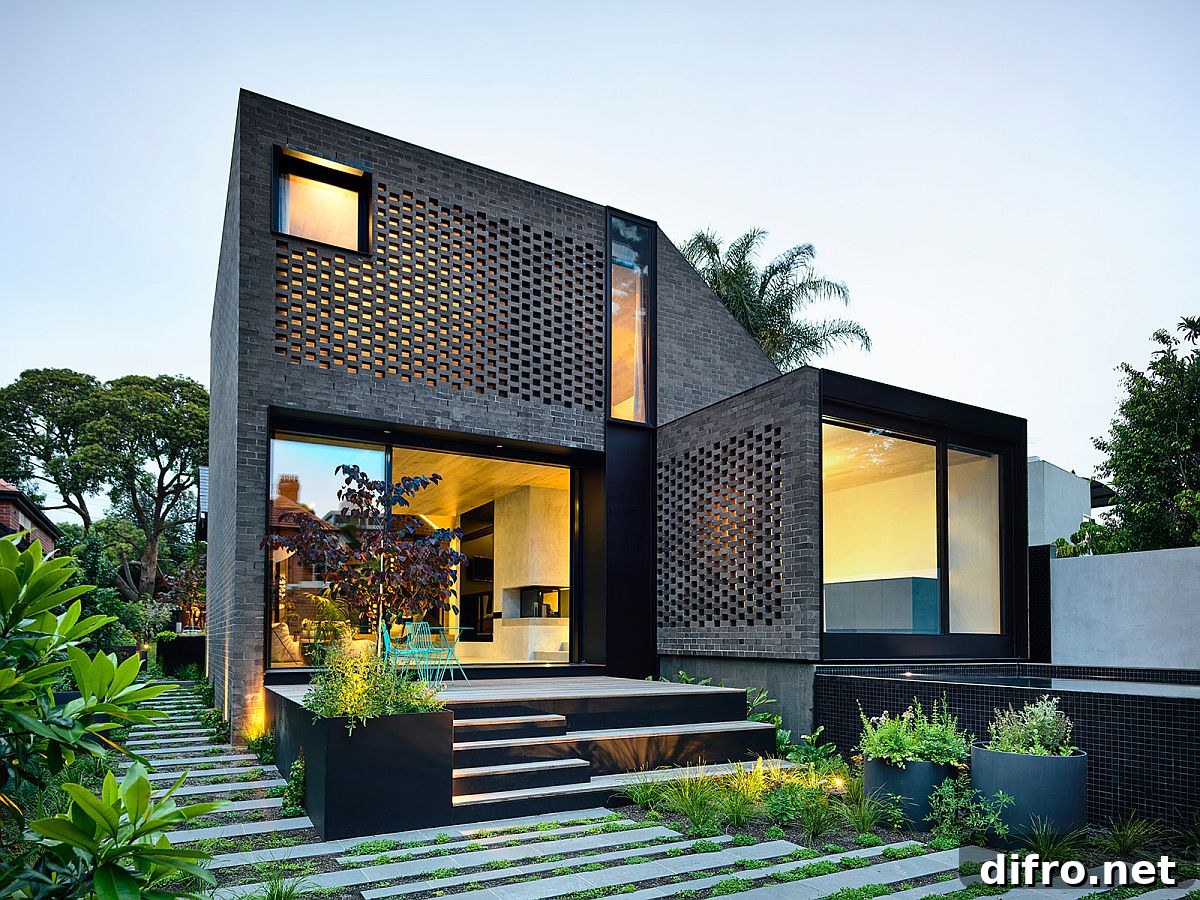
Modern extensions strive to strike a careful balance between the contemporary and the classic, creating additions that feel both fresh and sympathetic to the original building. The York St Residence on busy York Street in St. Kilda, Melbourne, is a clear example of this approach. Designed by Jackson Clements Burrows Architects, the project adds a two-storey, contemporary rear extension to a cherished heritage Australian home. Rather than simply mimicking the original structure, the design intentionally bridges old and new, creating a dialogue between heritage form and modern materiality.
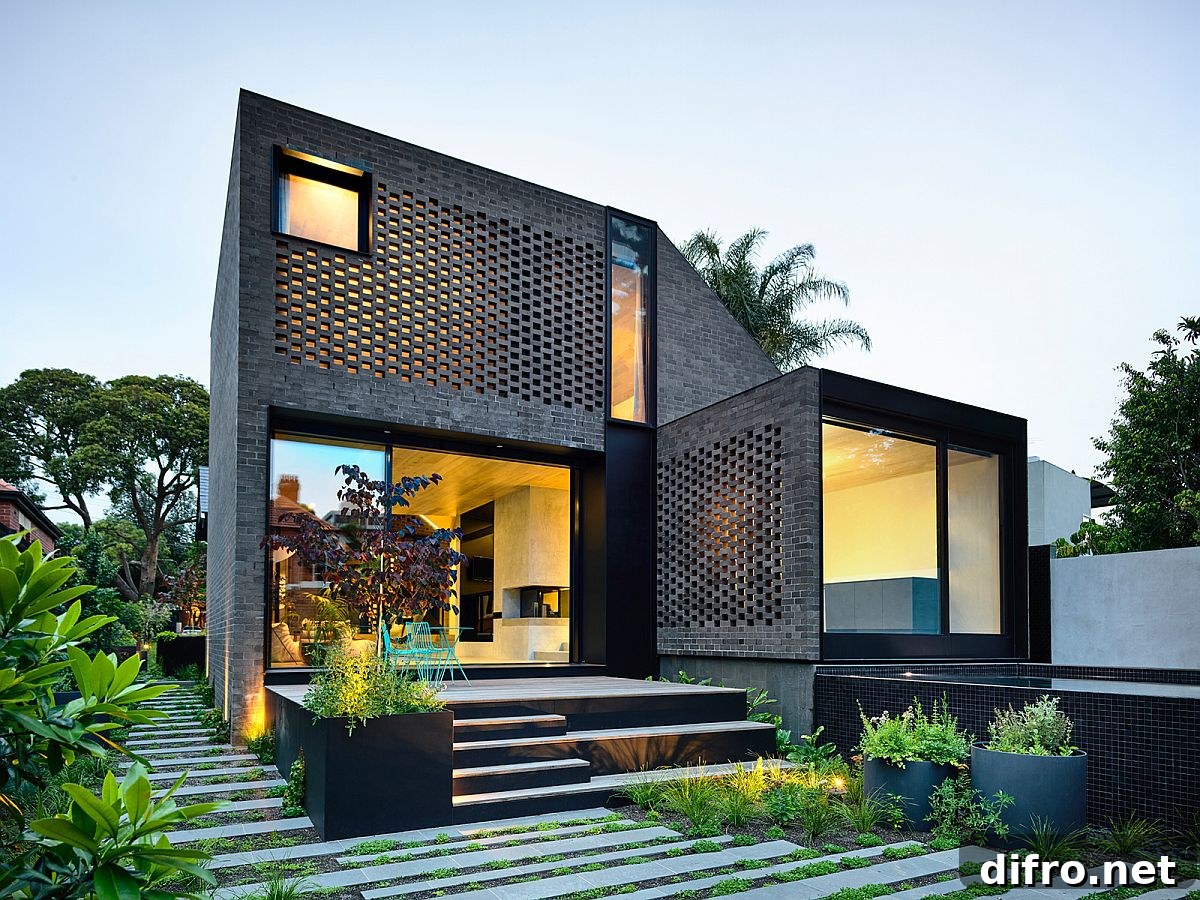
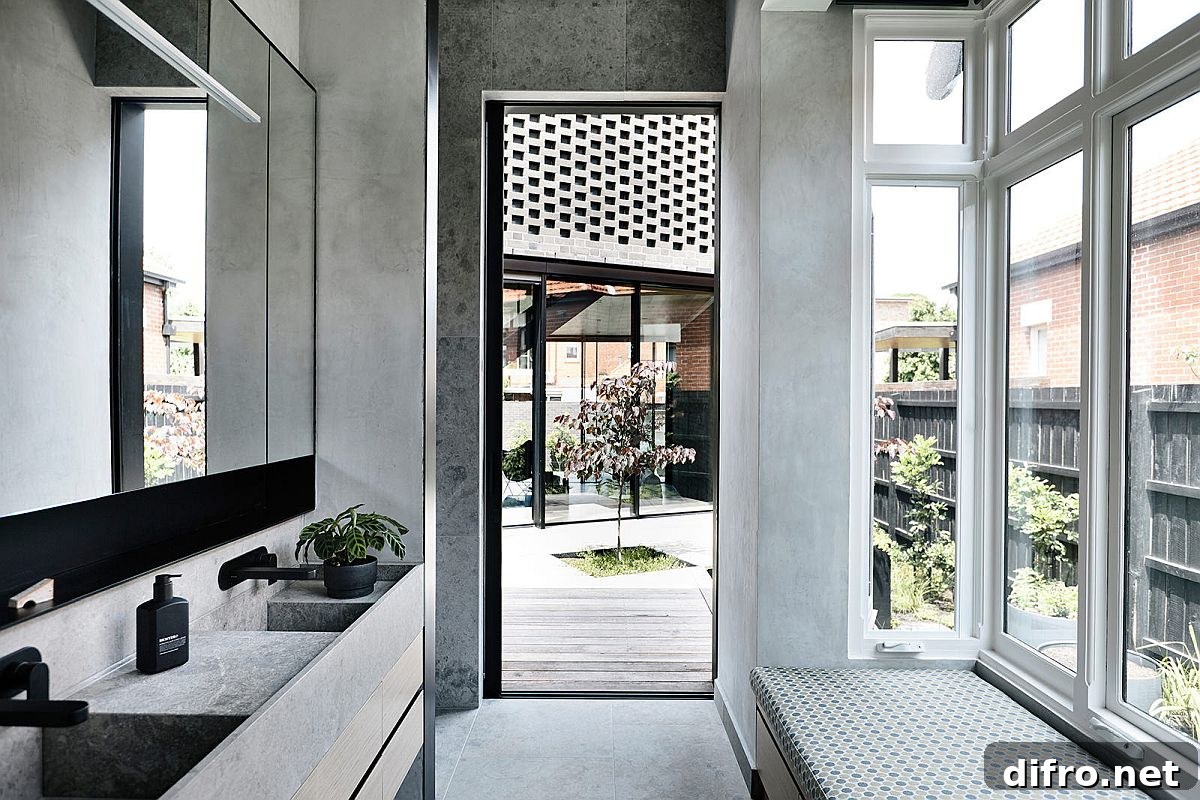
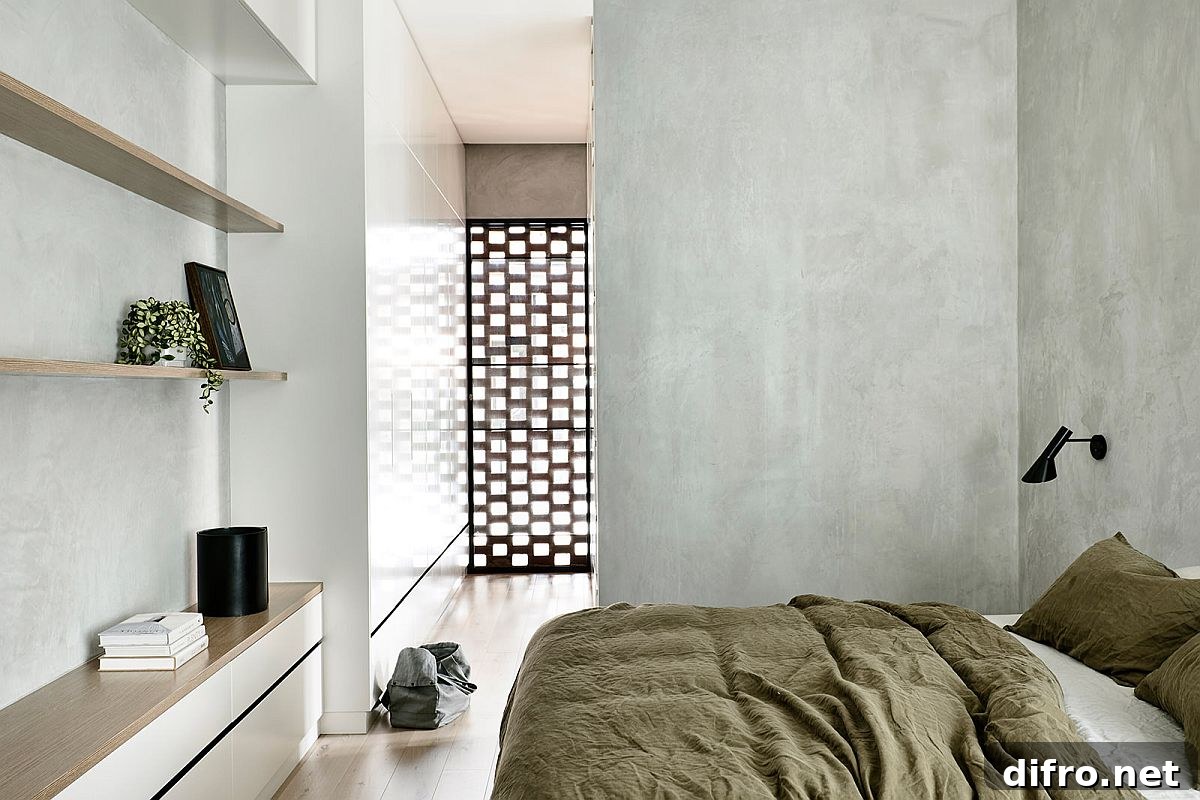
The new addition has a distinctive geometry that deliberately contrasts with the traditional forms of the original house while drawing inspiration from the familiar gabled roofs of the surrounding streetscape. The extension connects to the main house via a glazed link that is elegantly screened by striking hit‑miss brickwork. This brick screen performs on multiple levels: it provides privacy, modulates daylight, and gives the addition a textured, tactile character that complements the original masonry rather than competing with it.
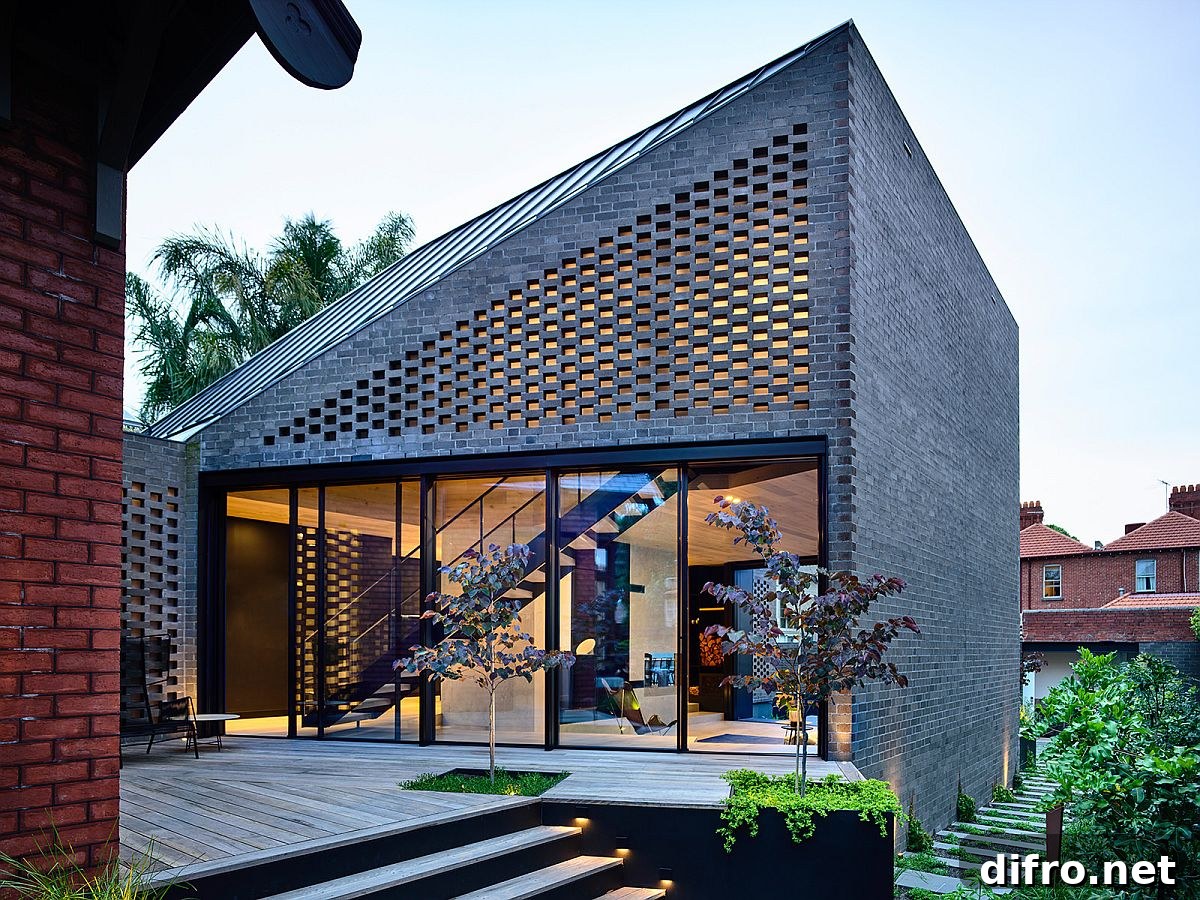
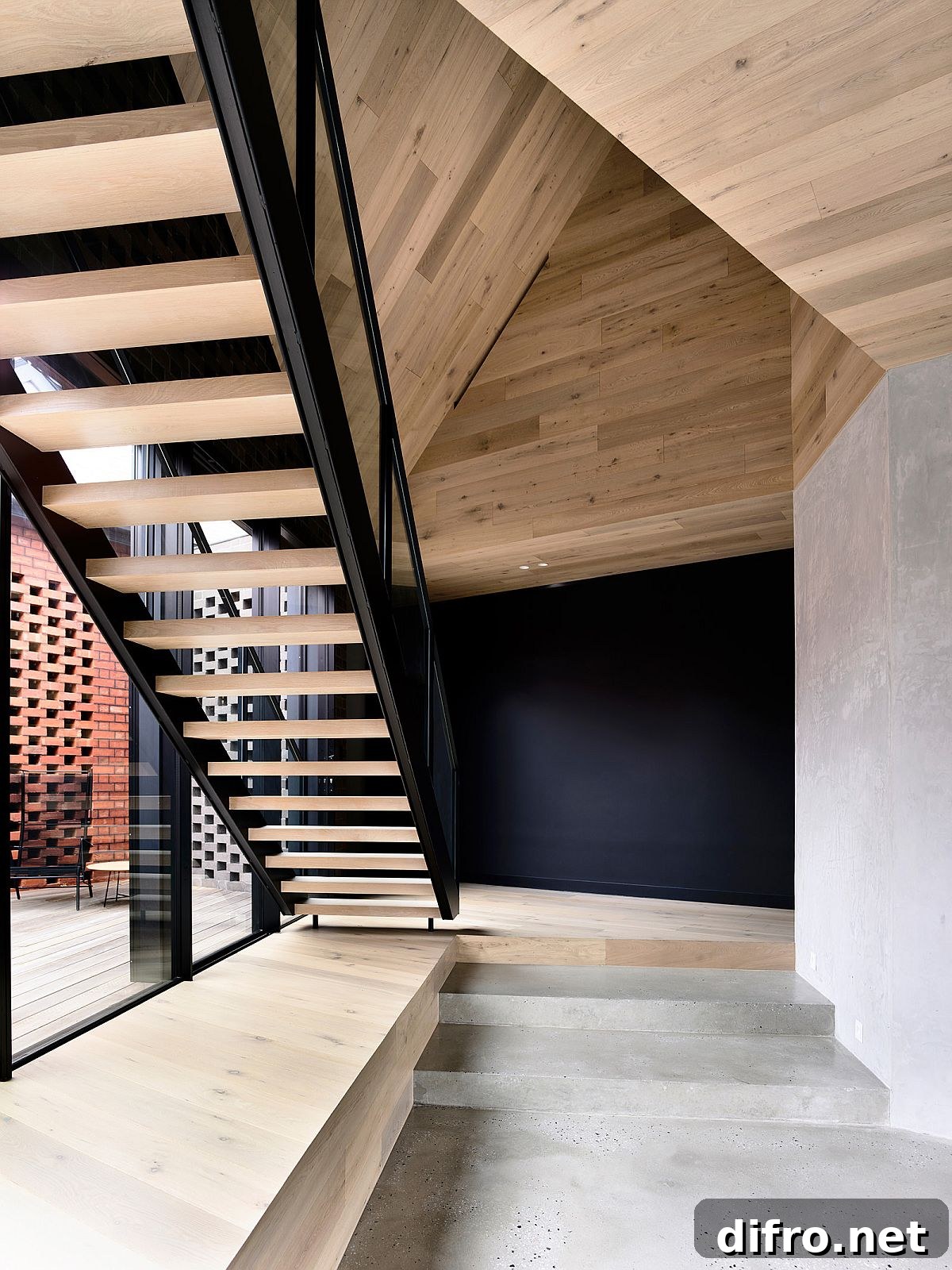
A small courtyard floods the new interior with natural light and acts as a generous threshold between old and new. Inside, the lower level is arranged as an open-plan living area where a series of gently raised platforms, rather than full-height partitions, define separate zones. These subtle level changes create a sense of sequence and intimacy while preserving visual continuity and an unhindered flow of daylight throughout the space. The layout supports modern family living—flexible, connected and centered around shared living and dining areas.
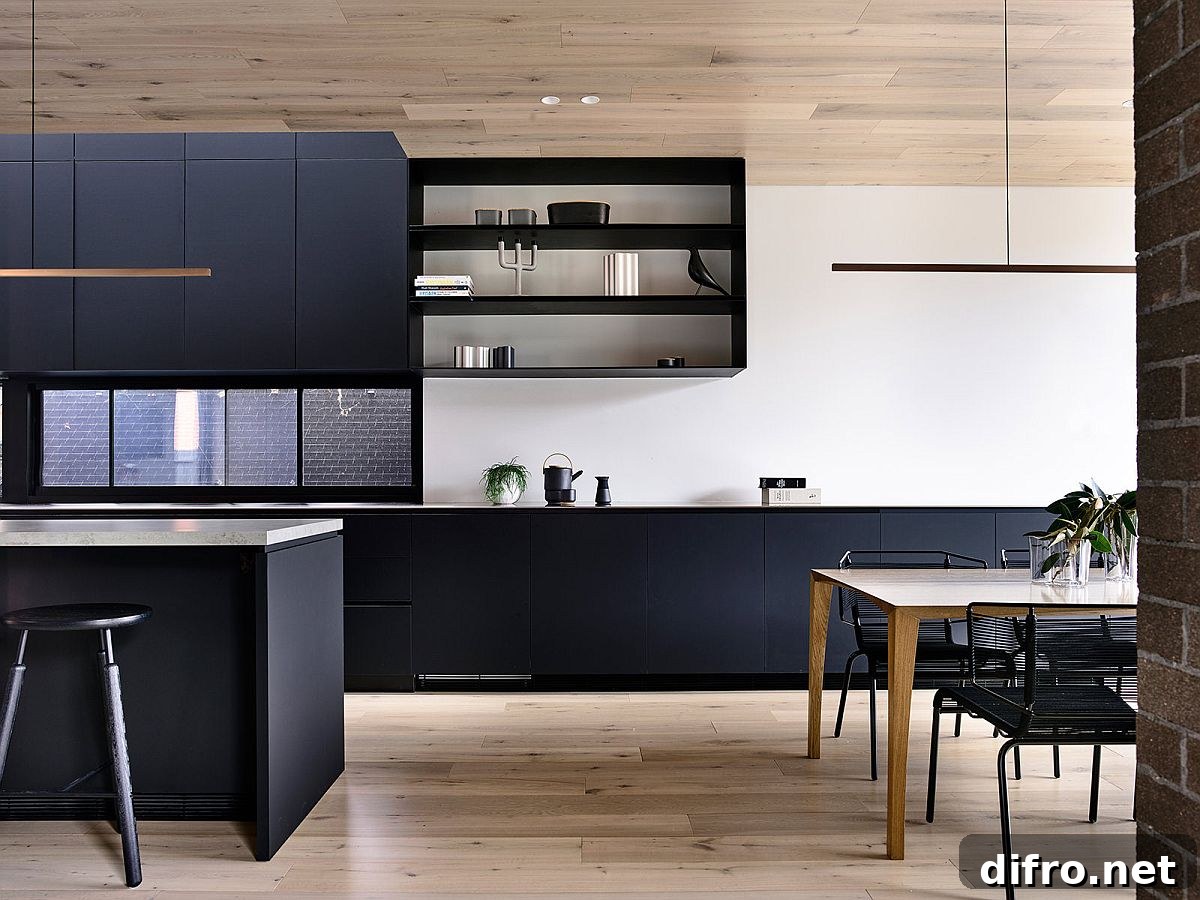
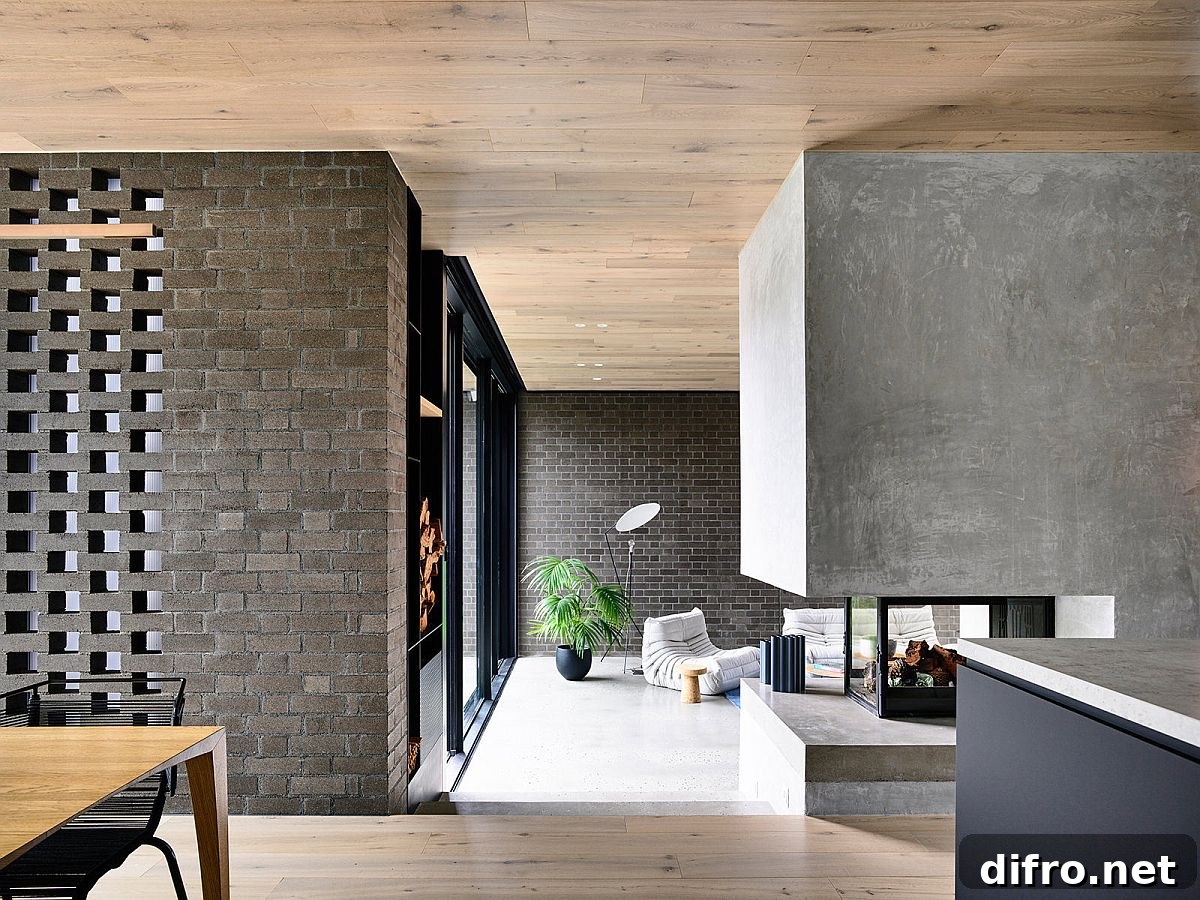
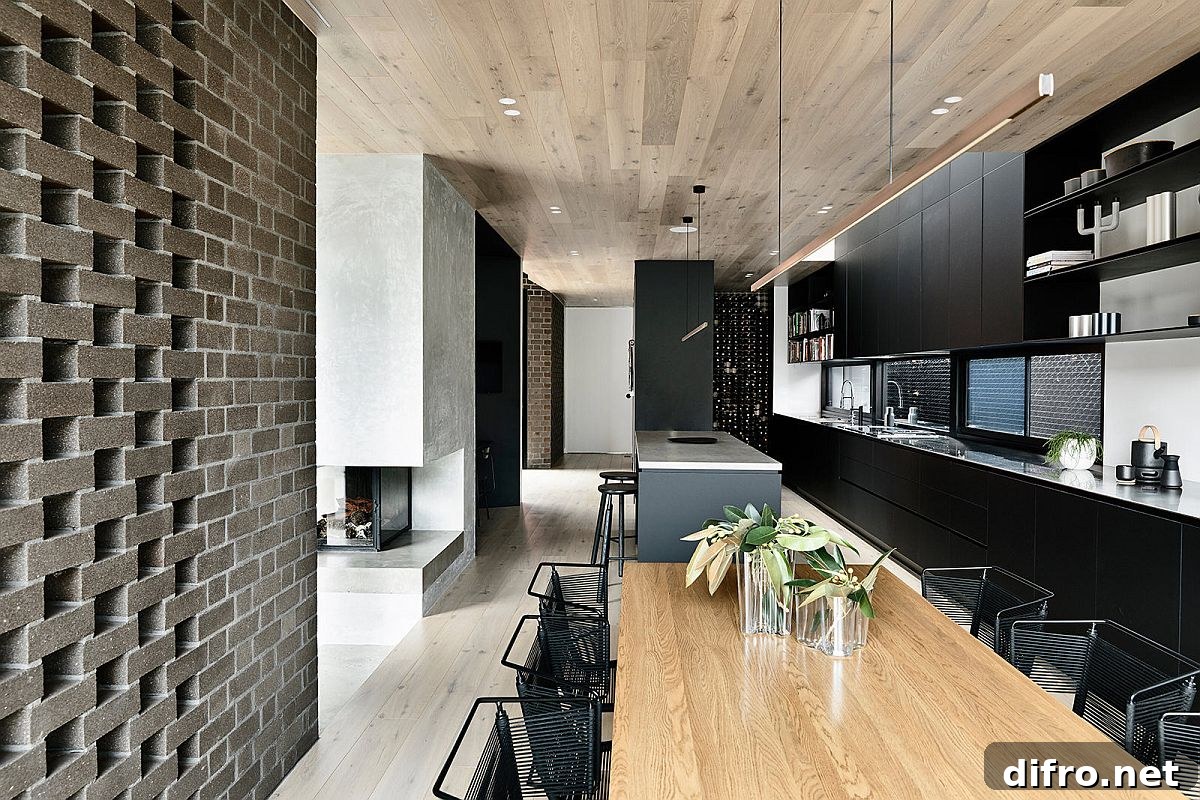
Materials are selected to balance warmth and refinement: steel, timber and brick are combined with concrete and extensive glazing to create interiors that feel both robust and refined. The kitchen features a bluish-gray island and cabinetry that introduce a subtle color palette and contemporary panache without overwhelming the restrained material scheme. Glazed walls and carefully placed openings ensure cross‑ventilation and daylight penetration, reinforcing a strong connection to the landscaped courtyard and the street beyond.
Maximizing natural light and spatial efficiency was central to the brief. The extension is organized around a sculptural stair that connects the ground floor to an upper level with bedrooms and quiet retreats. This staircase is a focal element—both functional and expressive—leading to a landing that houses a calming study nook tucked beneath a folded, origami-like timber-lined ceiling. The folded roof forms and thoughtful ceiling geometry respond sensitively to the hips and gables that characterize neighboring buildings, creating a contemporary silhouette that still respects the locale.
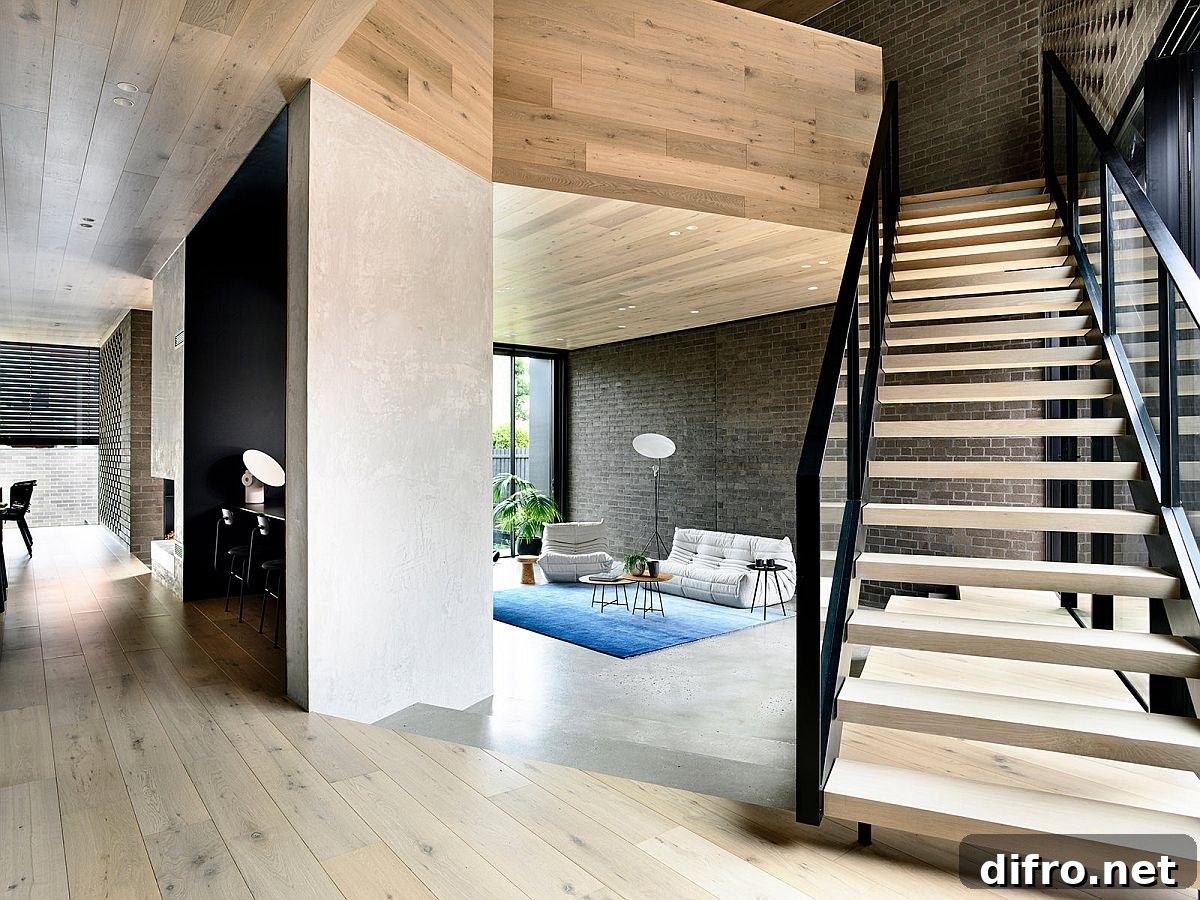
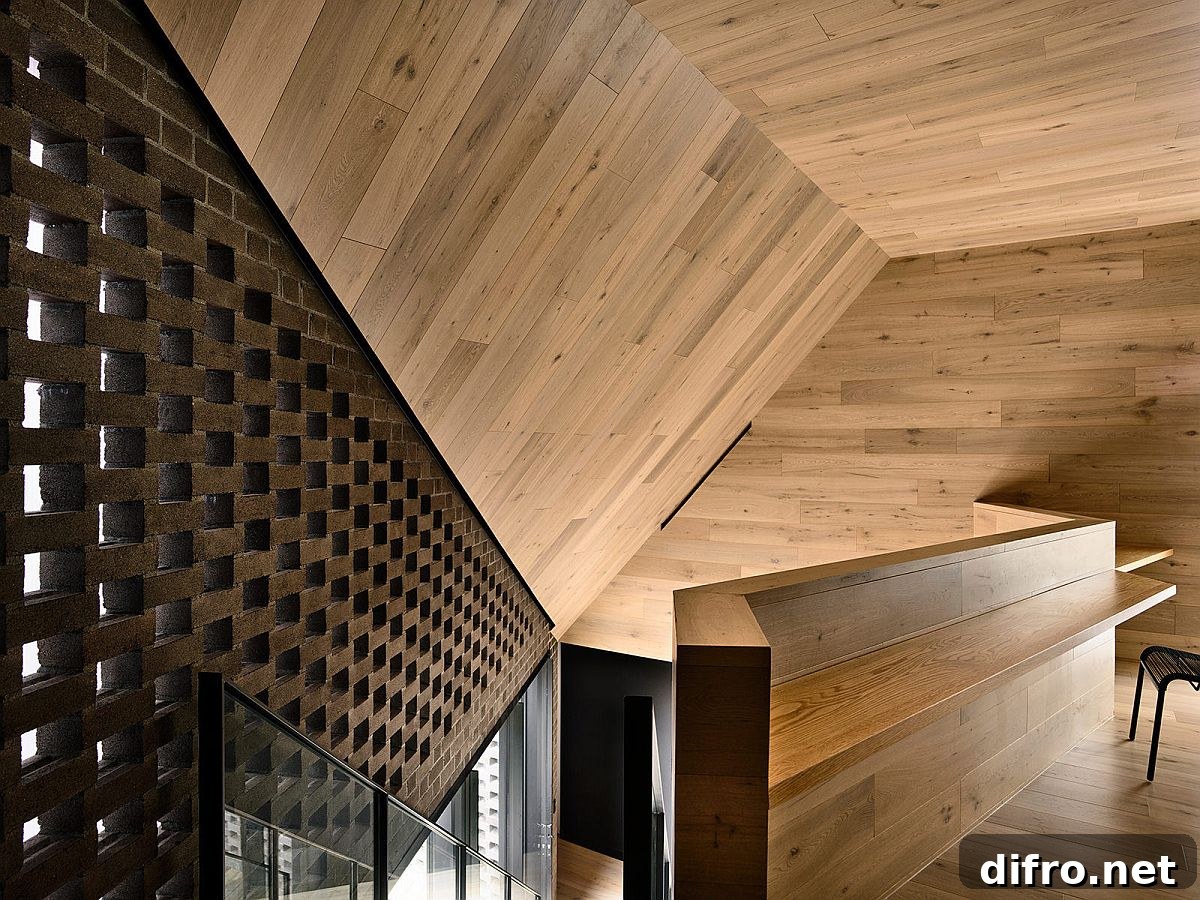
The form responds to the hips and gables of the prevalent existing buildings. A central focus is the sculptural staircase, which delivers its occupants from the ground floor to a landing study nook, set under a folding origami, timber-lined ceiling.
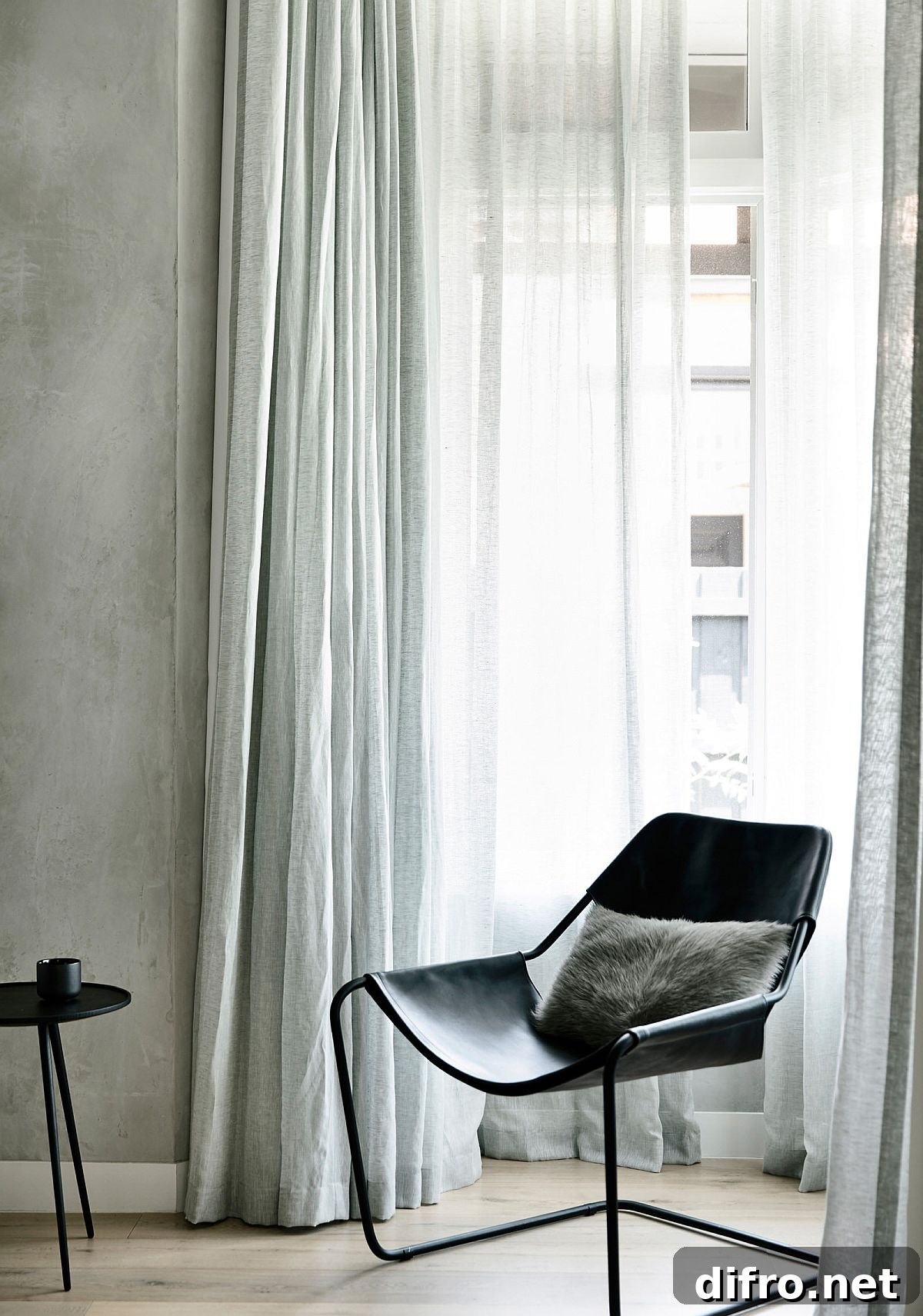
On the upper level, bedrooms and private spaces continue the minimal, contemporary approach: neutral tones, generous daylight and careful detailing create serene interiors that contrast with the textured exterior brickwork. A cozy sitting nook and well-proportioned rooms provide comfortable retreats, while extensive glazing frames views out to the courtyard and garden planting below, bringing landscape into everyday life.
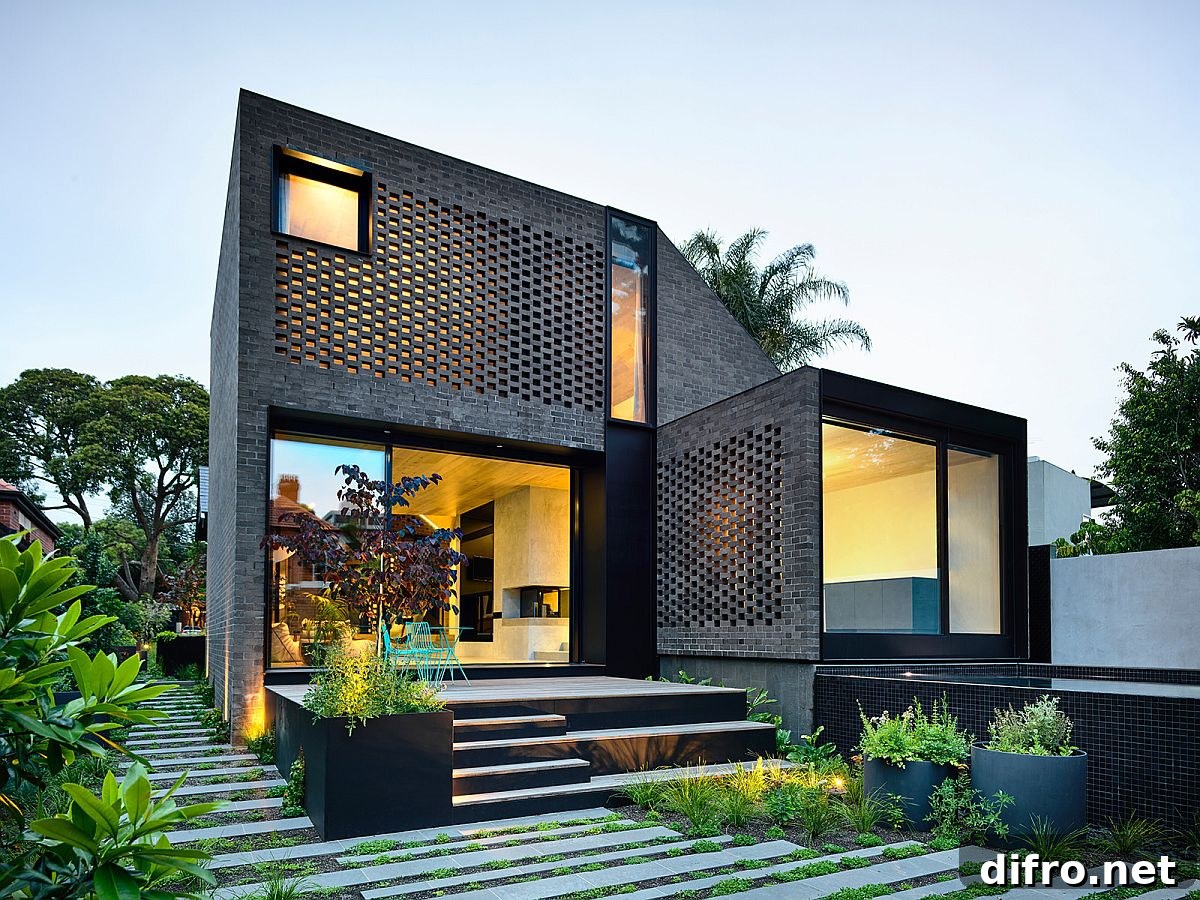
Overall, the York St Residence demonstrates how a contemporary rear extension can respect and enhance a heritage home. Thoughtful use of materials, careful response to the surrounding gables and roofs, and an emphasis on natural light and spatial flow result in an addition that feels both contemporary and contextually appropriate. Photography by Derek Swalwell captures the composition, textures and light that make this project a successful example of sensitive, modern adaptation to a classic Australian streetscape.