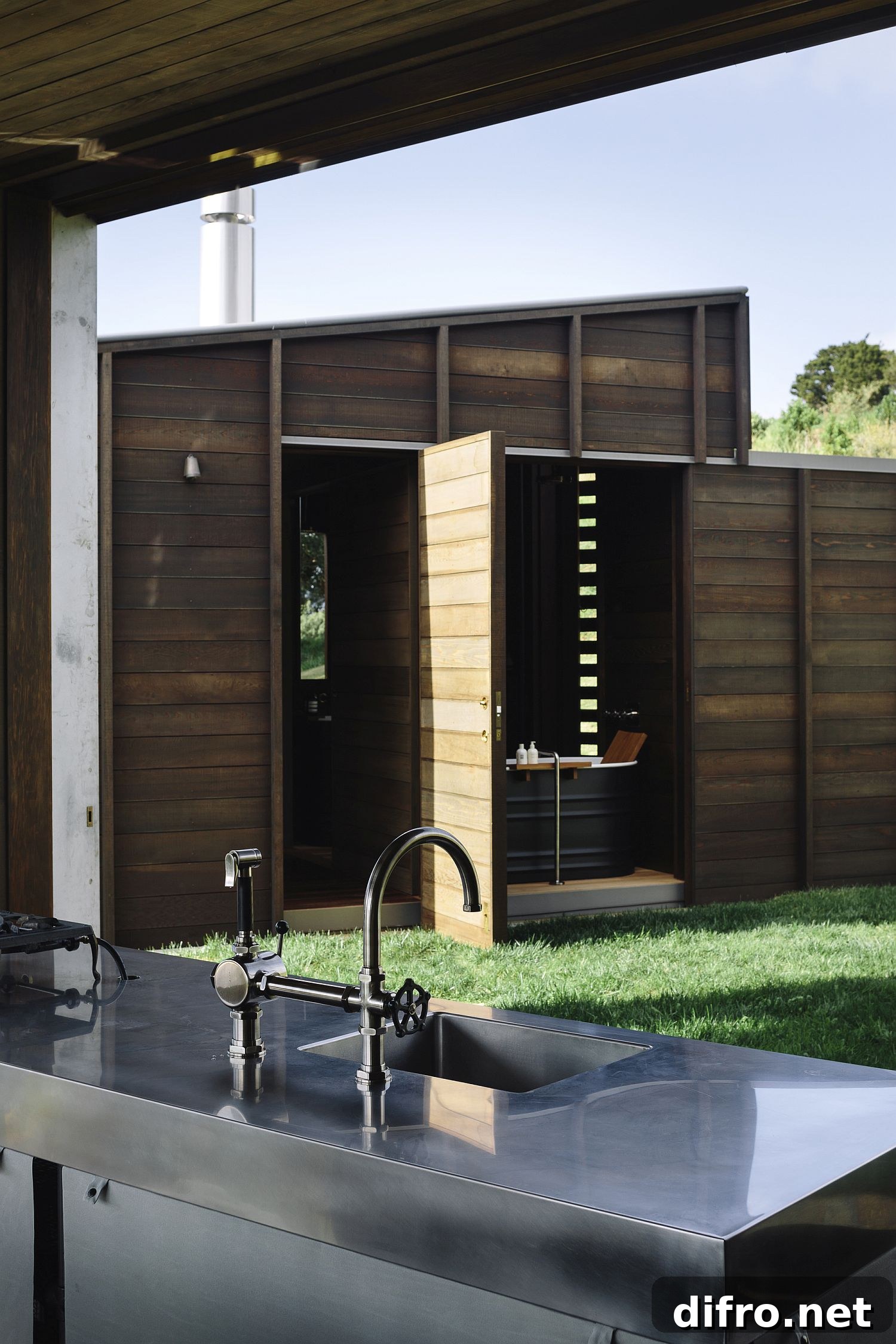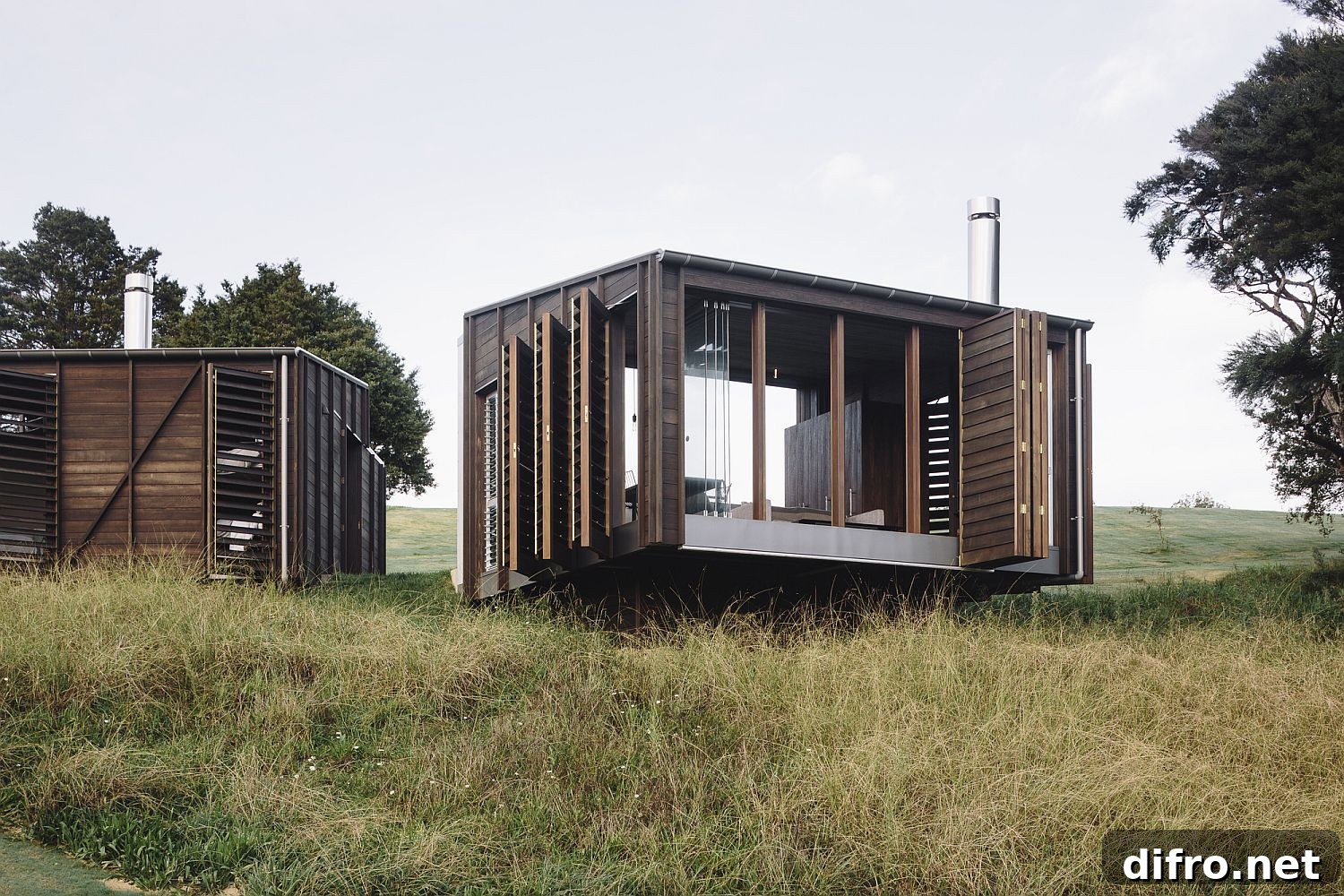
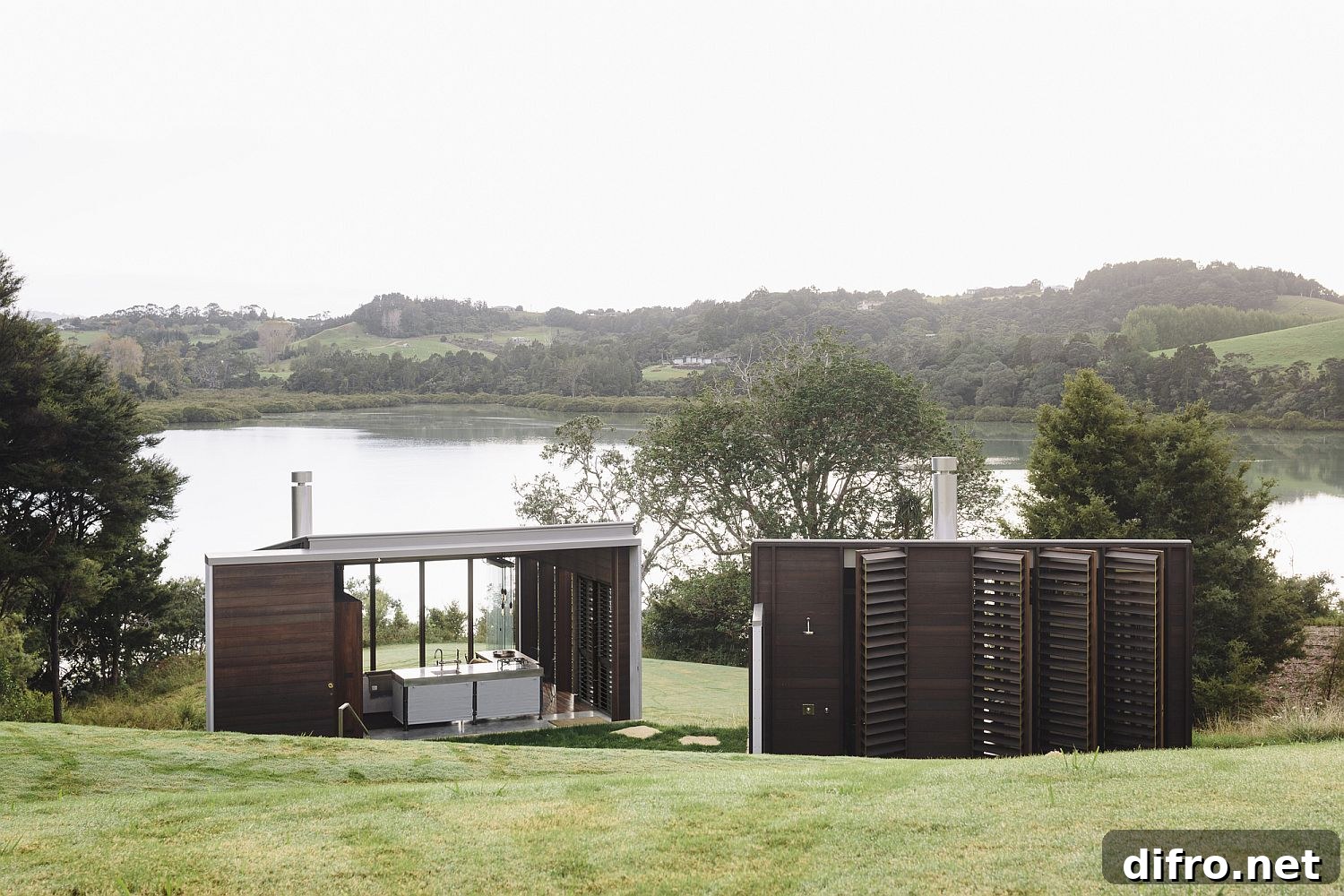
The Camp is an unpretentious name for a getaway that belies the thoughtful design waiting on the Tawharanui Peninsula. This modest wooden cabin, conceived by Fearon Hay Architects, makes elegant use of timber shutters and natural finishes to create a retreat that feels both simple and refined. The composition is straightforward: two connected timber structures sit on a sloping site beside a body of water, one containing shared living spaces and the other dedicated to sleeping. The spatial arrangement is deliberately clear, and the movement from one area to the next is easy and organic.
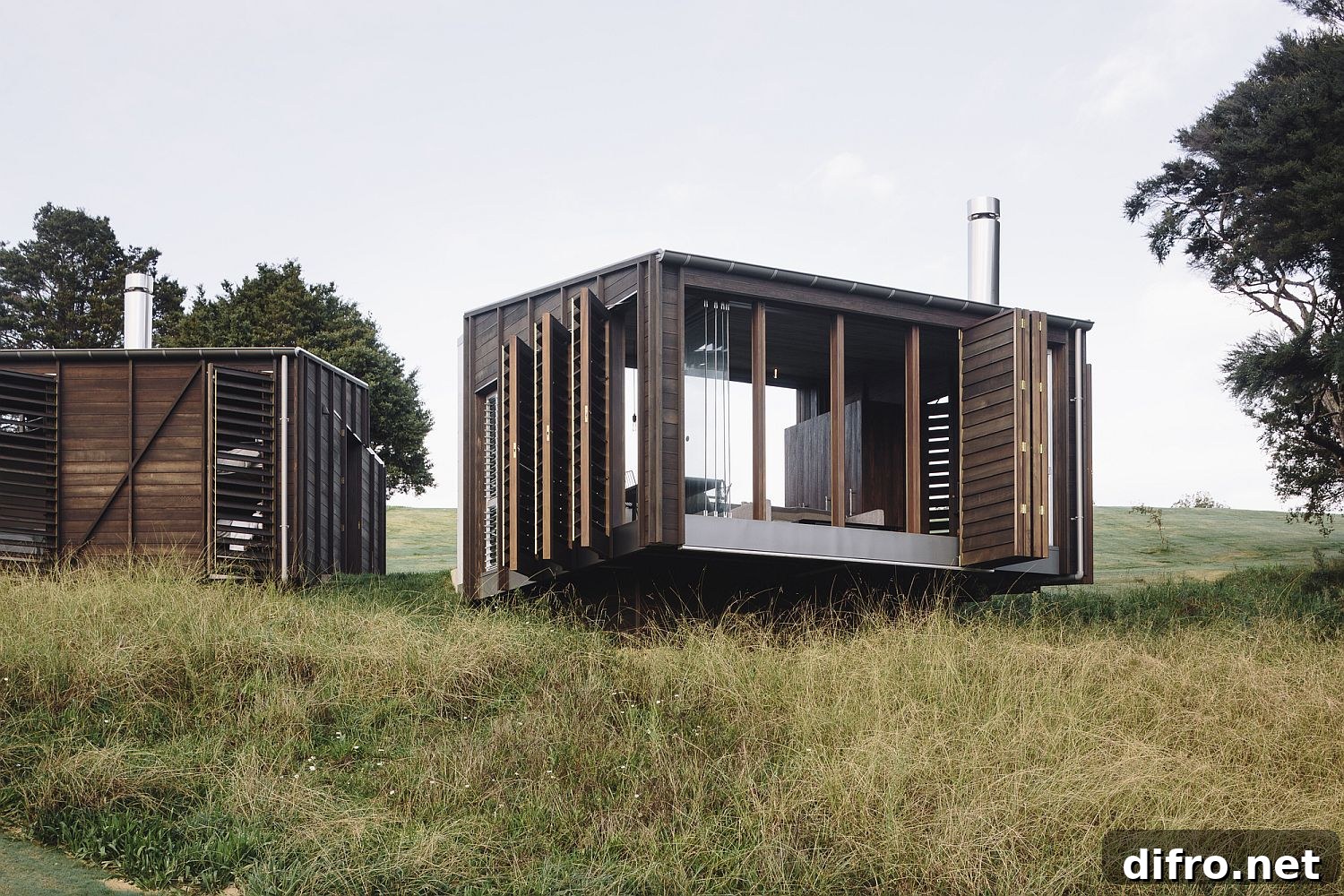
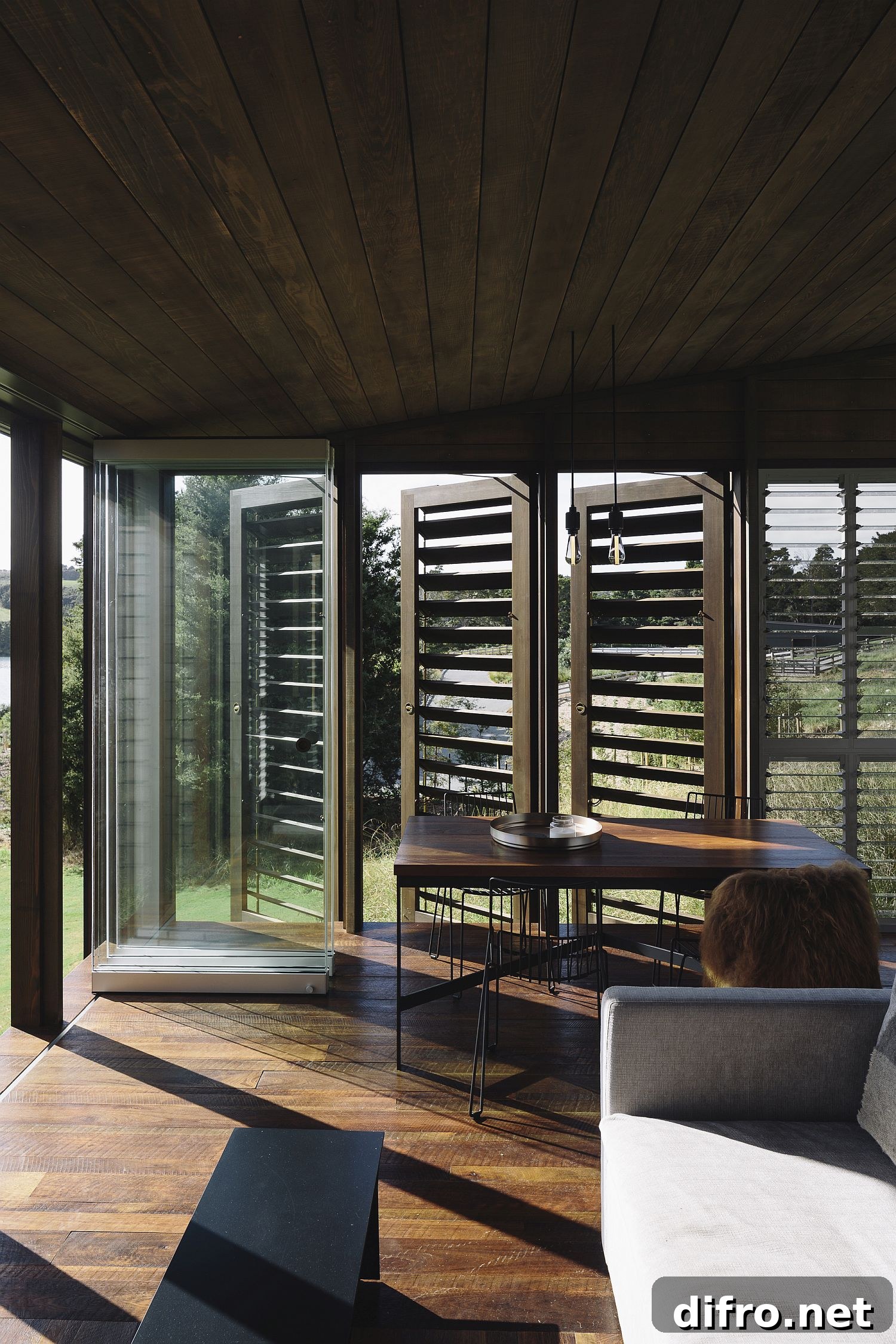
Step inside and minimalism defines the experience. Clean lines, warm timber tones and a restrained palette place the landscape front and center. Large openings and operable timber shutters blur the boundary between interior and exterior, allowing daylight, breezes and views to flow through the cabin. Timber surfaces finished in natural oil lend a tactile warmth and patina that will age gracefully, while shutters can be adjusted seasonally to balance light, warmth and privacy. Each design choice is subtle yet intentional, crafted to celebrate the surrounding landscape rather than compete with it.
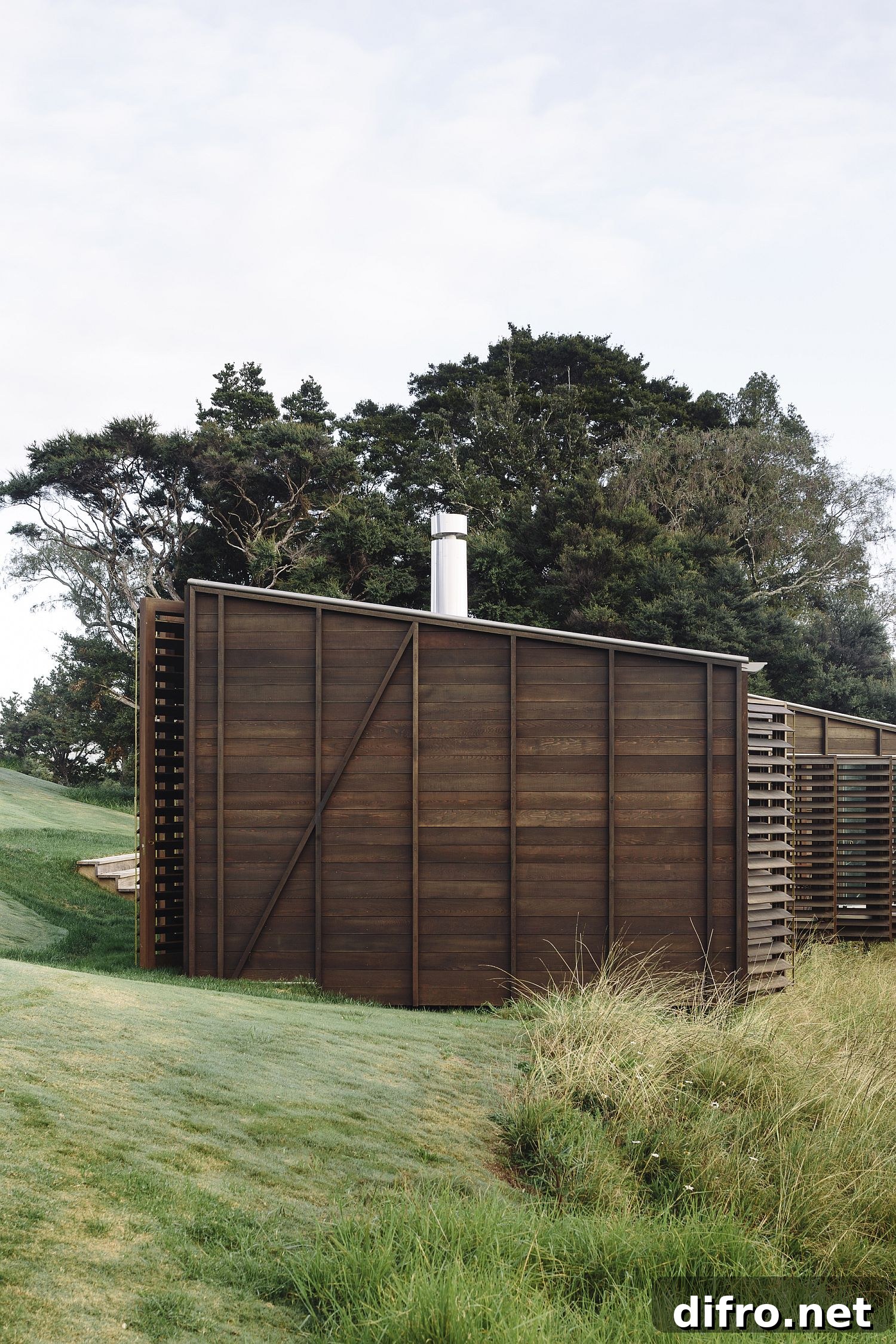
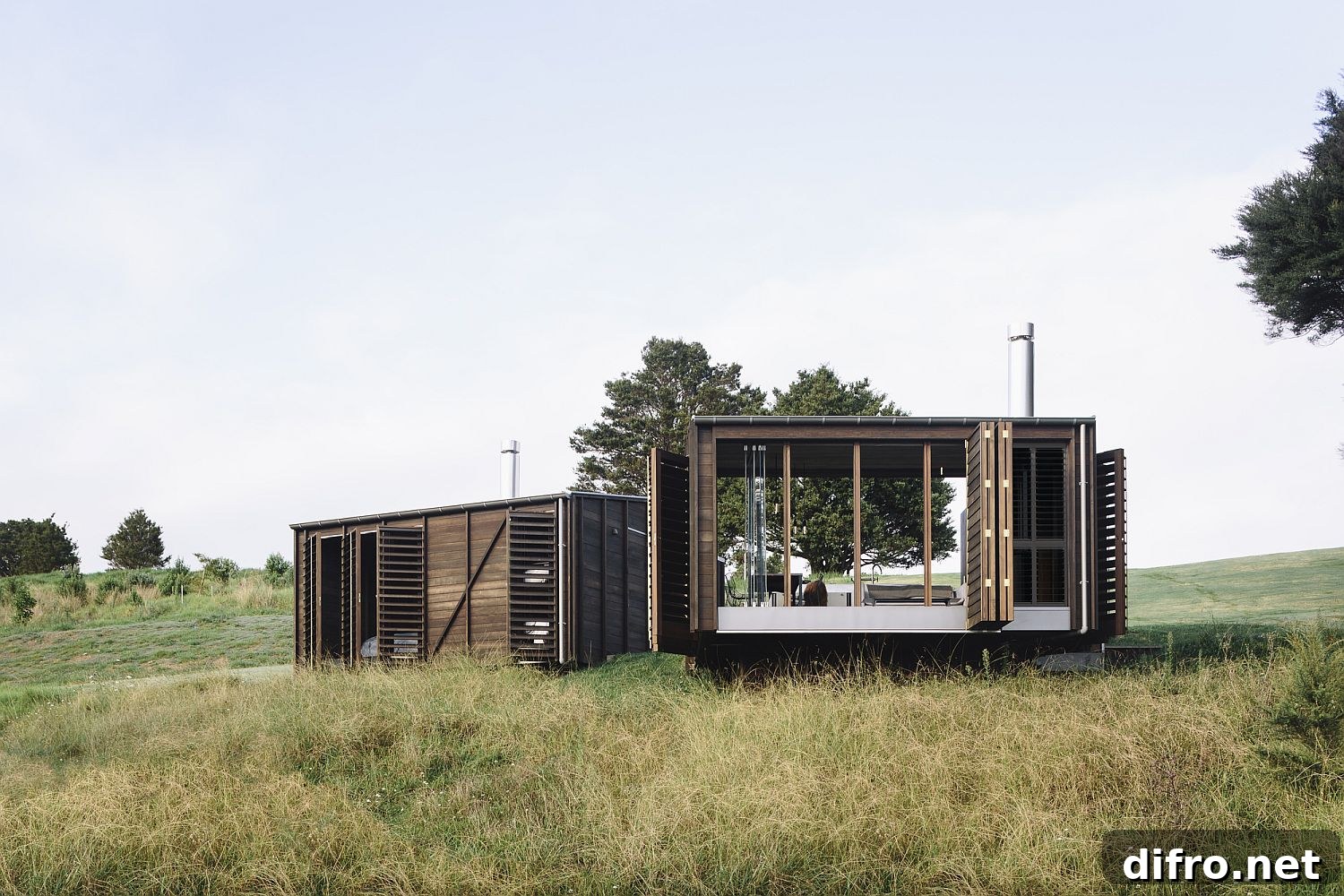
Placed on a gentle slope beside the water, the cabin’s two volumes respond to the site with modesty and clarity. The living pavilion opens to the view, anchored by a warm interior that invites lingering. The sleeping pavilion provides shelter and quiet, with windows framed by timber shutters that allow occupants to dial in ventilation and privacy. Thoughtful decisions—like the proportion of glazing, the rhythm of the shutters and the natural oil finishes—help connect occupants to the changing light and seasons of the peninsula.
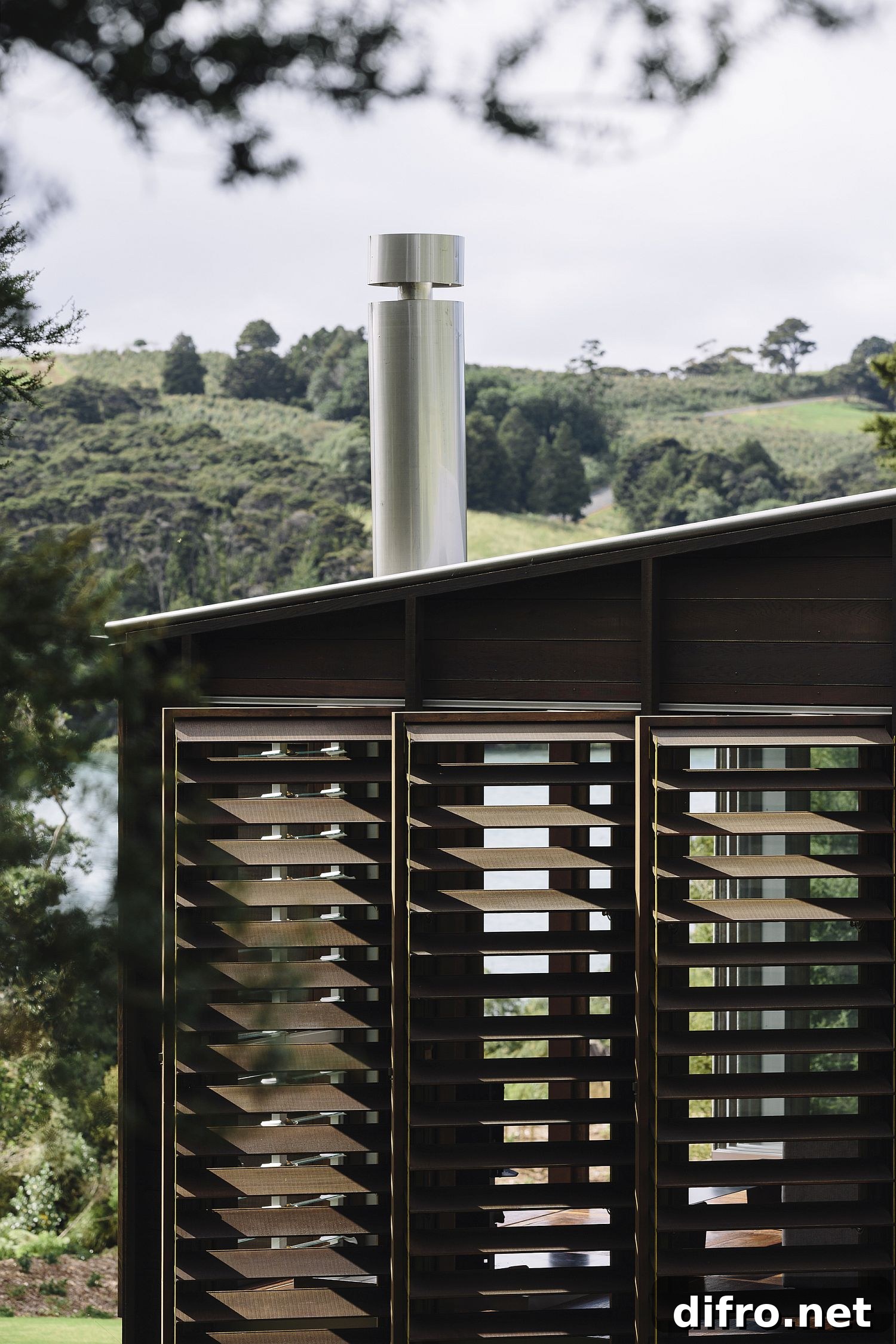
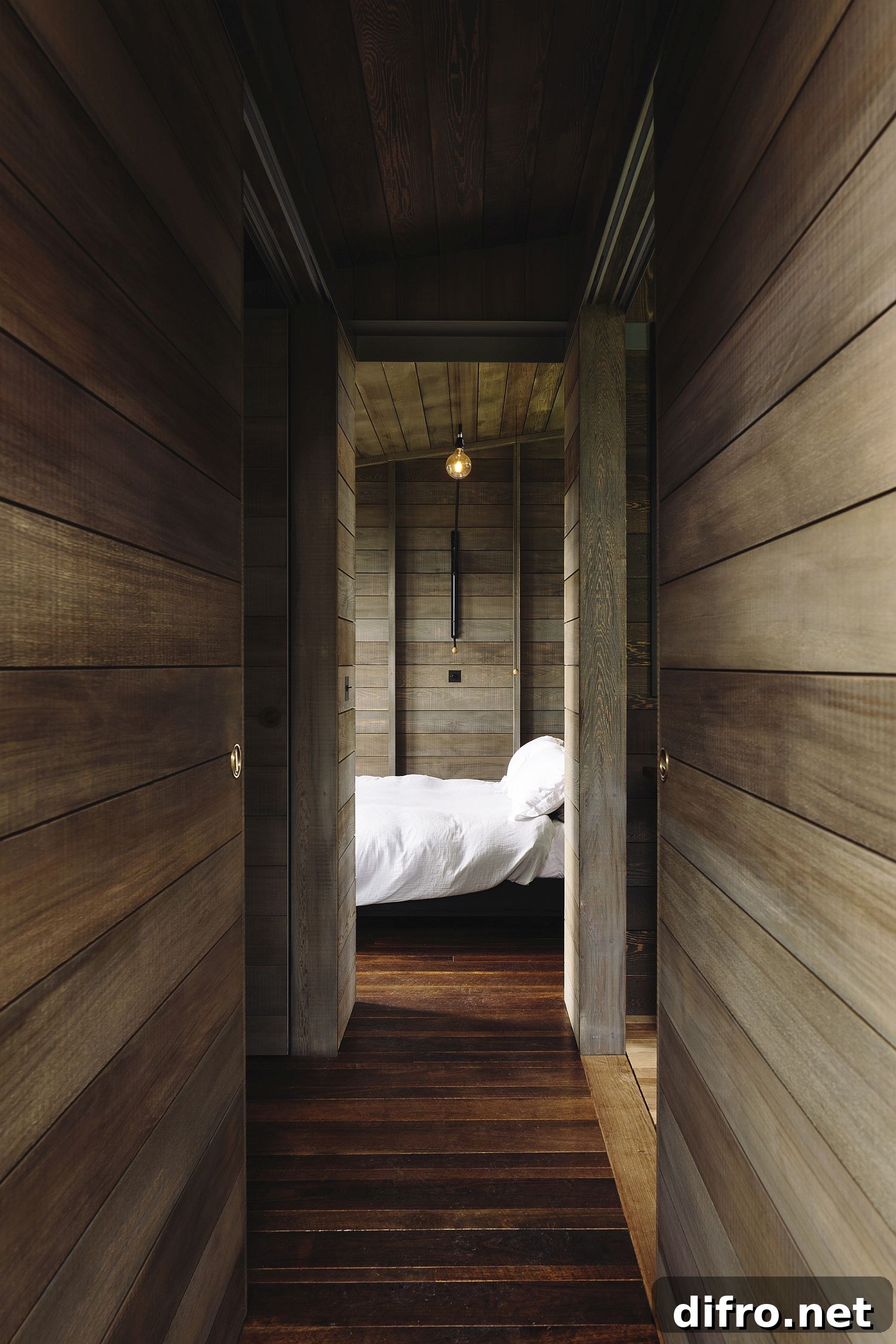
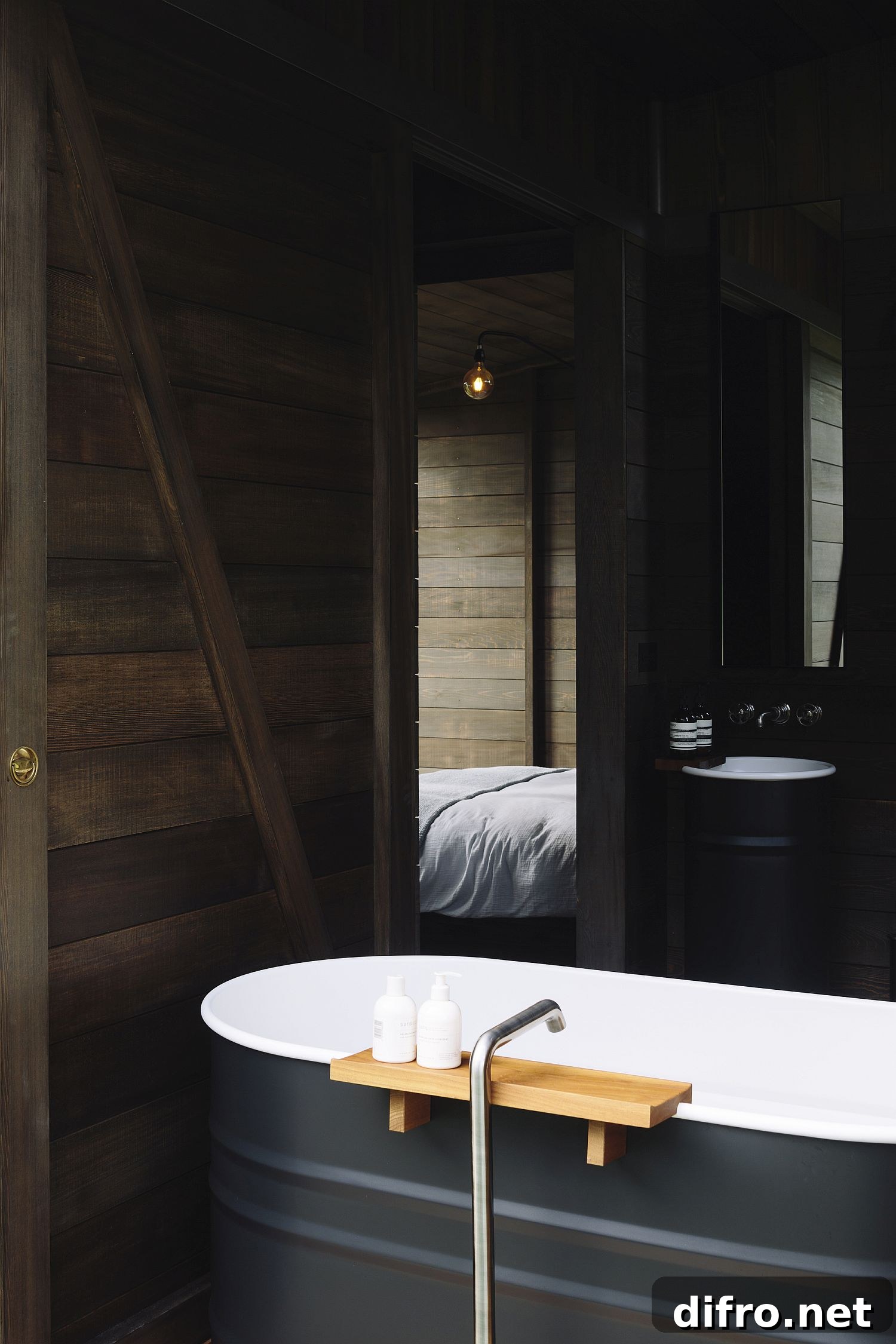
Inside, the bedroom functions as a quiet sanctuary. A bathtub located just a few steps away provides a private spot to relax while still feeling connected to the broader setting. Movable walls let inhabitants reconfigure sightlines and circulation, offering adaptability between communal and intimate moments. Carefully considered lighting—simple and well placed—complements the architecture, accenting textures and supporting a calm, restorative atmosphere.
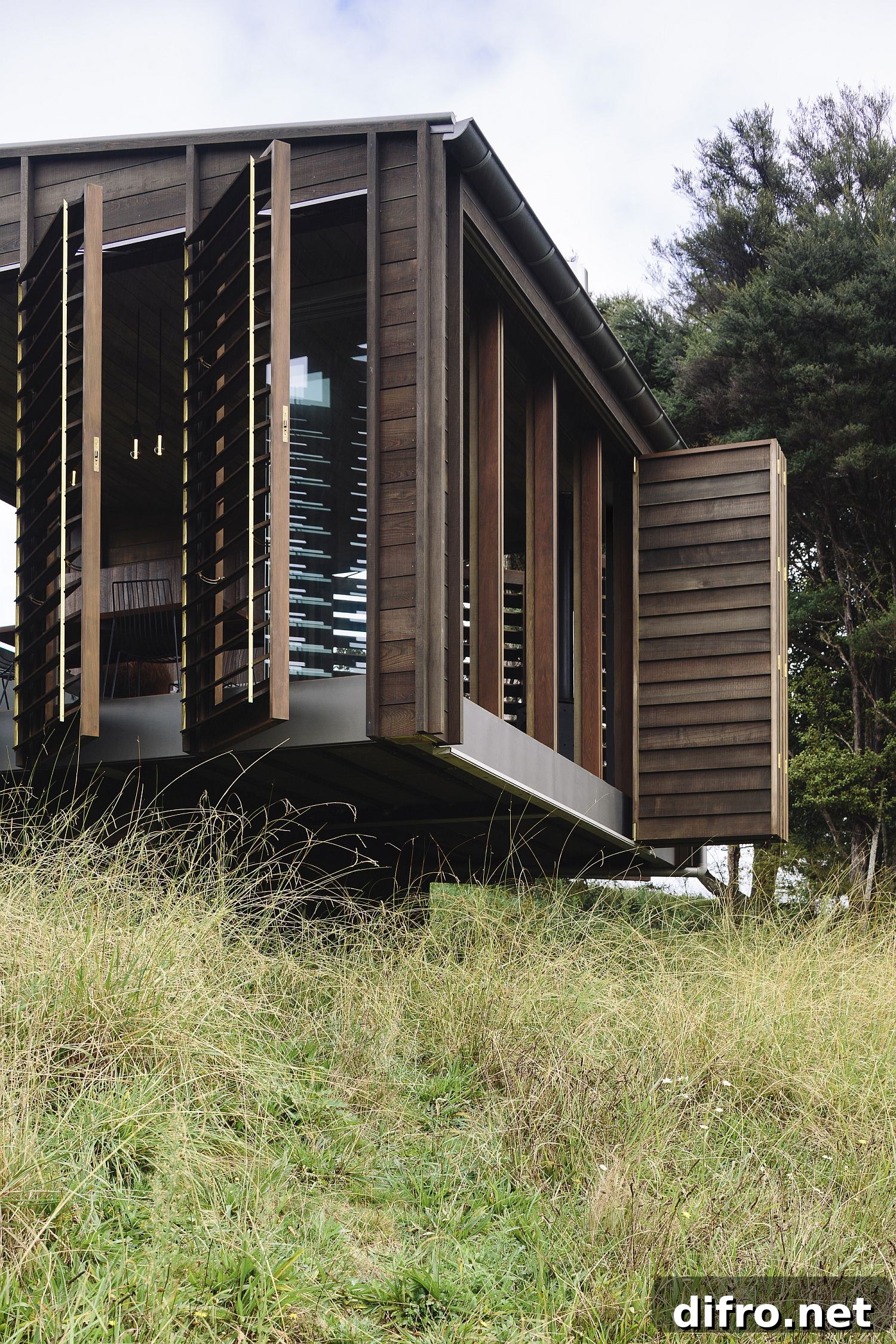
Every detail feels intended to endure: robust timber framing, natural finishes and a layout that prioritizes simplicity and connection to site. The result is a compact, well-crafted cabin that offers generous views, natural ventilation and a quiet relationship to the landscape—attributes that make it an appealing example of contemporary wooden cabin design on Tawharanui Peninsula.
[Photography: Simon Wilson]
RELATED: Red, Wood, Glass and Gorgeous View: Exquisite Cabin Sandefjord