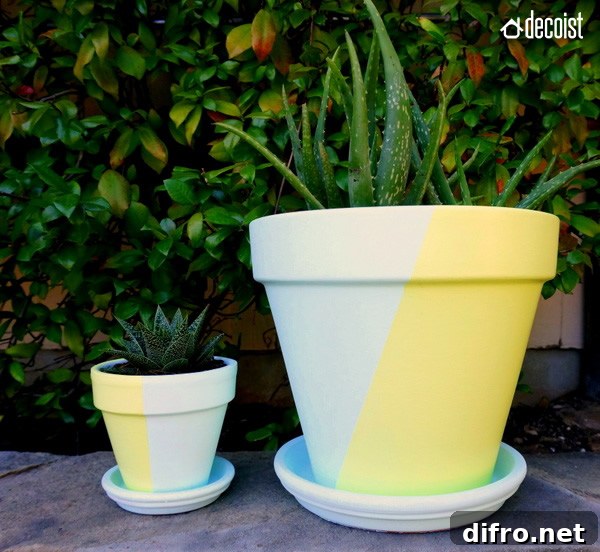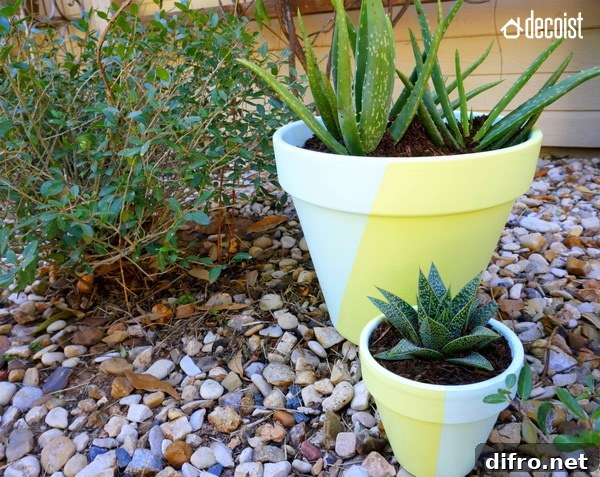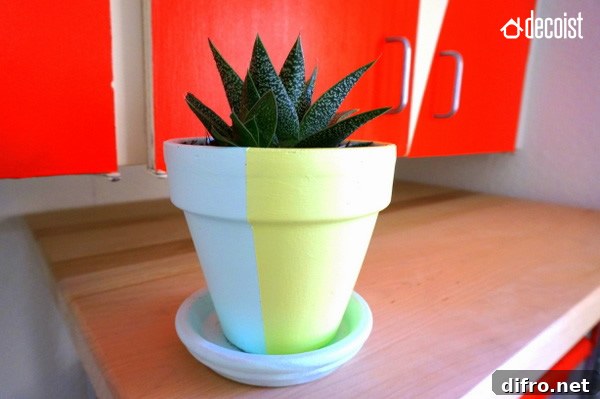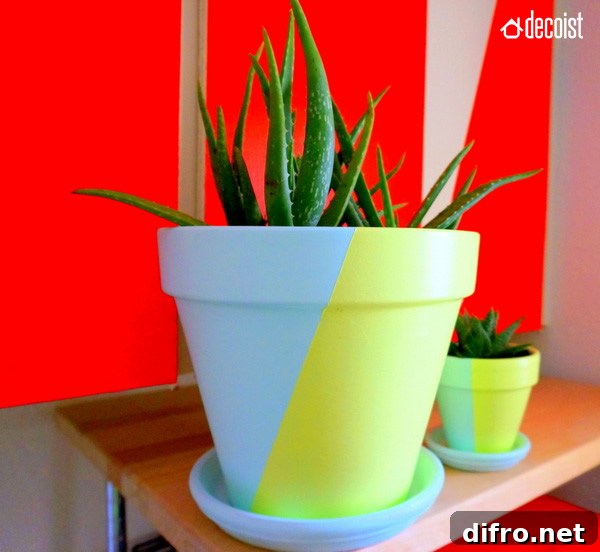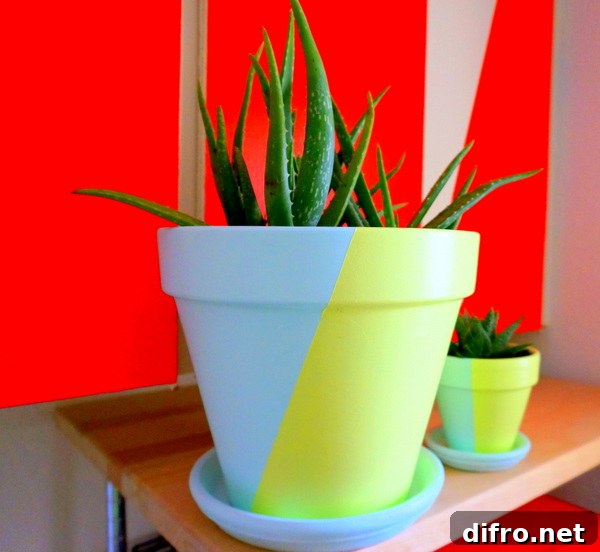
Looking for a quick, satisfying DIY project you can finish in an afternoon? I recently made two geometric painted pots that are simple to execute and deliver a big visual payoff. These painted terra-cotta planters are perfect for adding a modern, two-tone touch to a laundry room, a patio, or a sunny windowsill.
I completed this project over a relaxed weekend: I bought the pots and plants on Friday, applied the base coat on Saturday, and finished the accent color and planting on Sunday. Spread out or done in one afternoon, the process is easy and enjoyable—ideal for beginner craft lovers and anyone looking to refresh their home with DIY painted planters.
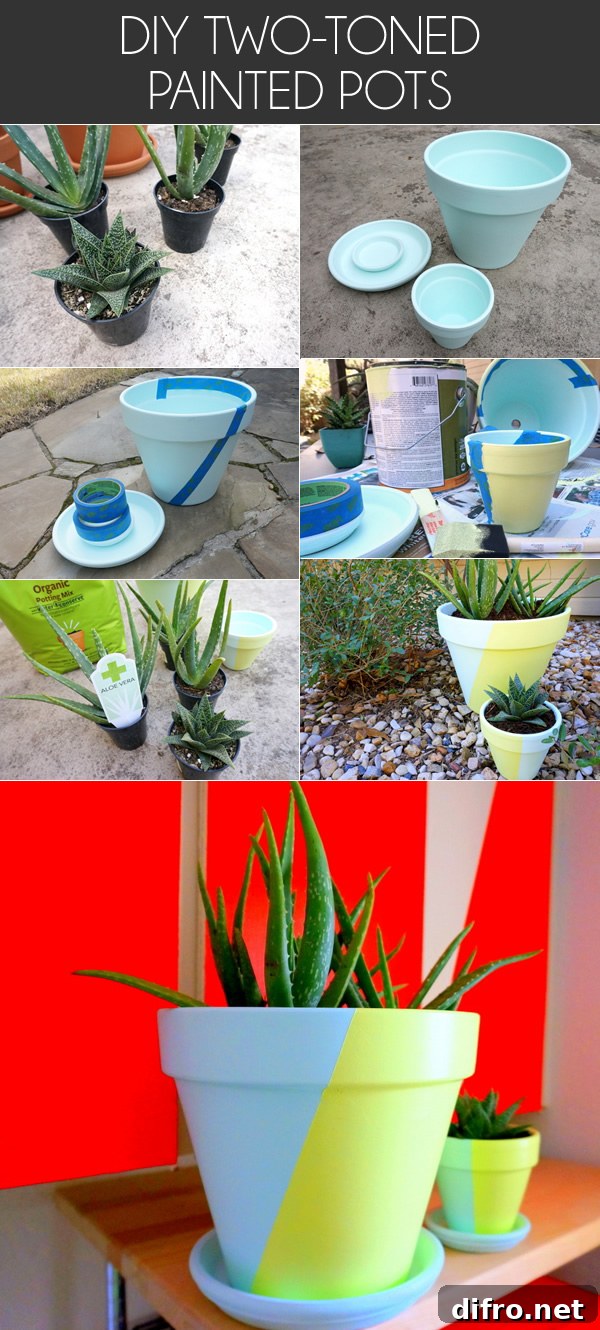
Below is a clear, step-by-step guide to creating your own painted geometric pots, with tips for painting, taping, and planting. This approach uses basic supplies—terra-cotta pots, leftover wall paint, painter’s tape, and simple tools—so it’s budget-friendly and ideal for upcycling materials you already have.
Step 1: Gather your supplies.
Prepare your workspace with a drop cloth and assemble these simple materials. Using familiar household paints and basic tools keeps the cost low and the project approachable.
- Terra-cotta pots in the sizes you prefer
- Two paint colors (I used leftover wall paint)
- Foam brushes and a small detail brush
- Painters tape
- Plants (succulents are an excellent choice)
- Potting soil
- Drop cloth, cardboard, or craft paper to protect your surface
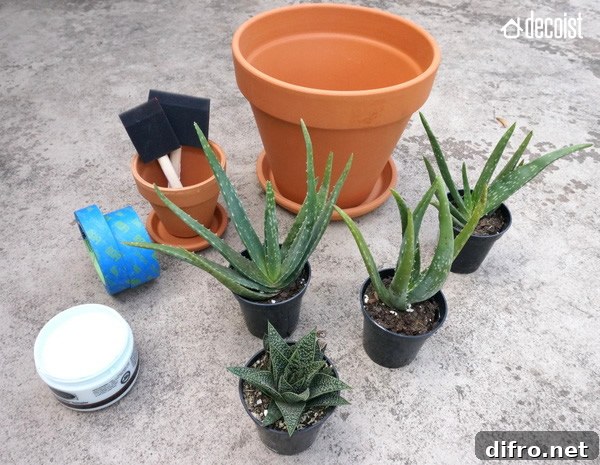
The blue paint I used came from a leftover wall sample and the lime green was an accent-wall remnant. A sample-size wall paint can be plenty for multiple small pots. If you already have paint and pots on hand, this DIY can be very affordable—I spent about $30 total on materials.
Step 2: Paint the pots with the lighter shade.
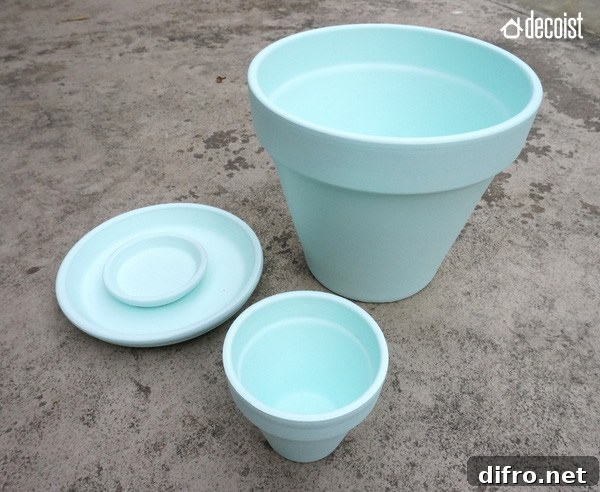
Begin with the lighter color as a base coat. When using wall paint on terra-cotta, priming isn’t always necessary; I often skip it for a more matte, understated look. Apply two even coats of the lighter shade and allow proper drying time between coats. Paint the exterior and as much of the interior as you prefer—dirt will cover most of the inside, but painting a couple of inches down creates a neat finish.
Step 3: Tape off a geometric design.
Wait until the base coat is fully dry, then use painter’s tape to mark off the geometric pattern you want. Diagonal, vertical, or triangular shapes work well for a modern, geometric planter look. For one pot I taped a diagonal band around half the circumference; for another I used vertical stripes. Adding tape along the inside rim helps prevent brush marks when painting the interior edge.
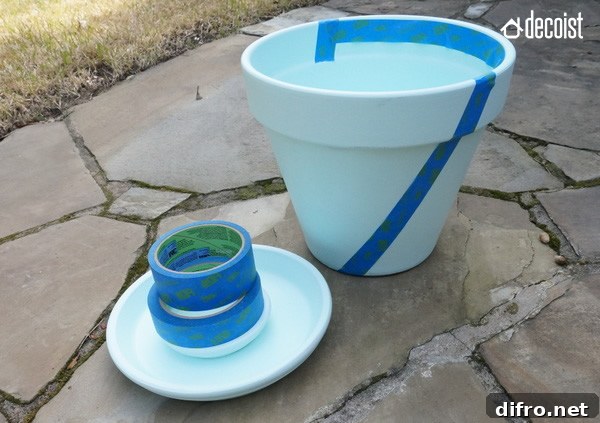
Once taped, apply the second, darker paint color to the exposed areas. Take your time near edges for clean lines. If paint bleeds slightly under the tape, don’t worry—you’ll touch it up in the next step.
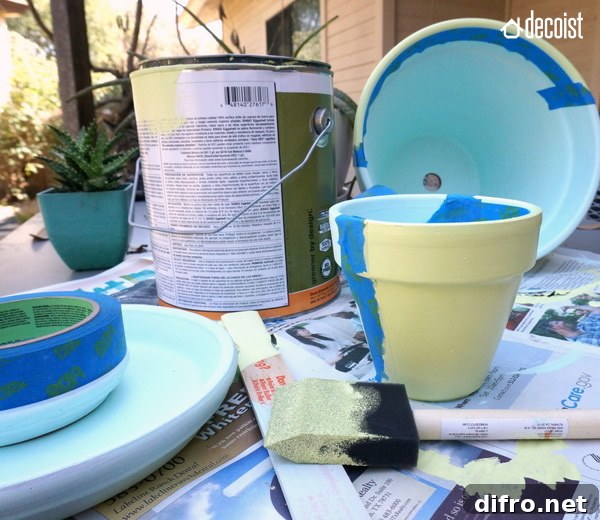
Step 4: Remove the tape and touch up as needed.
Peel the painter’s tape away carefully once the accent color is dry. It’s normal to see tiny paint bleeds or uneven edges—use a small detail brush to clean up lines and a foam brush for larger areas. A few touch-ups will make the geometric shapes crisp and polished.
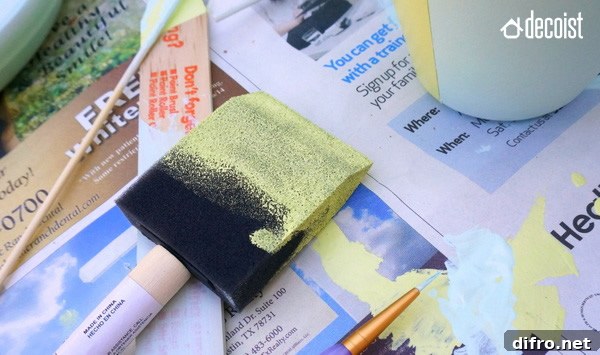
Step 5: Plant and display your pots.
After the paint is thoroughly dry, add potting soil and place your plants. Succulents are a low-maintenance option that look great with bold paint colors, but any small houseplant or herb will do. Water lightly and position the pots where they’ll get the appropriate light for your chosen plants.
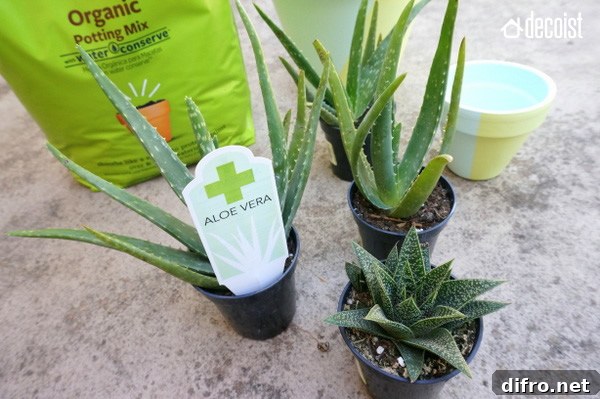
These painted geometric pots work beautifully both indoors and outdoors. Use them to brighten a laundry room, bring color to a porch, or create a small herb station in the kitchen. The two-tone design complements modern and eclectic décor alike.