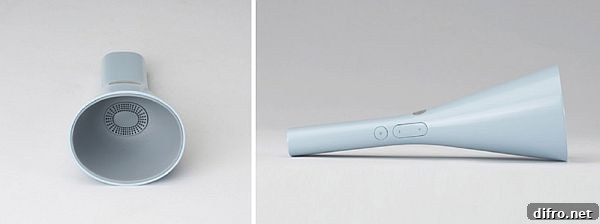
Zero G Light Lamp by sdesignunit
Korean design collective sdesignunit pushed conceptual lighting into a poetic territory with the Zero G Light lamp. The project emerged from a desire to translate the glowing presence of a traditional lantern into a state that appears to resist gravity. As the designers explain, “Zero G meaning a state of non gravitation is [a] lighting series that drag[s] the shape of lantern from in a weightless state to a gravity state.” The series captures that transition, exploring how form and position can be modulated by the impression of weightlessness and the expressive gesture of a wire frame.
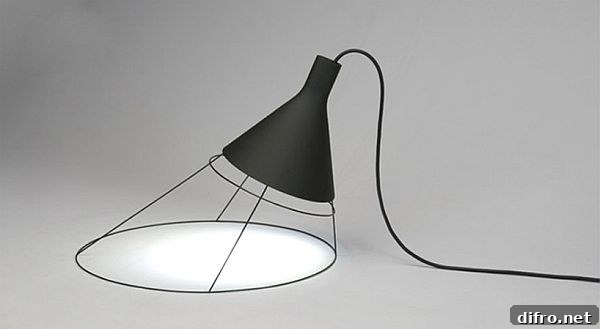
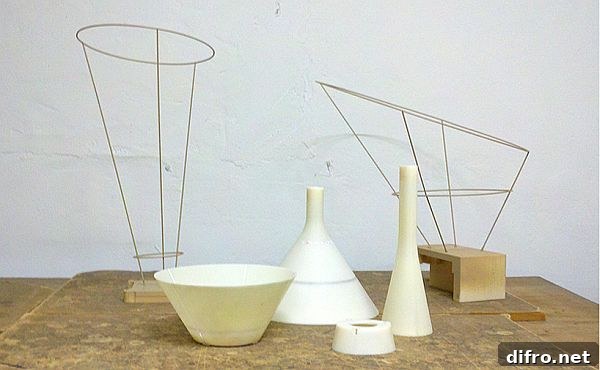
At the heart of Zero G is a minimalist wire structure that reads like a traced outline of light itself. Instead of concealing the mechanics of illumination, the slender frame celebrates negative space and movement, producing a delicate silhouette that seems to slice through the air. The openwork construction allows light to spill through and around the structure, casting nuanced shadows and emphasizing the contrast between the perceived motion and the object’s stillness.
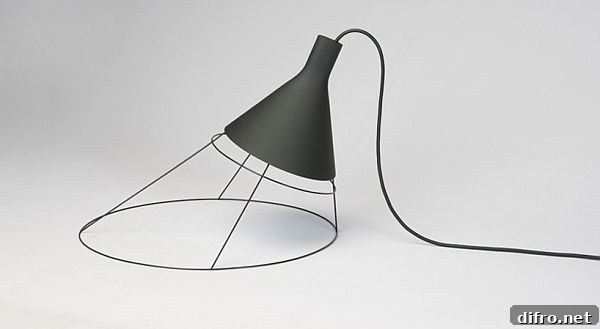
The series includes variants that alter scale, color, and the implied direction of motion. A taller rendition reads as if it is descending from above, its elongated silhouette suggesting momentum and focus. In contrast, a shorter, darker version concentrates the light within a more contained area, where beams intersect and create a concentrated field of illumination. These differences are not merely aesthetic; they allow the lamp to create distinct moods within a space, from dramatic vertical emphasis to a more intimate pool of light.
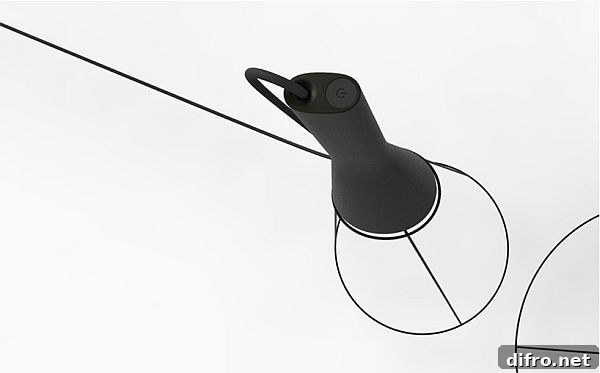
Zero G’s visual vocabulary is deliberately restrained. The wire frame acts as both structure and gesture: a line drawing in three dimensions that records an instant of movement and then arrests it. This approach draws attention to the qualities of light itself—direction, intensity, and the play of shadow—rather than to any ornate fixture. The resulting object is as much a sculptural presence as it is a functional lamp, inviting viewers to consider the relationship between gravity, motion, and illumination.
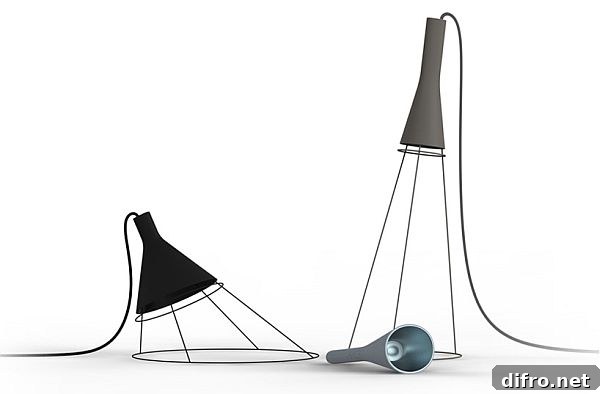
Because the concept emphasizes form and perception over elaborate detailing, Zero G adapts well to a variety of settings. In residential interiors it can serve as a striking focal point or a subtle atmospheric element; in galleries or curated public spaces it functions as an object of contemplation. The design’s flexibility—multiple proportions and visual weights—means it can be arranged to complement different spatial narratives, from high-ceilinged rooms to more intimate corners.
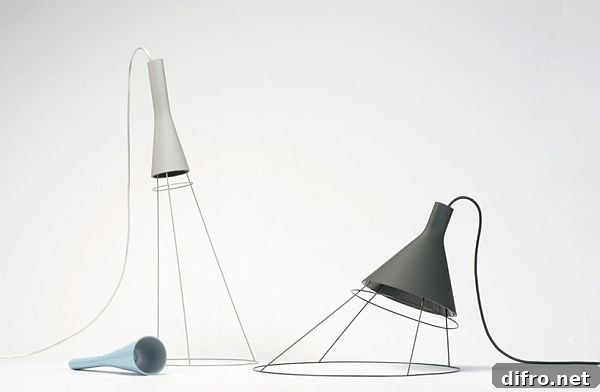
Beyond its immediate aesthetic appeal, Zero G contributes to ongoing conversations in contemporary lighting design about reduction, material expression, and the choreography of light. Instead of relying on mass or ornament, the lamp uses a drawn, linear language to suggest movement and to manipulate perception—turning a simple illumination device into a study of suspension and release.
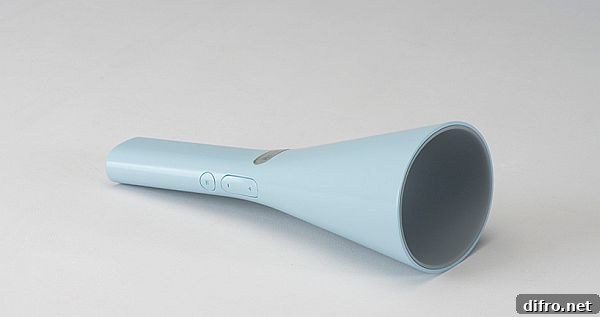
The series also encourages viewers to engage with lighting as an architectural element. The interplay between the slender frame and its environment—how it frames views, casts lines across surfaces, and creates depth through shadow—demonstrates how a lamp can shape atmosphere as much as it provides illumination. Zero G is an example of how thoughtful design can make light feel tangible and motion palpable even in stillness.
In the Zero G Light, sdesignunit offers a refined exploration of contrast—the tension between weight and levity, between structure and void. The collection is an invitation to reframe a familiar object, seeing a lantern not simply as a source of light, but as a form that can float in memory and space, poised between gravity and grace.