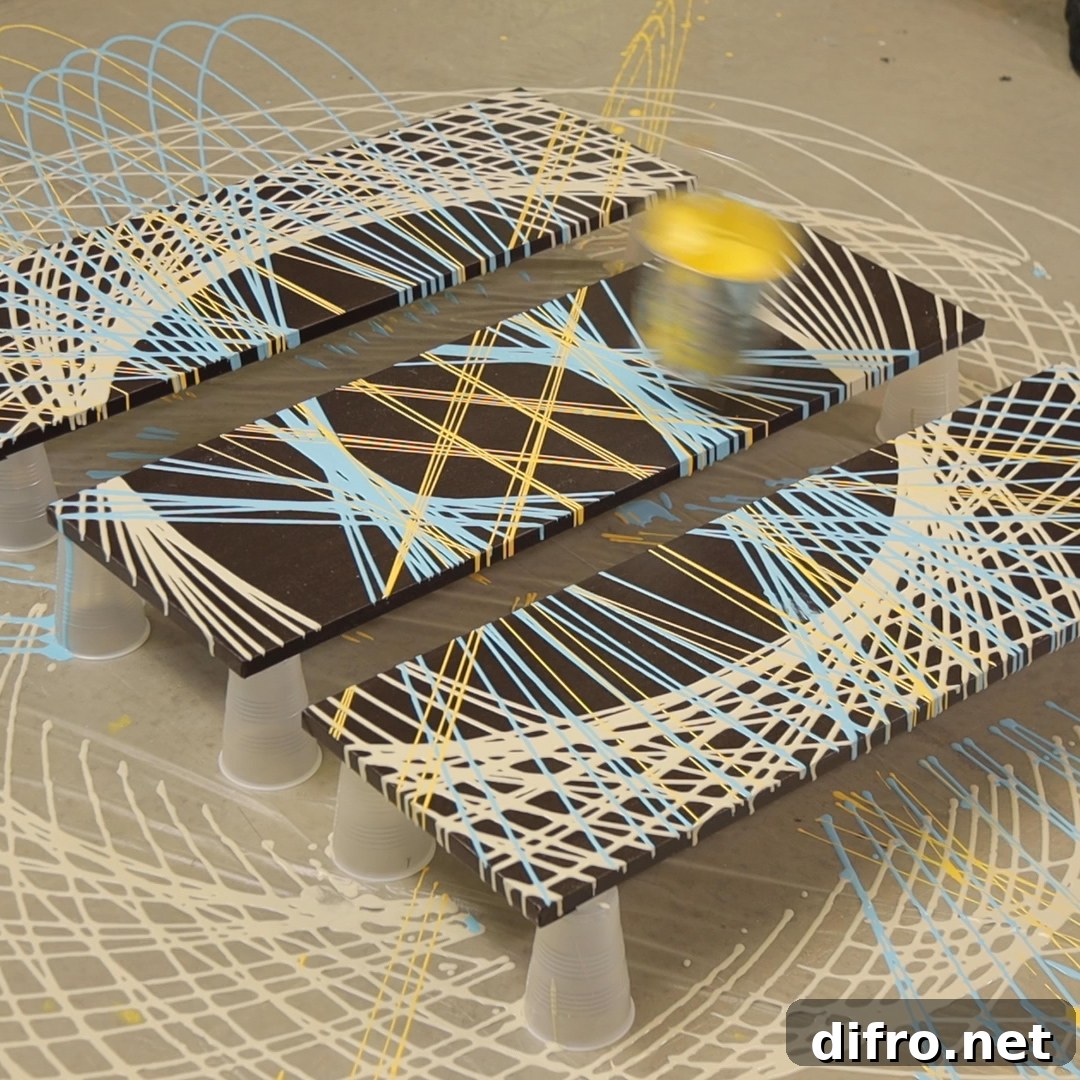
Photos are a great source of design inspiration. This article may reference decor items for the project—feel free to use your own preferred supplies.
Finding the right artwork to complete a room can be difficult, especially on a budget. Instead of hunting for the perfect print or painting, make your own modern pendulum painting. This step-by-step DIY tutorial will guide you through creating striking pendulum art—ideal as a single focal piece or a dramatic triptych—to display in your home.
Supply List
- Canvas: any size or number you prefer. A set of three works well for a triptych display.
- Acrylic or latex paint for the background—choose a dark or neutral tone for contrast.
- Paint for the pendulum effect: pick 2–4 accent colors that will pop against the background (cream, light blue, warm yellow and similar tones work well).
- Paint brush or foam roller for applying the background coat.
- Plastic cups or small blocks to elevate the canvas off the ground while you work.
- Twine, rope, or strong cord to suspend the paint can as your pendulum.
- Scissors and basic hand tools.
- Masking or painter’s tape to cover drilled holes temporarily.
- A full paint can or an empty can and separate paint to pour in for the pendulum.
- Drill and drill bits: at minimum have 1/4″, 3/16″, and 1/8″ bits available.
- Ceiling hook, brace, or drop-ceiling tile support to hang the pendulum securely.
- Painting tarp or drop cloth to protect floors and surfaces beneath your work area.
Overview
Pendulum painting is an accessible and dramatic method of producing abstract art. By suspending a paint-filled can and letting gravity and motion distribute paint across a canvas, you create organic arcs and layered shapes that are difficult to replicate by hand. This tutorial covers preparation, safe drilling, color selection, and techniques to achieve clean, visually striking results suitable for hanging or grouping as a triptych.
Step 1: Prepare the Background
Lay out your painting tarp and elevate the canvas by resting its corners on plastic cups or blocks. Apply a base coat to each canvas with a brush or foam roller. A solid, even background increases contrast and makes the pendulum colors stand out. If you want smoother flow from the paint can, consider using a primer for the background—primers are typically thinner and can be more economical.
Step 2: Choose Your Colors
Select your pendulum paint colors next. Bright or warm tones on a dark background produce high impact. You can use multiple cans for layered effects; plan the sequence so colors blend or layer the way you intend. Test swatches on scrap paper if you’re unsure how the colors will interact.
PRO TIP: Thinner paints flow more predictably from the can. If your chosen paint is very thick, add a small amount of medium or water (for acrylics) and mix thoroughly.
Step 3: Set Up the Suspension
Secure a strong rope or twine to a ceiling hook, brace, or drop-ceiling support directly over the center of your canvas. Attach the paint can to the rope and make sure the can hangs freely several inches above the canvas. Confirm the canvas is level and that the paint tarp fully covers the surrounding area—pendulum painting can be messy.
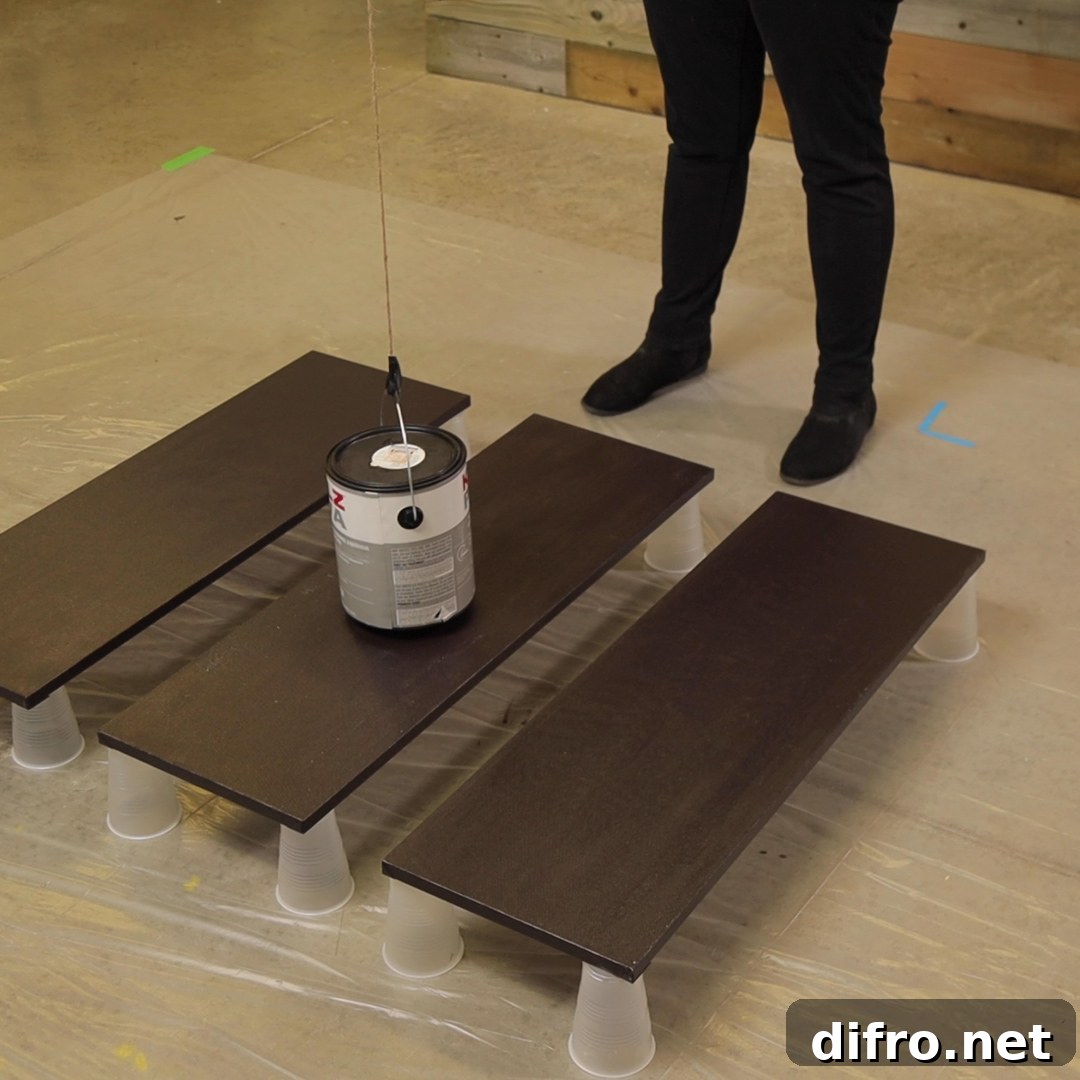
Step 4: Practice the Swing
Before introducing paint, practice the pendulum motion with the empty can. Push the can straight forward and let it swing back and forth until you develop a smooth, predictable arc. For wider, sweeping strokes push with a broader motion; for thinner oval shapes use a narrower, more forward-directed push.
Step 5: Drill the Paint Can
With caution, drill a 1/4″ hole into the bottom center of the paint can using a drill and the appropriate bit. Temporarily cover the drilled hole with painter’s tape while positioning the can. If your drill or setup allows, wear safety glasses and work on a protected surface to avoid damage. If you prefer not to drill, a pour spout or a container with a controlled opening can be used instead.
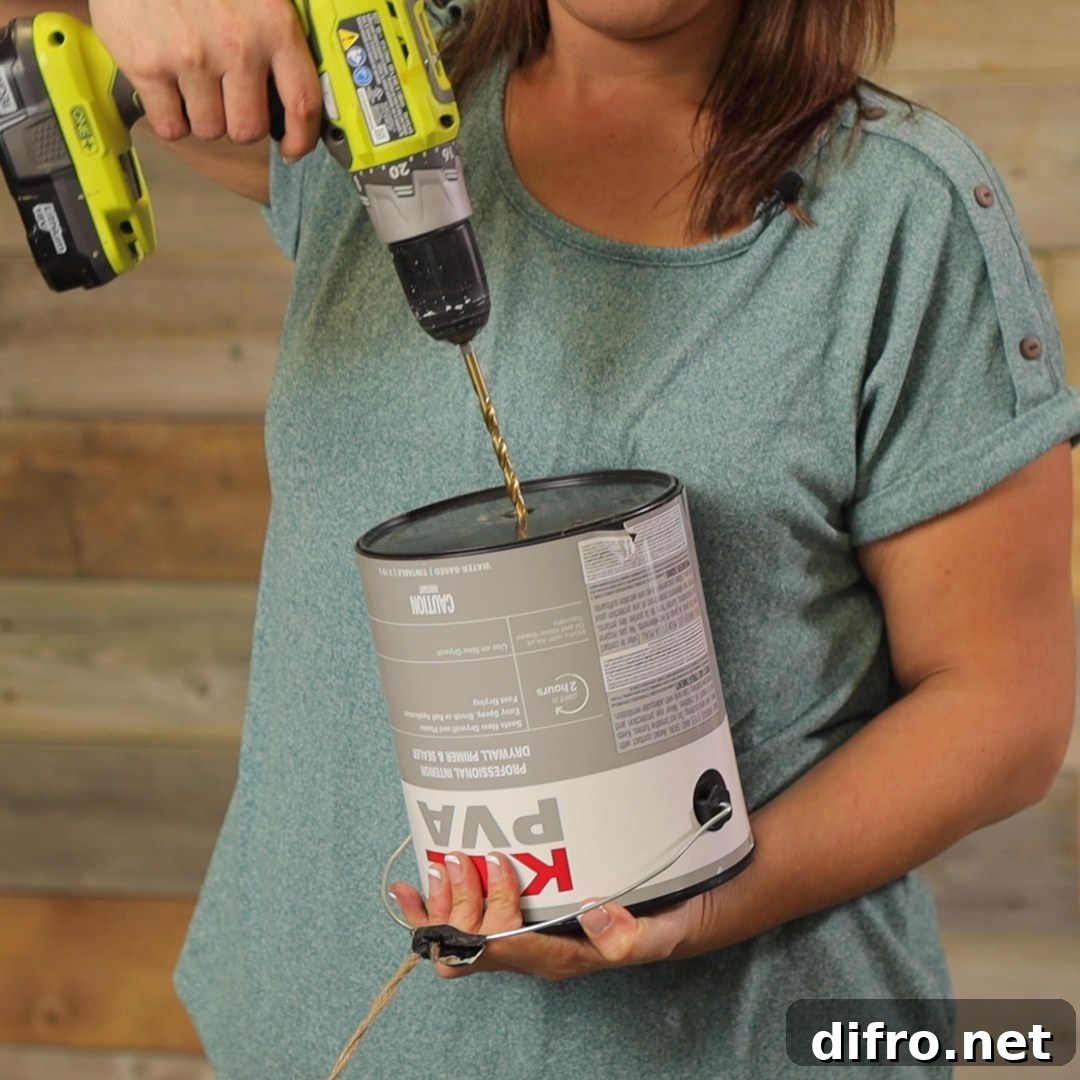
Step 6: Add an Air Hole
Drill a small air hole near the top of the can to allow paint to flow more smoothly. This prevents glugging and helps create a more consistent line as the paint dispenses while the can swings.
Step 7: Fill the Can
If your can is empty, pour your selected paint color into the can now. For thicker paints, add a little medium to improve flow. Clean the can rim and replace the temporary tape until you are ready to begin.
Step 8: Start Painting
Position the can at your chosen starting point above the canvas. Remove the tape to open the hole and give the can a controlled push. Maintain a steady rhythm and allow the pendulum to swing naturally. To catch the can safely, wait until it swings away from the canvas and use a quick clapping motion—this reduces splatter and avoids unwanted drips on the artwork.
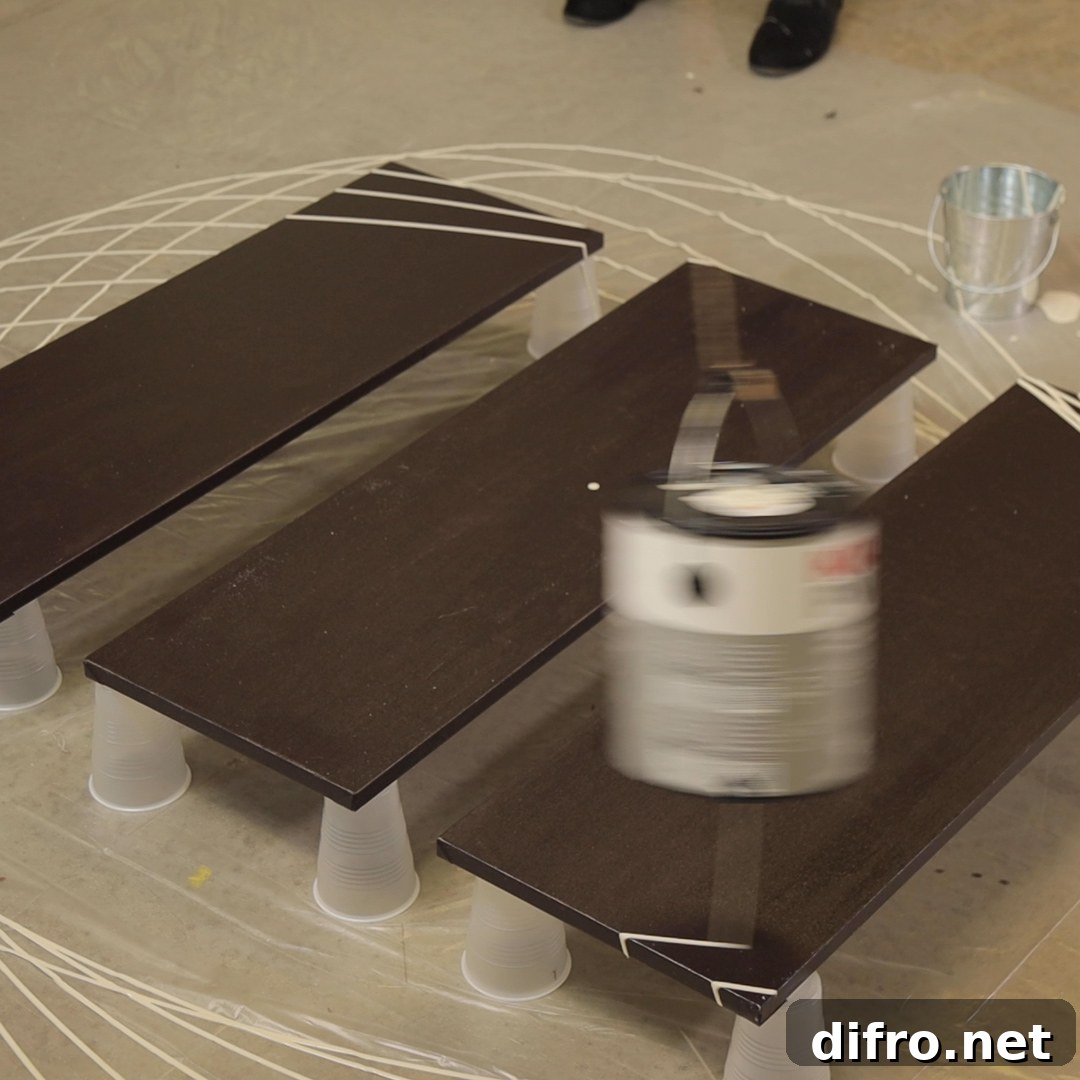
PRO TIP: Catch the pendulum when it swings away from the canvas—this minimizes accidental splashes and helps you control layering across multiple passes.
Step 9: Layer and Swap Colors (Optional)
To add depth and complexity, switch colors between runs. Let each layer dry partially if you want clearer separation, or layer wet-on-wet for blended, flowing transitions. For a coordinated triptych, repeat similar motions across each canvas so the pieces read as a single composition when hung together.
Finishing Touches and Display
Allow your painting to dry completely—drying times vary by paint type and thickness. Clean the can and workspace promptly. For display, frame or hang the canvases at eye level; a triptych looks best when each panel is evenly spaced. Choose lighting that highlights the texture and motion of the pendulum strokes.
Safety and Cleanup
Wear safety glasses when drilling, work in a well-ventilated space, and protect floors and furniture with a tarp. Dispose of or store leftover paint properly according to local guidelines. Keep children and pets away from the work area while painting and drying.
Share Your Work
If you try this pendulum painting project, we’d love to see the results. Share photos of your finished pieces on Facebook, Instagram, or Pinterest and tag them with relevant DIY and art hashtags so other makers can discover your work.