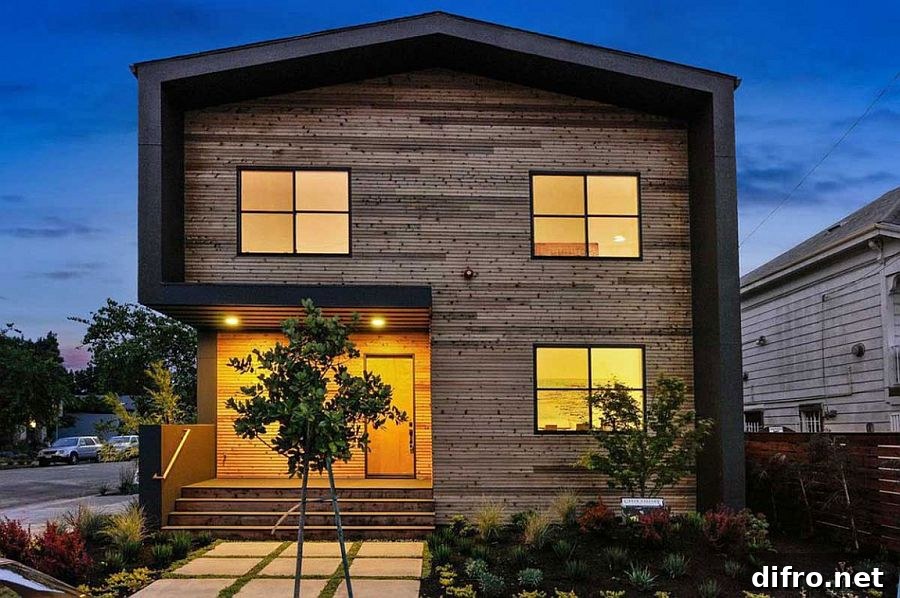
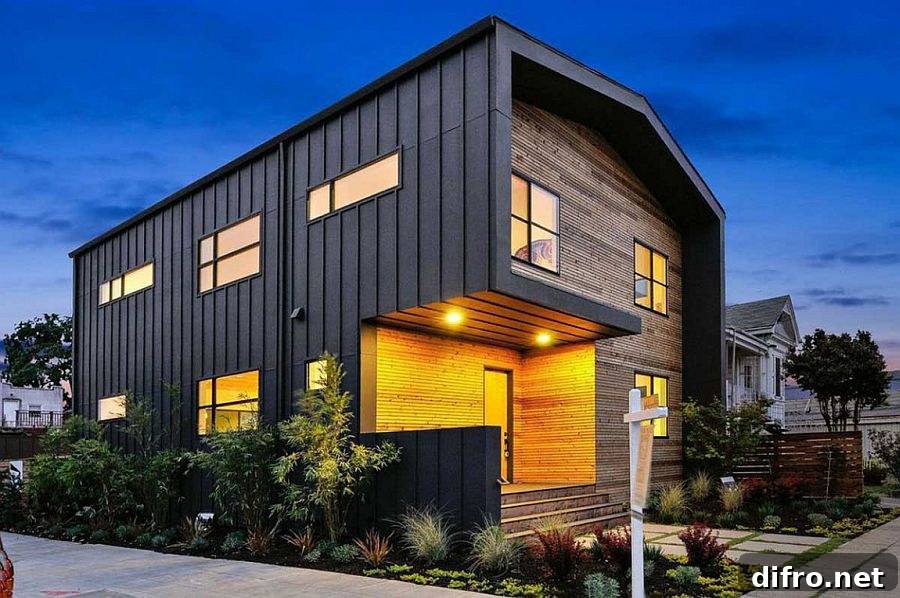
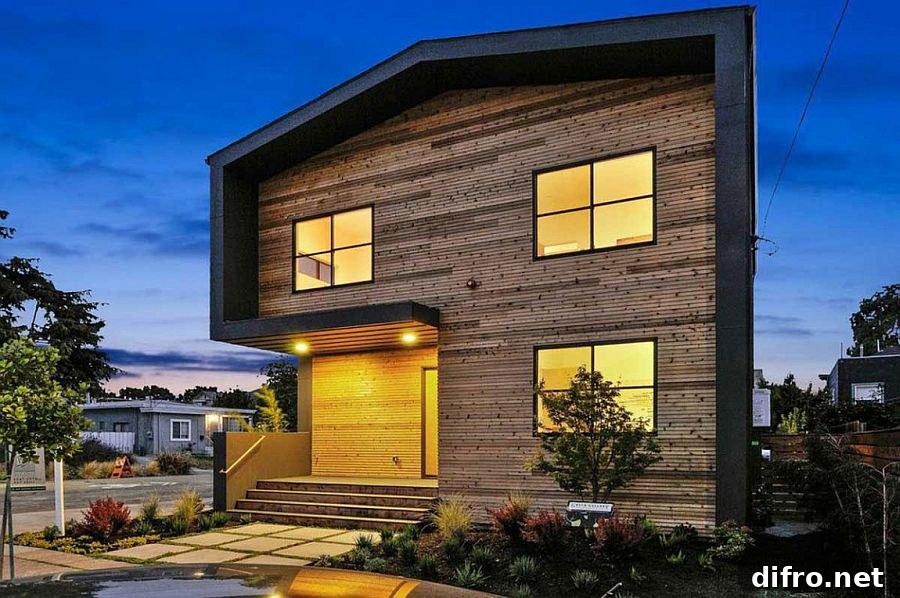
How do you design a home that respects a neighborhood of traditional houses while offering a fresh, contemporary identity? That balance is the guiding idea behind Baran Studio’s 58th Street Project, a single-family residence in North Oakland, California. The design reinterprets a classic pitched roof, wrapping it around the exterior facade and drawing that form down toward the front entry. The result reads familiar at a glance, yet unmistakably modern up close—a thoughtful response to its context that nonetheless stands apart.
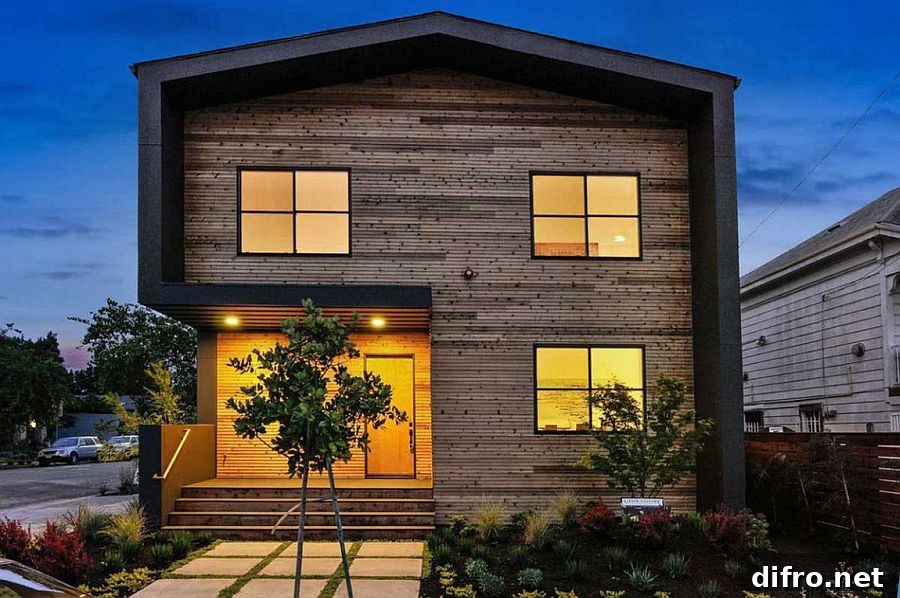
The exterior is the house’s most arresting feature: bold, inventive and warm. The wrapped pitched roof reads like a sculptural skin that both conceals and reveals, creating pronounced lines and sheltered moments at the front elevation. The material palette and detailing give it a slightly industrial edge, while wood accents and softened tones introduce visual warmth so the home complements its residential setting instead of feeling out of place.
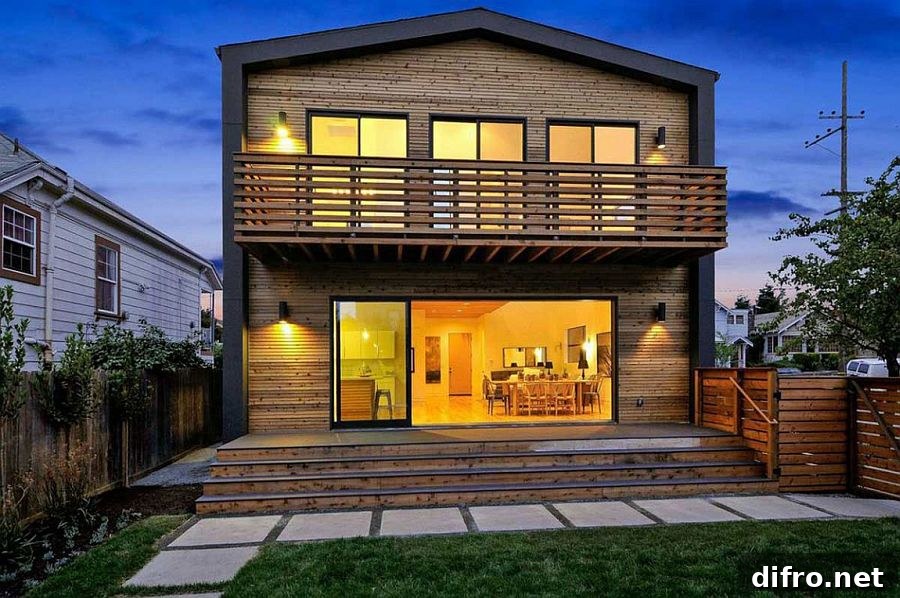
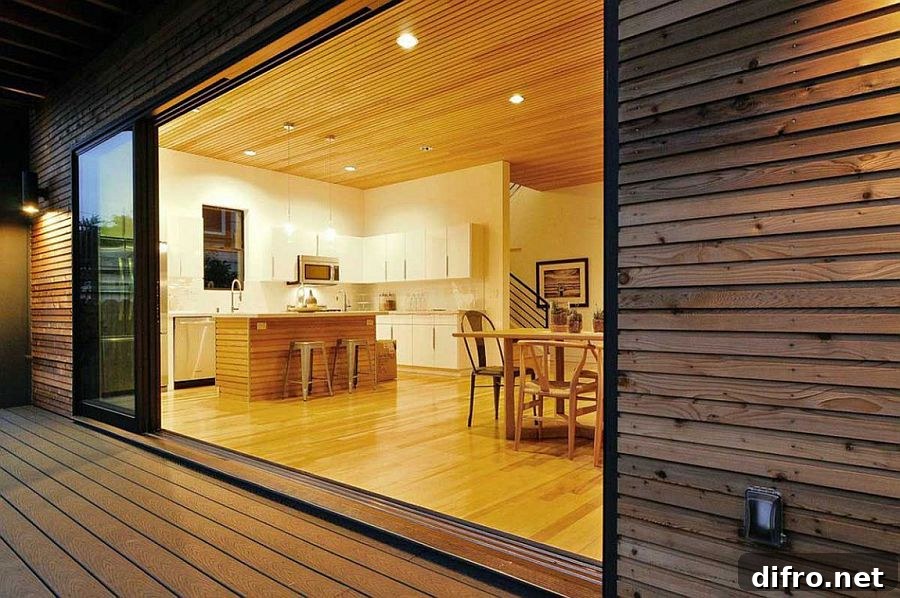
At the rear, the same vocabulary continues. The lower level opens directly onto a generous wooden deck, extending the kitchen and dining areas outward to create a lively indoor-outdoor family zone. This outdoor platform functions as an extension of daily life—ideal for weekend gatherings, quiet mornings, and relaxed meals—so the private backyard feels simultaneously intimate and sociable.
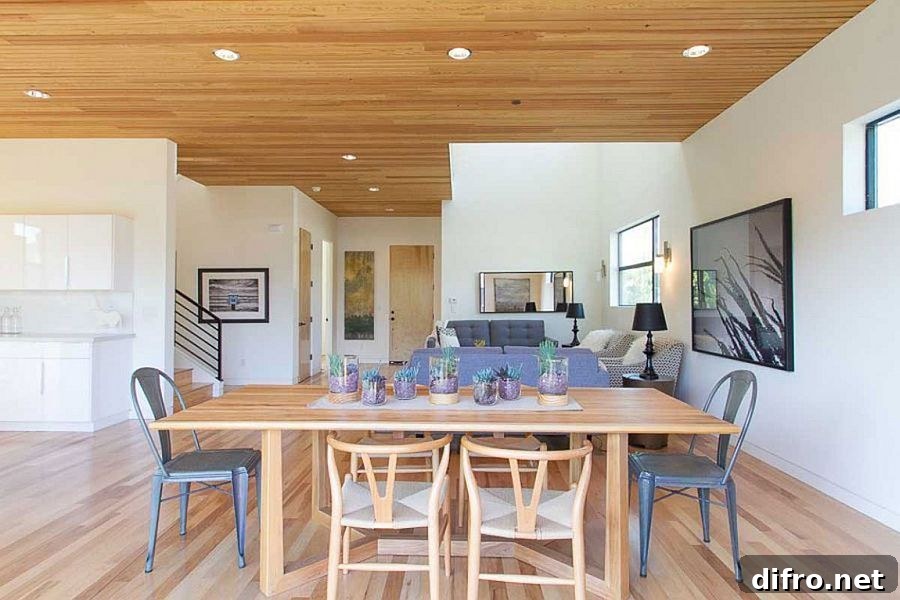
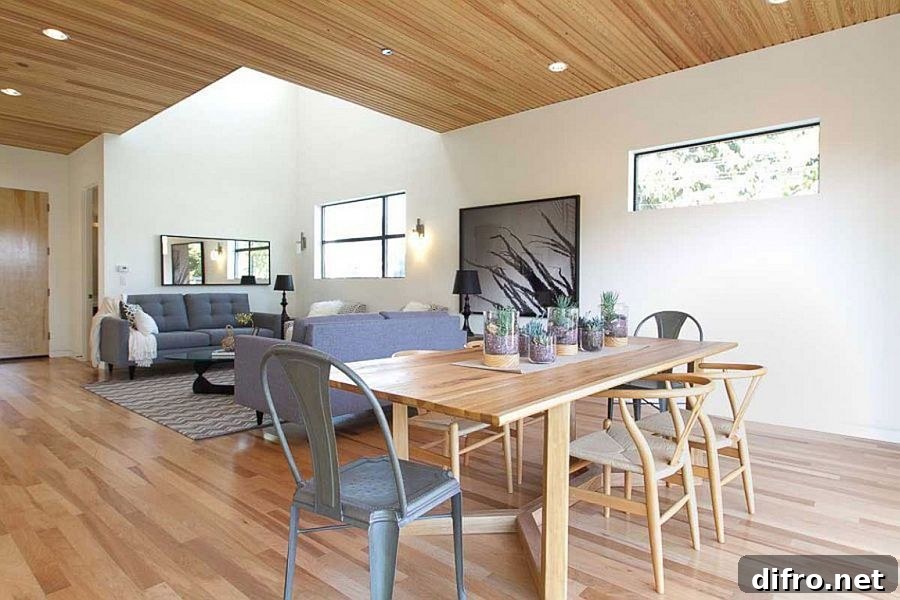
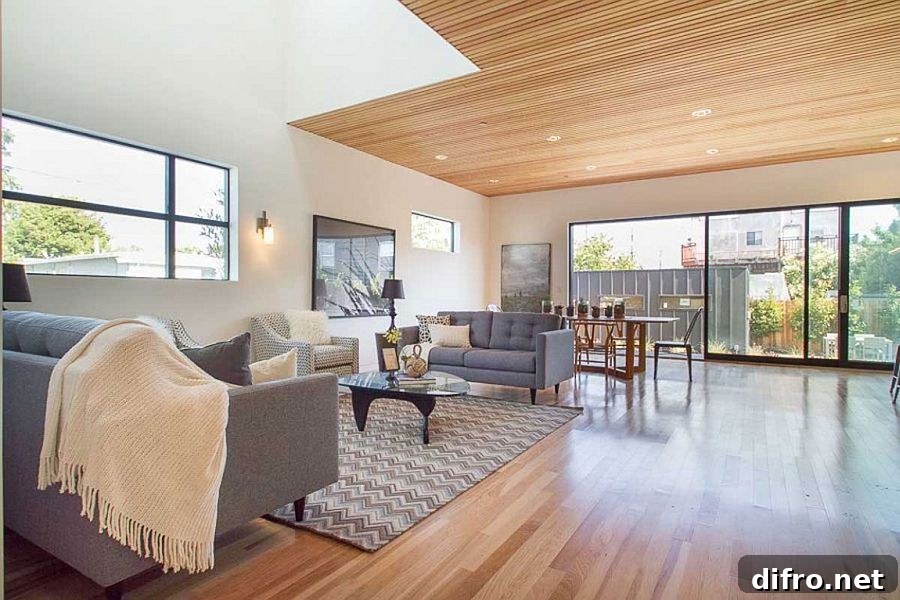
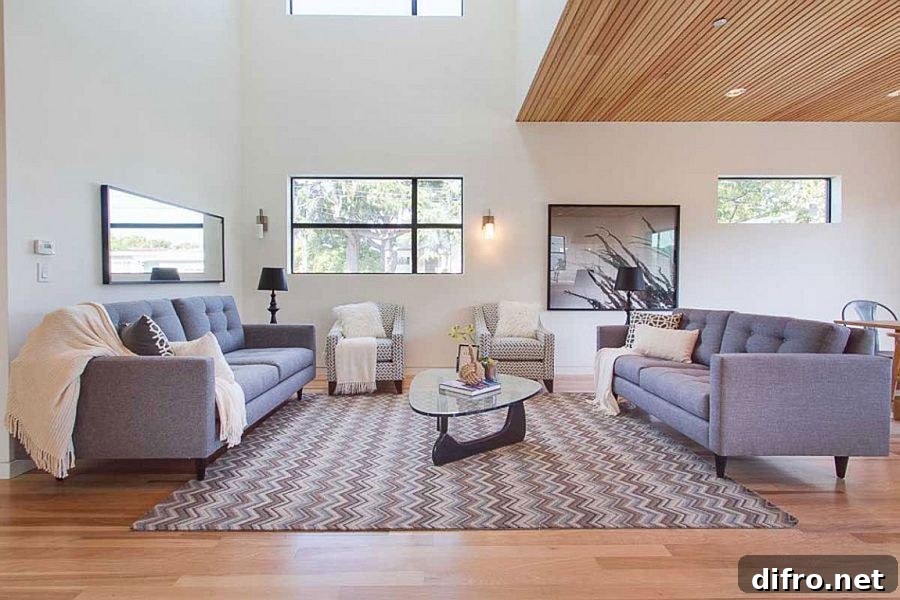
Inside, the material strategy shifts to a softer, more restrained palette. Whites and muted tones dominate the interior, creating a calm backdrop for family life and letting the wood elements take center stage where warmth and texture are needed. Timber is a recurring theme—linking the exterior skin to interior ceilings, floors and furnishings—and it helps establish a consistent, cozy atmosphere throughout the two-level plan.
The ground floor accommodates the main living areas—living room, kitchen and dining—arranged to promote flow and connection. Large openings, careful sightlines and the deck connection enhance natural light and encourage indoor-outdoor interaction. A classic Noguchi coffee table anchors the living room, demonstrating how carefully chosen pieces can complement the home’s modern-traditional vocabulary without overwhelming it.
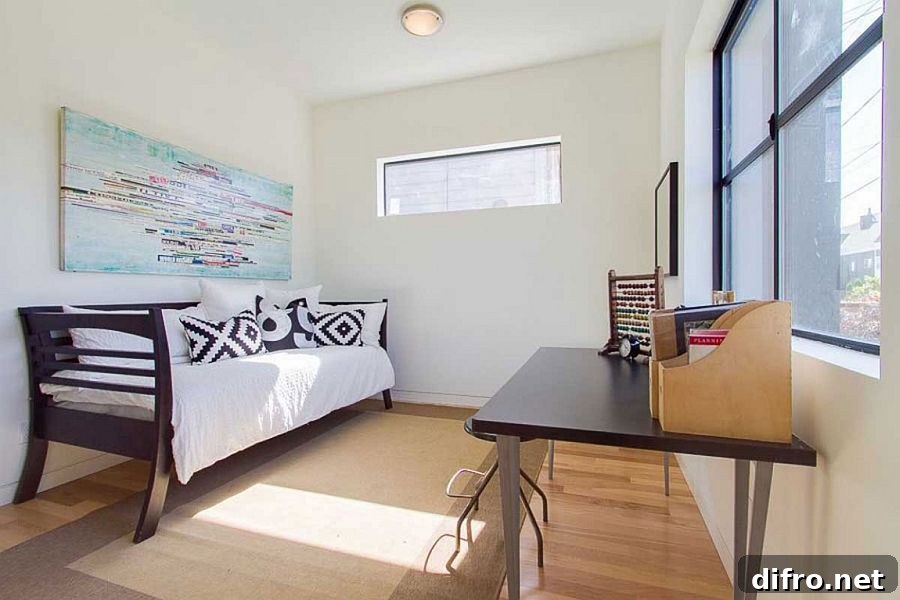
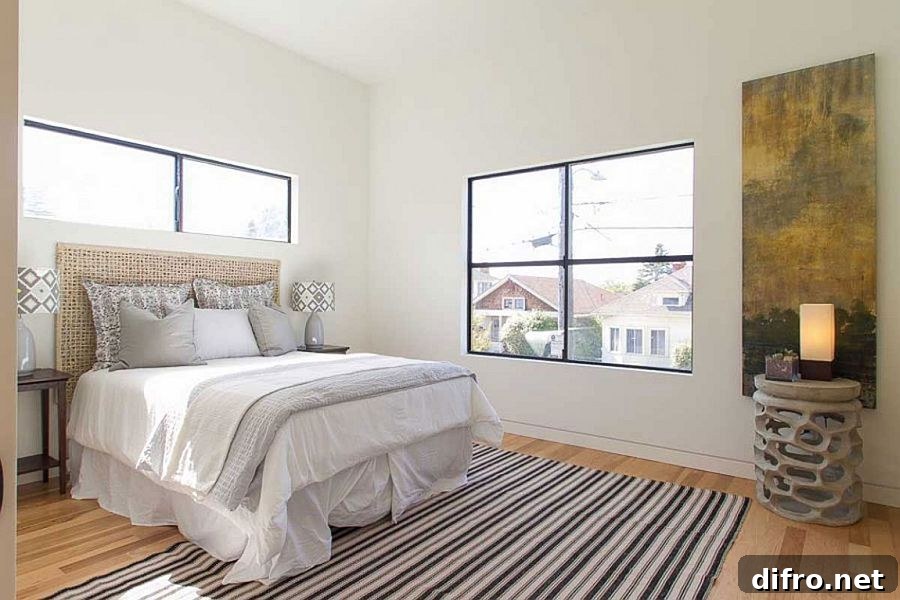
The upper level is devoted to private programs: bedrooms, bathrooms and a guest room, plus a calm, well-lit home office designed for focus and reduced stress. The office’s black-and-white palette reads crisp and contemporary, while bedrooms favor soft whites and layered textiles—such as a striped rug—to keep the sleeping spaces serene and inviting.
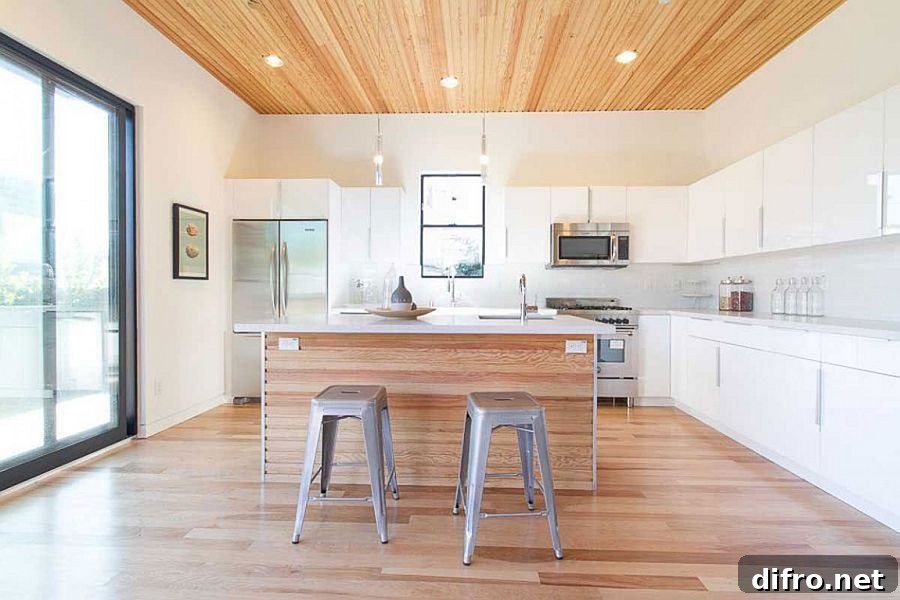
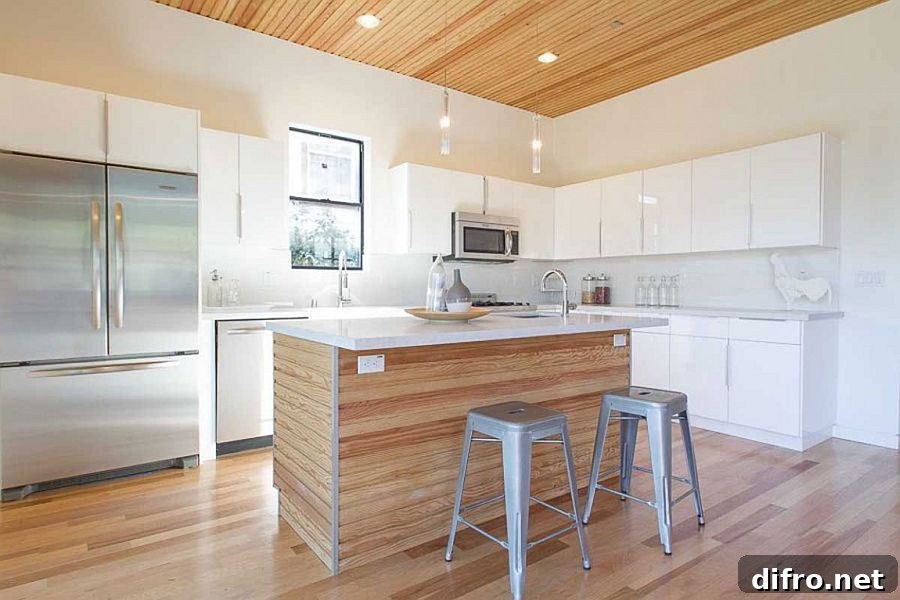
The kitchen exemplifies the home’s blend of practicality and understated style. Finished predominantly in white to reinforce brightness and cleanliness, it features a central island and breakfast counter that encourage casual meal prep and social interaction. Adjacent dining arrangements embrace informality—mixing different chairs and styles to create a relaxed, lived-in feel that suits family life.
Overall, the 58th Street Project succeeds by merging traditional form with contemporary sensibilities. It respects the neighborhood’s scale and character while introducing a distinctive, modern interpretation of a pitched-roof house. The careful use of materials, the connection between interior and exterior, and the clear separation of public and private spaces produce a functional, warm family home—one that feels both rooted in place and refreshingly current.