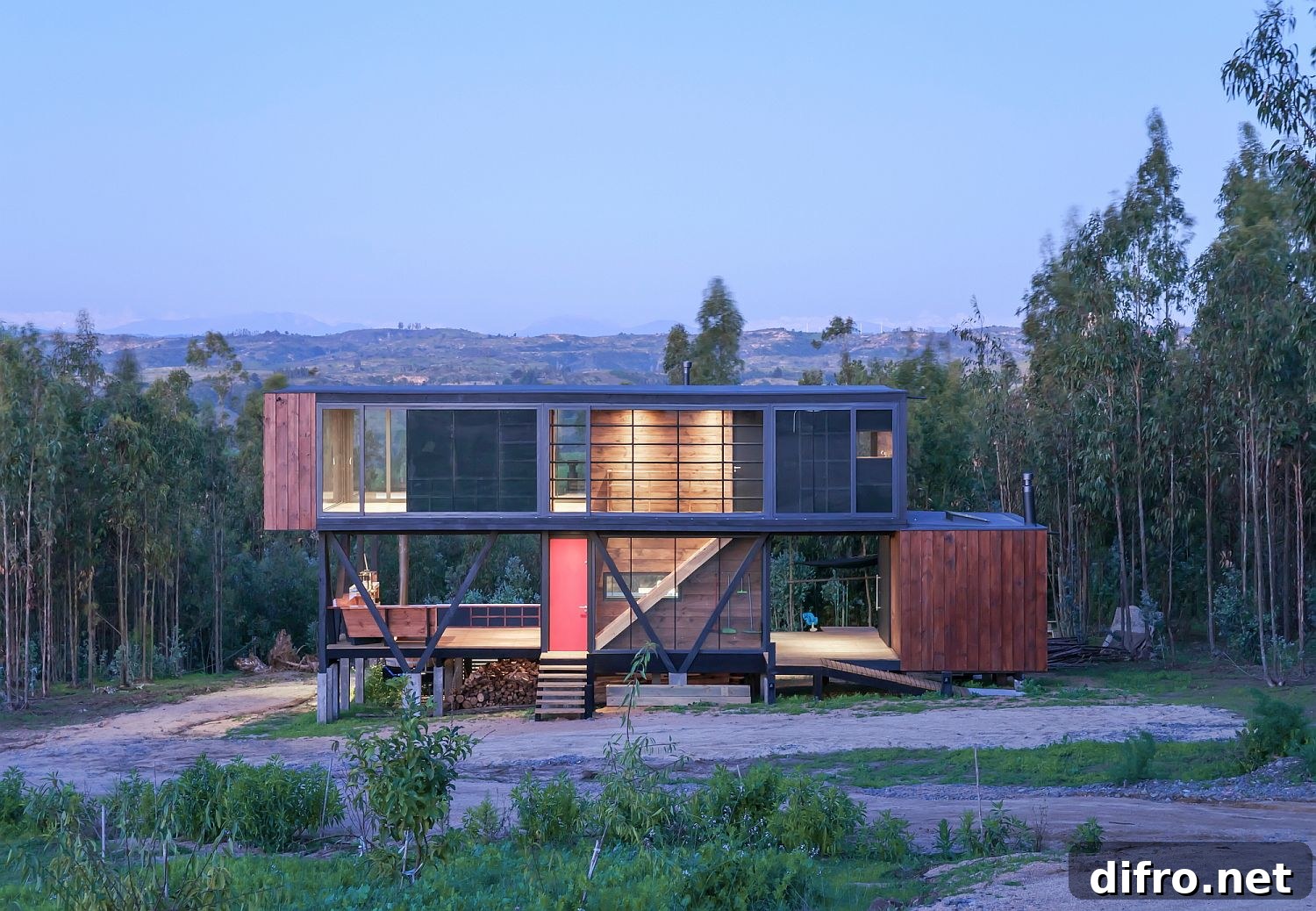
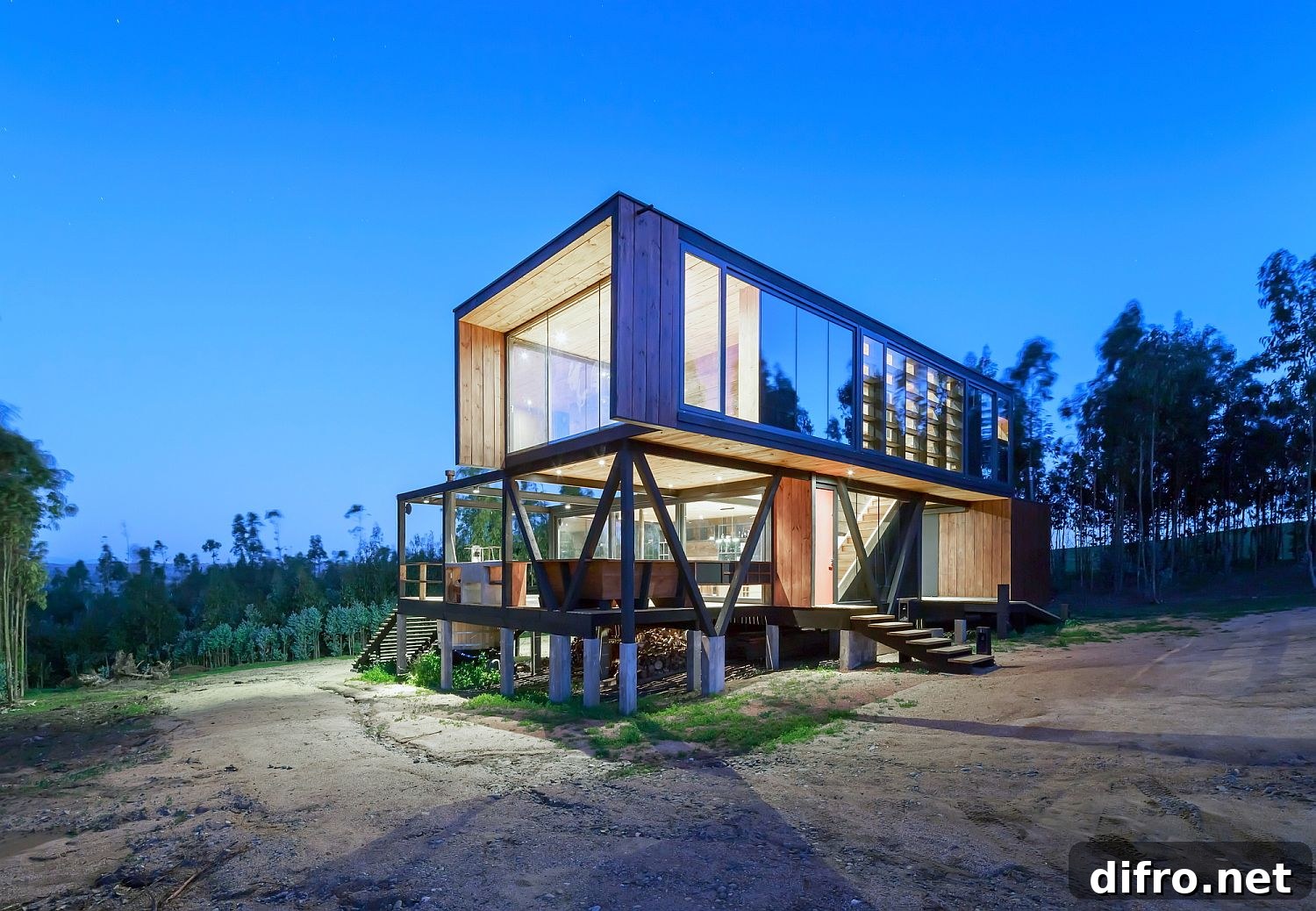
A cantilevered house offers distinct advantages that simply cannot be matched by ordinary raised-platform designs. Beyond a striking façade that commands attention, a cantilever creates covered space beneath the overhang—perfect for sheltered outdoor living or parking—and dramatically frames distant views. Perched on an elevated lot on Centinela Hill in Matanzas, the Harfagar House in Chile, designed by WMR Arquitectos, uses its cantilevered form to focus attention on the village of La Boca and the meeting of the Rapel River with the Pacific Ocean in the distance.
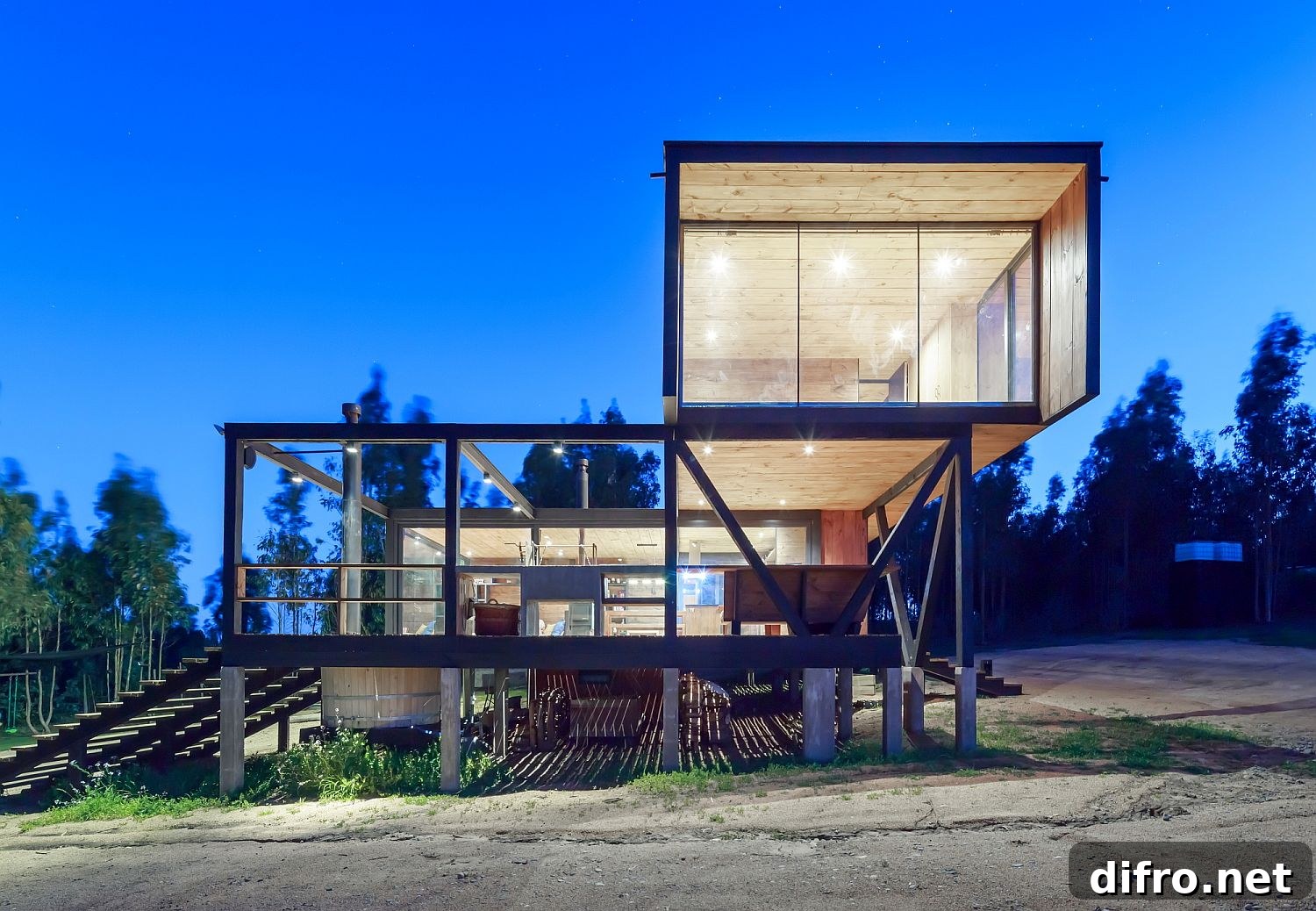
The architecture of Harfagar House is organized as two intersecting volumes that point in different directions to capture multiple perspectives across the landscape. The ground or first level accommodates an open plan living area, kitchen and dining space that opens seamlessly onto a generous deck—an extension of the interior that brings the landscape into daily life. Above, the second level contains private bedroom spaces oriented to other views and protected by the cantilevered overhang. The split orientation of volumes allows the house to engage the site on several axes, optimizing sightlines while preserving privacy for each programmatic zone.
Material choices reinforce the warmth and tactile quality of the interiors. Local quartersawn pine is used extensively, wrapping walls and surfaces to create a cohesive, natural finish that contrasts with cooler structural elements. Large glass walls dissolve the boundary between inside and out, flooding the house with natural light and allowing constant visual connection to the coastal panorama. The exposed structure—most notably the V-shaped support columns that carry much of the second level—adds an architectural counterpoint that emphasizes the cantilever while providing a sculptural quality to the façade.
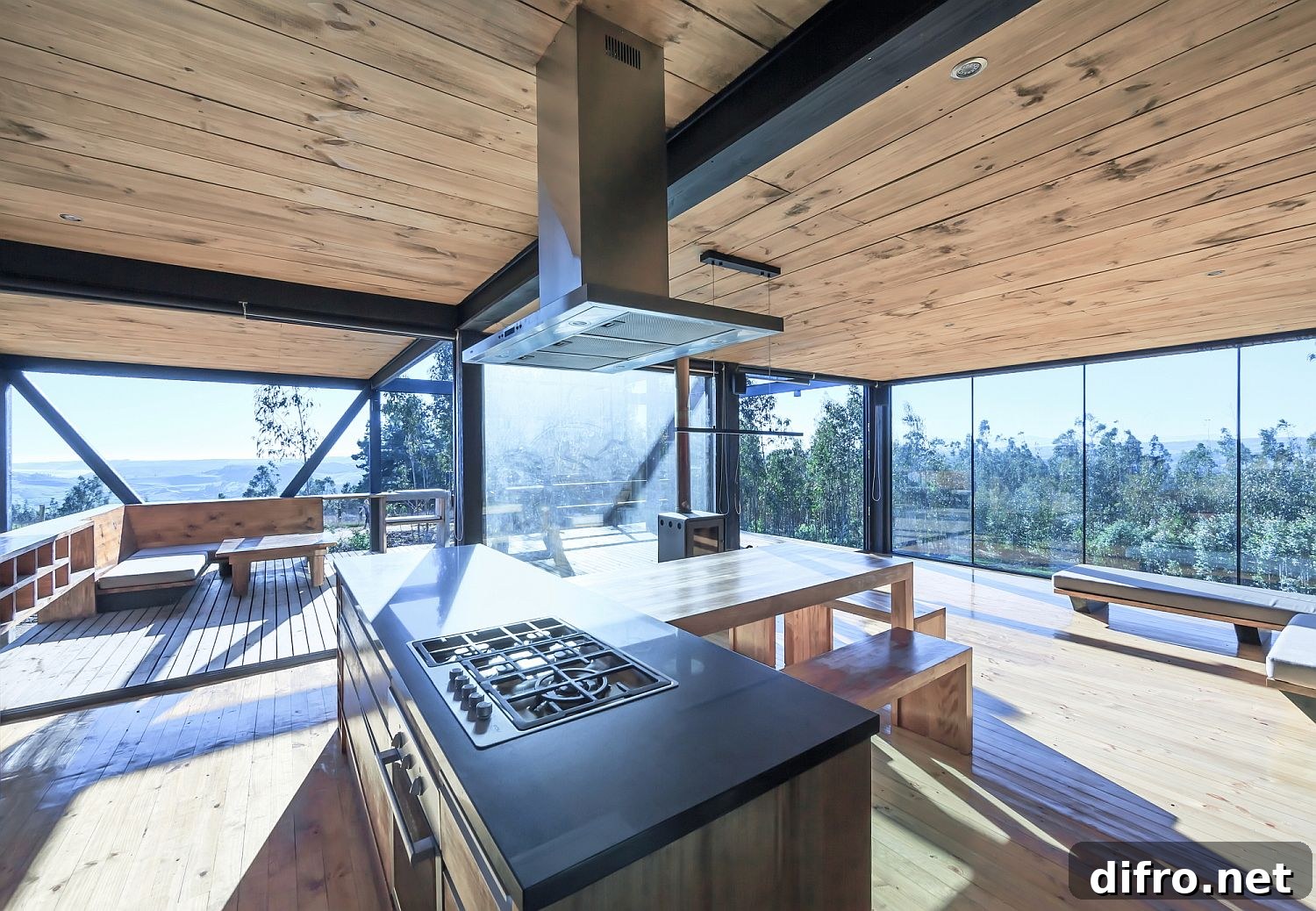
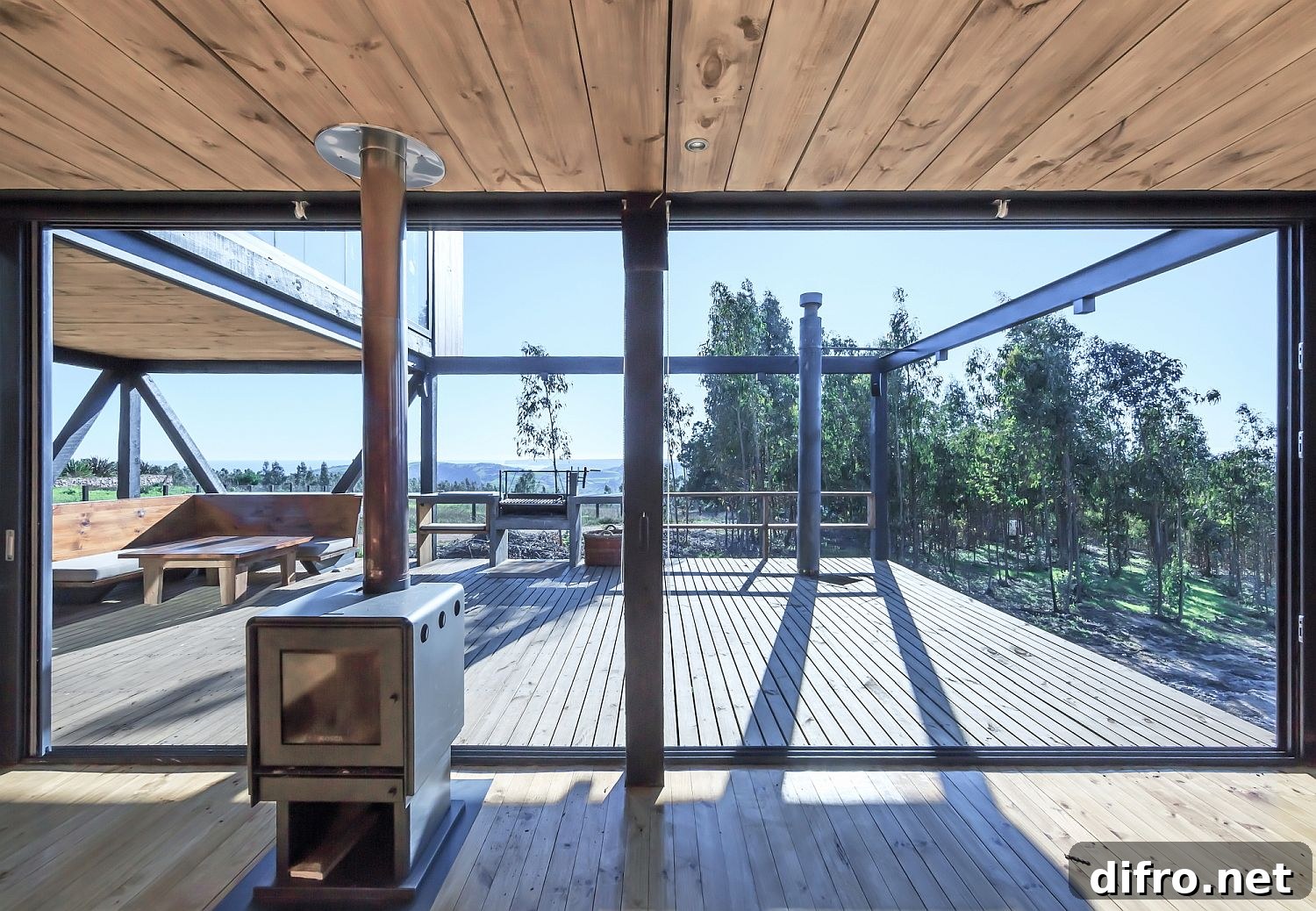
Outdoor living is integral to the design: twin decks and terraces wrap the house at different levels, extending the daily living spaces and providing a variety of sheltered and exposed outdoor settings. The sweeping deck on the first level becomes an immediate outdoor room for dining, lounging or simply taking in the view, while secondary terraces serve the bedroom level and offer quieter, more private retreats. This clear indoor-outdoor relationship enhances the experience of place and draws attention to the site’s coastal setting.
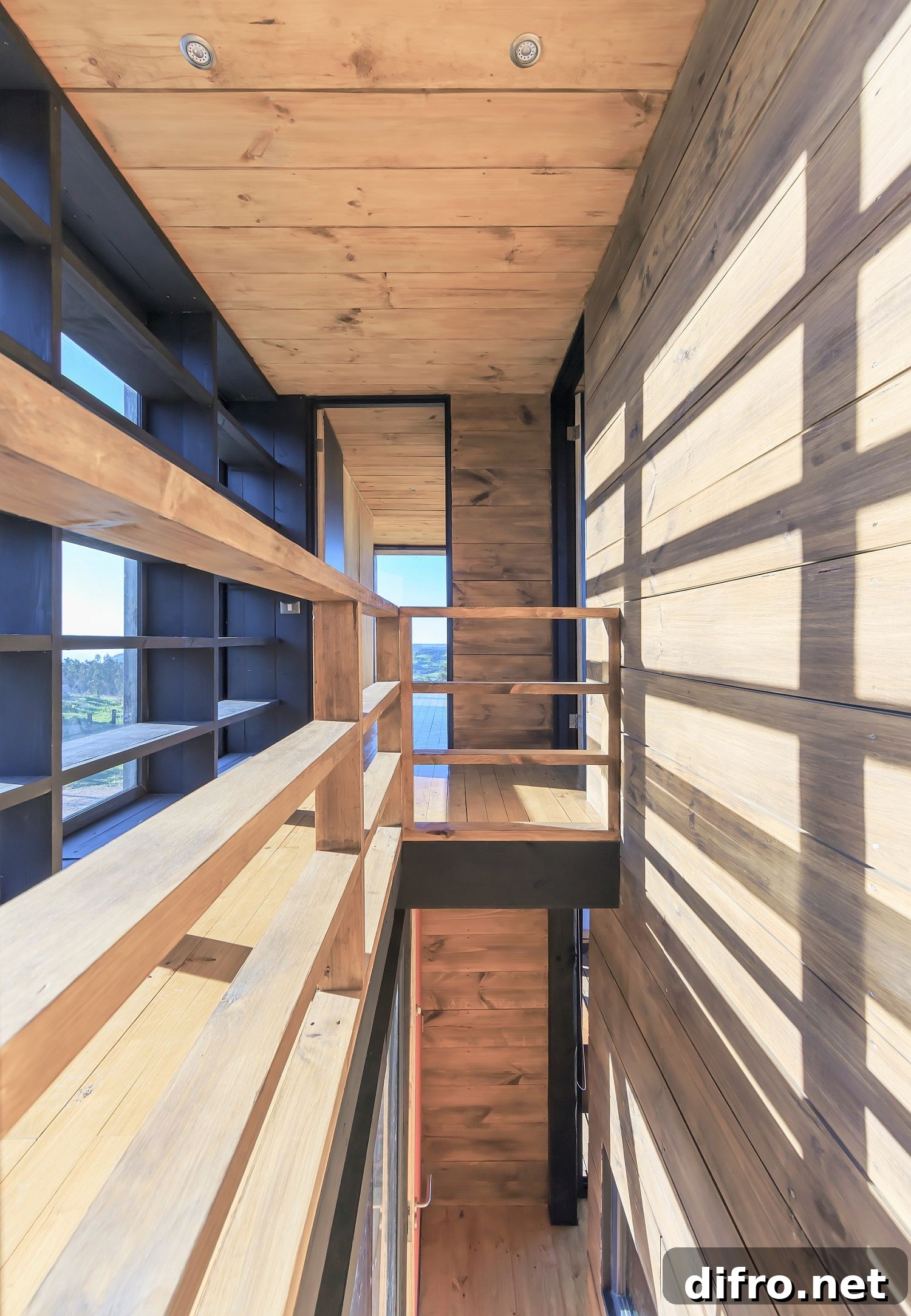
Circulation between the two distinct volumes is resolved with a thoughtfully placed staircase that links public and private areas while taking advantage of daylight from strategically placed glazing. The circulation core becomes a moment of transition—both visual and spatial—where natural light animates stairs and landings. Clean, contemporary lines and restrained décor keep attention on materiality, views and the house’s relationship with its site rather than on ornament.
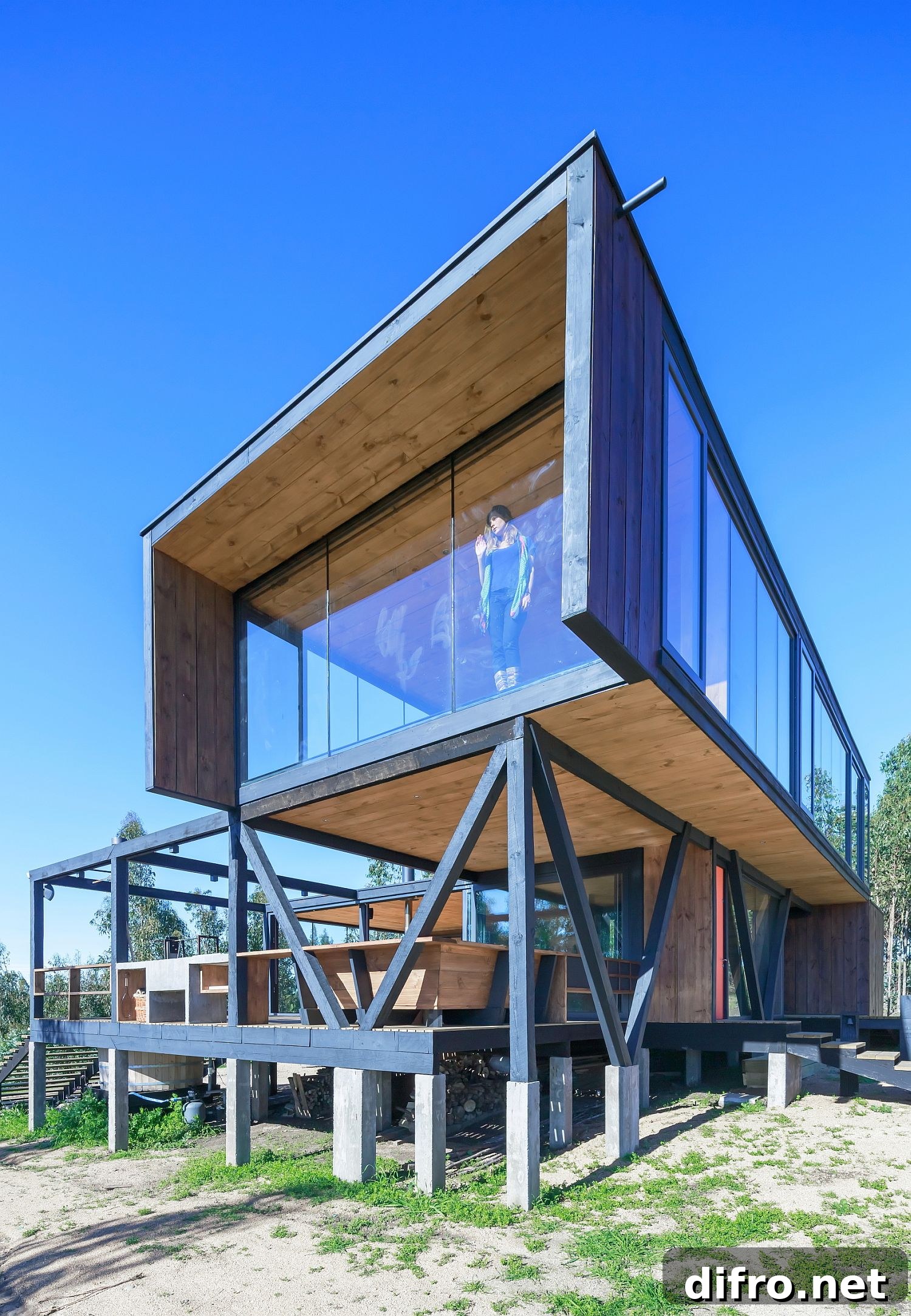
The structural expression—visible in the metallic frame elements and V-shaped supports—creates a purposeful contrast with the warm wooden cladding. This balance between exposed engineering and refined natural finishes is a hallmark of contemporary residential design and clearly informs the Harfagar House. Multiple entrances and decks make the plan flexible and accessible from different directions, responding to the slope of the site and to prevailing views and breezes.
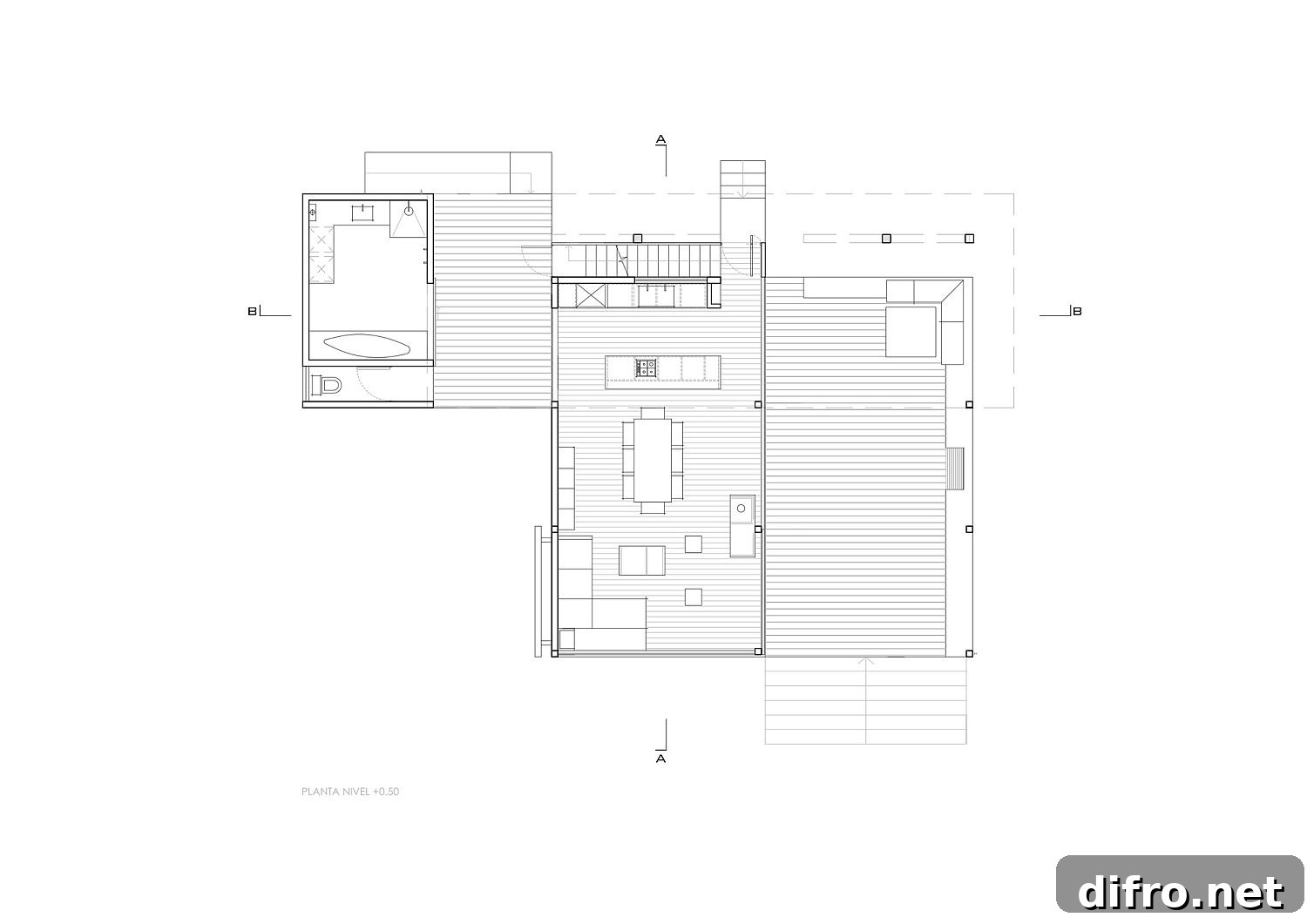
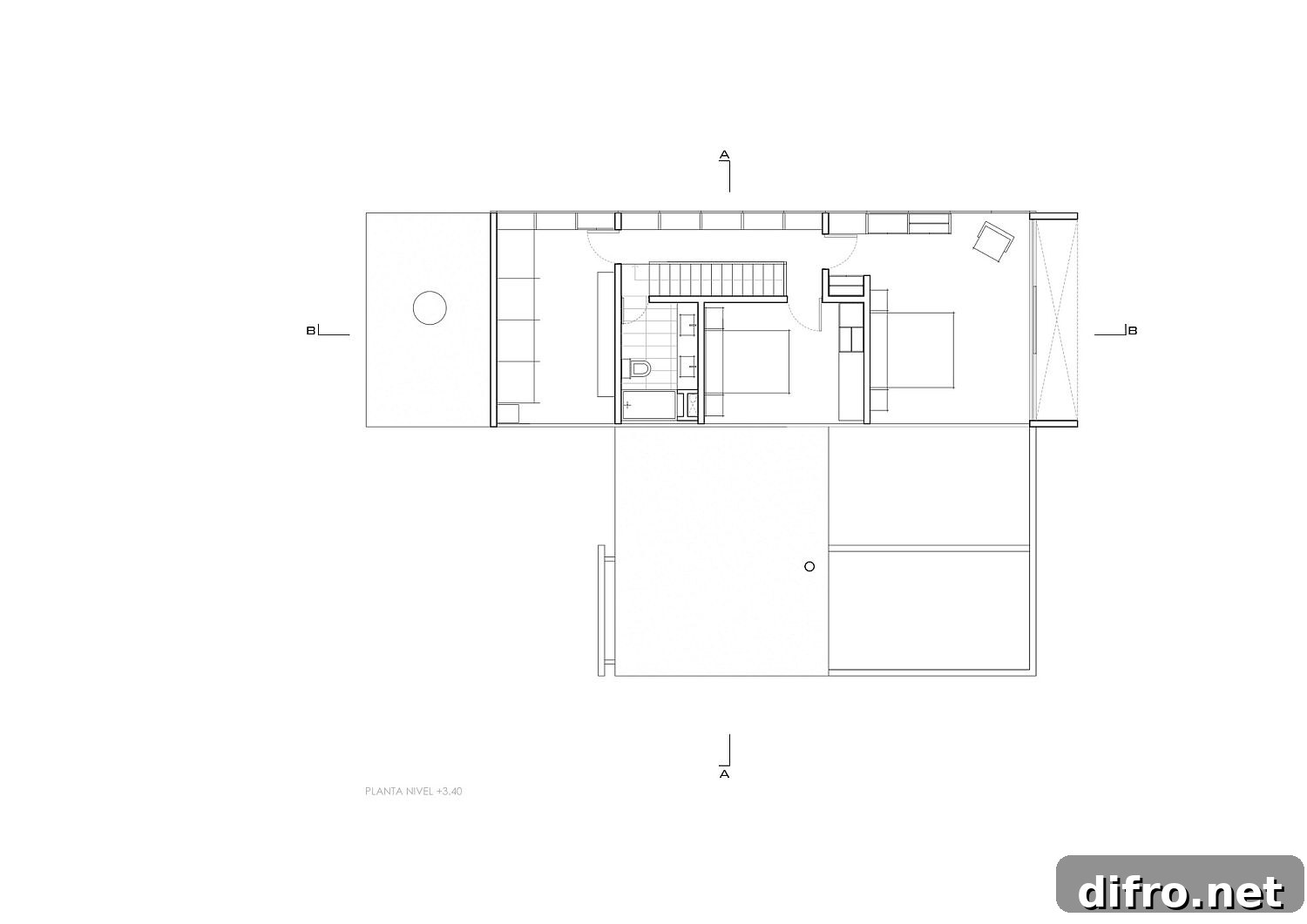
Floor plans show a clear separation of public and private zones, with the ground-level plan focused on communal living, circulation and outdoor connection, and the upper plan arranged for bedrooms and private terraces. The layout emphasizes comfort, privacy and adaptability while maintaining strong visual and physical ties to the surrounding landscape.
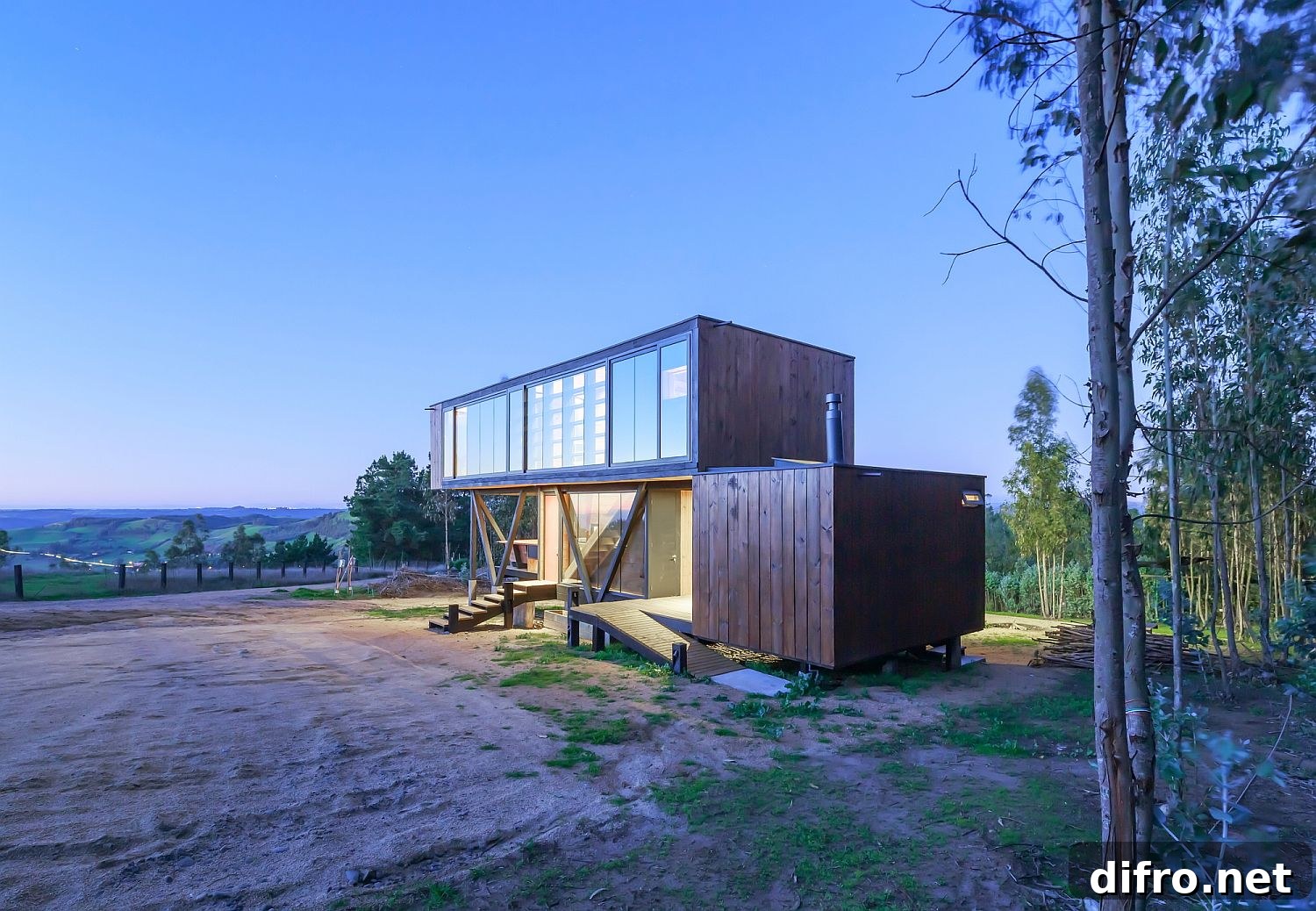
Harfagar House demonstrates how cantilevered architecture can maximize views, create sheltered outdoor spaces, and generate a striking visual identity while responding sensitively to site, climate and materials. The project by WMR Arquitectos balances strong structural gestures with warm timber finishes and generous glazing to create a contemporary home that celebrates its coastal setting.
Photography: Sergio Pirrone