Galley Kitchen Ideas: Efficient Layouts and Smart Design Tips
Galley kitchens take their name from the narrow cooking areas found below deck on ships. Built to make the most of limited space, ship galleys prioritize work zones and storage. In homes, a galley layout is often mistaken for cramped or restrictive, but in reality it can be highly efficient and adaptable. A well-designed galley kitchen maximizes usable area while delivering an organized, compact place to prepare meals and entertain.
At its core, a traditional galley kitchen is defined by two parallel runs of cabinets and countertops that create a long, central working corridor. While these kitchens historically lacked room for dining, modern solutions frequently incorporate seating or pass-throughs to connect the kitchen with adjacent living spaces. Below are several inspiring galley kitchen concepts that work in a variety of home sizes and styles, along with practical design takeaways for planning your own.
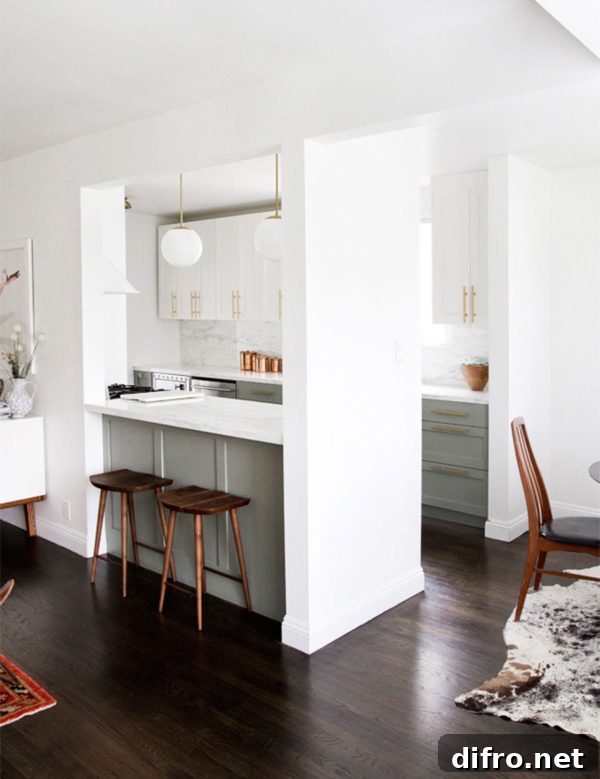
In this light and bright contemporary galley kitchen, the designer chose an asymmetrical layout to include a small eating area without feeling closed off from the rest of the home. One side features a cutout open to the living area, creating a cozy dining niche. A cool white and gray palette is warmed by rich wood tones in the dining and bar furniture and by hardwood floors. Accents like copper canisters and brass cabinet hardware add texture and visual interest.
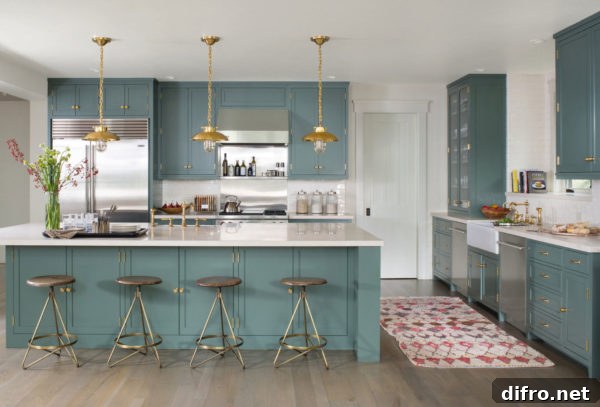
Another take on the galley layout adds a third wall of counters and cabinets plus generous seating at a breakfast bar. The cabinetry in this example is painted in a deep green tone—Farrow & Ball’s Green Smoke—paired with brass hardware and nautically inspired pendant lights for a warm, familiar feel. This arrangement works especially well in a slightly larger space, where the extra run of cabinets increases prep area and storage without losing the galley’s efficient flow.
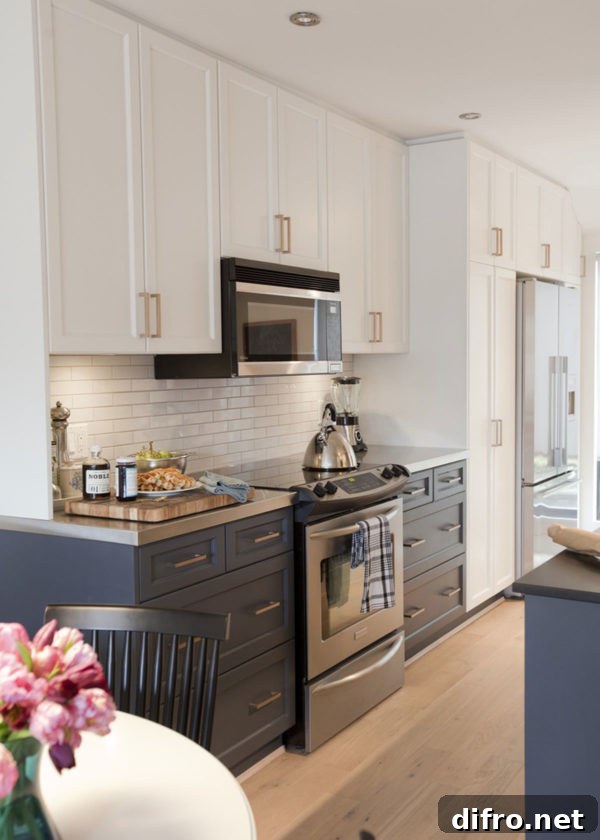
For those who prefer a classic galley plan, a compact layout can still be highly stylish. Here, deep blue base cabinets contrast with an otherwise white palette, while subway tile and light wood floors add warm texture. Extending tall cabinets all the way to the ceiling is a smart choice in galley kitchens: it captures extra storage where space is limited and keeps clutter out of sight.
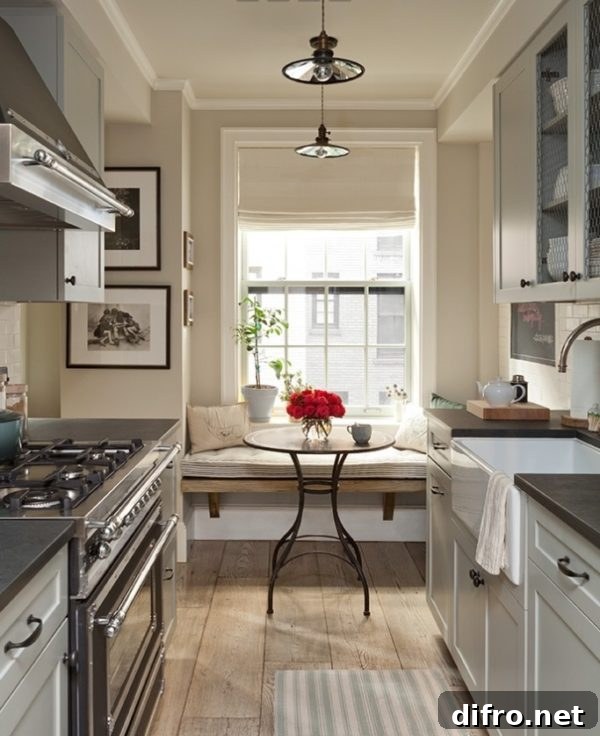
Even within the typical galley footprint, you can create an inviting, sunlit area perfect for entertaining. Wide rustic plank floors pair well with stainless steel appliances and darker countertops atop white cabinetry. Again, ceiling-high cabinets make the most of vertical space and help the kitchen feel organized and purposeful.
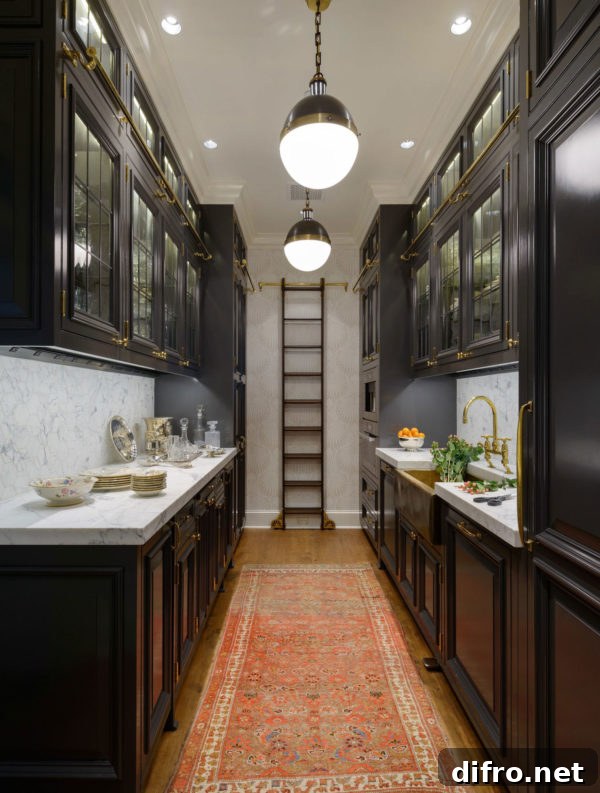
A more formal approach uses dark, symmetrical cabinetry with rich marble countertops and gold accents to create an elegant atmosphere. Concealed appliances give the space a seamless, custom look, and a rolling library-style ladder adds both function and a touch of drama. This example demonstrates how a galley layout can be both beautiful and highly functional, meeting the dual goals of design and practicality.
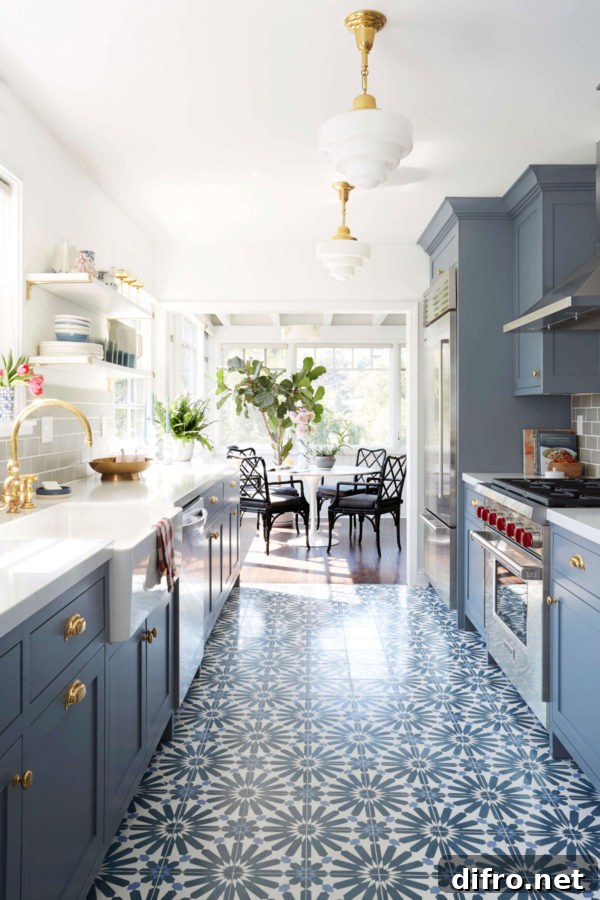
An asymmetrical galley can also embrace pattern and personality. This sun-filled room features an eye-catching patterned floor and a window above the sink that brings natural light into the workspace. Blue cabinets temper the brightness, while vintage-style overhead lighting and a retro stove give the space an eclectic, lived-in charm. Patterned tile is an effective way to add character without crowding the visual field in a narrow plan.
Design tips for making the most of a galley kitchen:
- Prioritize workflow: keep the work triangle efficient by locating sink, cooktop, and refrigerator within easy reach.
- Maximize vertical storage: full-height cabinets and open shelving use wall space that might otherwise go unused.
- Improve light and openness: add windows, skylights, or a pass-through to bring in light and visually connect the kitchen to other rooms.
- Choose finishes wisely: lighter colors and reflective backsplashes make narrow spaces feel larger; bold colors or patterned floors can add personality when balanced with neutral surfaces.
- Integrate appliances: panel-ready appliances and concealed storage keep the corridor uncluttered and streamlined.
- Include flexible seating: a small banquette, narrow table, or breakfast bar can provide dining space without disrupting the galley flow.
Galley kitchens are far from one-size-fits-all. With thoughtful layout choices, smart storage solutions, and carefully chosen finishes, a galley plan can feel spacious, efficient, and welcoming—proving that good design makes the most of every square foot.