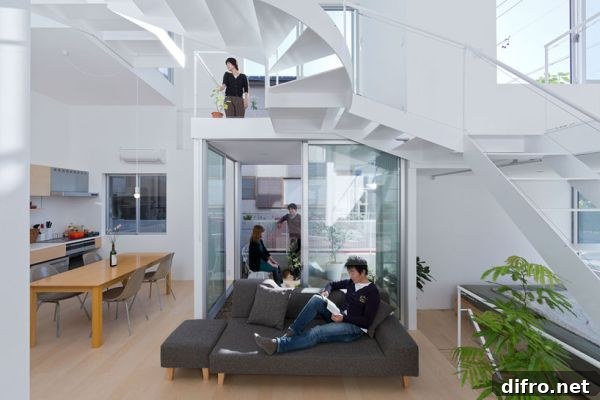
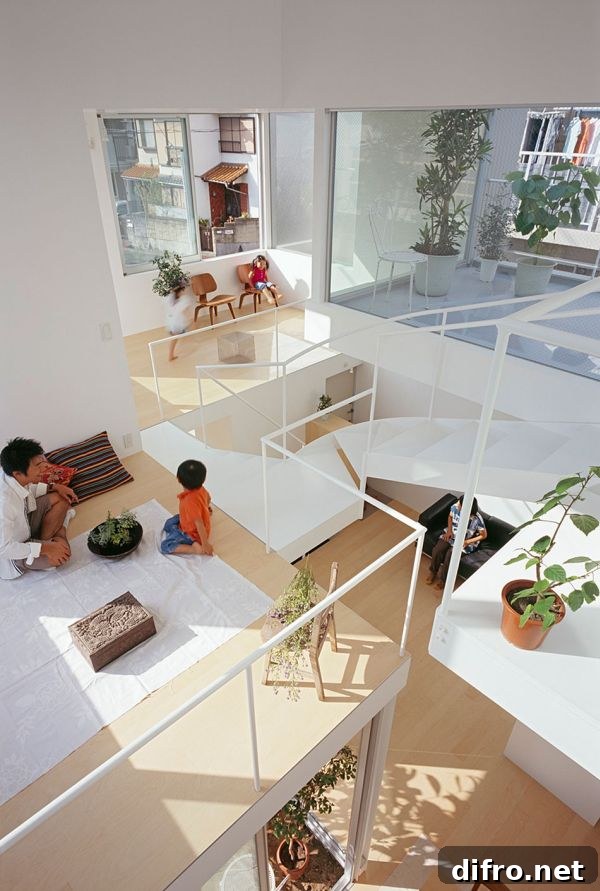
When it comes to making the most of limited space, few traditions are as refined as contemporary Japanese residential design. Conceived and executed by Tetsuo Kondo Architects, this inventive family home sits in Chayagasaka and demonstrates a highly disciplined approach to spatial economy. The project is organized around the notion of a single expansive room: individual functions are subtly delineated rather than enclosed, so a small family with children can enjoy a continuous, flowing interior where sightlines and movement remain largely unobstructed.
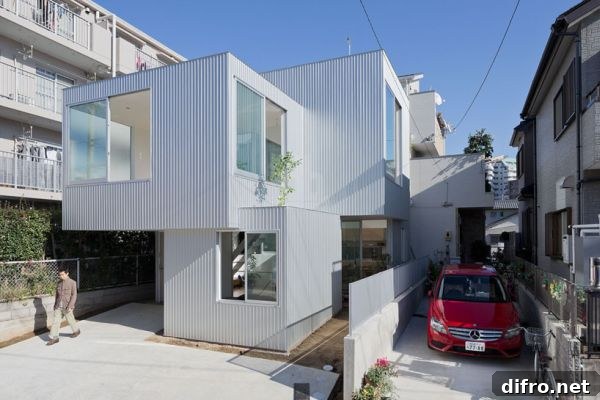
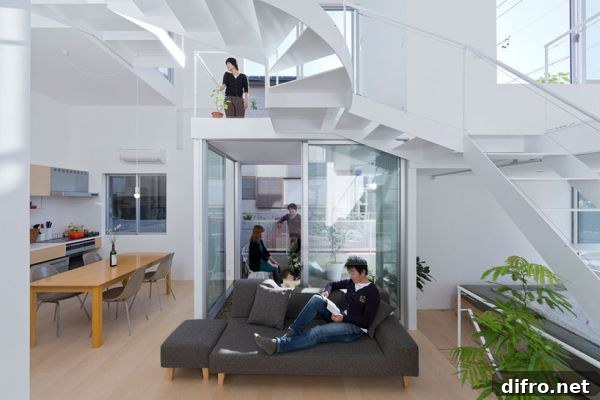
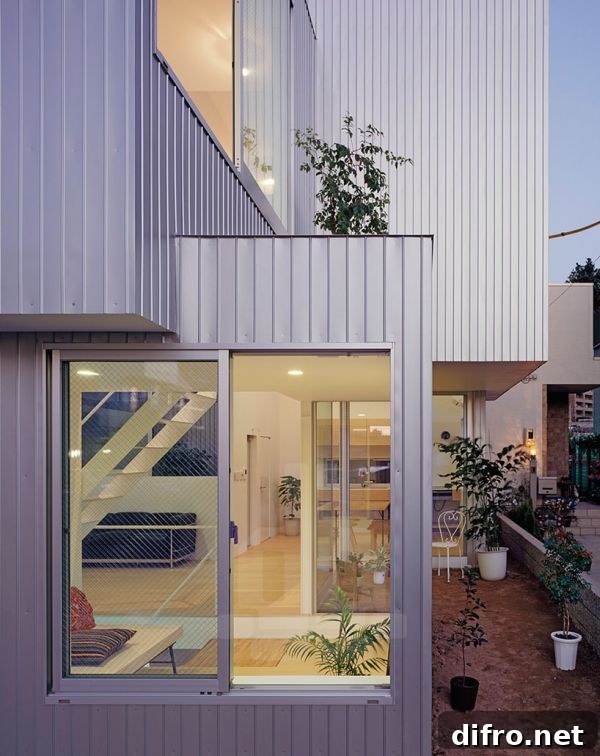
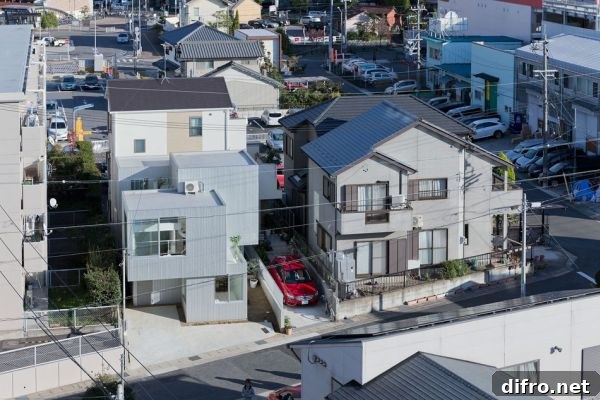
The exterior reads as three large metallic volumes stacked in a geometric composition, a sculptural silhouette that immediately identifies the residence on its urban site. Beyond that striking shell, the interior strategy is intentionally restrained: walls are minimized and a soft, neutral white palette creates continuity between spaces. That single backdrop amplifies daylight and makes the compact footprint feel far more open than its dimensions suggest. On the ground level, an ergonomic modern kitchen, an open living area and a casual dining spot share a single spatial field while still feeling distinct through careful zoning and furniture placement.
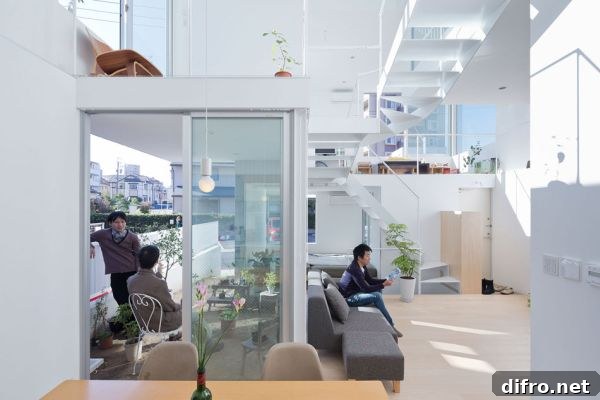
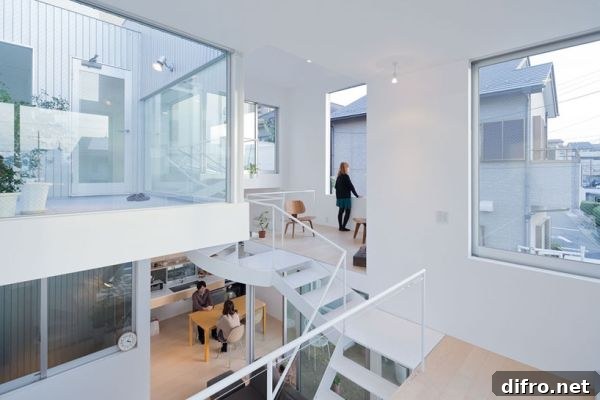
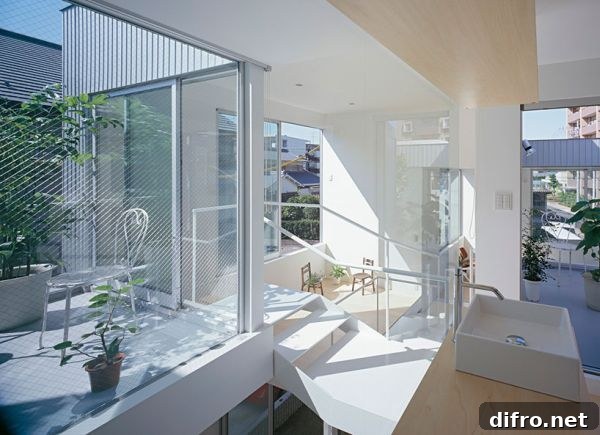
Light, materials and carefully placed openings all contribute to a sense of openness. A small indoor courtyard brings a living fragment of the outdoors into the heart of the plan, giving rooms direct visual access to greenery and sky. Large sliding glass doors connect interior and courtyard, enabling cross-ventilation and a close relationship with natural light throughout the day. These features not only improve comfort but also reinforce the feeling of spatial generosity despite the compact overall area.
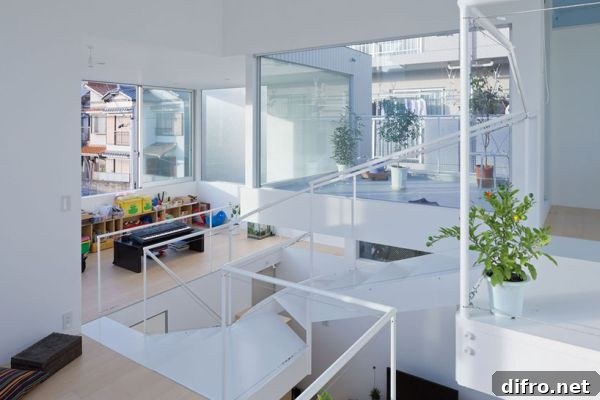
Circulation is resolved through a sculptural staircase that doubles as a visual anchor. Its clean lines and white finish echo the interior palette, while its placement organizes movement between levels without interrupting sightlines. Above, the upper level is composed as a sequence of terraces and staggered platforms, allowing parents to supervise children across the plan and offering varied vantage points over the living areas below. These terraces also create opportunities for daylight to penetrate deeper into the house, improving daylighting and passive ventilation strategies.
Though compact in footprint, the Chayagasaka house never gives the impression of being cramped. The careful balance of solid and void, combined with a limited material palette and flexible spatial arrangements, creates an environment that feels both functional and refined. Every element has been considered to support family life: places to cook, relax, dine and play flow naturally from one to the next, making the home adaptable to changing needs.
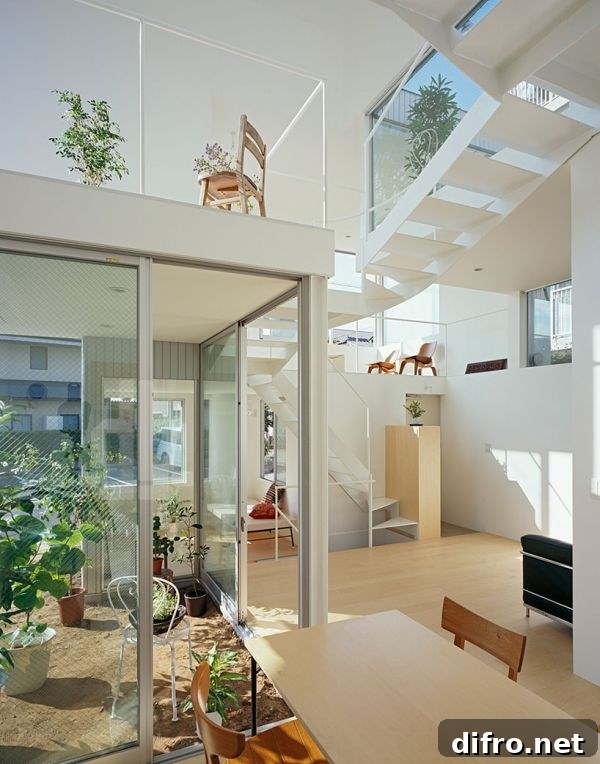
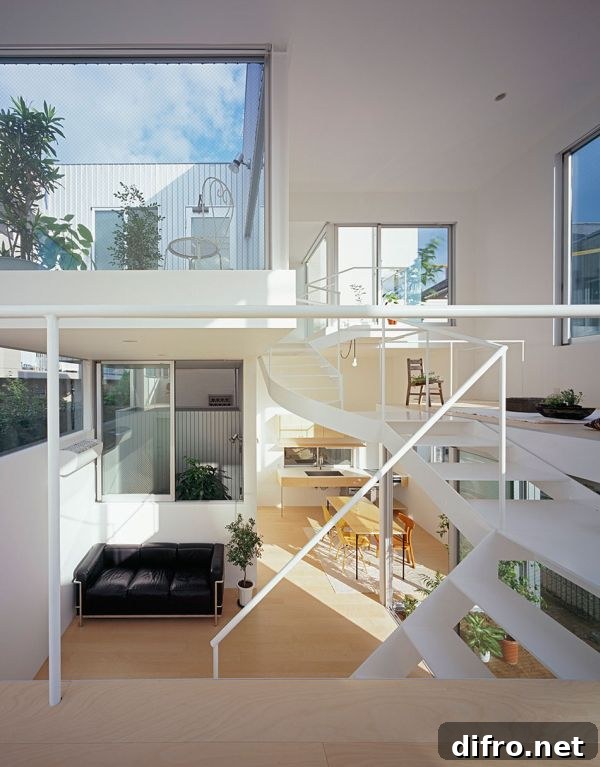
In summary, the Chayagasaka residence by Tetsuo Kondo Architects is a compelling example of modern Japanese architecture that prioritizes spatial efficiency, daylight, ventilation and family-oriented circulation. Its minimalist interior treatment, sculptural staircase and integrated courtyard show how a small urban plot can be transformed into a comfortable, flexible home that feels both airy and intimately connected to nature.