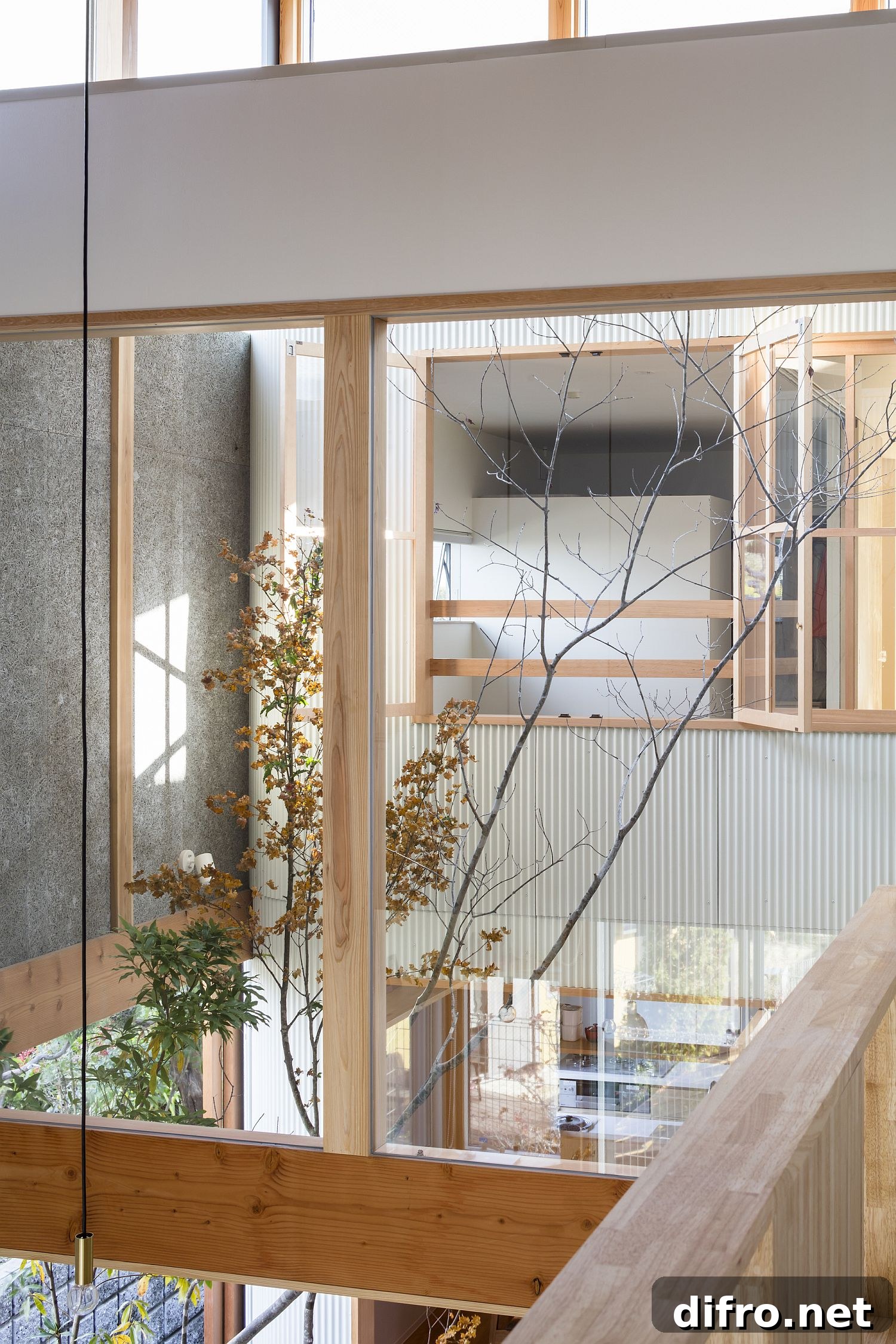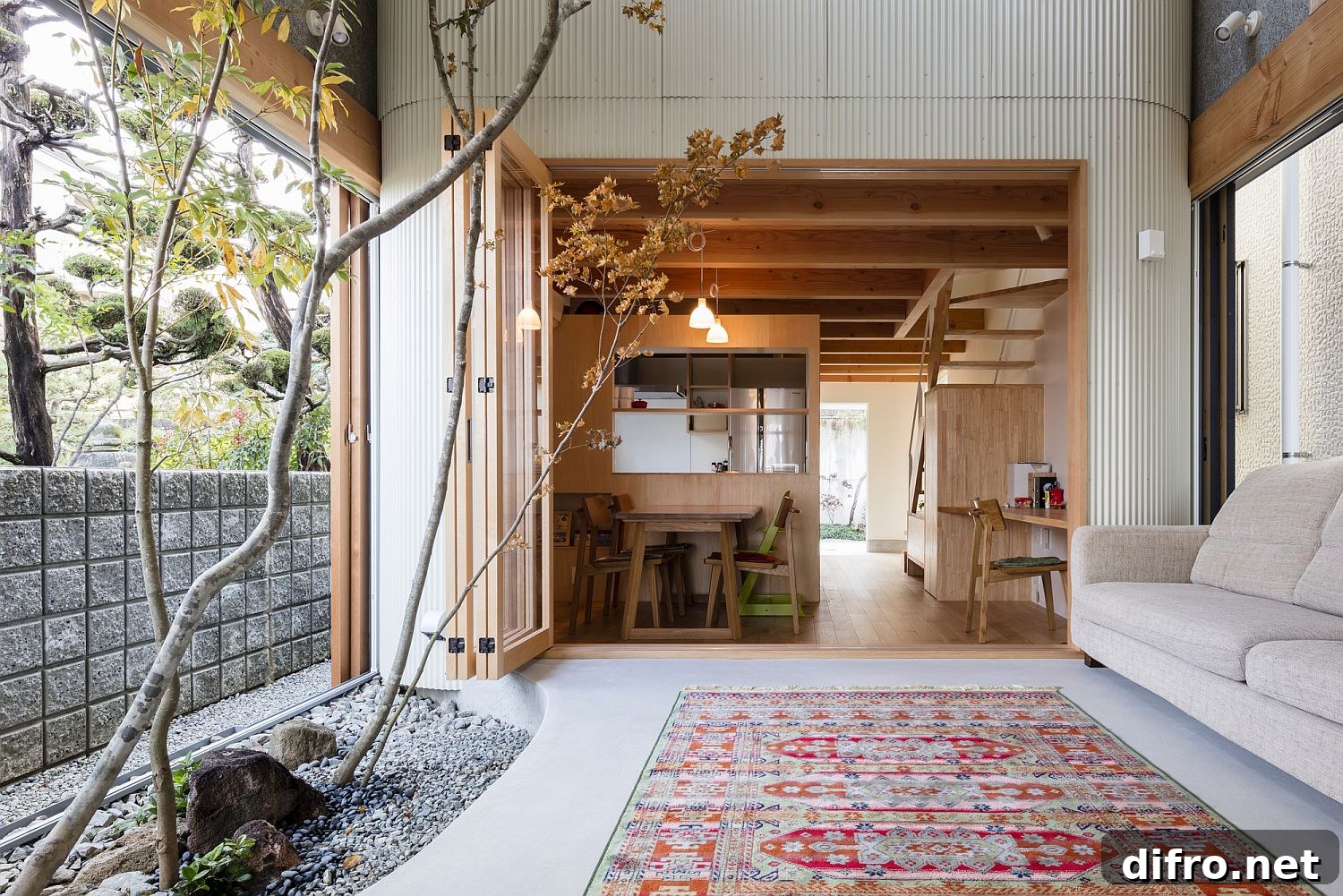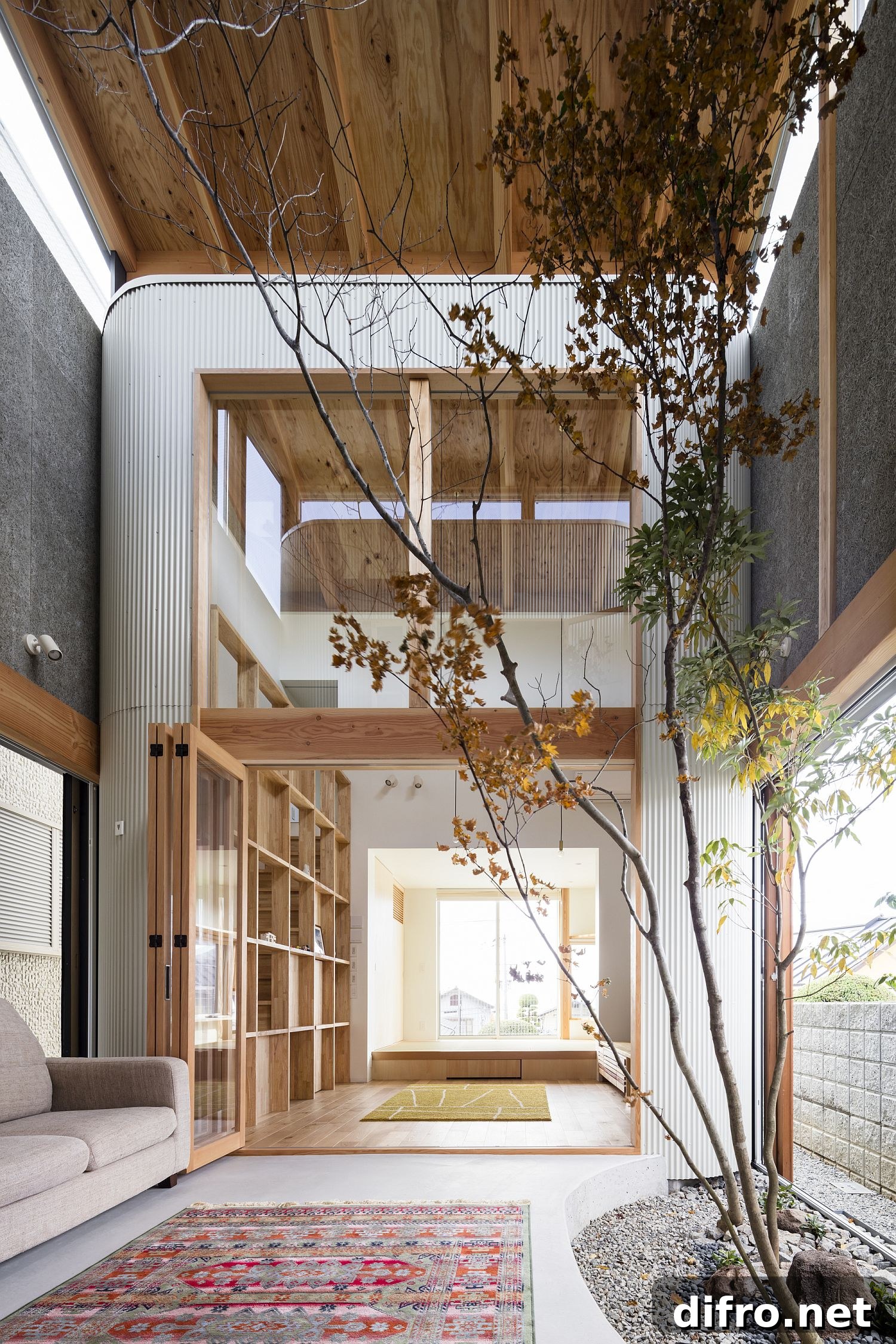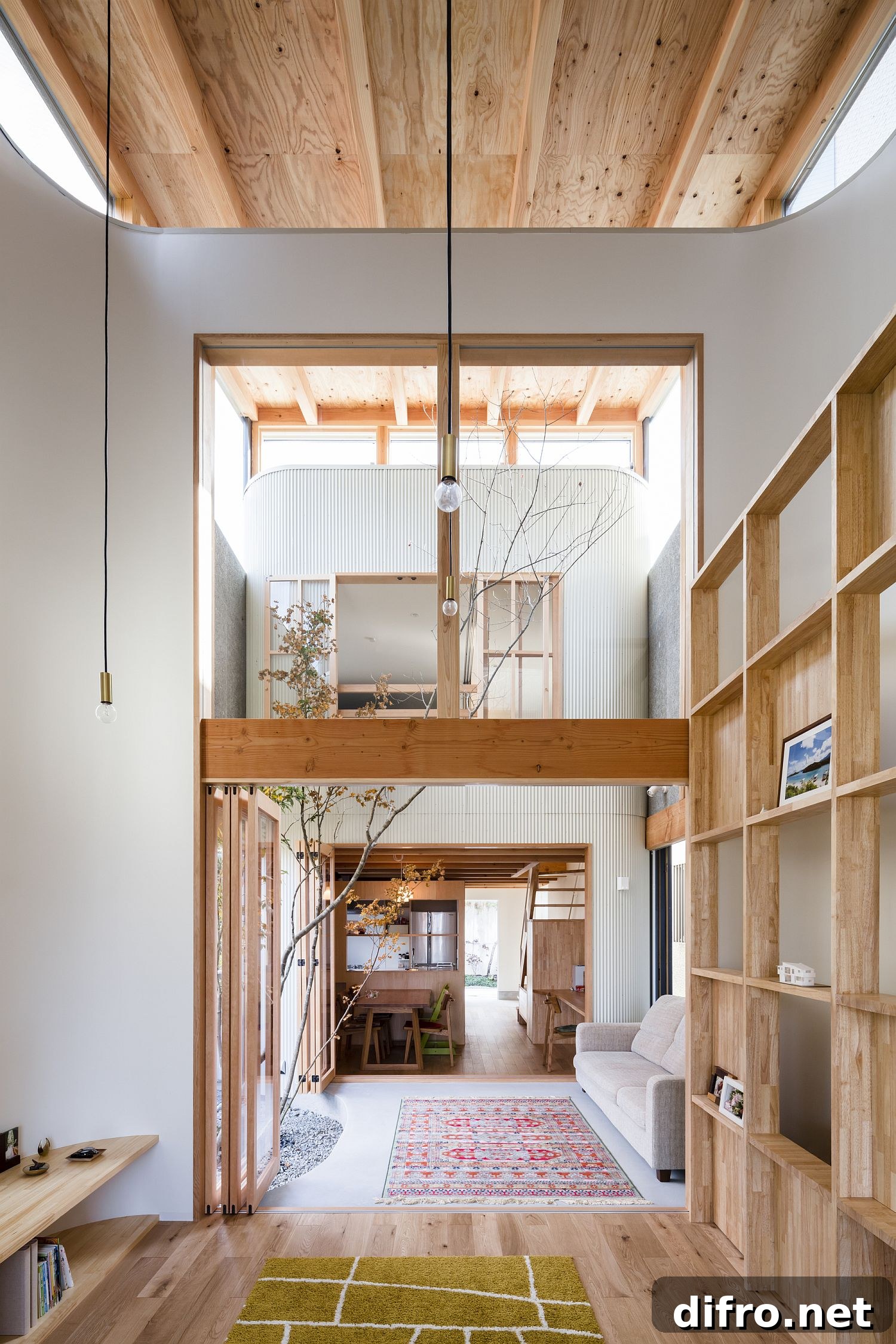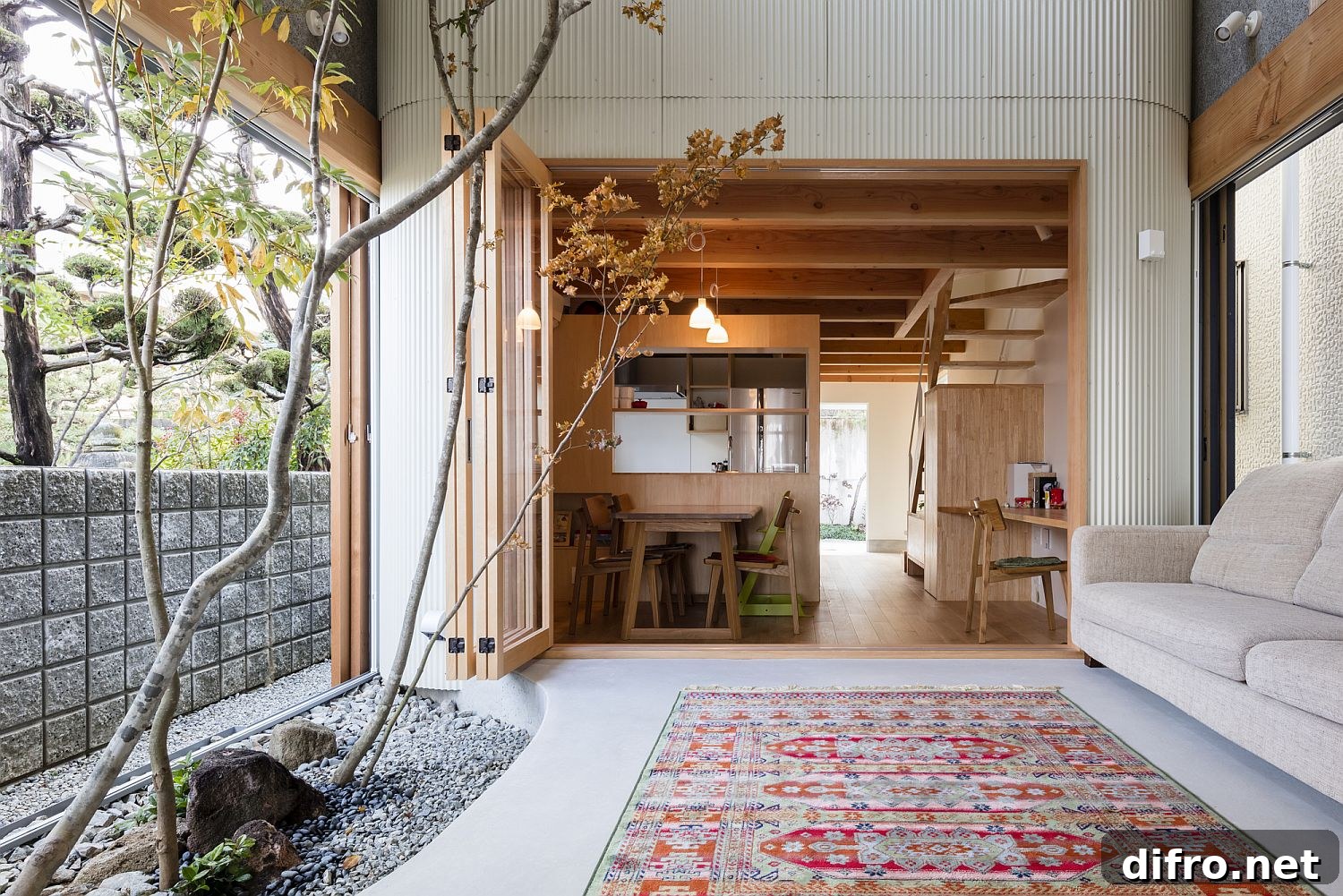
Designing a modern family home on a narrow, constrained lot is always a challenge. Designing one that is both family-friendly and eco-conscious raises the stakes even higher. Nestled at the foot of a mountain in Japan, the Melt House successfully meets that challenge. The home integrates greenery directly into its interior, creating a calm, nature-forward atmosphere without relying solely on floor-to-ceiling glass. Rather than simply opening the house to the outside, the architects at SAI Architectural Design Office incorporated a purposeful indoor garden under a double-height roof. Placed at the heart of the floor plan, the garden separates the kitchen and dining area from the living room, functioning as a transition zone, a social hub and an everyday gathering place for the family.
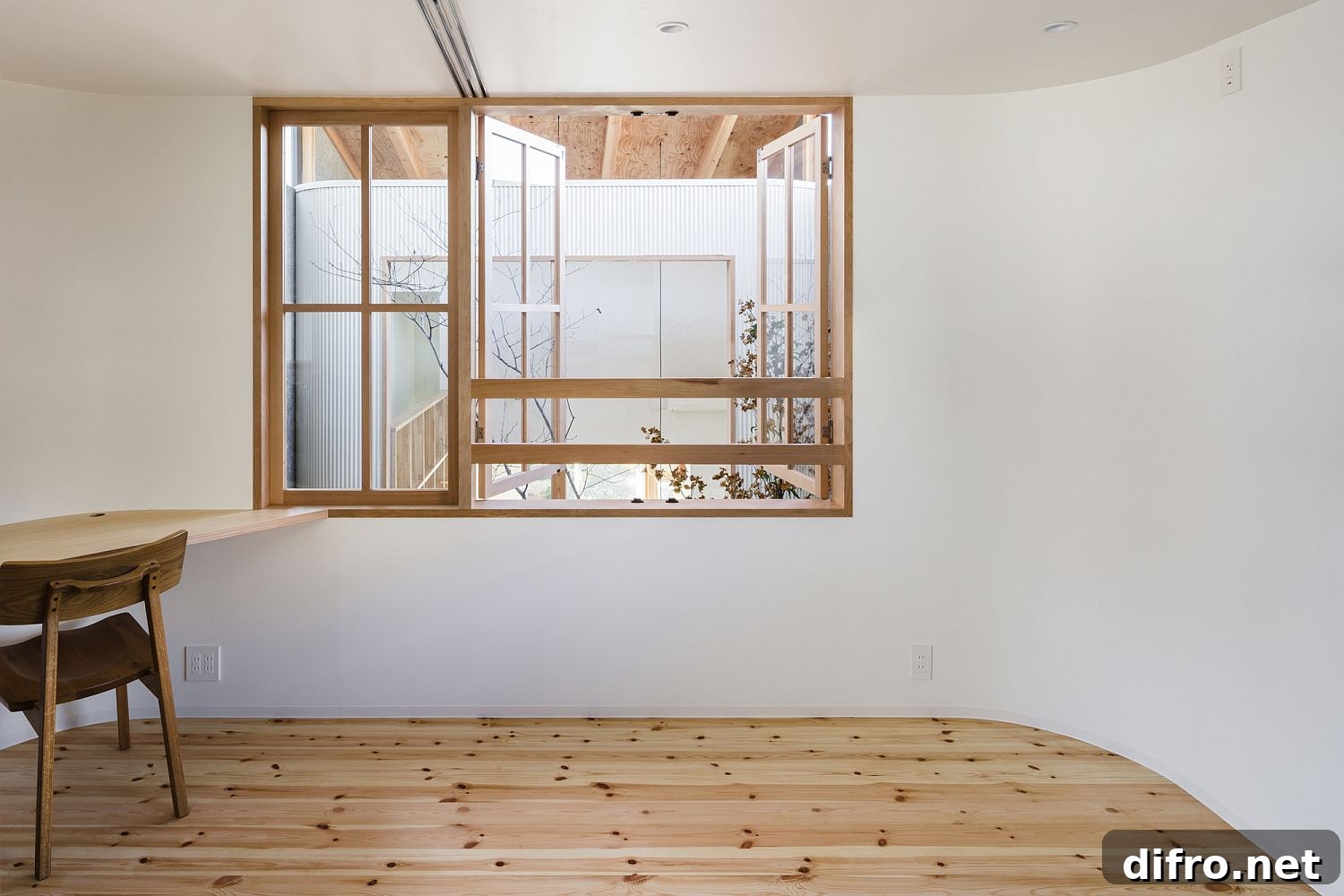
Despite the site’s narrow dimensions, the interior feels open and generous. A double-height ceiling enhances the sense of space, while carefully placed windows frame views and invite balanced natural light into the home. The interior palette—an elegant combination of white and warm wood—keeps rooms bright and visually connected. These materials, together with glass elements and clean lines, contribute to a timeless, minimal aesthetic that also supports a comfortable family life.
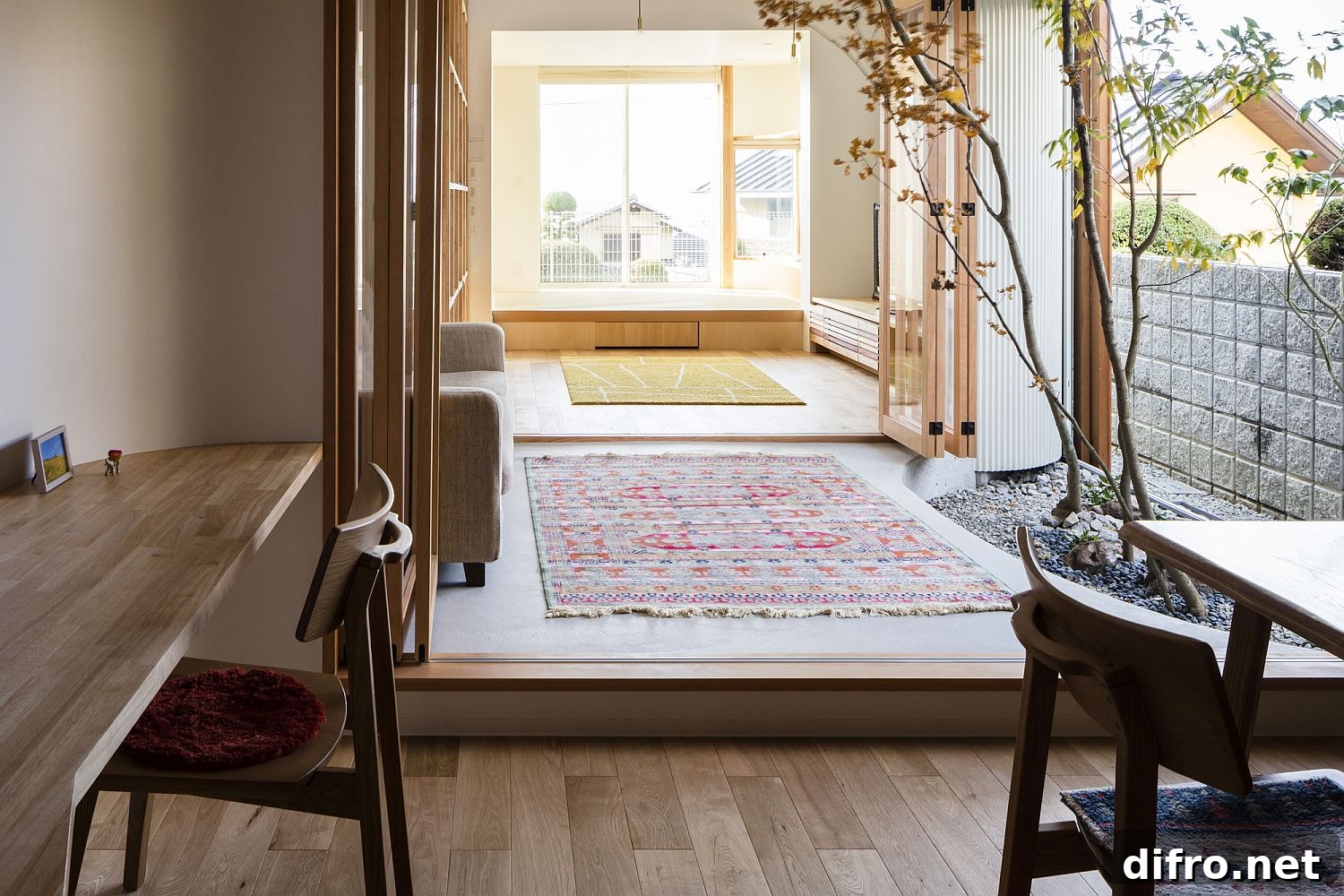
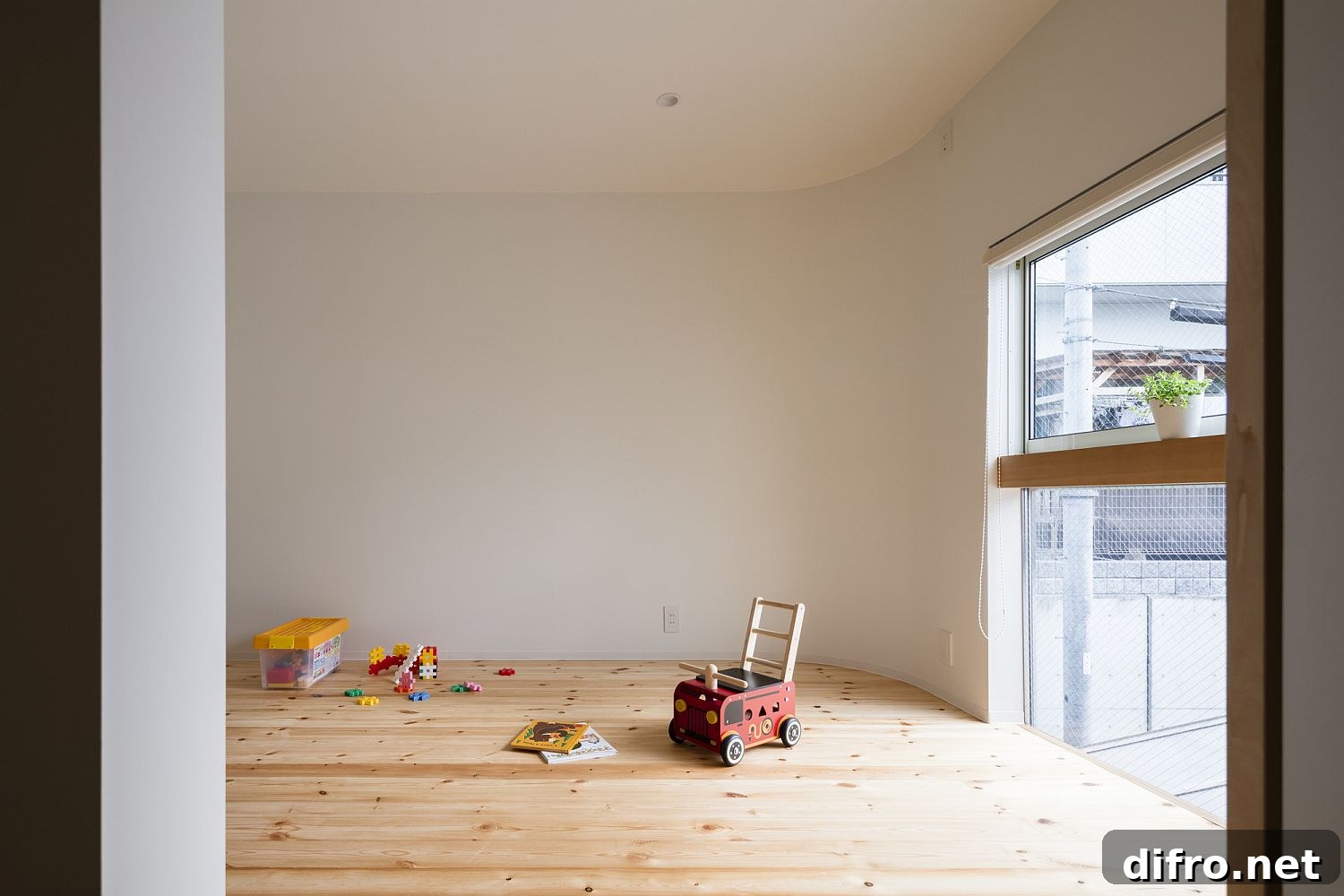
The residence was planned for a young family—a couple in their thirties with two children—and its spatial organization supports daily routines and family interaction. Living spaces, including the kitchen, dining and living room, are located on the ground floor where the indoor garden acts as a central, unifying feature. Bedrooms and bathrooms occupy the upper level, benefiting from privacy and abundant daylight thanks to the double-height void and intelligently positioned windows.
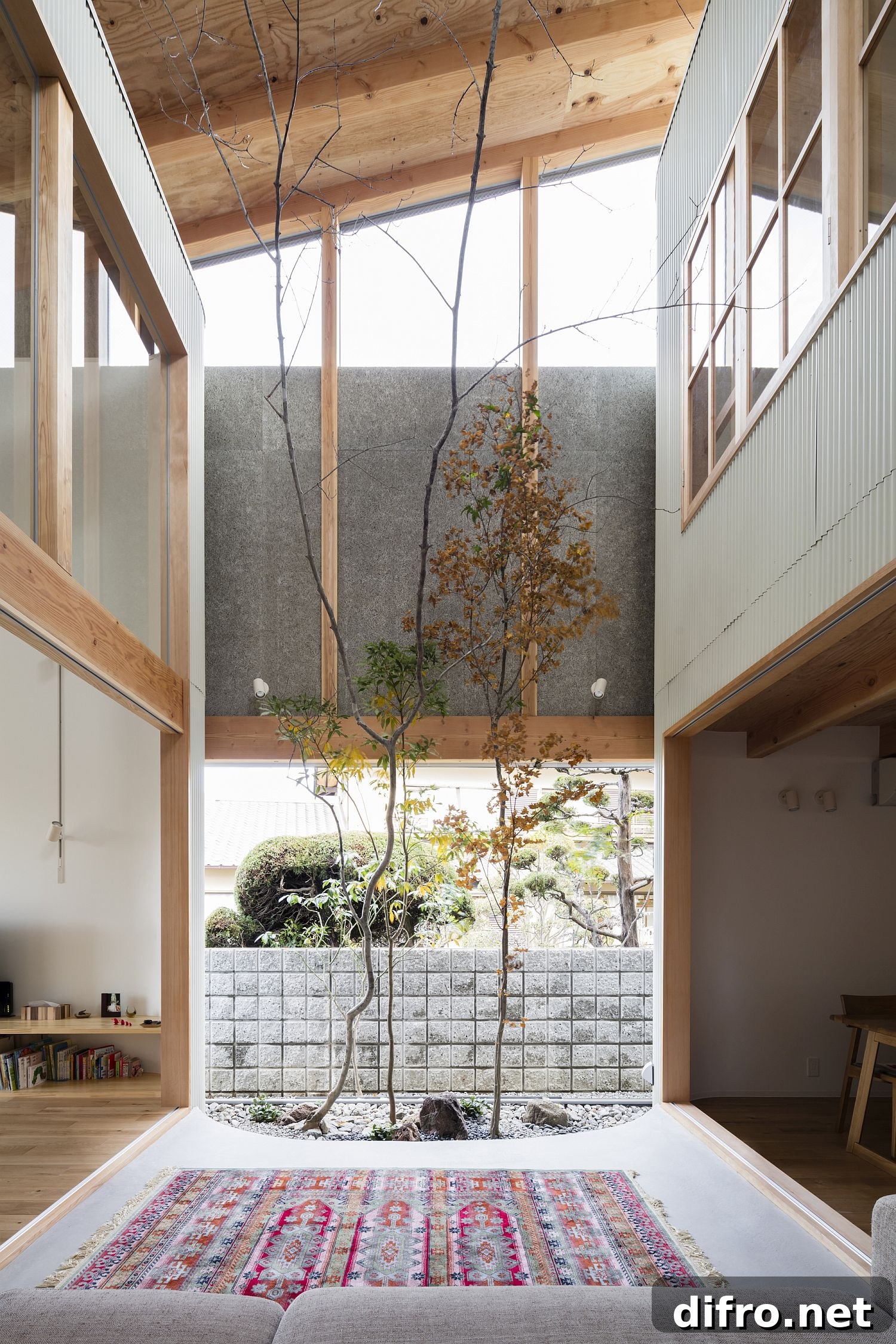
Rather than a high-maintenance planted atrium, the Melt House features a tasteful dry garden. This solution provides the sensory benefits of a green space while limiting the maintenance demands on the homeowners. A dry garden adds texture and a tactile quality to the interior: stone, gravel, sculptural planting and minimalist detailing create a serene landscape that reads as natural, restrained and deeply considered. Because it is covered by a double-height roof, the garden also benefits from shelter and a controlled environment, which helps minimize upkeep and extend the life of planted elements.
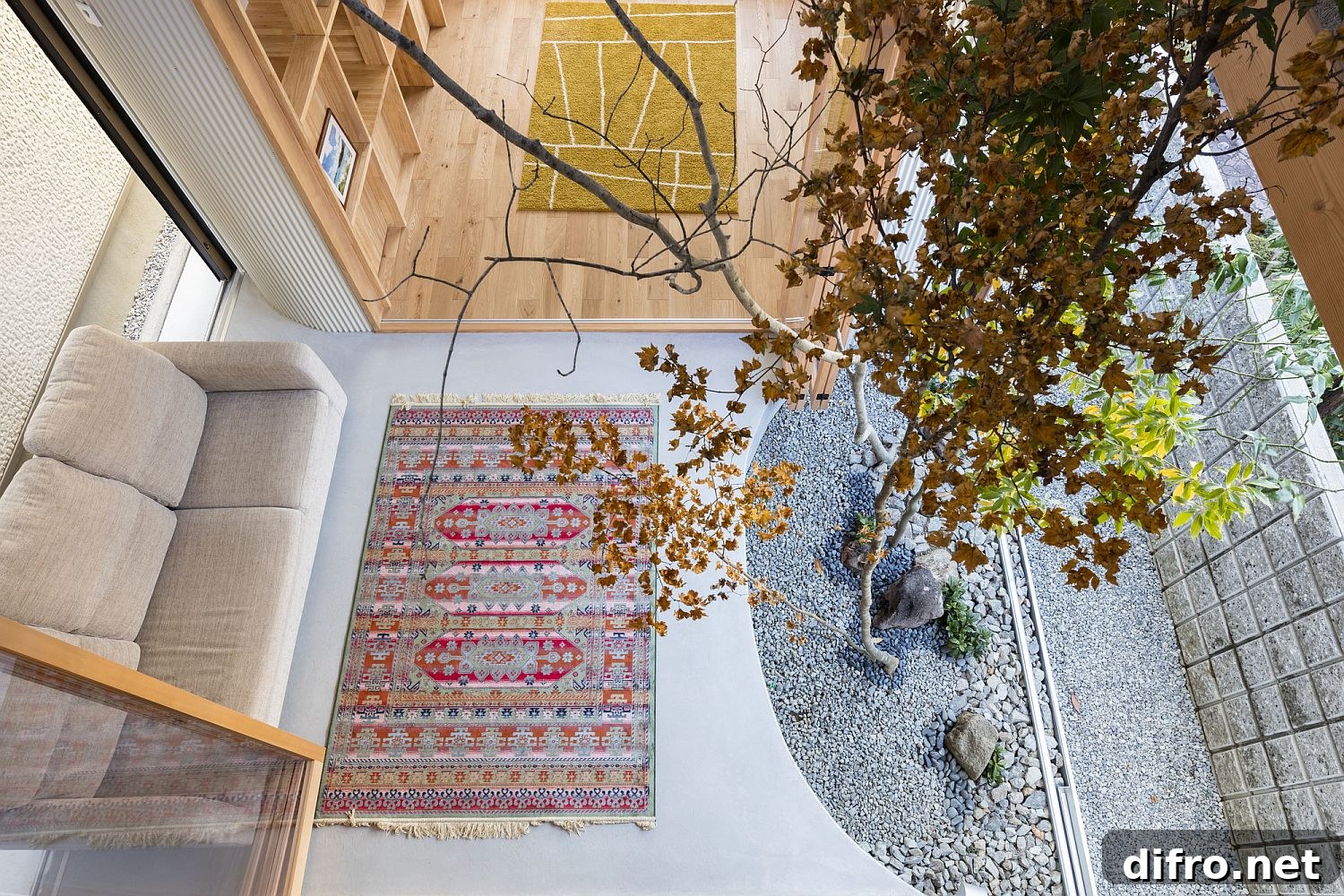
Beyond aesthetics, the central garden brings several functional advantages: it creates a calming focal point, improves visual connections between spaces, acts as an acoustic buffer, and provides a semi-outdoor play and social zone for children and adults alike. The garden’s position between dining and living areas encourages interaction and creates a flexible, shared environment that supports both family life and quiet moments.
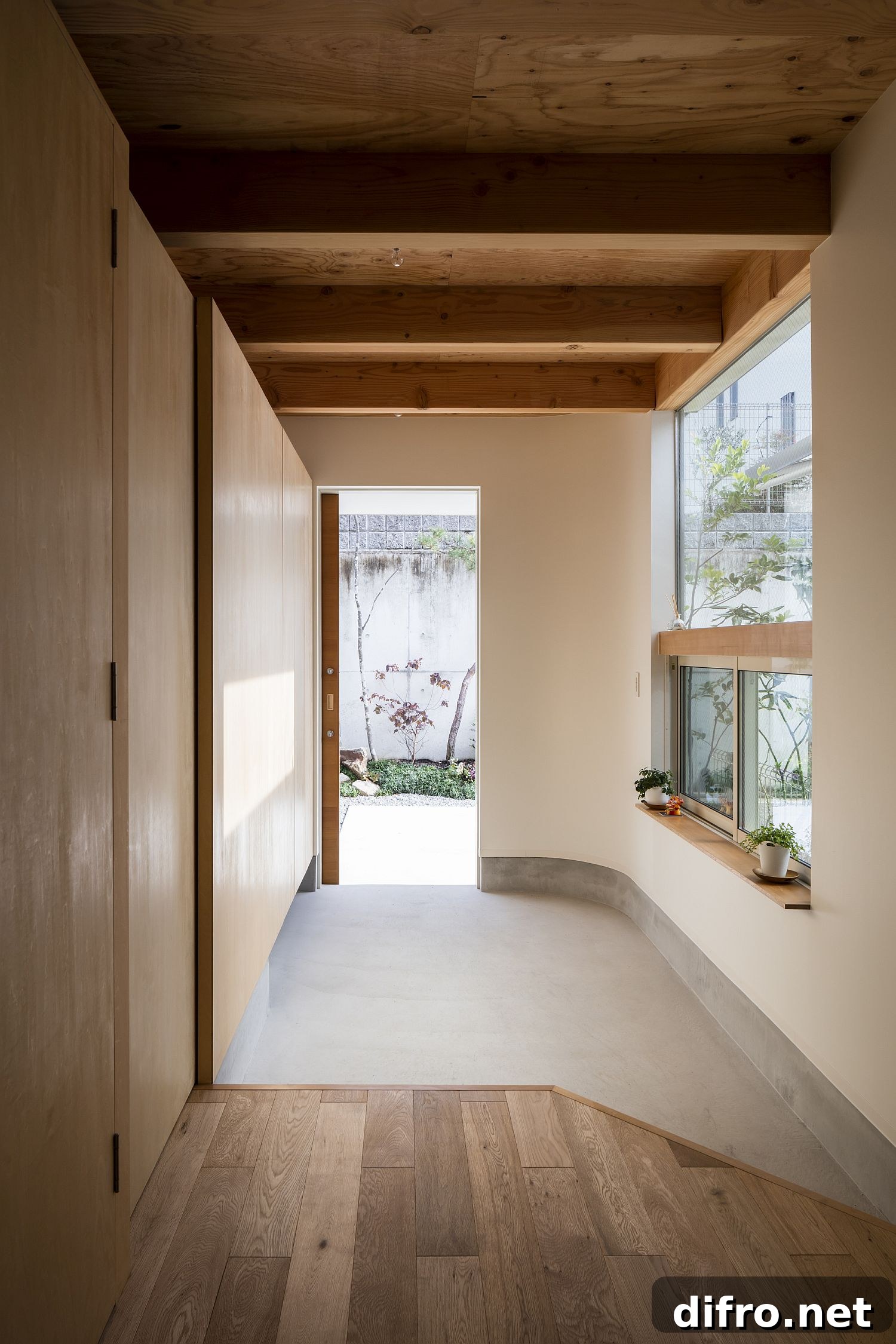
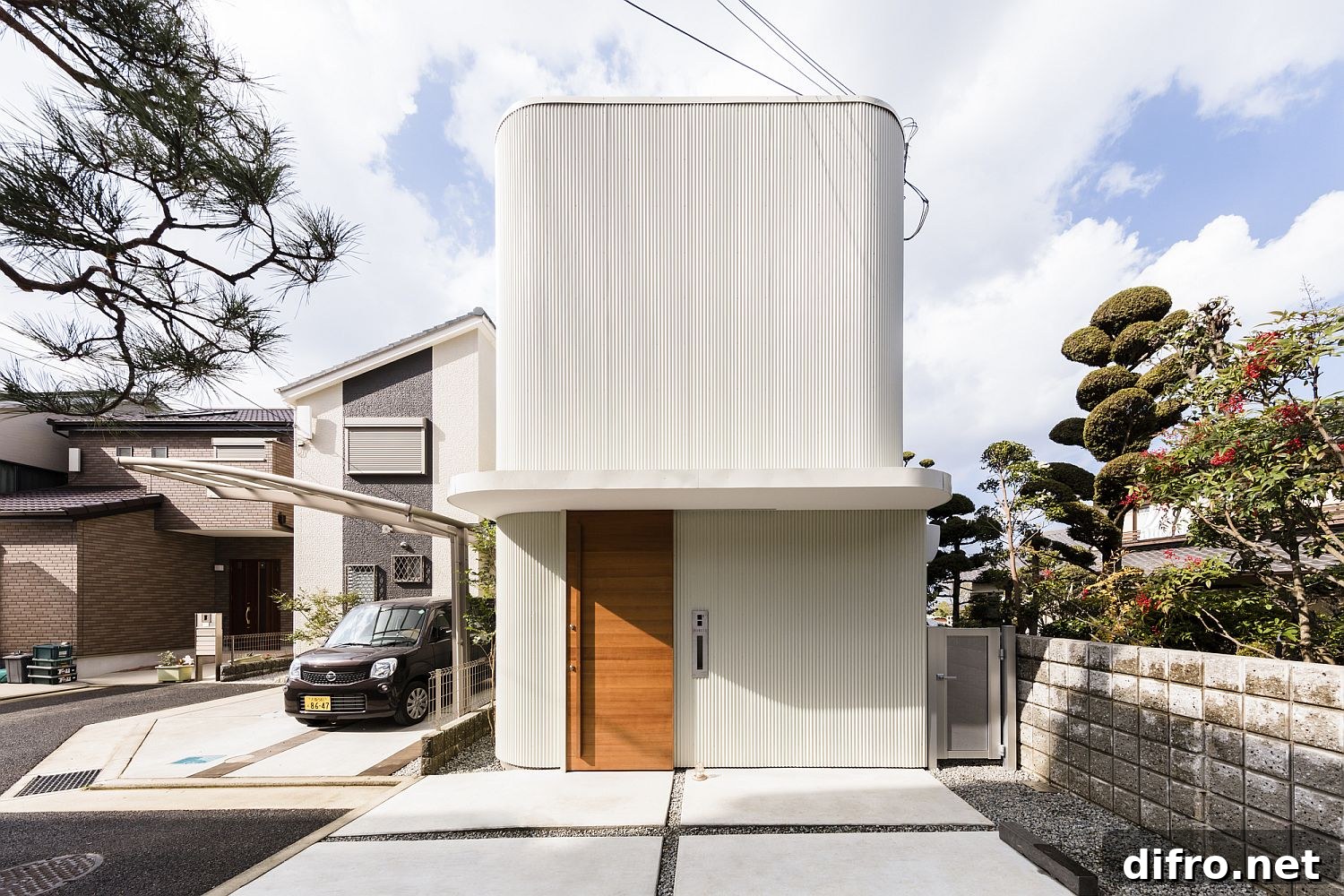
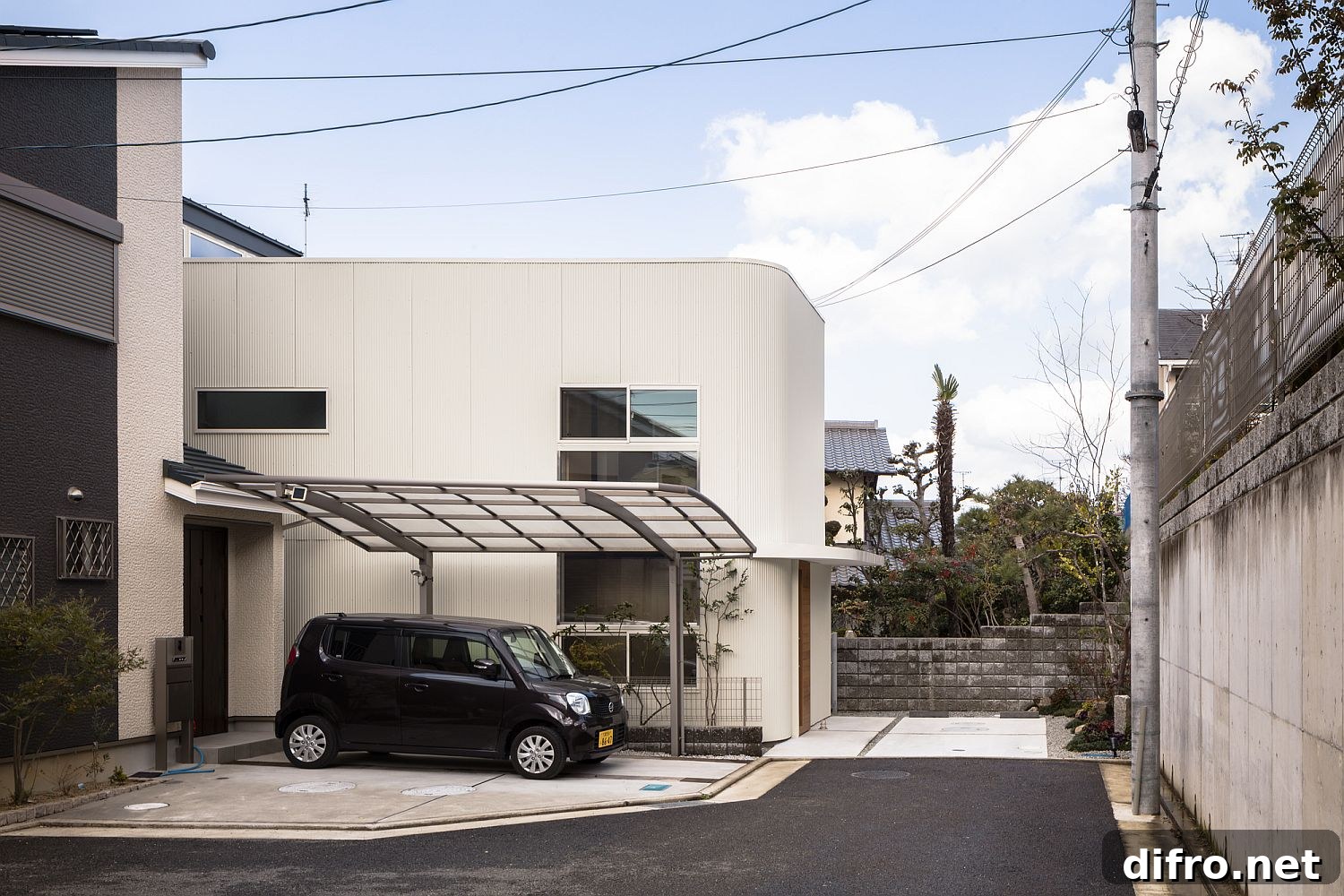
From the street, the Melt House presents a neat, curved white facade with a warm wooden entrance, integrating parking and entry in a compact footprint that respects the narrow site. Surrounded by a modest landscape, the building sits comfortably within its context while the interior reveals a brighter, more spacious atmosphere than the exterior might first suggest. Interiors combine white surfaces, exposed wood and clear glass to produce a cool, calming environment that feels both contemporary and inviting.
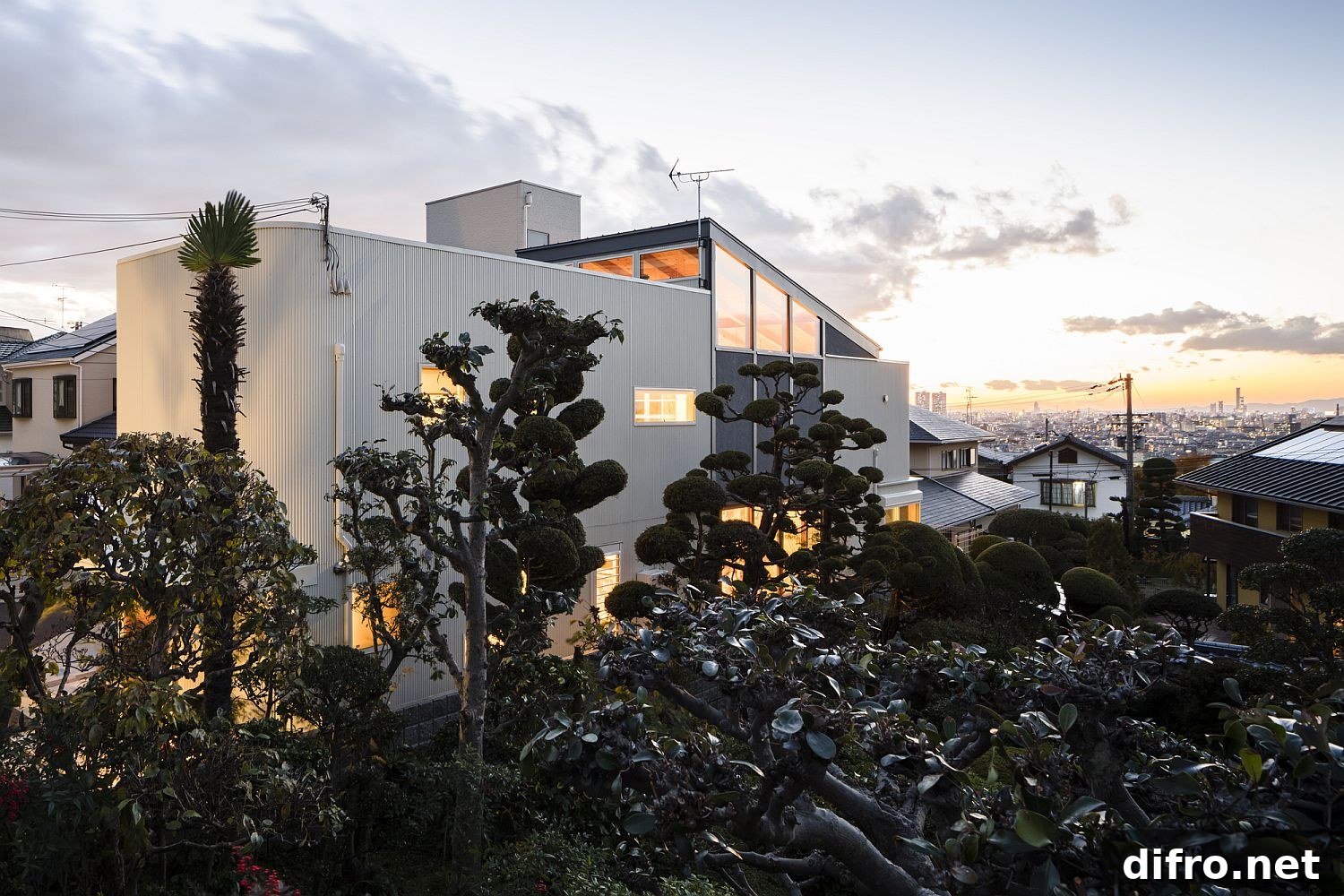
Overall, the Melt House exemplifies how thoughtful design can reconcile compact urban sites with a strong connection to nature. It proves that an eco-friendly approach need not be extravagant or high maintenance: careful zoning, abundant natural light, material restraint, and the inclusion of a simple, sheltered garden can produce a warm, resilient family home. Minimal, cozy and picture-perfect, the Melt House demonstrates how architecture can create meaningful daily experiences for a family while responding sensitively to a narrow lot and its natural setting. Photography: Norihito Yamauchi.