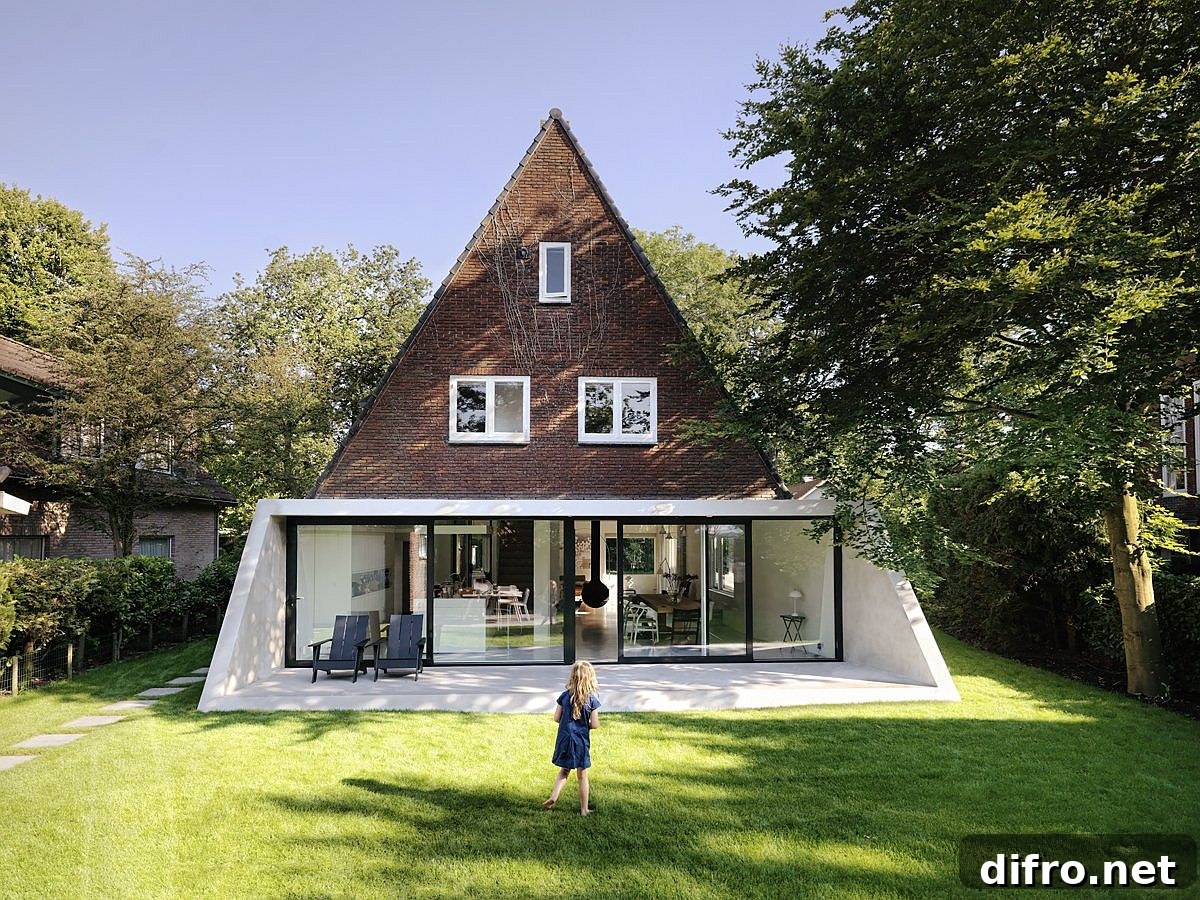
The A-frame house is a timeless architectural form, refined through decades to deliver compact, inviting dwellings around the world. In a sensitive contemporary update, Atelier van Wengerden has transformed the SH House in Bentvelt by adding a new lower level that expands both the function and the visual appeal of the original structure. The addition contains an open-plan living room, kitchen and dining area that visually spills into the rear garden through expansive sliding glass doors and floor-to-ceiling windows, creating a seamless connection between inside and out.
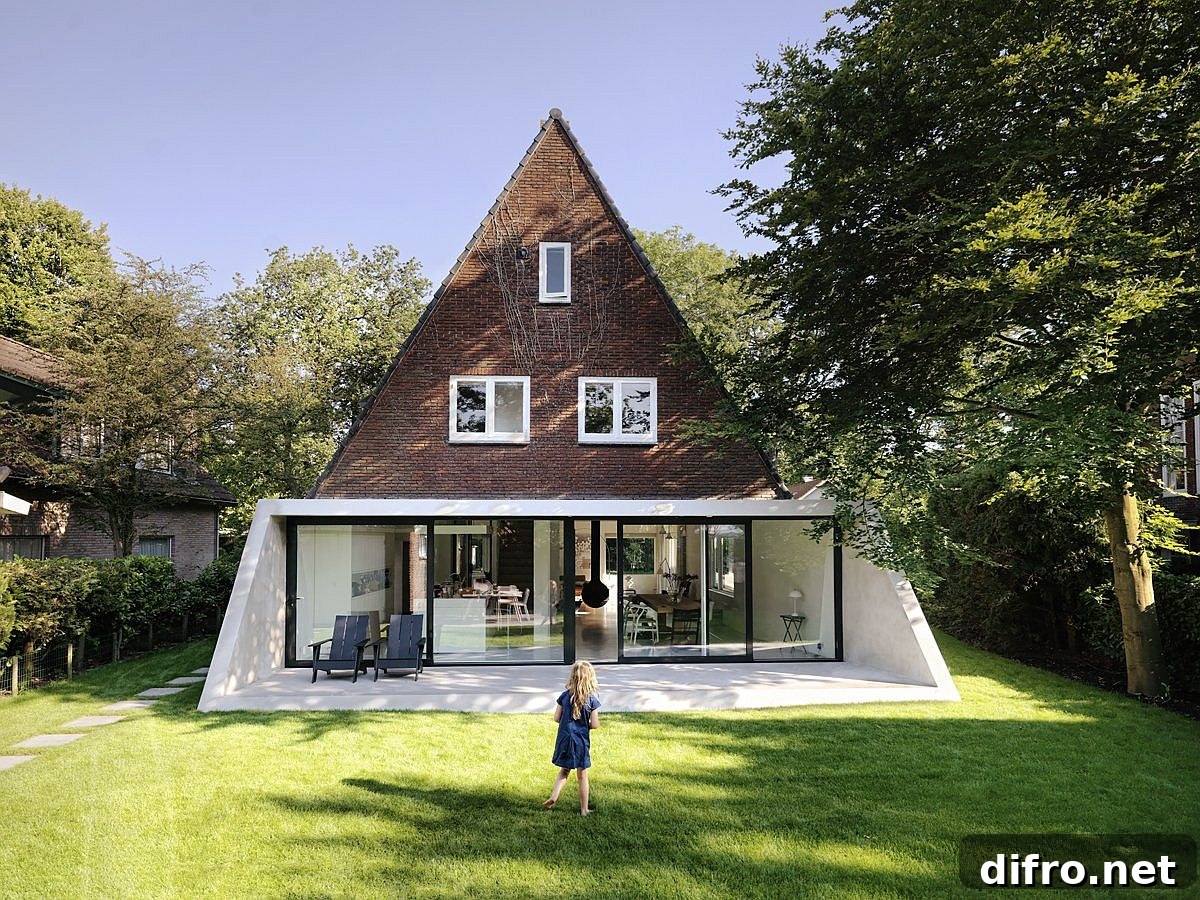
Respectful Renovation: Preserving the 1932 Frame
Originally built in 1932, the upper frame of the house was preserved and enhanced to maintain the character of the period while introducing contemporary comfort. The architects retained the original A-frame silhouette, allowing the home to keep its identity even as new interventions provide modern performance and spatial flow. The renovation blurs the boundary between garden and interior: abundant natural light and large glazed openings dissolve the threshold, while careful material choices reinforce a harmonious, modern-classic aesthetic.
Open Plan Living and Thoughtful Demolition
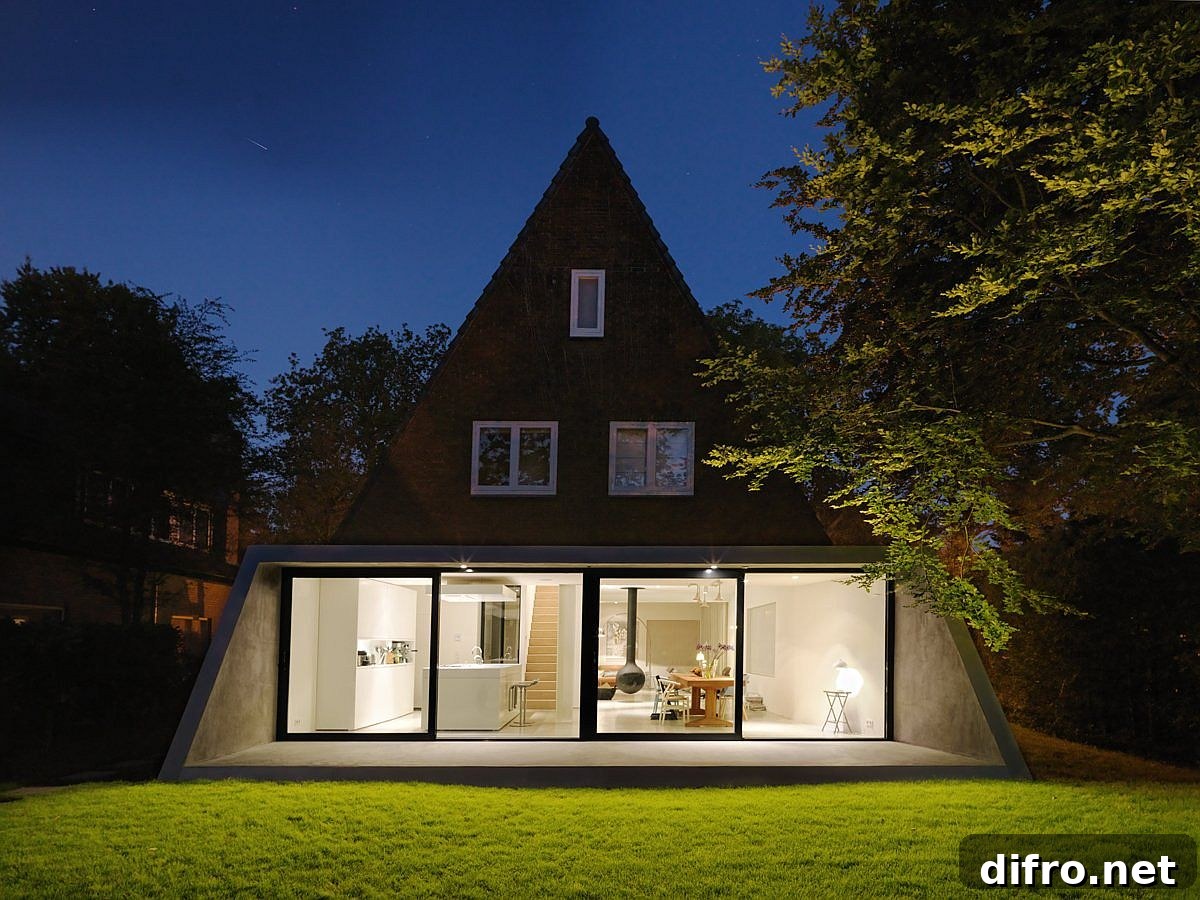
To create a brighter, more generous interior, previously cramped and poorly positioned partitions were removed. This strategic demolition opened sight-lines from the rear glazed elevation through to the front of the house, allowing daylight to flow unimpeded through the lower level. The result is an airy, continuous living environment where dining, cooking and lounging coexist without separation—perfect for contemporary family life and informal entertaining.
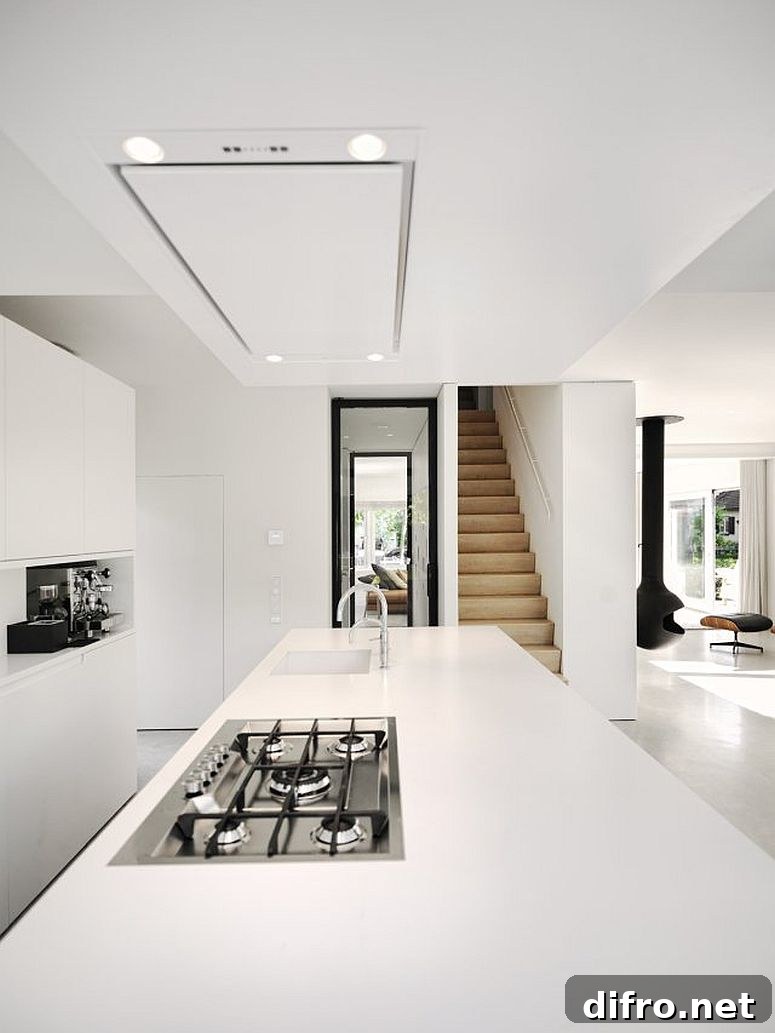
At the heart of the redesign is a staircase that organizes movement through the house. Positioned as a central spine, it connects the new lower level with the preserved upper frame and the rest of the home, providing a simple and elegant circulation path.
Material Palette: Concrete Base with Timber Warmth
The extension relies on concrete as a primary structural and aesthetic element, giving the lower level a solid, grounded character that contrasts with and supports the lightweight timber frame above. Inside, timber elements—such as Douglas fir columns and planed fir finishes—introduce warmth and texture, balancing the cool, minimalist quality of the concrete. Together, these materials produce a refined interplay of modern minimalism and natural tactility.
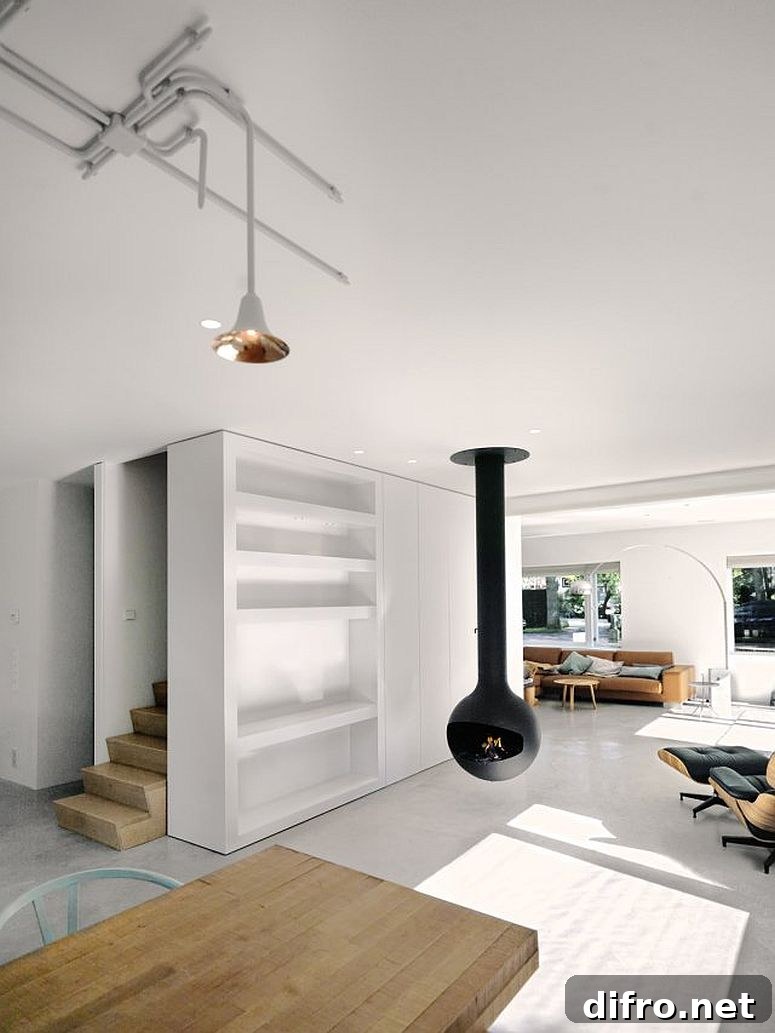
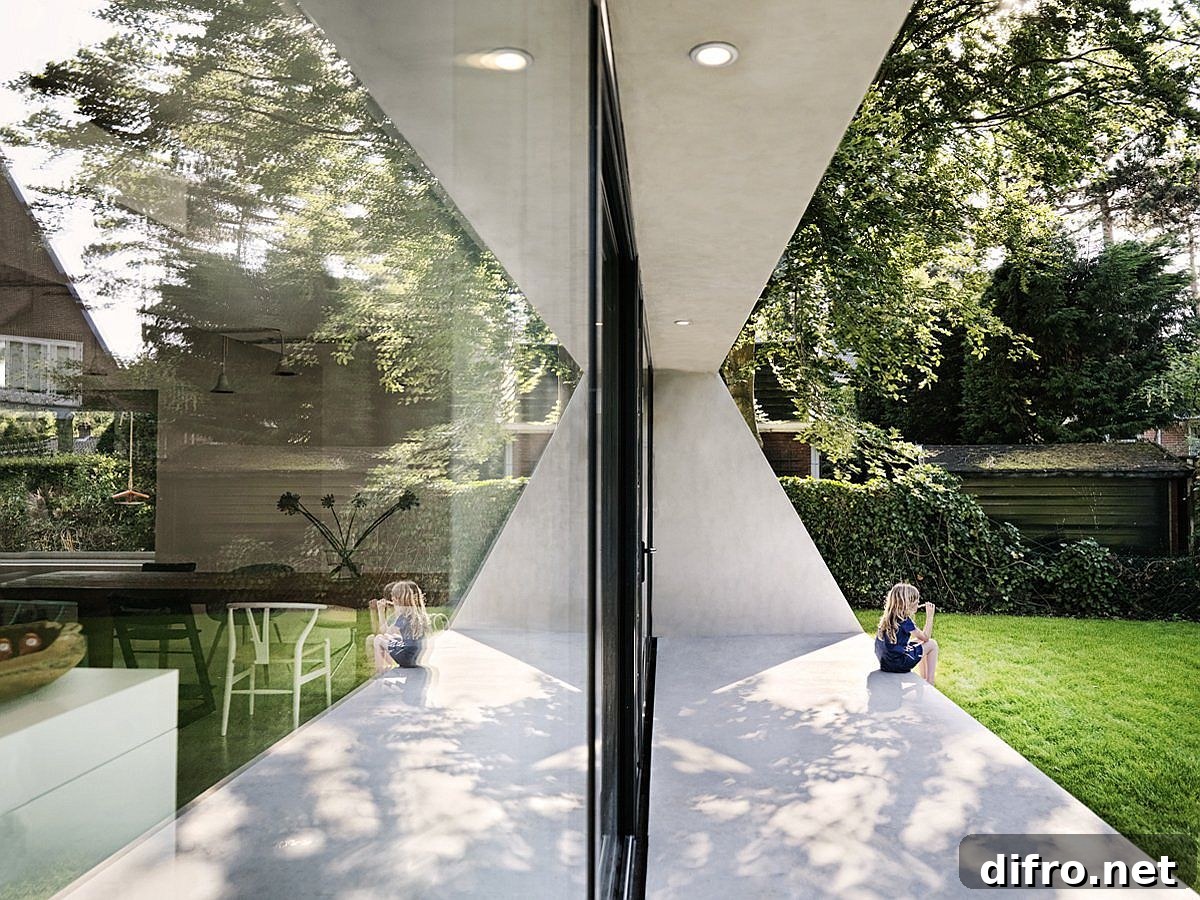
The living room is organized around a sleek, contemporary fireplace that provides a cozy focal point for the open plan. The kitchen, finished predominantly in white, sits comfortably within the expansive lower level while maintaining a visual link to the garden through the glazed rear wall. Where interior and exterior meet, the new addition creates transitional spaces—a sheltered patio and generous thresholds—that encourage outdoor living and provide varied day-to-day experiences.
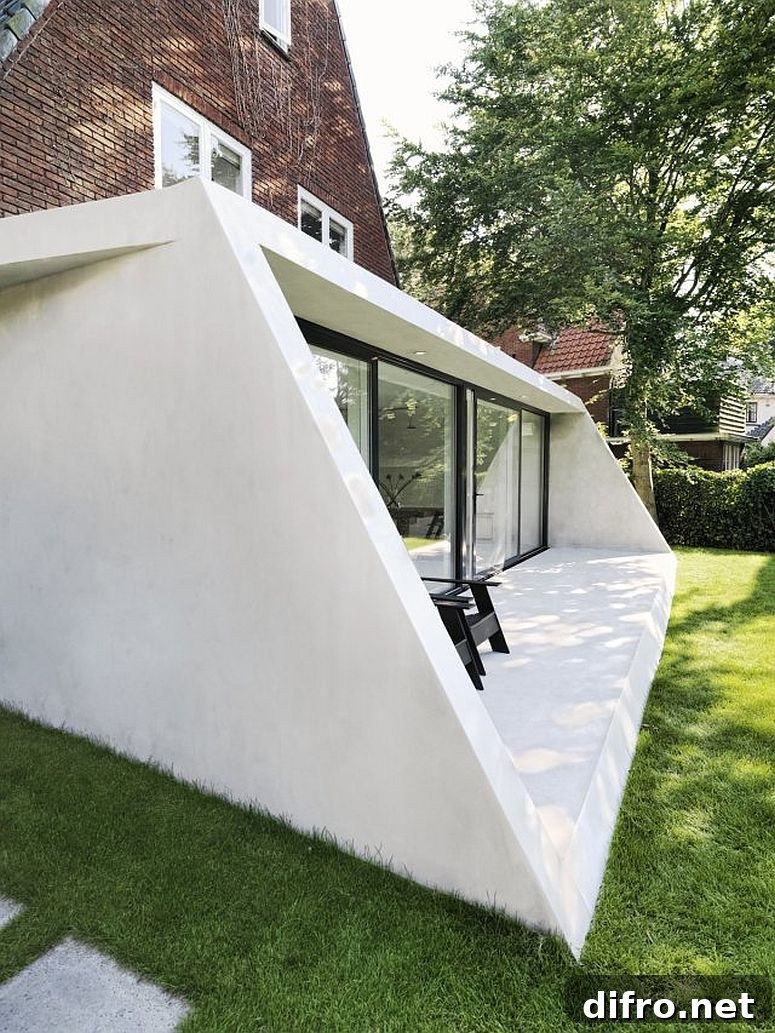
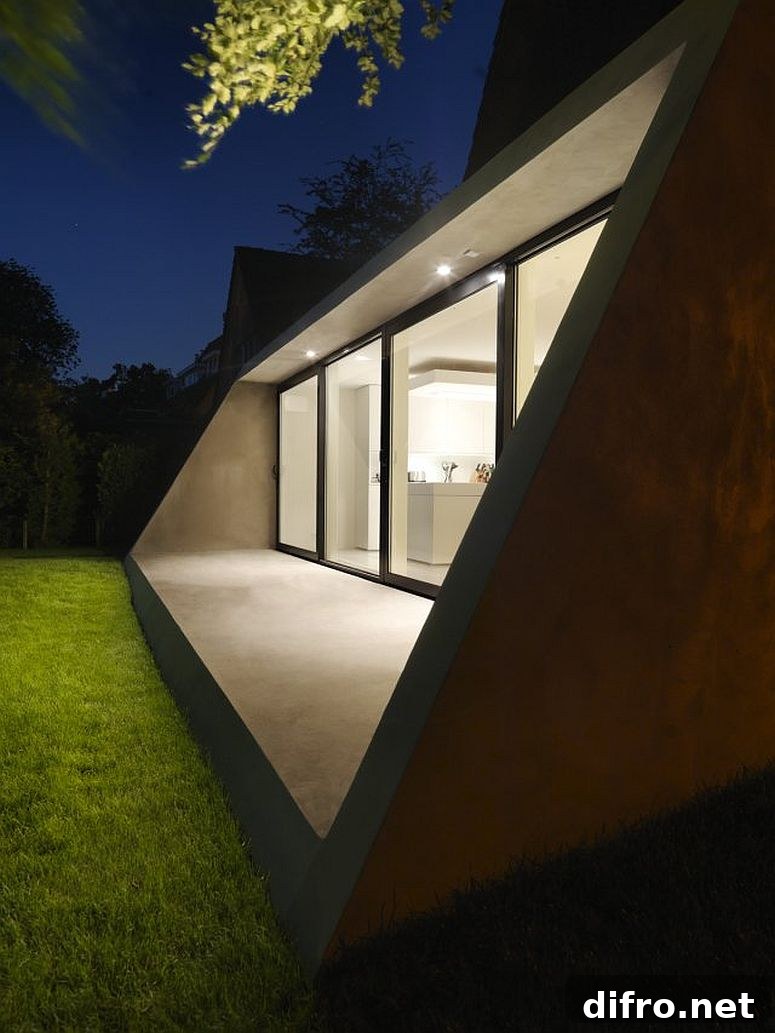
Overall, the SH House renovation balances conservation and contemporary intervention. By preserving the historical frame, opening up the plan, and introducing a restrained palette of concrete and timber, the architects succeeded in creating a home that feels both rooted in its past and fully adapted to present-day living.