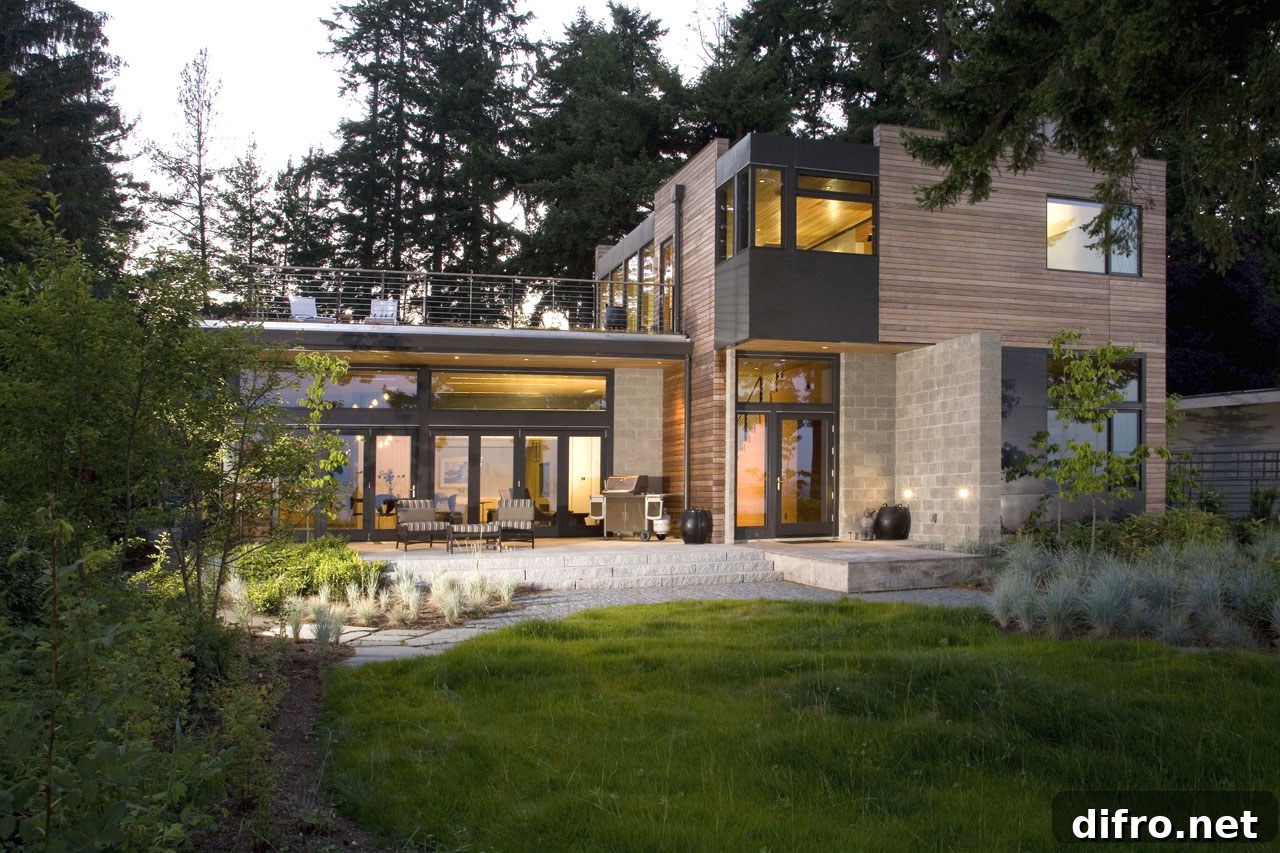
Perched on Yeomalt Bluff overlooking Puget Sound and the Seattle skyline, this striking residence on Bainbridge Island, Washington, is a showcase of thoughtful, performance-driven architecture. Known as the Platinum House, the home was recognized for its sustainability with a LEED Platinum certification—the first of its kind in the state outside Seattle—setting a high bar for eco-conscious residential design in the region.
Coates Design Seattle Architects designed the 2,500-square-foot house to combine striking coastal views with highly efficient systems and durable materials. The design integrates passive heating and cooling strategies, a geothermal heating and cooling system, a vegetated roof, and a 3,000-gallon rainwater collection system, all working together to dramatically reduce the home’s environmental footprint.
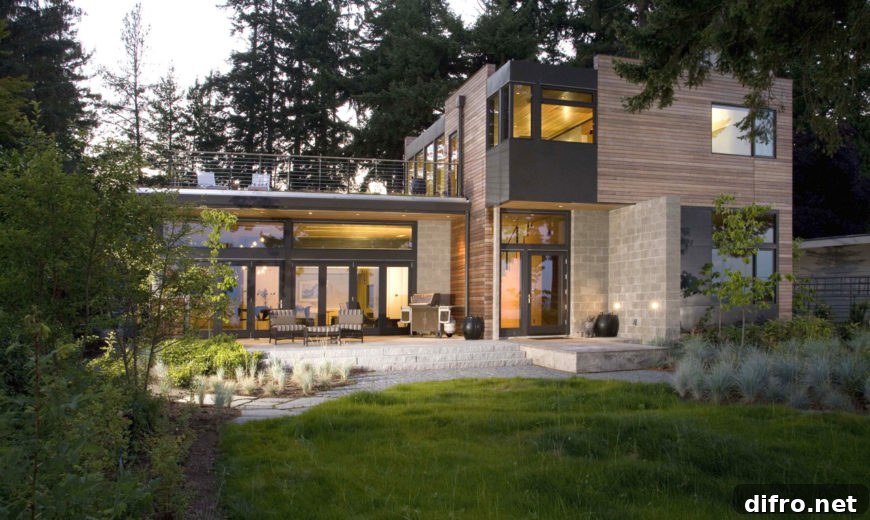
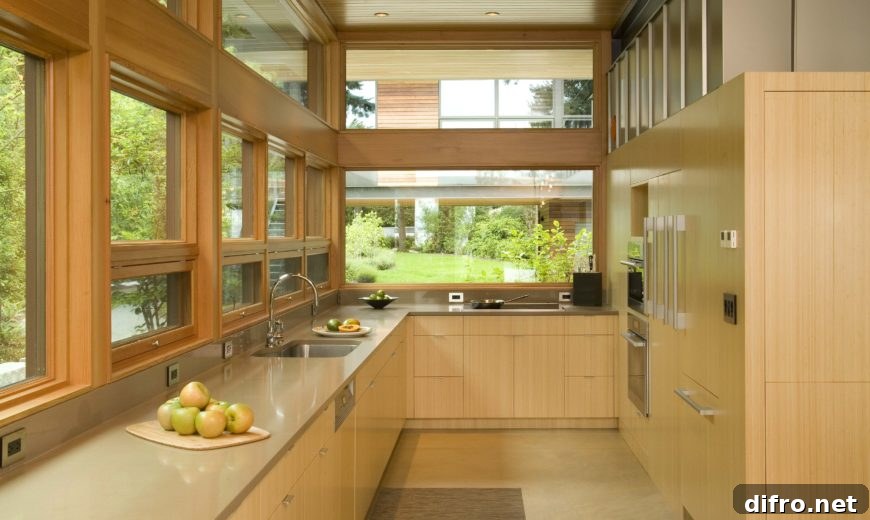
Natural light and an orientation that takes full advantage of the site are central to the house’s environmental strategy. Large windows and skylights are deliberately positioned to optimize solar gain during cooler months while facilitating cross-ventilation in summer. A substantial interior wall functions as a thermal mass, absorbing heat during the day and releasing it as temperatures drop, which helps keep the main living areas comfortable without heavy reliance on mechanical systems.
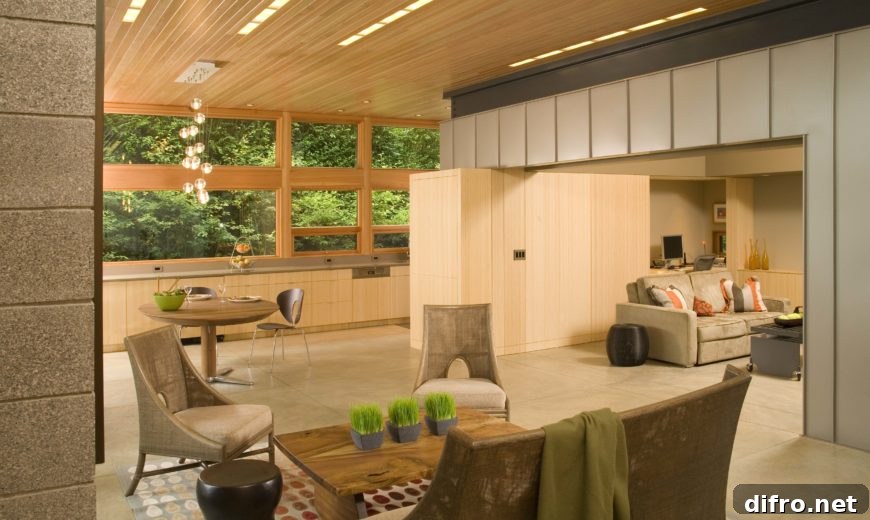
Interiors are organized for flexibility and everyday livability. Sliding and bi-folding doors allow rooms to combine or separate as needed, so modest-sized spaces can instantly become larger, open-plan areas for gatherings or remain intimate for daily routines. This adaptability reduces the need for excess square footage while enhancing the way the home functions for occupants and guests.
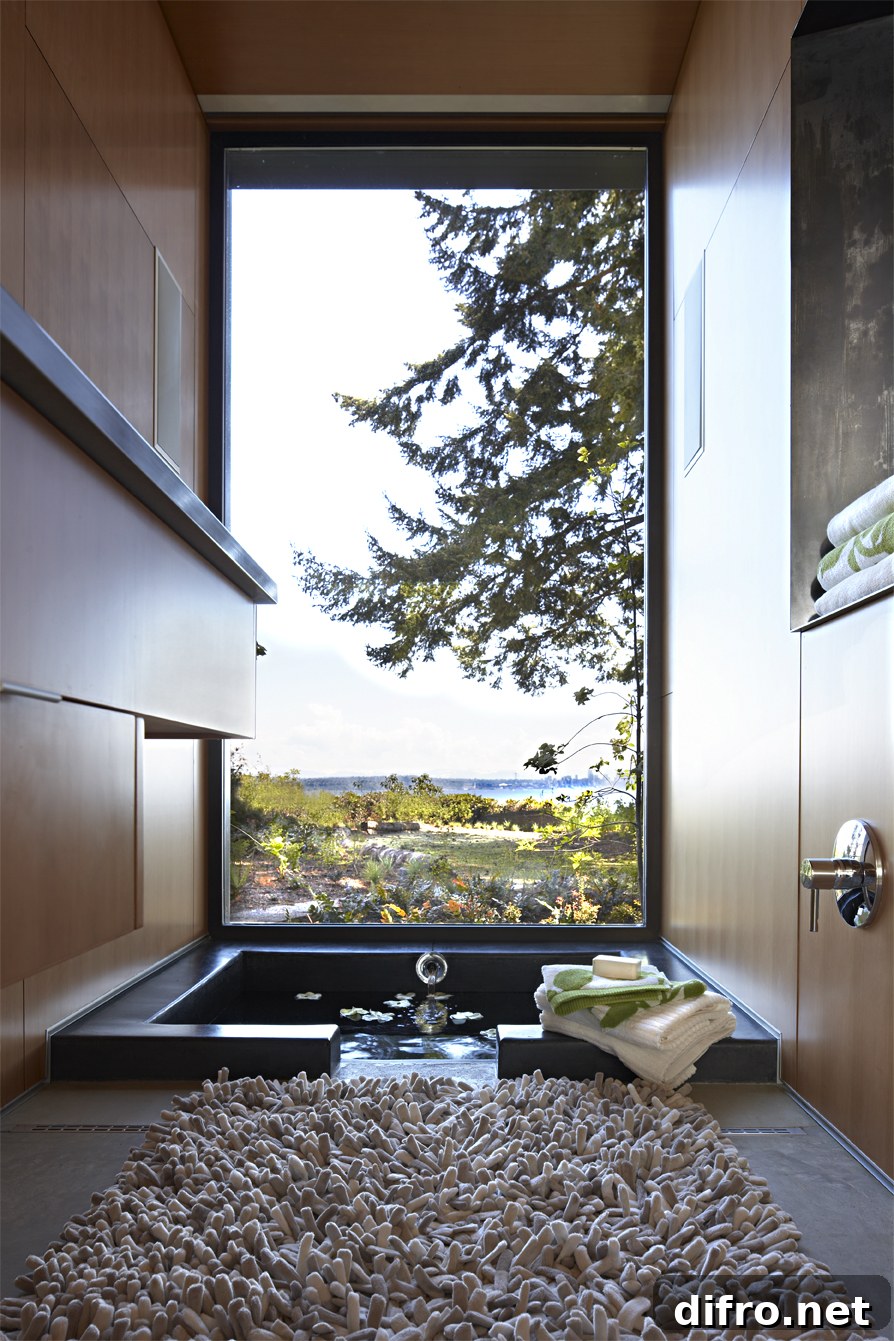
Practical innovations are integrated into everyday spaces. In the master bathroom, for example, custom casework conceals a washer and dryer and provides efficient clothing storage, reducing circulation space and keeping utility functions compact and accessible. Such careful planning of built-ins helps maintain clean lines and uncluttered rooms while enhancing functionality.
One of the most distinctive sustainable features is the vegetated roof, which serves multiple purposes: it adds insulation to reduce heat loss, mitigates stormwater runoff when combined with the rainwater collection system, and creates a quiet, private outdoor garden patio for relaxation and enjoying the views. The house’s rainwater harvesting stores up to 3,000 gallons, which can be used for irrigation and other non-potable needs, reducing demand on municipal water supplies.
Combined with the geothermal system and low-energy mechanical equipment, the house consumes roughly 70% less energy than typical houses of a similar size. That level of efficiency is achieved through whole-building thinking: orienting and shaping the home to the site, choosing high-performance systems, and layering passive and active strategies to minimize energy demand while preserving comfort and livability.
The Platinum House’s approach to sustainable architecture has been recognized through several awards, validating both its design quality and technical innovation. Honors include Seattle Homes and Lifestyles – 2010 Bath of the Year, a 2010 Forest Stewardship Council Design & Build finalist recognition, and the 2011 Dream Home Awards for Best Innovation in Green Technology. These accolades highlight the project’s success at combining aesthetic refinement, functional planning, and environmental stewardship.
Overall, the Platinum House demonstrates how resolute attention to site, occupant needs, and integrated systems can produce a home that is both beautiful and highly efficient. It stands as an example of how residential design can reduce environmental impact while offering versatile spaces, strong connections to nature, and lasting comfort for those who live there.