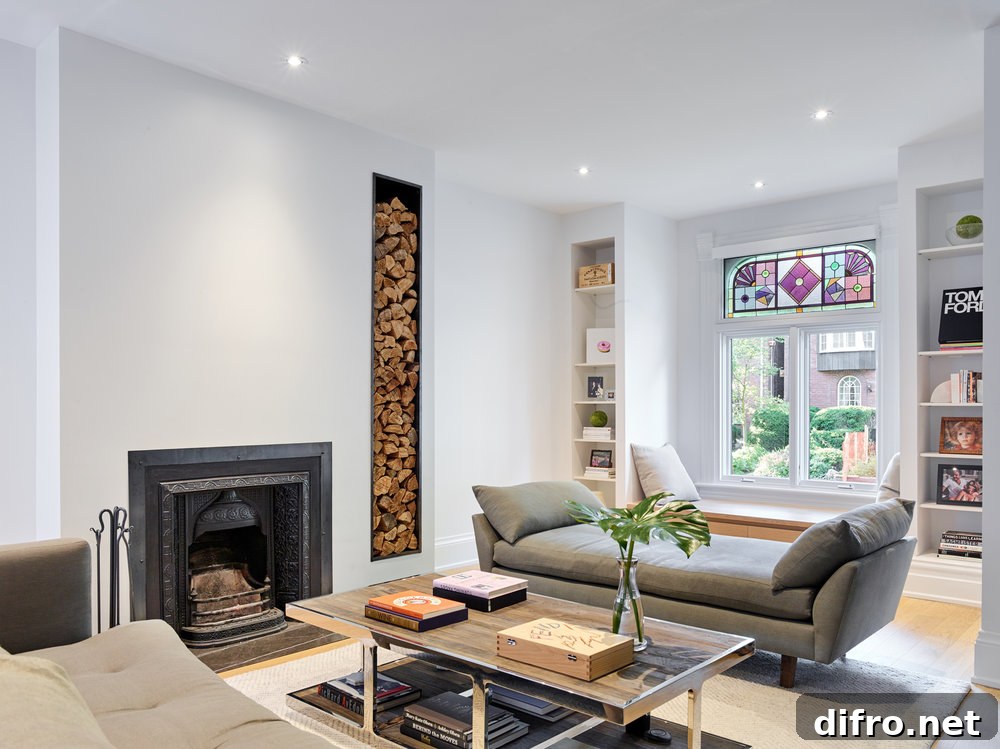
Macpherson Renovation: A Modern Minimalist Facelift for an 1890s Toronto Home
Renovating an older home requires a careful balance between preserving historic character and introducing contemporary comfort. The Macpherson Renovation demonstrates how a restrained, modern approach can respectfully transform an 1890s residence into a light, functional living environment. Designed by VFA Architecture + Design for a couple who appreciate refined interiors, the project leans on a predominantly white palette while layering natural materials to create warmth and visual interest.
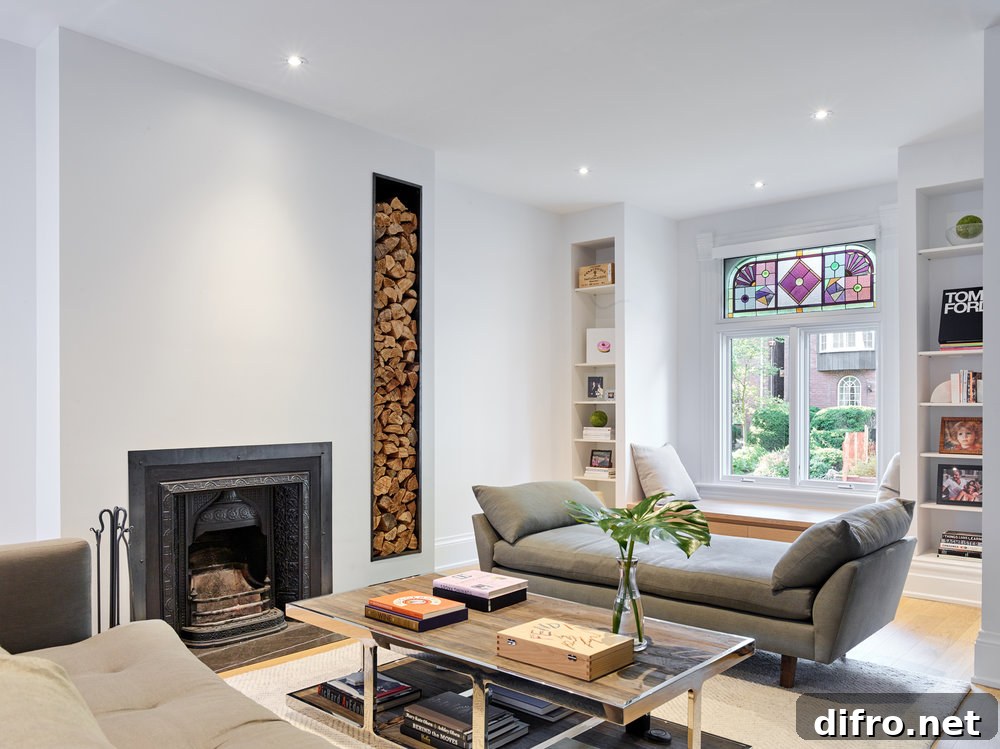
The renovation focused on the lower level, where the layout places the living area at the front of the house and a social kitchen and dining area toward the rear. Key to the intervention was removing unnecessary internal partitions and excess ornamentation, opening up sightlines and allowing rooms to feel more spacious and cohesive. White walls and ceilings act as a calming backdrop, while oak, marble and lacquered finishes define the kitchen and living zones and introduce subtle, tactile contrast.
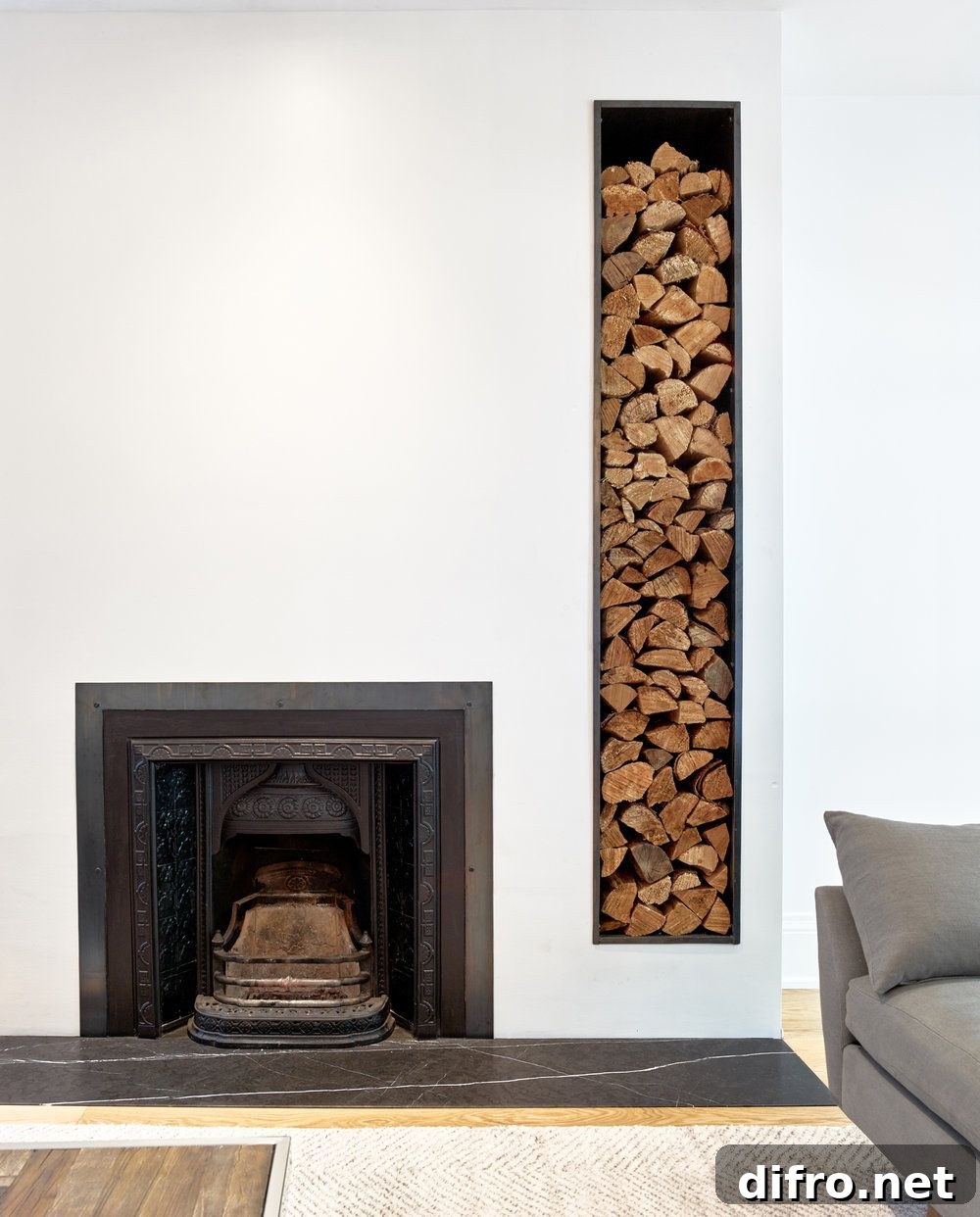
Importantly, some original features were preserved rather than erased. The classic fireplace remains an anchor in the living room, enhanced by the simplified surroundings so that historic detail can be appreciated without competing layers of décor. This careful preservation makes the historic element read as a deliberate design feature within a contemporary composition.
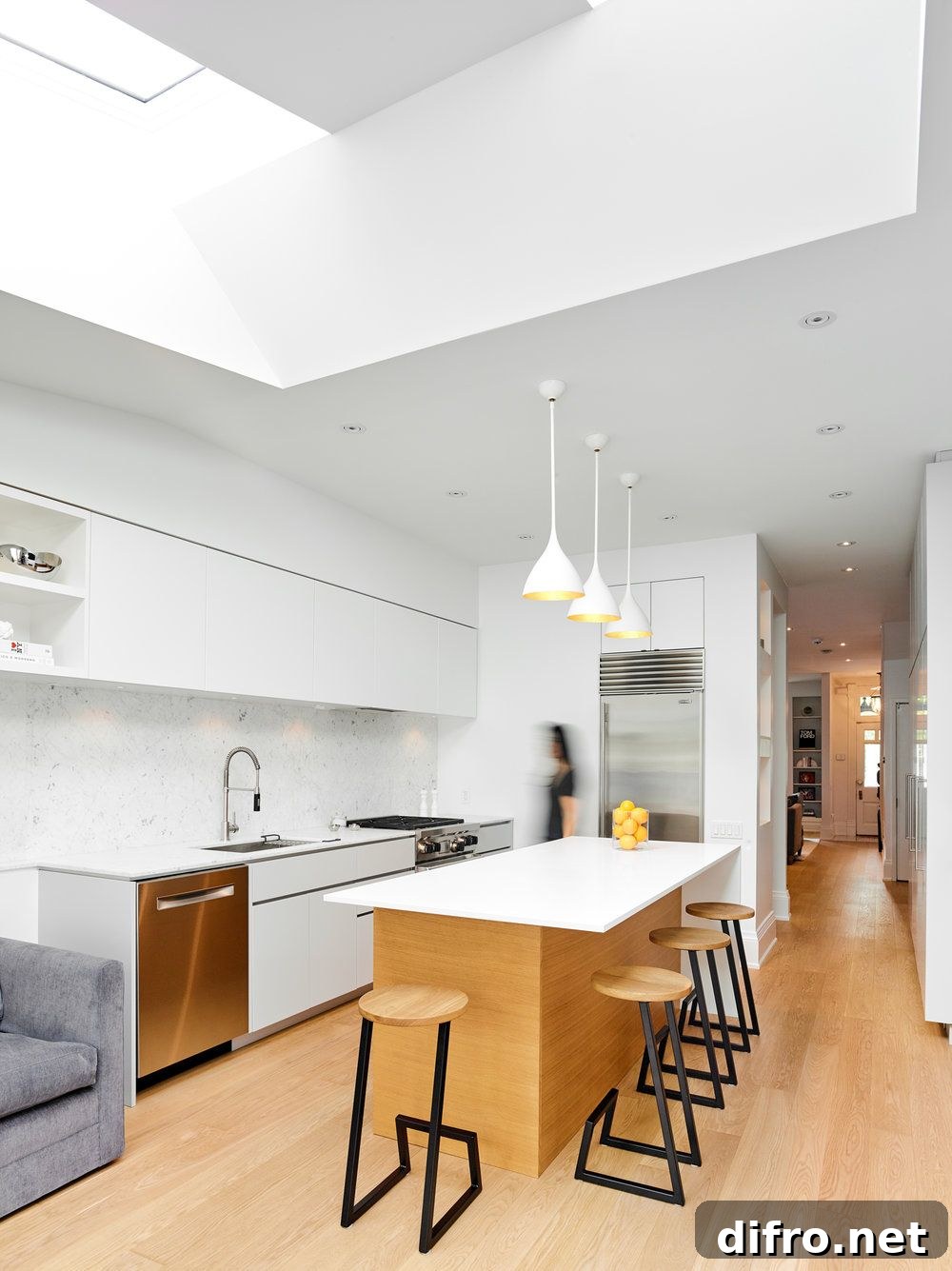
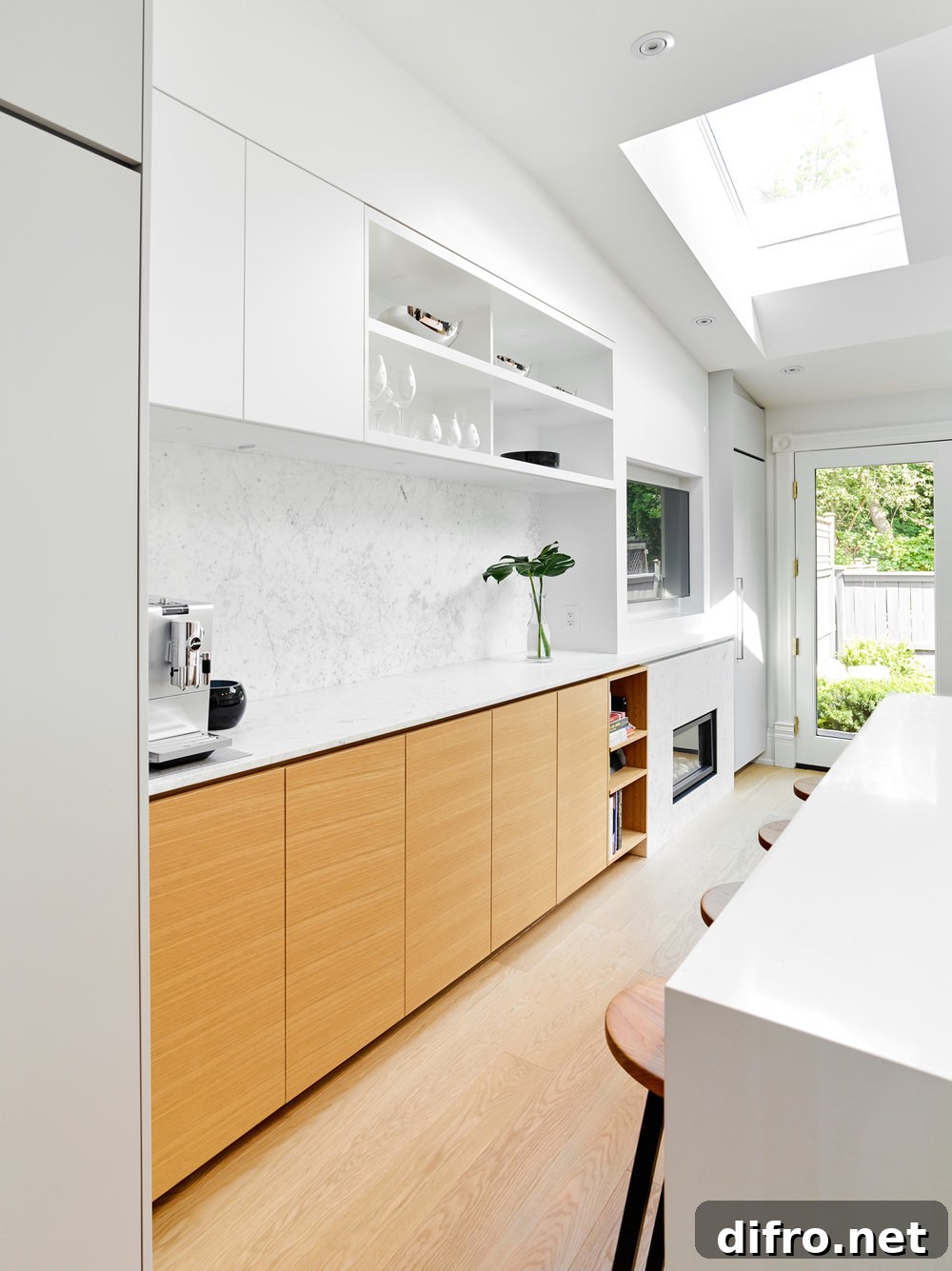
Natural light plays a central role in the project’s success. Skylights and large rear doors bring daylight deep into the plan, turning the kitchen and dining area into bright, inviting spaces suitable for both everyday life and entertaining. The influx of light amplifies the white finishes and highlights material textures—marble counters, oak cabinetry and finely lacquered surfaces—resulting in an interior that feels both polished and approachable.
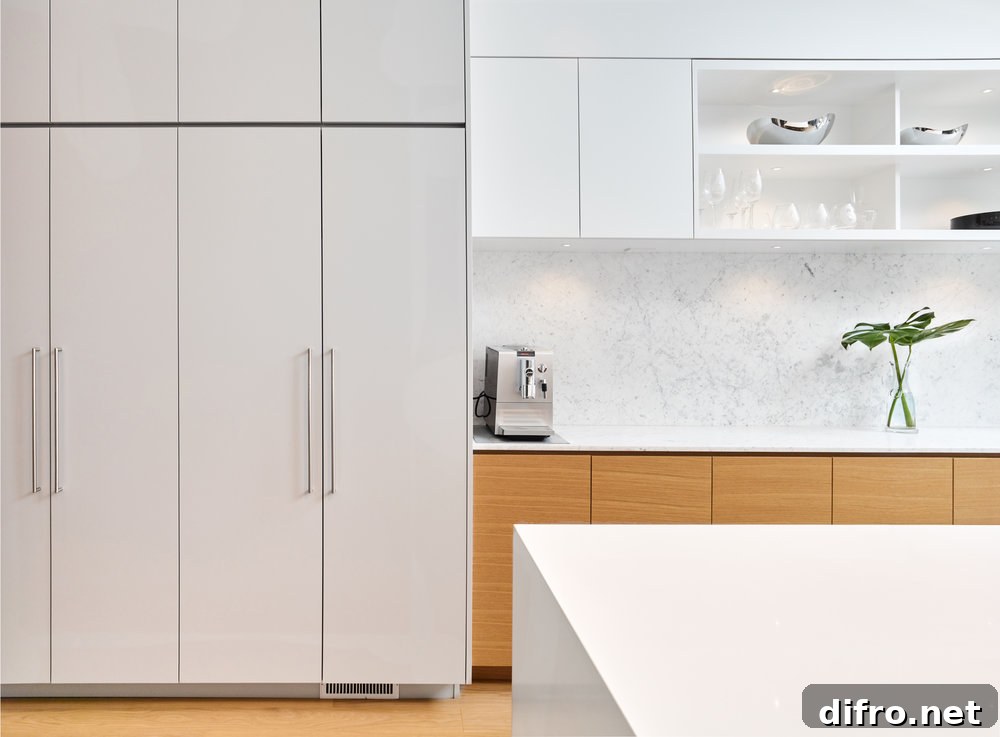
The kitchen blends minimal forms with quality materials. Marble surfaces bring a refined, tactile quality while oak introduces warmth and grain. Lacquered cabinetry keeps silhouettes clean and reflective, contributing to a sense of openness. Inset or integrated appliances and restrained hardware preserve uncluttered lines; stainless steel elements provide a practical, contemporary touch without dominating the calm palette.
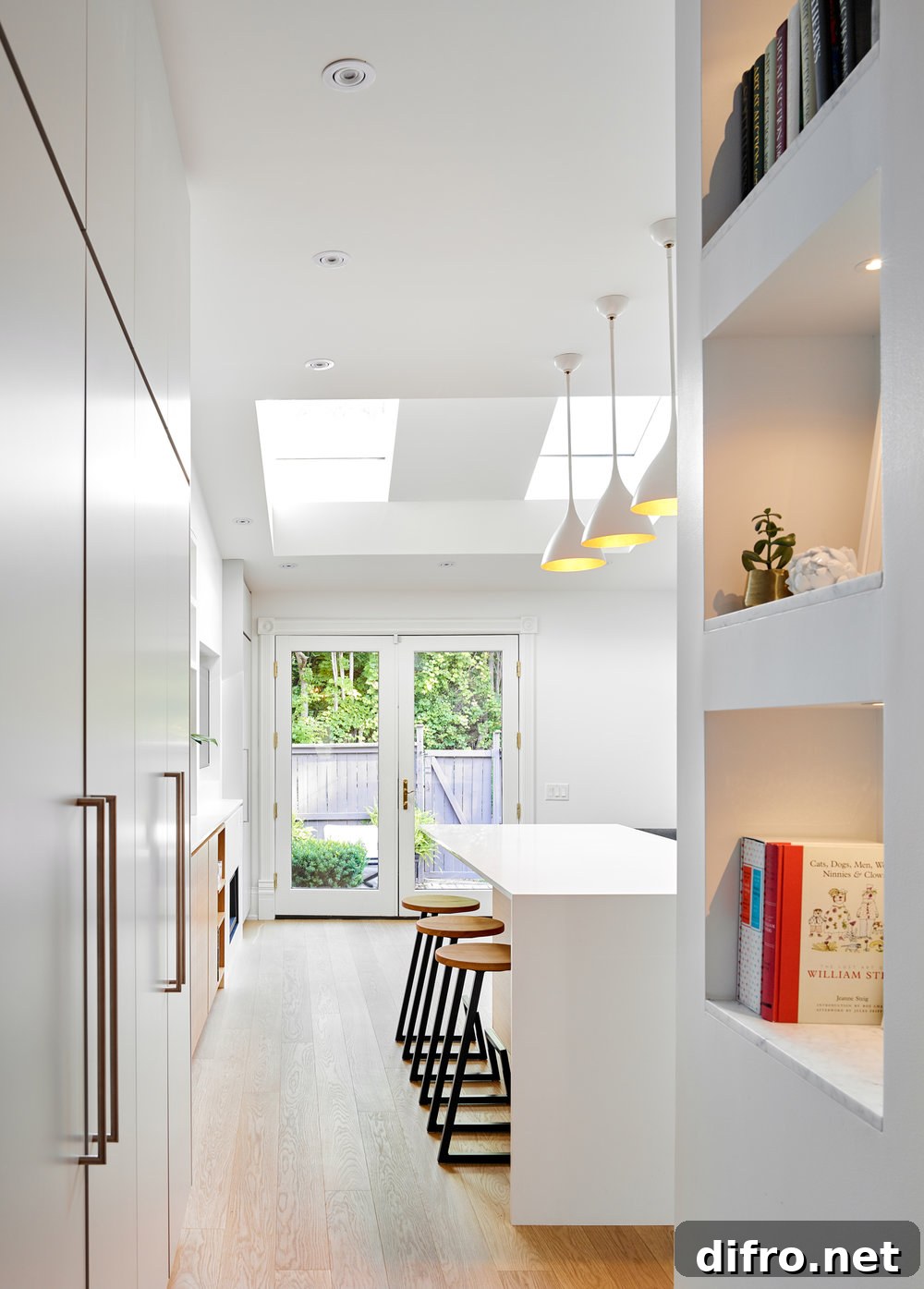
Pendant lighting and simple metallic accents add discreet sparkle and visual rhythm above the island and dining table. These elements introduce focal points and scale without overwhelming the restrained scheme. The result is a social kitchen that reads as both functional and elegant: a space meant for cooking, gathering and casual living.
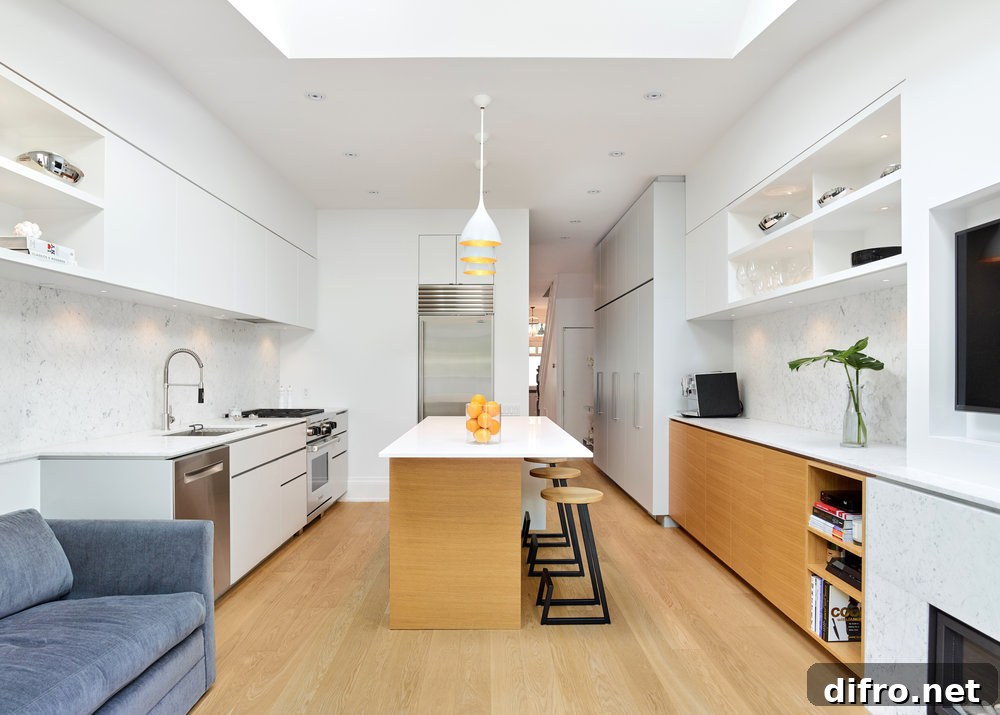
Beyond aesthetics, the design emphasizes livability. Removing redundant walls widened circulation and improved connectivity between the living room and the kitchen-dining suite. Generous openings to the outdoors—doors that connect the rear of the house with exterior space—strengthen the relationship between interior and landscape, extending usable living zones during favourable weather.
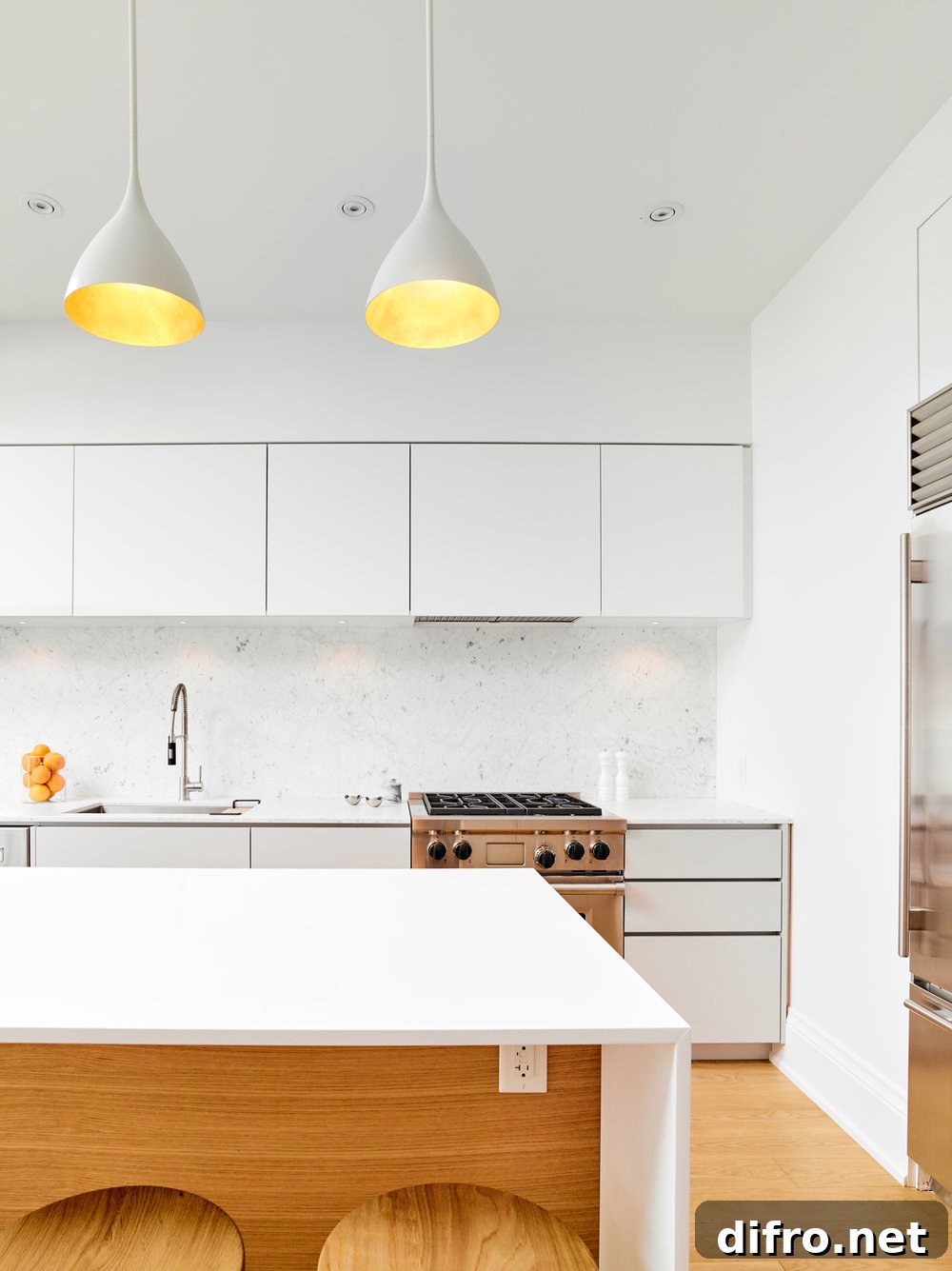
Lessons from the Macpherson Renovation are applicable to many heritage projects: retain authentic architectural elements where they add value; use a restrained color palette to unify diverse spaces; layer natural materials to create warmth and texture; and prioritize daylight and clear circulation to enhance perceived space. Thoughtful restraint—rather than excessive ornamentation—can reveal the character of an older home while making it fully functional for contemporary life.
Photography: Scott Norsworthy