Diamanten Cabin in Oppdal — A Modern Minimal Mountain Retreat
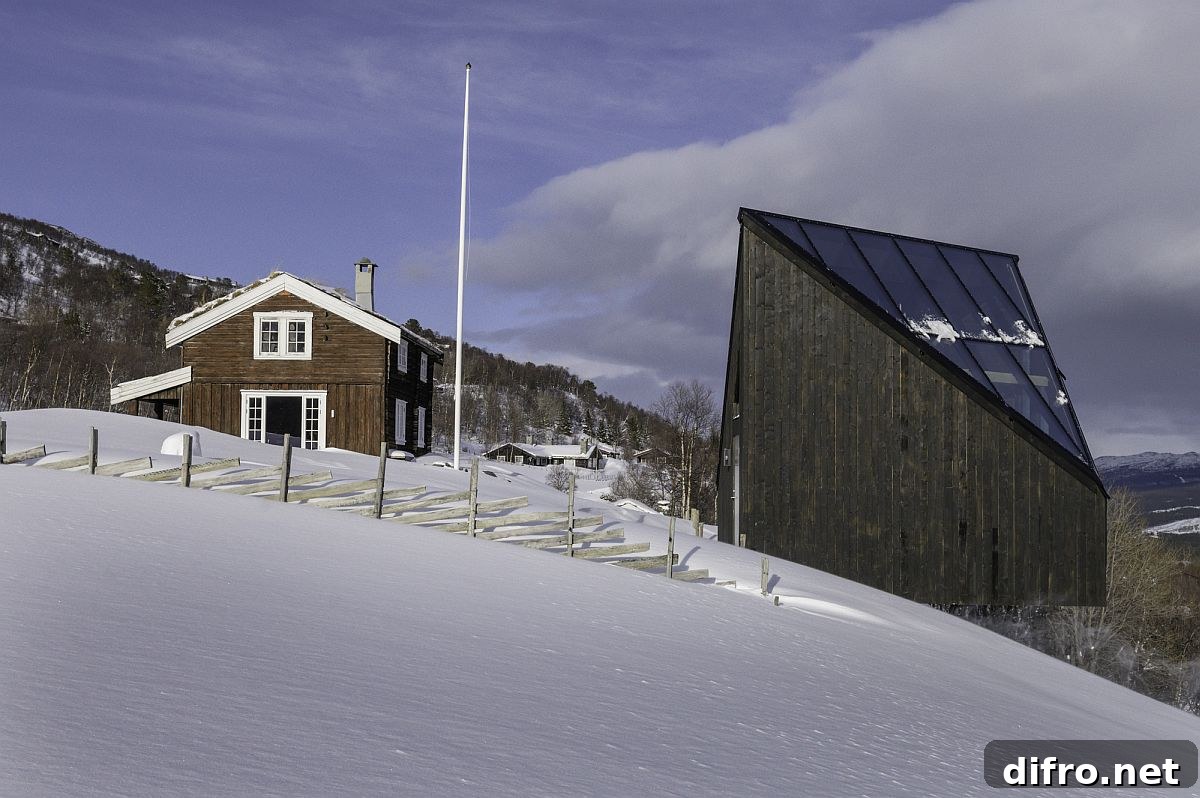
There is something immediately captivating about an abstract building with a modern, minimal design. These structures read like pieces of contemporary art—distinctive forms that stand out amid conventional squares and rectangles. Perched on the snow-covered slopes of Oppdal in central Norway, the Diamanten Cabin by A38 Arkitekter is precisely that kind of exceptional home. Its sculptural silhouette and thoughtful detailing reinvent the idea of a mountain cabin, blending Nordic tradition with contemporary geometry.
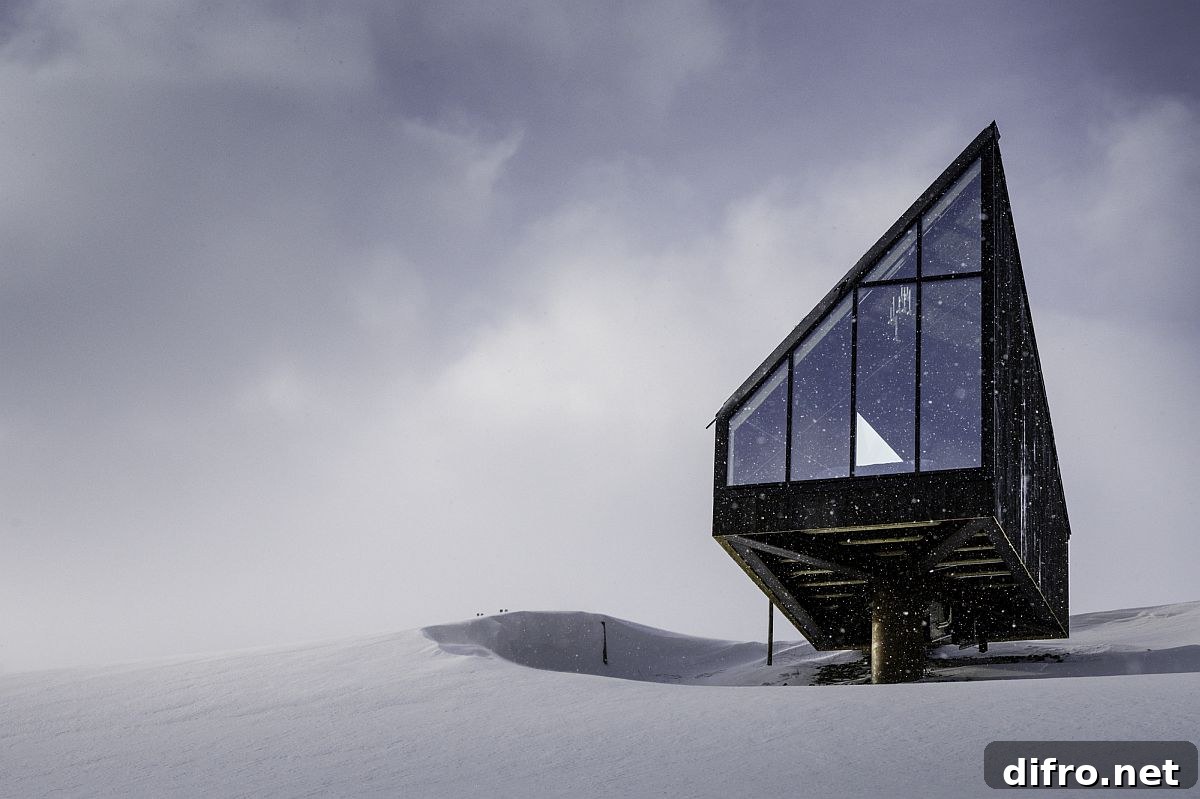
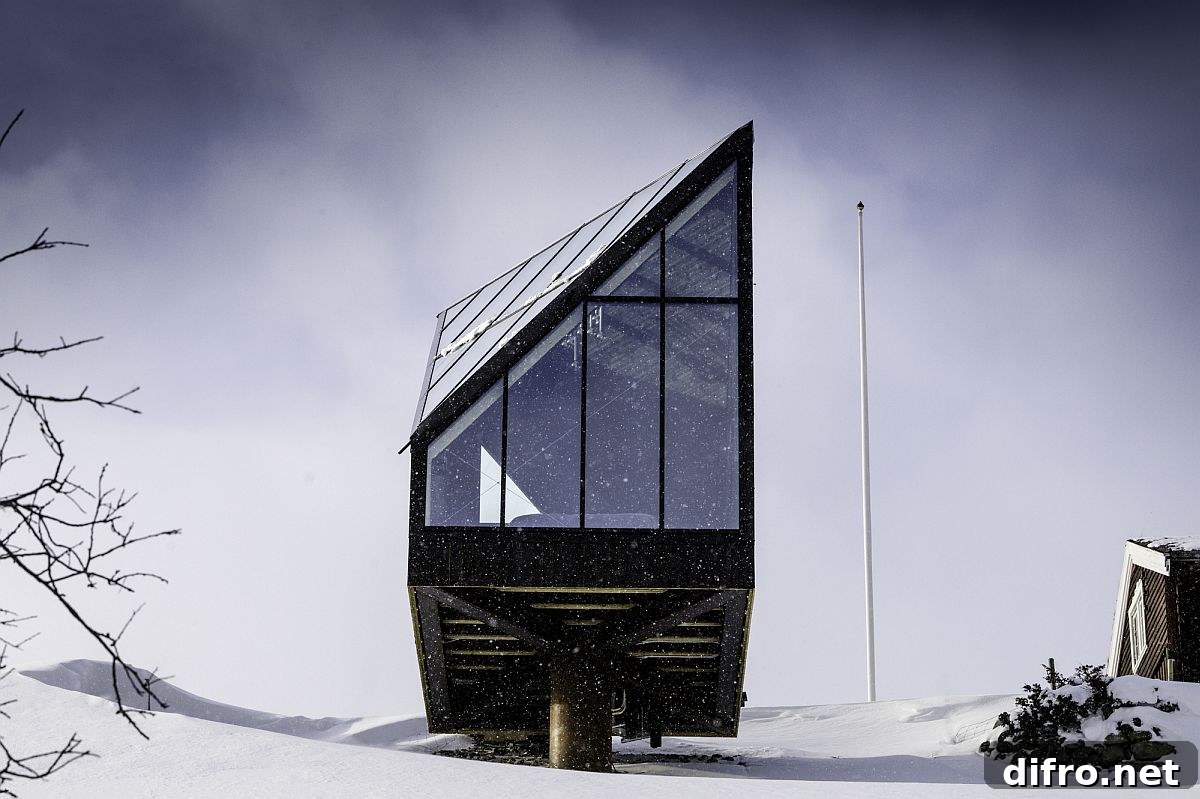
The cabin’s exterior combines dark timber cladding, glass and metal into a precise, geometric composition. What arrests the eye first is the way the main volume appears to float: a slim, sturdy central column carries the structure’s weight, allowing the building to hover slightly above the ground. This approach reduces the cabin’s footprint and preserves the natural terrain beneath it, creating a minimally intrusive presence in the landscape. From certain perspectives, the supporting column disappears against the mountain backdrop, giving the impression that the house is levitating.
Large, floor-to-ceiling glass panels frame expansive mountain views and flood the interior with natural light. The glazing dissolves the boundary between inside and out, allowing the living room, bedroom and kitchen to feel connected to the wide, snowy panorama that surrounds the site. Internally, the aesthetic is deliberately restrained: simple lines, a limited material palette and uncluttered volumes emphasize calm and clarity while directing attention to the scenery beyond.
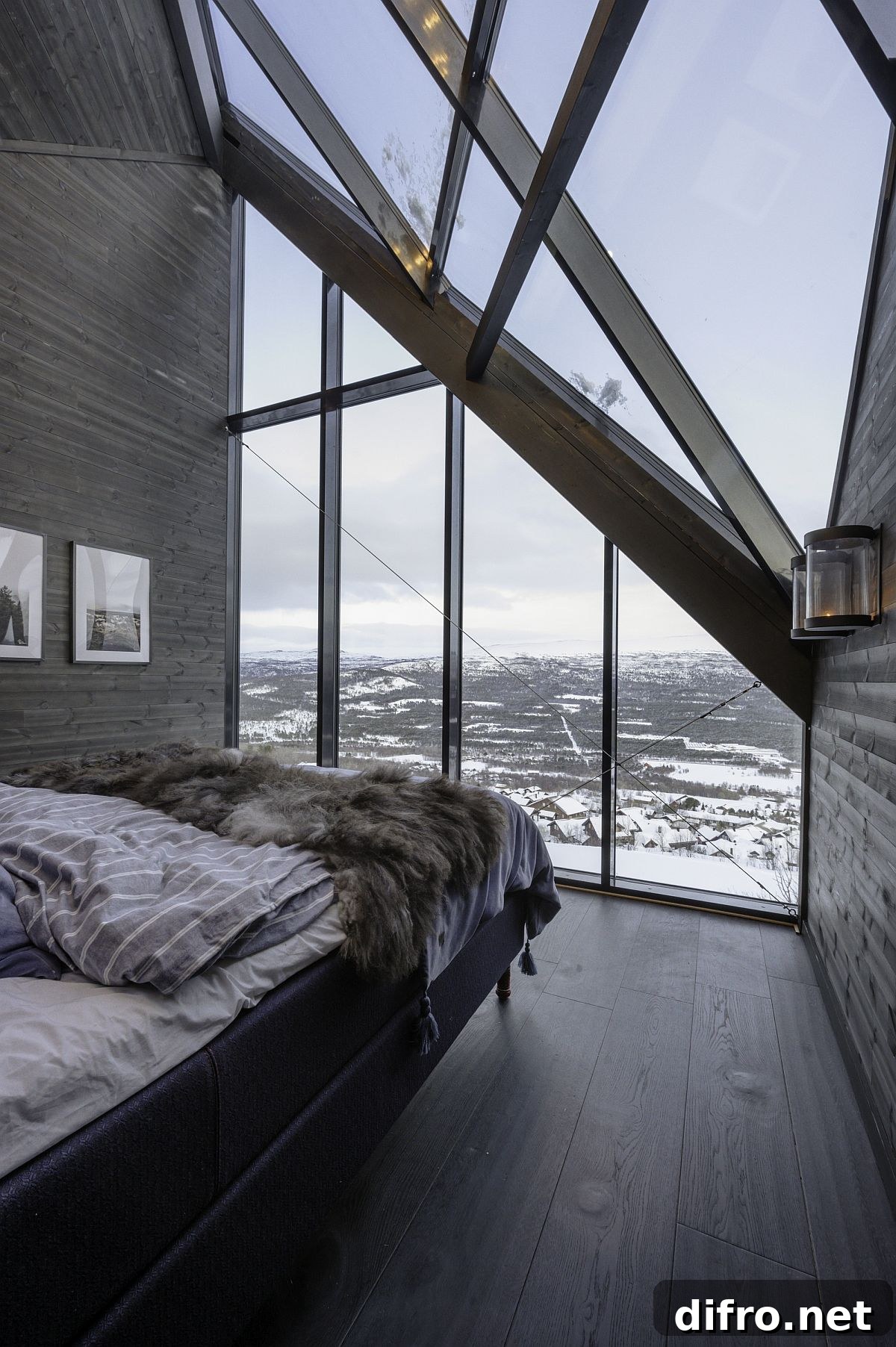
The design balances contemporary ambition with sensitivity to local building traditions. The dark timber references classic Nordic cladding, while the cabin’s compact footprint and considered siting reflect an intent to leave as much of the natural site undisturbed as possible. By lifting the main volume above the ground, the architects preserve snow patterns, vegetation and drainage, reducing the long-term impact of the building on its immediate environment.
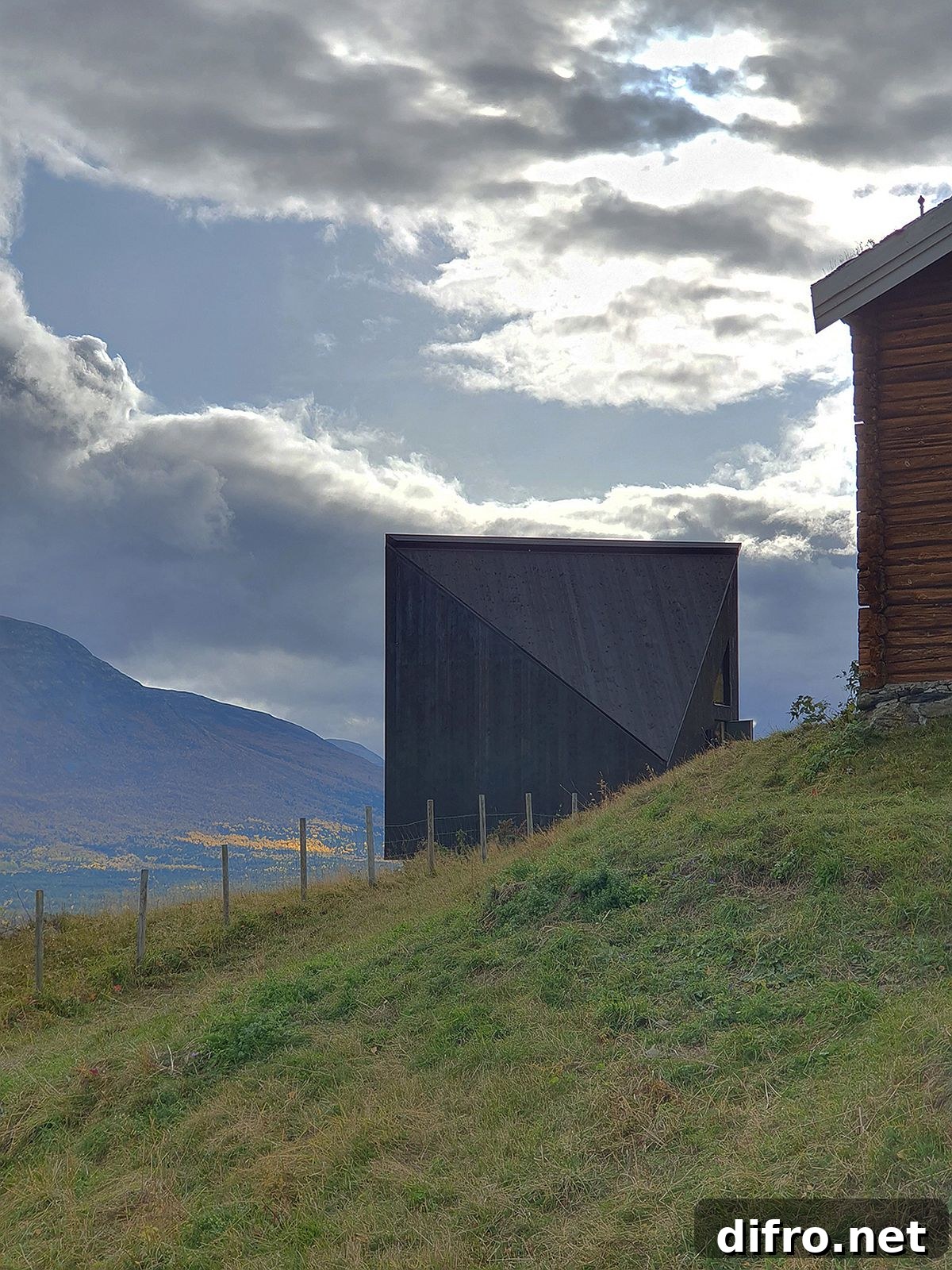
Structurally, the central column is a minimalist solution with maximum effect. It provides the necessary support while keeping the cabin’s contact with the ground compact and efficient. That reduced footprint supports environmental goals without compromising the architectural presence: the result is simultaneously bold and respectful of place. The cabin’s elevated stance also enhances privacy and offers different visual relationships to the terrain depending on the vantage point.
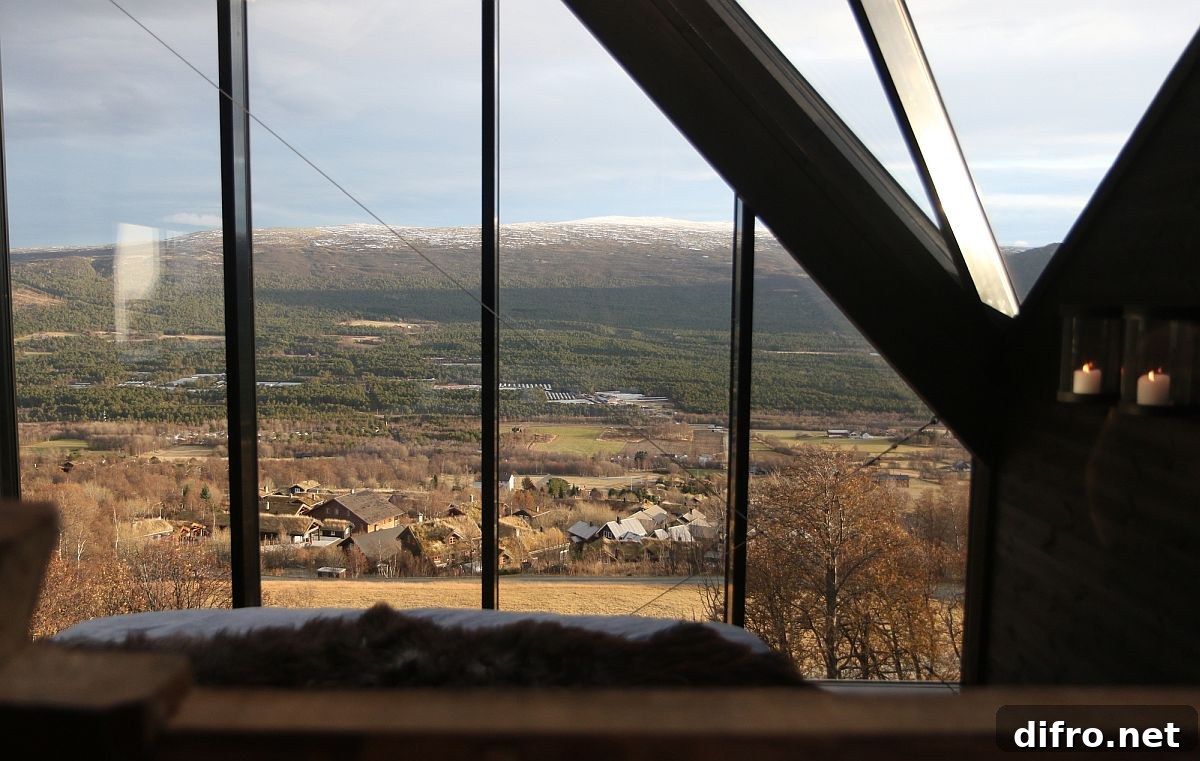
Inside, the interiors continue the exterior’s restrained language. Generous glazing opens up living spaces, while careful placement of openings frames the peaks and valleys beyond. The palette—muted, natural and tactile—supports the serene atmosphere, allowing light, shadow and seasonal change to become part of the interior experience. The cabin functions as both a refuge and a vantage point: intimate in scale but generous in its visual connection to the surrounding landscape.
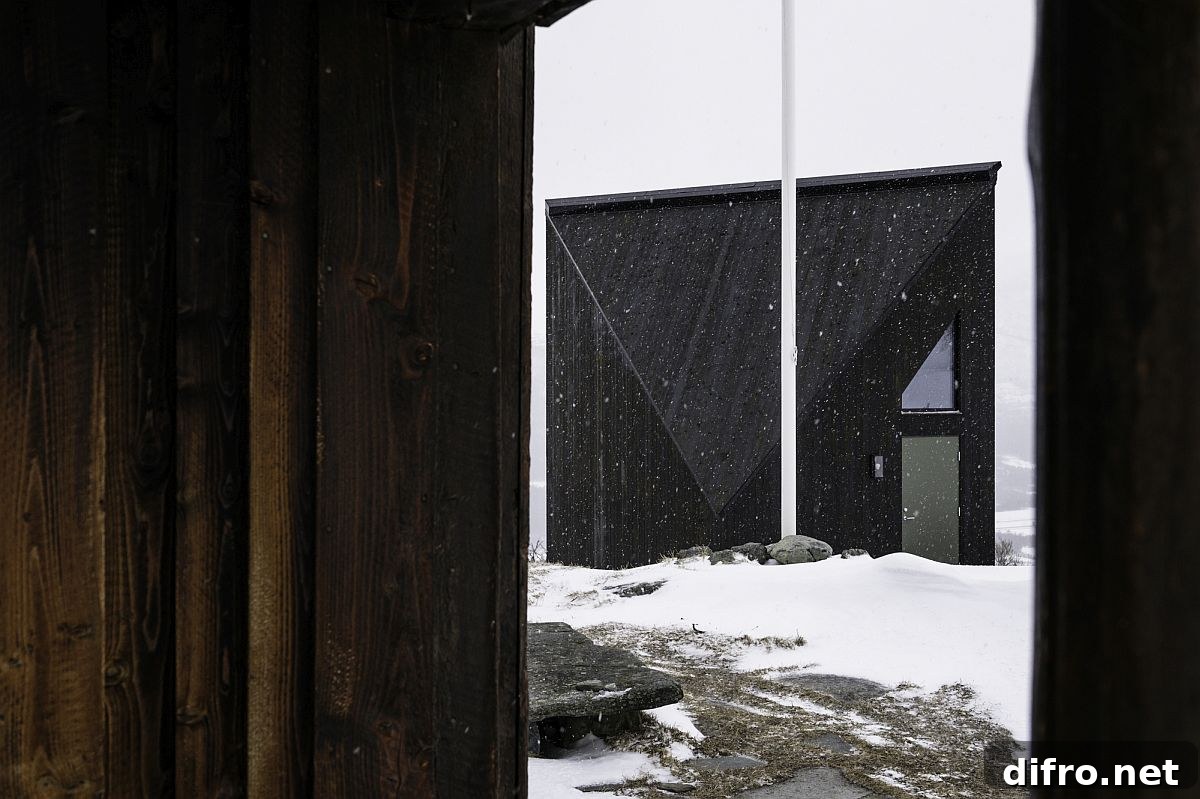
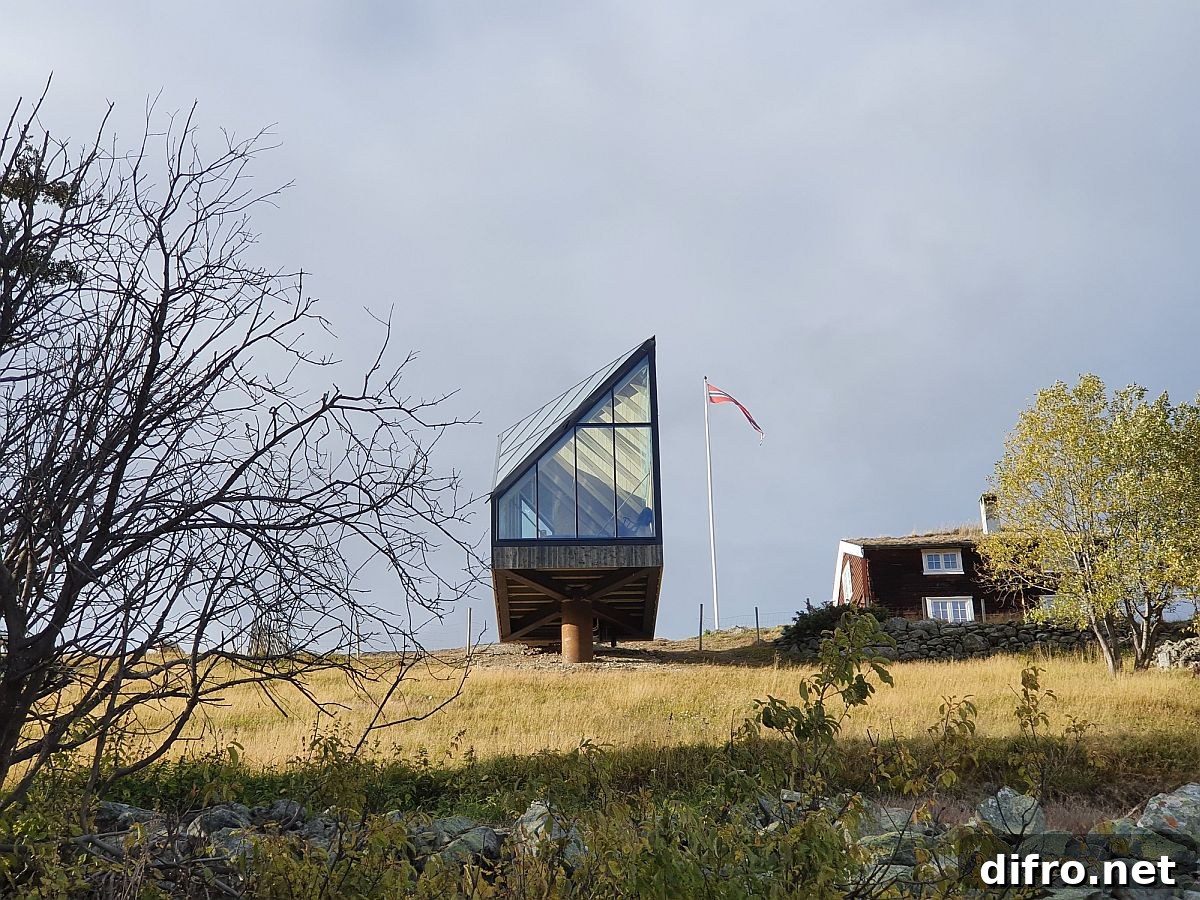
“Right from the start, we were fascinated by the idea of creating a piece of modern architecture that could form a contrast with the age-old, beautiful wooden buildings as well as holding its own as a building.”
The Diamanten Cabin is a clear example of contemporary architecture that respects context while asserting its own identity. It stands as a compact, thoughtful response to mountain living—contemporary in form, respectful in its footprint and generous in the way it frames the natural world. Captivating, creative and attuned to its surroundings, this cabin reads like a diamond in the mountains: a precise, luminous object amid the timeless Norwegian winter landscape.