Hye Ro Hun House by IROJE KHM Architects — A Mountain-Edge Residence in Gwangju
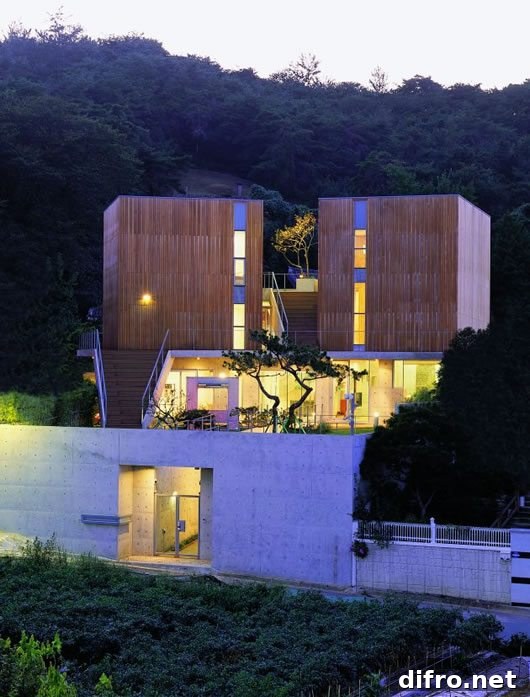
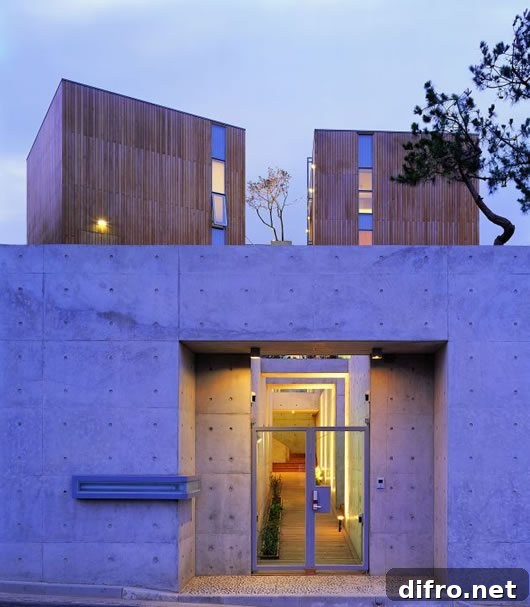
Simply stunning, the Hye Ro Hun House by IROJE KHM Architects presents a striking fusion of contemporary design and its natural setting. Perched above the downtown of Gwangju, the house reads as an architectural response to a steep, mountainous site: a composition that balances transparency, enclosure, and a measured dialogue with landscape. The design uses a clear, glass-lined approach and a canyon-like walkway to transition from the public street into a private inner court, creating a staged spatial sequence that feels both dramatic and intimate.
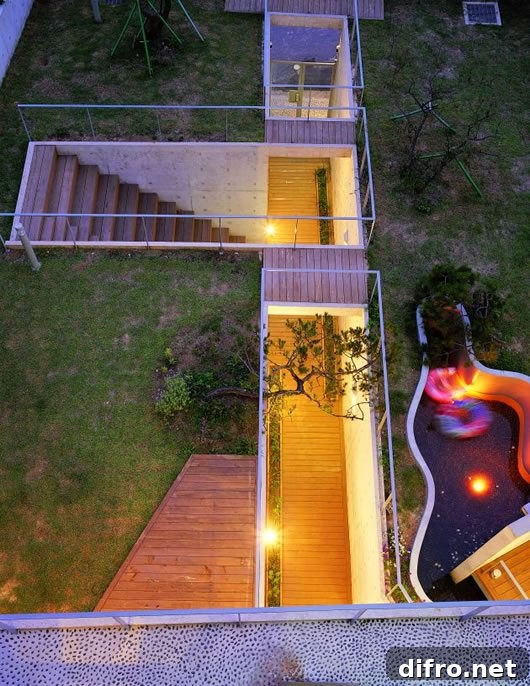
The arrival sequence is deliberate. A transparent entrance guides visitors along the narrow, canyon-like path, framed by walls and openings that modulate light and view. This procession softens the shift from exterior to interior and establishes a visual connection with the house’s central courtyard. The inner court becomes the organizing heart of the residence, bringing daylight to interior spaces while maintaining privacy and shelter from the surrounding terrain.
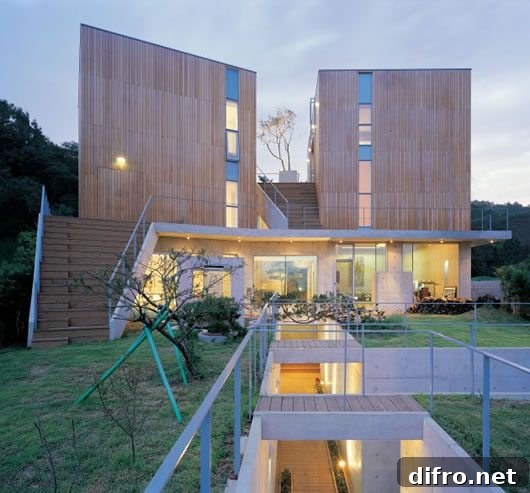
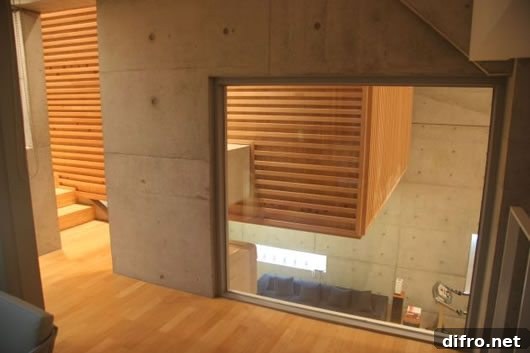
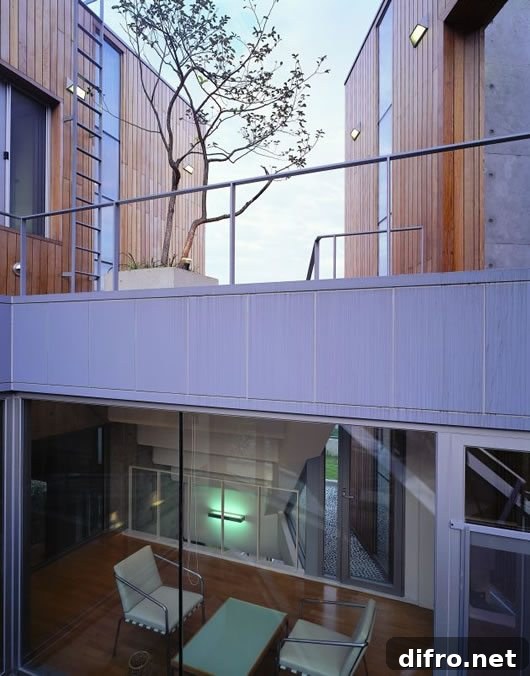
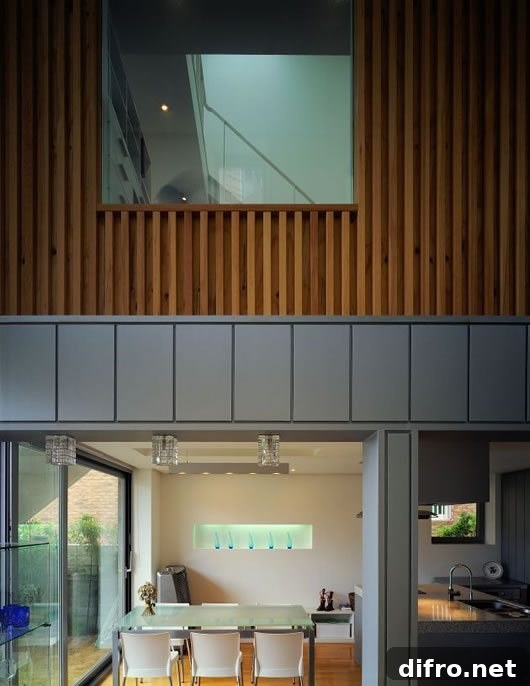
The house’s upper volumes read as two suspended wooden boxes, a clear architectural gesture that floats above the courtyard and the lower living areas. These suspended forms accommodate three bedrooms and two study rooms, allowing private programs to occupy elevated positions that benefit from views and daylight. The use of wood for these volumes introduces warmth and texture, contrasting with the transparent and solid elements that define the entrance and court.
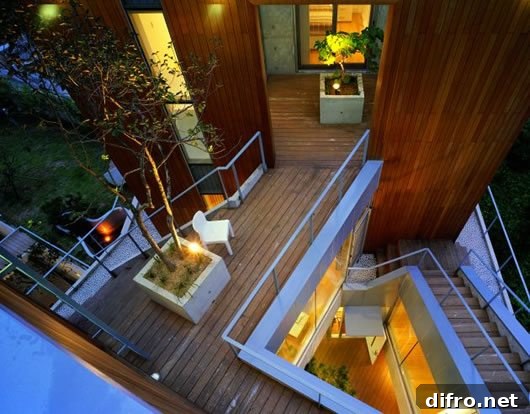
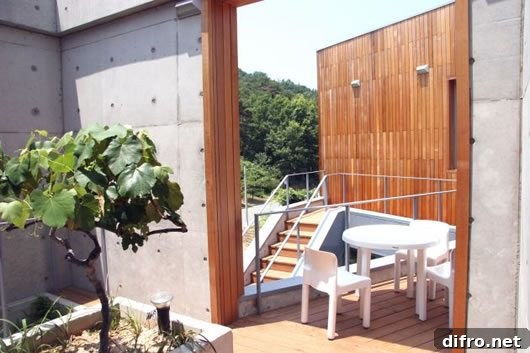
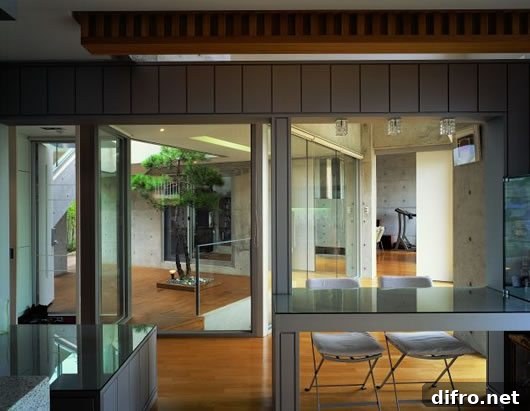
Beyond bedrooms and studies, the residence provides a functional layout for daily life: an integrated kitchen and dining area that opens toward exterior terraces and views, creating fluid indoor-outdoor relationships. Circulation is organized to prioritize sightlines to the courtyard and landscape, encouraging occupants to move through a sequence of framed views rather than simply traversing rooms. This thoughtful arrangement enhances the sense of connection with the surrounding mountains while maintaining domestic comfort.
A particularly memorable feature is the house’s outdoor bamboo garden, which rises to a height of approximately nine meters. This vertical green element delivers a strong visual and atmospheric presence in the courtyard, filtering light and wind, and adding a living, seasonal dimension to the architecture. The bamboo garden not only enriches the sensory experience of the court but also reinforces the project’s integration of natural elements into a compact urban site.
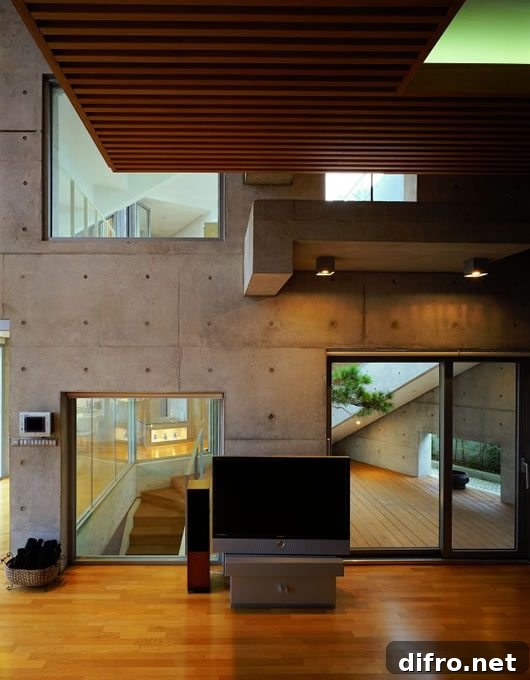
Material choices and spatial relationships work together to create contrasts that feel intentional rather than disjointed. Transparent glass, warm timber, and disciplined masonry or concrete surfaces are orchestrated to emphasize the building’s tectonic clarity. The suspended wooden boxes, in particular, create shadow and depth, their cantilevered presence lending a sense of lightness that counterbalances the grounded base of the house.
From an architectural perspective, the Hye Ro Hun House is an example of contemporary residential design that responds to both context and program. It balances openness and privacy, indoor comfort and outdoor experience, and formal clarity with tactile materiality. The canyon-like approach, inner courtyard, elevated sleeping volumes, and tall bamboo garden together form a cohesive design language that reads well both up close and from the surrounding slopes.
For those interested in modern Korean architecture, this house demonstrates how a compact site can produce rich spatial complexity through considered circulation, strategic voids, and a clear hierarchy of volumes. The project highlights IROJE KHM Architects’ sensitivity to landscape and their capacity to craft homes that are at once sculptural and inhabitable—places where architecture amplifies the experience of daily life while responding thoughtfully to the terrain.
Below are images that capture different perspectives of the house, showing the entrance sequence, courtyard, suspended wooden volumes, interiors, and the dramatic bamboo garden that anchors the composition.