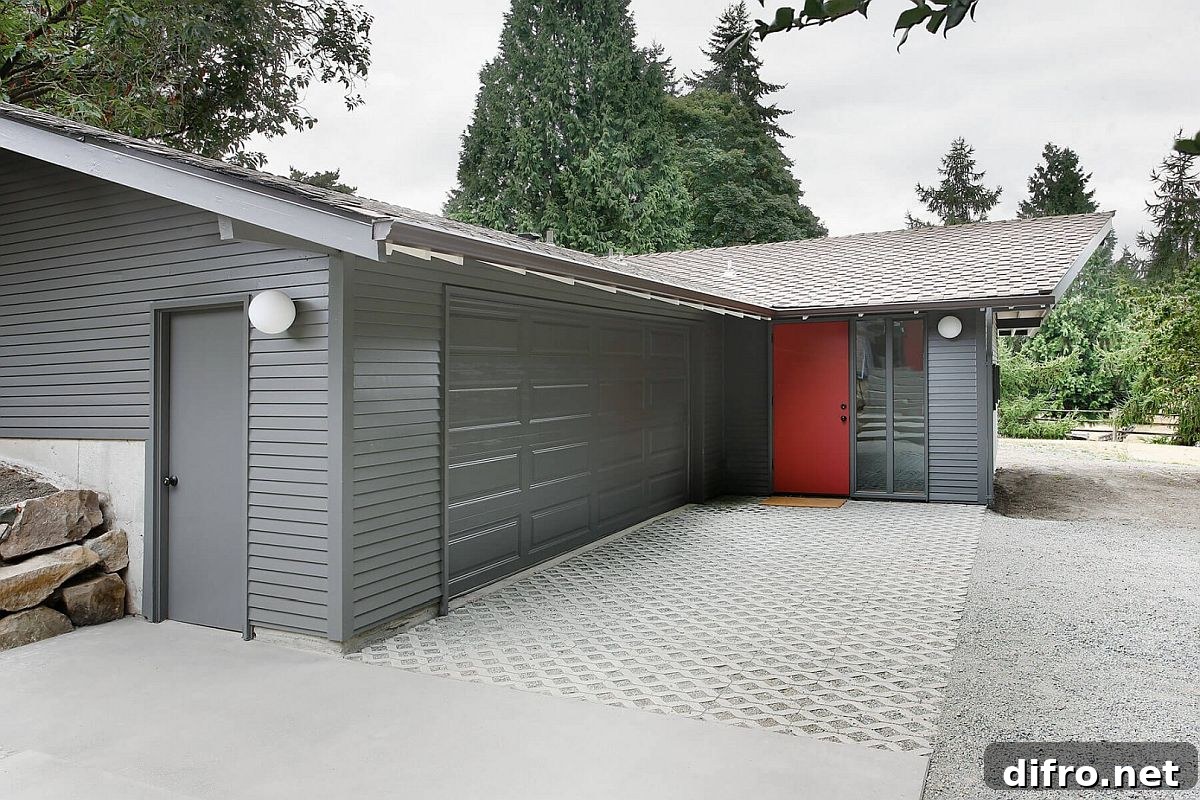
What do you do when you own an old horse stable but not a single horse? A couple in Kirkland, Washington chose to preserve and reinvent their unused outbuilding rather than let it fall into neglect. The result is a thoughtful conversion by SHED Architecture & Design: a spacious, modern studio that doubles as a comfortable accessory dwelling unit (ADU) when needed. The project carefully balances the stable’s original character with contemporary living requirements, creating a bright, flexible space perfect for art, work, or relaxed living.
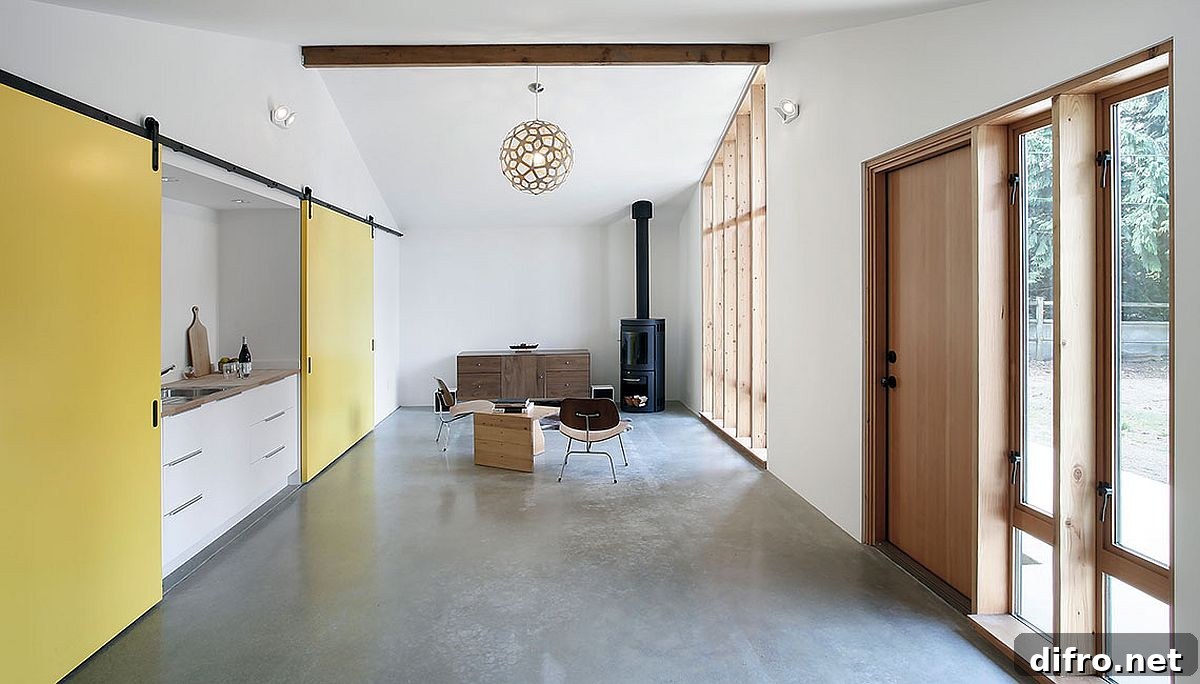
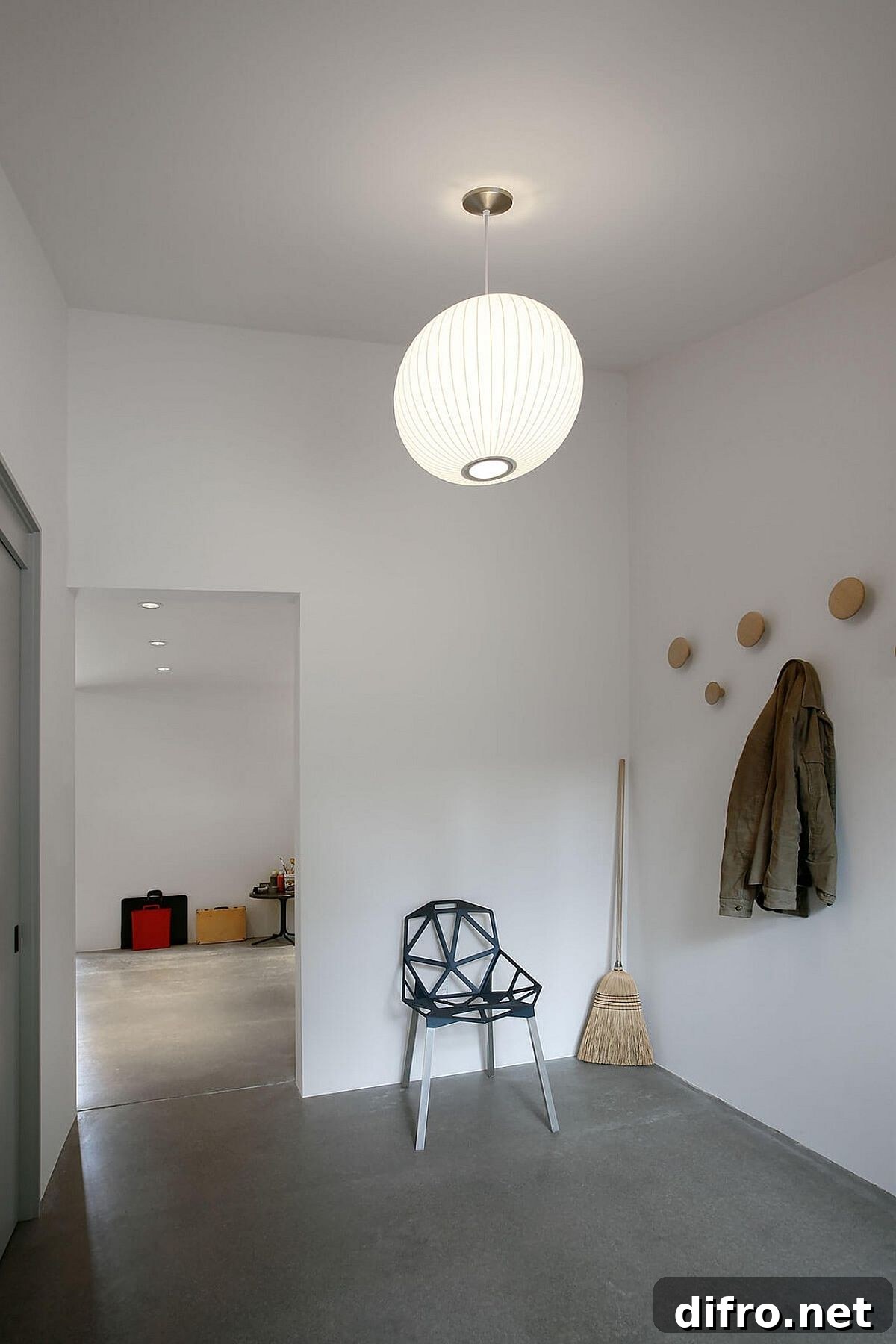
The full-height studio sits at the heart of the renovation. Its double-height volume and sloped ceiling are retained and celebrated, turning what was once a compact barn into an airy, multi-use interior. A modest mudroom and entry sequence lead into the main space, creating a practical transition between the outdoors and the studio. The designers used the existing bones of the structure—the roofline and framework—to anchor the new layout while opening up sightlines and daylight within.
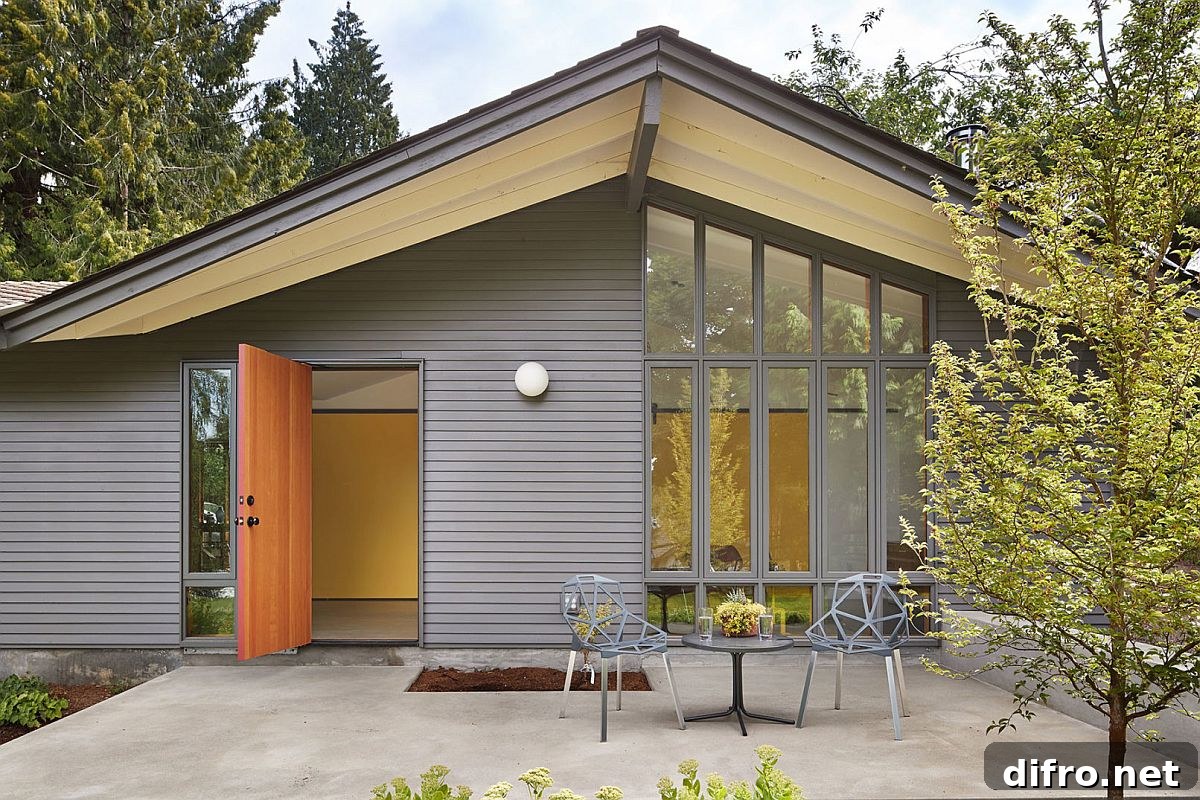
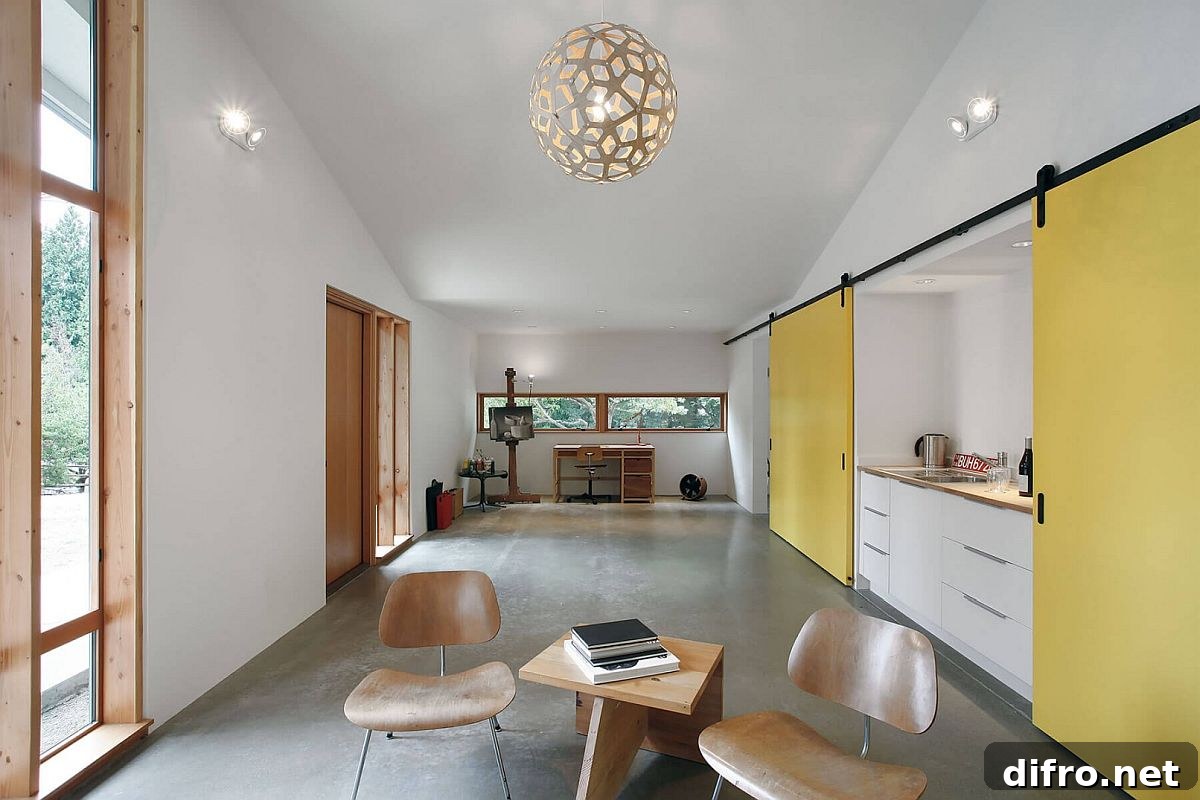
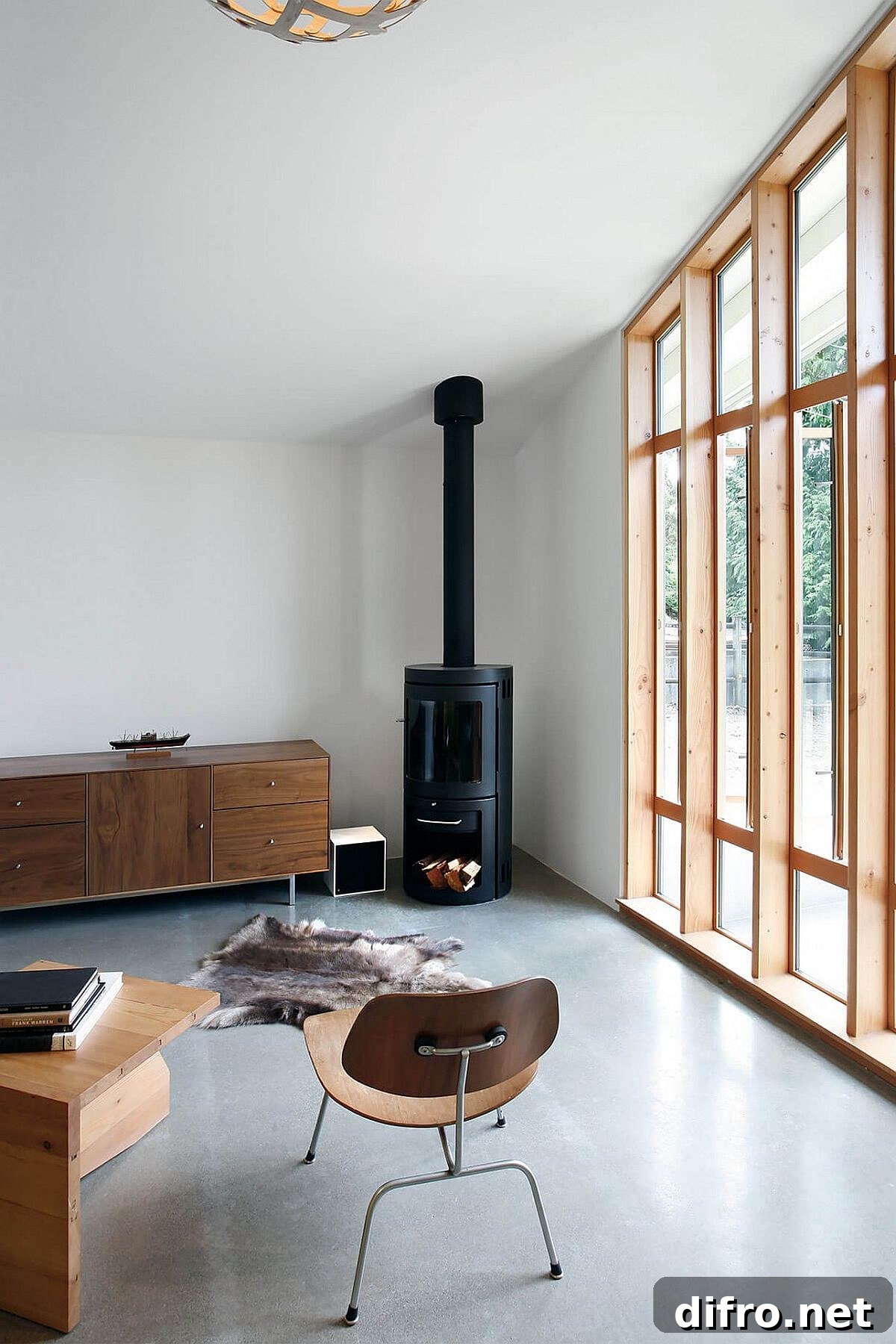
Mid-century inspired windows were chosen to bring generous natural light and cross-ventilation into the studio, a nod to the glazing language of the property’s main house. These wooden windows and pivot doors open widely to the landscape, helping the interior feel connected to the surrounding yard. Along the western elevation, a new patio provides an outdoor extension of the living area and frames sunsets over the property—an intentionally simple addition that enhances daily use without overwhelming the original structure.
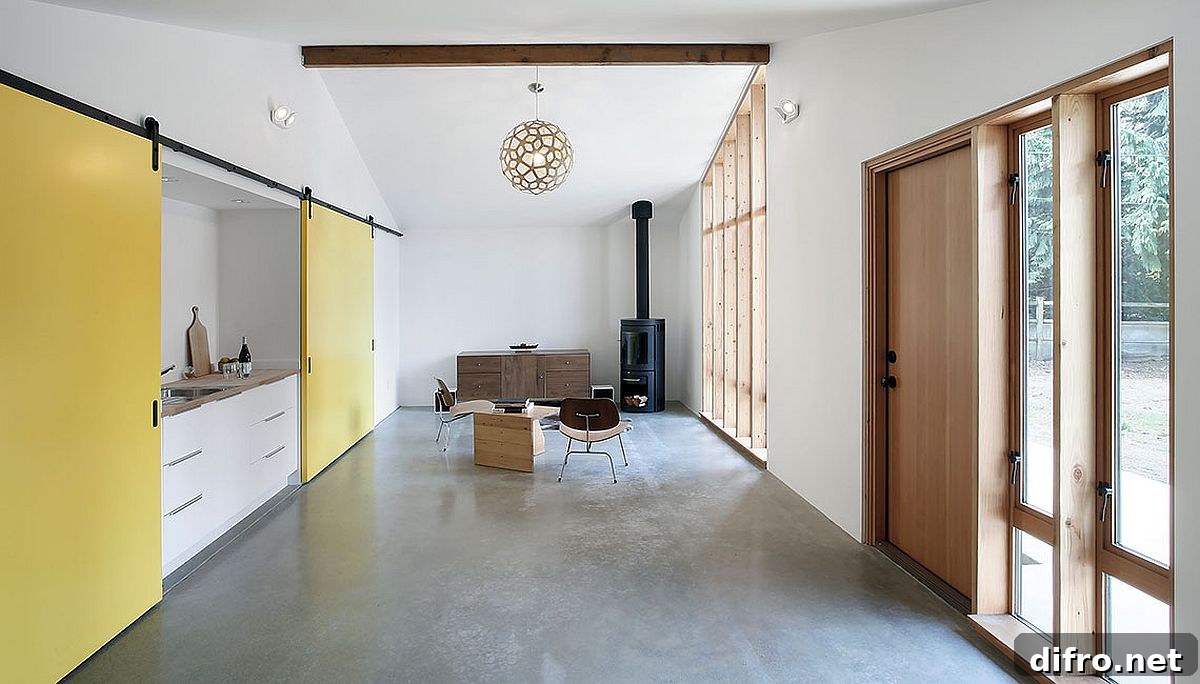
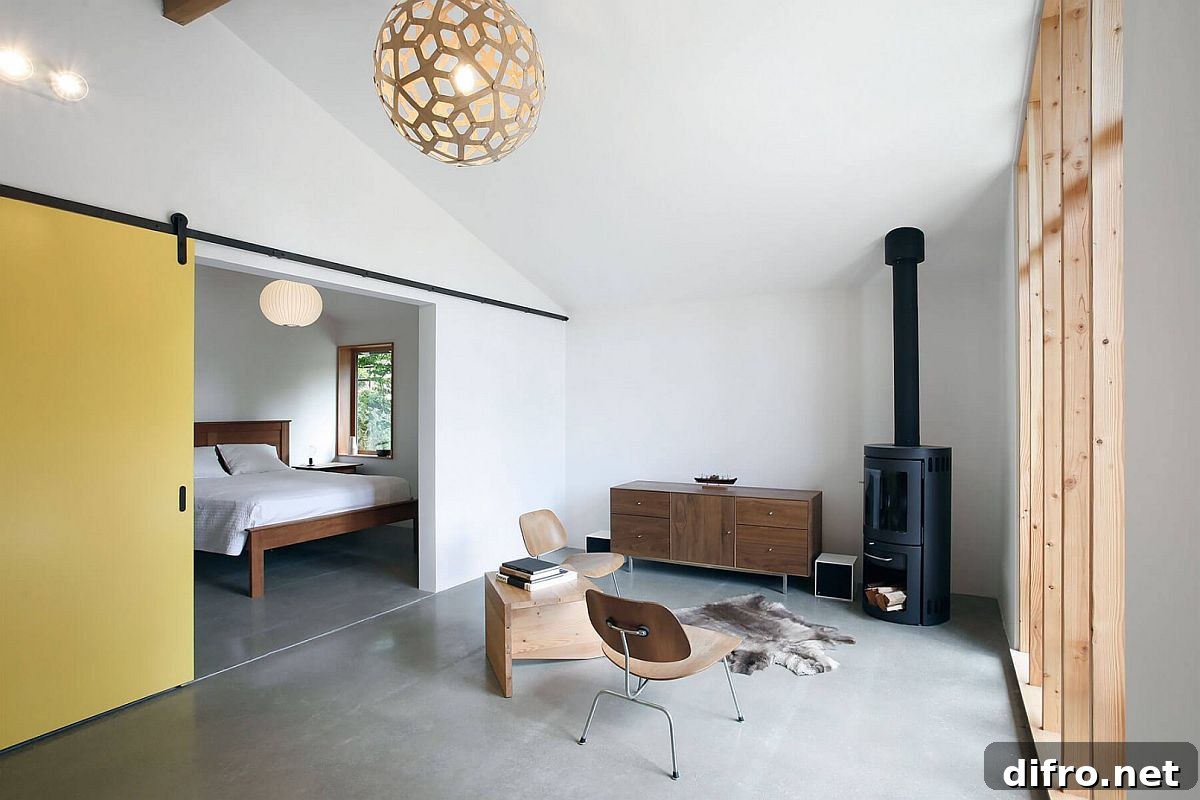
One of the conversion’s most striking elements is the large yellow sliding barn door. This cheerful, barn-style door references the building’s agricultural past while functioning as a practical divider: it conceals the private bedroom and support spaces and can be left open to maintain a free-flowing studio. Two bypass sliding doors offer additional flexibility, allowing the interior to be reconfigured quickly for different uses—private sleeping quarters, a dedicated workshop, or a fully independent ADU layout.
A simple patio along the western facade opens the studio to the landscape and captures evening light. New windows and doors echo the mid-century glazing found at the main house, highlight the stable’s original framework, and flood the interior with natural light for painting, working, or relaxing.
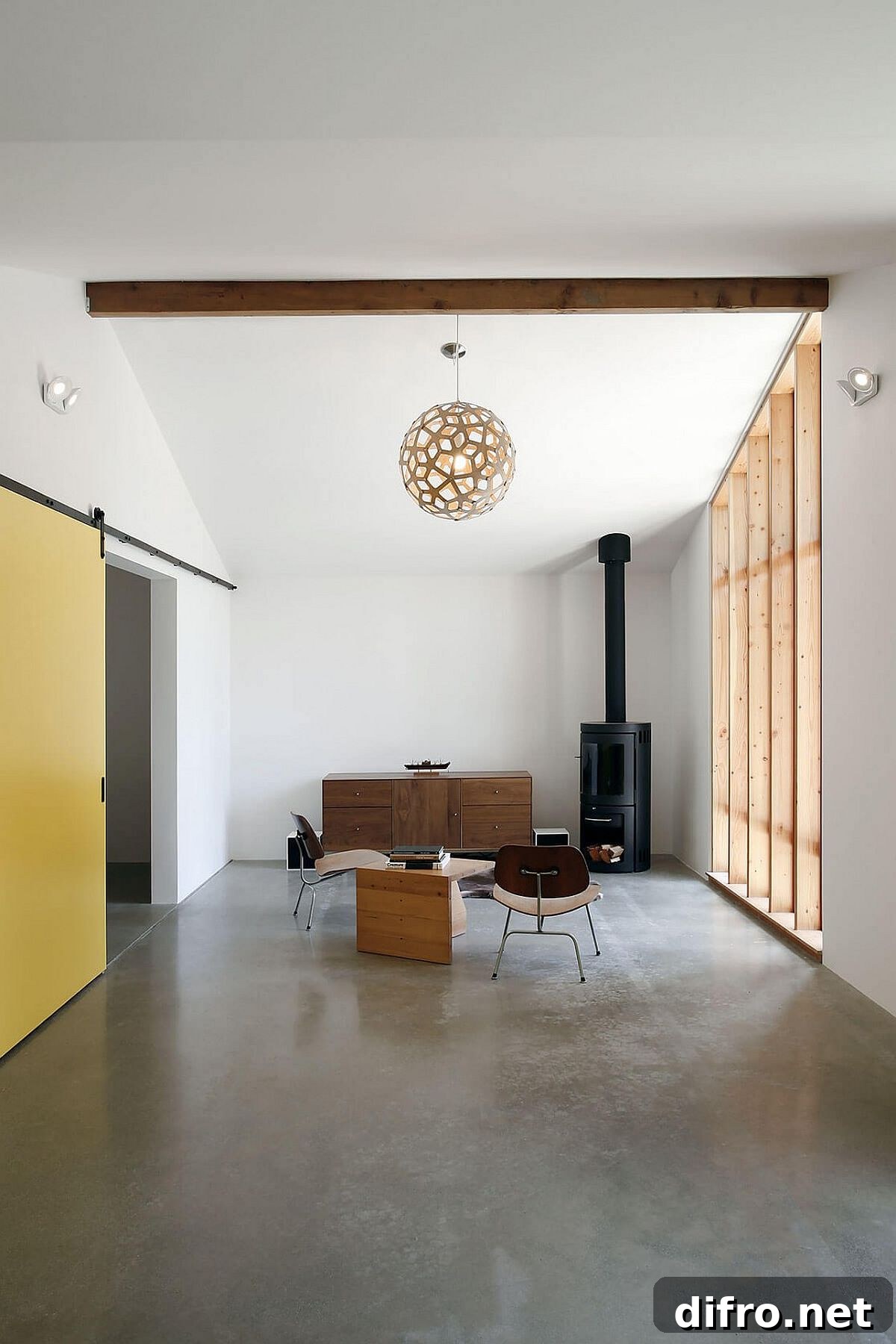
Interior finishes are deliberately minimal. A corner fireplace, a sleek wooden credenza, and restrained furnishings define comfortable living zones without cluttering the open plan. Lighting is selective and sculptural: a David Trubridge Coral pendant gently illuminates the central volume, emphasizing the scale of the studio while maintaining a calm, refined atmosphere.
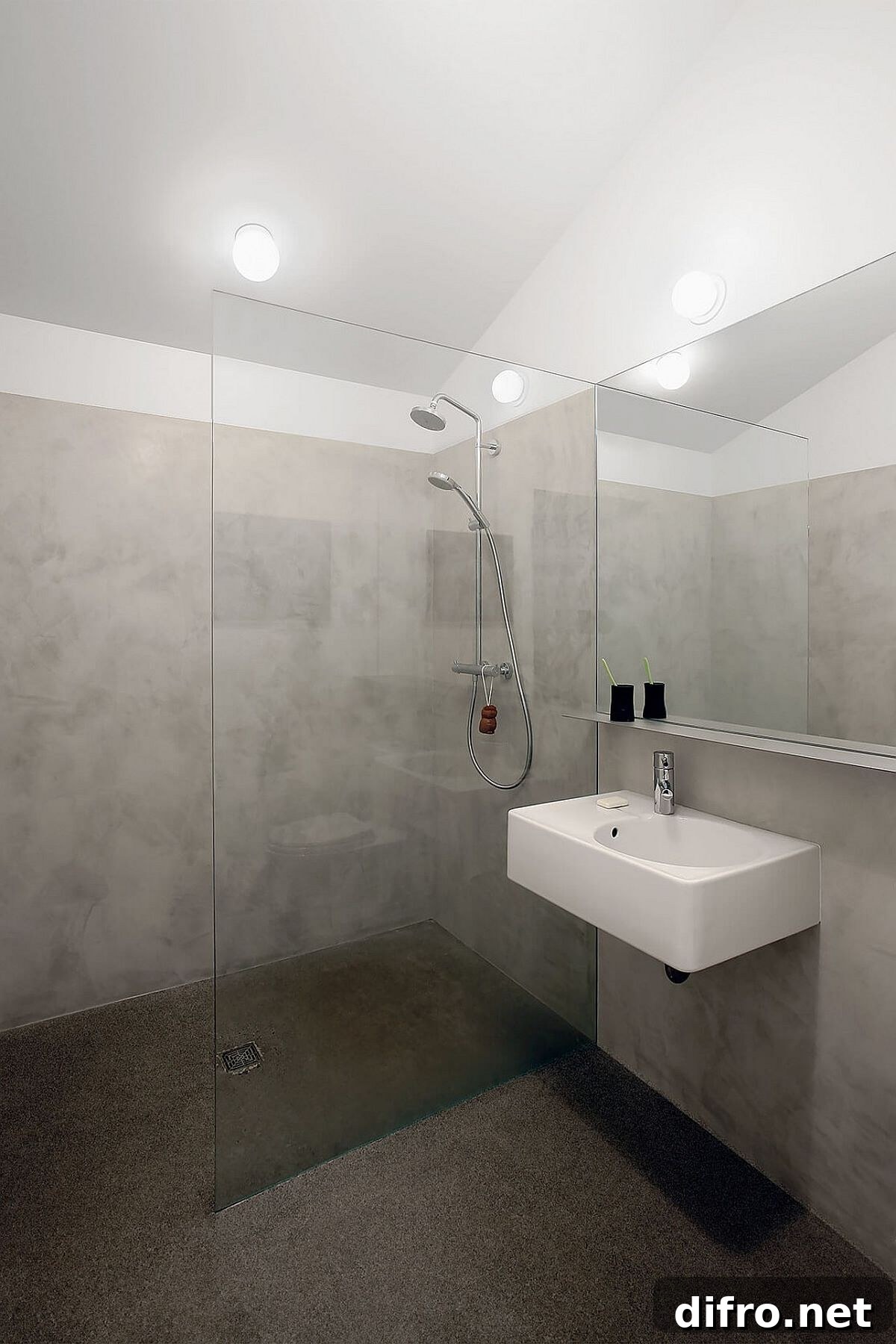
The bathroom and support spaces were designed with the same minimalist approach. Clean lines and a restrained palette create a modern, functional bathroom that complements the main studio while keeping maintenance simple. Throughout the project, the design choices prioritize adaptability and livability—making the former stable suitable for daily use, creative work, or as an independent ADU.
By emphasizing practical upgrades, daylighting, and flexible partitions, this stable-to-studio conversion in Kirkland demonstrates how an existing structure can be thoughtfully reused. The careful preservation of key architectural features, combined with contemporary interventions, delivers a versatile living and working environment that honors the building’s past while meeting present-day needs. Photography: Mark Woods – Benjamin Benschneider.