Contemporary Concrete and Hardwood Home in Torquay, Victoria
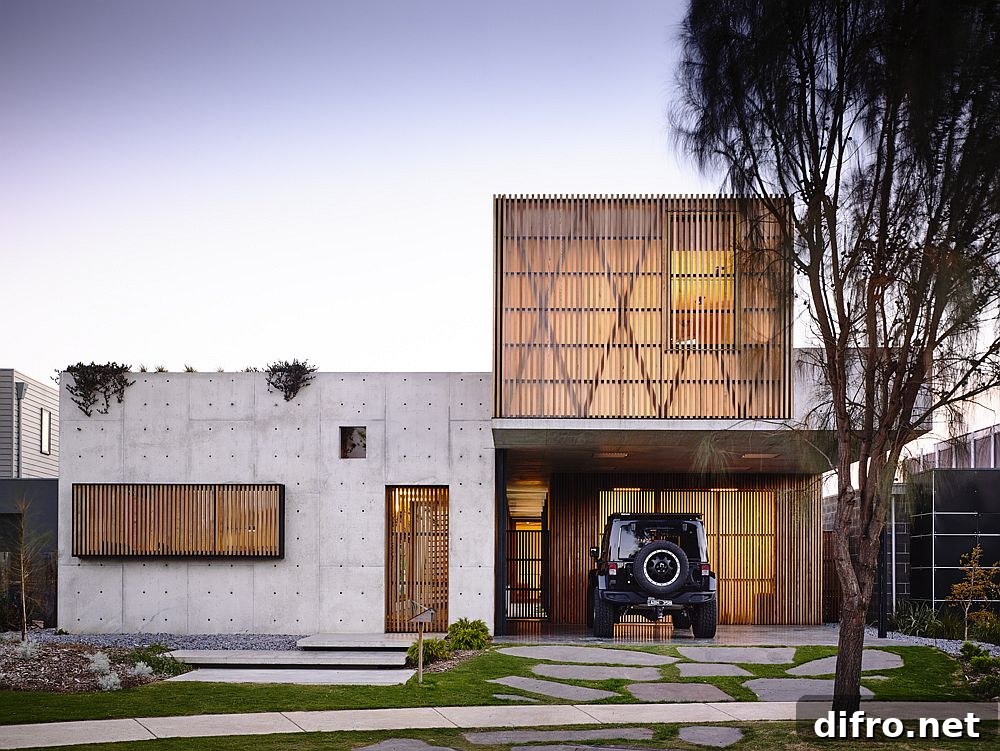
In dense urban and suburban neighborhoods, thoughtful design can create a private, sheltered retreat without losing a connection to the outdoors. This contemporary concrete house in the seaside town of Torquay, Victoria, demonstrates that balance beautifully. Anchored by robust concrete forms and softened by warm hardwood finishes, the residence transforms a tightly packed suburban site — positioned beside wetlands and a golf course — into a calm, internalized sanctuary for modern family life.
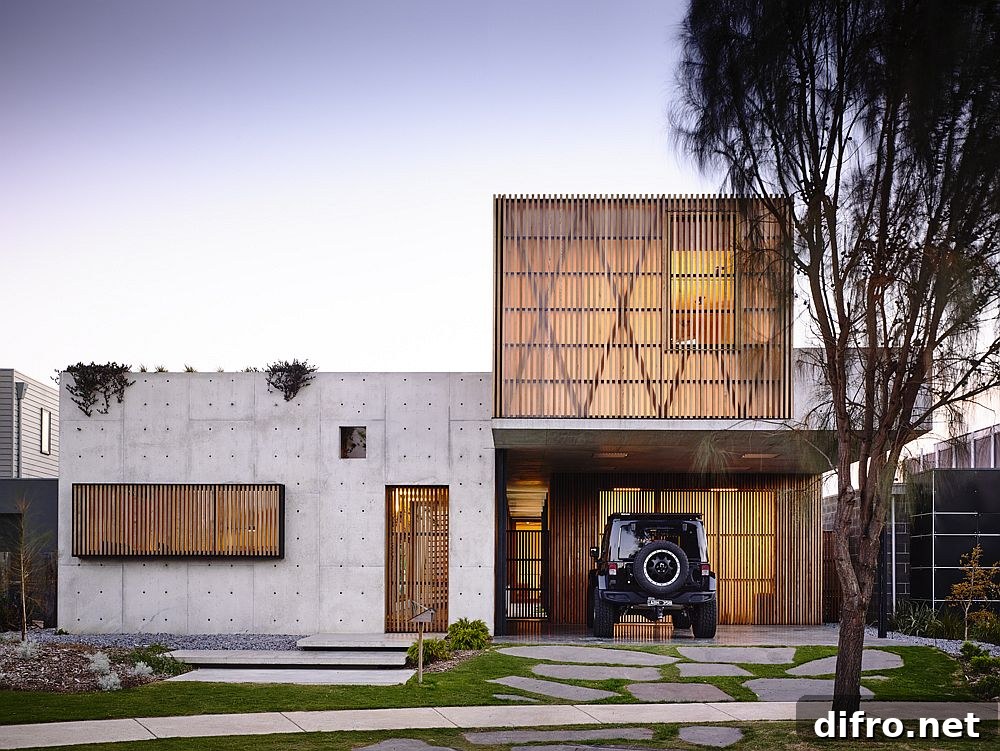
The last two decades have seen a shift away from high-gloss, perfectly polished finishes toward materials that celebrate texture and authenticity — raw concrete, reclaimed timber and simple cement surfaces. This house wears that aesthetic openly: exposed concrete walls define most rooms and extend to the exterior, setting a rugged, minimalist tone. Against that backdrop, natural hardwood surfaces and carefully selected joinery bring warmth and tactile contrast.
Visitors enter through a generous double-height foyer and a quiet internal courtyard that together create a calm threshold between street and home. Large sliding glass walls and glazed hallways intentionally blur the line between inside and outside, filling the interiors with natural light and framed views of planted courtyards, the wetlands and the distant golf course. Thoughtful orientation ensures privacy from neighboring houses while allowing curated glimpses across the landscape.
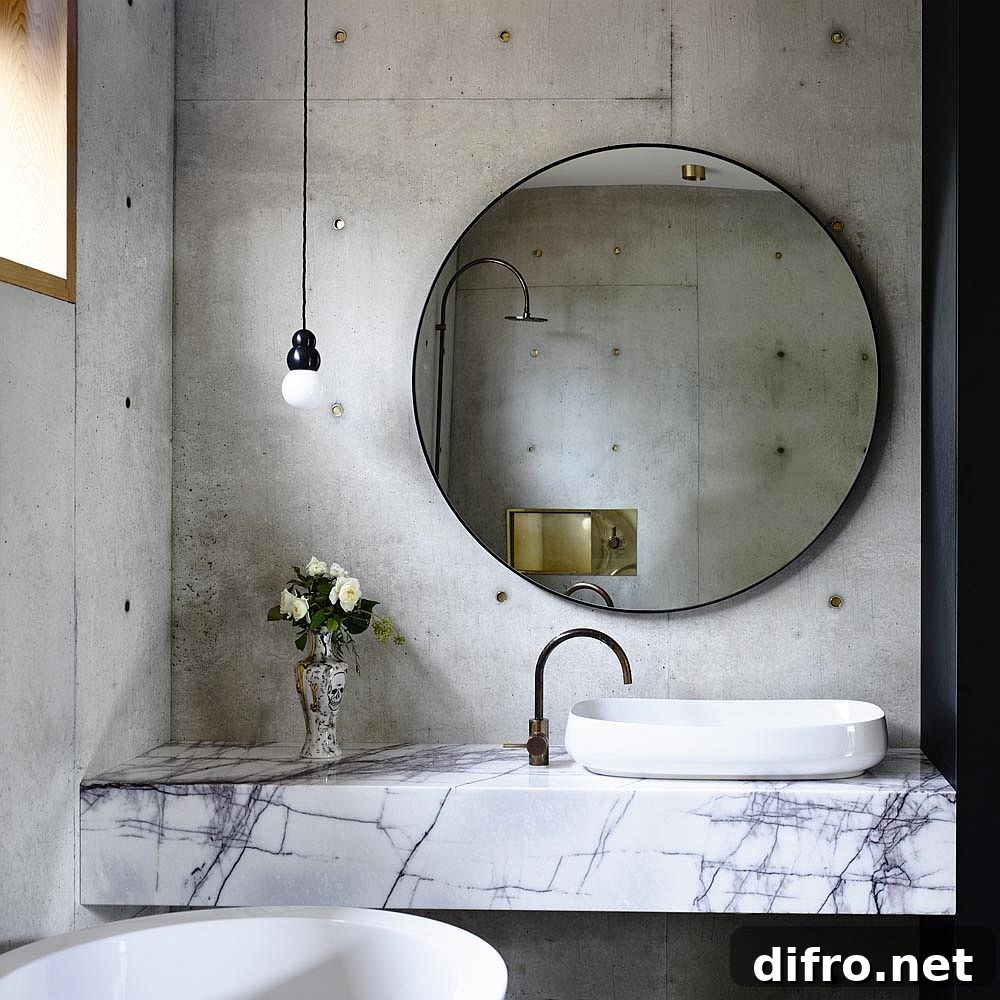
Internally, a restrained palette of materials reinforces clarity and cohesion. Dark floors and black-framed cabinetry provide a strong graphic foundation, while a white marble backsplash in the kitchen introduces a refined, luminous contrast. Metallic range hoods and contemporary fixtures establish focal points without overpowering the overall calm. Bathrooms and bedrooms continue the concrete-forward approach, where simple marble vanities and carefully proportioned openings keep spaces feeling serene and considered.
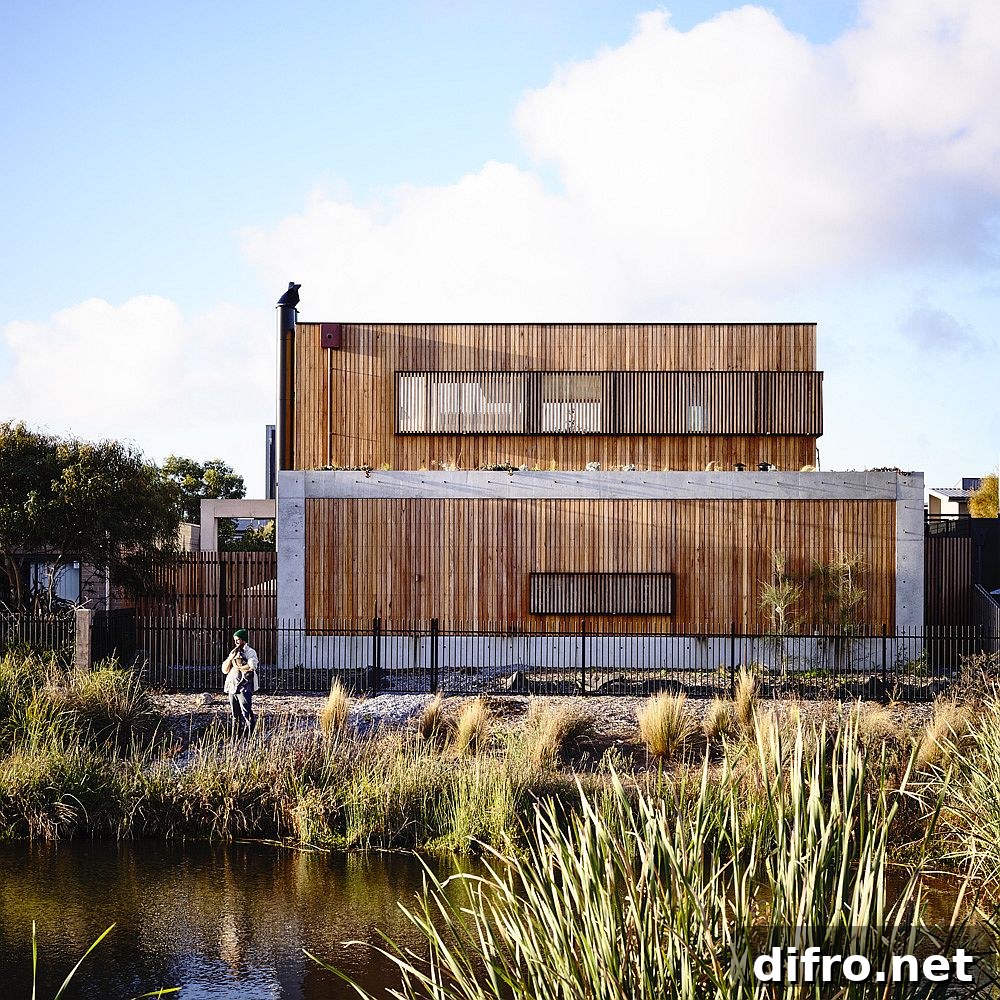
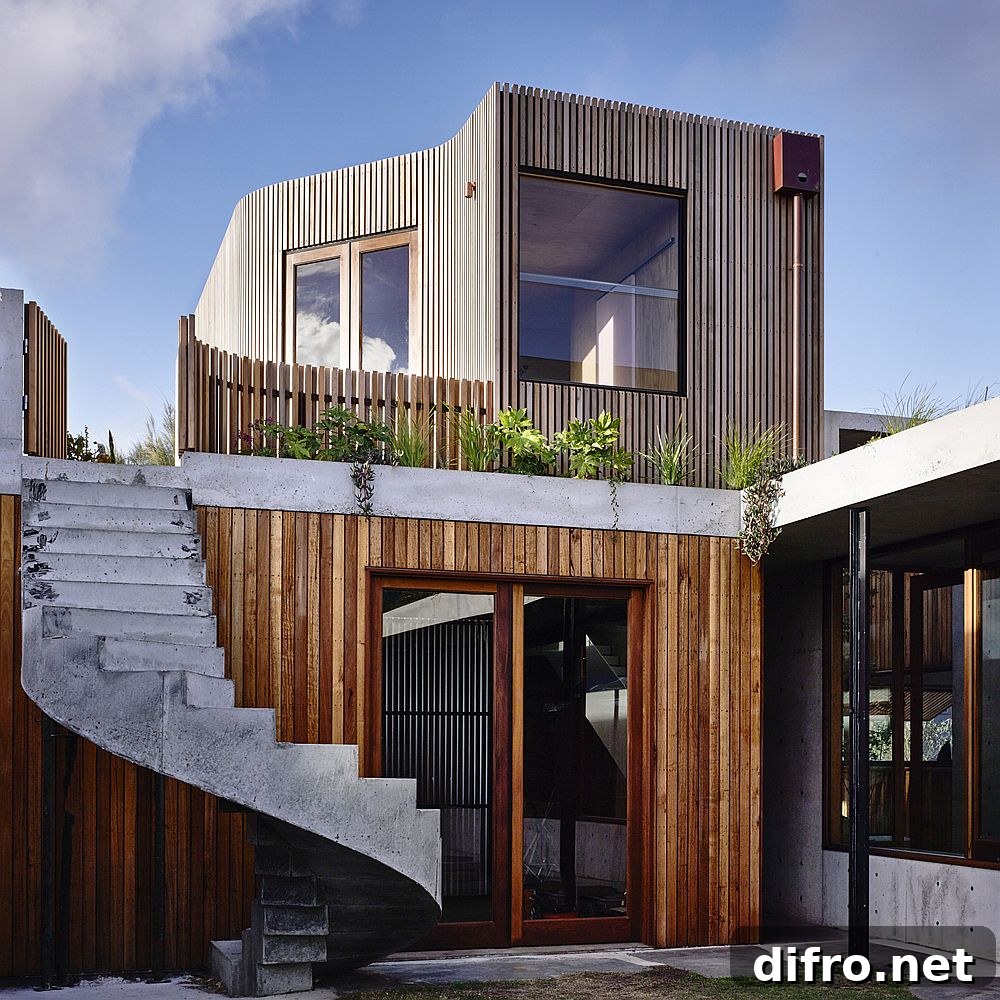
Privacy was a primary design driver: the house reads as a walled sanctuary from the street, concentrating its openings inward and toward the natural amenity beyond the block. Roof terraces host locally planted gardens that extend the home’s ecology and provide private outdoor rooms. Internal courtyards and planted pockets throughout the plan create a layered sequence of green spaces that bring light, ventilation and a sense of refuge to the compact suburban footprint.
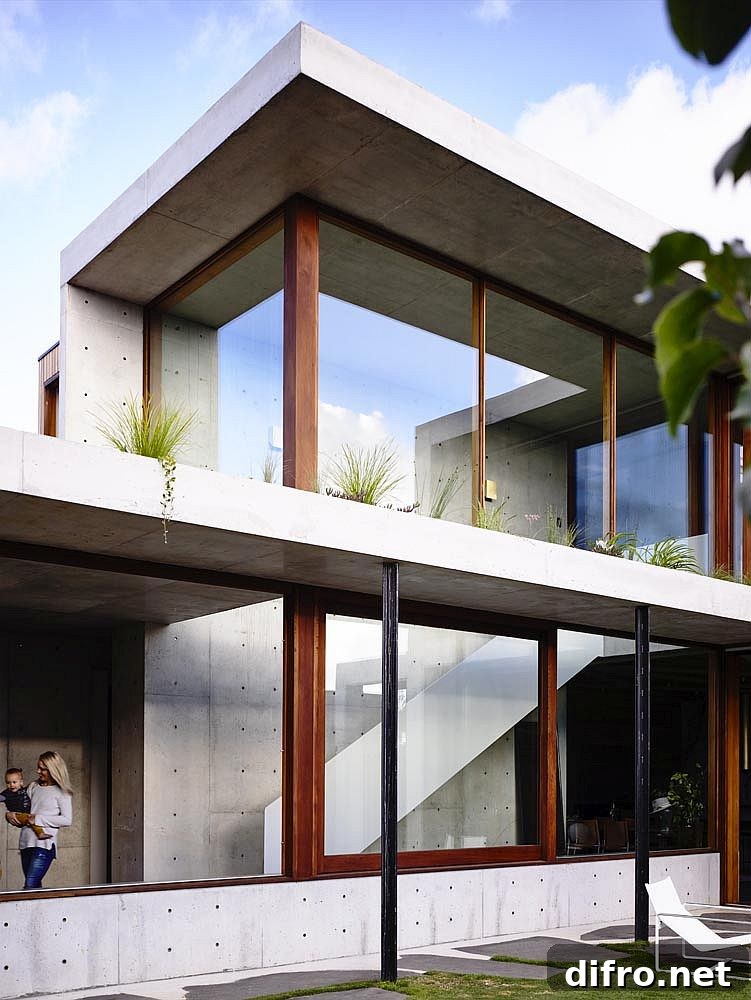
Tightly hemmed in by suburban houses but backing onto wetlands and a golf course, the house functions as a walled sanctuary — an internalized habitat that opens inward, with roof gardens planted from local species and carefully framed views of the surrounding landscape.
Architectural details are deliberately minimal and precise: the contemporary staircase, integrated joinery, and slimline marble vanities all contribute to a restrained, sophisticated interior. Each material is chosen for durability and sensory impact, from the tactile grain of hardwood ceilings to the cool texture of exposed concrete. The result is a home that feels both rugged and refined, private yet intimately connected to its coastal setting.
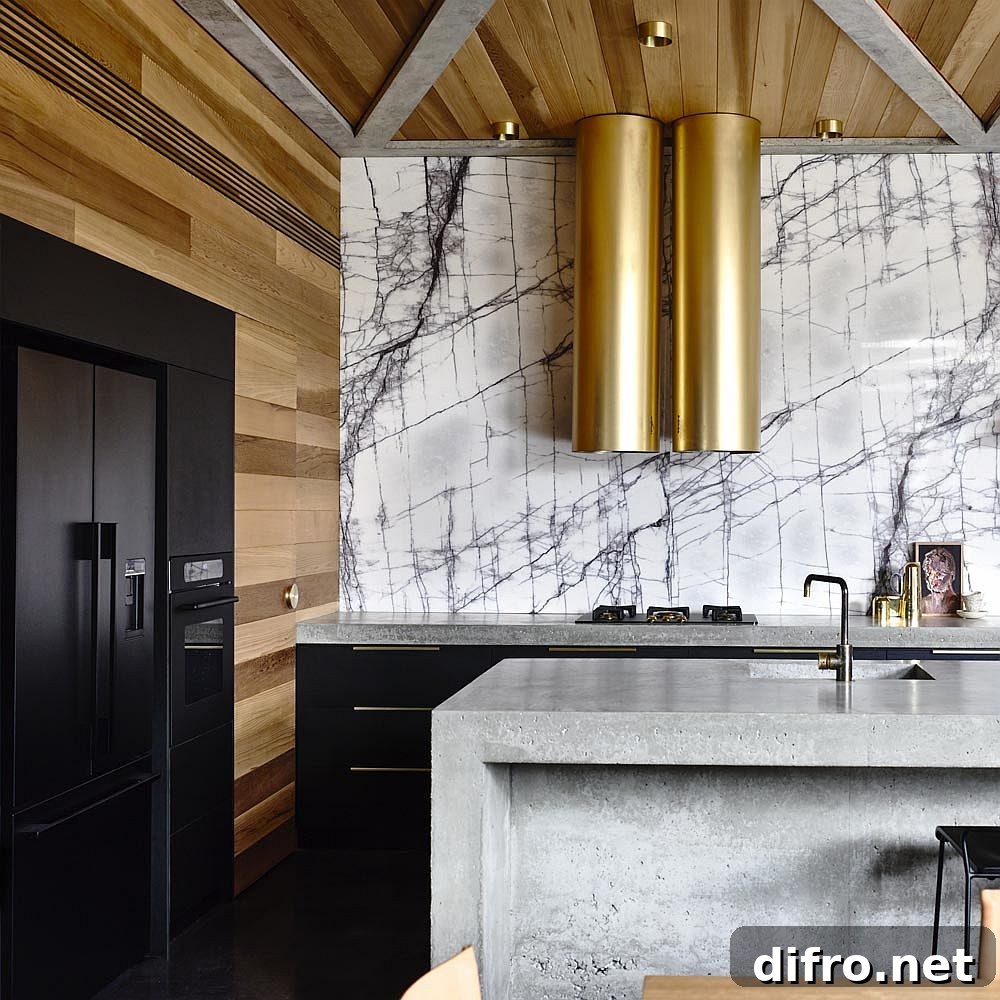
Overall, the house illustrates how contemporary architecture can reconcile privacy, material honesty and a strong relationship with landscape. By prioritizing durable, textured materials and strategic openings, the design creates a comfortable, adaptable family home that feels grounded in its seaside context while offering quiet, inward-facing sanctuary.