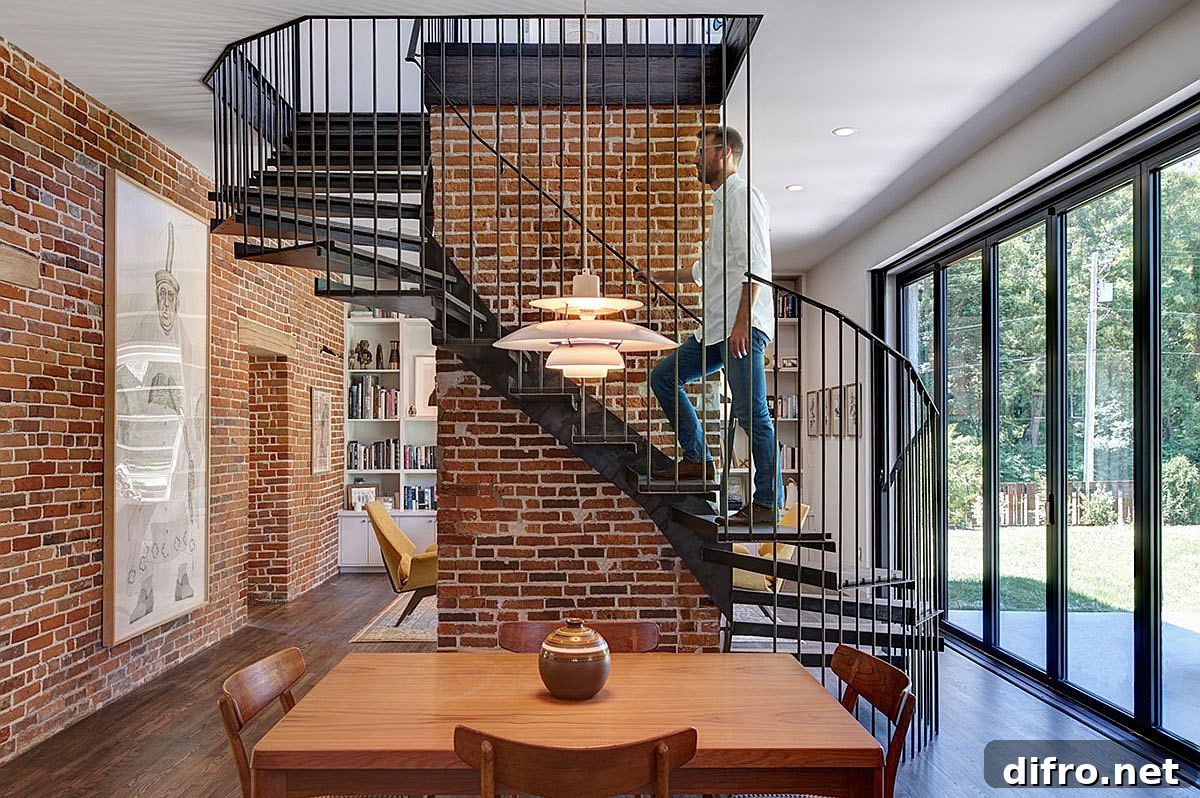
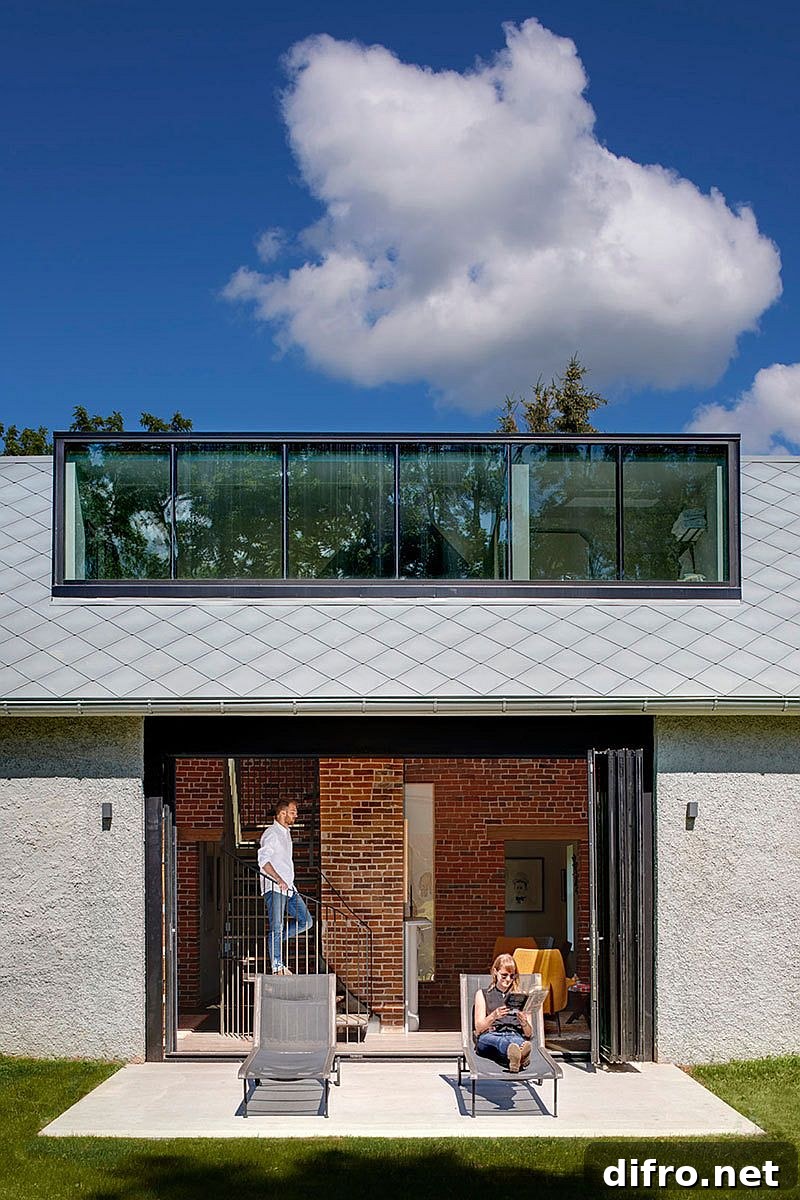
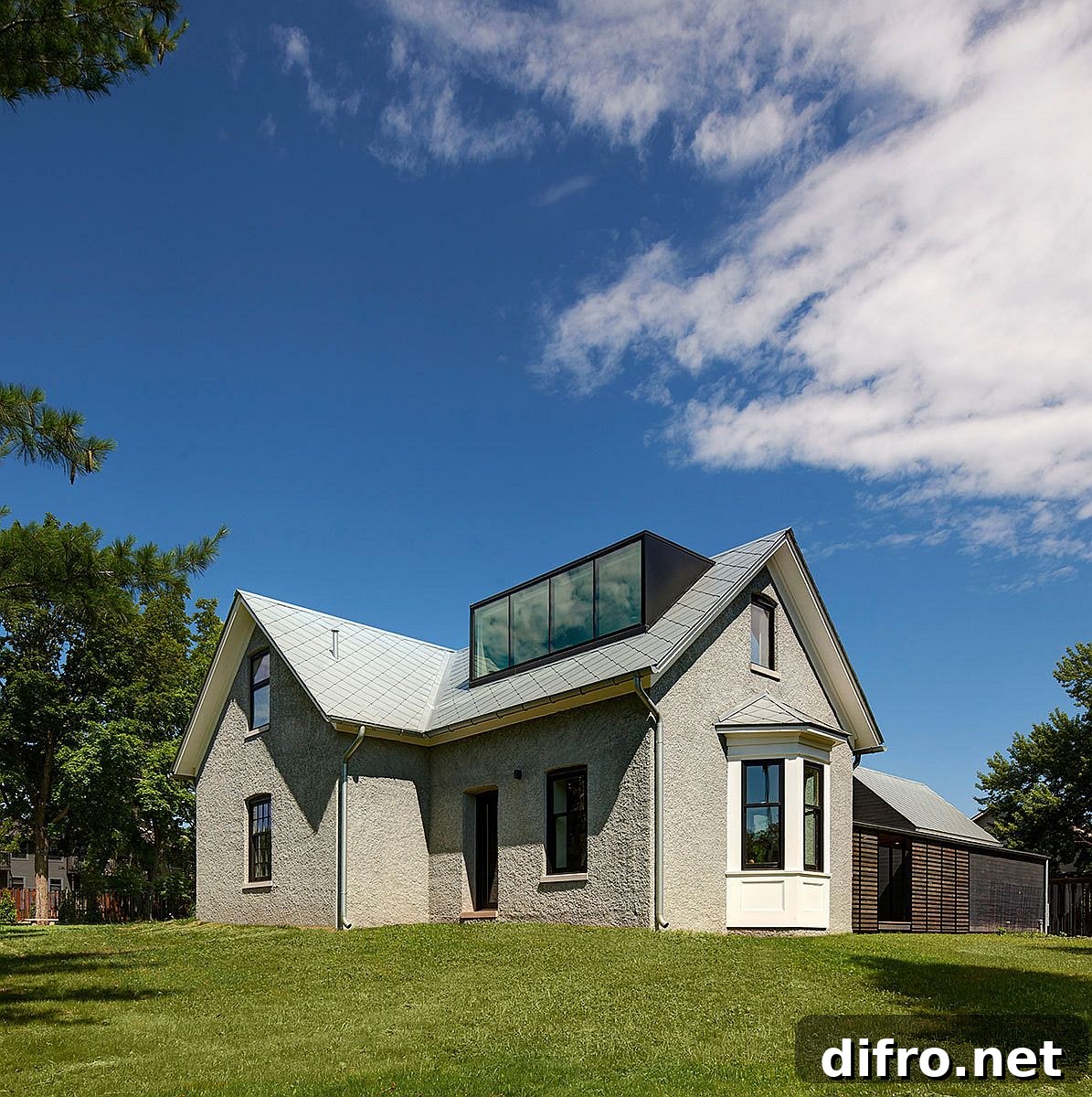
Transforming an 1850s farmhouse into a livable contemporary home requires thoughtful choices that honor history while introducing modern comfort. The Foster Road Retreat in Iowa City, redesigned by Neumann Monson Architects, achieves that balance with a refreshingly minimal aesthetic that reads more like a modern retreat than a typical renovation. From the street the home’s silhouette reads clean and updated, but inside original elements such as brick walls and timber traces quietly recall the building’s 19th-century origins.
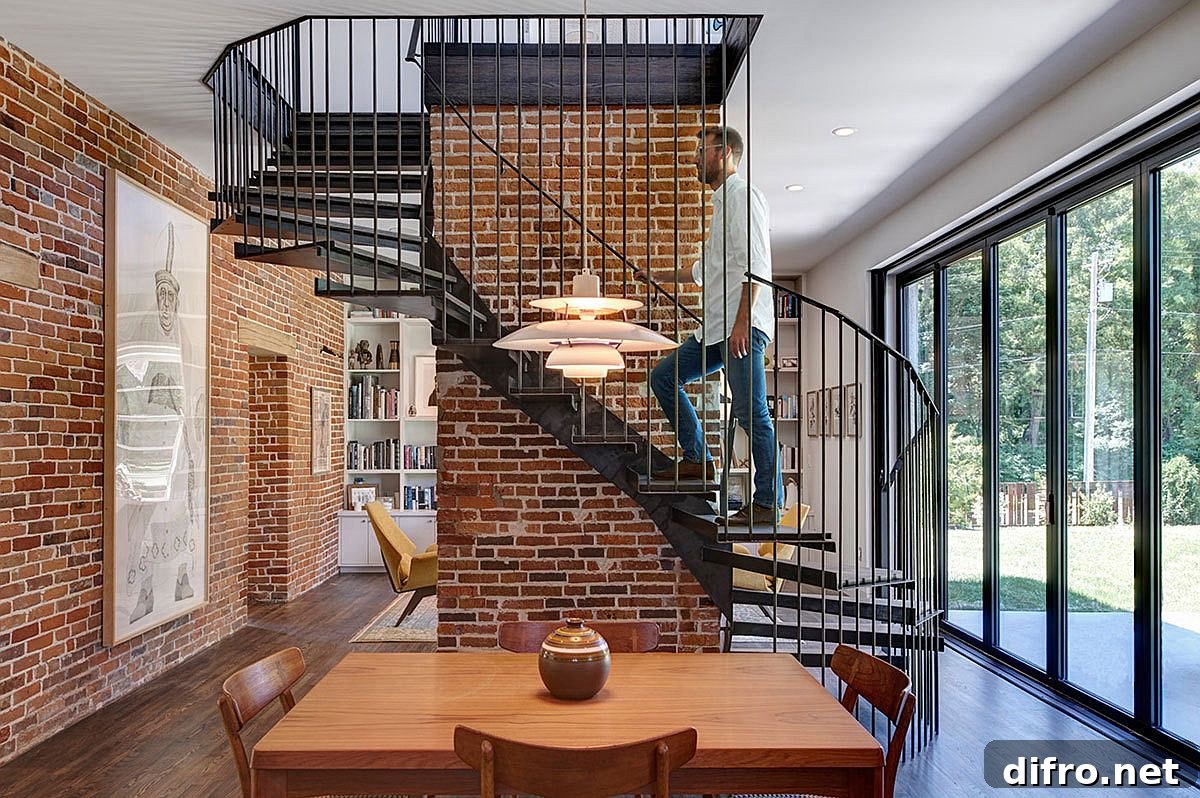
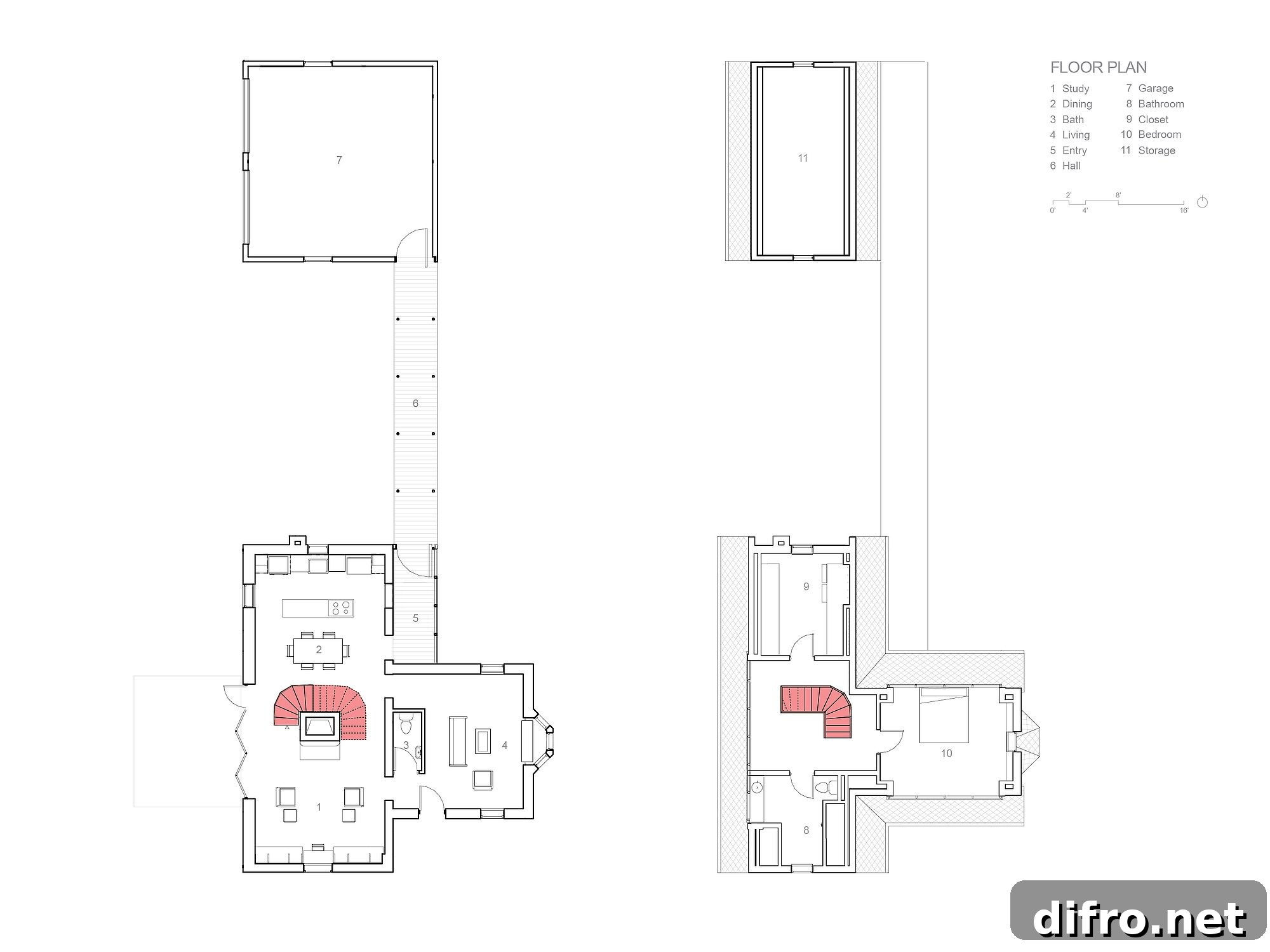
The interior is organized around a striking spiral staircase that acts as a sculptural centerpiece and primary circulation spine, linking the lower-level living spaces to a newly created master suite in the attic. This vertical element allows sightlines to flow between floors while reinforcing the home’s modern sensibility. Exposed masonry, preserved where possible, provides warmth and texture against sleek metal, glass, and refined wood finishes that define the updated interiors.
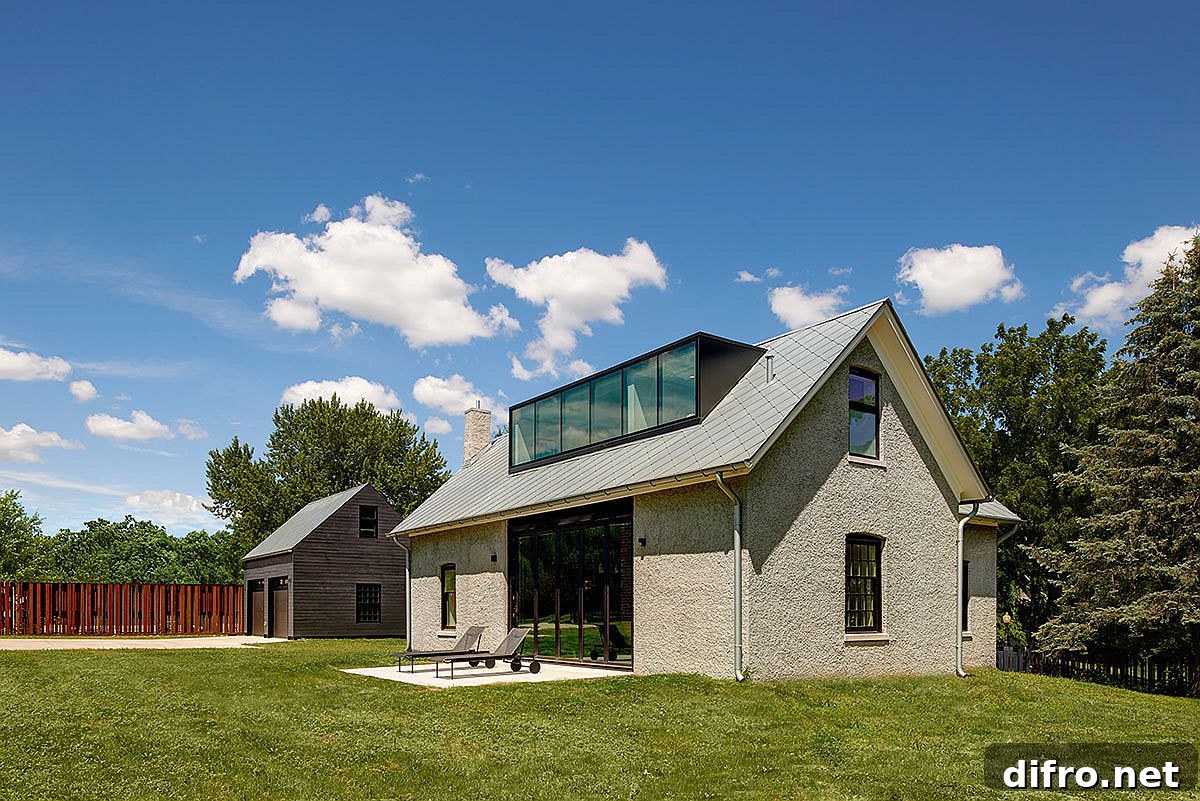
Upstairs, the attic-level master suite was carefully laid out to maximize natural light and ventilation. Generous windows and strategically placed skylights brighten the bedroom, bathroom, and walk-in closet, creating a calm, airy retreat tucked beneath the roofline. The addition feels deliberate rather than intrusive, using scale and material continuity to relate the new spaces back to the original farmhouse shell.
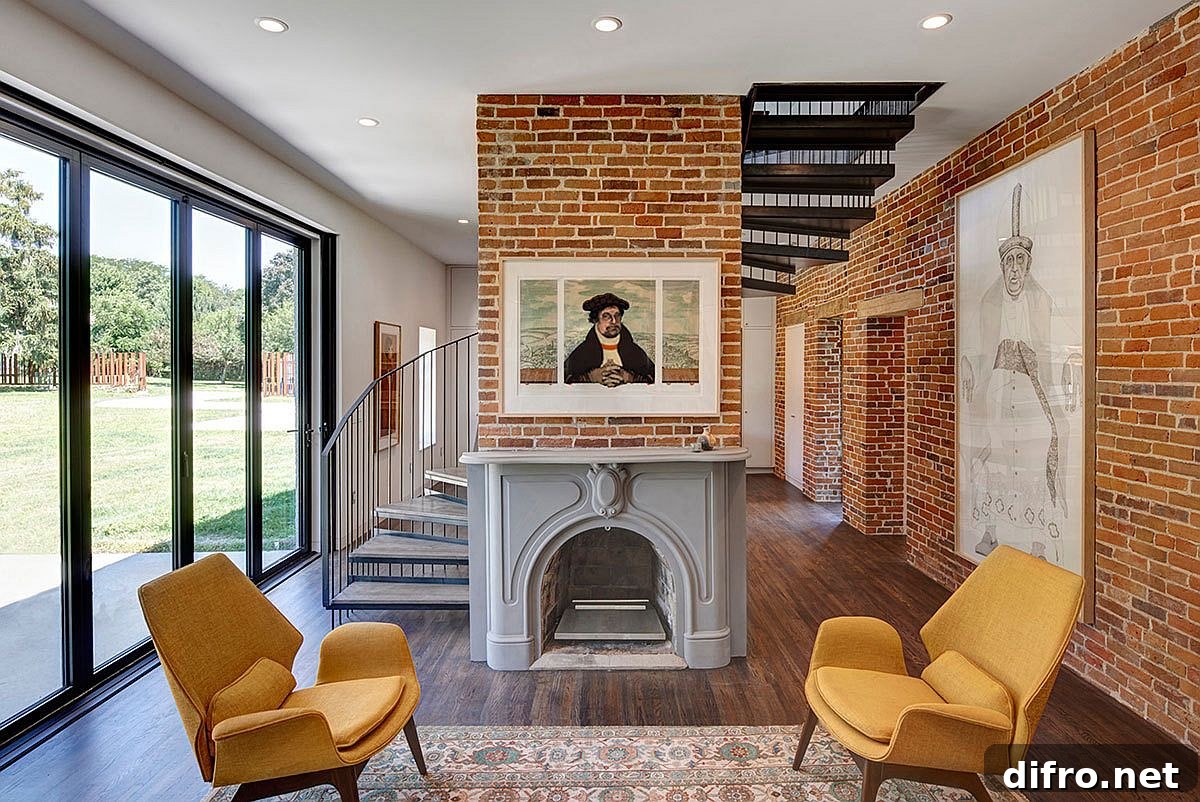
Material choices emphasize contrast and tactility: the rough, timeworn character of brick and wood juxtaposes with the refined surfaces of steel, glass, and smooth millwork. Polished finishes and restrained detailing in the living areas and bedrooms reinforce a contemporary aesthetic, while retained structural elements anchor the design in the property’s historic narrative.
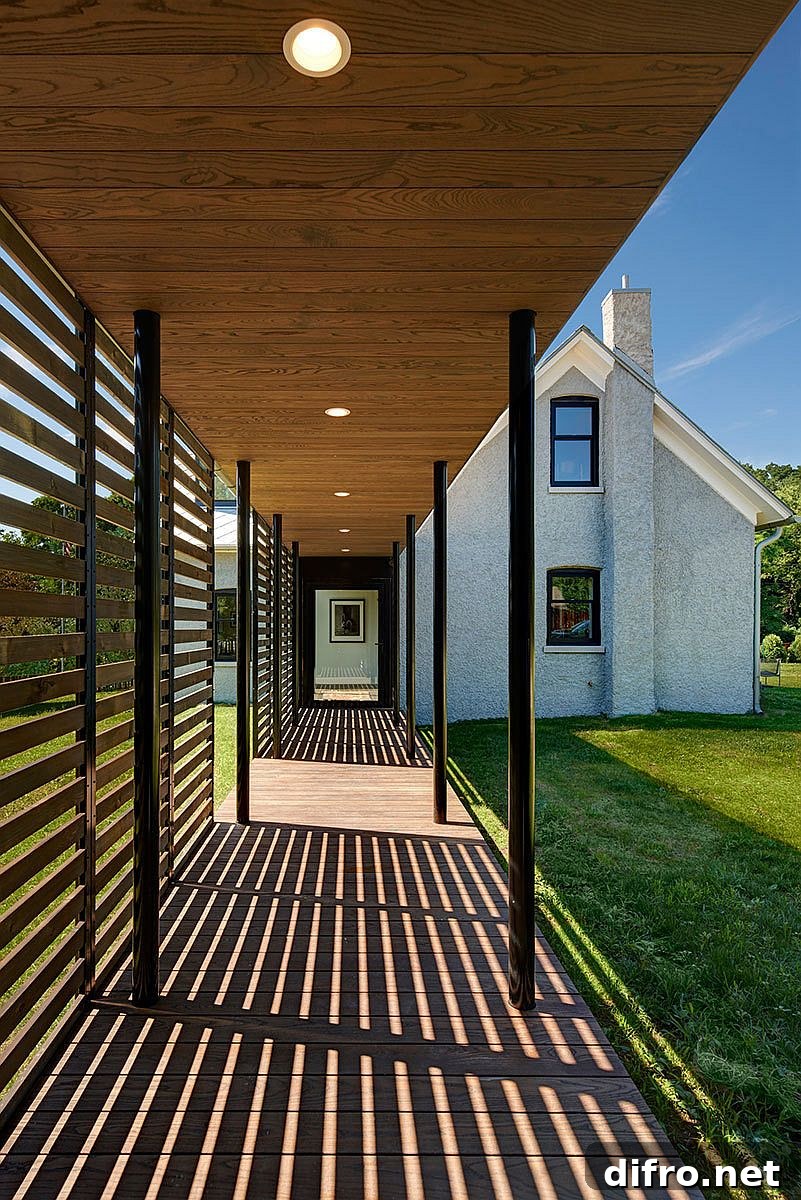
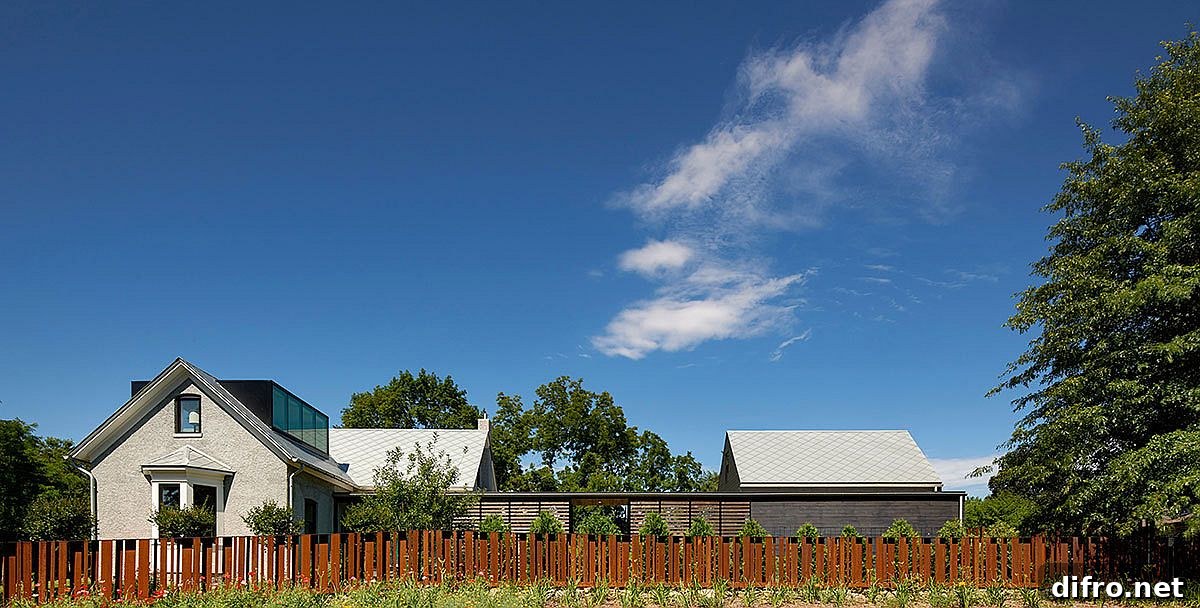
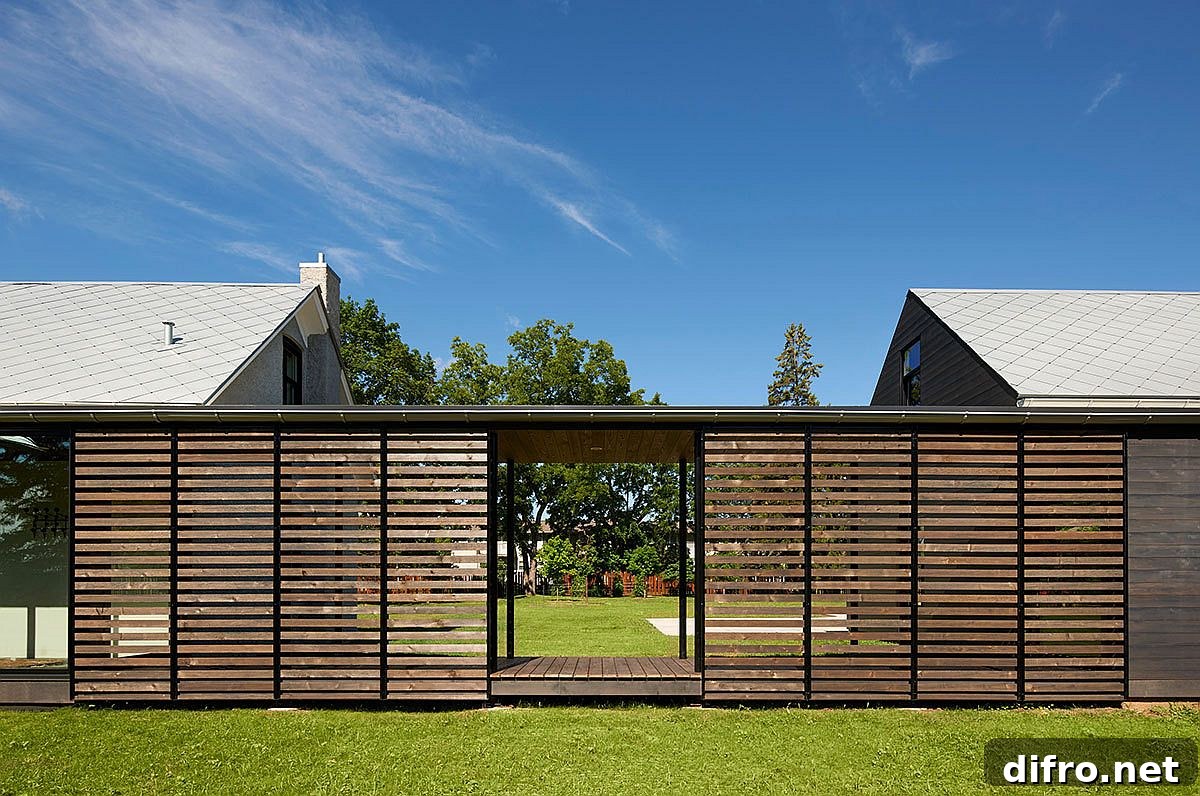
The landscape design and circulation around the house reinforce indoor–outdoor connections. Sheltered walkways and a carefully planted garden create private exterior rooms that extend living and circulation beyond the house’s footprint. These outdoor spaces provide both visual relief and practical transition zones between the home’s separate units.
Energy efficiency is an integral part of the renovation. The house is powered in part by an 8.4 kW photovoltaic array, while upgraded insulation and passive heating strategies help reduce overall energy demand. LED lighting and EnergyStar-rated appliances further lower operational consumption, so the result is a revitalized residence that is both comfortable and responsible in its energy use.
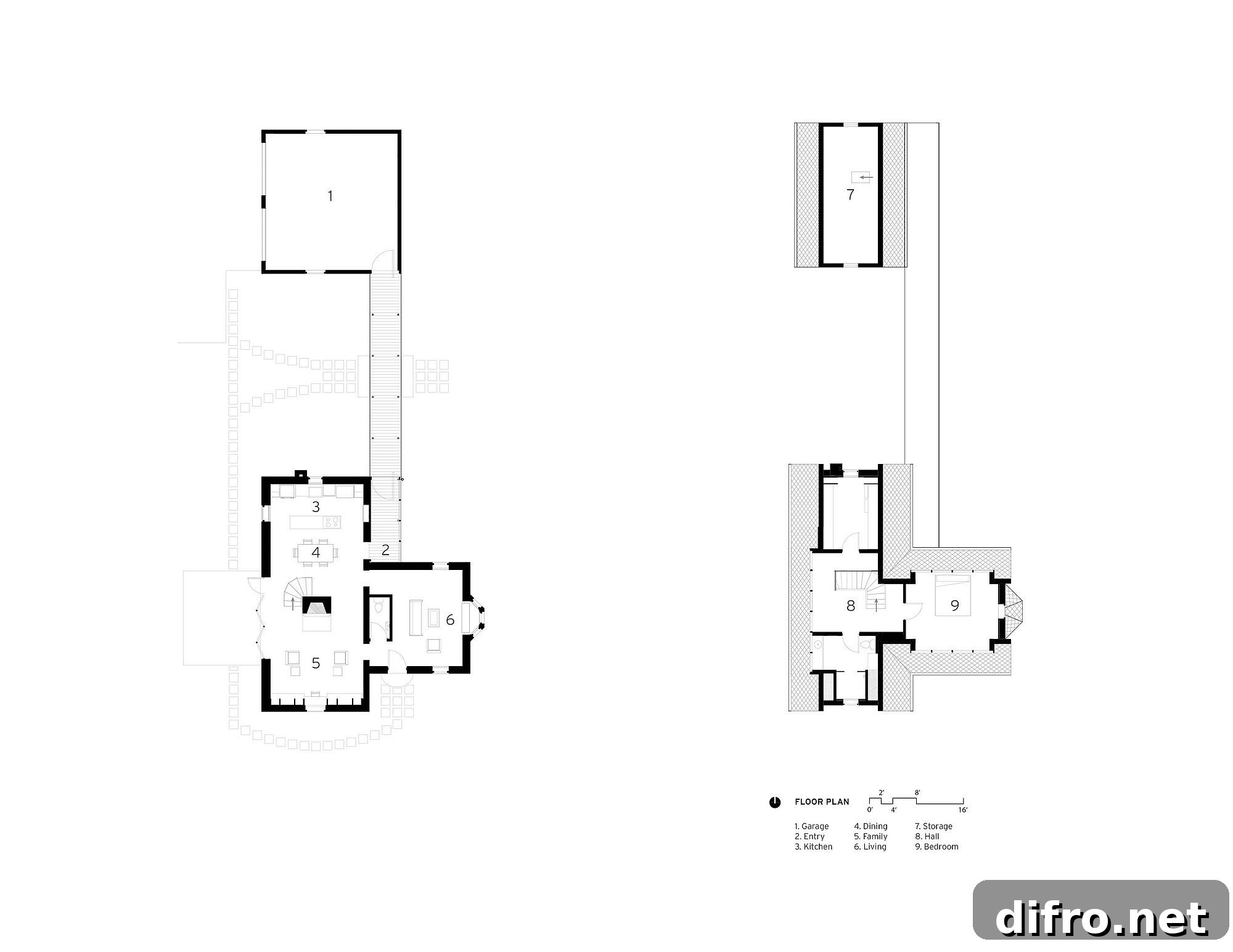
Floor plans included in the project documentation illustrate how the redesign reorganized the home for contemporary living. The new spiral stairway alters circulation patterns and makes the attic spaces more accessible, transforming what might have been underutilized volume into a functional and luminous master suite. A covered walkway links the property’s two functional units, improving privacy and movement while reinforcing the sense of a cohesive composition.
Photographs documenting the transformation capture the balance of light, texture, and form that define the project. The Foster Road Retreat demonstrates how careful design interventions—respectful of an older shell yet confident in their contemporary language—can create a home that reads as both new and familiar, efficient and elegant.
Photography credit: Integrated Studio.