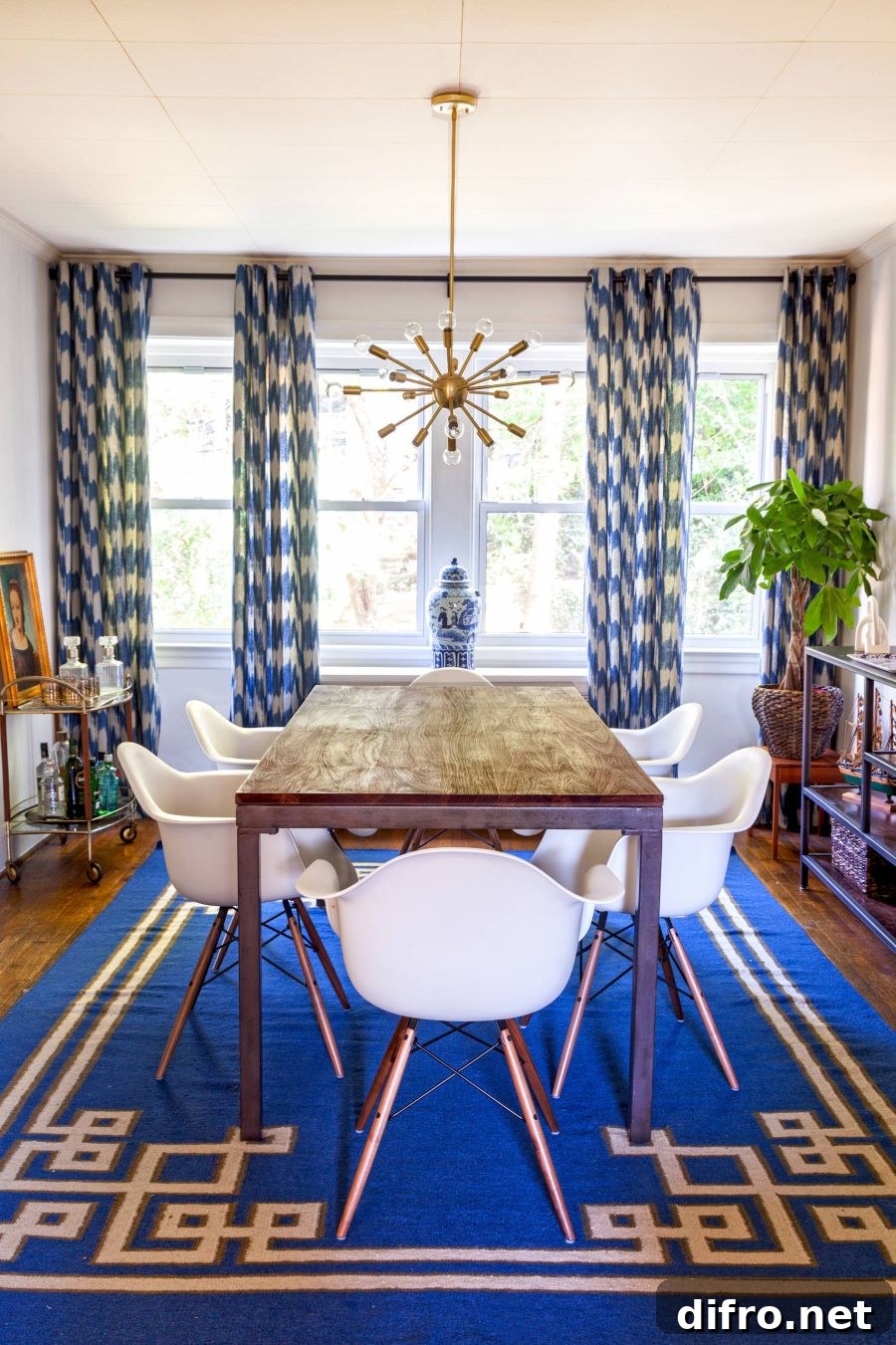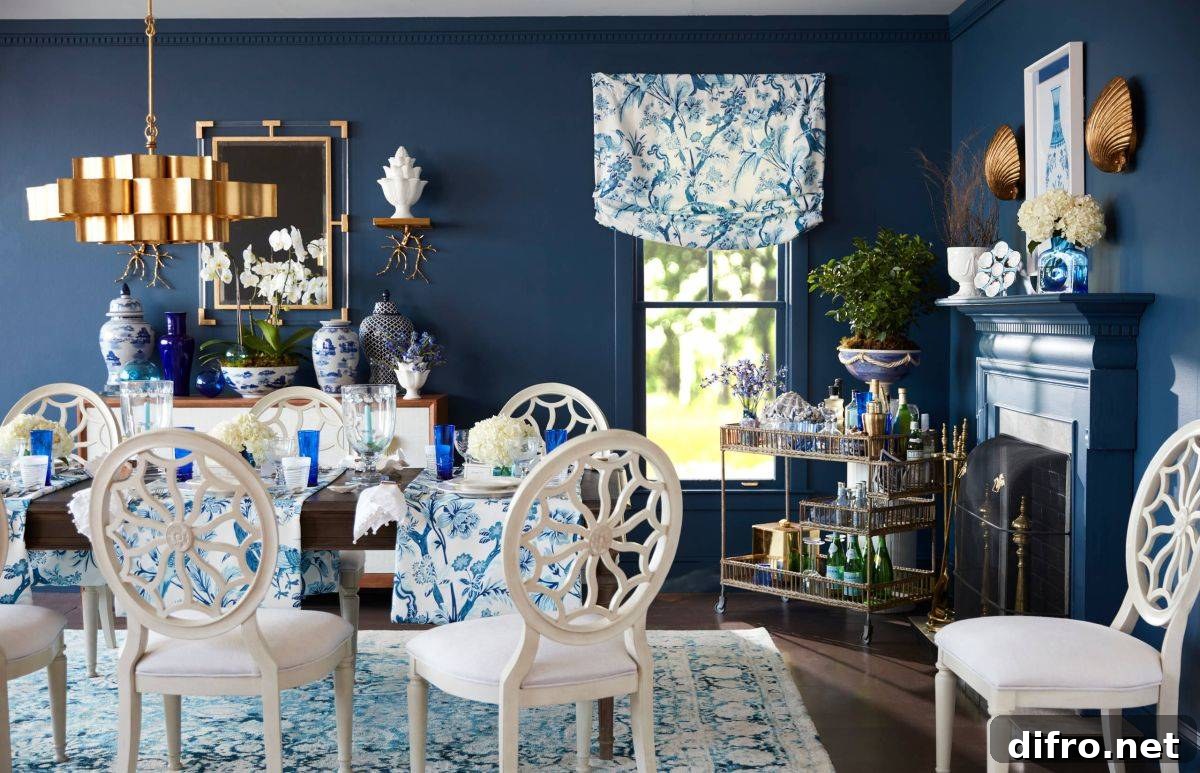
The dedicated dining room may be less common in many contemporary homes, but the dining area still holds an important place in open-plan living. It serves as the natural link between the kitchen and the living room, a transition zone that helps tie the two spaces together. Different homeowners imagine different things as the “perfect” dining space: from bold styles and dramatic hues to calm, understated palettes. Among the many options, the blue and white dining room stands out for its timeless appeal and striking versatility.
Blue and white dining rooms bring a classic color pairing into your home that is easy to carry through to adjacent areas like the kitchen and living room. Timeless yet fresh, this combination offers a wide range of possibilities thanks to the many shades of blue available—navy and indigo for drama, sky and powder blues for calm, or teal and cerulean for a more contemporary punch. Paired with white, blue never dominates in a way that feels heavy; instead it reads as balanced, bright, and inviting.
A Timeless Color Duo
White and blue work well in virtually any dining setting. The contrast creates a natural brightness and a sense of openness that flatters both large and small rooms. Deciding whether blue or white should dominate depends on the style you want—lighter blues and more white for a breezy, coastal feel; deeper blues for a sophisticated, moody look. Far from feeling cold, a blue-and-white palette becomes warm and welcoming when combined with soft lighting, natural textures, and complementary accents.
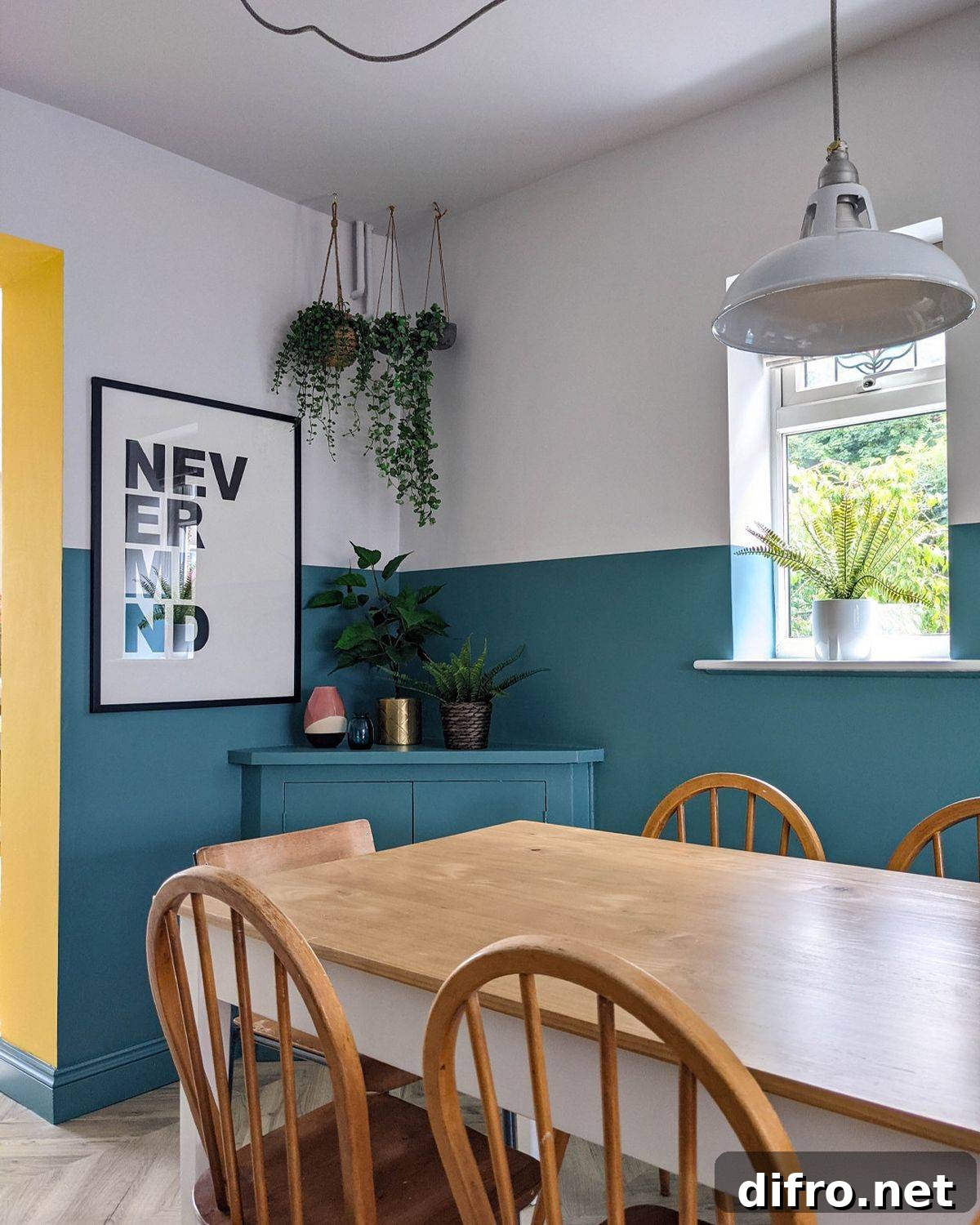
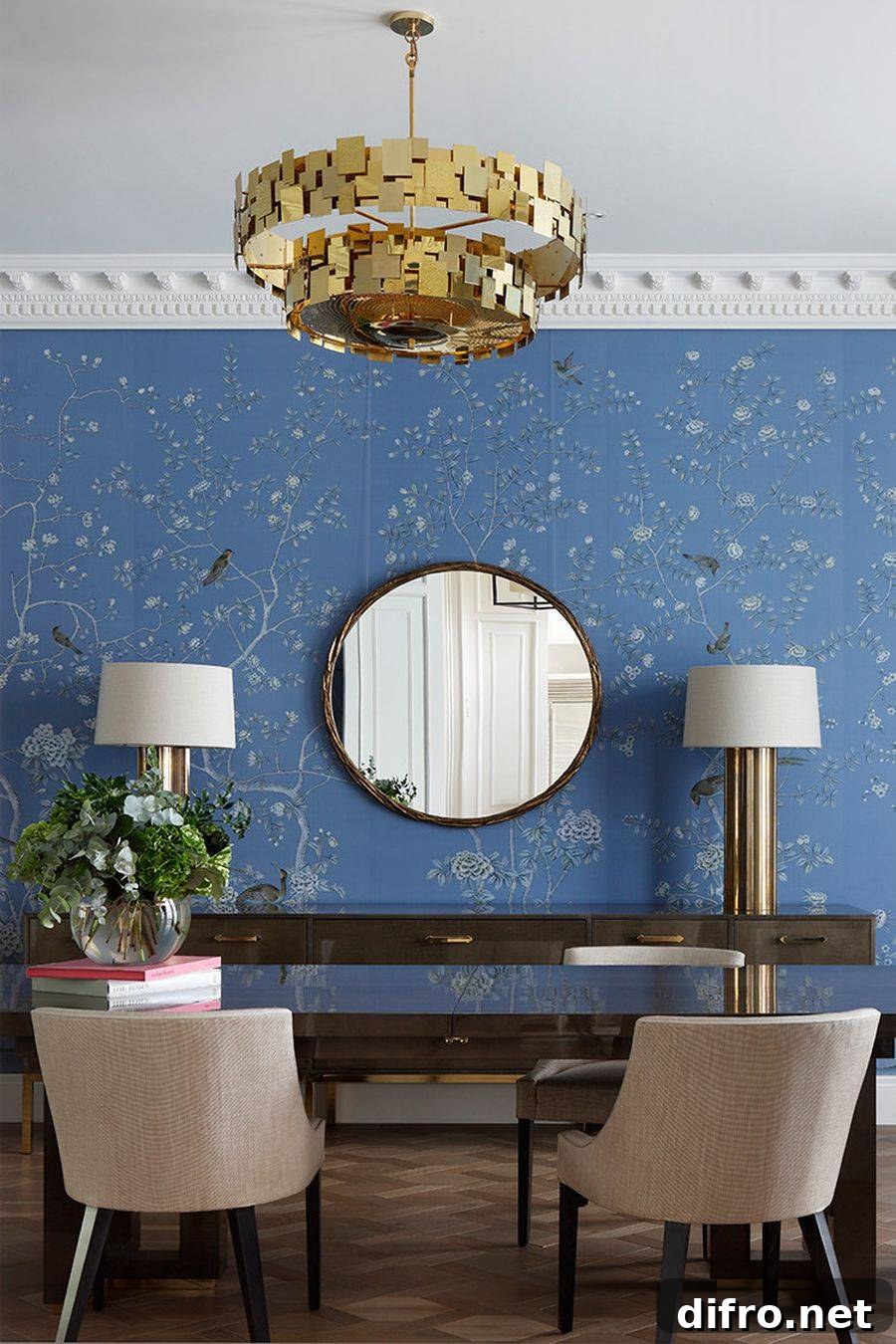
Making a Trendy Statement
If you want to introduce blue into a white dining room, start with curated accents: cushions, placemats, artwork, or a runner create immediate visual interest without a permanent commitment. Accent pieces are the simplest way to test the waters and can be swapped seasonally or as trends change. To make a bolder move, consider a blue feature wall. An accent wall anchors the space and lets you layer in complementary textures—wicker, wood, or brass—so the room feels cohesive and thoughtfully styled.
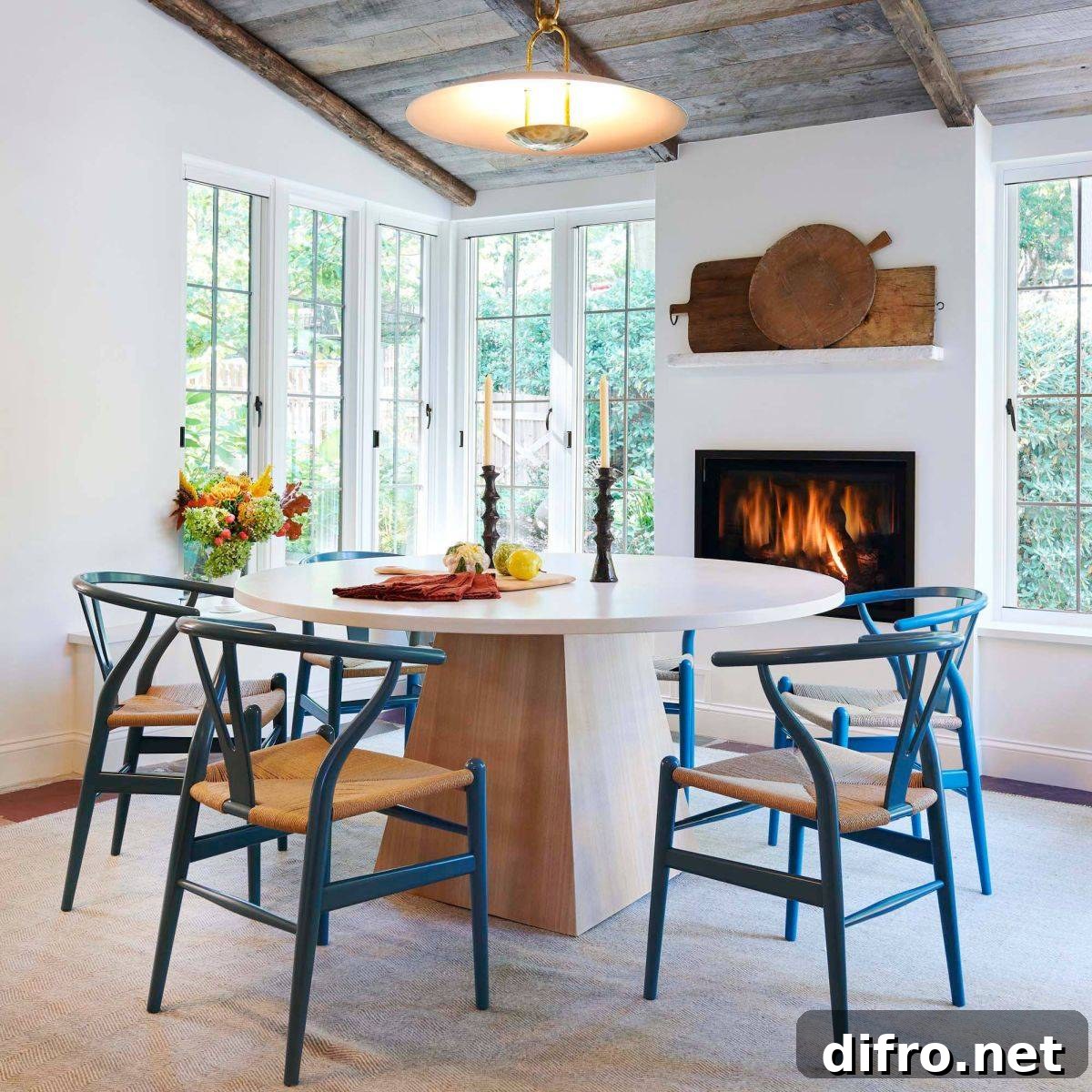
Beyond paint, furniture offers another effective route. Swapping a few chairs for blue-upholstered seats or choosing a blue dining bench can shift the room’s mood without overwhelming it. Textiles—rugs, curtains, and table linens—introduce additional layers of color and pattern that reinforce the theme while adding comfort and visual warmth.
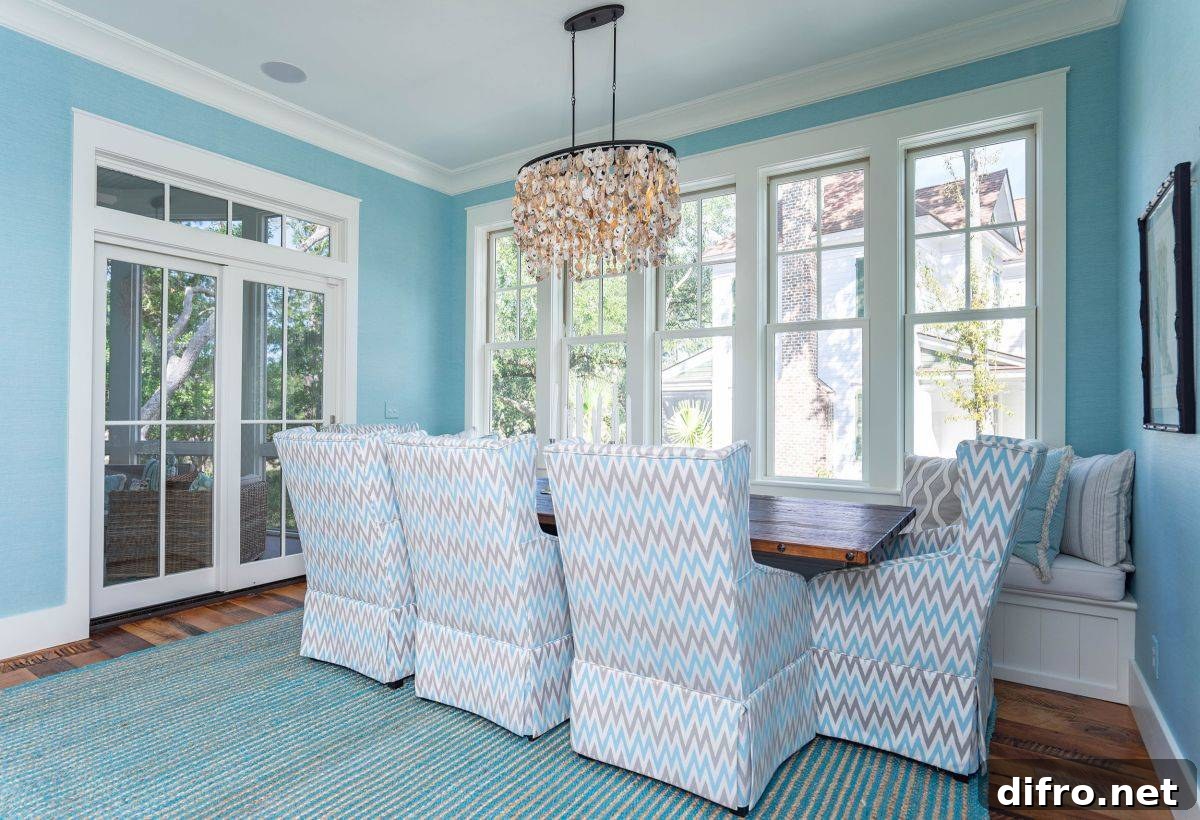
Fitting in with Every Style
One of the most compelling qualities of blue and white is how effortlessly it adapts to different design styles. In modern and contemporary rooms, combine crisp white walls with bold blue accents to maintain a clean, minimalist aesthetic. For farmhouse or rustic interiors, choose muted, matte blues and combine them with distressed woods and warm metals to create a cozy, lived-in feel. Eclectic spaces can handle saturated blues mixed with varied patterns and textures for a playful, curated look.
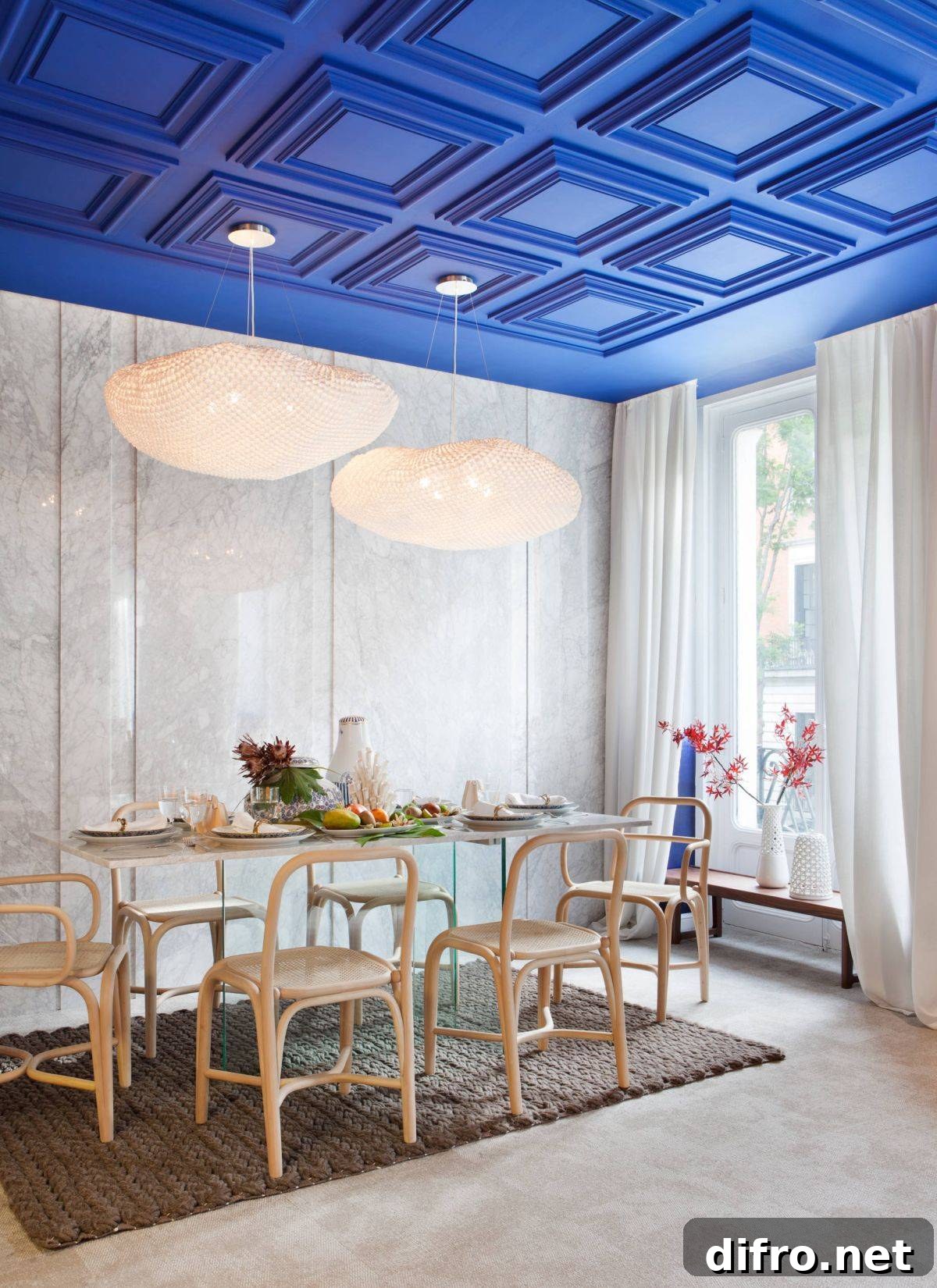
Even compact dining nooks benefit from a blue-and-white scheme: a white backdrop keeps the space feeling airy, while blue accents add depth and personality without crowding the eye. Incorporate mirrors, reflective surfaces, and layered lighting to enhance brightness and emphasize the palette’s clean lines.
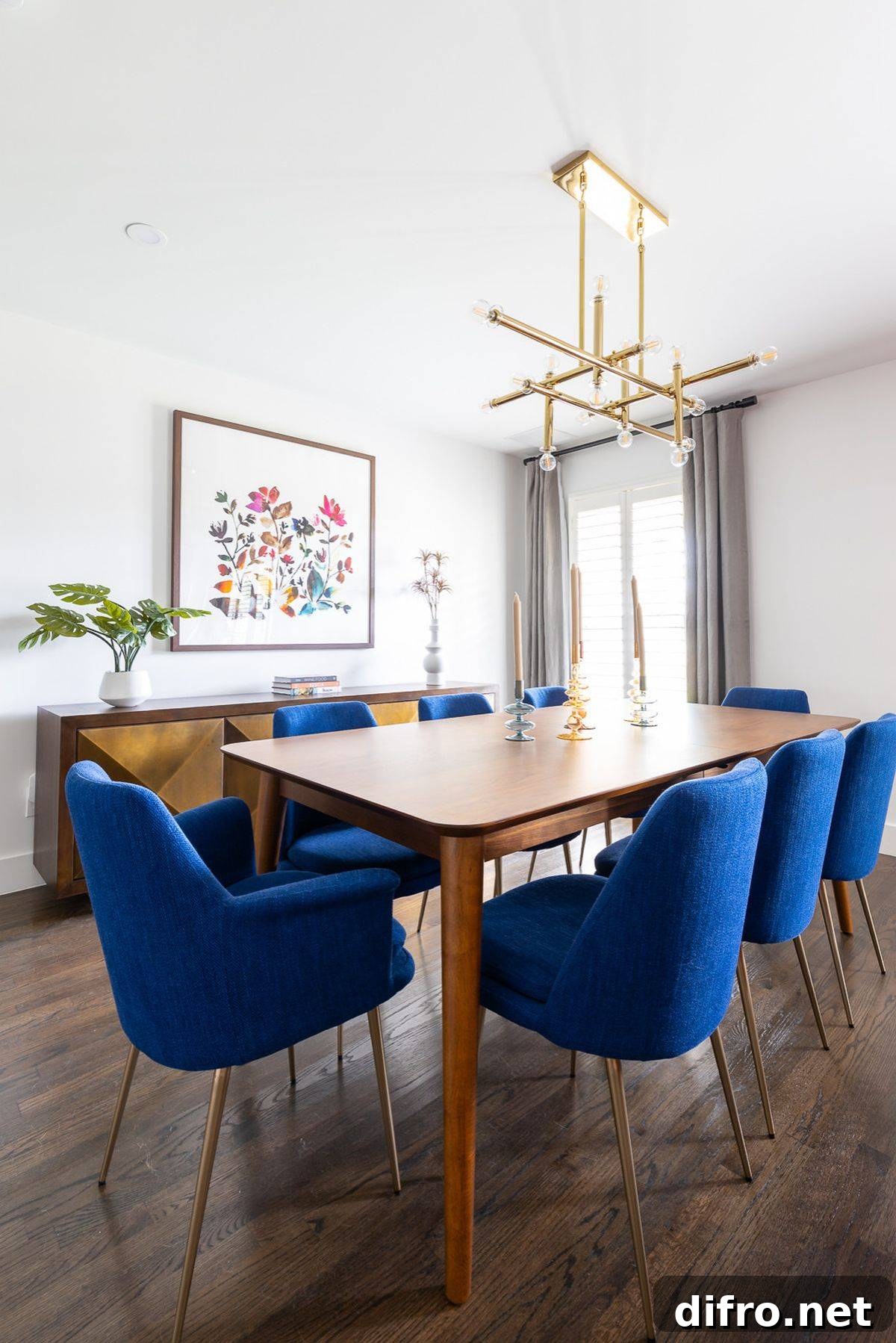
Accessories play a key role in pulling the look together—artwork in deep blue tones, patterned crockery, or a statement light fixture can refine the room’s character. Consider mixing materials such as wood, glass, and metal to offset the coolness of blue and introduce a tactile warmth that invites guests to linger.
Whether you prefer subtle accents or a full blue-and-white transformation, this pairing offers lasting appeal and flexible styling options. With thoughtful layering, texture, and lighting, a blue and white dining room becomes a balanced, welcoming space that suits a variety of tastes and complements adjacent living zones with ease.