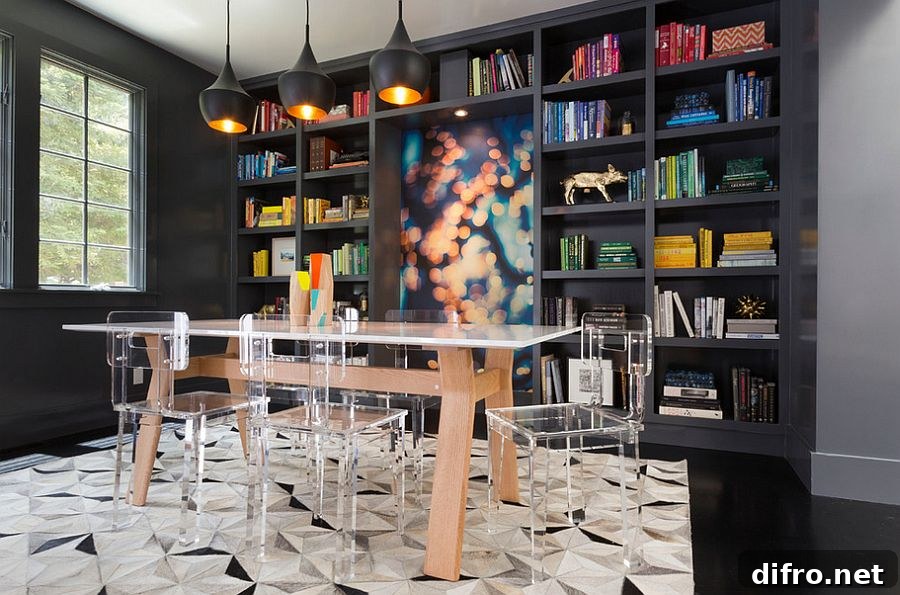
Many homeowners comfortably use white, beige or gray as a neutral backdrop for their dining rooms, while others choose brighter tones like red or yellow to energize the space. One color that’s often overlooked—or even avoided—is black. Some assume black will make a dining room feel cold or gloomy and clash with a cheerful, contemporary home. In reality, black can add depth, sophistication and a dramatic elegance when used thoughtfully. Below are practical ideas and inspiring examples to help you bring black into the dining room with confidence.
![Gorgeous dining room that is all about black [Design: Orange Coast Interior Design]](https://difro.net/wp-content/uploads/2026/06/img_122122_1.jpg "Black Dining Room Ideas for a Refined, Sophisticated Space 2")
Black is versatile: it can be moody and dramatic or refined and modern depending on how you balance it with light, texture and furnishings. It doesn’t automatically create a gloomy room—used correctly it can highlight architectural details, make colors pop and create a timeless black-and-white aesthetic. Here are six effective ways to incorporate black into the dining room, along with visual inspiration to get you started.
1. A Sophisticated Backdrop
An all-black wall treatment is a bold choice and not for everyone, but when you’re ready to commit it rewards you with a striking, sophisticated backdrop. If full paint feels too intense, consider black wallpaper to add texture and interest without a flat, uniform surface. Another approach is to paint only an accent wall or a portion of the room black, pairing it with a lighter, complementary shade to keep the space balanced and inviting.
![There is no shortage of color, class or creativity in this dark dining room! [Design: Ann Lowengart Interiors]](https://difro.net/wp-content/uploads/2026/06/img_122122_2.jpg "Black Dining Room Ideas for a Refined, Sophisticated Space 3")
![Modern dining room makes a bold, dramatic statement [Design: MB Jessee]](https://difro.net/wp-content/uploads/2026/06/img_122122_3.jpg "Black Dining Room Ideas for a Refined, Sophisticated Space 4")
![Lovely use of black and white in the dining room [Design: Kathleen Ramsey]](https://difro.net/wp-content/uploads/2026/06/img_122122_4.jpg "Black Dining Room Ideas for a Refined, Sophisticated Space 5")
2. Look to the Ceiling
The ceiling is the most neglected surface in many homes, yet painting it black can create a dramatic, cocooning effect that elevates the entire room. Black ceilings work especially well in large dining rooms with high ceilings, but they can also lend a cozy, urbane feel to more compact spaces. If you try this, ensure the room has good lighting—both natural and layered artificial lighting—so the space remains warm and inviting rather than heavy or closed-in.
![Ceiling adds to the beauty of the dashing dining room in black and white [Photography: Jonathan Calvert]](https://difro.net/wp-content/uploads/2026/06/img_122122_6.jpg "Black Dining Room Ideas for a Refined, Sophisticated Space 6")
![Eclectic dining room in black with hints of white! [Design: Gaile Guevara]](https://difro.net/wp-content/uploads/2026/06/img_122122_7.jpg "Black Dining Room Ideas for a Refined, Sophisticated Space 7")
3. Time for Dark Flooring
Dark or painted black floors have made a strong comeback. A dark floor anchors the room and creates dramatic contrast without overwhelming the space the way an all-black wall might. It’s a subtle way to introduce black: pair dark flooring with white or neutral walls and coordinate furnishings and accents in matching tones to achieve a coherent, sophisticated look that still feels bright and balanced.
![Dark flooring lets the decor additions stand out visually [Design: Lindy Donnelly]](https://difro.net/wp-content/uploads/2026/06/img_122122_8.jpg "Black Dining Room Ideas for a Refined, Sophisticated Space 8")
![Fascinating dining room design dips into the beauty of black [Design: Luigi Rosselli Architects]](https://difro.net/wp-content/uploads/2026/06/img_122122_9.jpg "Black Dining Room Ideas for a Refined, Sophisticated Space 9")
4. Stylish Seating to Anchor the Space
Dining chairs are a low-commitment way to introduce black into the room. Choose black chairs around a lighter table or select a glossy black table or sideboard as a bold anchor piece. Repeating black in smaller accessories—frames, lighting accents or tableware—helps tie the scheme together and makes the color feel intentional rather than accidental.
![Amazing array of iconic chairs in black for the dining room [From: Lisa Petrole Photography and Stephane Chamard Architecte]](https://difro.net/wp-content/uploads/2026/06/img_122122_10.jpg "Black Dining Room Ideas for a Refined, Sophisticated Space 10")
![Glossy table in black steals the show here! [Design: Britto Charette Interiors]](https://difro.net/wp-content/uploads/2026/06/img_122122_11.jpg "Black Dining Room Ideas for a Refined, Sophisticated Space 11")
5. The Magic of Rugs and Drapes
Rugs and drapes are among the easiest and most cost-effective ways to add black to a dining space. A black rug or a wall of dark curtains can define the dining area in an open-plan layout and create a dramatic contrast against white walls. This approach is reversible and flexible—you can experiment with patterned rugs, textured fabrics and layering to achieve either a bold black-and-white look or a more subtle, tonal scheme.
![Dining room with Scandinavian style in black and white [From: Jennifer Hagler]](https://difro.net/wp-content/uploads/2026/06/img_122122_13.jpg "Black Dining Room Ideas for a Refined, Sophisticated Space 12")
![Dark drapes can offer the perfect blend of form and functionality [Design: CL Intérieurs]](https://difro.net/wp-content/uploads/2026/06/img_122122_14.jpg "Black Dining Room Ideas for a Refined, Sophisticated Space 13")
6. Lighting Makes a Difference
Lighting is essential when working with black. Striking pendants, drum shades or sculptural fixtures in black enhance the room’s character while providing the necessary illumination to keep the space lively. A well-chosen light becomes a focal point that complements black walls, ceilings or furnishings and ensures the dining room feels polished, inviting and well balanced.
![Pendants extend the visual impact of the ceiling [Design: Steele Associates]](https://difro.net/wp-content/uploads/2026/06/img_122122_16.jpg "Black Dining Room Ideas for a Refined, Sophisticated Space 14")
![Large black drum pendants add drama to the chic dining room [Design: Nicole Hollis / Ben Mayorga Photography]](https://difro.net/wp-content/uploads/2026/06/img_122122_17.jpg "Black Dining Room Ideas for a Refined, Sophisticated Space 15")
![Chairs and lighting bring black to the dining room with innate simplicity [Design: Todd Davis Architecture]](https://difro.net/wp-content/uploads/2026/06/img_122122_18.jpg "Black Dining Room Ideas for a Refined, Sophisticated Space 16")
Used with intention, black can transform a dining room from ordinary to extraordinary. Whether you adopt it on a large scale—walls, ceilings or floors—or start small with seating, rugs or lighting, black offers a refined palette that pairs beautifully with neutrals, wood tones, metals and bold accent colors. Thoughtful layering and attention to light are the keys to creating a dining space that feels both dramatic and welcoming.