Choosing a room’s color scheme is one of the most challenging parts of interior design. Whether you’re deciding on the main hue or figuring out how to make that color work with furniture, textiles, and lighting, color choices shape a room’s mood and perceived size. Color theory provides a simple framework to make those decisions easier—no art degree required. Below are six essential color schemes that form the backbone of color theory. Once you understand them, selecting harmonious shades and pairing them confidently becomes far simpler.
Monochromatic
A monochromatic color scheme uses a single color and varies it through different shades, tints, and tones. This approach creates a cohesive, calming look and is especially effective in small spaces where visual clutter can make a room feel busy. To avoid a flat or clinical result, build contrast and texture into the design: combine matte and glossy finishes, mix wood, metal, and fabric, and use darker and lighter values of the same color to define areas and highlight architectural features. A monochromatic palette can feel sophisticated and serene when contrast and material variety are thoughtfully applied.
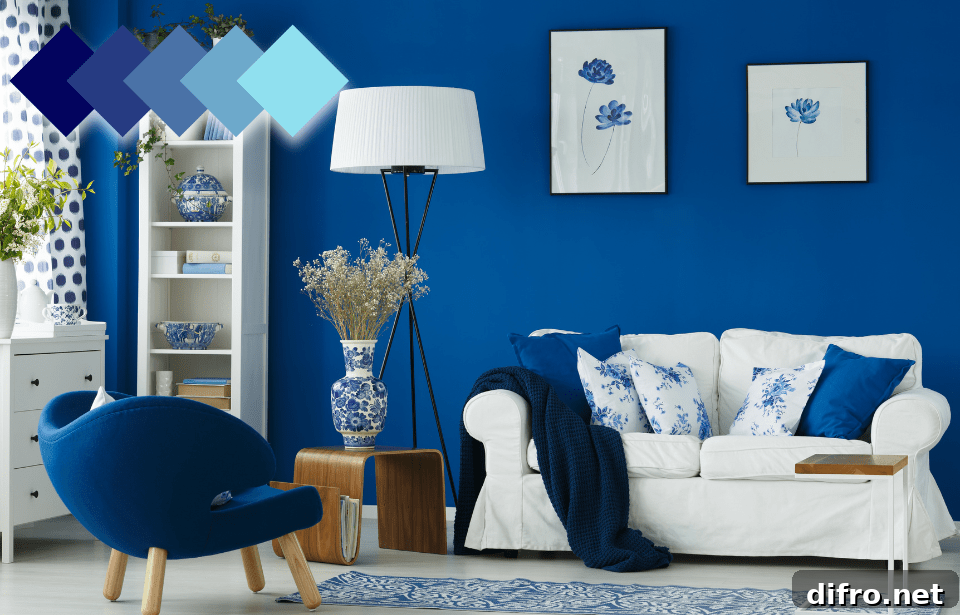
Analogous
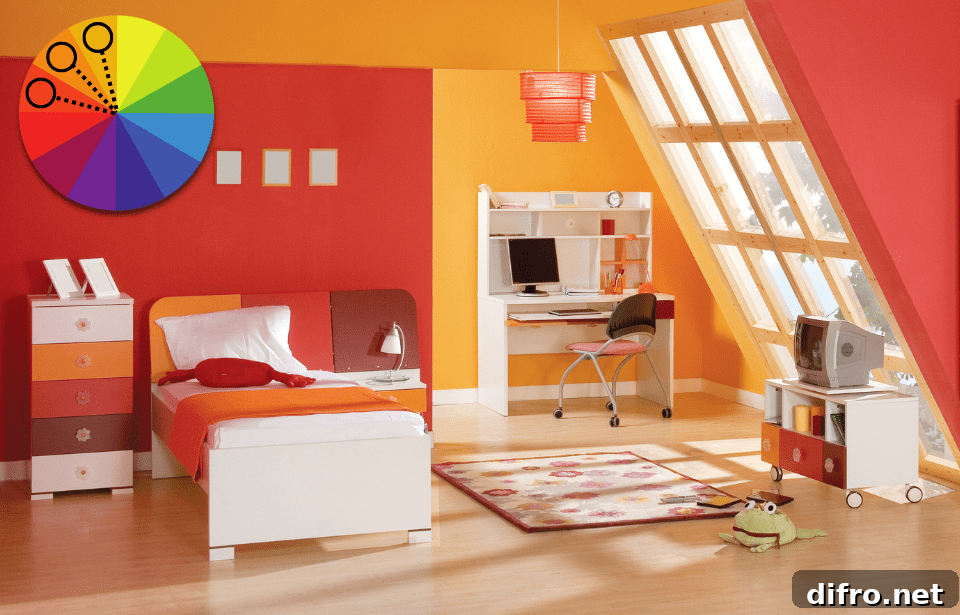
Analogous colors sit next to one another on the color wheel—think orange with red and yellow. Because these hues share similar undertones, they blend smoothly and create a harmonious, unified effect without feeling monotonous. This palette is ideal for anyone who enjoys color but prefers subtlety over stark contrasts. Choose one dominant color and use the adjacent hues as supporting accents. For example, if green is the main color, integrate teal and chartreuse accents through textiles, plants, and decorative objects to make the primary color stand out while maintaining a calm, natural flow.
Complementary
Complementary colors lie directly opposite each other on the color wheel—blue and orange, or red and green, for example. These combinations produce high contrast and vibrant energy, making them perfect for rooms that need a bold focal point. To avoid visual overload, let one color dominate while using the complementary hue as an accent. For instance, a navy sofa paired with burnt orange cushions reads as deliberate and lively; by contrast, using equal amounts of both can feel chaotic. If you want contrast without intensity, choose muted or desaturated versions of each color for a balanced, sophisticated look.
Split-Complementary
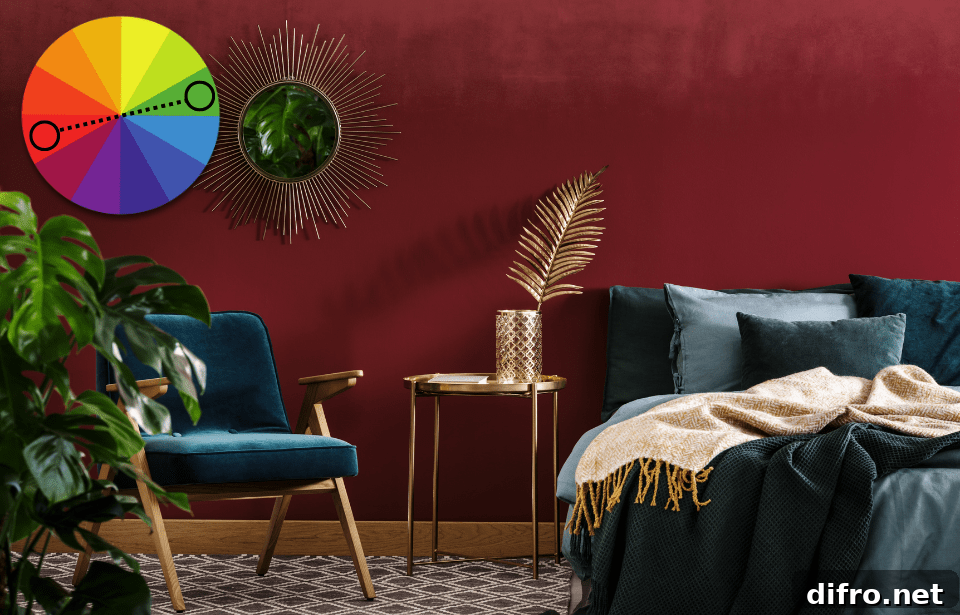
Split-complementary schemes soften the intensity of a direct complementary pair by pairing one hue with the two colors adjacent to its opposite. So instead of pairing blue with orange, you might pair blue with red-orange and yellow-orange. This creates visual interest and balance while reducing the jarring contrast of a straight complementary match. Split-complementary palettes are especially useful when you want to combine warm and cool tones without creating a showy or overwhelming effect. They offer variety and subtle drama while remaining easy to live with.
Triadic
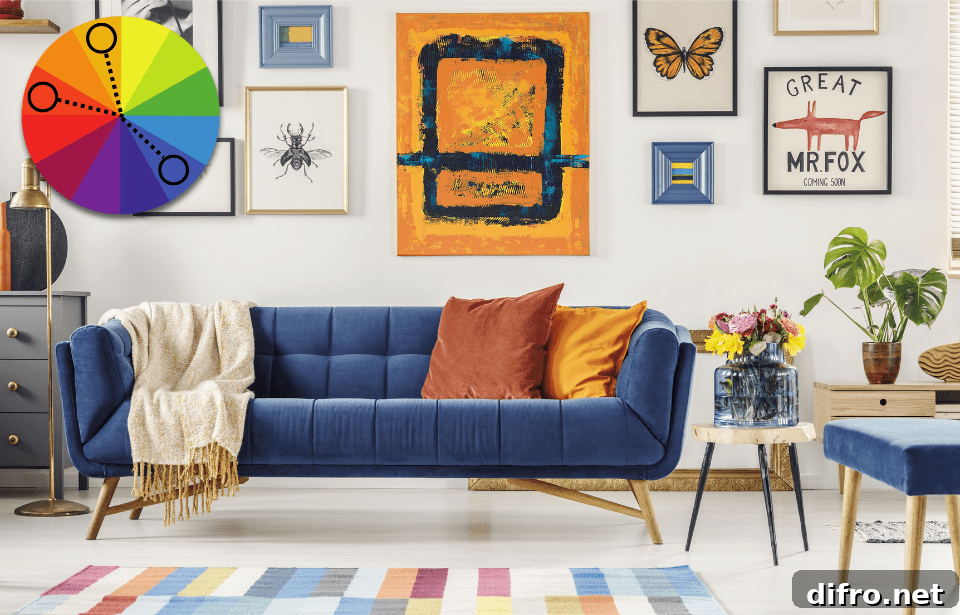
Triadic palettes use three colors evenly spaced around the color wheel—such as red, yellow, and blue—to produce lively, balanced combinations. This approach is bold and playful, and it’s especially effective in creative or energetic spaces like playrooms, studios, or feature walls. Triadic schemes demand careful distribution: choose one dominant color and use the other two for accents, while anchoring the overall design with neutrals or natural materials. Pairing triadic colors with wood tones, stone, or soft whites creates cohesion and prevents the palette from feeling chaotic.
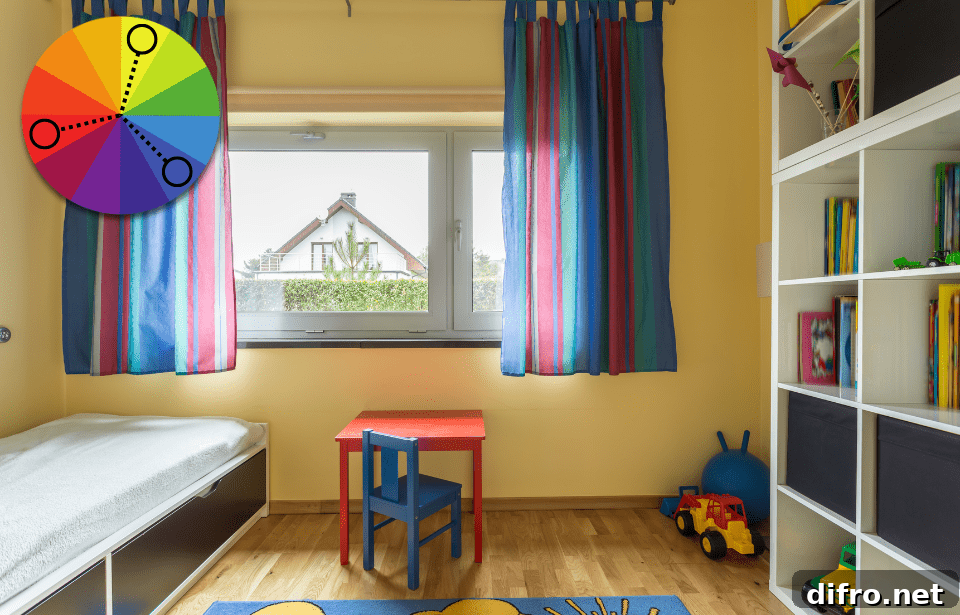
Color has a profound impact on how a room feels—its mood, scale, and the atmosphere it creates. These six basic color schemes—monochromatic, analogous, complementary, split-complementary, and triadic—offer reliable starting points for designing with confidence. When choosing a palette, consider the desired mood, natural light, and the materials already in the room. Use one color as the anchor, introduce contrast and texture, and balance bold hues with neutrals or natural finishes. With these principles in mind, you can mix and match palettes to suit any style, from understated and serene to vibrant and expressive.