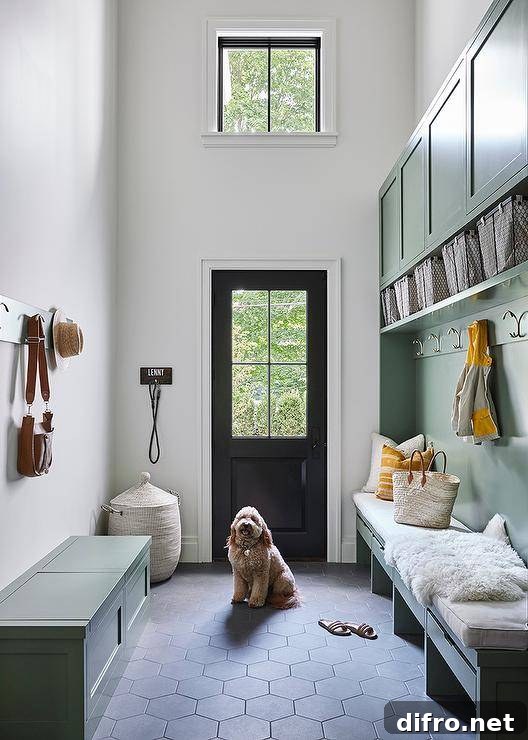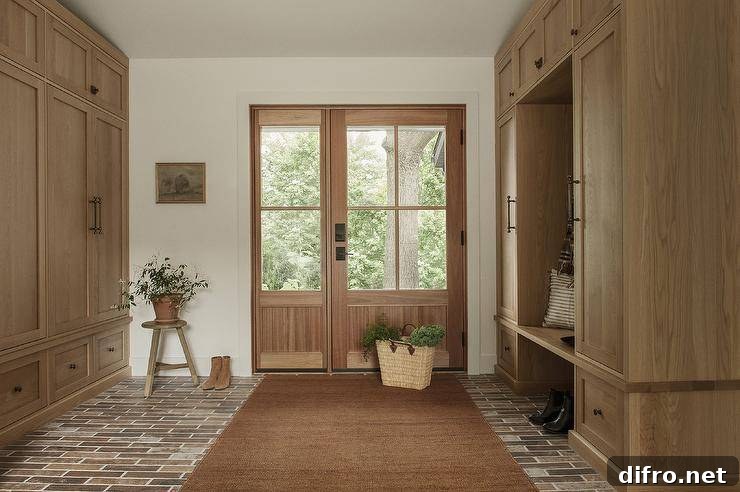
A mudroom—also called an entryway or transitional space—protects the rest of your home from the outdoor mess. It’s the ideal spot to drop muddy shoes, wet coats, backpacks and bags. But a mudroom can be far more than a practical catchall. With thoughtful planning it becomes an organized, welcoming part of the home that reflects your style. Below are fresh mudroom ideas and tips to inspire layouts, storage solutions, finishes, lighting and décor for every size and budget.
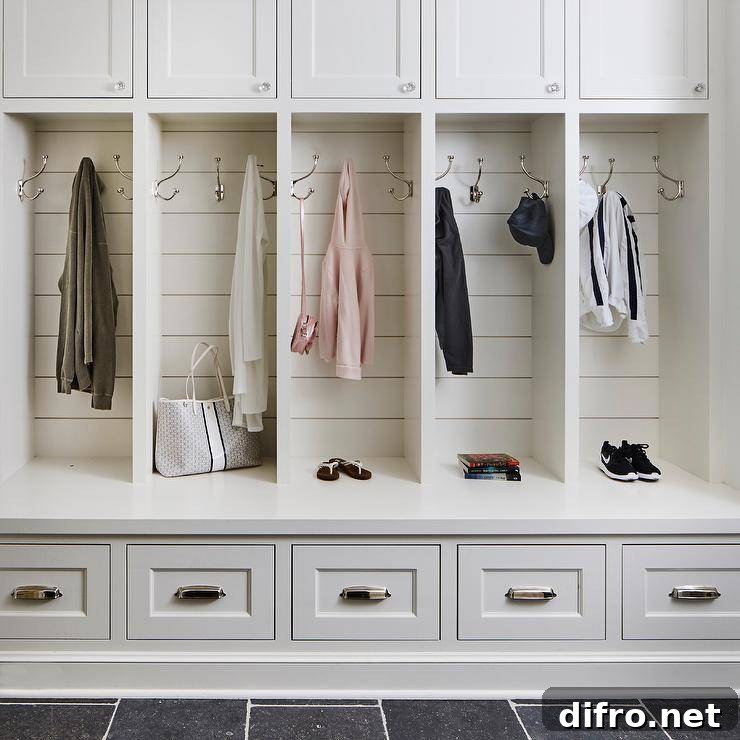
Whether you’re planning a brand-new mudroom or refreshing an existing entry, there are countless options: from minimalist benches and open cubbies to custom cabinetry, built-in seating, and bold accent walls. Choose solutions that match your household routines and the amount of traffic your entry sees. This guide covers smart storage, durable flooring, effective lighting, and décor strategies to make any mudroom both practical and attractive.
Storage Solutions
Good storage is the backbone of a useful mudroom. Maximize function by combining different systems so every item has a place. Popular solutions include built-in benches with drawers or cubbies below for shoes, stacked lockers for seasonal gear, and open hooks for daily use items.
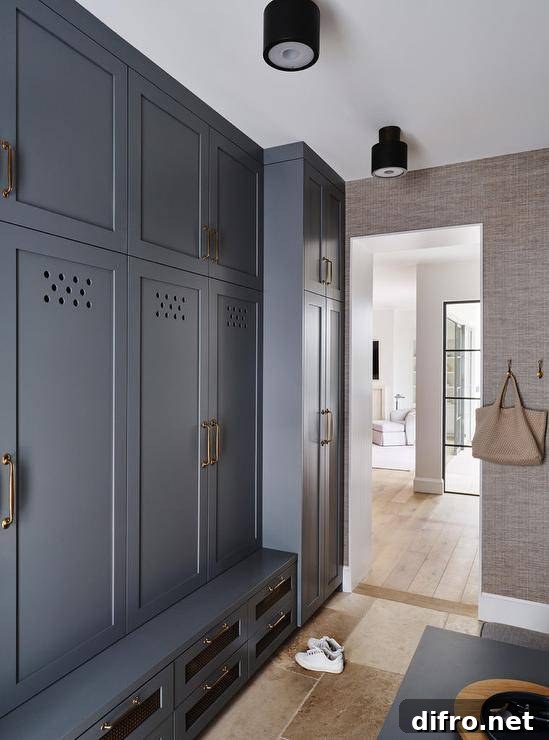
Consider a cubby system with labeled baskets for each family member, built-in shoe shelves, or deep drawers for boots. Hooks or a wall-mounted rack keep coats and daily bags accessible. For households with kids or pets, add low hooks, a wipeable bench surface, and dedicated bins for outdoor toys and leashes.
Flooring Ideas
Choose flooring that stands up to dirt, moisture and heavy foot traffic. Durable and easy-to-clean options include porcelain or ceramic tile, luxury vinyl plank, and sealed concrete. Tiles offer a wide range of colors and patterns—perfect for creating a visual focal point—while vinyl gives waterproof performance at a lower cost. Concrete fits industrial or modern schemes and is extremely low-maintenance.
Lighting Ideas
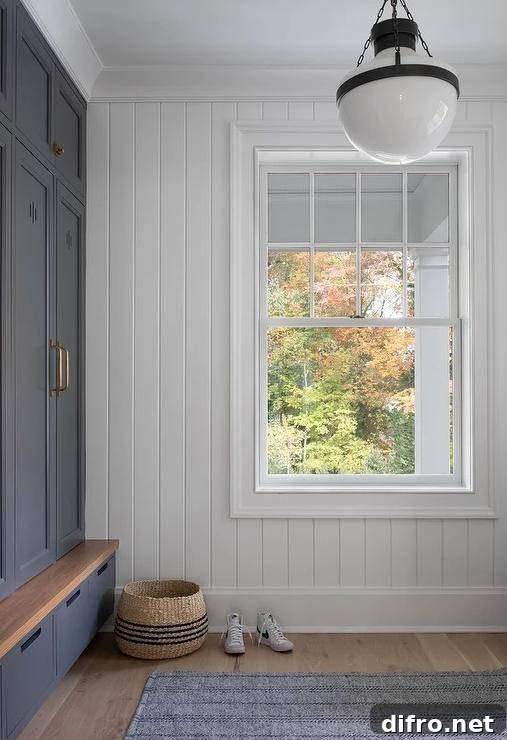
Good lighting improves safety and usability in the mudroom. Recessed ceiling lights deliver even general light, while pendants or a small chandelier add personality. Wall sconces beside doors or over benches provide welcoming, task-friendly illumination. For narrow or windowless mudrooms, prioritize layered lighting—ambient plus task—to ensure the space is bright when needed.
Decoration Ideas
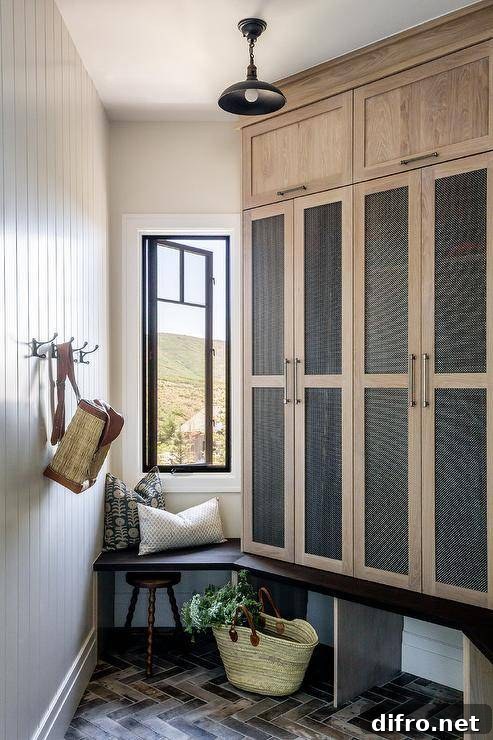
Decor should complement function. Start with a neutral, easy-to-clean backdrop and layer in accents—rugs, baskets, artwork, and mirrors—to bring warmth and character. A mirror makes a small mudroom feel bigger and lets you check appearance before you leave. Textured baskets and coordinated bins keep items tidy while adding visual interest.
Small Mudroom Ideas
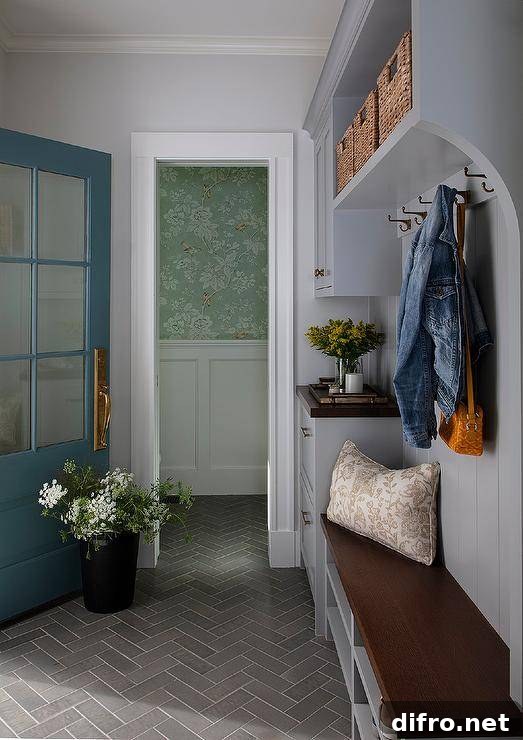
Even a narrow hallway can become a functional mudroom. Use vertical space with floor-to-ceiling storage, add slimline benches with hidden compartments, and mount hooks at different heights for children and adults. Over-the-door organizers or slim shoe racks keep clutter off the floor. Multipurpose furniture—benches that store shoes or fold-out seating—maximizes every square inch.
Large Mudroom Ideas
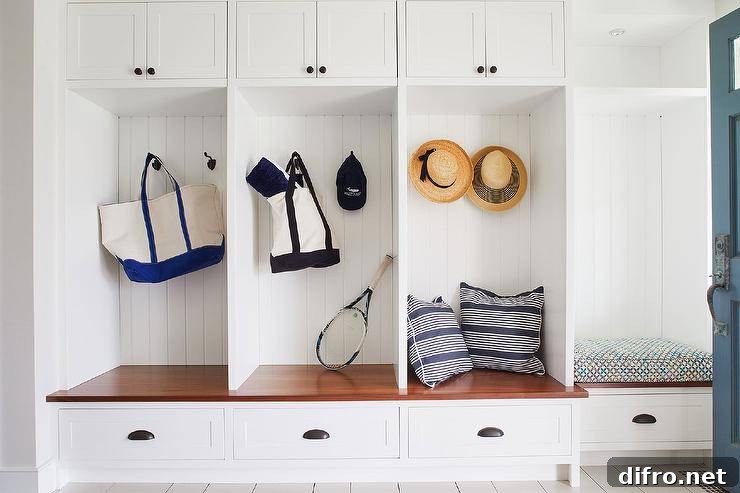
Larger mudrooms allow for distinct zones: storage, seating, and mud cleanup. Consider a seating nook with a cozy chair or bench, a central island for folding laundry or organizing bags, and built-in cabinets for seasonal storage. Statement lighting, an area rug and art can make a large mudroom feel intentional and homey rather than utilitarian.
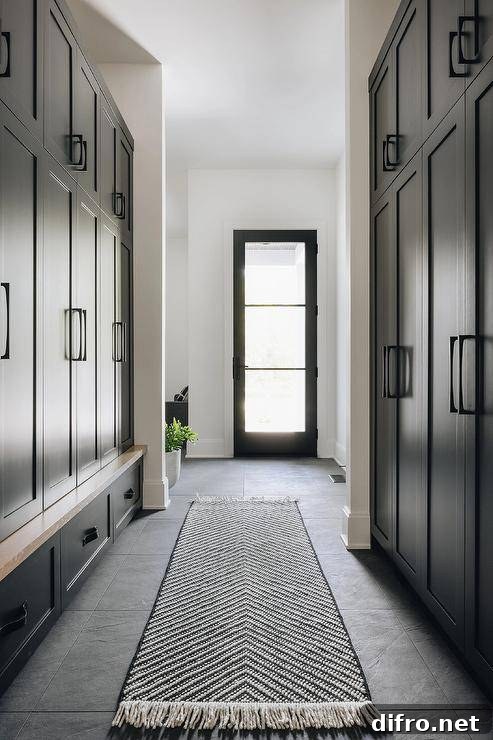
Adding Color
Color helps define a mudroom’s mood. Match the palette to your home’s overall scheme, or make the entry a cheerful exception with an accent wall, colorful cabinets or a vibrant rug. For family-friendly spaces, durable paint and washable textiles let you use bolder hues without extra maintenance. Wallpaper, stenciling or painted stripes can add pattern and energy without sacrificing practicality.
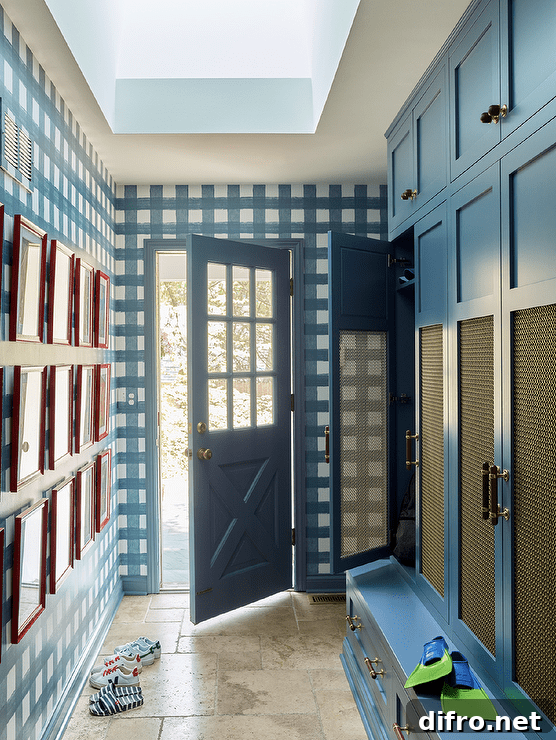
Frequently Asked Questions (FAQs)
What is a mudroom?
A mudroom is an entry or transitional space near an exterior door used to store shoes, coats, bags and outdoor gear while keeping dirt and moisture out of living areas.
Why are mudrooms important?
Mudrooms protect the rest of the house from mud and debris, provide organized storage, and create a dedicated spot for daily routines like putting on shoes or grabbing a coat.
What are some mudroom storage ideas?
Install built-in cubbies, shelves, cabinets, shoe drawers and hooks. Use labeled bins and baskets, add a bench with hidden storage, and create zones for each family member to keep clutter under control.
How can I make my mudroom more functional?
Customize storage to your household needs: include hooks at child height, a drop zone for backpacks, a bench for changing shoes, a pet station, or even a small sink for washing up after outdoor activities.
What flooring options are best for a mudroom?
Durable, water-resistant floors like ceramic or porcelain tile, luxury vinyl plank, and sealed concrete are ideal for mudrooms because they’re easy to clean and withstand heavy use.
Can a mudroom be stylish?
Absolutely. Thoughtful finishes, statement lighting, coordinated storage solutions and decorative accents make mudrooms both attractive and functional.
Do I need a large space for a mudroom?
No. Even a small alcove or hallway can function efficiently with vertical storage, multipurpose furniture and thoughtful organization.
Designing a great mudroom means balancing durability and organization with style. Whether your entry is compact or expansive, incorporate durable surfaces, layered lighting, custom storage and color or texture to create a mudroom that serves daily life while enhancing your home’s aesthetic.