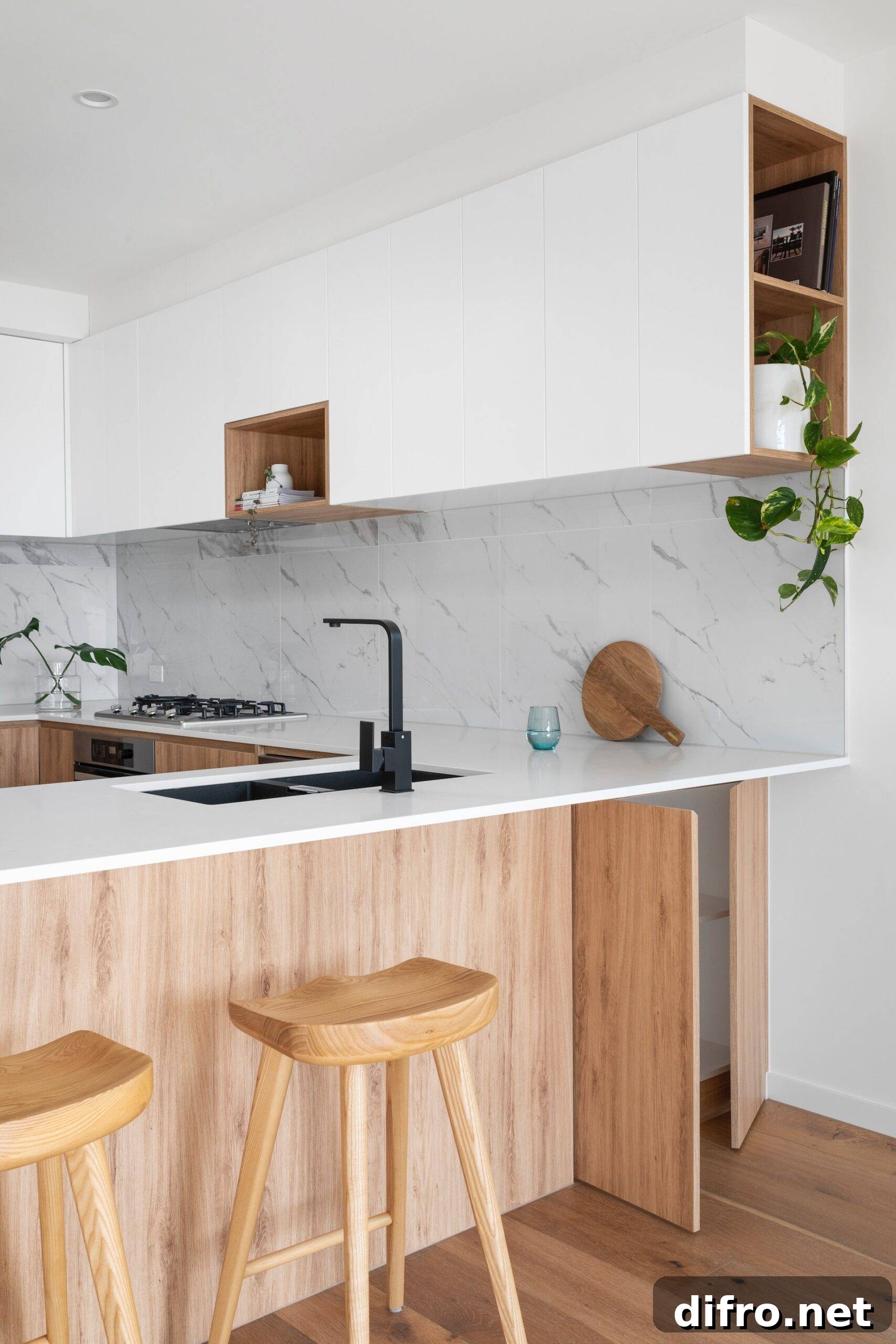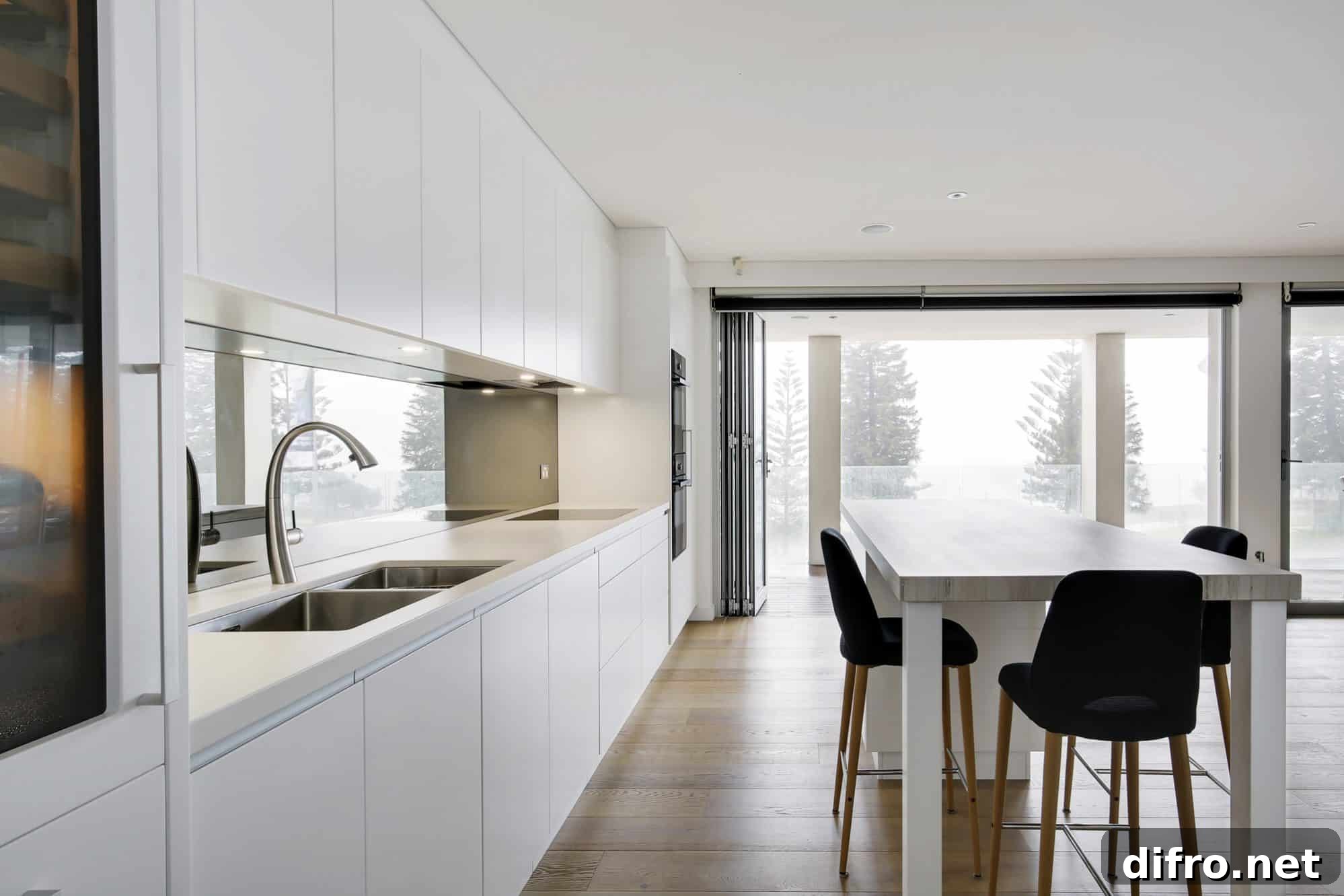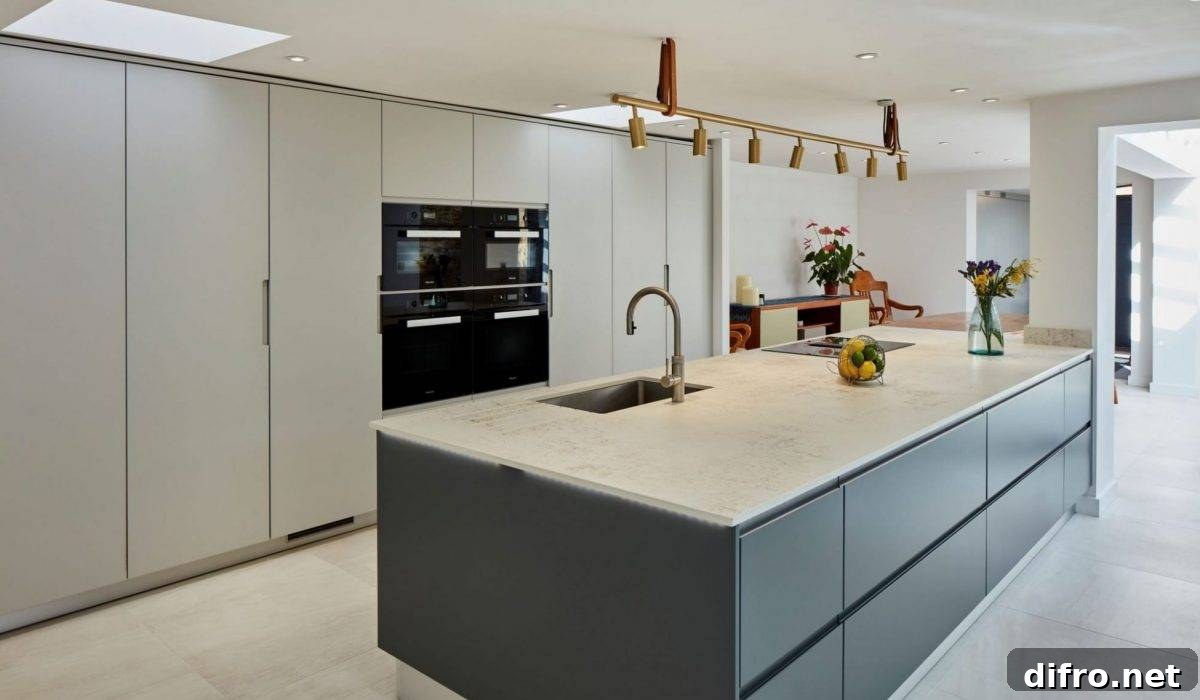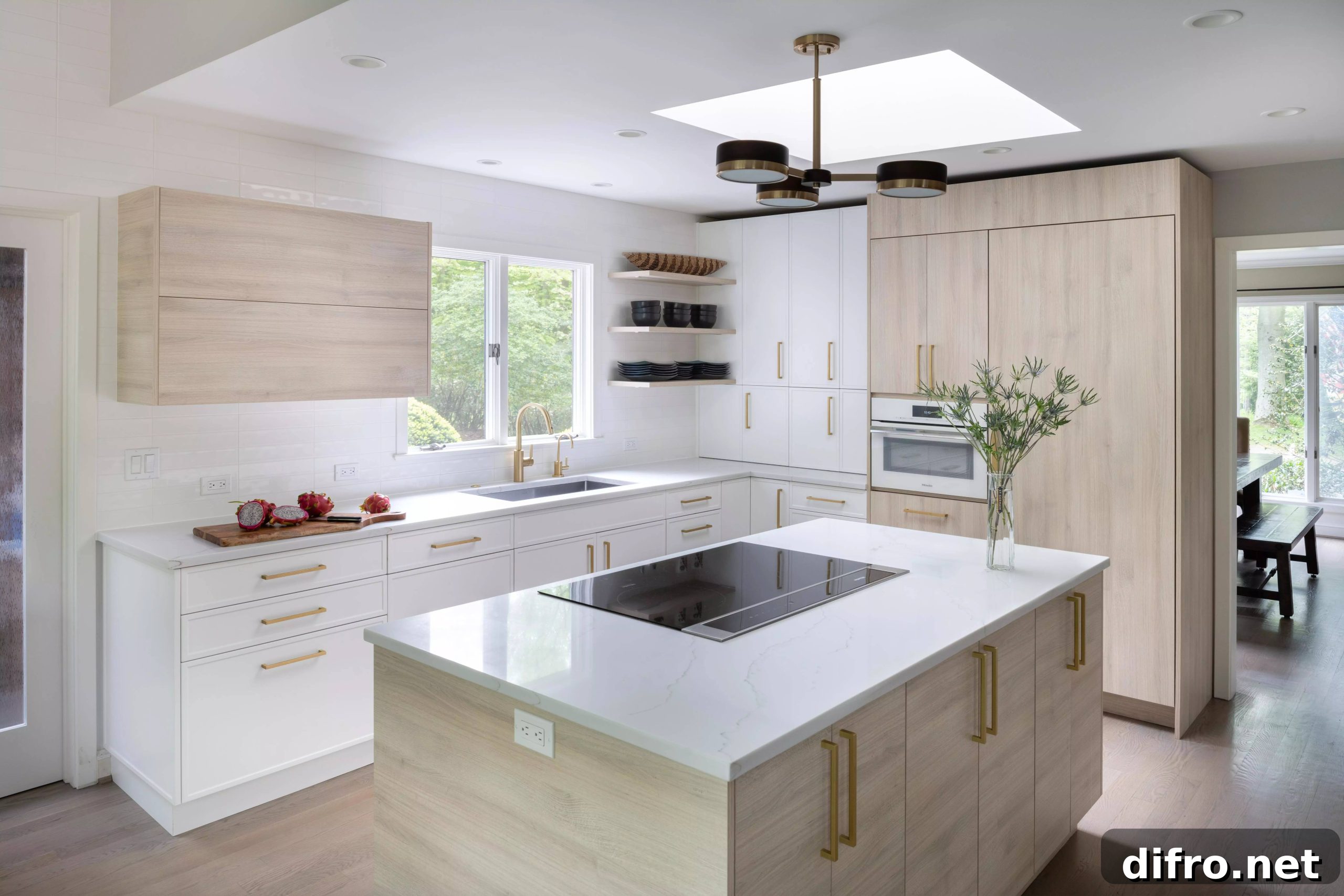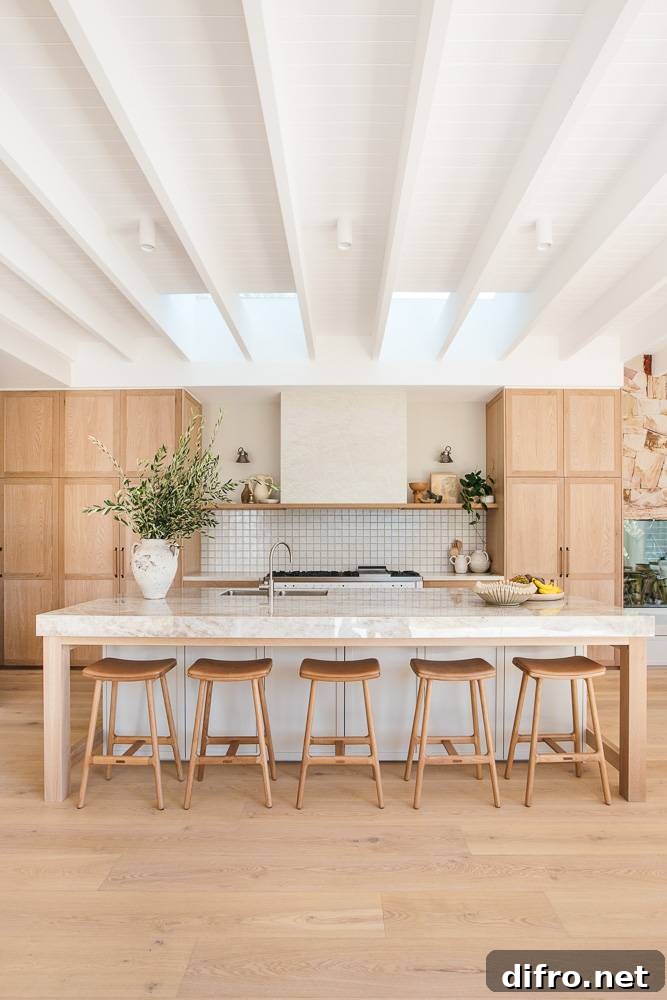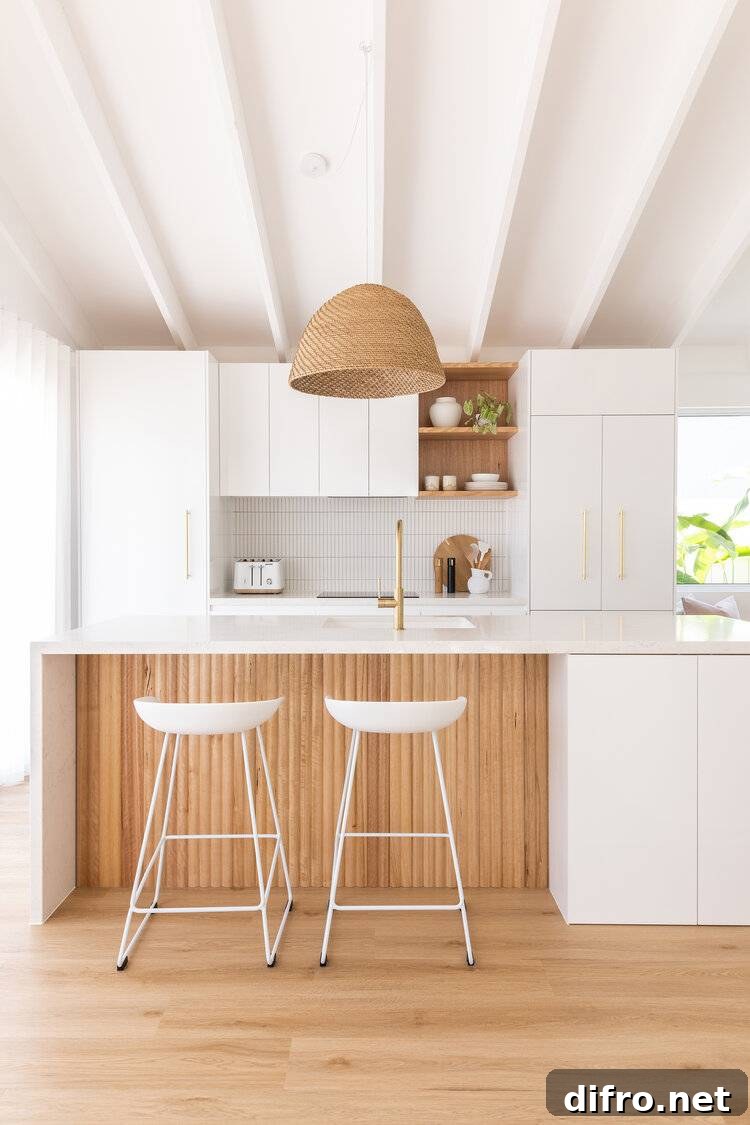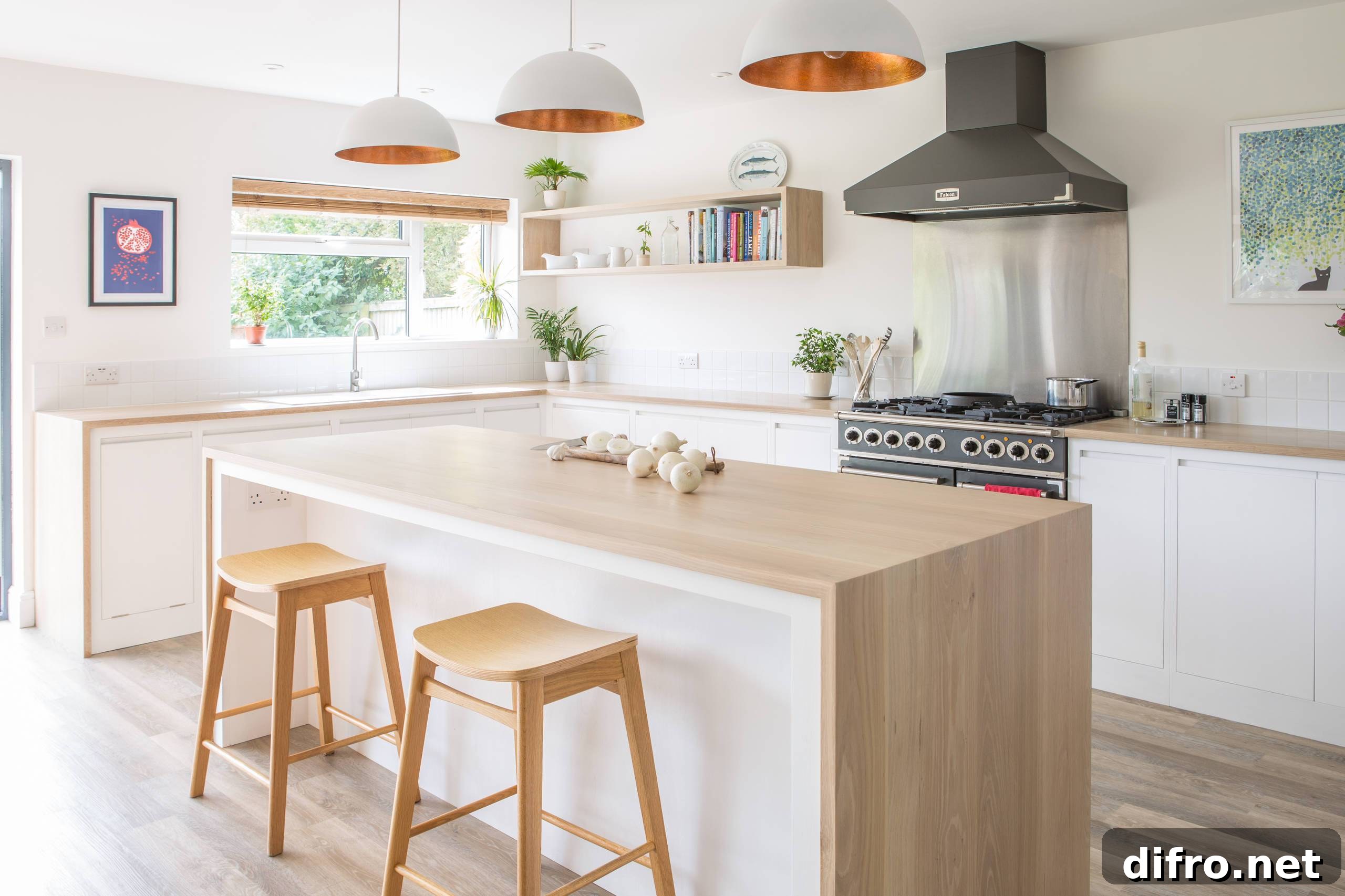
A minimalist kitchen brings functionality and a clean, streamlined appearance to your home. More than a decorating trend, minimalism has become a lifestyle choice for people who prefer calm, uncluttered spaces that reduce distraction and simplify daily routines. A kitchen organized around essentials not only looks serene but also makes cooking faster and more enjoyable.
If you’re ready to embrace a minimalist kitchen, this guide will walk you through practical steps—decluttering, smart storage, appliance management, simple hardware updates, and pantry organization—so you can create a space that reflects your needs and stays easy to maintain.
Declutter
Decluttering is the essential first step toward a minimalist kitchen. Start by removing items that don’t belong in the kitchen or that don’t contribute to food preparation. Clear countertops of nonessential items and collect everything that needs a new home.
Go through your dishware and keep only what you use daily, plus a few pieces for guests. This is a good time to pare down excessive mug or glass collections. In the utensil drawers, eliminate duplicates—one or two spatulas, a handful of essential tools, and a reliable set of knives are typically sufficient.
Evaluate your pots and pans honestly: most households function well with a single saucepan, one or two skillets of different sizes, and a couple of baking sheets. Donate or recycle extra pieces you rarely use. After decluttering, organize drawers with dividers or compartments so frequently used items are easy to find and stay tidy.
Empty plastic containers often accumulate in cupboards; keep only the ones you use for lunches and storage, and discard containers with missing lids. Reducing unnecessary items frees up storage and creates a calmer visual environment.
Conceal appliances
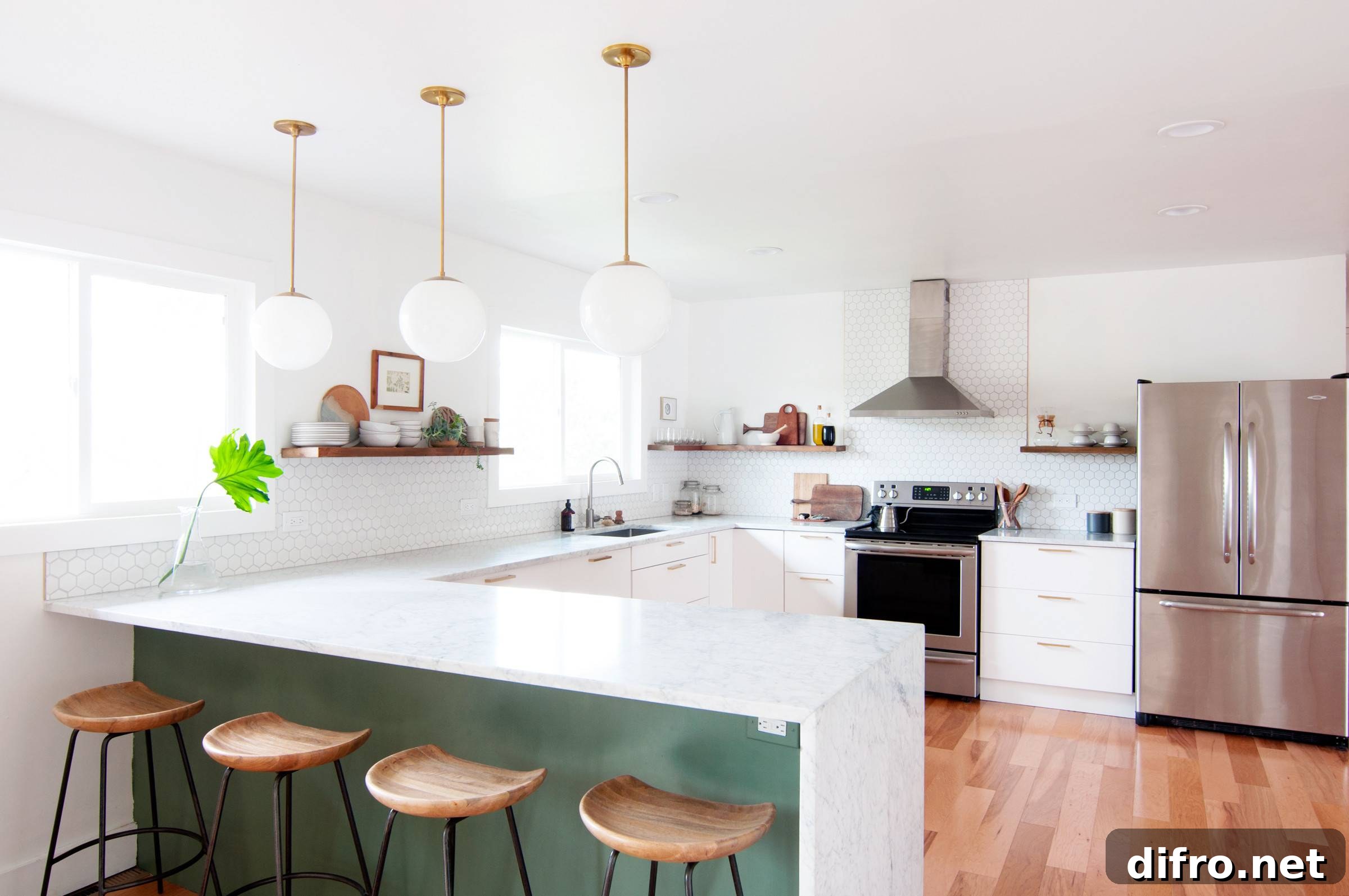
Countertops should feel open and uncluttered. Keep only the appliances you use daily on the counter—your coffee maker, for example, can be a permanent fixture if it’s in constant use. Small appliances used infrequently, such as blenders, food processors, or stand mixers, are better stored in cabinets or pantry shelves.
Concealed appliance storage reduces visual clutter and makes cleaning easier. Consider pull-out shelves, appliance garages, or upper cabinets with lift systems to tuck devices away while keeping them accessible when needed.
Update the hardware
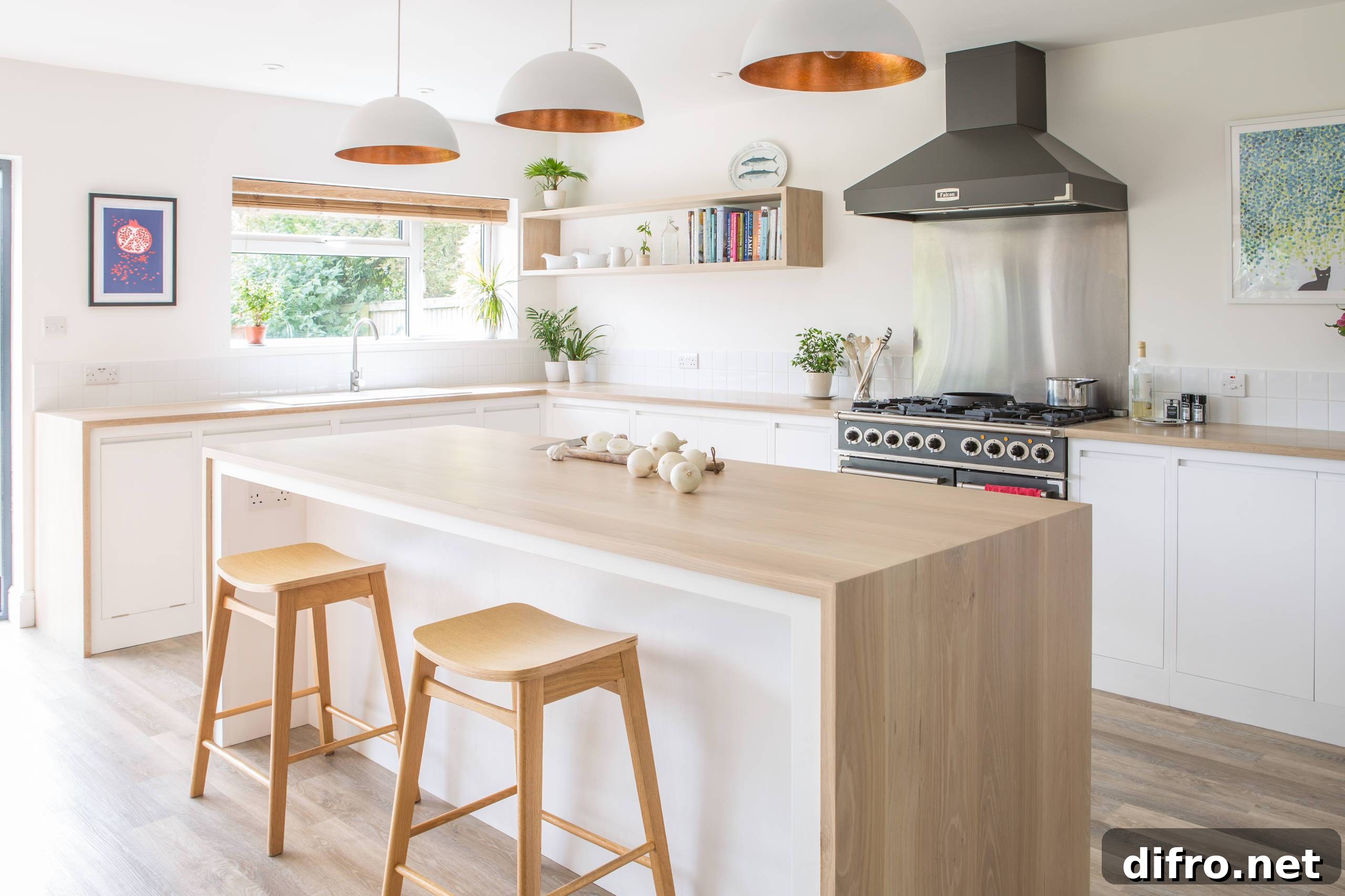
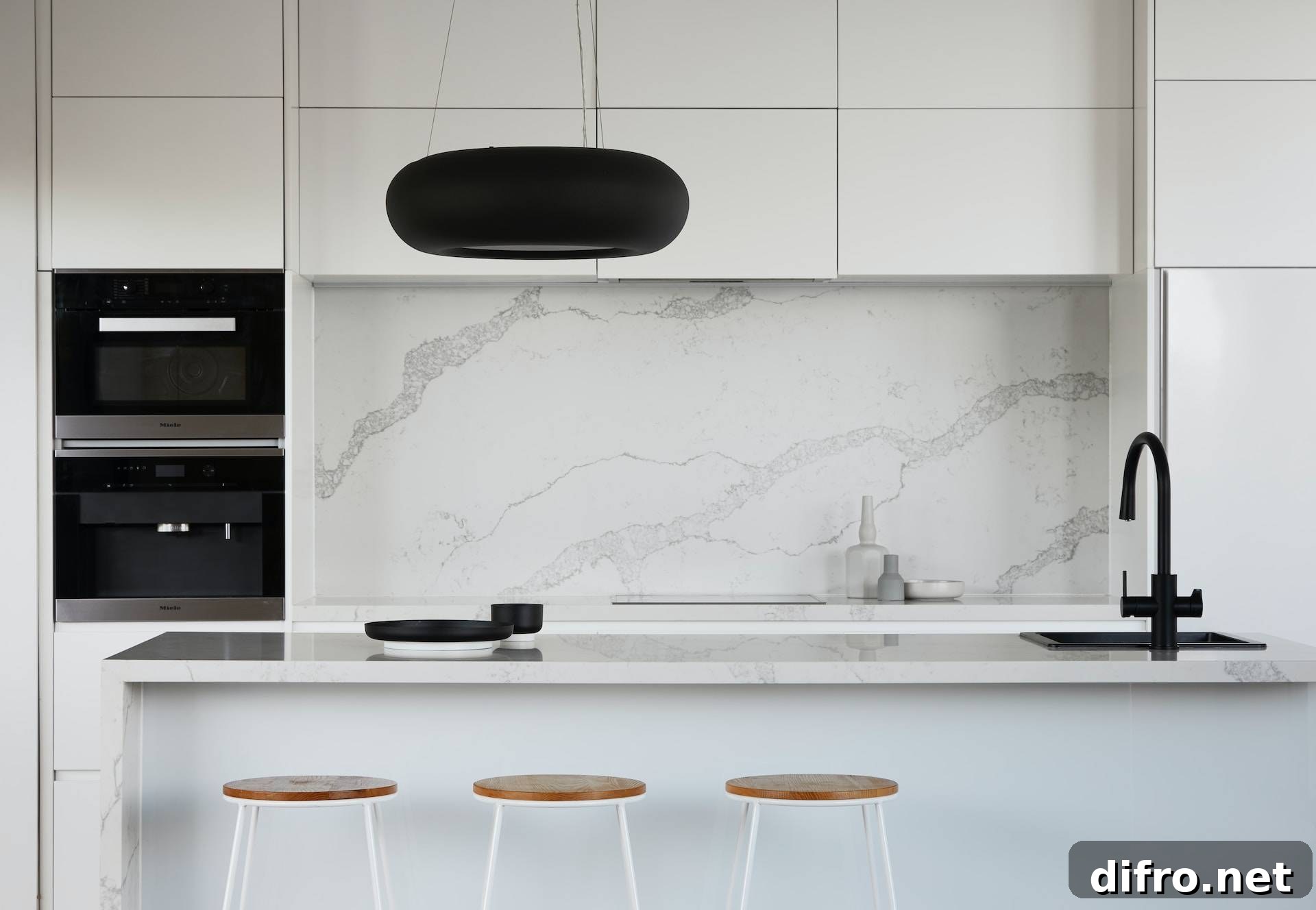
Small design updates can dramatically improve the overall look of a minimalist kitchen. Replace ornate fixtures and bulky knobs with streamlined alternatives that emphasize clean lines and simple shapes. Sleek bar pulls, slim hardware, and a faucet with minimalist detailing will harmonize with a pared-back aesthetic.
Choose finishes that complement your kitchen palette—matte black, brushed brass, or polished chrome can all work depending on your style—but keep the forms simple and consistent to maintain a cohesive, uncluttered appearance.
Organize your pantry
A well-organized pantry makes meal prep faster, reduces food waste, and keeps your kitchen looking intentional. Sort items into categories—grains, canned goods, baking supplies, snacks—and use clear containers for bulk ingredients so you can see quantities at a glance. Label containers if helpful.
Use inexpensive baskets or bins to create zones within shelving: one for baking, one for breakfast items, one for canned goods, and a lower, kid-friendly shelf for snacks. Rotate older items forward to avoid expired products and periodically clear out single-use condiment packets or duplicates.
Visibility and simple grouping are key. When everything has a place and is easy to find, your pantry supports a minimalist kitchen by keeping countertops and workspaces free of overflow.
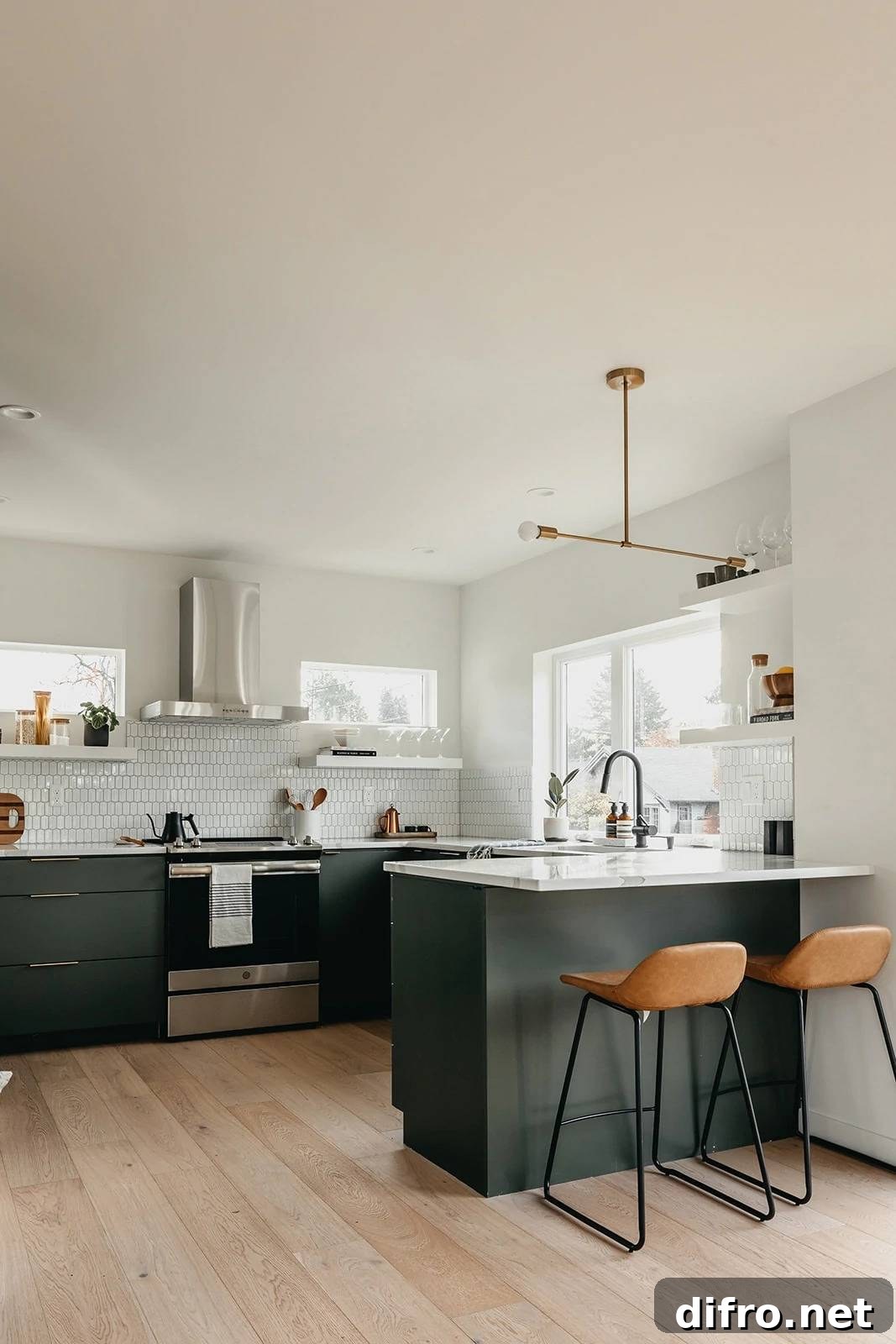
Creating a minimalist kitchen is a gradual process of removing excess, organizing what remains, and choosing functional, understated finishes. Focus on purposeful storage, streamlined hardware, and clear pantry systems to keep your space calm, efficient, and inviting—so cooking is simple and your kitchen feels like a restful part of your home.