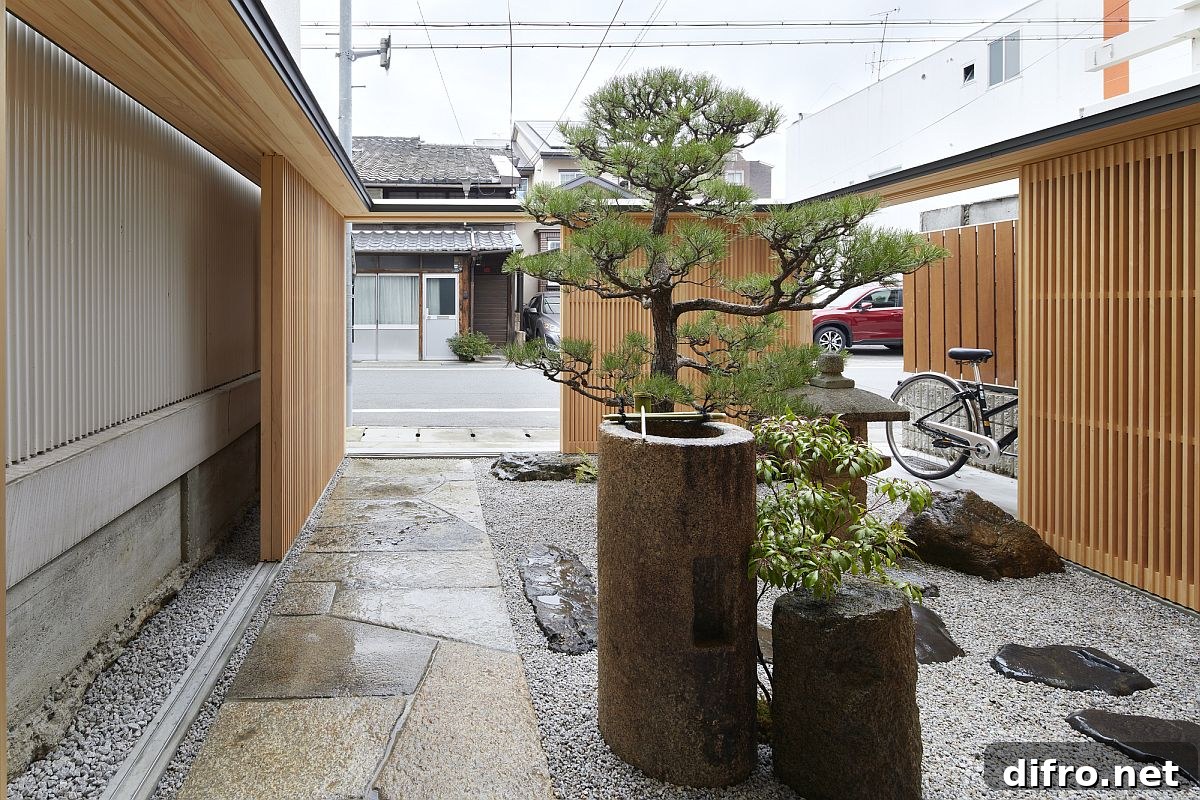
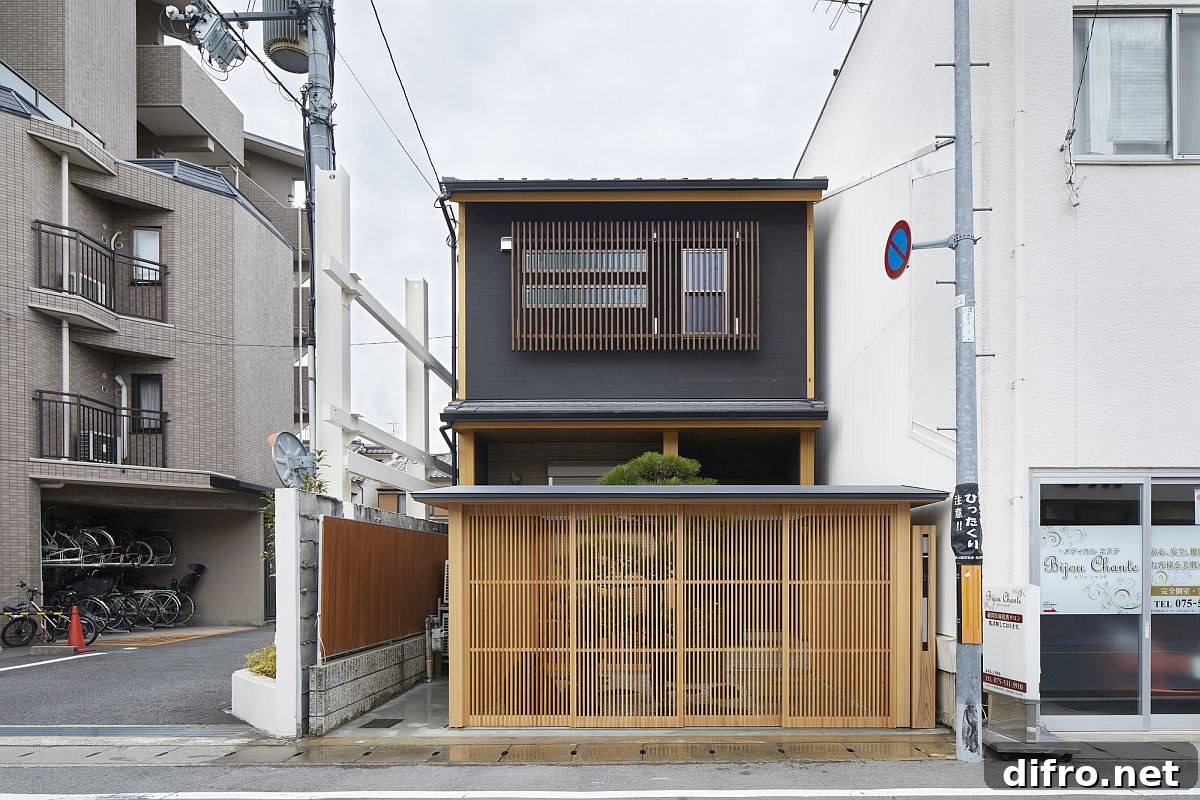
Sometimes we crave a getaway that removes us from the daily rush and drops us into another world. Other times, a simple, year-round retreat in a rustic setting is enough. For those who can’t often leave their everyday routine, transforming a small outdoor space into a private sanctuary can be the perfect solution. The Tsubo-Niwa Extension by Kenzo Makino & Associates in Kyoto, Japan, is a refined example of turning an ordinary frontage into a peaceful urban oasis. A front yard designed as a zen-style Japanese garden brings calm, balance, and a sense of separation from the street without disconnecting from the surrounding landscape.
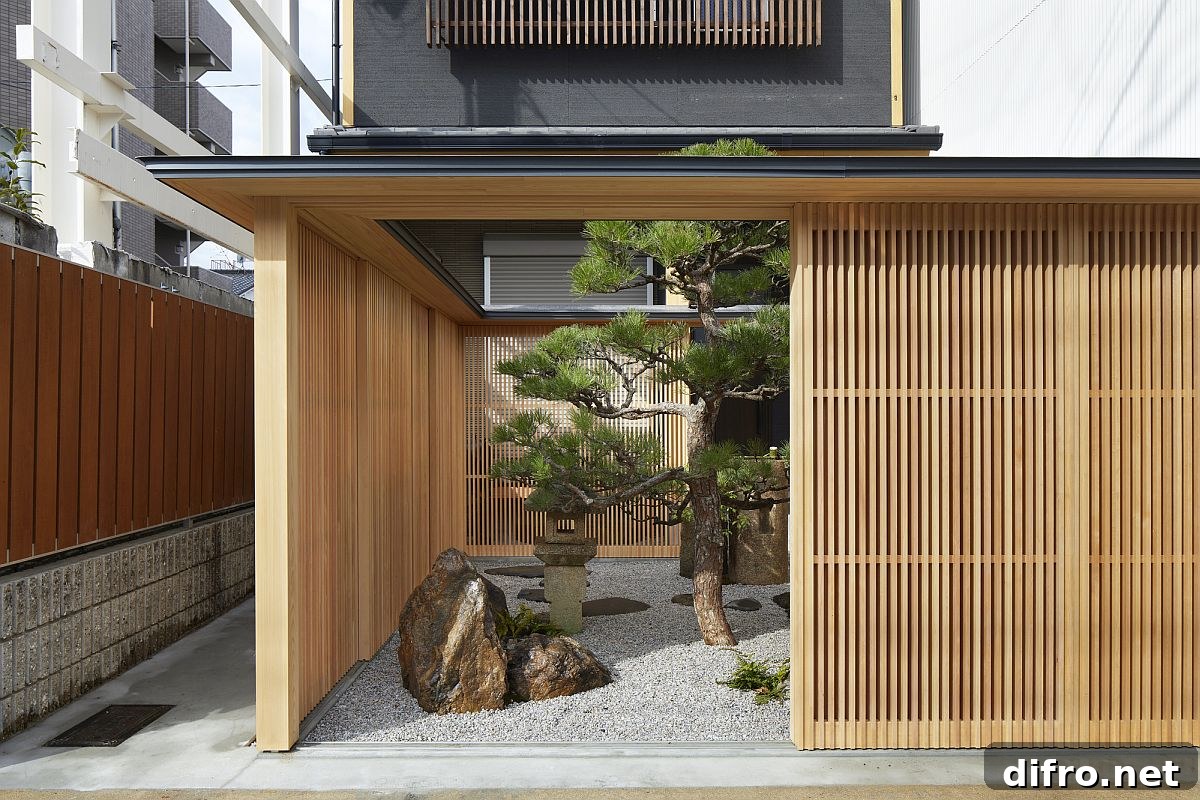
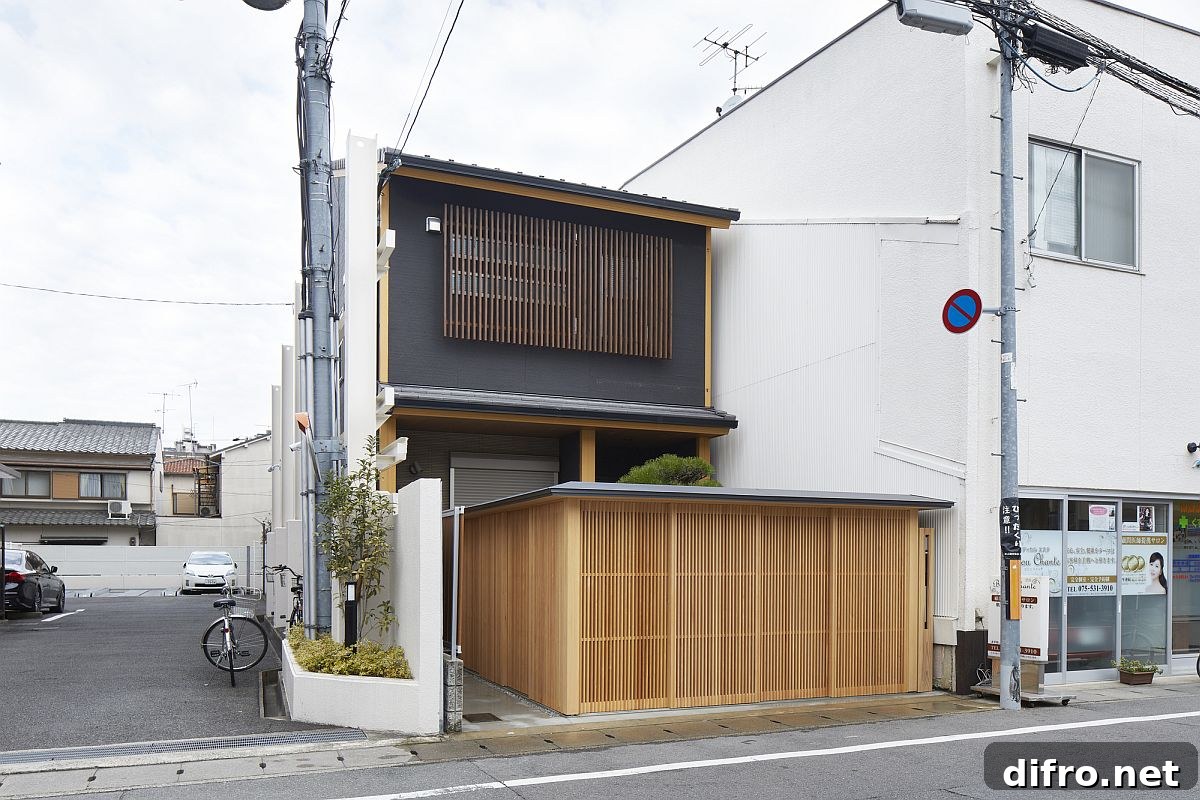
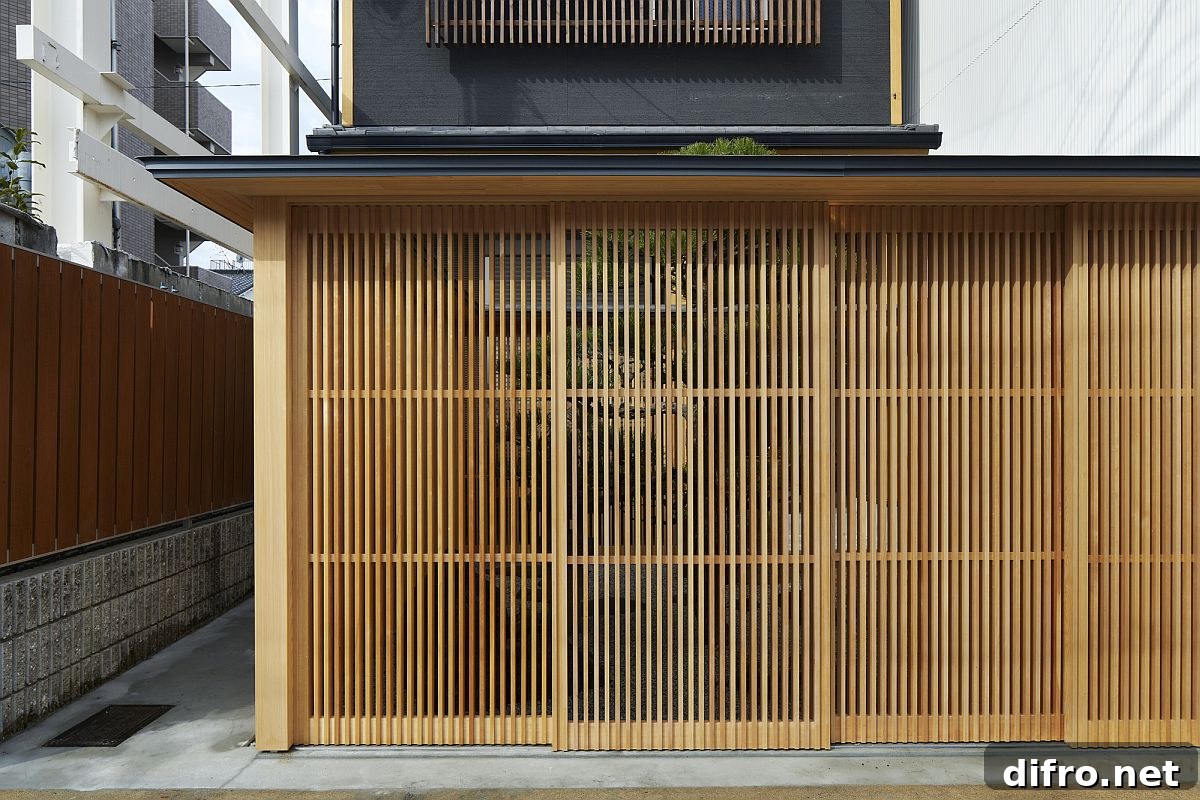
Rather than using the space in front of the house for car parking, the designers converted it into a minimalist Japanese garden that celebrates traditional form and contemporary function. The layout emphasizes clarity, restraint, and the essential elements of a classic Japanese garden: carefully chosen paving, stones, plantings, and open space that invite quiet reflection. The garden’s enclosure is formed by sliding wooden lattice doors that provide privacy while allowing a visual connection to the neighborhood when desired.
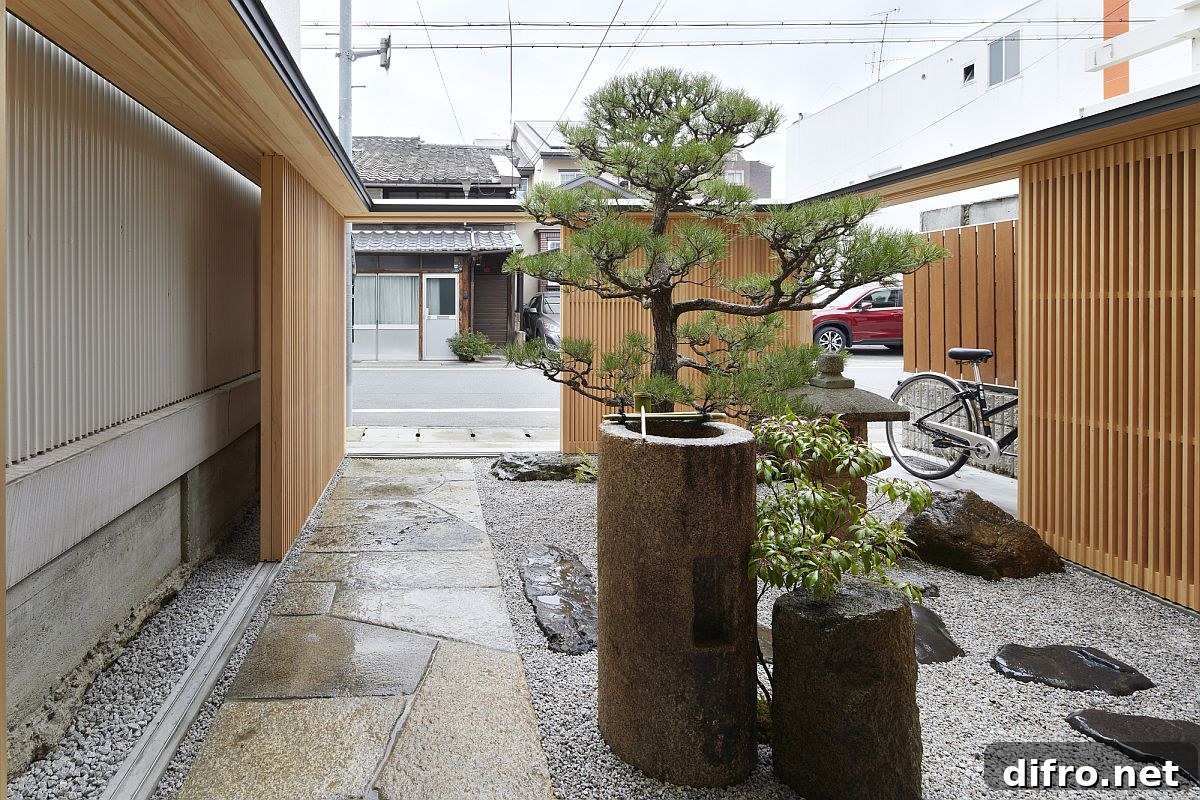
Functionality is integrated into the design with subtle details. Metal eaves are installed above the wooden doors and walls to channel rainwater away from the structure, protecting the wood and creating a small overhang that reads like a delicate roof from the street. These galvanized steel eaves also add an understated modern accent that complements the natural materials and keeps maintenance needs low. The result is an elegant fusion of craft and practicality.
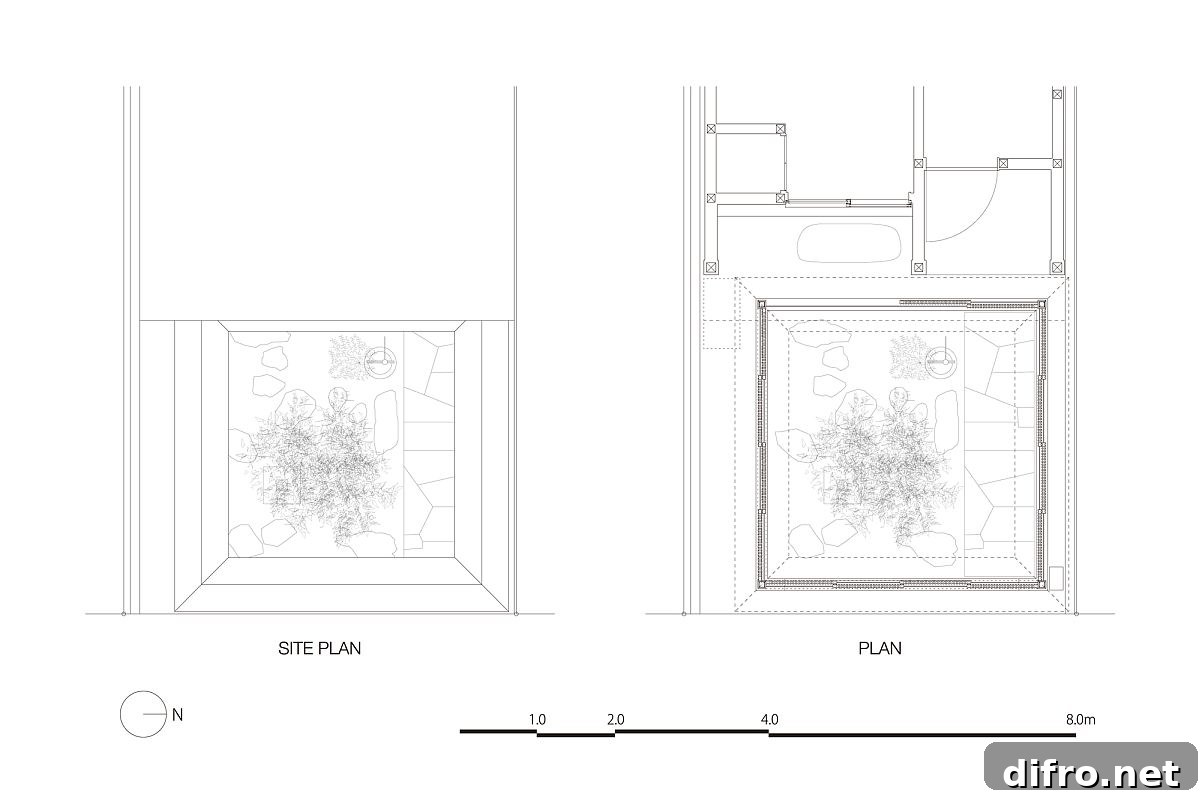
Viewed from above or from the street, the composition reads as calm and deliberate. Careful placement of stones and plantings creates visual rhythm and depth, while open patches of ground and stepping paths encourage slow movement and contemplation. The garden’s restrained palette and careful proportions make it suitable for a range of seasons, allowing for subtle changes in color and texture throughout the year.
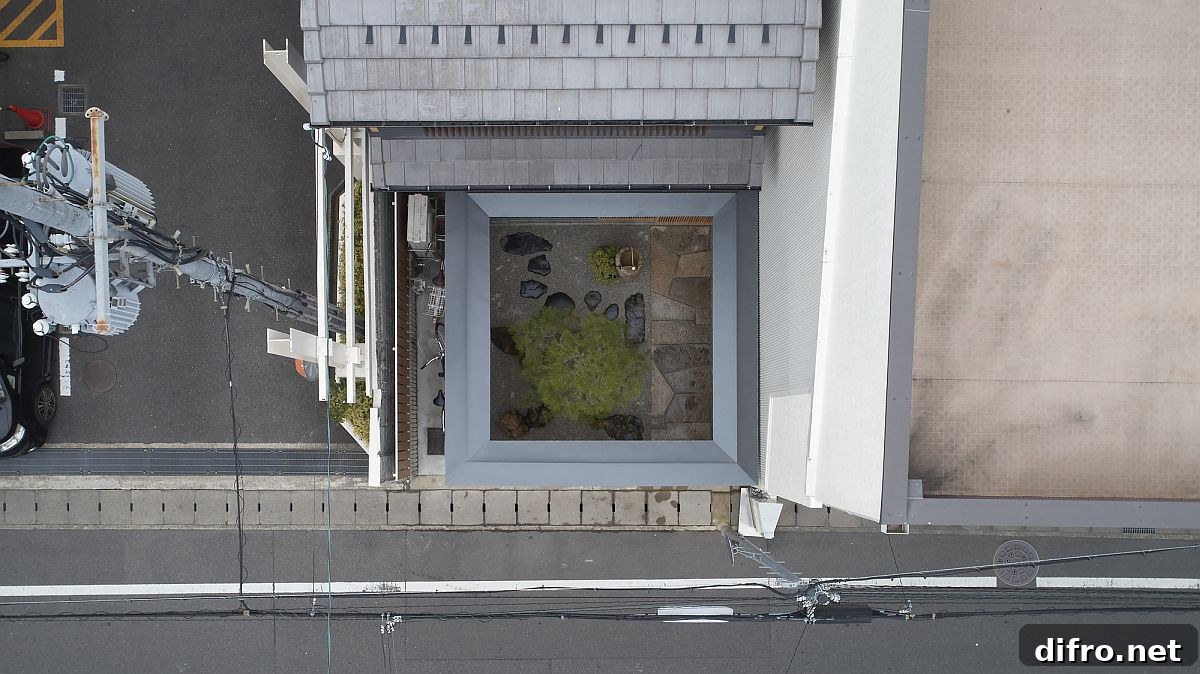
Alongside the garden, a compact utility area serves multiple practical needs: space for storing everyday items, parking for bicycles, and an outdoor mudroom where residents can transition from street to home. This thoughtful allocation of space demonstrates how small urban sites can accommodate both beauty and utility without sacrificing either. The arrangement keeps the garden’s integrity intact while offering useful, discrete storage and access points.
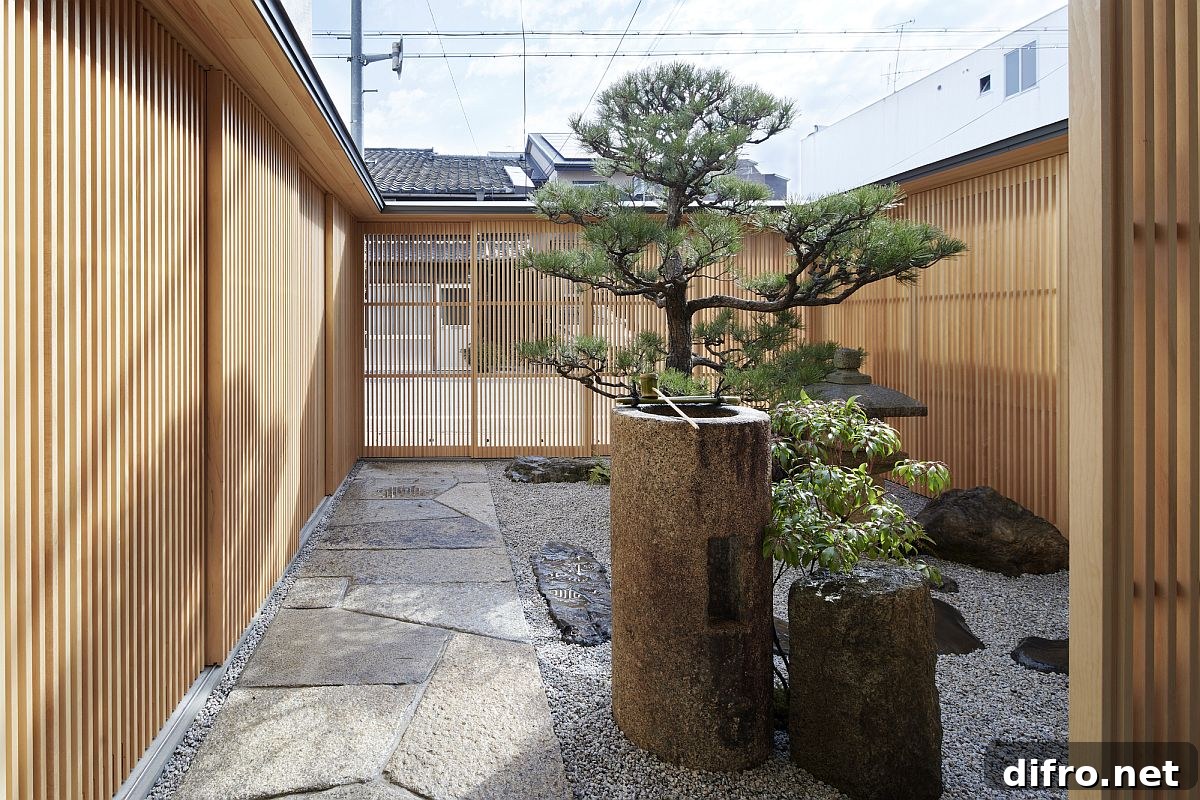
The project exemplifies how a modest front yard can become an everyday retreat, offering a quiet place to unwind after work or to welcome guests with a sense of calm. Its simple language of materials—wood, stone, metal, and sparse planting—reinforces a timeless aesthetic that is both modern and rooted in tradition. For city dwellers seeking a low-maintenance, high-impact landscape, this Tsubo-Niwa Extension demonstrates how careful design turns limited space into a meaningful lived experience.
Included with visual documentation is the design plan, which clarifies the relationship between the house, the front garden, and the adjacent utility area. This plan highlights how a compact plot can be organized to prioritize both movement and repose, creating pockets of privacy in a dense urban environment.
Photography: Toshiyuki Yano