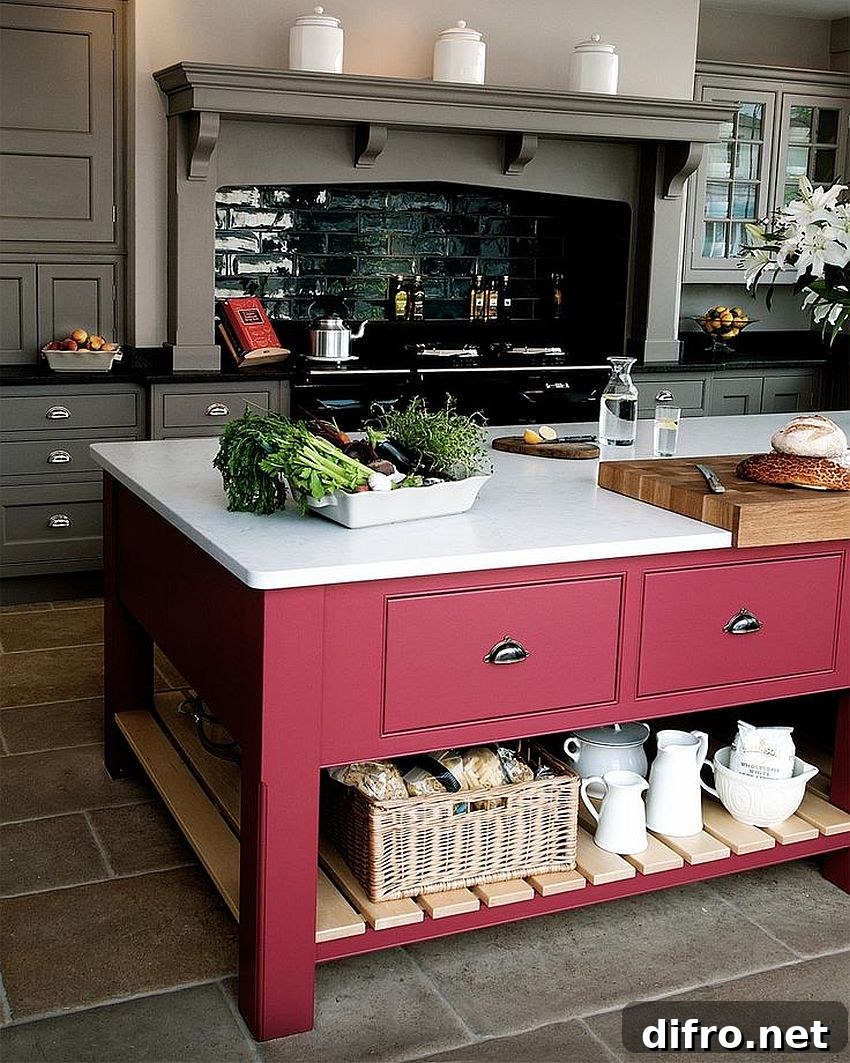
Modern homes often favor neutral palettes: white, gray and brown dominate walls, floors and major furnishings. While neutrals offer flexibility—making it easy to switch styles, seasonal accents and décor—they can also leave a space feeling bland. A colorful kitchen island is a simple, high-impact way to break the monotony and introduce personality into the heart of your kitchen.
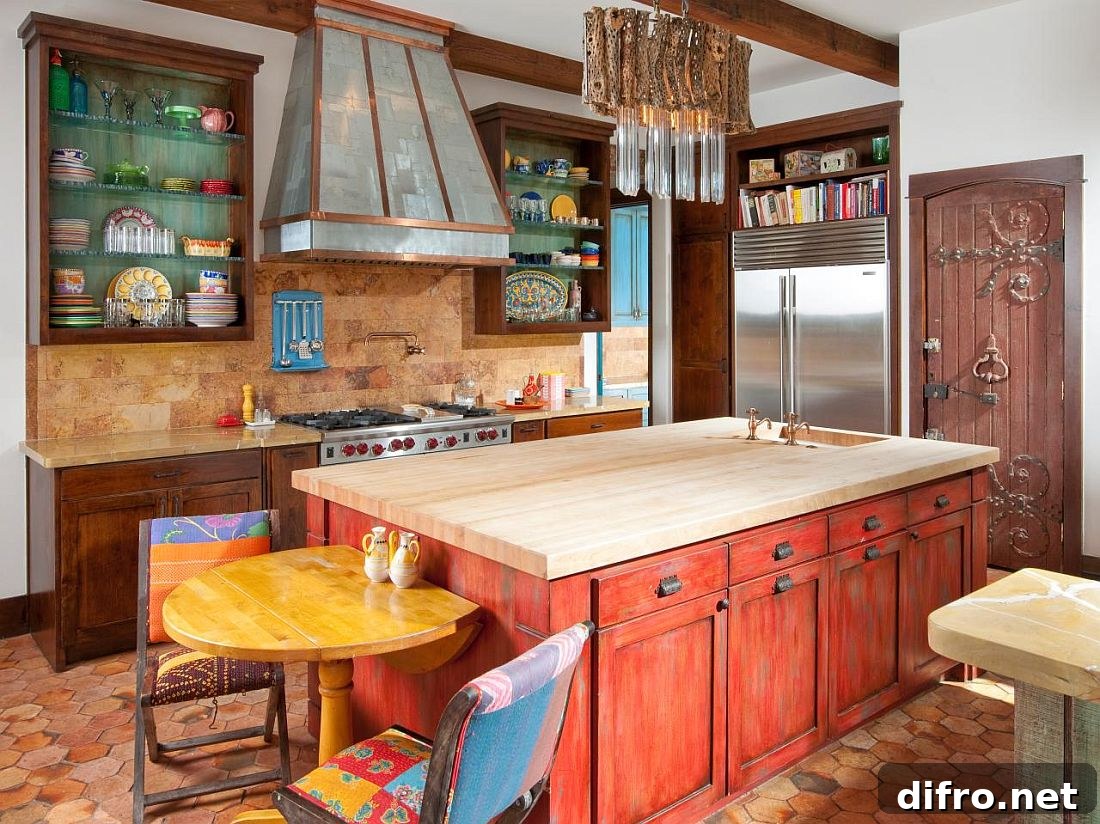
A painted island, a lacquered finish, or a bold stained wood center island can instantly change the kitchen’s atmosphere. Colorful islands give the room identity, make open-plan layouts feel intentional, and help visually separate the kitchen from adjoining dining or living areas. They also invite experimentation—try pairing a vibrant island with neutral cabinetry or echoing that island color elsewhere in accessories and accents to create cohesion.
Everlasting Blue
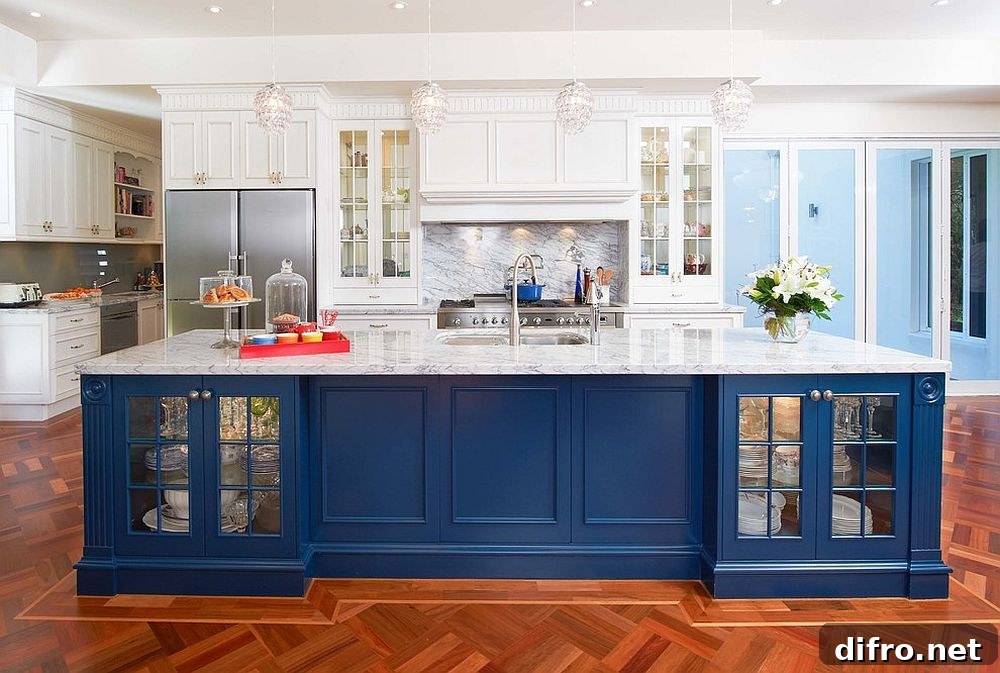
Blue remains one of the most versatile and enduring choices for a kitchen island. From deep navy to soft slate or grayish-blue, blue works across a wide range of styles: coastal, Mediterranean, farmhouse, Scandinavian and contemporary. The final effect depends on the finish and materials—a painted matte island feels classic, whereas a high-gloss lacquer or a rich stained wood brings a more modern, polished look.
Blue islands pair particularly well with light marble or quartz countertops and white cabinetry, producing a crisp, cheerful kitchen that still feels grounded. In traditional and coastal designs, darker blues make a strong statement; in modern kitchens, muted bluish-grays or teal tones maintain sophistication without overwhelming the space.
Painting it Red!
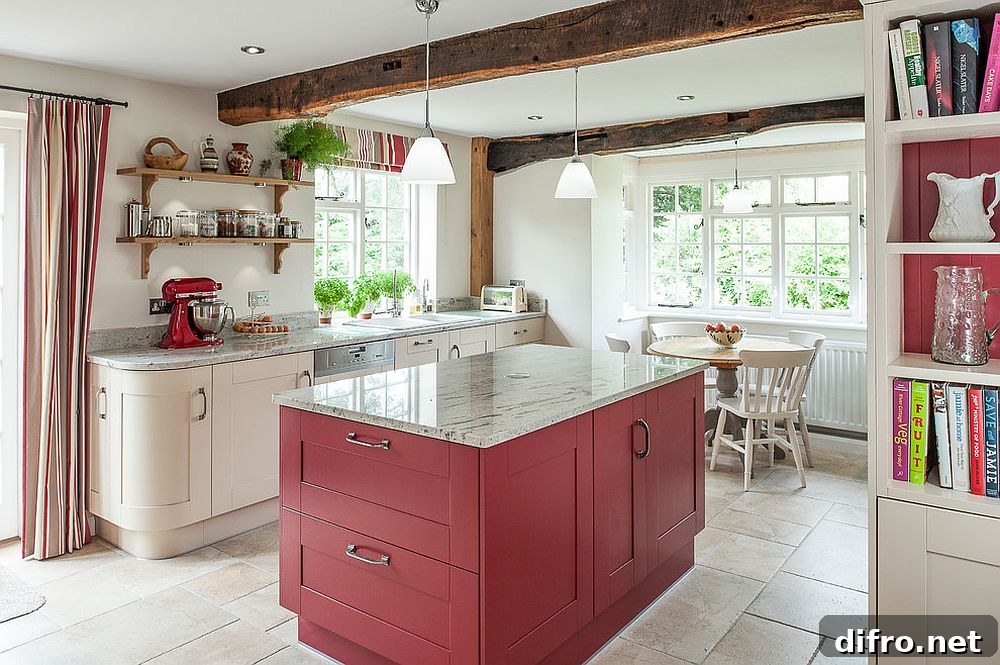
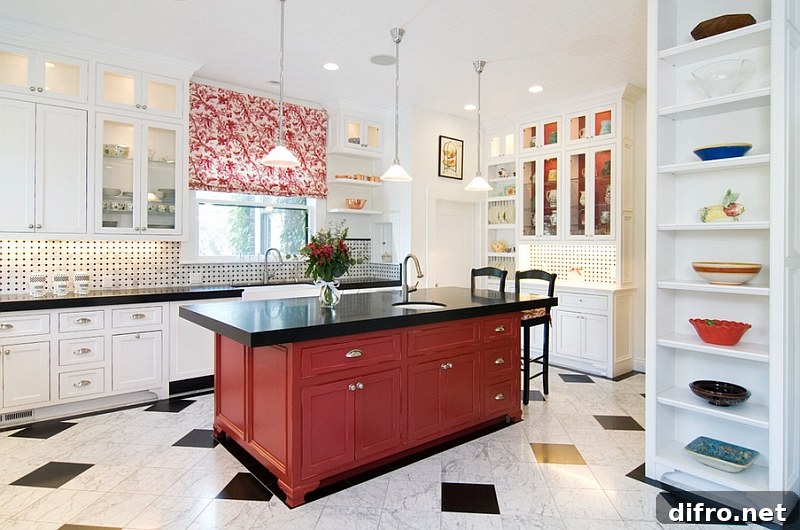
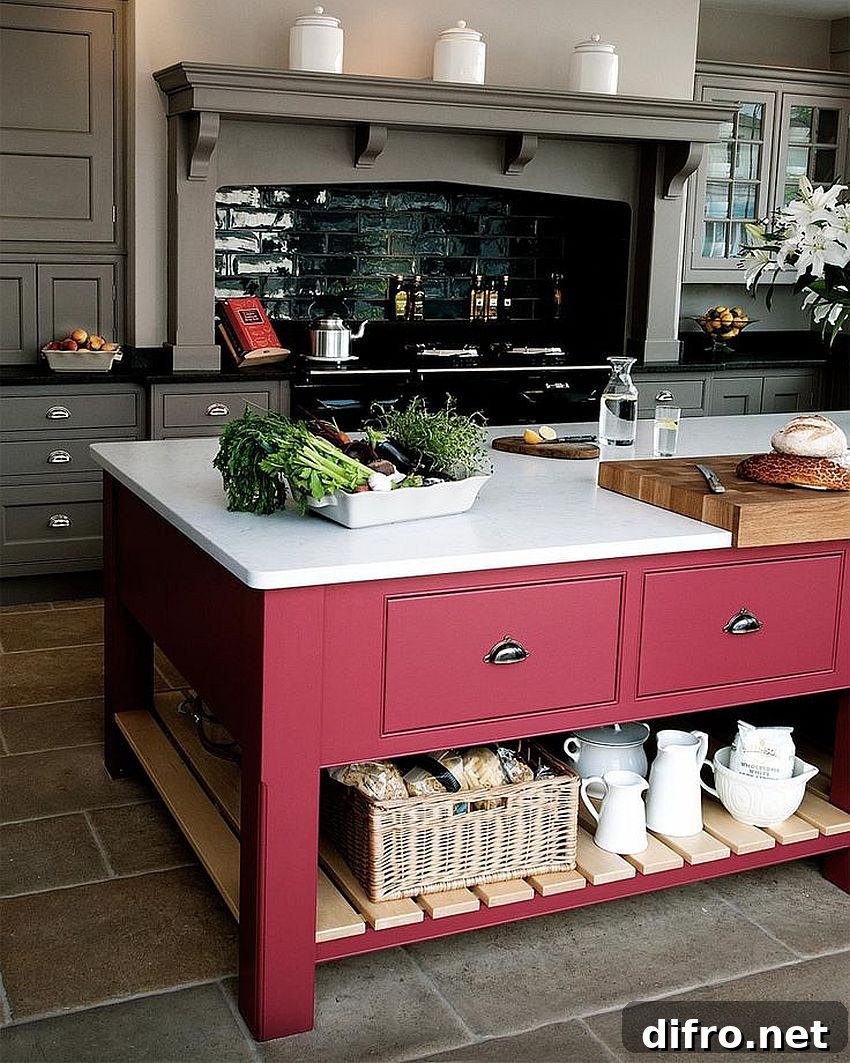
Red can be intimidating, but used thoughtfully it becomes an energizing focal point. A red island set against a neutral backdrop—white, gray or warm wood—adds vibrancy without overpowering the room. Matte or satin red finishes read as sophisticated and less showy than glossy tones, and red works beautifully in both contemporary kitchens (paired with black or stainless accents) and Mediterranean or farmhouse interiors.
Because red commands attention, balance is key: limit competing colors, repeat a small amount of red elsewhere (a bowl, bar stools or pendant lights), and choose hardware and countertops that harmonize rather than compete.
Finding the Right Hue
Choosing the right color for your kitchen island begins with the kitchen’s overall style and palette. If the room already has several competing colors, a bright island may make the space feel cluttered. For cleaner, more cohesive design, pick an island color that repeats elsewhere—on open shelving items, pendant lights, window trim or upholstery. In minimalist kitchens, muted or monochrome islands work best; in eclectic spaces, a contrasting, unexpected color can be a deliberate design choice.
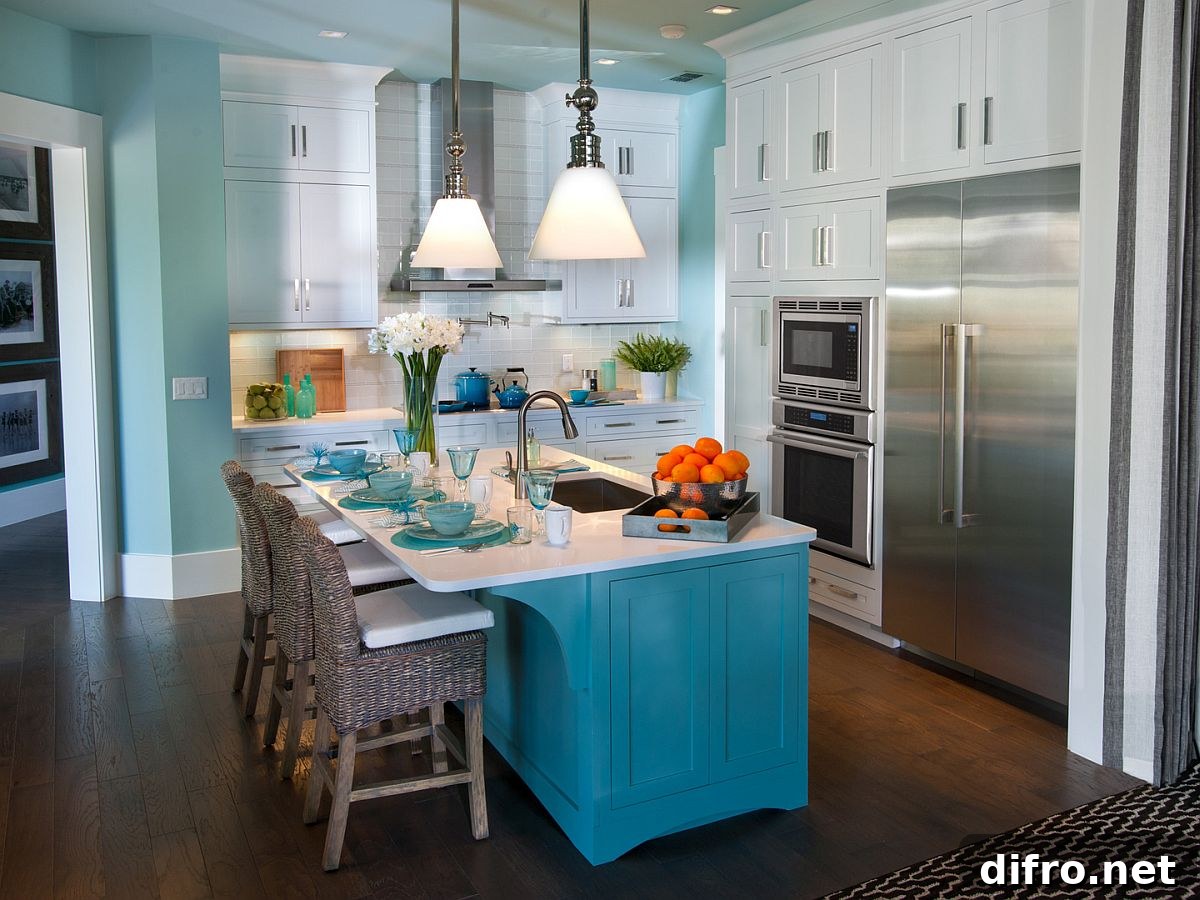
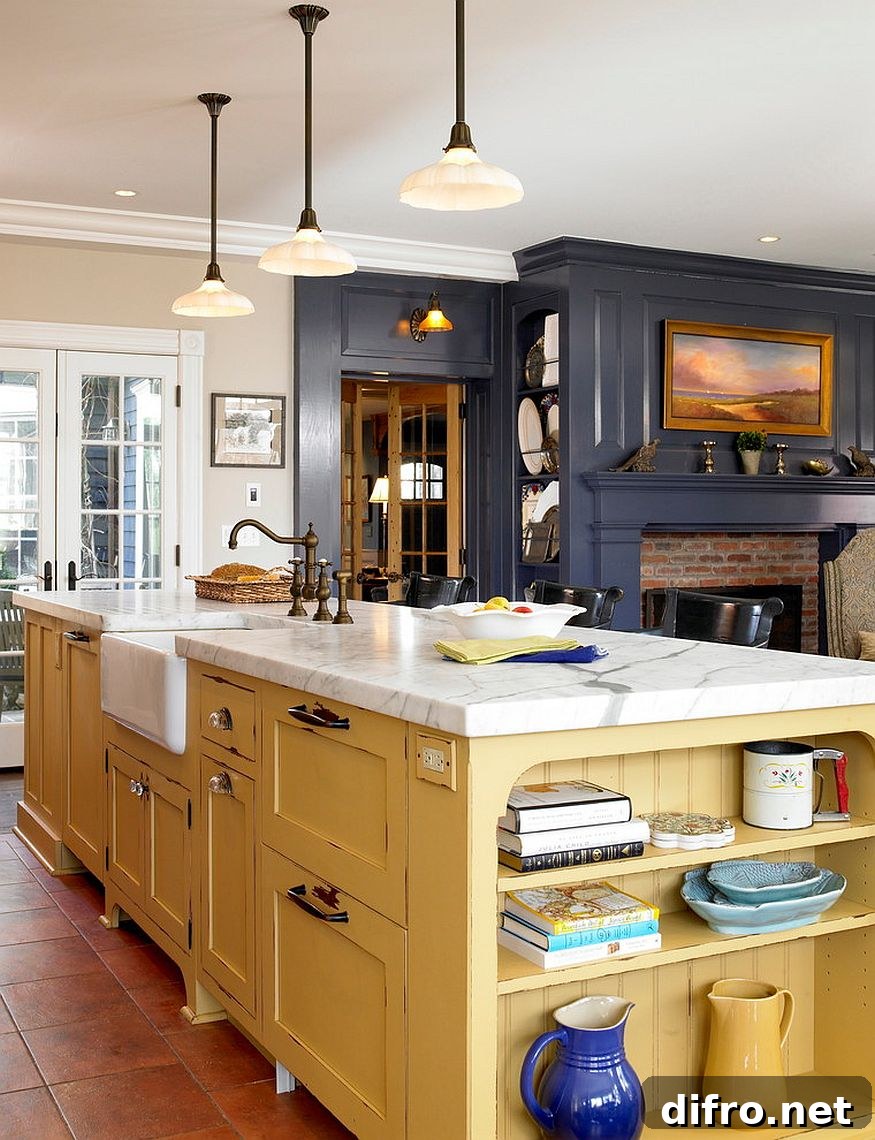
Light, neutral cabinetry and countertops are often the best canvas for a colored island. A teal or jewel-toned island reads as refined when paired with marble or quartz surfaces, while sunny yellow or soft mustard suits both vintage and modern kitchens when balanced with neutral finishes.
Unique Colors for the Kitchen Island
This season, consider colors beyond the usual choices. Fuchsia, coral, upbeat purple or a bold orange can create an unforgettable focal point. For adventurous designs, a multi-colored island—whether through painted panels, mixed finishes or inlaid tiles—offers a playful collage of color that turns the island into art.
Alternatively, jewel tones like teal and emerald can bring depth and elegance, while muted pastels can soften an otherwise stark space. Onyx or deep charcoal finishes, combined with warm metallic accents, give a dramatic, contemporary edge without relying on bright hues.
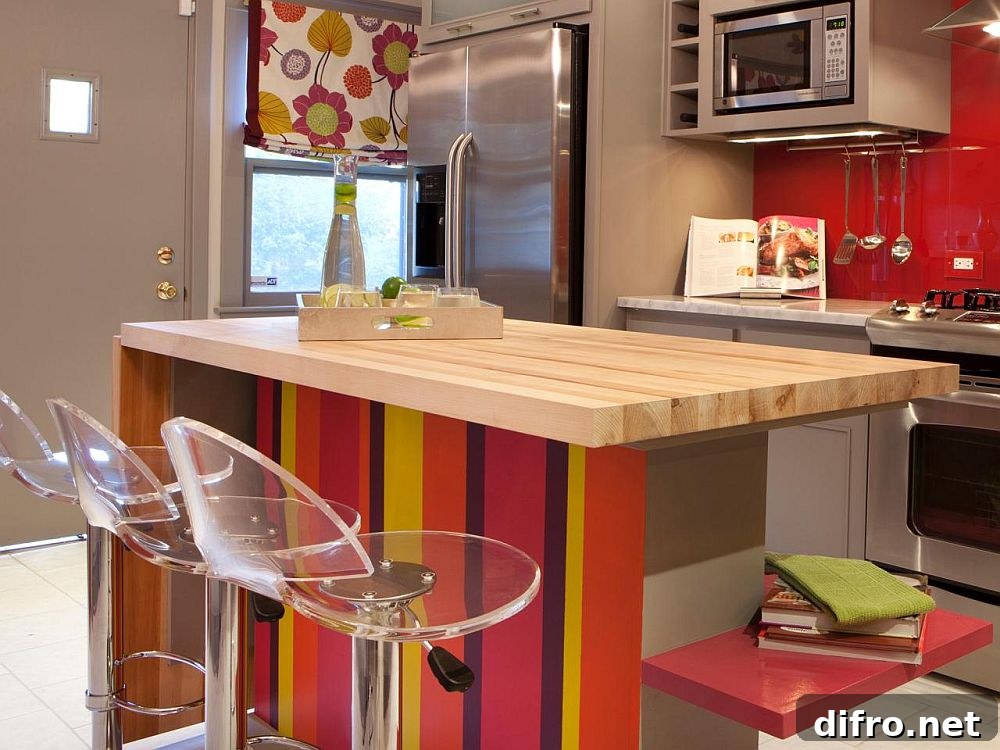
Ultimately, a colorful kitchen island is an efficient way to introduce character, focal interest and personality into your kitchen design. Whether you choose classic blue, bold red, sunny yellow or a daring custom hue, the island can anchor the room and elevate the entire space—so pick a color that reflects your style and makes your kitchen feel unmistakably yours.