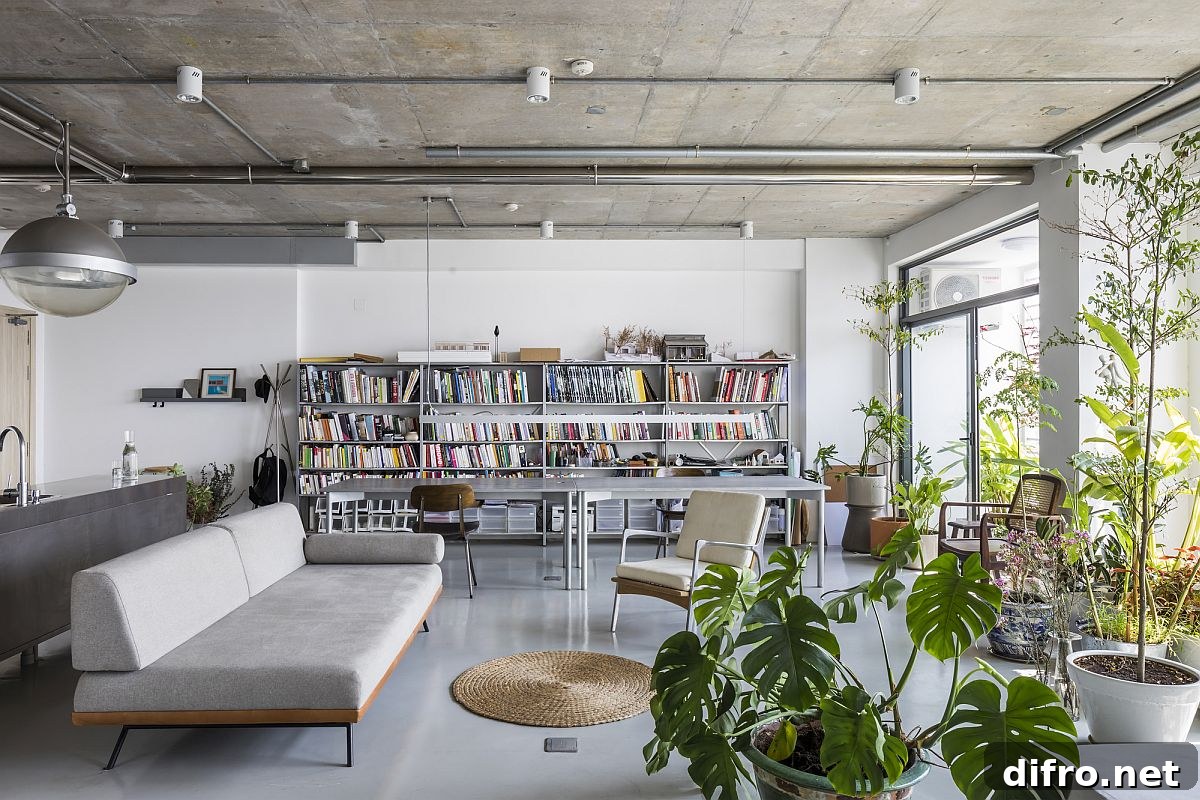
Rivaparc Apartment Renovation — A Book-and-Plant-Focused Home in Ho Chi Minh City
This recently completed renovation, titled the Rivaparc Apartment Renovation and designed by Nhabe Scholae, reimagines a compact Ho Chi Minh City flat around the homeowner’s two greatest passions: books and indoor plants. Rather than relying on heavy ornamentation, the design uses a restrained material palette, clever partitions and generous natural light to make the collection of greenery and volumes the clear focal points.
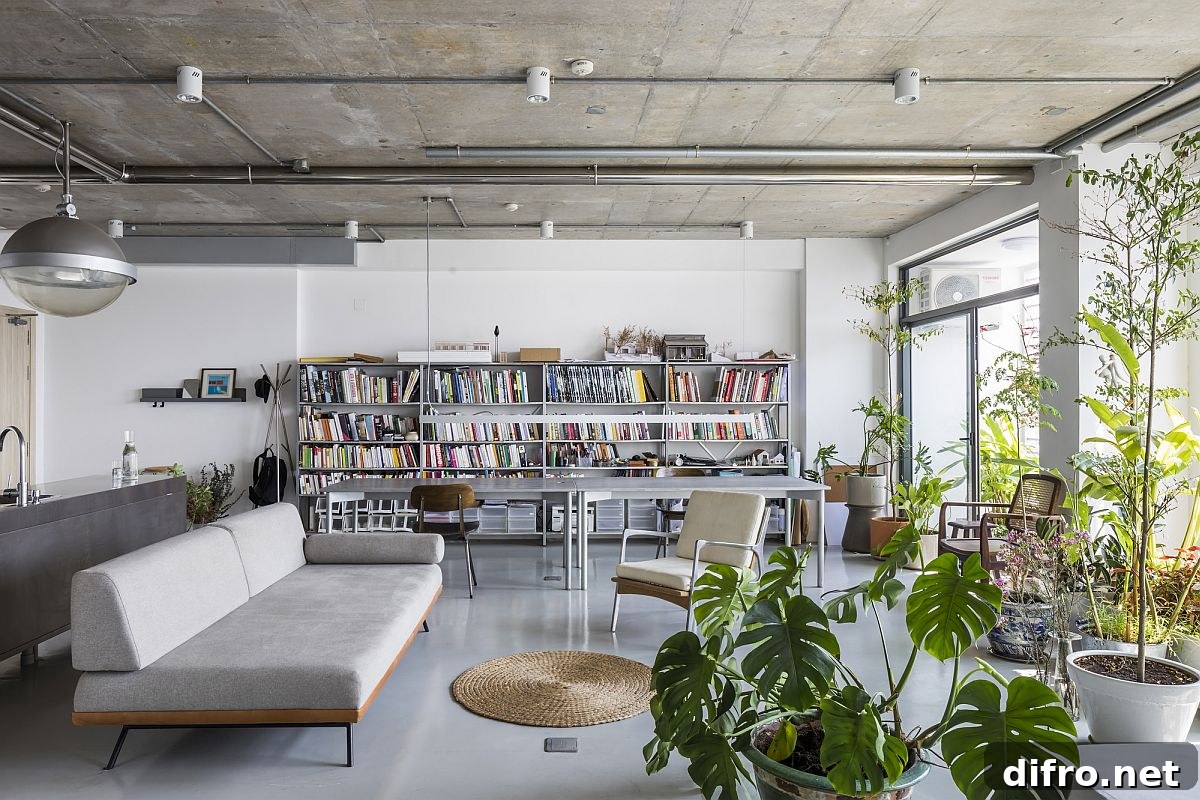
The interior balances modern minimalism and light industrial character. Floors are finished in smooth gray epoxy resin, which brings a contemporary visual lightness and durability that complements the apartment’s raw architectural elements. An exposed concrete ceiling and visible ductwork retain the building’s industrial identity, while large windows and soft white sheers filter daylight into a calm, inviting atmosphere.
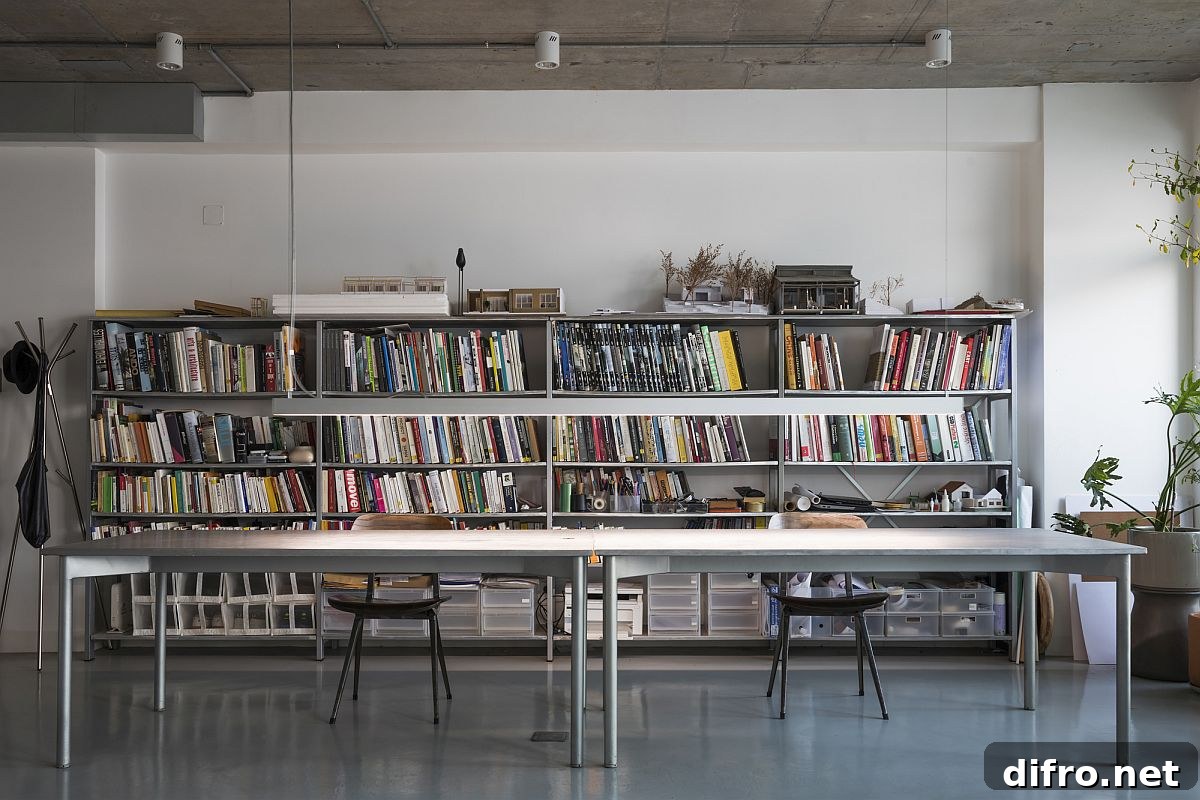
Rather than fill the space with decorative objects, the design elevates two elements: an expansive wall of books and a lush display of houseplants. The large bookshelf that anchors the living area organizes the owner’s library while acting as a warm, textural backdrop. Opposite the shelves, a carefully curated collection of indoor plants injects life, color and a sense of calm. Together, these features create a living room that reads more like a private conservatory and reading room than a typical urban apartment.
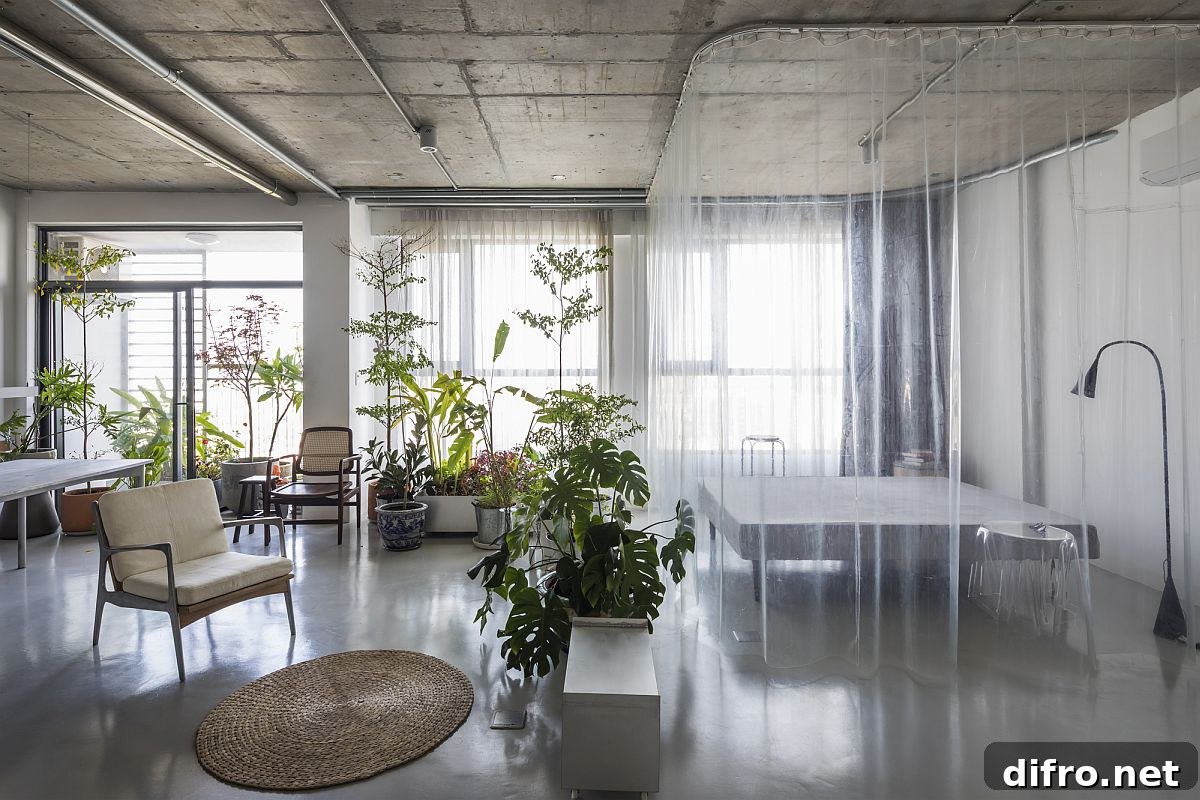
Spatial organization prioritizes flexibility. Internal partitions are kept light and porous rather than solid, allowing the apartment to feel open and adaptable. Translucent curtains and plastic dividers create subtle separations—defining sleeping and living zones without severing visual connection—so the compact plan can shift easily between private retreat and communal living.
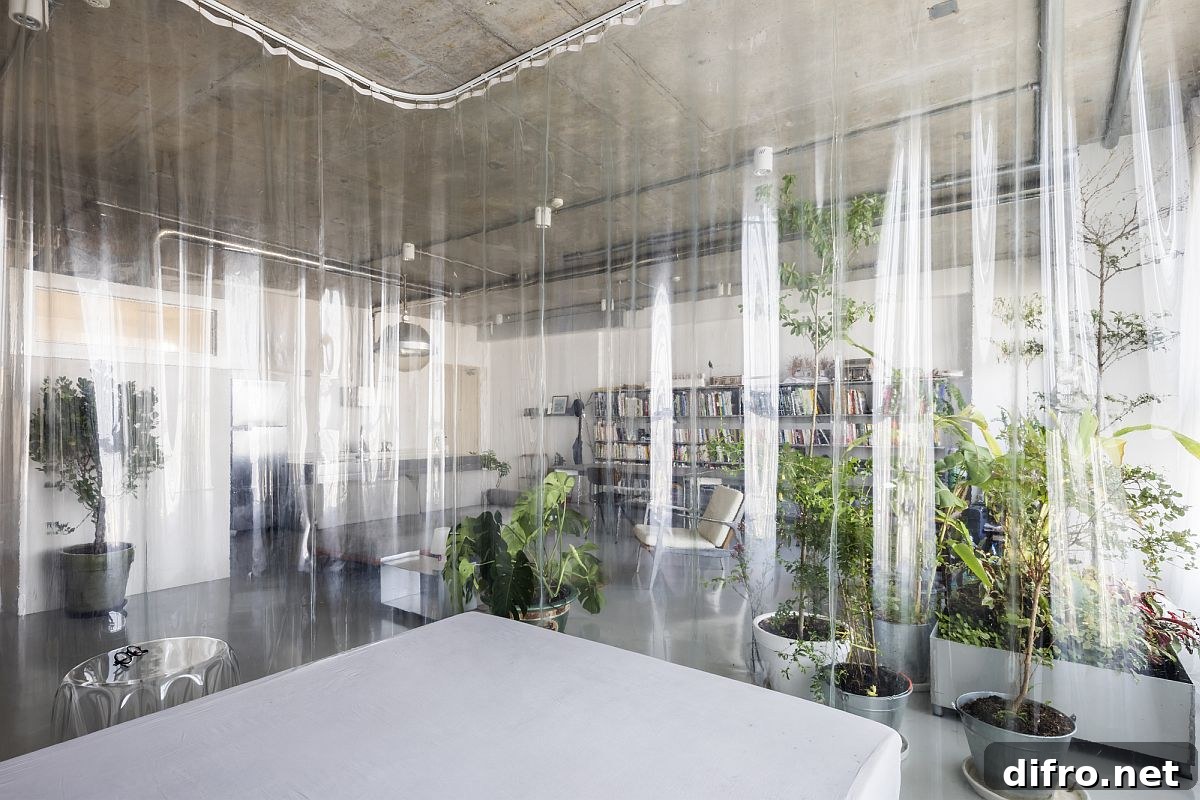
Textural contrast is subtle but intentional. The warmth and pattern of bookshelves, the organic shapes of plant foliage and the soft movement of white sheers counterbalance the stoic gray floor and concrete ceiling. The result is a composed, lived-in space where natural materials and personal collections stand out as the primary décor.
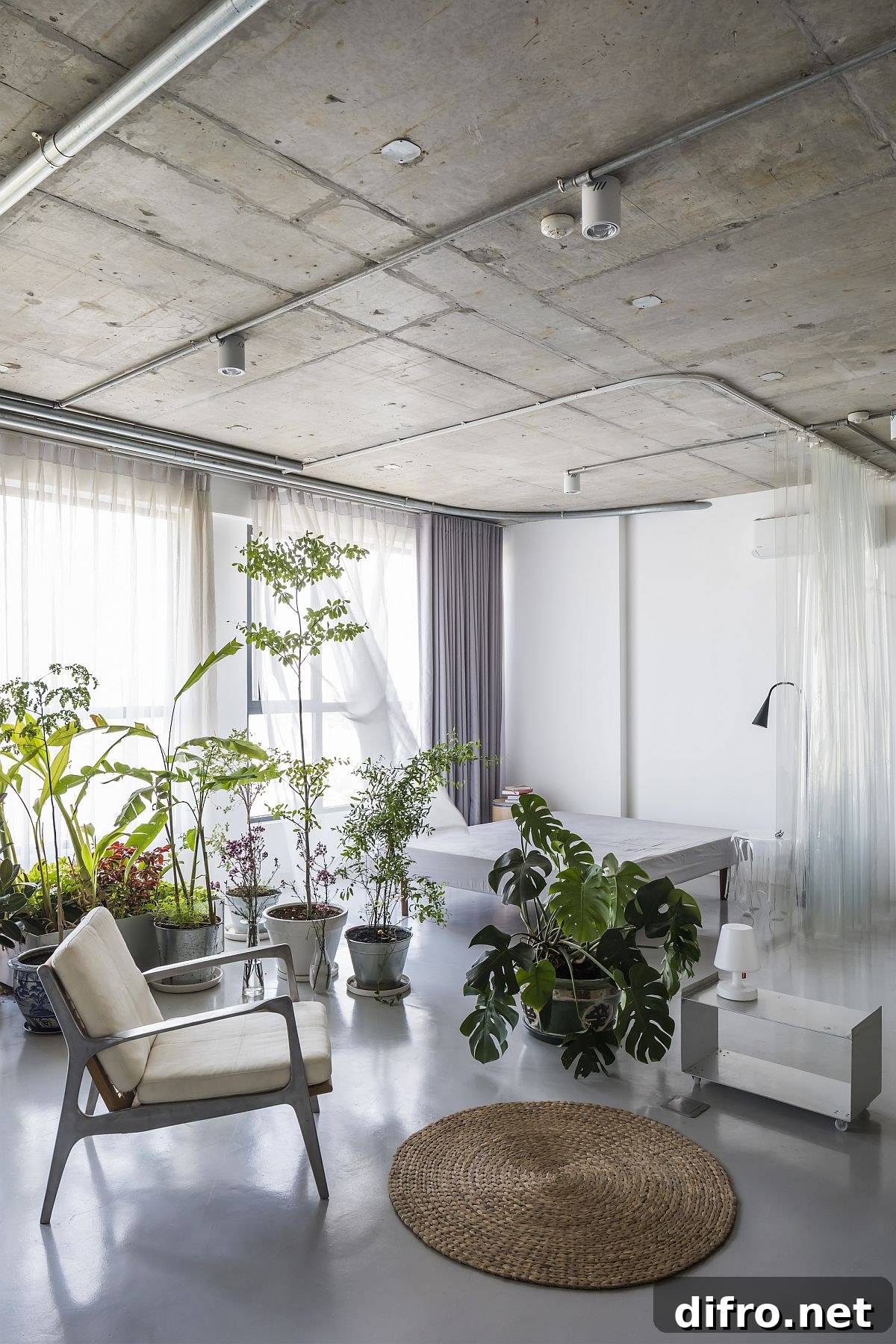
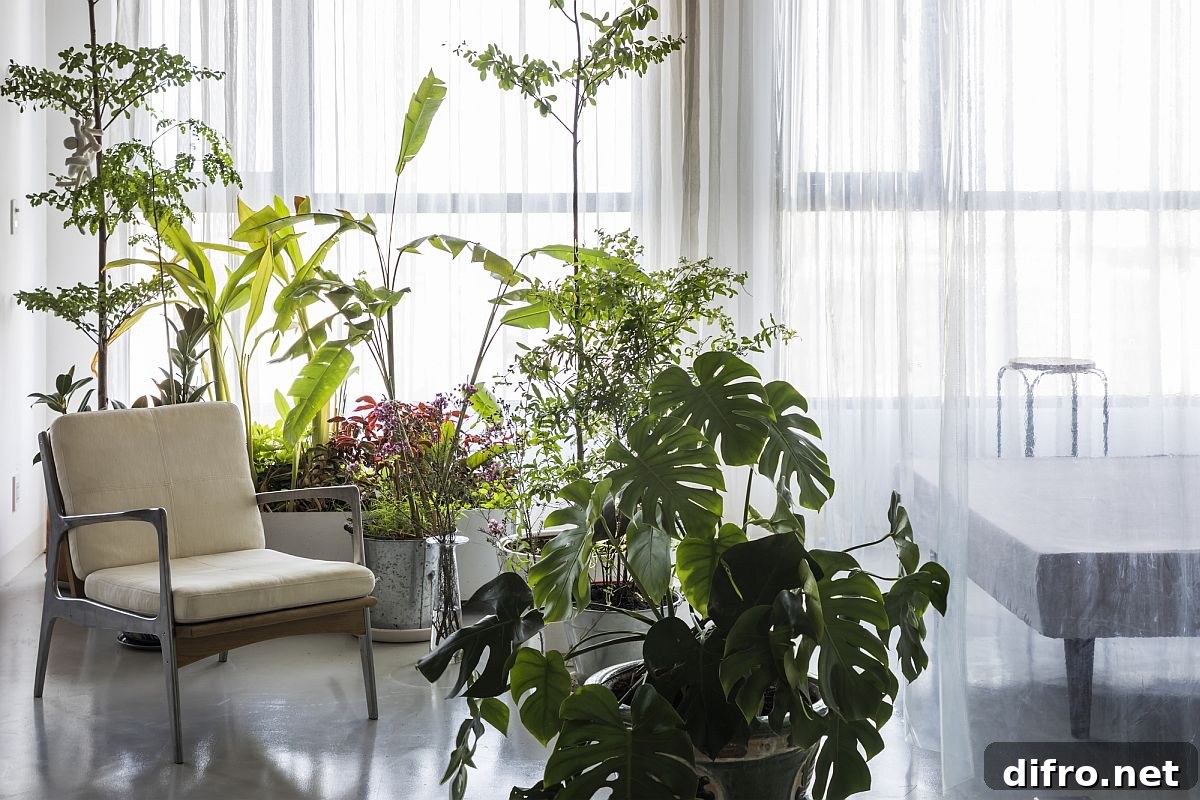
The plant collection is positioned to take full advantage of natural light and to form a restful “green room” within the urban environment. Groupings of pots at different heights create depth and interest, while the overall arrangement emphasizes low-maintenance species that thrive in indoor conditions.
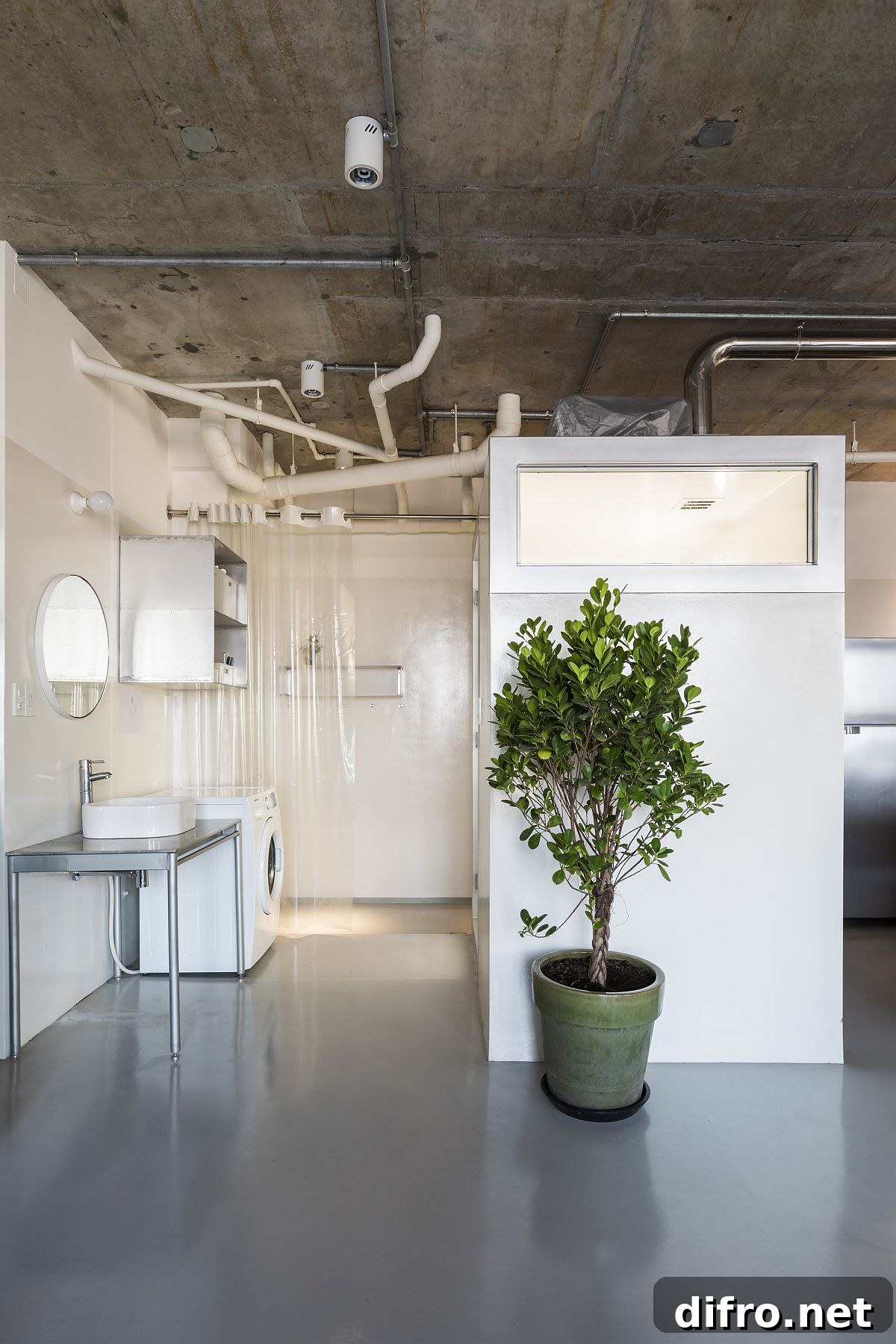
Privacy solutions are equally considered. Frosted glass doors allow ventilation and light transfer while preserving private zones, and carefully chosen partitions let the apartment breathe yet remain functional. These choices support a home that is adaptable, breathable and quietly elegant.
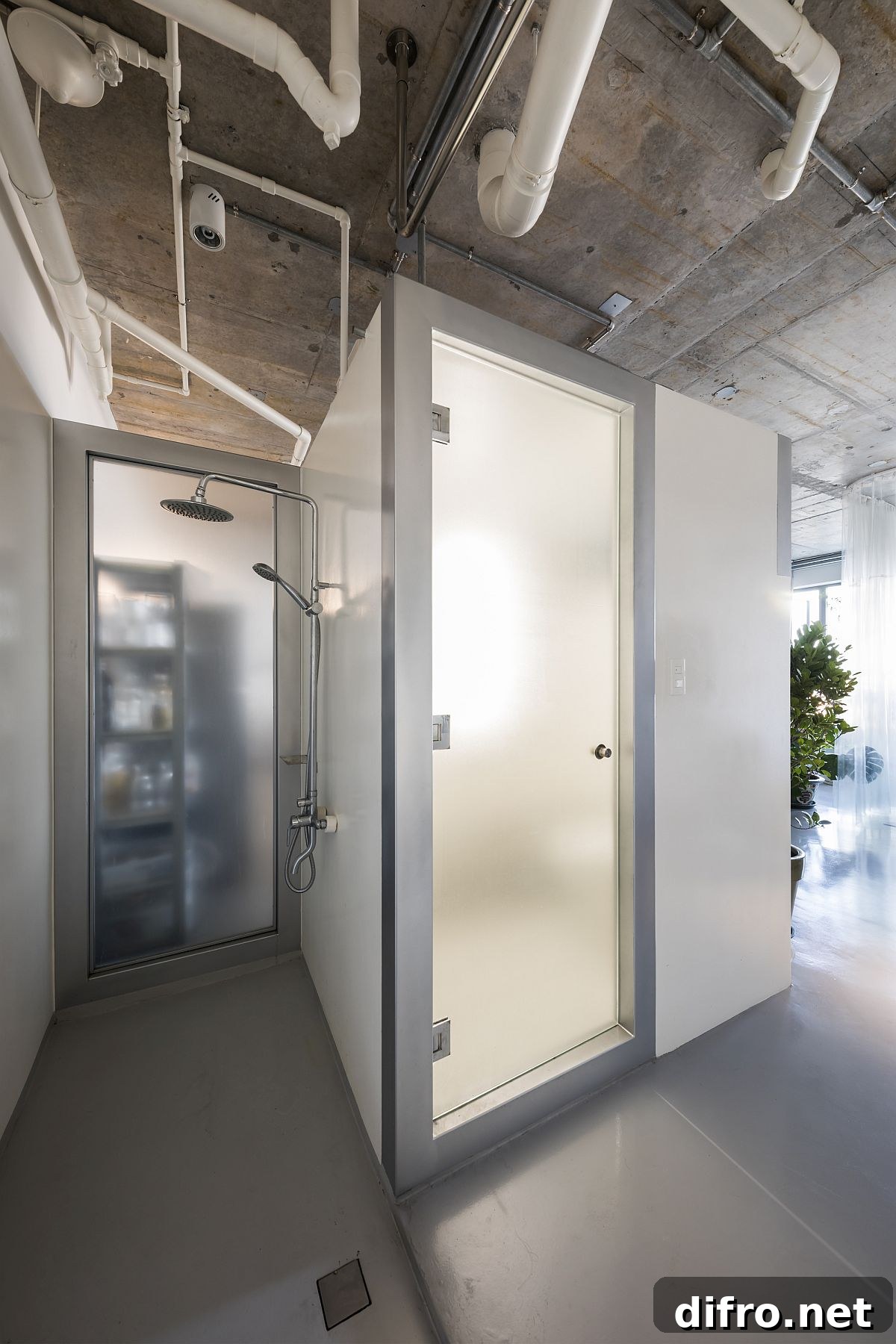
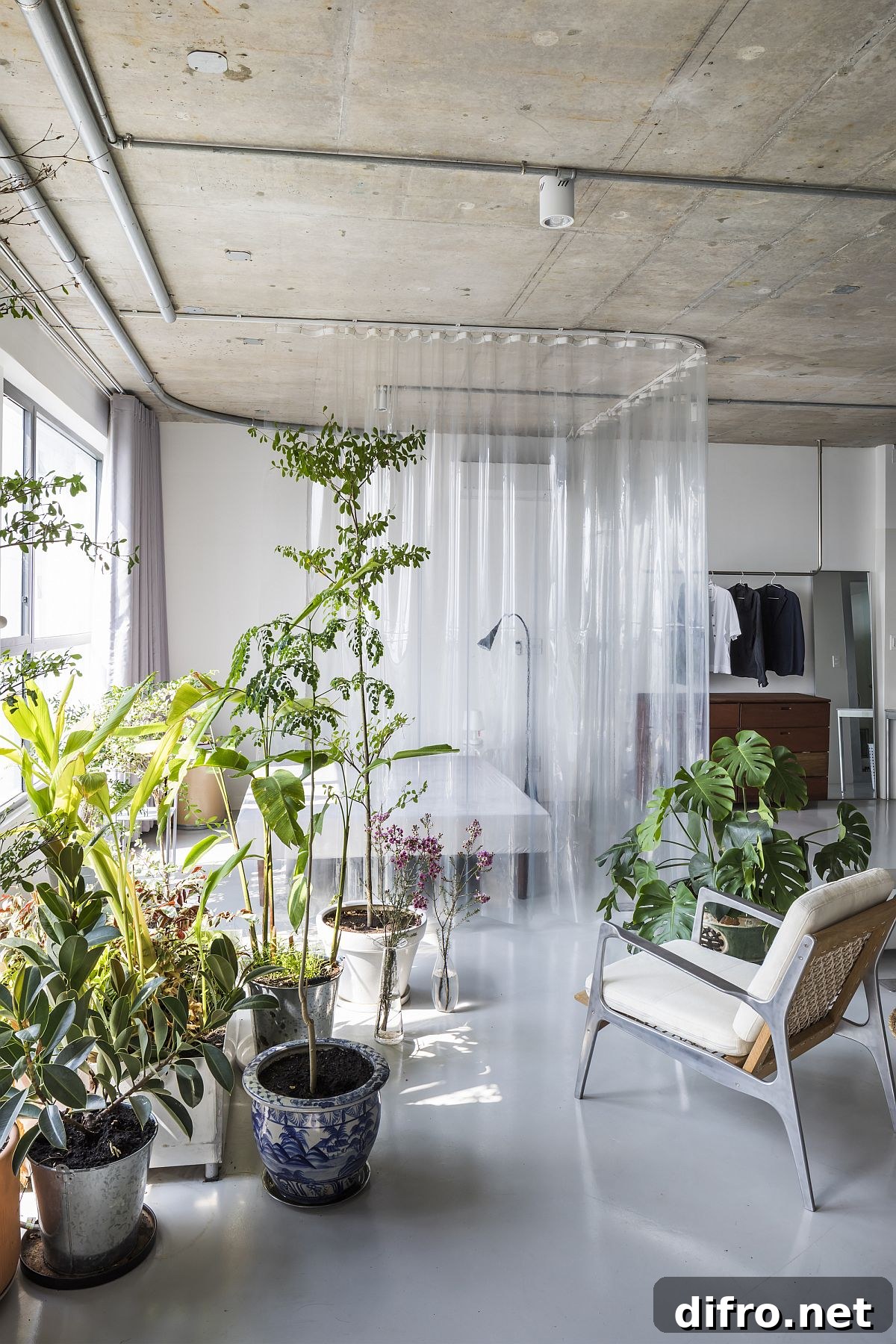
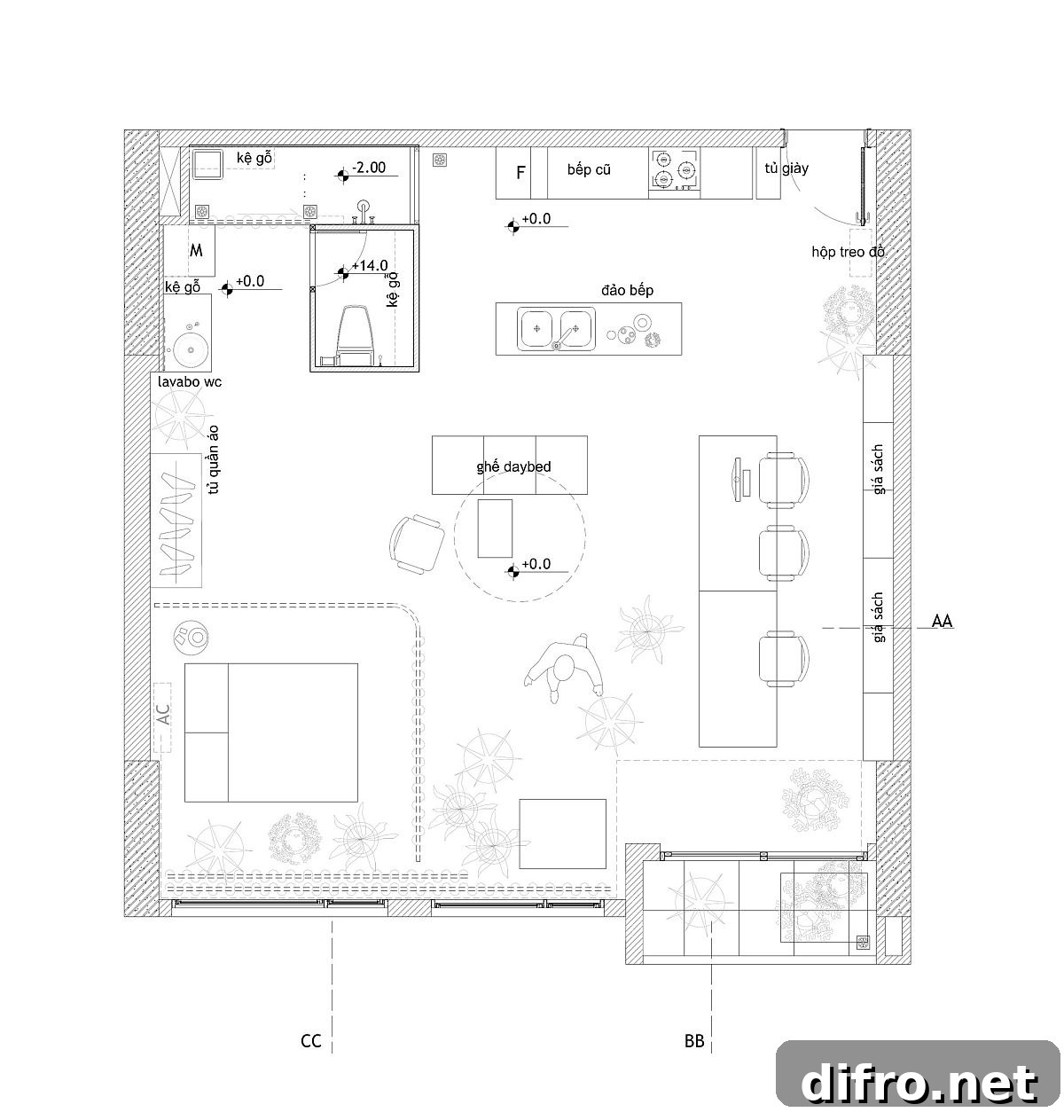
The floor plan reinforces the concept: open, flexible common areas framed by simple, efficient service zones. This allows the apartment to feel larger than its footprint and ensures the homeowner’s books and plants remain the primary design focus.
Photography: Hyroyuki Oki