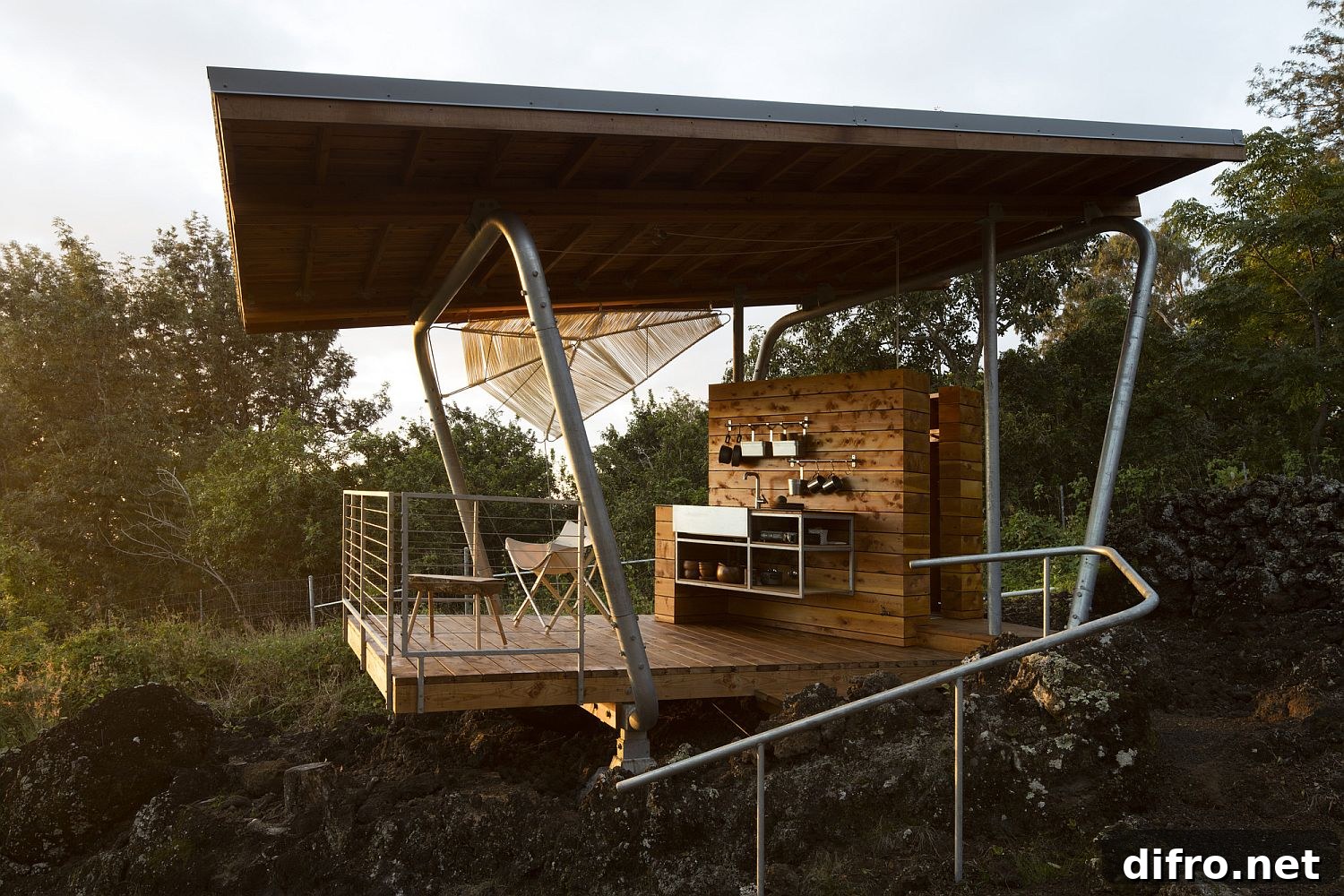
Living beside a 300-year-old lava flow might sound dramatic, but on Maui the presence of volcanic landscape becomes an opportunity for architecture rather than an obstacle. The Outside House by FLOAT Architectural Research and Design responds to that landscape with quiet precision: two compact pavilions that prioritize openness, natural materiality and a direct relationship with the outdoors. The house reframes the lava flow not as a threat but as a defining landscape feature — a dramatic, permanent neighbor visible from the bedroom and woven into the daily experience of the home.
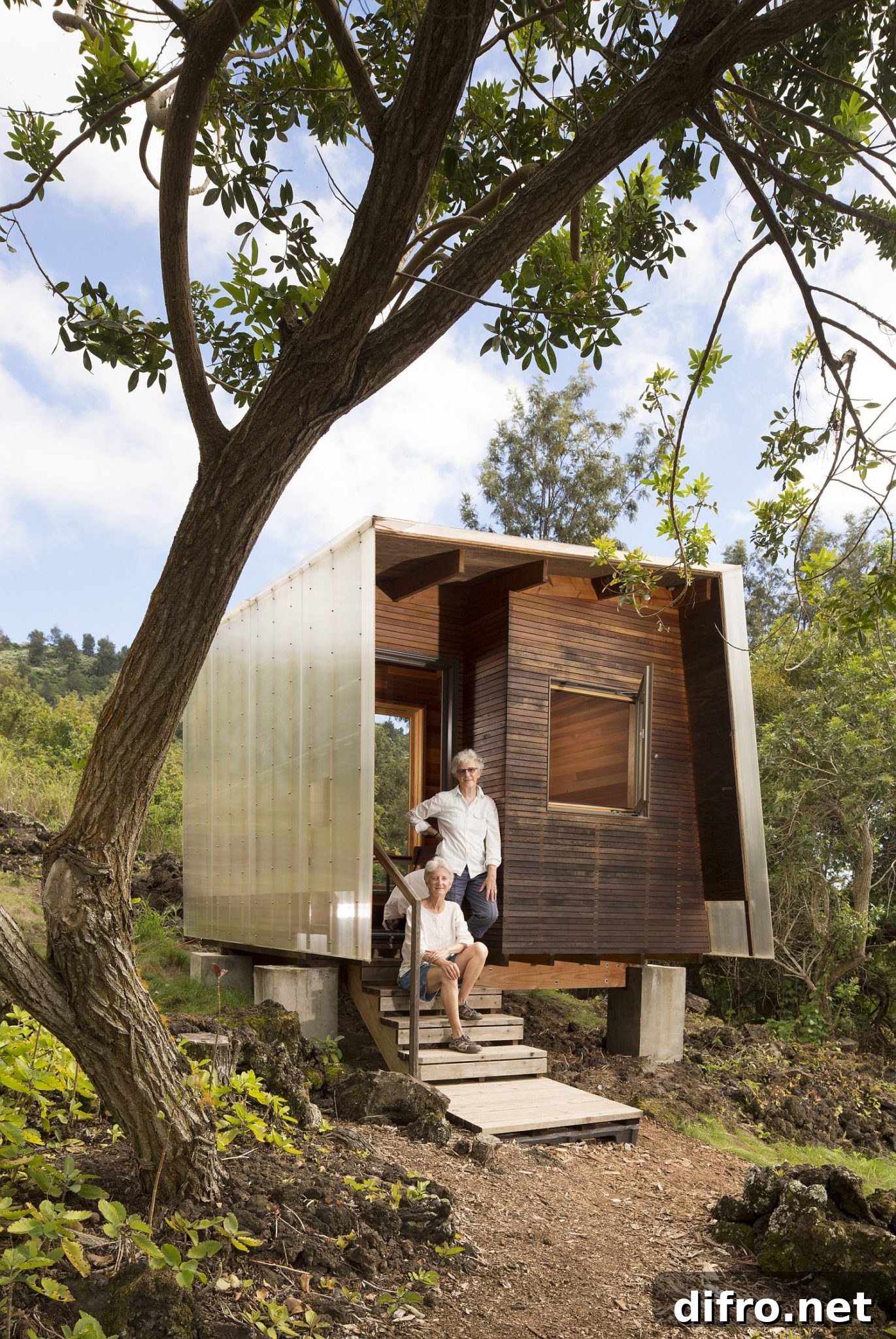
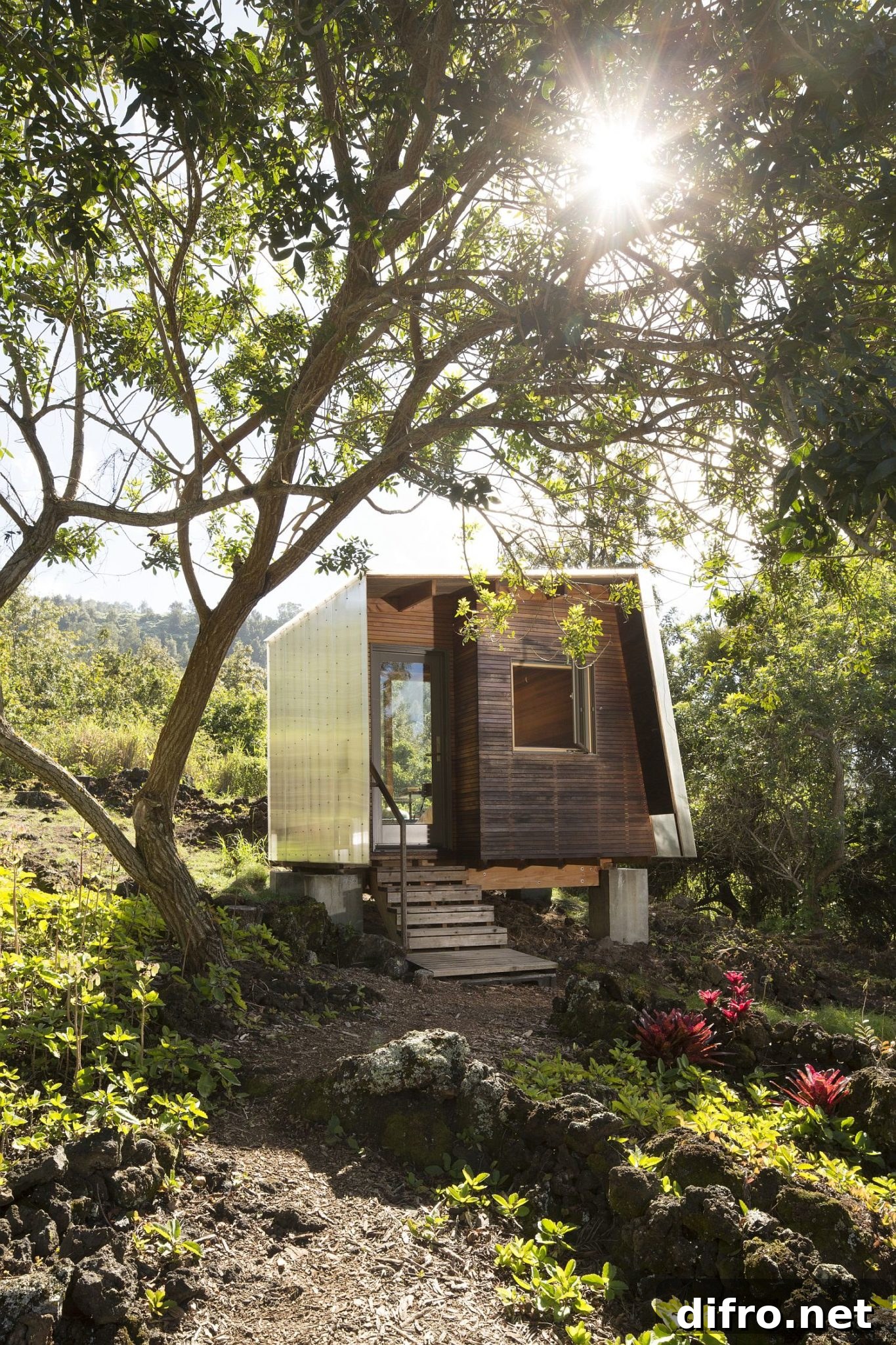
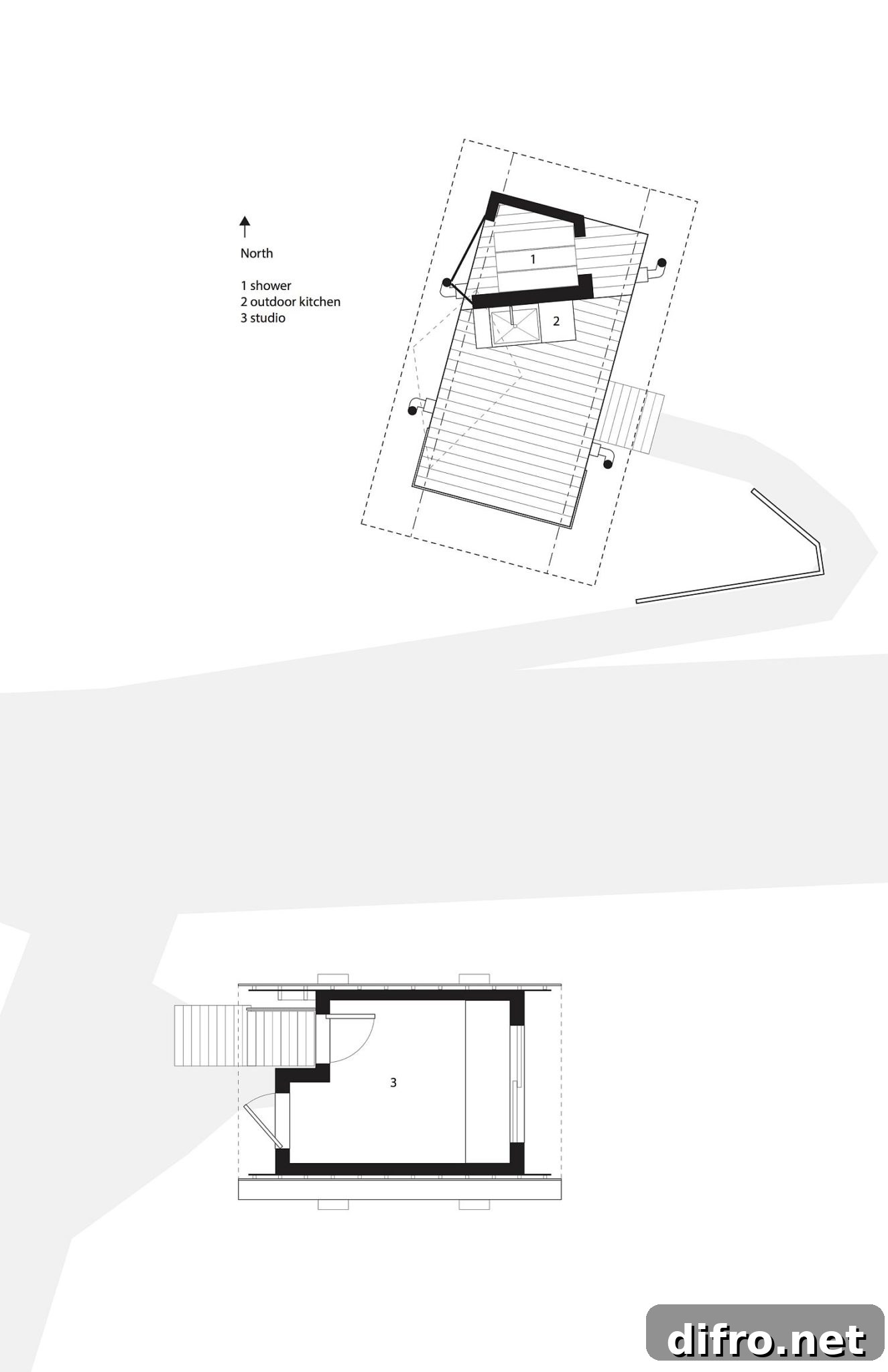
The design separates private and social functions into two distinct volumes. The enclosed pavilion, known as Mauka, houses the more intimate spaces — the bedroom and sheltered interior areas — and rests on concrete piers to minimize contact with the ground. Natural wood interiors and a restrained, minimal approach to fittings create a warm, contemplative atmosphere inside. Large windows frame the outside, so sitting in the bedroom becomes an act of looking outward: toward native plants, the ocean horizon and the dark, textured surface of the lava field that abuts the property.
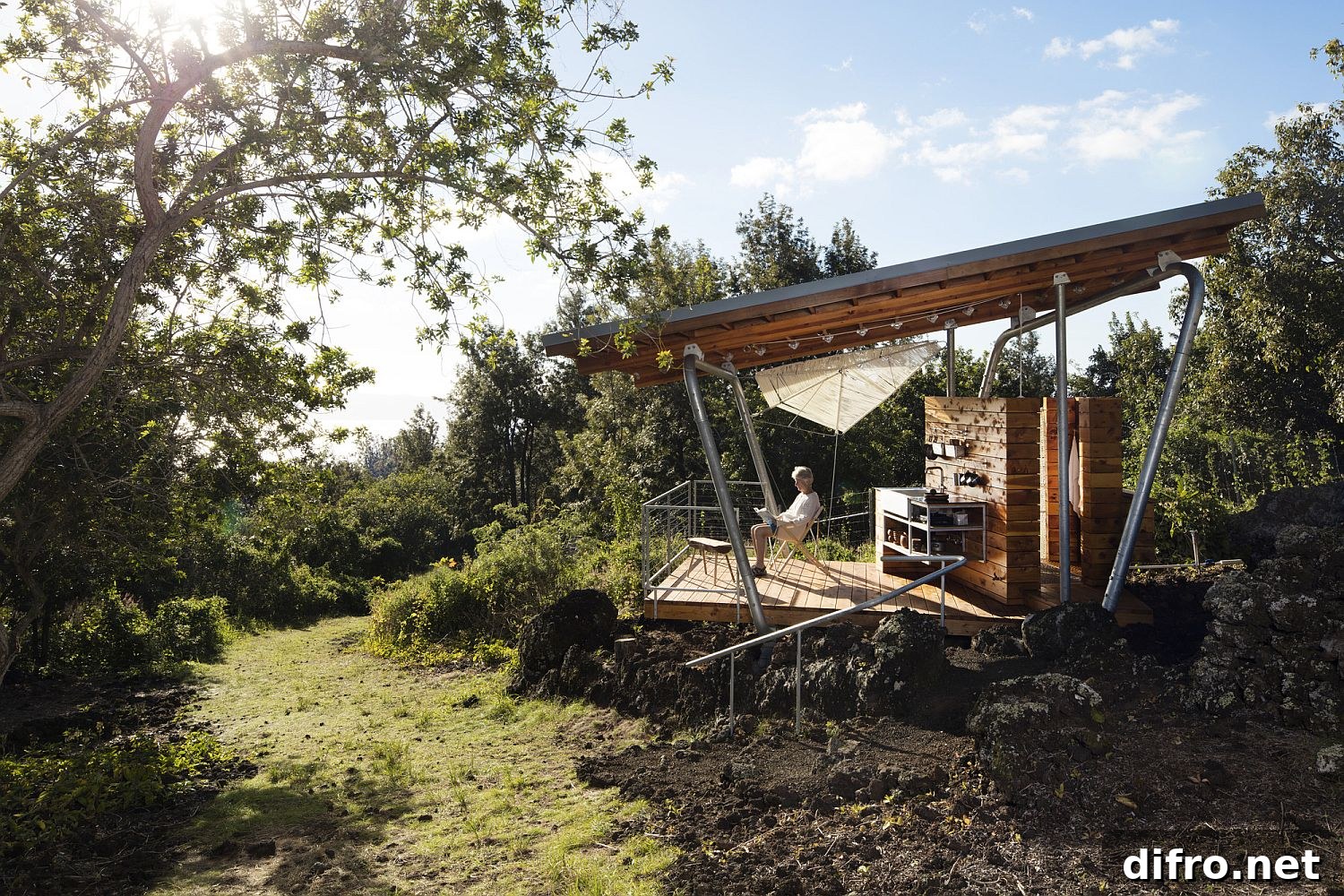
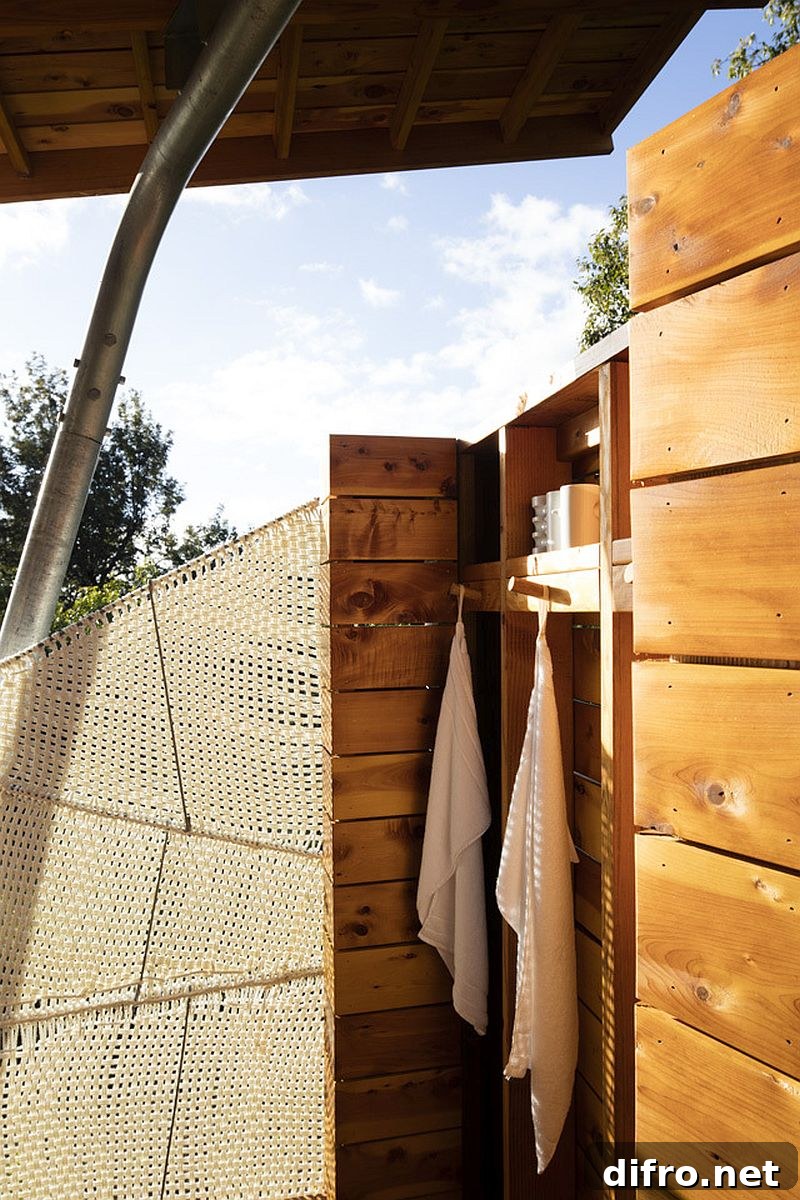
The second pavilion, Makai, is an intentionally open counterpart. It functions as an outdoor living room — a covered pavilion that contains a hidden kitchen, a lounging area on the deck and an outdoor shower — designed to extend daily life into the landscape. This separation of functions allows each pavilion to offer a distinct relationship with nature: Mauka for shelter and close contemplation, Makai for socializing, cooking and bathing beneath the sky. The result is a home that feels both private and porous, with transitions between inside and outside handled with care.
Material choices underscore the house’s low-key but thoughtful approach. Polycarbonate sheathing wraps portions of the exterior to provide diffused light and weather protection while wood anchors the interiors with warmth and tactility. The concrete piers lift the main sleeping pavilion, reducing site disturbance and helping the structure relate more gently to the volcanic ground. Together these elements create a layered aesthetic that balances shelter, translucency and robust performance in a coastal, volcanic climate.
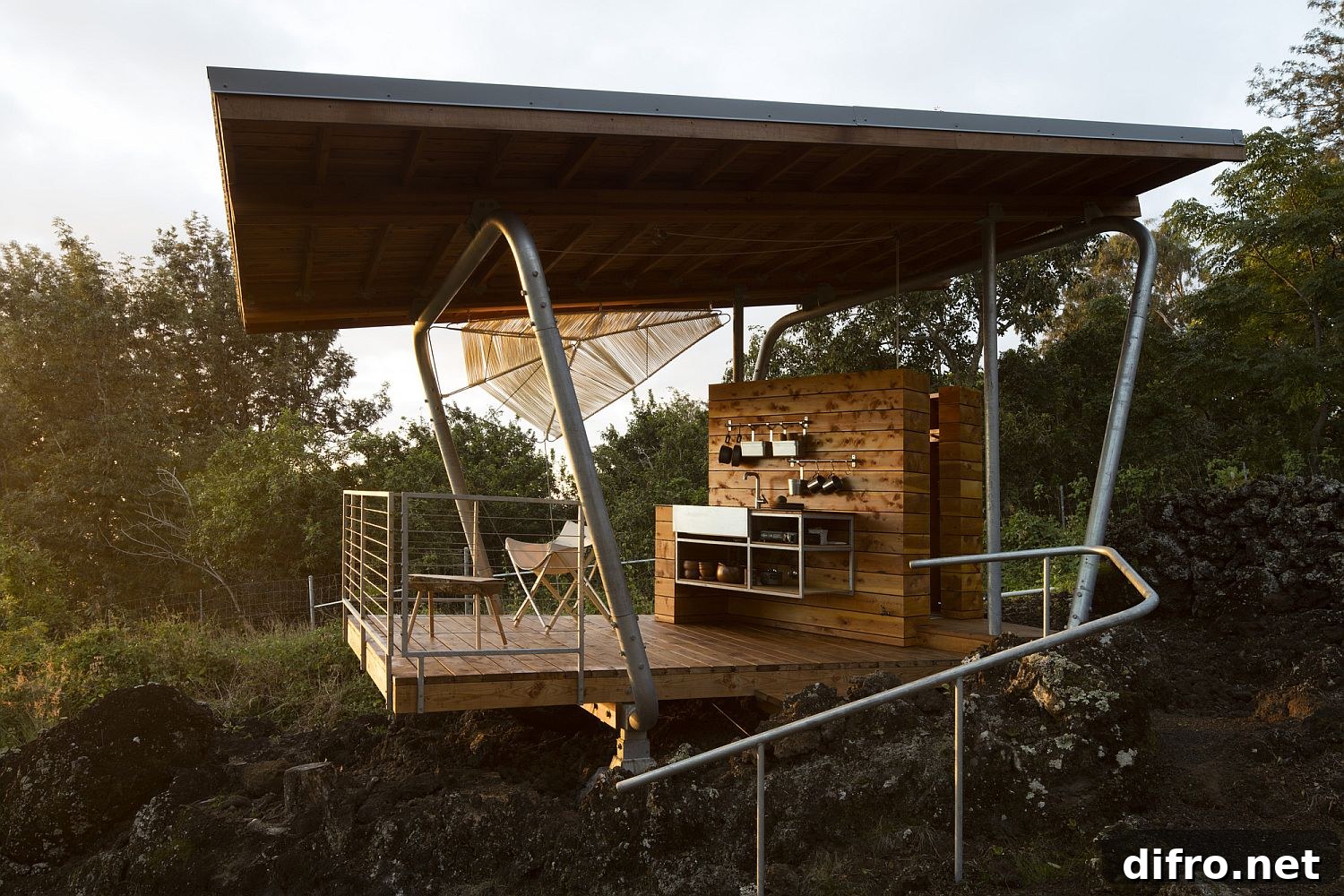
Views play a central role in the project. From the deck and the bedroom’s large window the Pacific Ocean and distant Kahoolawe Island form the horizon, while the nearby lava field provides immediate texture and contrast. Orienting openings toward these views makes the landscape feel like an extension of the home. At the same time, the outdoor pavilion offers sheltered areas for cooking and gathering, so the homeowners can choose how exposed they want to be to wind, sun and sound.
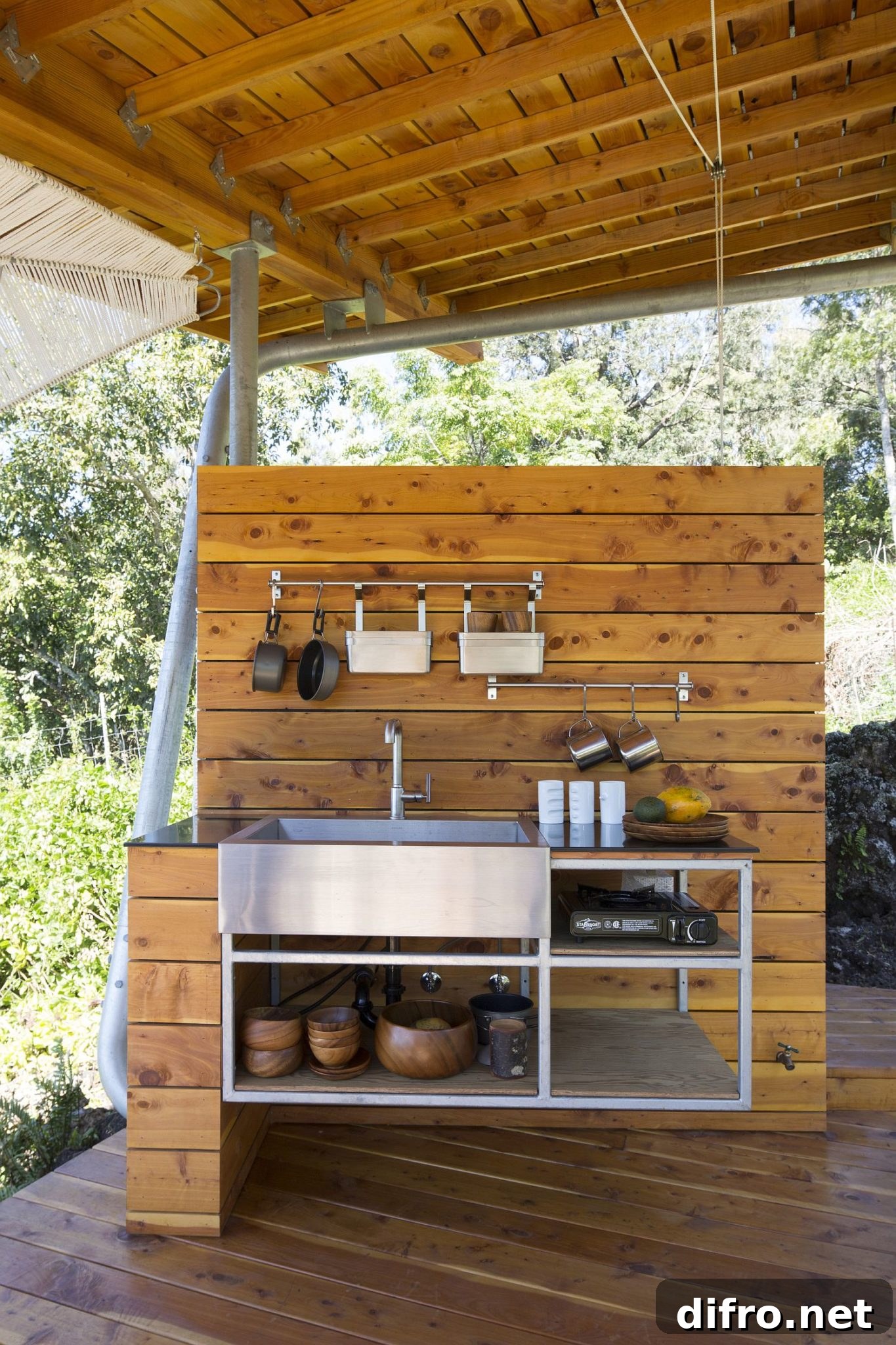
Practical considerations, including a compact plan and careful material choices, support sustainable living without calling attention to themselves. The modest footprint, natural ventilation opportunities created by the pavilion arrangement, and durable exterior cladding are all part of a strategy to minimize maintenance and energy use while maximizing comfort. The design treats sustainability as an integrated feature rather than a stylistic add-on, aligning the house’s performance goals with its aesthetic and experiential aims.
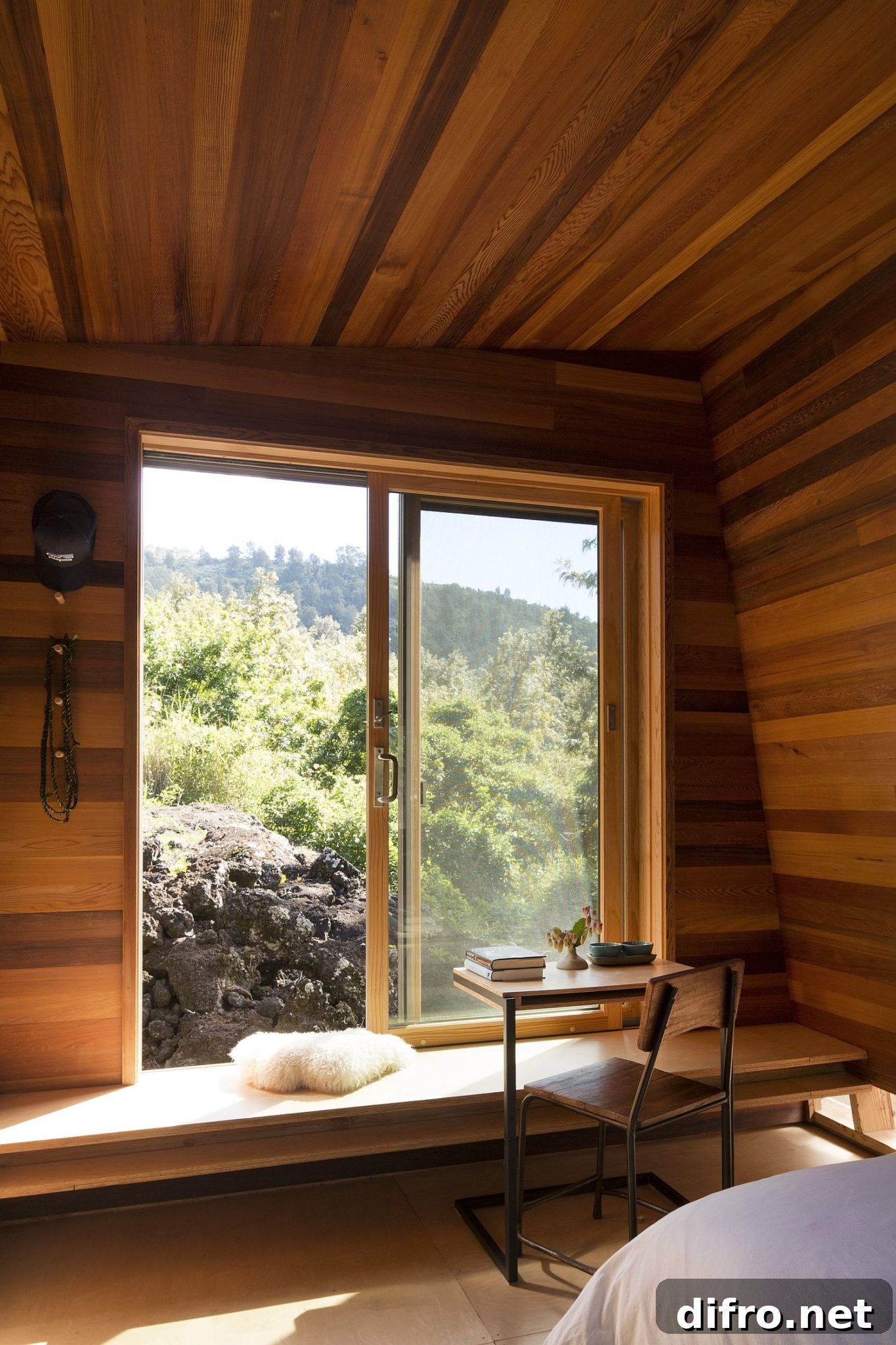
The interior rhythm is calm and functional: a bench beside the window serves multiple purposes, and simple furnishings maintain focus on the view rather than on decor. The sheltered bathroom connects visually with the outdoors, reinforcing the overall strategy of blurring boundaries and encouraging occupants to engage with the island environment at all times of day.
Designer Erin Moore is an architect and principal of FLOAT architectural research and design and Associate Professor in the Architecture Department and in the Environmental Studies Program at the University of Oregon. Moore uses her teaching, research, and design practice to explore ways that architecture reflects and reinforces ideas of nature.
Featured project: Outside House — a pair of pavilions that embrace Maui’s volcanic landscape, crafted to connect occupants with ocean views, the lava flow and the island’s natural rhythms. The design is a clear example of how modest, intentional architecture can respond to a dramatic site with restraint and clarity.