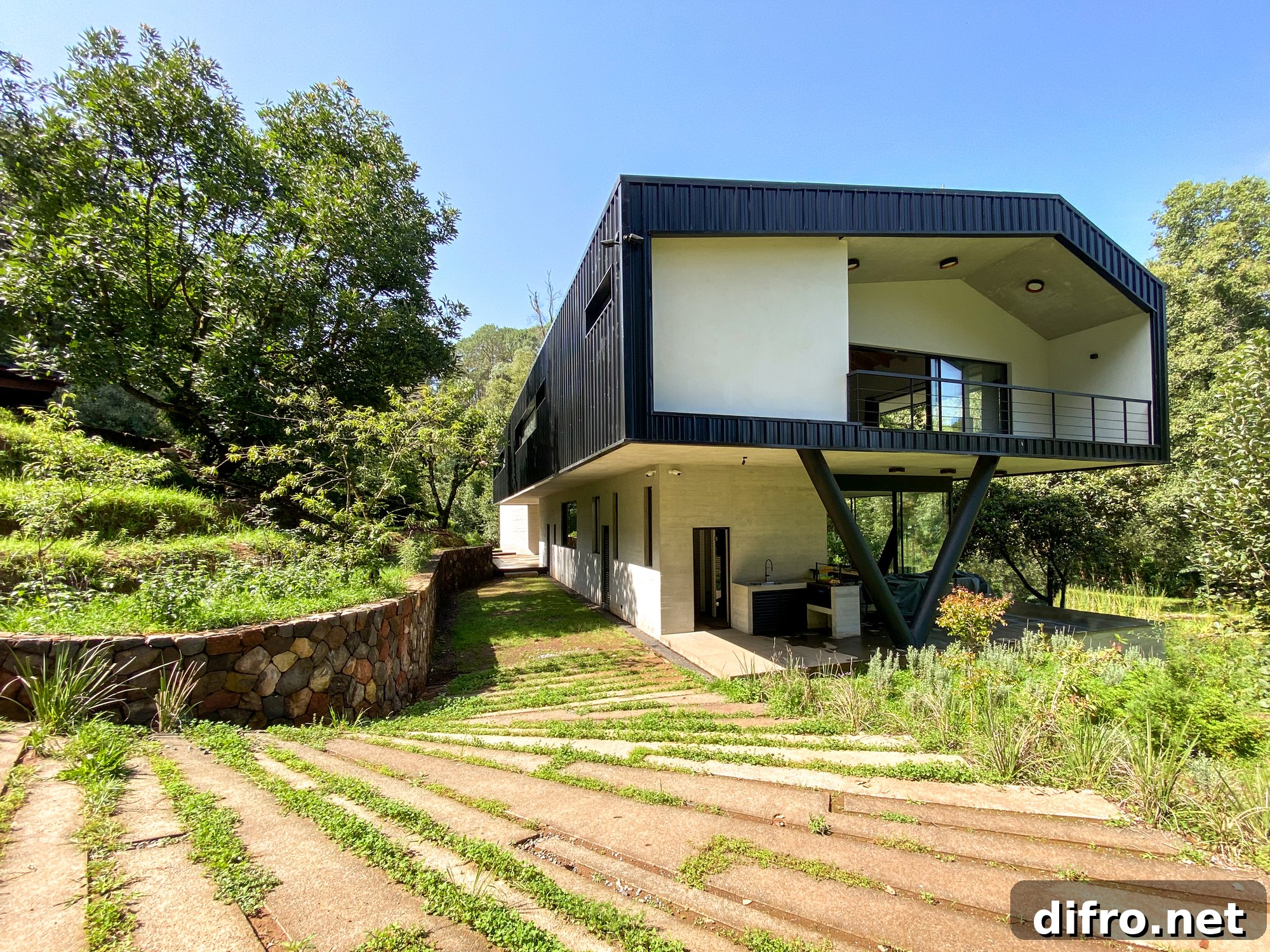
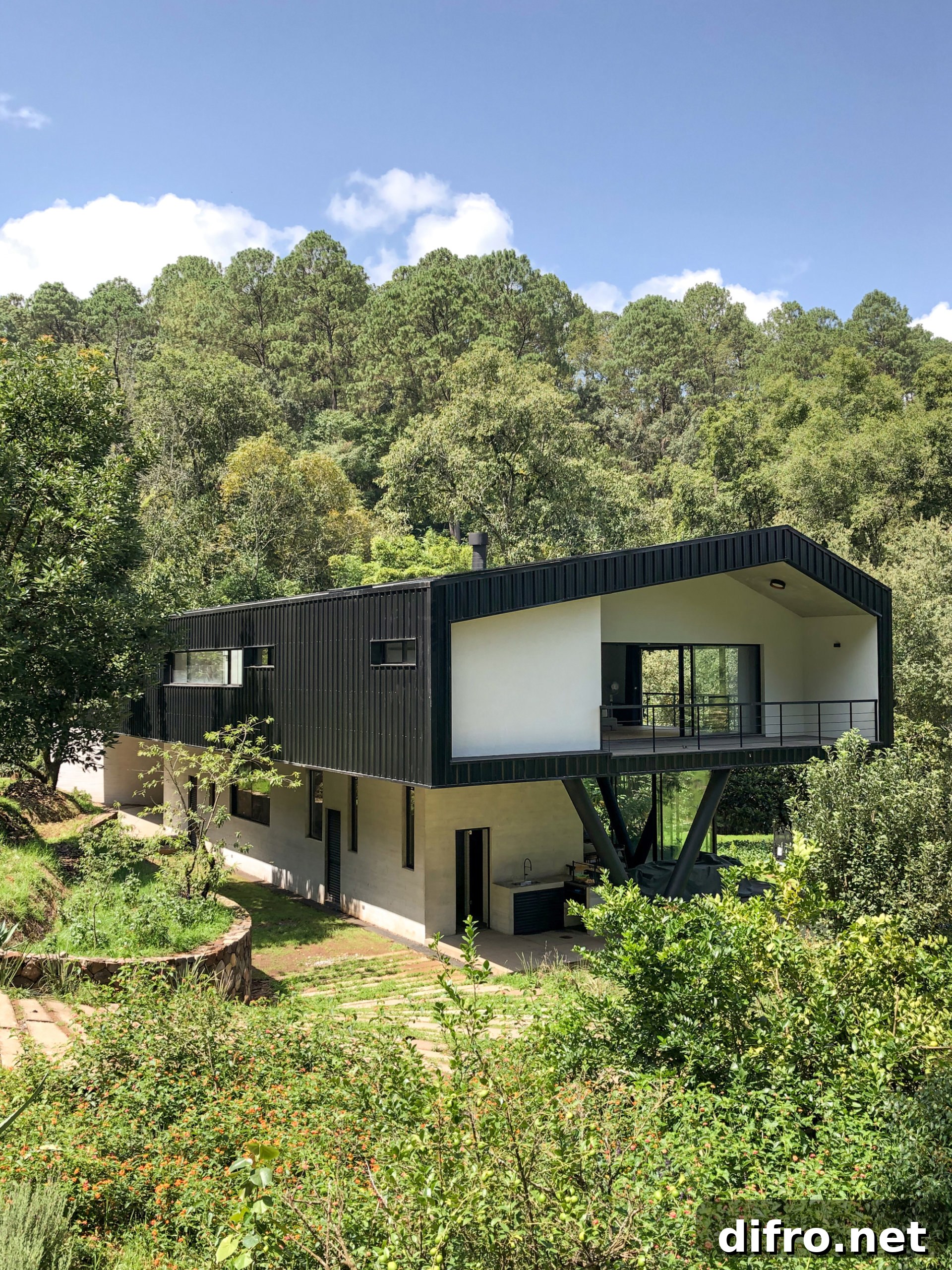
Surrounded by a lush forest, threaded with small streams and natural springs, the Ocoxal House by A-001 Taller de Arquitectura in Valle de Bravo blends vernacular form with contemporary comfort. Perched at the edge of the woods, the house takes cues from regional cabin typologies—particularly the familiar gabled roof—while arranging living and service areas across a clearly articulated two-level layout. The upper volume, with its characteristic pitched roof, contains the main living spaces and bedrooms, while the lower base accommodates private rooms and guest suites, allowing the home to sit lightly on the terrain.
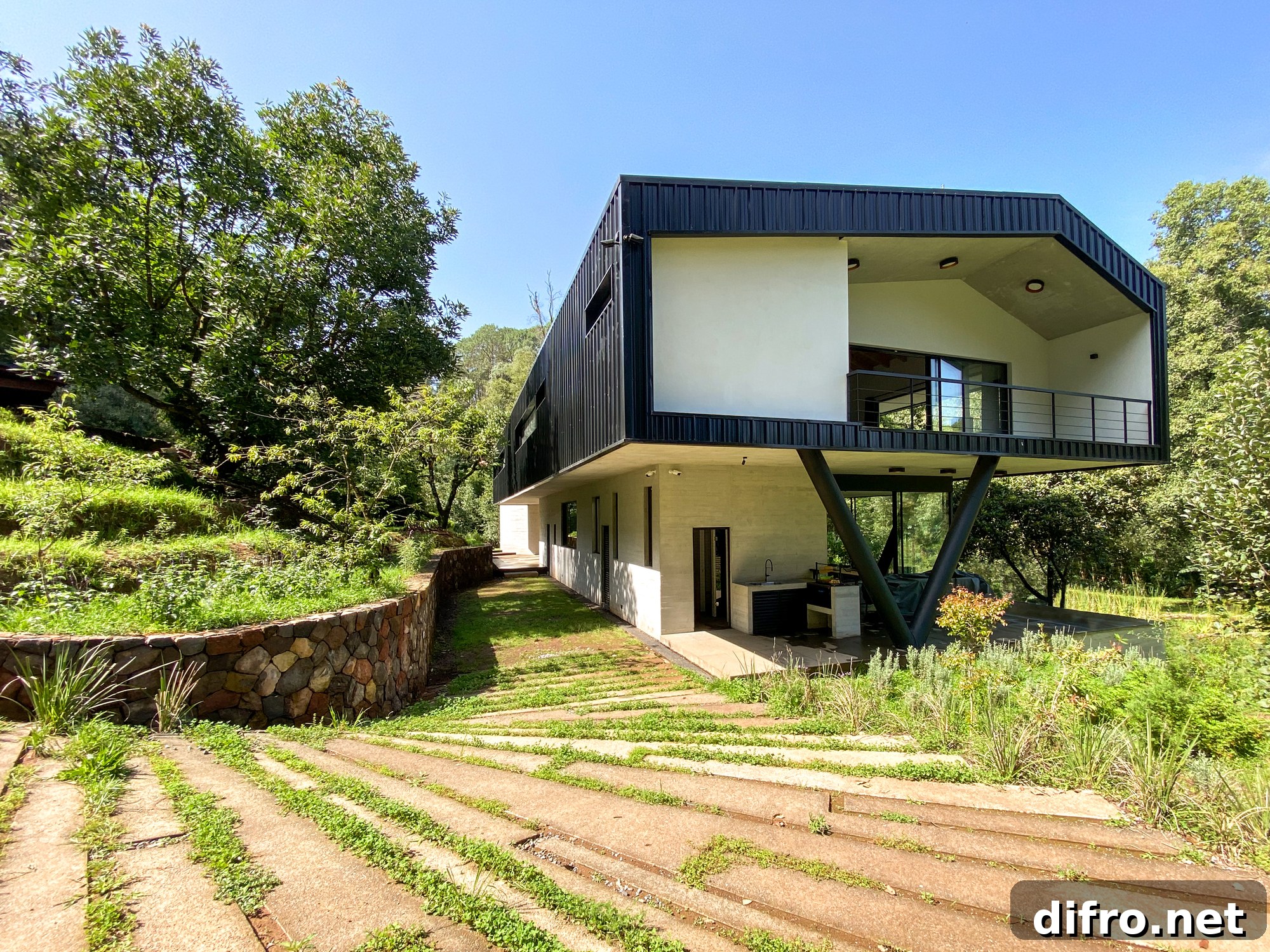
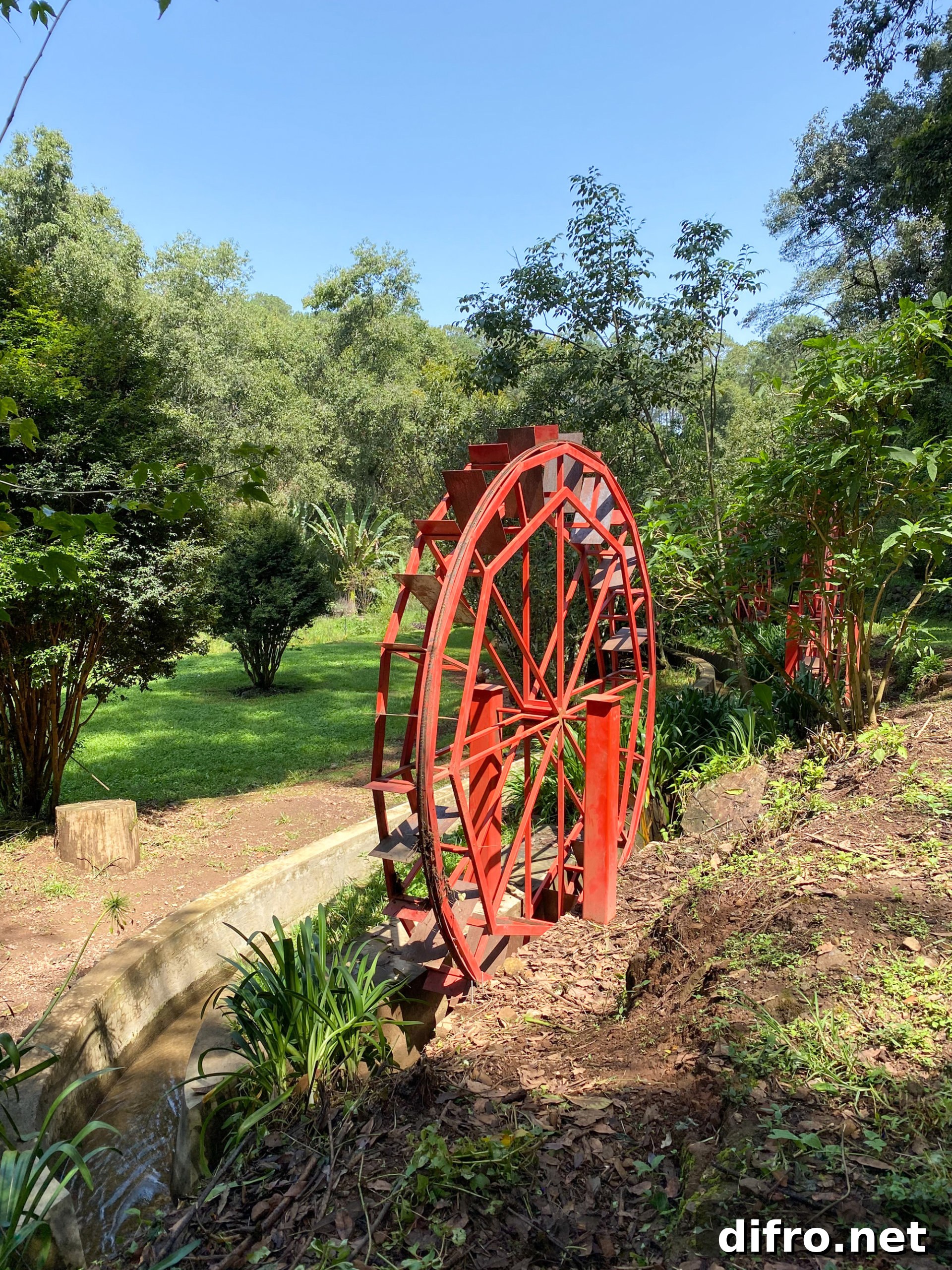
The design intentionally minimizes impact on the surrounding landscape and reduces the building’s carbon footprint. Solar panels mounted on the roof provide electricity for bathrooms, pool systems and water heating, while a hydraulic mill located on the property captures the energy of the flowing river to meet a significant portion of the house’s energy demand. Complementing these systems, a network of irrigation channels reuses water to sustain the fruit and vegetable gardens that surround the house. Together, these solutions support a lifestyle that is closely tied to the rhythms and resources of the site.
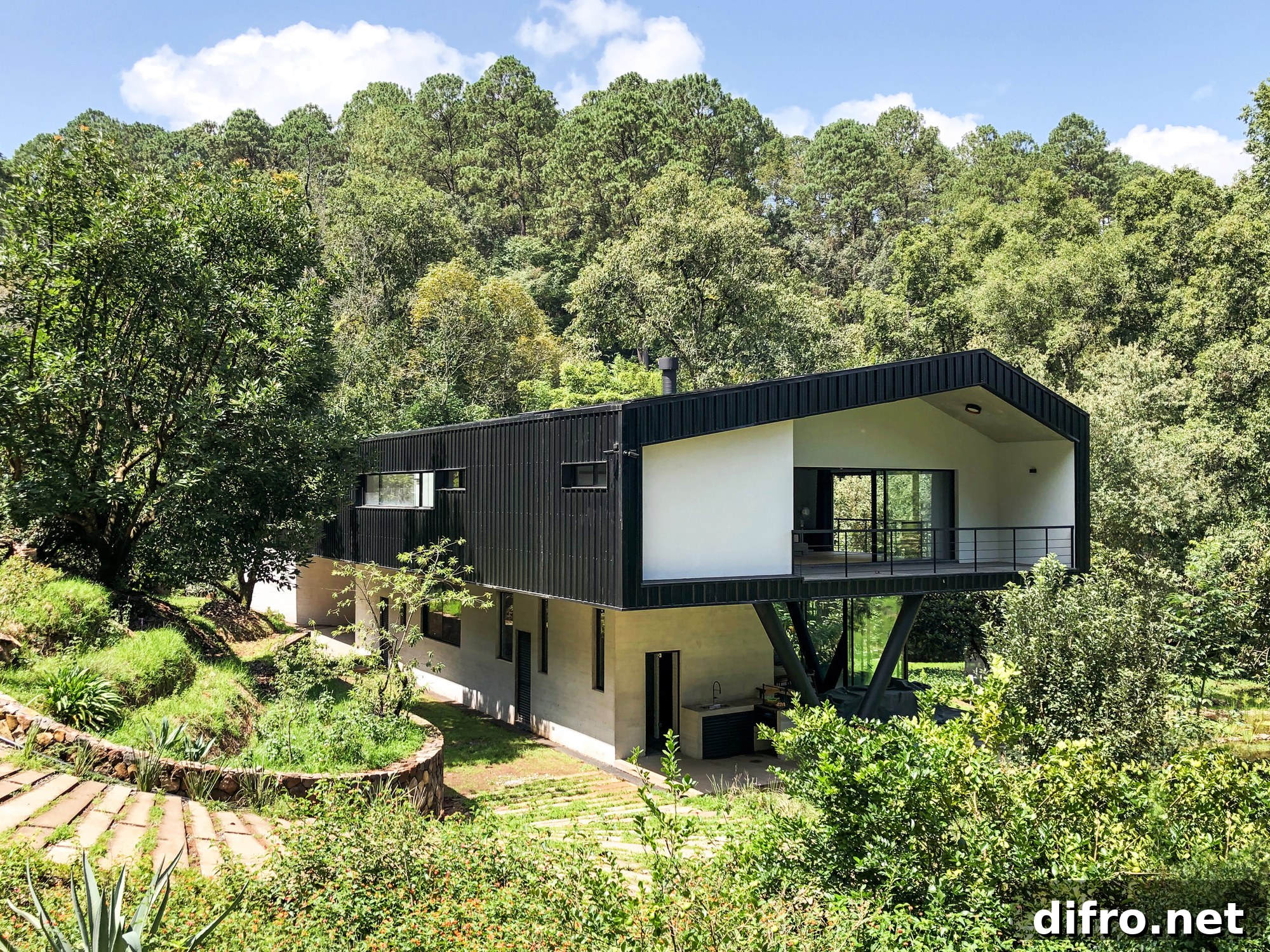
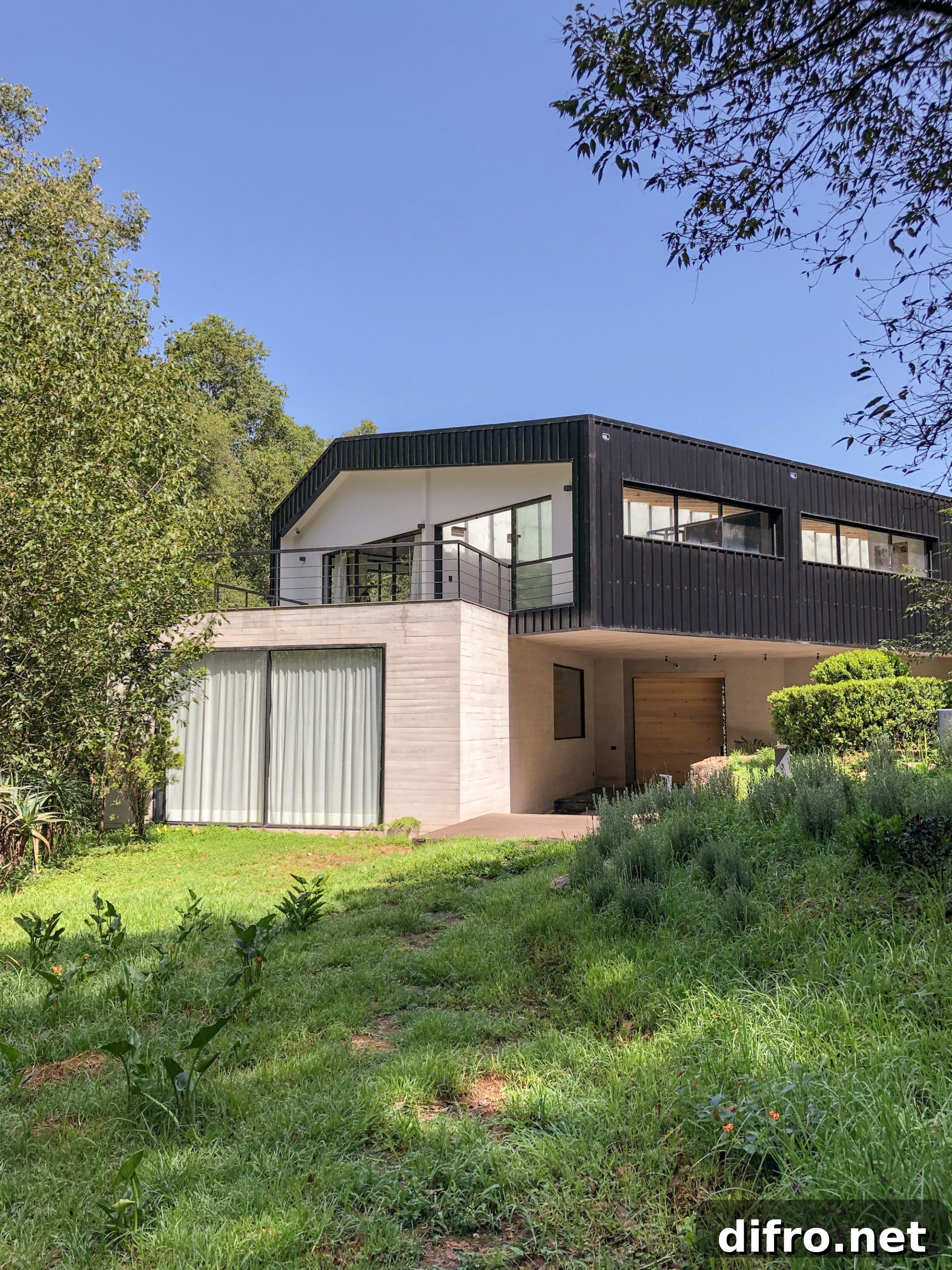
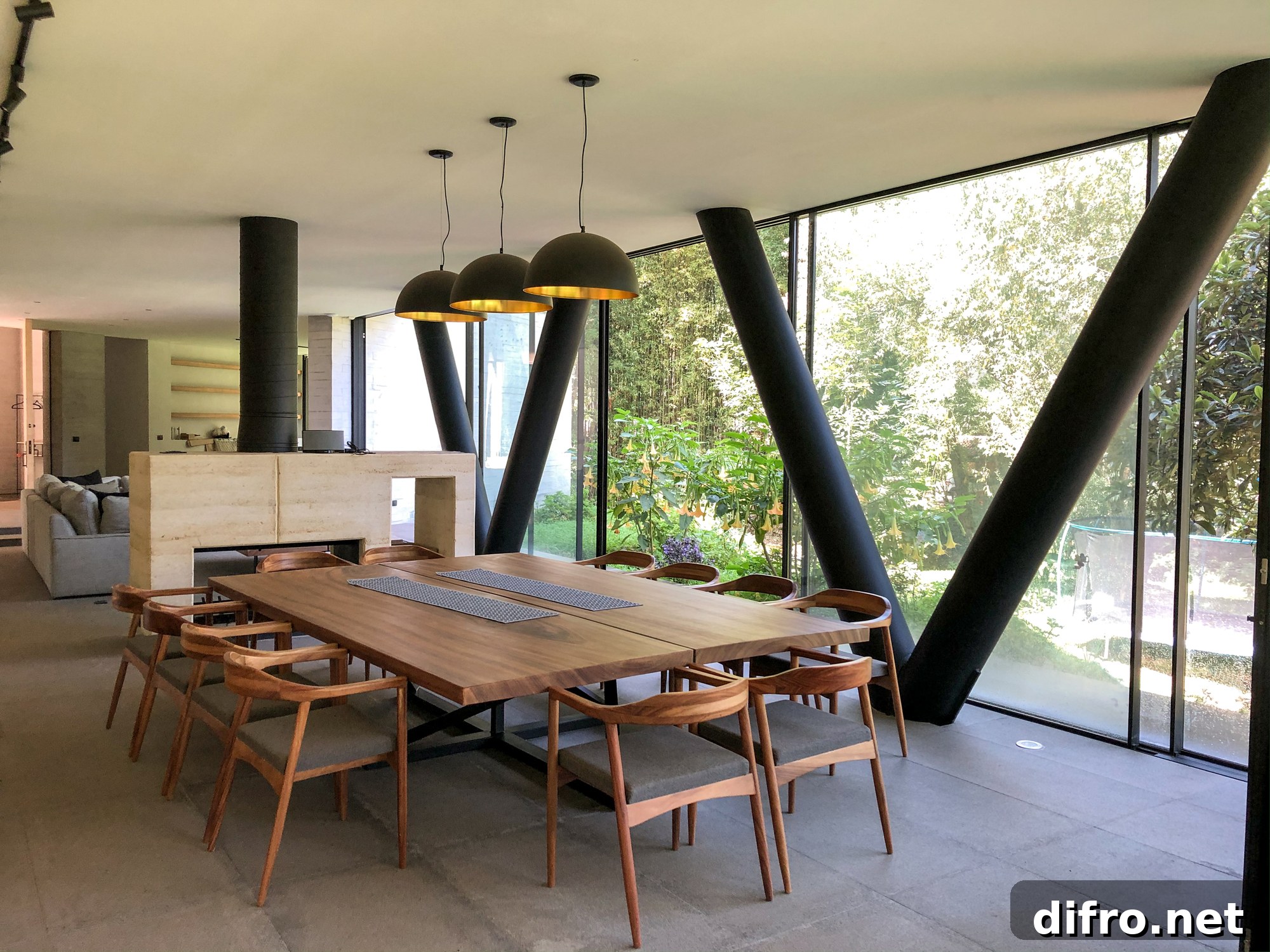
Material choices reinforce the dialogue between the contemporary and the familiar. A restrained palette of metal, glass, timber and concrete creates a modern yet warm aesthetic: dark metallic cladding frames generous glazing that opens views toward the forest, while wood and white interiors lend warmth to the living areas. Structural elements such as exposed beams and black pendant lighting provide visual contrast and rhythm, emphasizing the house’s modular composition without overpowering the natural setting.
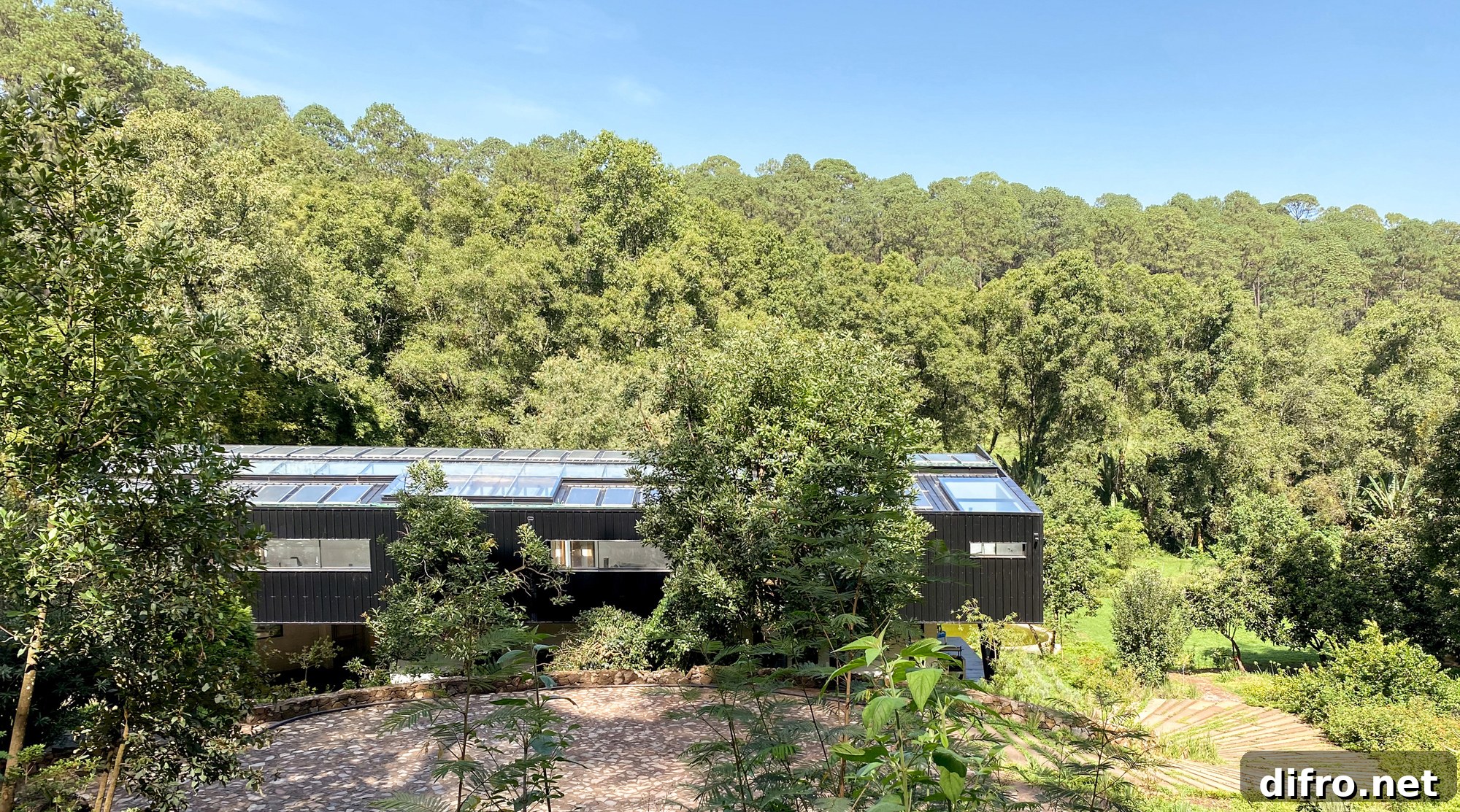
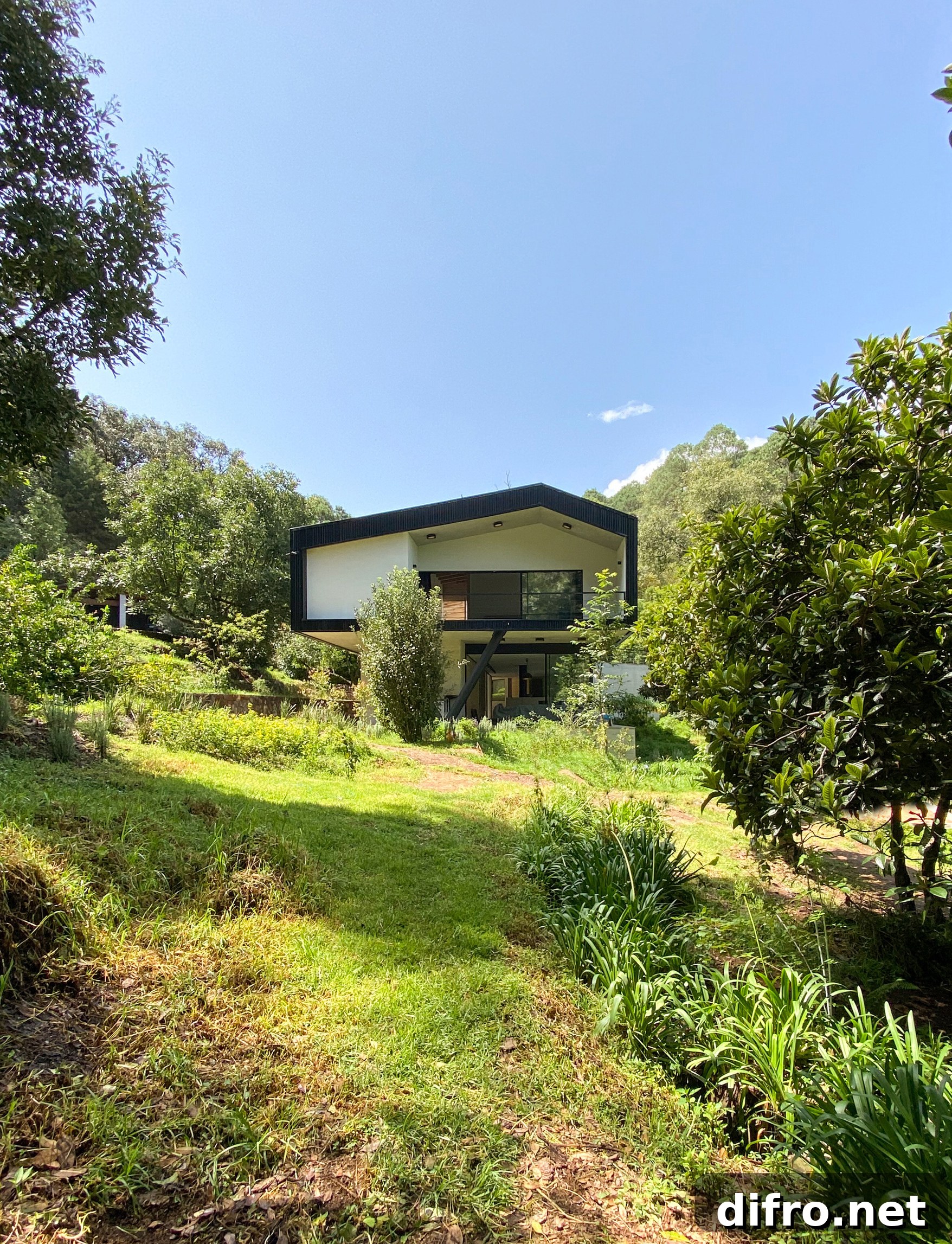
Passive bioclimatic strategies play a central role in the project’s environmental approach. The building’s orientation, shading, natural ventilation and thermal mass work together to regulate temperature and humidity, reducing dependence on mechanical heating or cooling. These passive measures are complemented by the active systems on site—solar arrays and the hydraulic mill—so that energy consumption is minimized while interior comfort is maintained year-round.
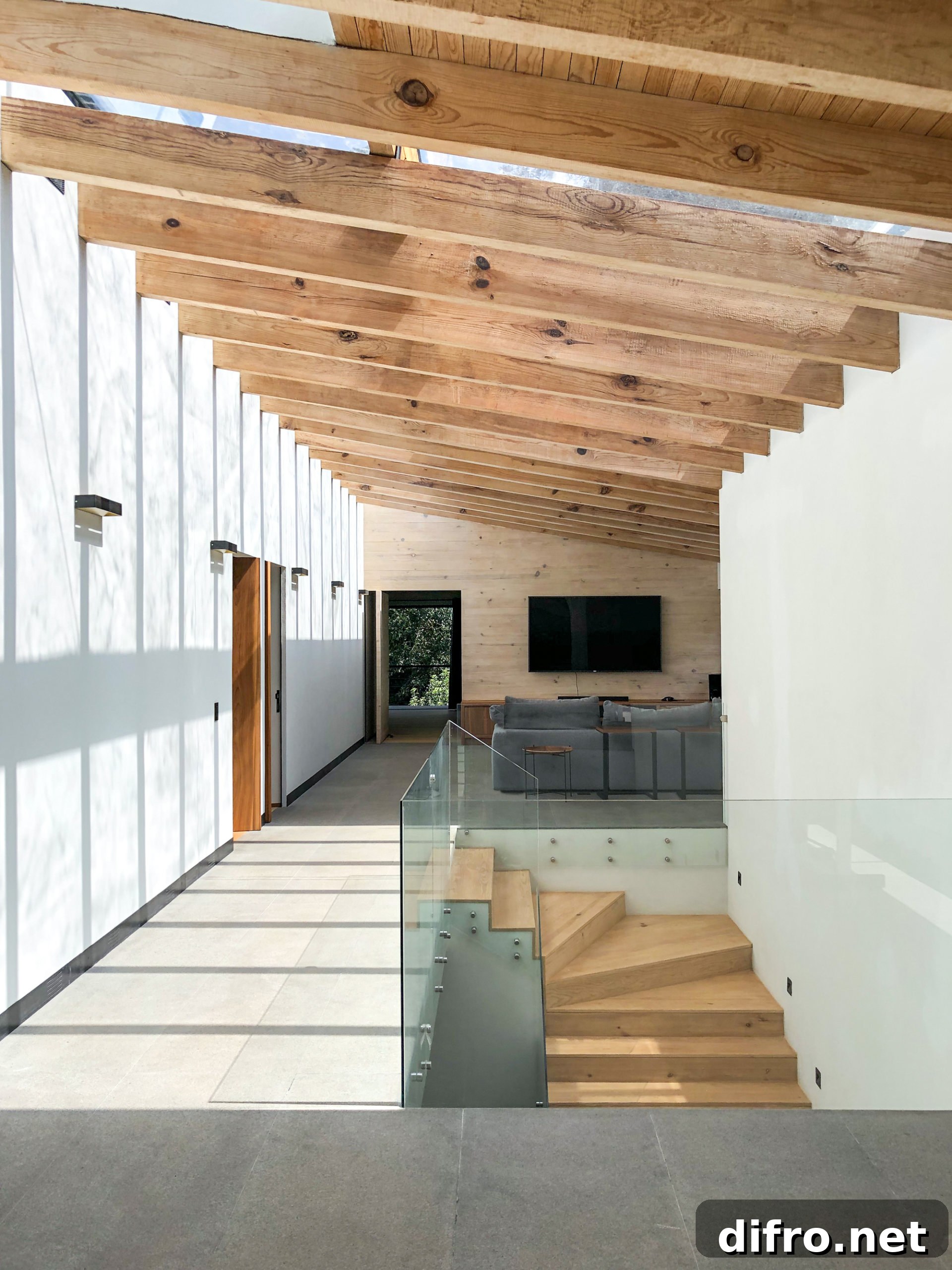
Passive bioclimatic control technologies were implemented with the intention of taking advantage of the natural resources of the environment and regulating the different factors that affect habitability and comfort, such as humidity and temperature.
Landscape design respects the existing ecology: native vegetation is largely preserved and integrated into the project, while cultivated areas use gravity-fed channels for irrigation. These small channels both highlight the property’s water features and provide a practical means to nurture vegetable and fruit gardens without intensive mechanical input. The result is a home where built and natural systems coexist, each supporting the other.
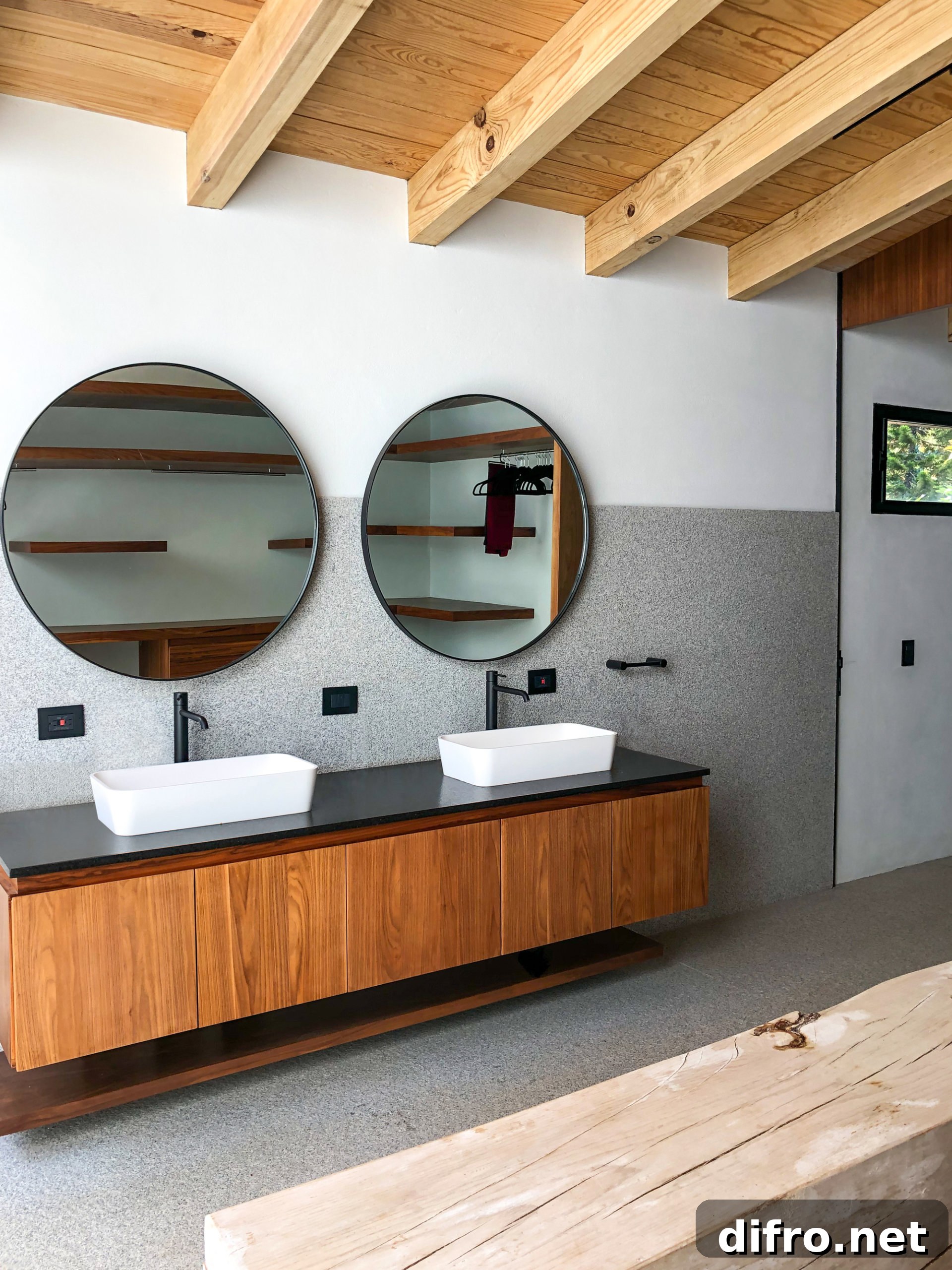
Inside, the rooms balance openness with intimacy. Wood-clad ceilings and well-proportioned glazing allow daylight to fill the interiors, while concrete floors and carefully placed thermal mass contribute to a comfortable indoor climate. Bathrooms and service areas are designed with the same restraint and material honesty, combining functionality with a clean, contemporary aesthetic.
Ocoxal House demonstrates how thoughtful architecture can honor local tradition while embracing sustainable technologies. By combining passive strategies, renewable energy and careful site stewardship, the project creates a quietly modern retreat that responds to its environment and makes everyday living more regenerative.