Often the most successful architecture is the simplest—clear, efficient and thoughtfully resolved to meet specific site and budget constraints. The Hotchkiss Residence, designed by Scott Edwards Architecture, replaces a decades-old modular home on a long-held family lot and demonstrates how disciplined design can deliver comfort, longevity and strong visual appeal without extravagance. Built on a modest budget of $550,000, the project prioritizes structural quality, durable materials and practical livability over unnecessary ornament, resulting in a home that performs well year after year.
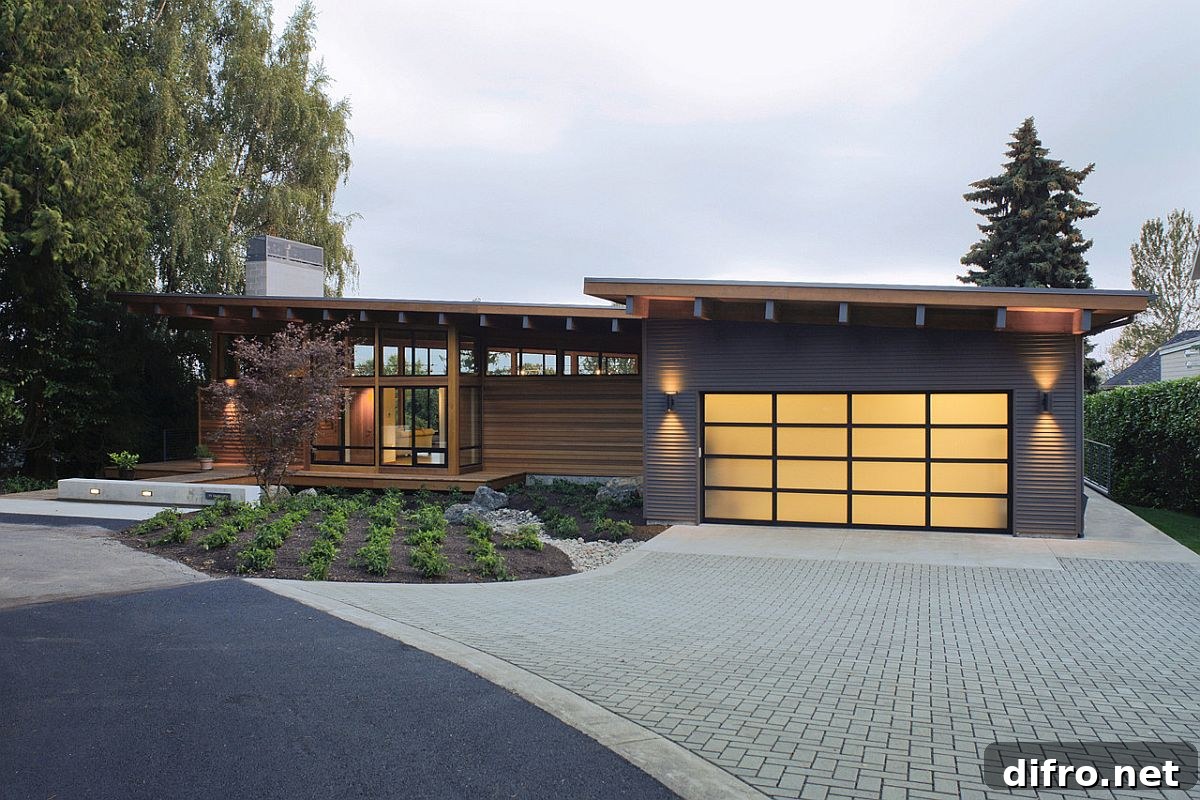
Set to take advantage of sweeping views toward the Columbia River and distant Mt. Hood, the house emphasizes a thoughtful indoor-outdoor relationship. A sequence of sliding glass doors and expansive windows visually and physically connect the living areas to the landscape, inviting natural light while preserving privacy. The design responds directly to the Pacific Northwest climate: a sloping, slate-clad roof and careful roof overhangs help manage persistent rain, and durable exterior materials—wood, glass and concrete—were selected for their low maintenance and longevity.
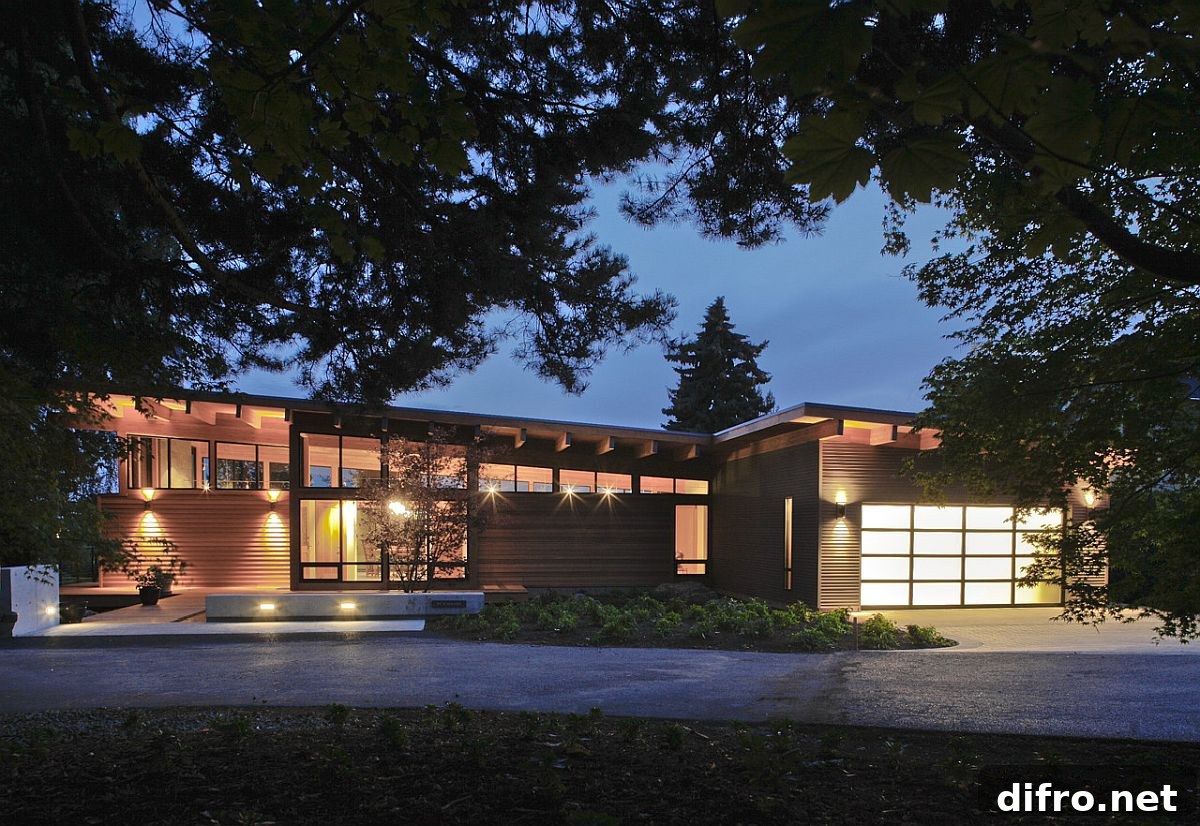
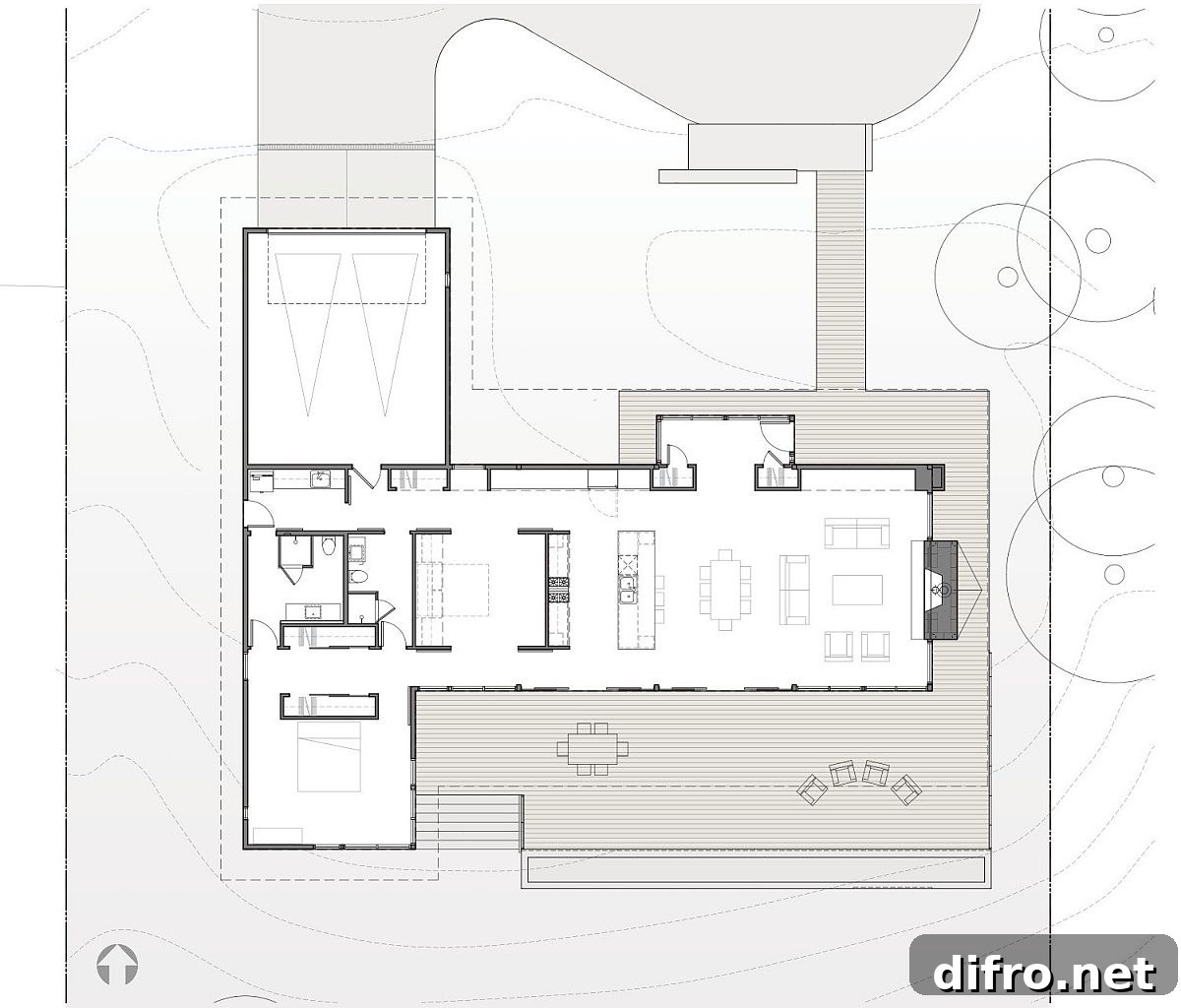
Passive solar strategies and orientation play an important role in the home’s environmental performance. The plan and window placement are arranged to capture winter sunlight deep into the interior spaces for natural warming, while generous overhangs and a single-sloped roof protect openings from heavy rain and summer sun. These simple but effective passive heating and shading strategies reduce reliance on mechanical systems and contribute to overall comfort throughout the year.
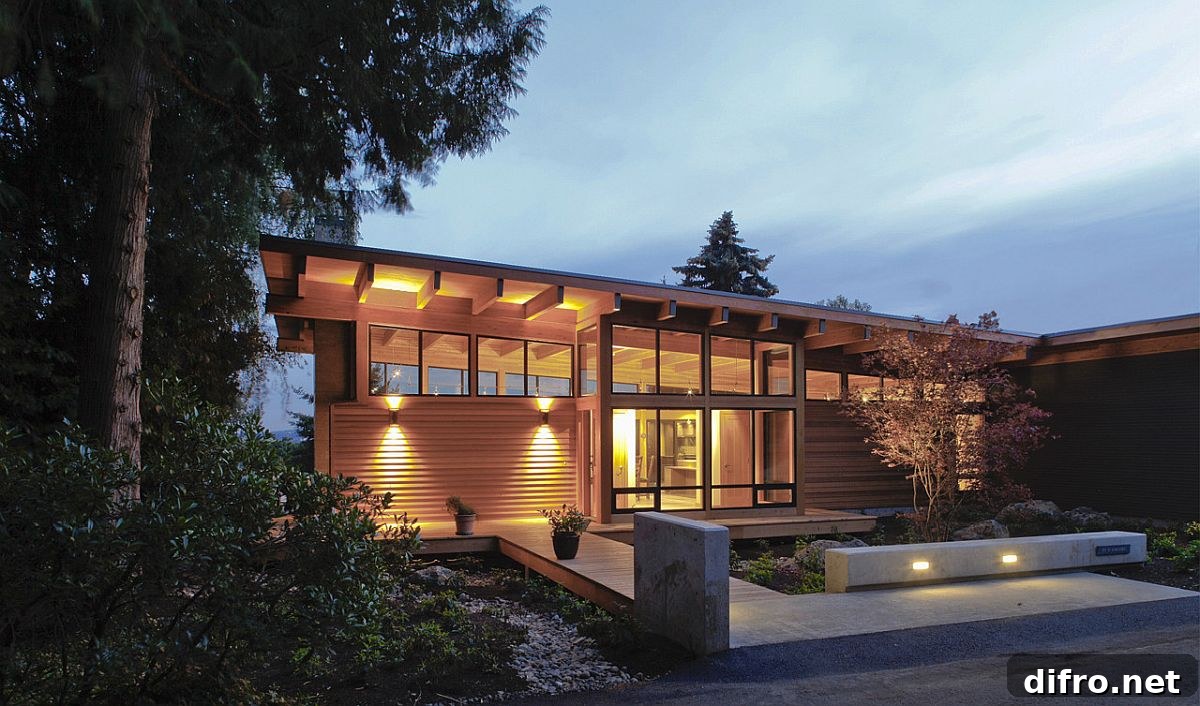
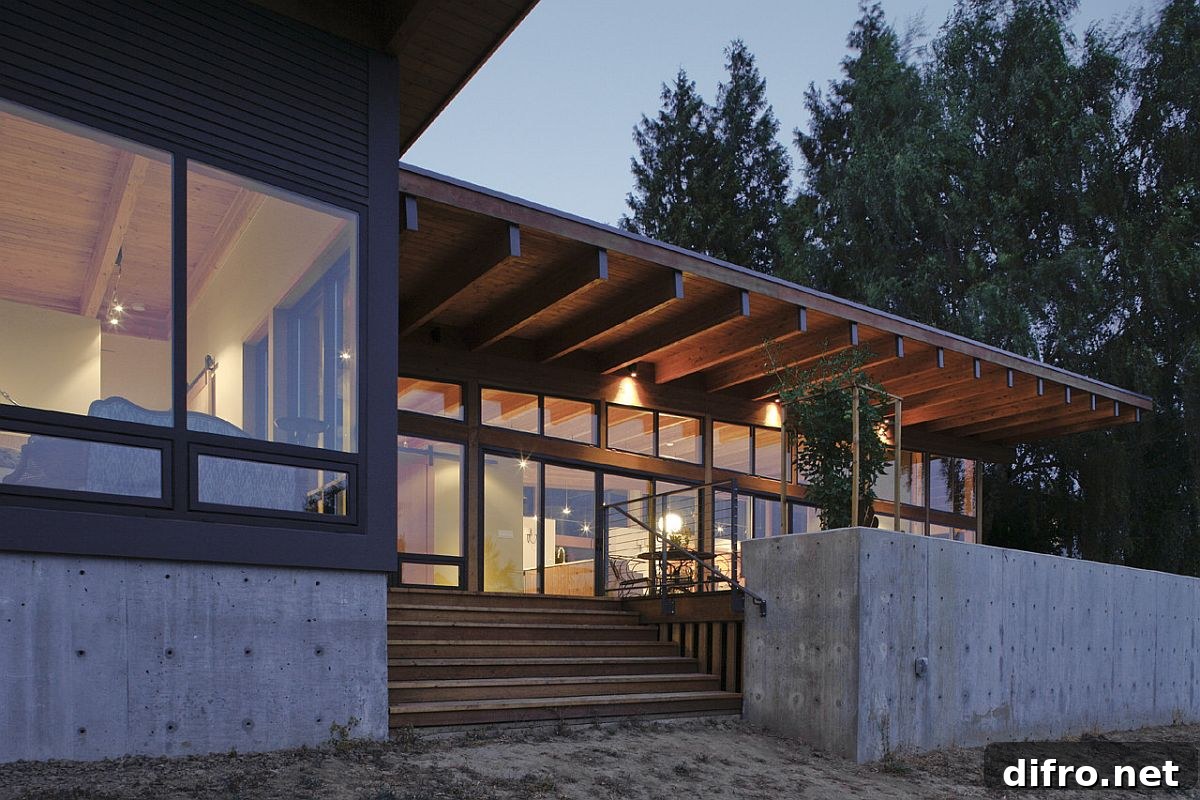
The house’s single-sloped roof begins over the bedroom wing and rises to its highest point above the living area, cantilevering out to shelter the south-facing deck. This simple roof gesture not only provides visual drama and volume inside the living space but also responds practically to fast-changing Northwest weather conditions. The covered deck becomes an extension of the living room, a protected outdoor room where residents can enjoy the view, entertain guests, or relax in a semi-sheltered setting.
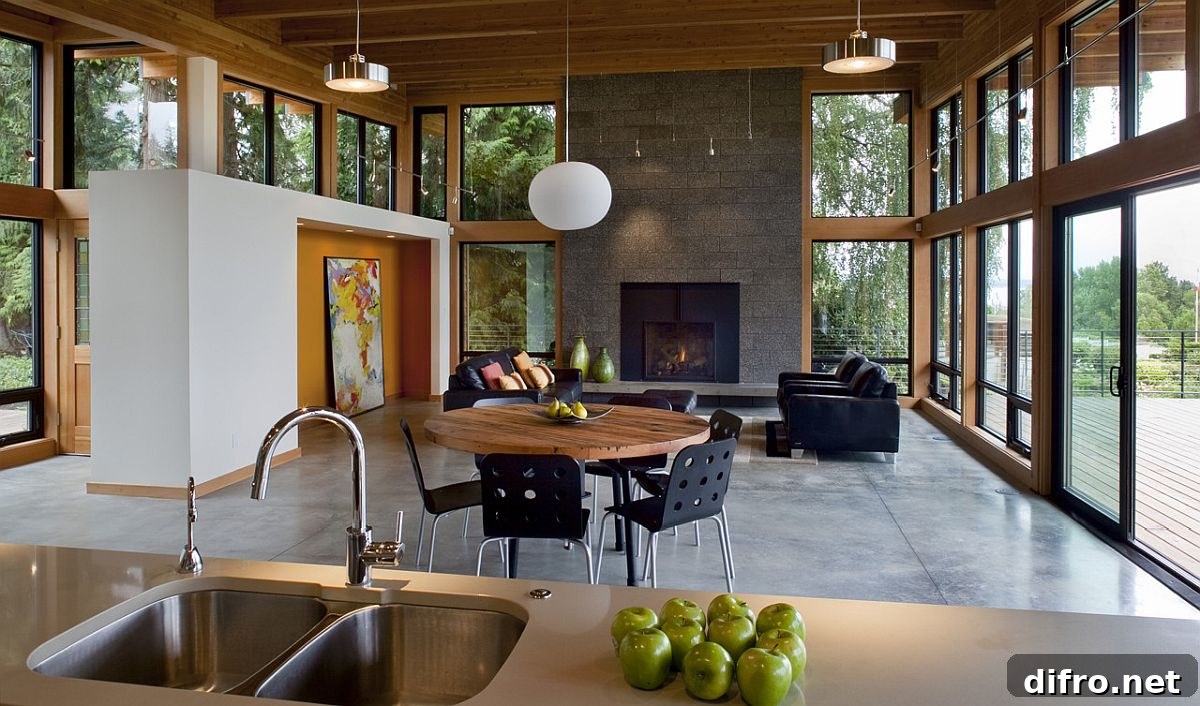
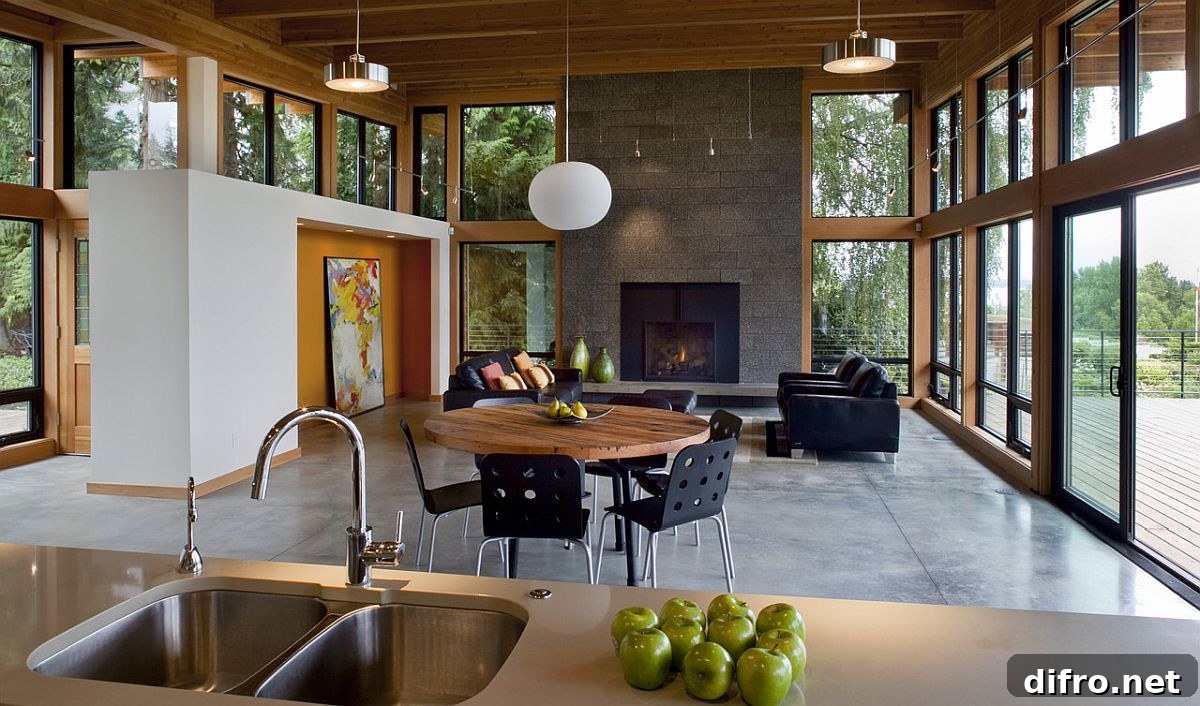
Inside, an open-plan living and dining area opens onto the deck, creating a continuous flow for family life and casual entertaining. Natural materials and a restrained palette—warm wood tones, exposed concrete and clear glass—create a relaxed, contemporary interior ambiance. Thoughtful joinery, practical built-in shelving and a compact kitchen island provide everyday functionality without excess, supporting the house’s overall goal of sensible, durable design.
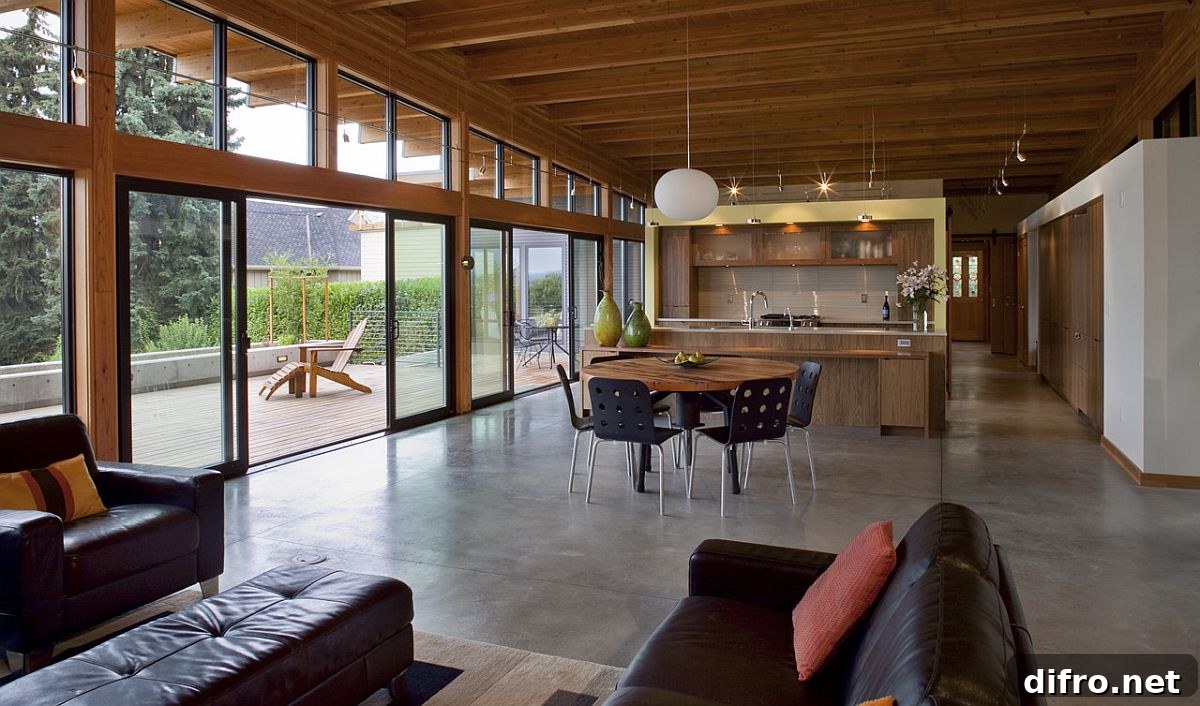
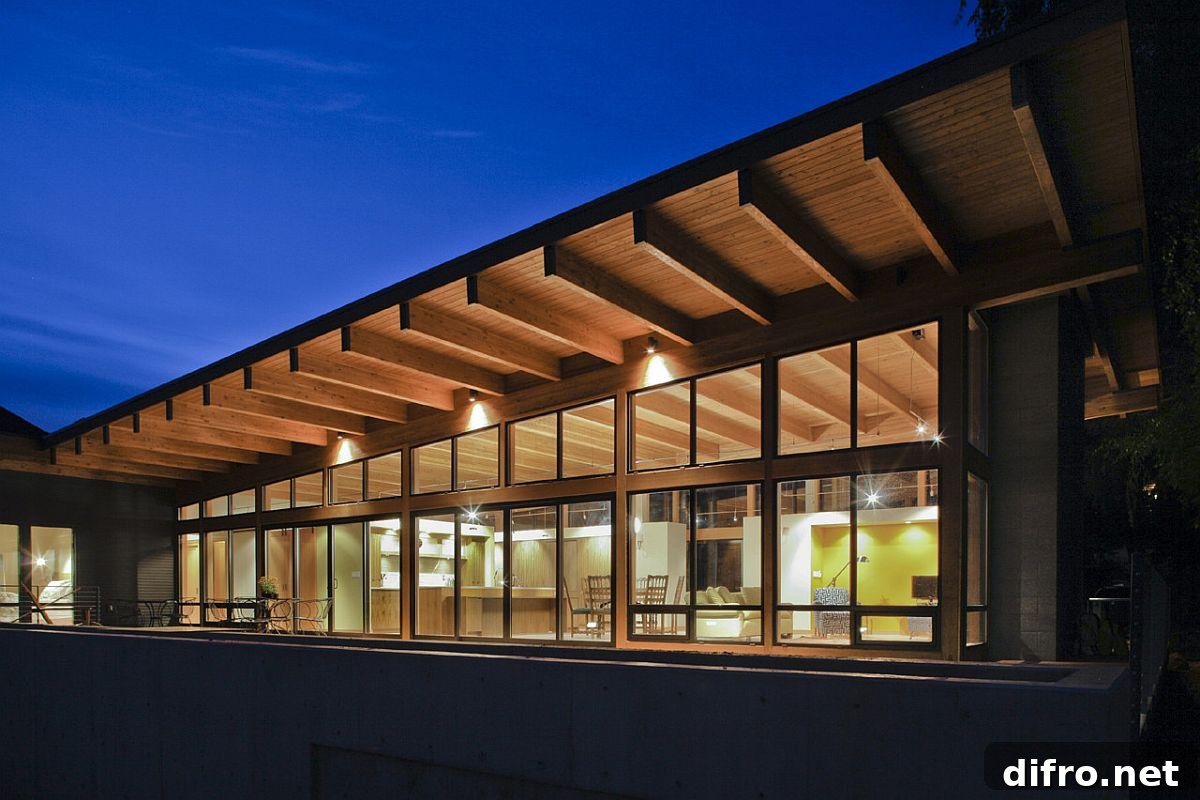
The single-sloped roof begins at the bedroom suite and rises above the living room, cantilevering over the south-facing deck to shelter the outdoor living area. The house is linked by bridges to the homes of the owners’ children on adjacent lots, completing a multi-house family compound while preserving privacy and individual identity for each residence.
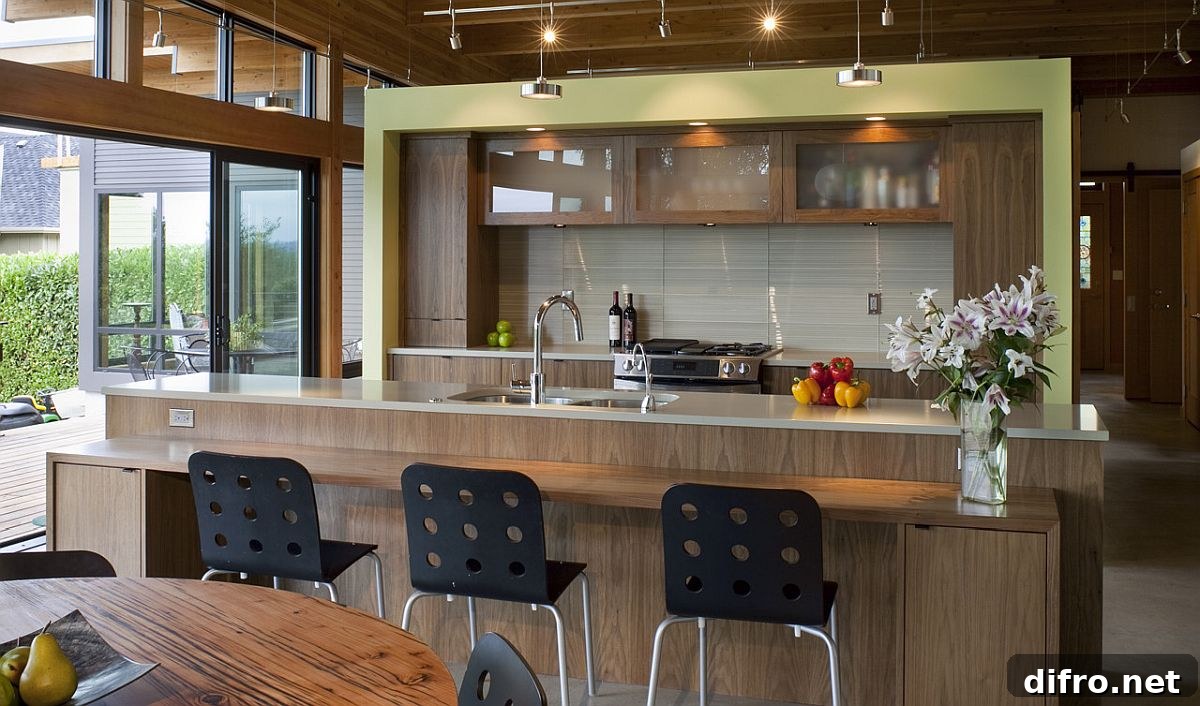
Details throughout the interior emphasize simplicity and durability: a warm wooden island anchors the kitchen, built-in shelving provides smart storage, and clean lines keep the spaces feeling open and uncluttered. The combination of finishes—timber, concrete and glass—delivers a balanced, relaxed environment that fits the homeowners’ lifestyle and the property’s natural setting.
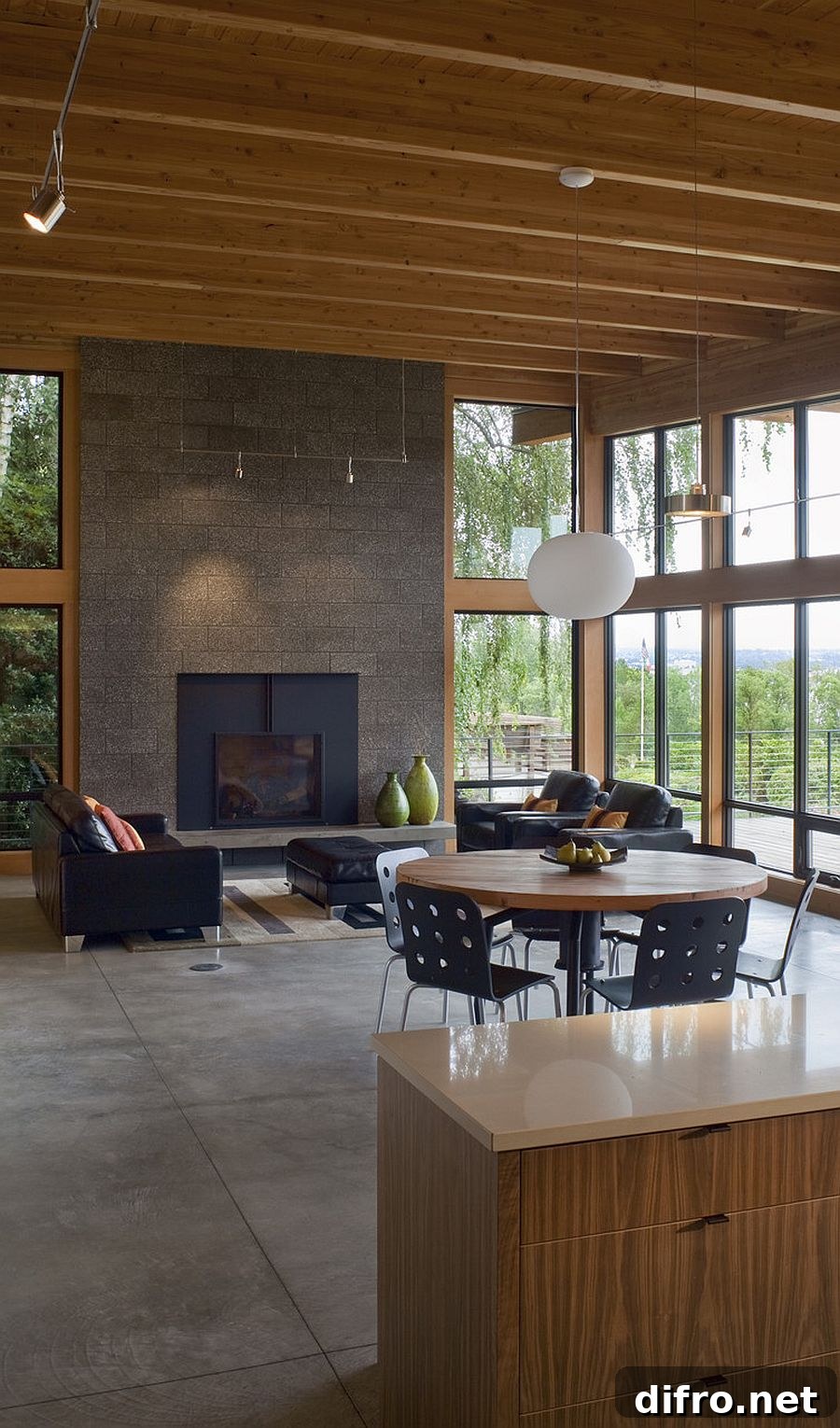
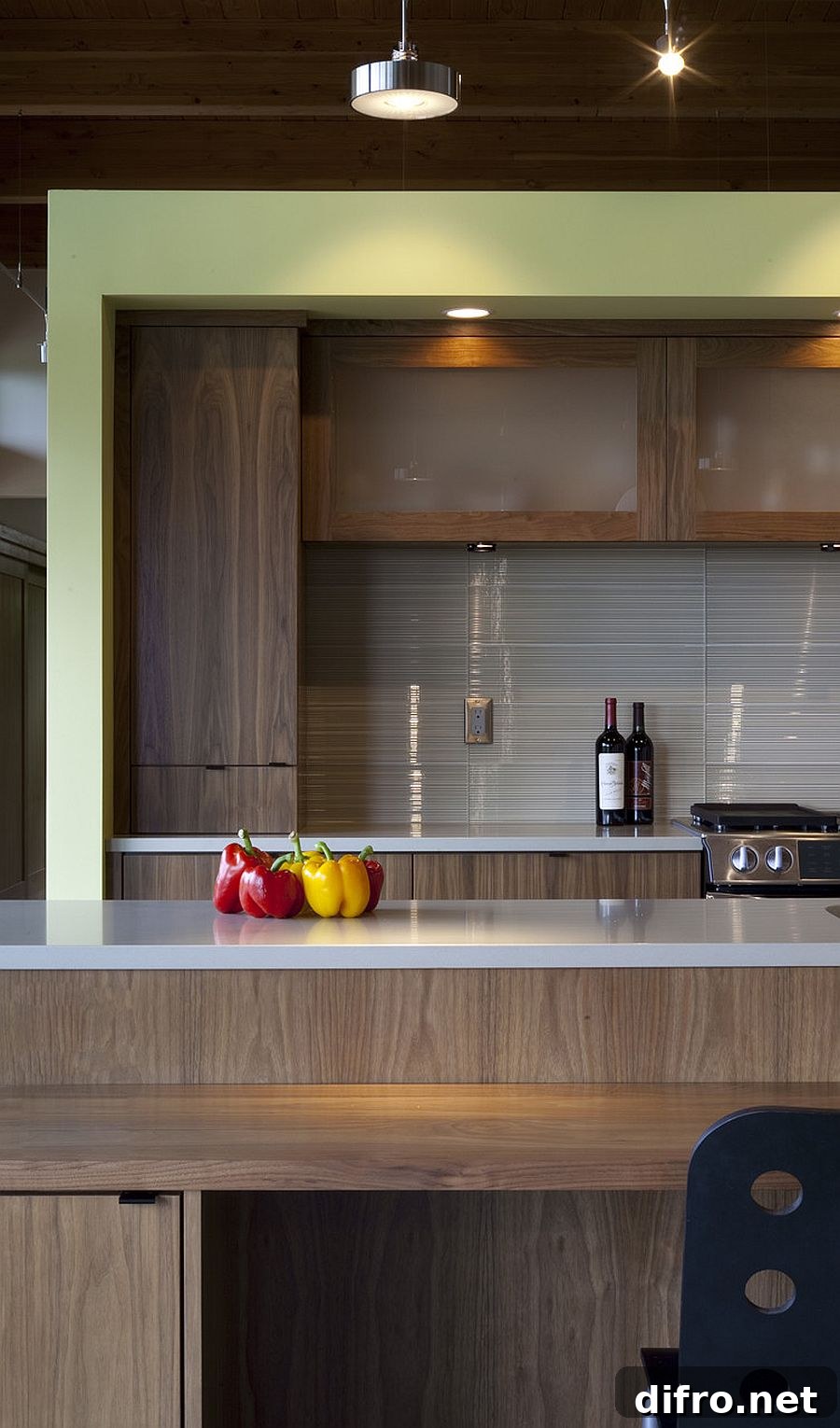
At its core, the Hotchkiss Residence demonstrates how careful choices—clear organization, responsive site orientation, weather-resilient materials and modest, well-executed details—can deliver a highly livable home on a limited budget. The result is a contemporary Vancouver residence that balances comfort, durability and connection to the landscape while honoring the long family history on the site. Photography by Peter Eckert captures the home’s textural contrasts and the way natural light animates both interior and exterior spaces.