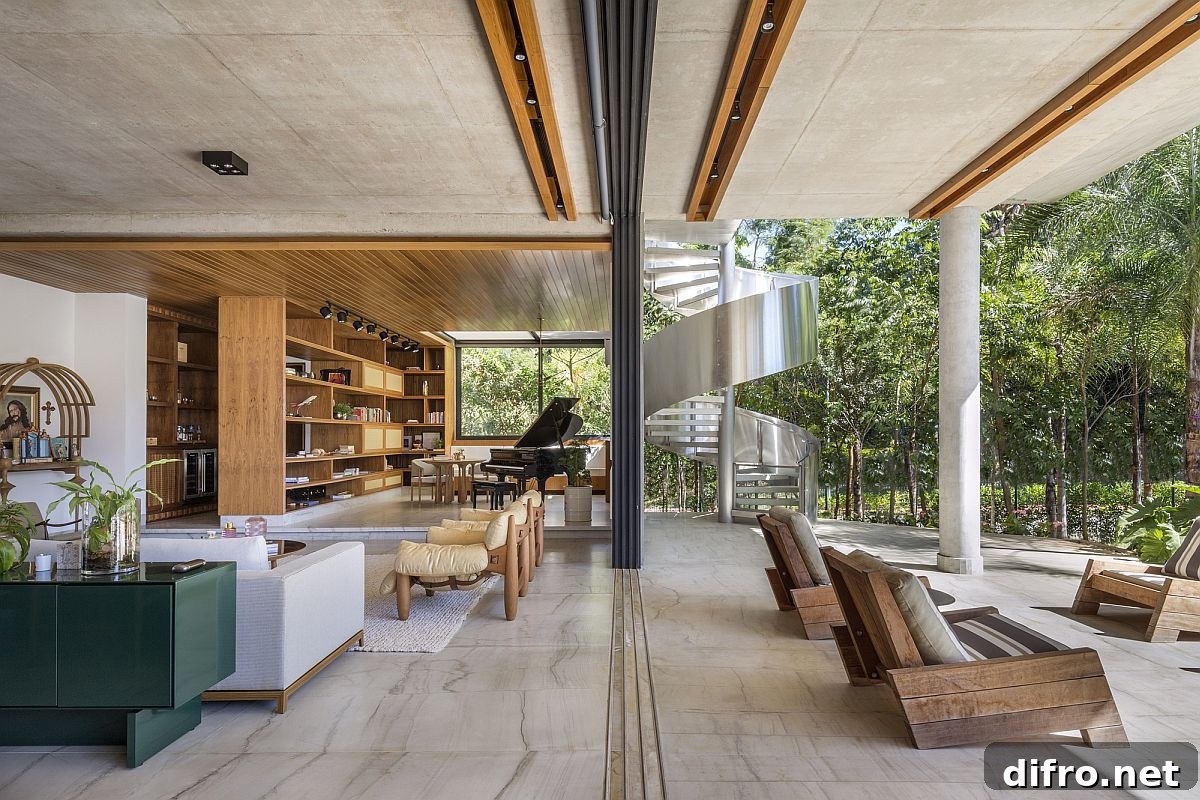
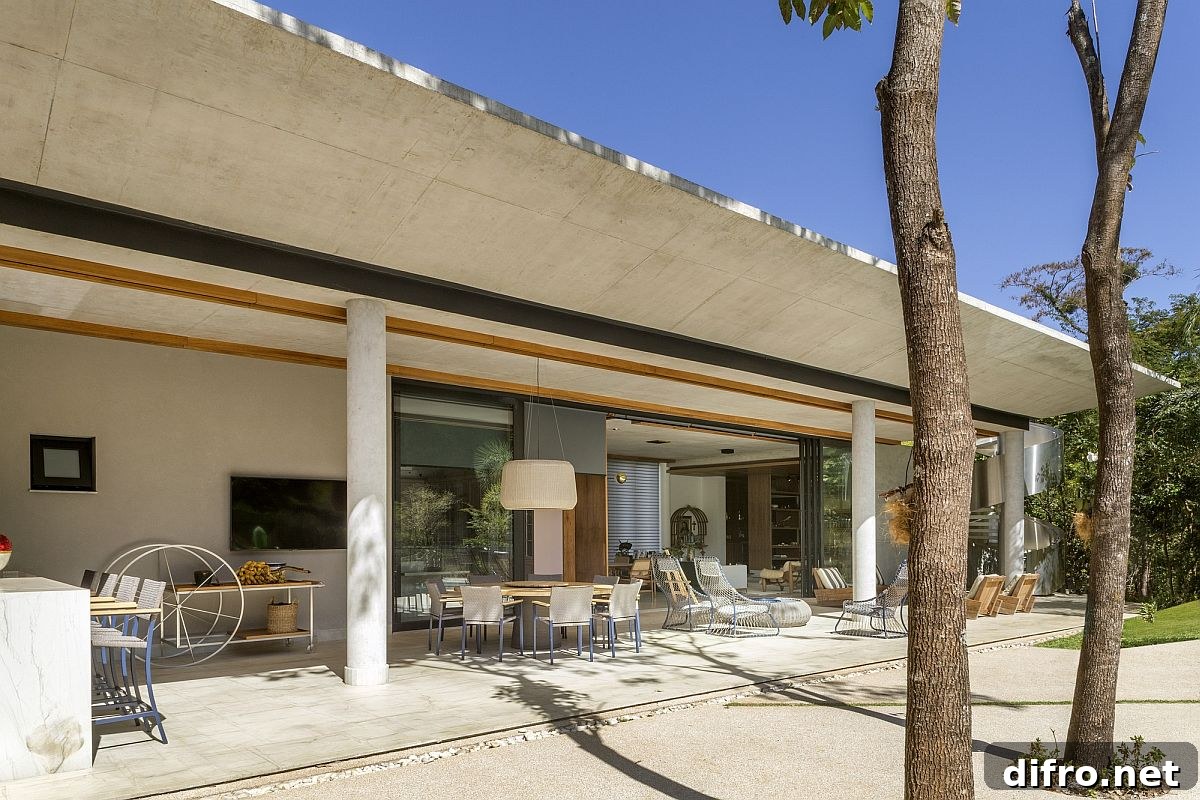
Every successful home design responds to the unique constraints of its lot while addressing the practical and emotional needs of its occupants. Casa da Mata, designed by Leo Romano in Brazil, is a clear example: its street-facing façade protects family privacy, while the rear of the house opens fluidly to the garden. Stacked sliding doors and large glazed openings blur the line between interior and landscape, creating a calm, open environment that encourages indoor and outdoor living.
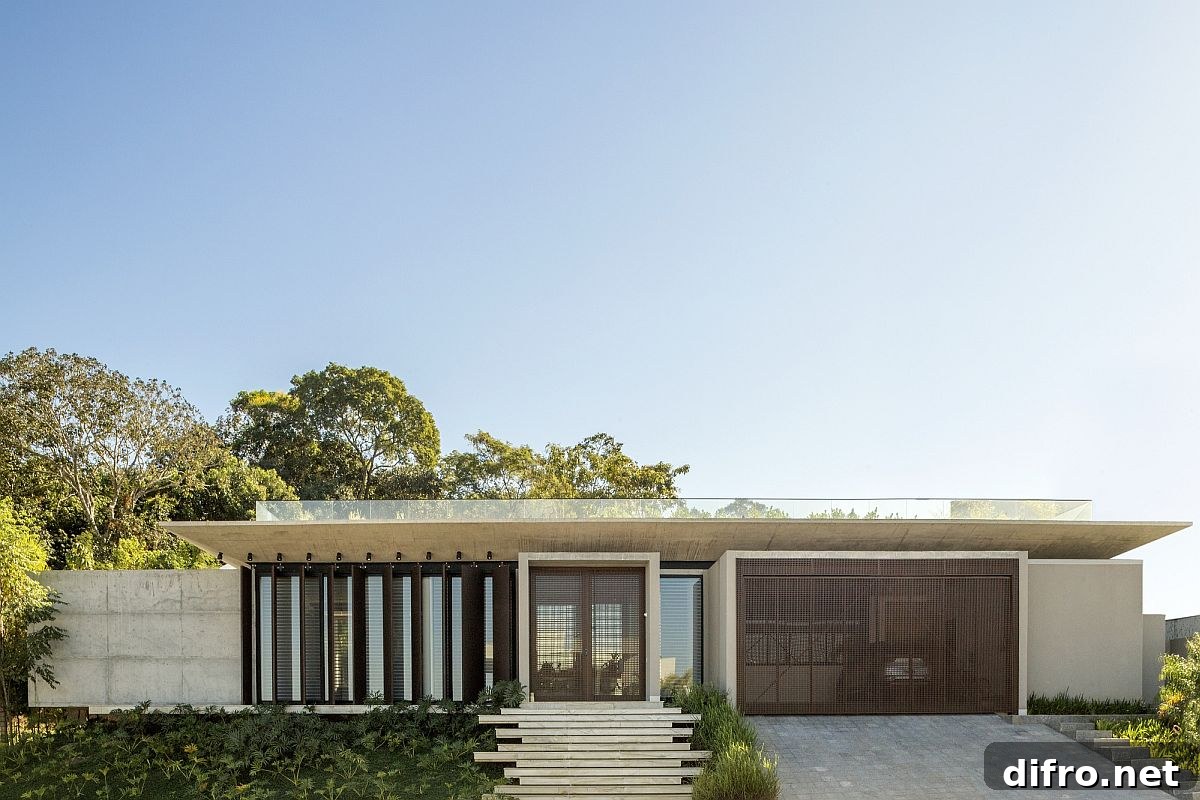
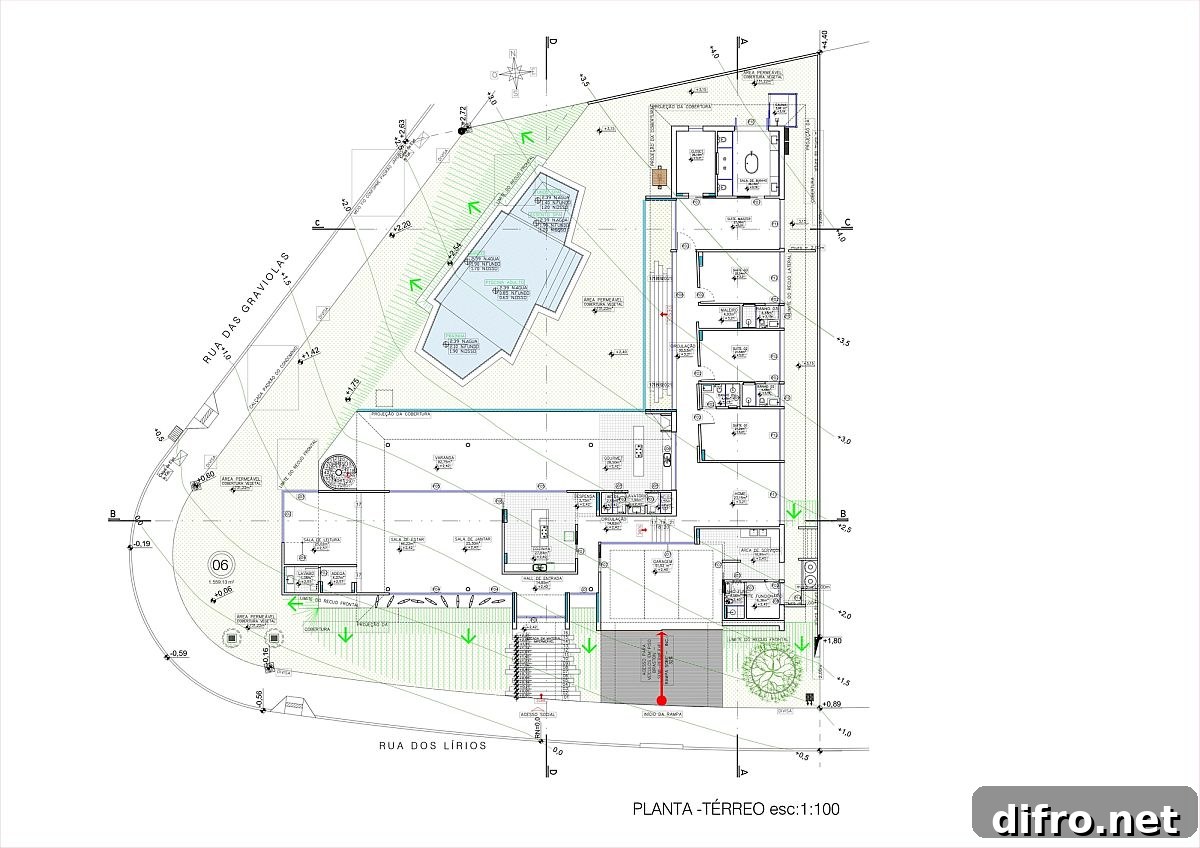
Built on a triangular lot, the house uses an L-shaped plan to make the most of available space while shaping a sheltered courtyard. This L-shaped organization brings warmth and intimacy to the outdoor living area and efficiently separates public living spaces from private bedrooms and service areas. The arrangement naturally frames views of the garden and channels circulation so that living, dining and kitchen areas extend to the outdoors without awkward transitions.
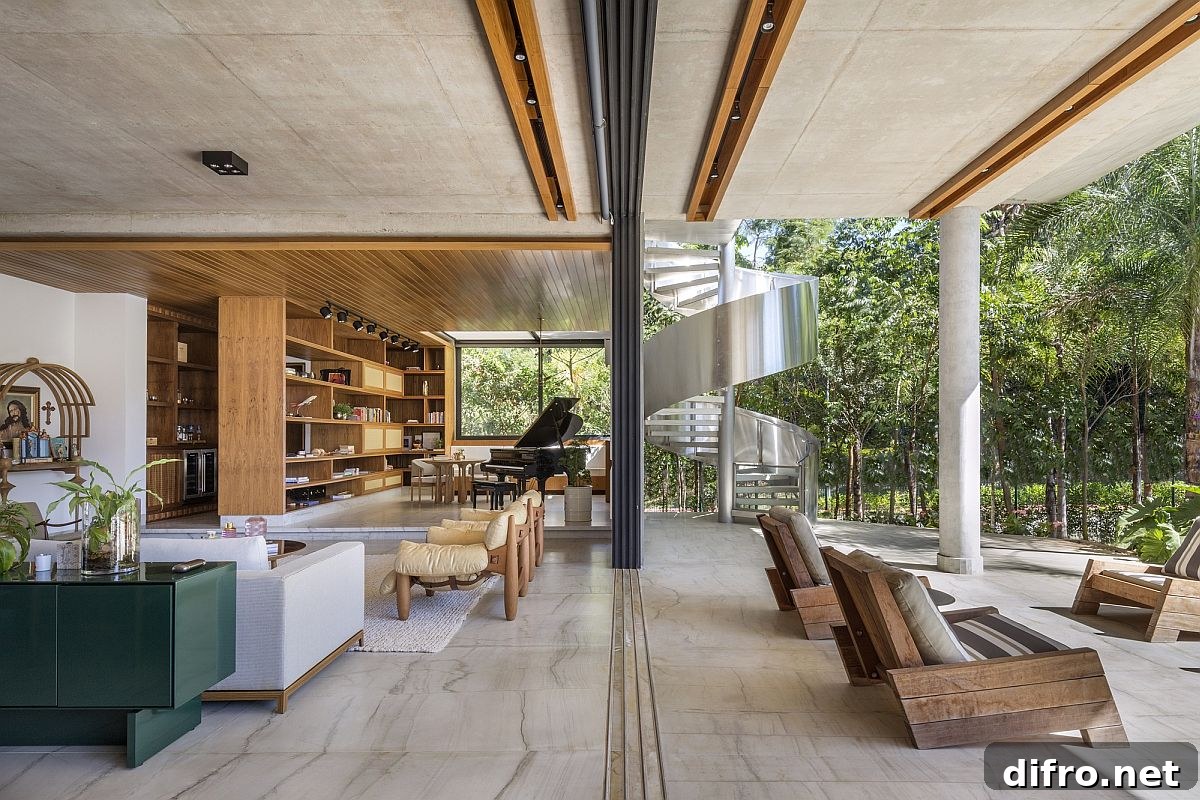
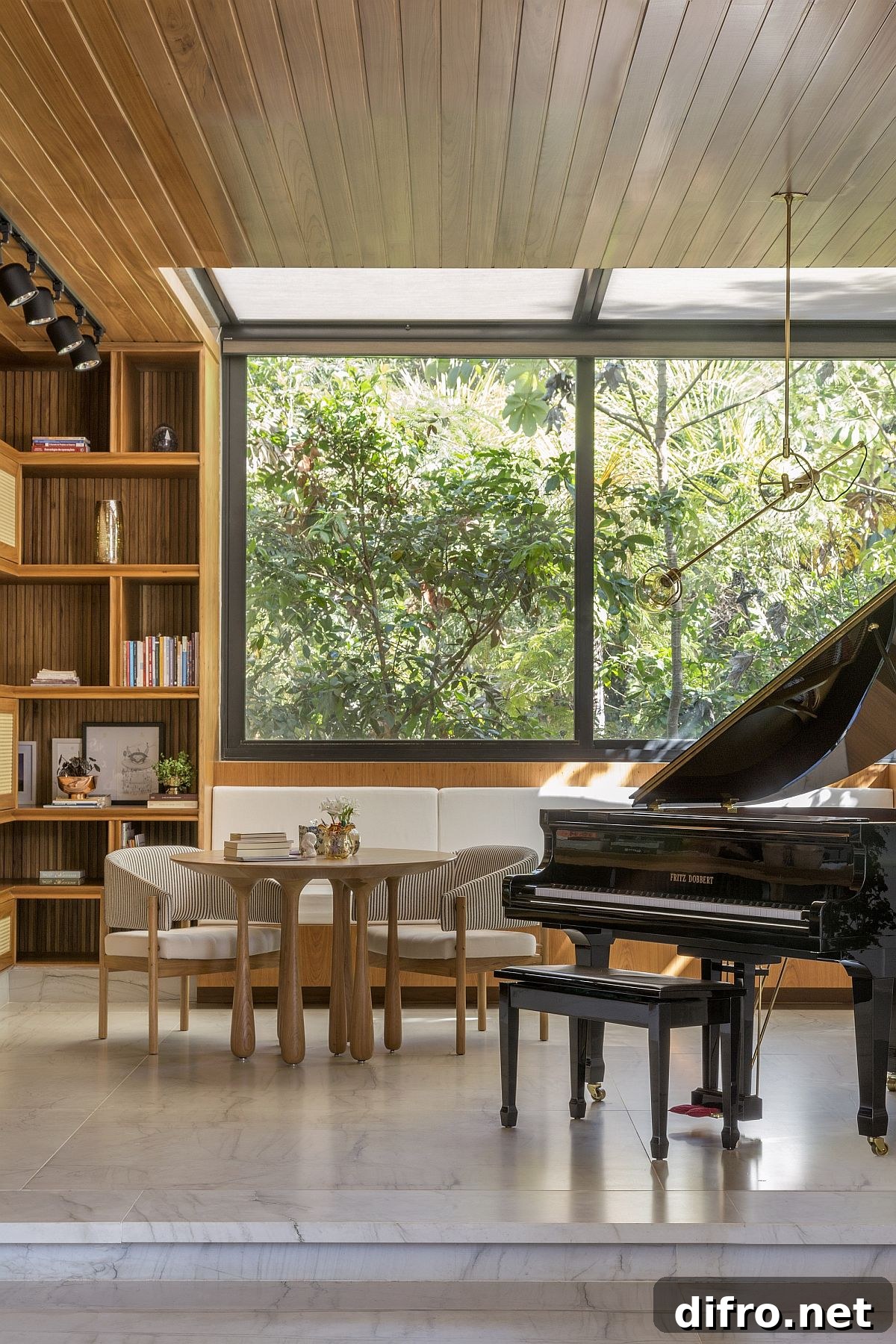
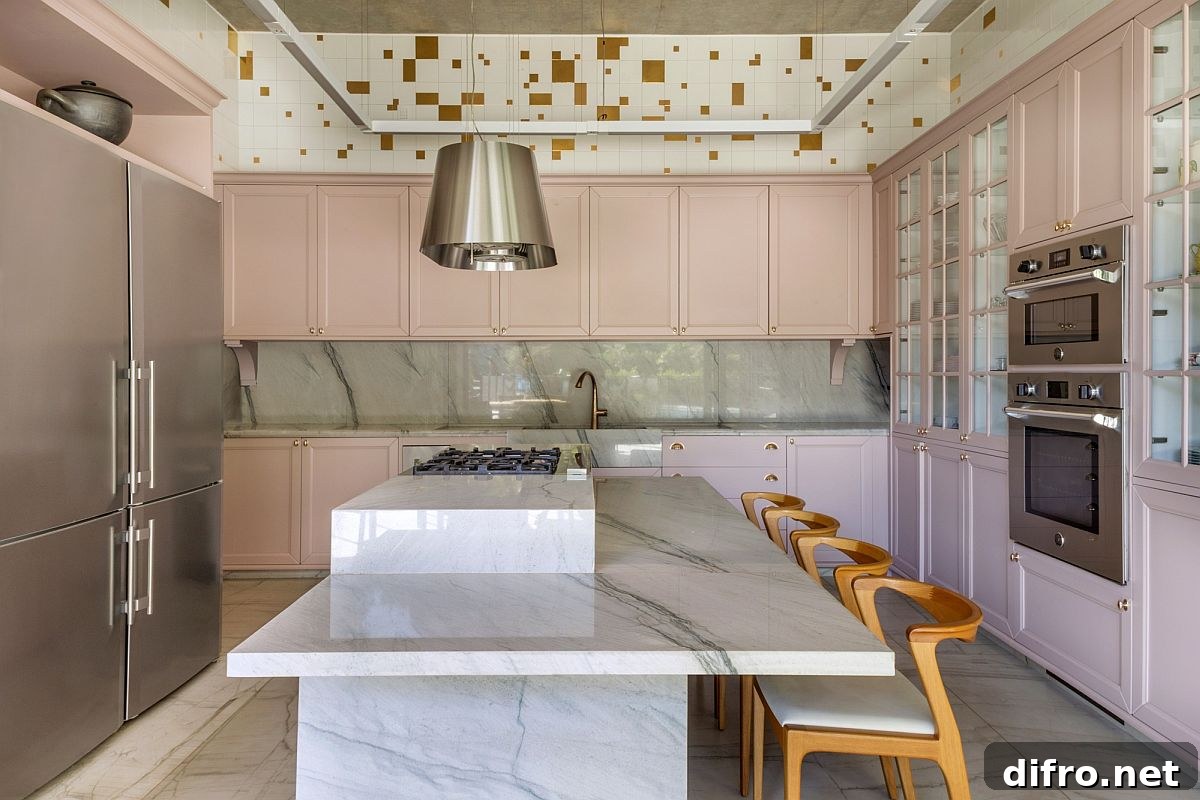
Inside, the palette is restrained and contemporary: warm wood tones paired with white surfaces create a bright, airy atmosphere. Accents such as bold wall art, indoor plants and soft pastel tones—mint greens and blush pinks—introduce color without overwhelming the calm composition. These choices reinforce a relaxed modern aesthetic that feels both fresh and lived-in. In the kitchen, pastel pink cabinetry and mint-green details lift the space and establish a subtle, cheerful character that complements the more neutral materials used elsewhere.
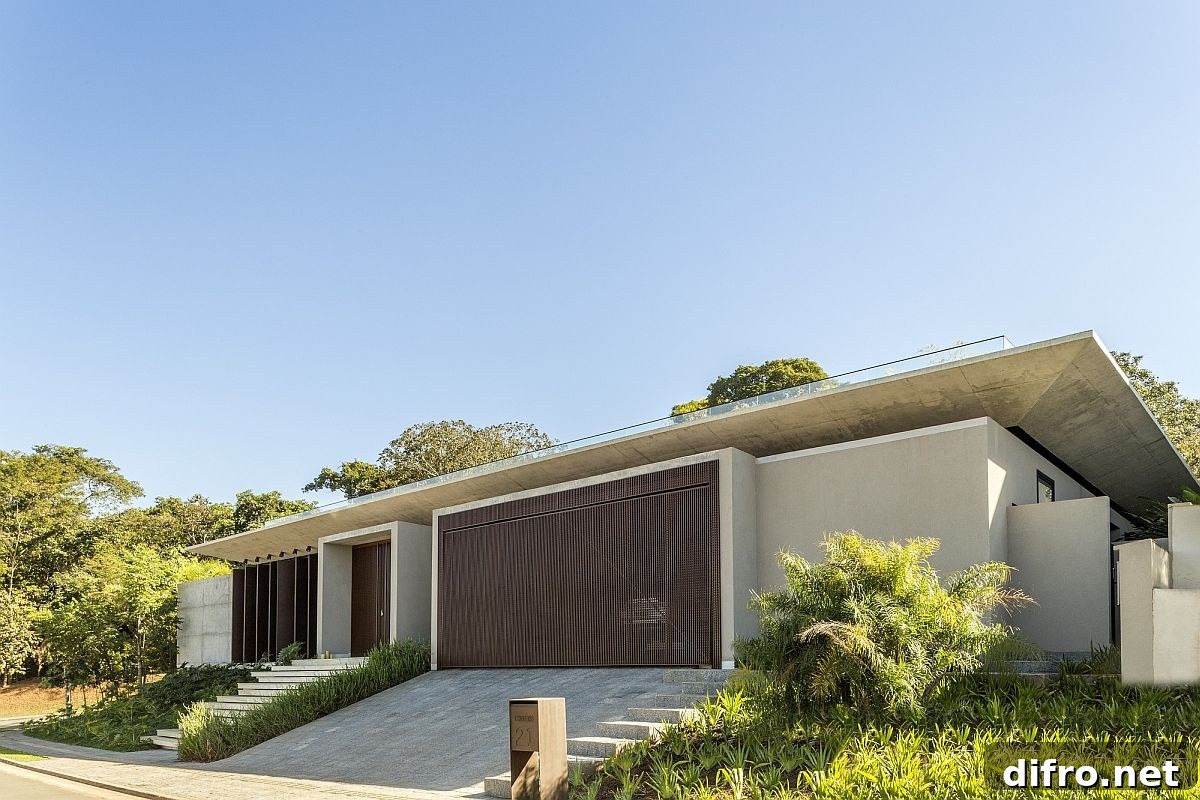
Material choices emphasize both durability and tactility. Polished concrete and vertical wood baffles provide a clear, contemporary expression on the street side, delivering privacy and a sculptural quality to the façade. Marble countertops and carefully chosen contemporary fixtures inside support the sense of refined comfort. The layout also uses subtle level changes to define zones and create visual interest in what would otherwise be a compact footprint.
Covered patios and sheltered outdoor rooms form comfortable extensions of the interior, providing flexible spaces for family gatherings and quiet relaxation. These covered terraces are oriented to capture garden views while remaining protected from direct sightlines on the street, so social spaces feel private and secure. Around the house, abundant greenery and layered plantings add an additional screen and help the architecture sit lightly within its landscape.
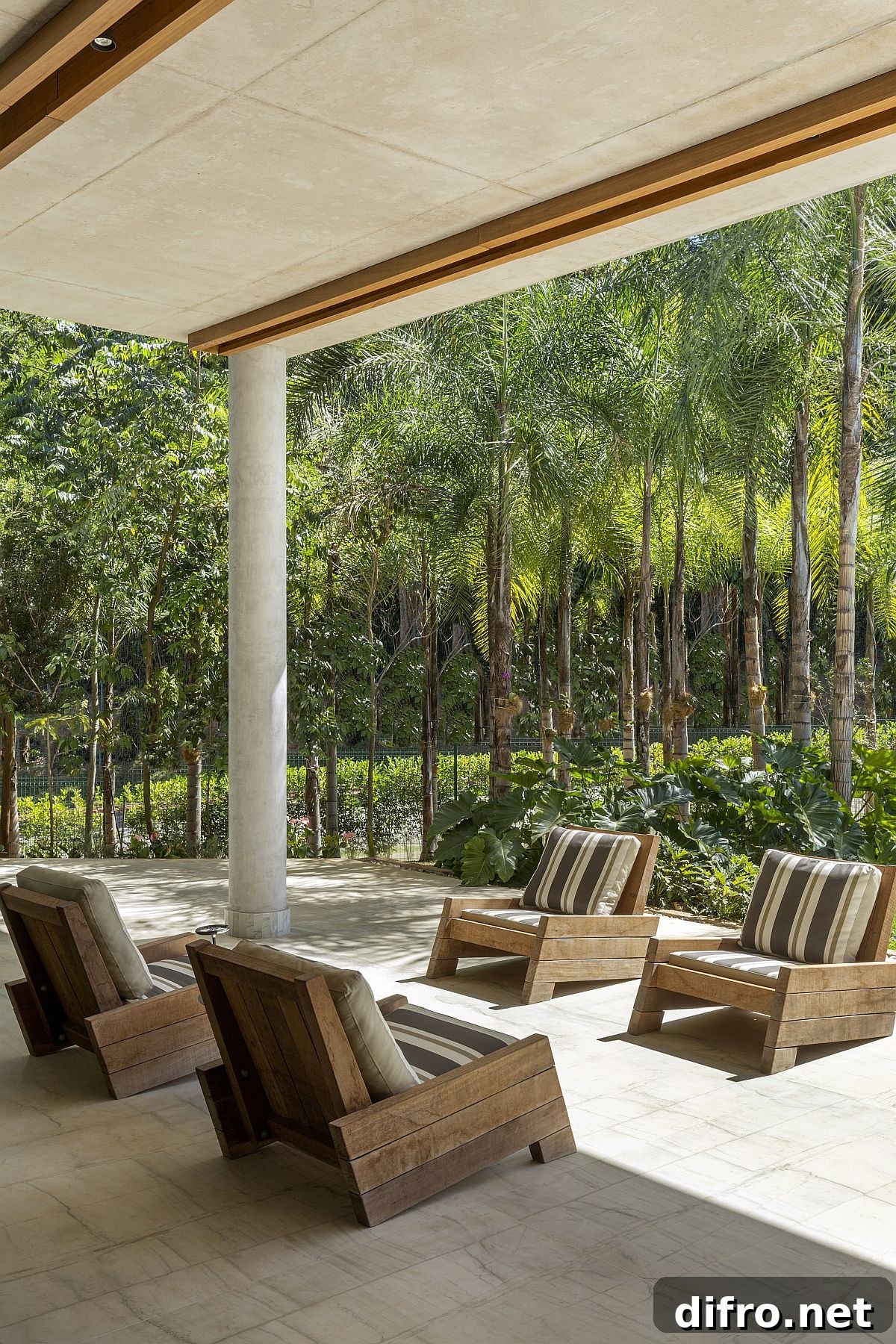
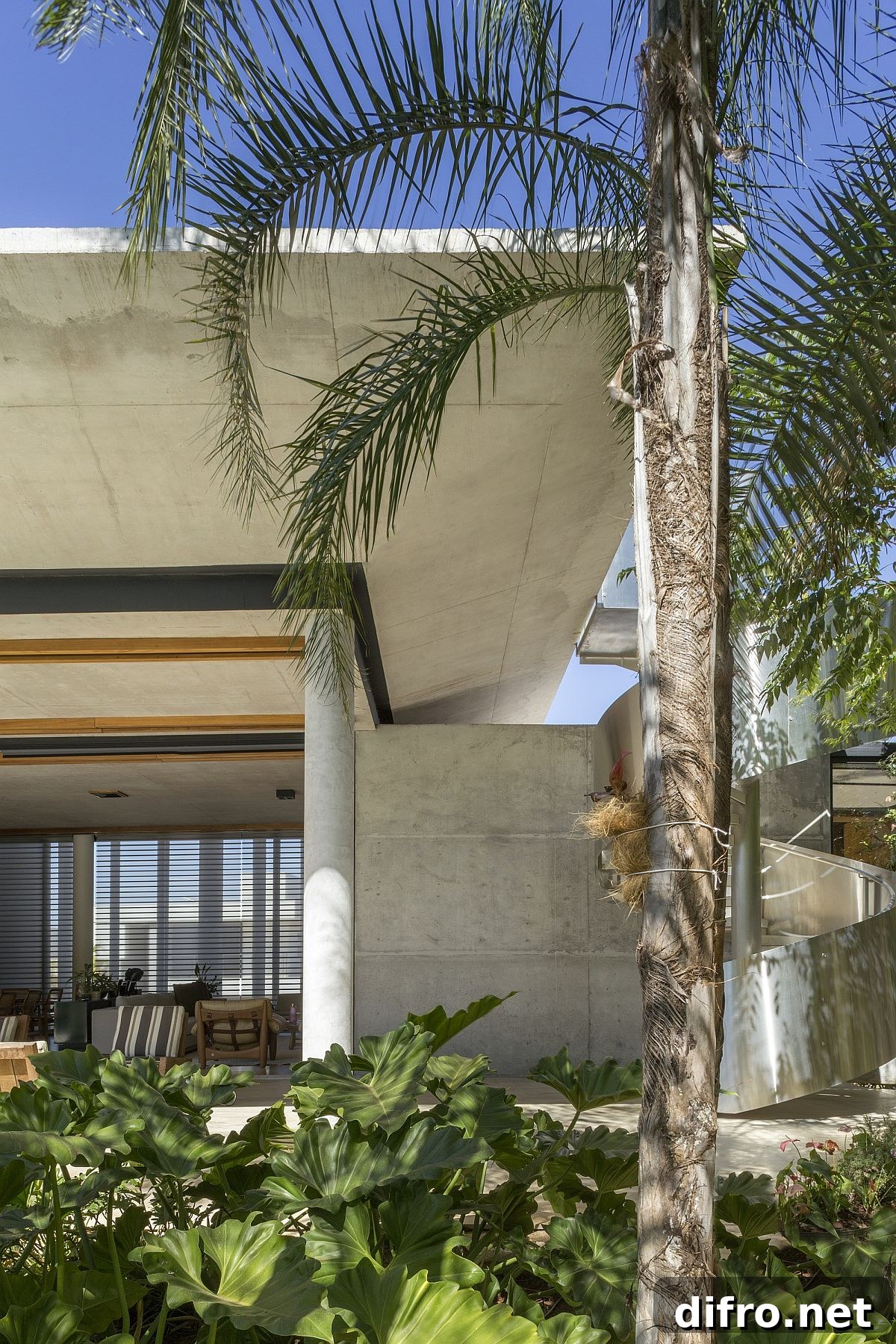
The architectural concept focuses on extending the horizontal lines, creating a visual extension of the building from all sides. The main facade combines concrete with vertical baffles for more privacy. An overhanging concrete box stretches out. This box also features an opening in the ceiling, bringing architecture and nature closer together.
Functionally, the design balances openness with discrete private zones. The L-shaped plan allows public spaces to open directly to the courtyard while bedrooms and service areas remain shielded. Large glazed surfaces and operable doors permit cross ventilation and daylight to reach deep into the plan, fostering a comfortable indoor climate without relying solely on mechanical systems.
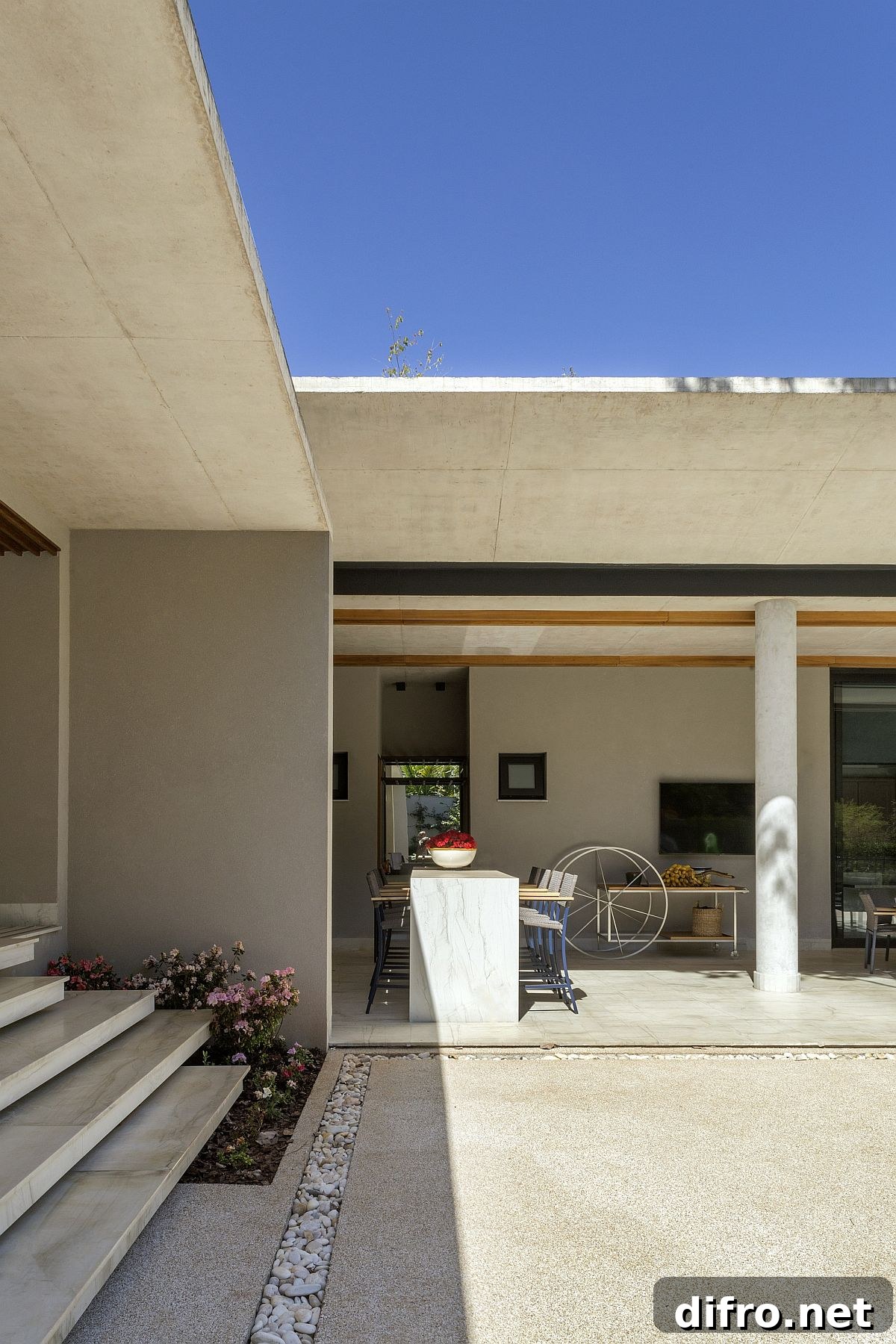
Casa da Mata demonstrates how thoughtful siting and careful material decisions can create a private, light-filled home that still embraces the landscape. Designed to meet the everyday needs of its residents, the house finds elegance in simple moves—horizontal emphasis, a cohesive material palette and strong indoor-outdoor continuity—resulting in a contemporary family home rooted in its Brazilian context. Photography by Edgard Cesar captures these qualities, documenting the way light, material and landscape work together throughout the house.