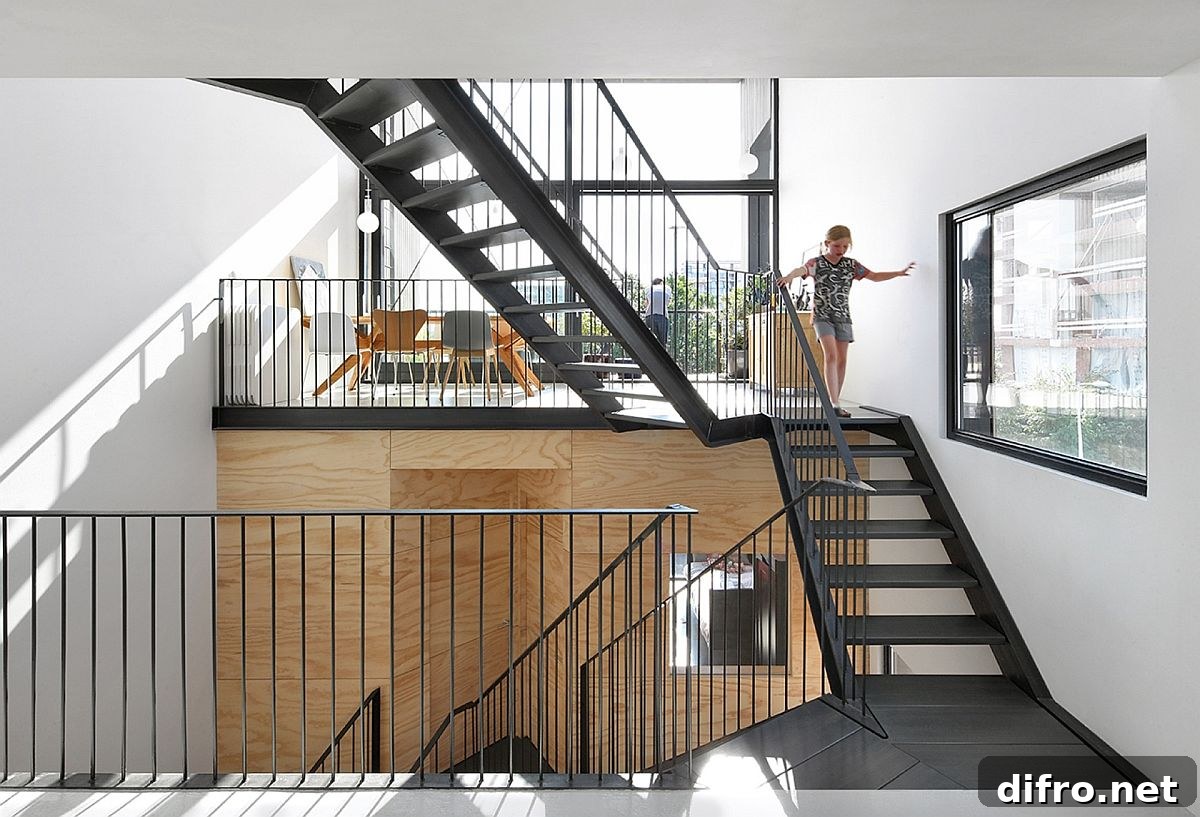
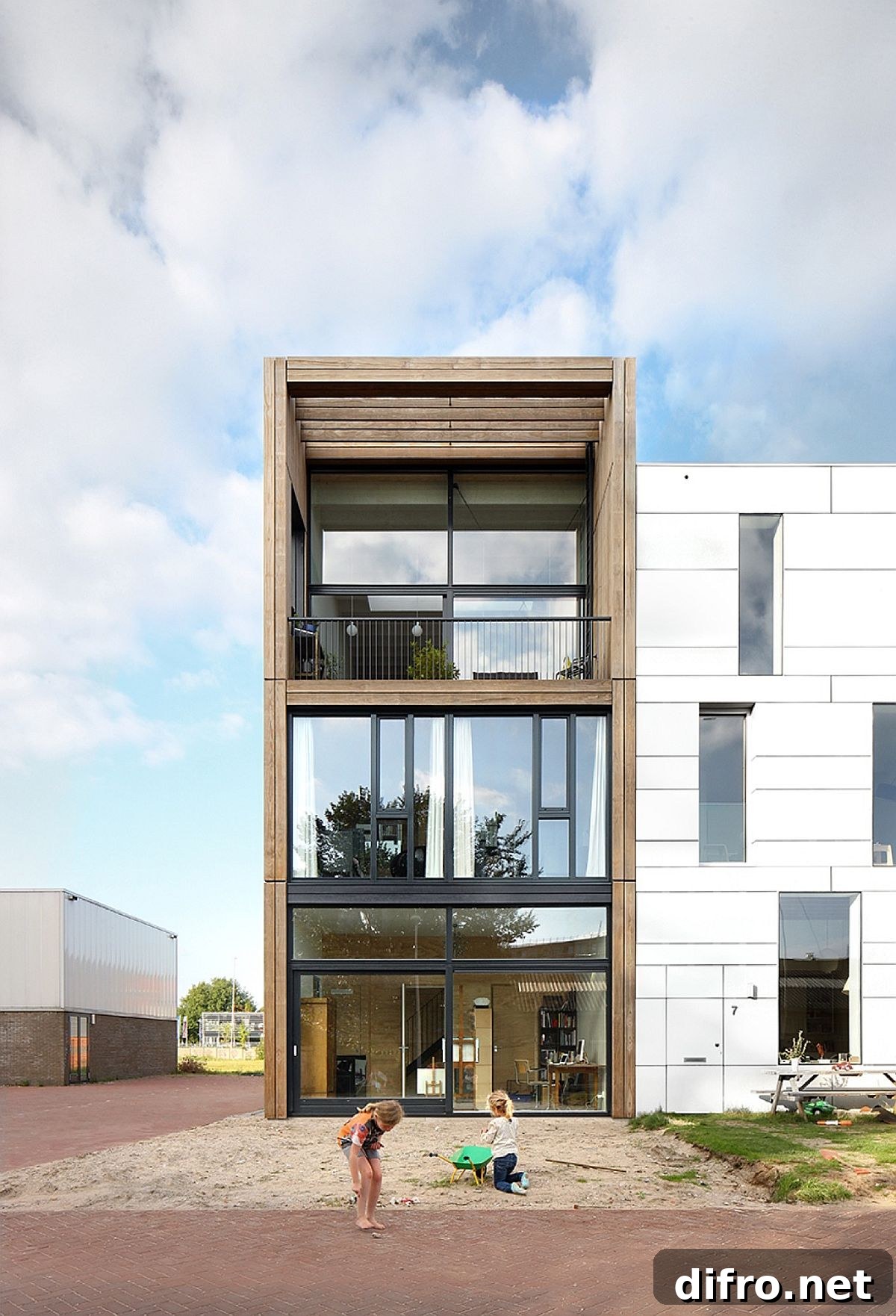
Most homes follow a familiar pattern: living room, kitchen and dining areas occupy the lower floors while the private rooms are tucked upstairs. Lofthouse I, designed by Marc Koehler Architects in Amsterdam, intentionally reverses this convention. In this inventive residence the two bedrooms and bathrooms sit on the ground floor, while the living spaces and kitchen are placed on the upper levels. This inverted plan elevates daily life—literally—so the family can enjoy expansive city views from their main living areas. The house’s prefab structural frame supports a dramatic central atrium and an atrium-styled stairwell that reads like a suspended walkway in the sky.
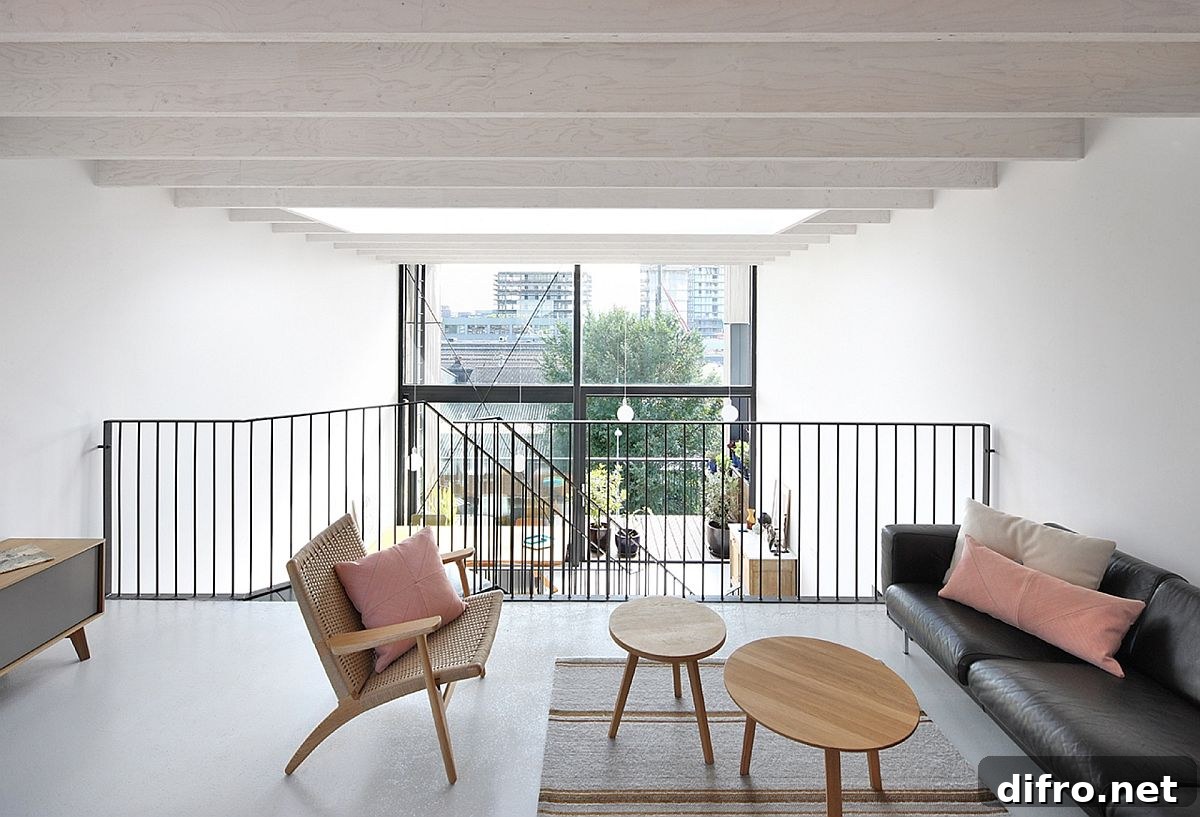
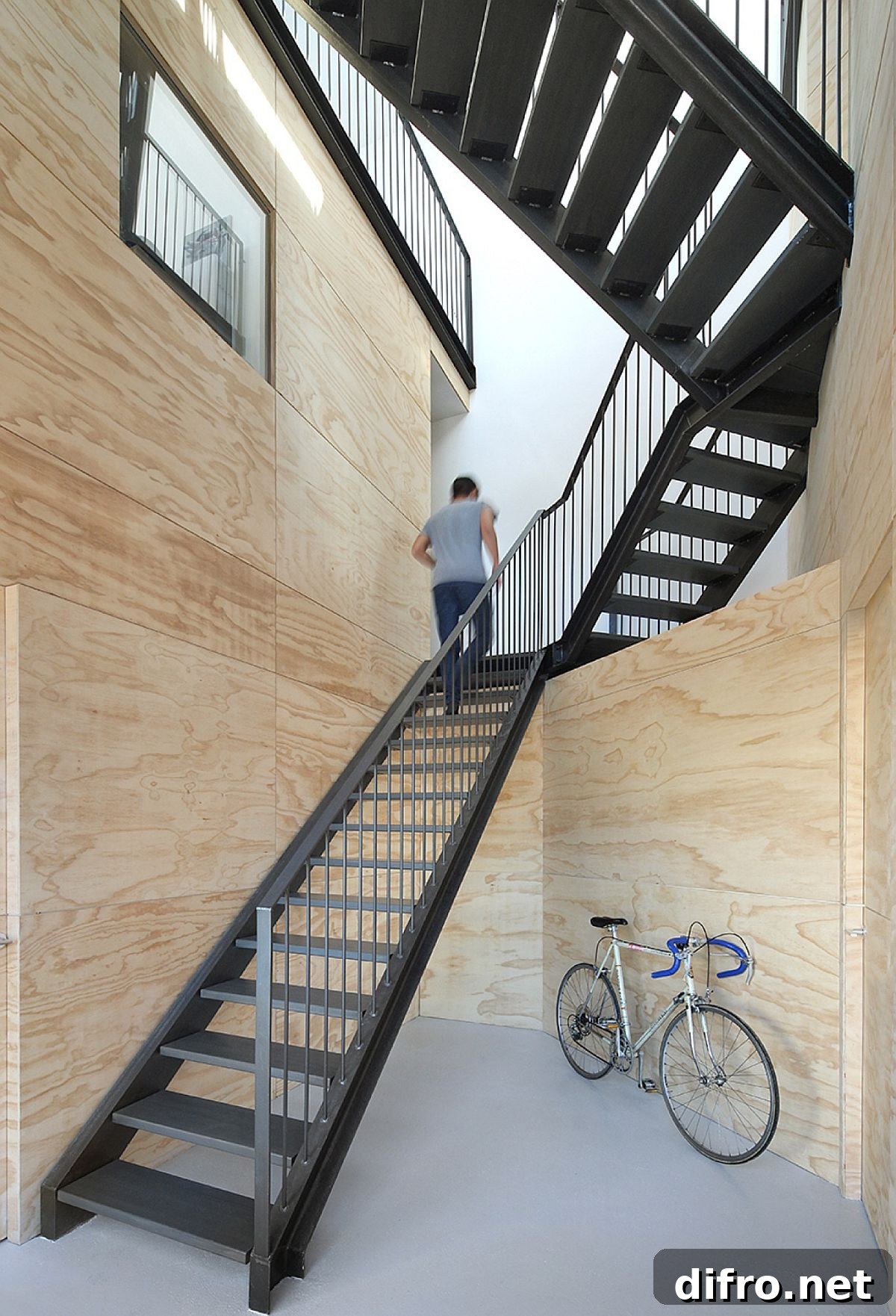
The home’s continuous metallic staircase is the visual centrepiece: a sculptural element that threads through the interior and links every level in a seamless, dramatic manner. The overall interior language is modern-industrial, where warm wood, raw metal and transparent glass are combined in carefully balanced proportions. Large glazed openings bring generous daylight deep into the plan, creating a bright and healthy living environment while framing views across the neighborhood. Glass walls and sliding doors further blur the line between interior and exterior, making the upper-level living areas feel open and connected to the city beyond.
The residence uses a prefabricated wooden frame, which brings multiple advantages. Prefab construction reduces on-site building time and labor, which in turn lowers costs and disturbance for neighbors. The modular nature of the frame also allows the interior to evolve over time: levels can be adapted, openings repositioned and finishes upgraded with relative ease. From an environmental perspective, using engineered timber in a controlled factory process typically reduces waste and embodied carbon compared with more conventional builds, making the house a practical, planet-friendly option for contemporary urban living.
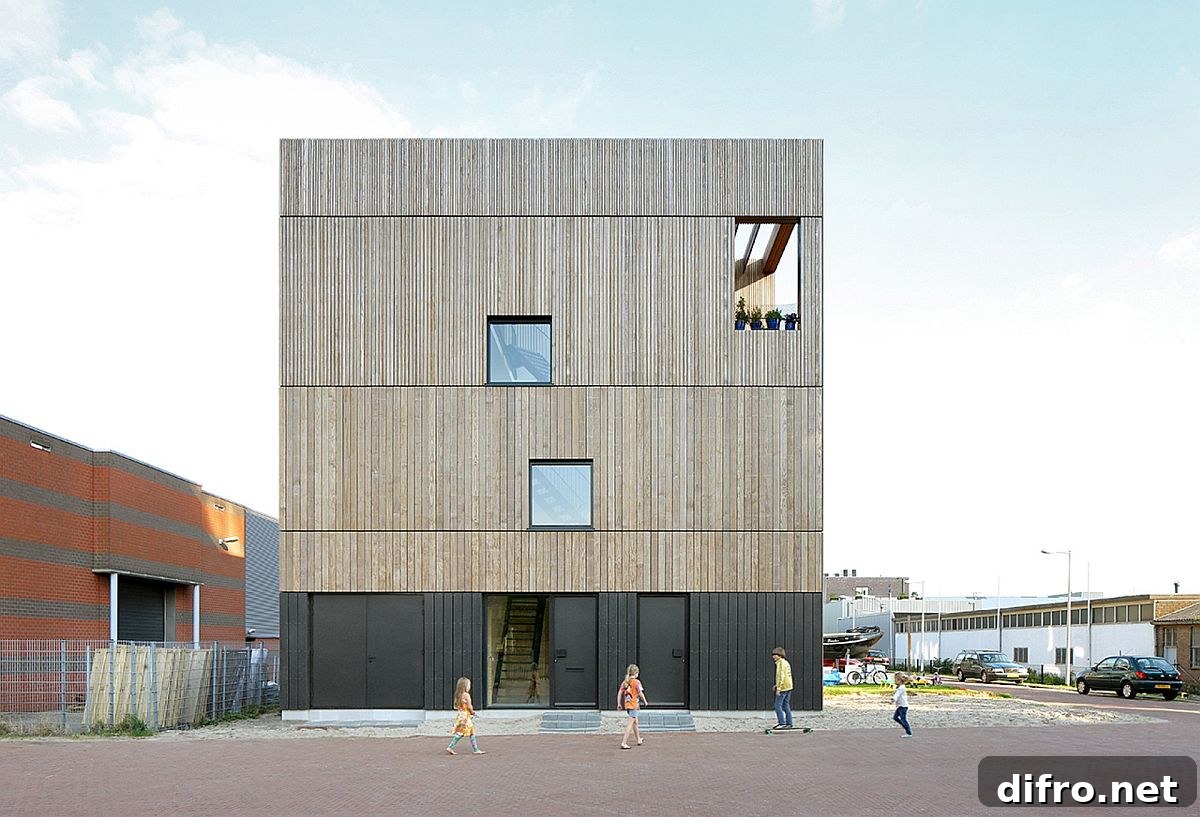
On the exterior, a refined wooden cladding gives the house a layered, tactile presence on the street. The façade is clad in preserved Radiata Pine softwood, which contributes a warm, natural texture while weathering gracefully over time. The design balances coarse, robust elements with finer detailing so the exterior reads as a composed, layered sequence rather than a single flat plane. Large glazed surfaces sit within black-painted hardwood frames, offering a striking contrast and emphasizing the building’s robust, industrial inspiration.
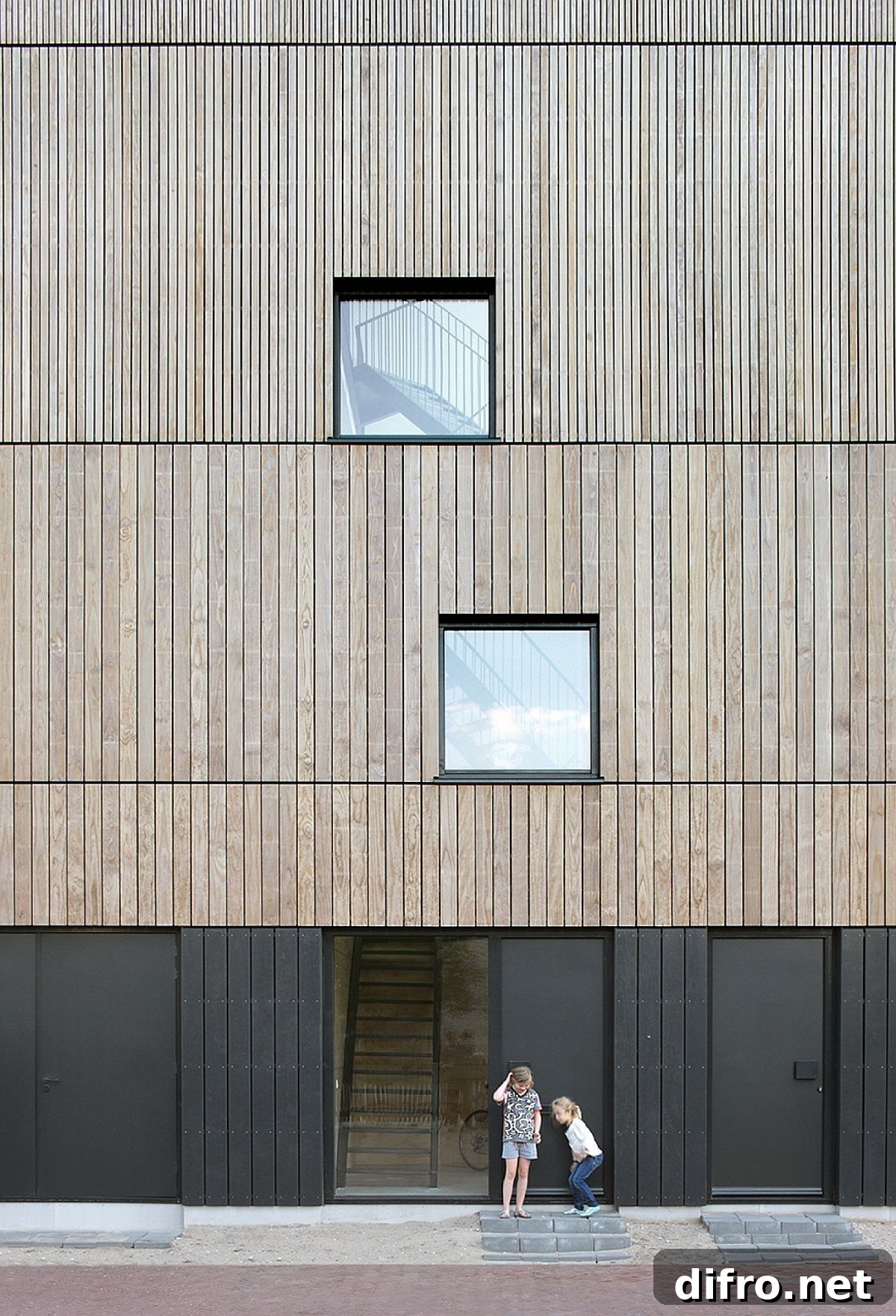
This industrial location inspired the architect to design a sturdy framework with large glazed surfaces and black opaque, painted hardwood frames. Besides being sturdy, the house also emanates a serene atmosphere. The house has a refined wooden wall cladding, the transition from coarse to fine resulting in a façade with a layered and surprising appearance. The façade is covered with a preserved Radiata Pine softwood
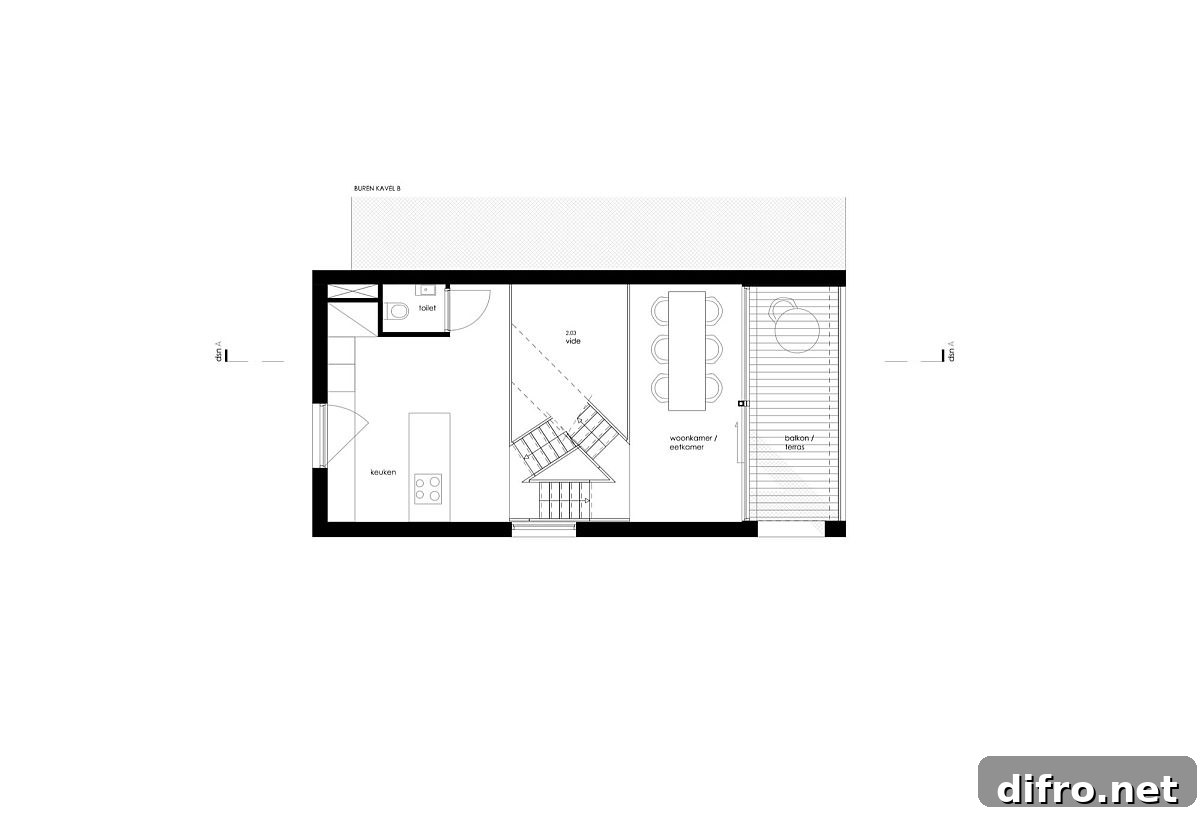
The interior composition centers around an atrium: a vertical void threaded by a series of walkways and stair flights that create dynamic sightlines and spatial connections between floors. This vertical circulation becomes more than a way to move between levels—it functions as a social spine where light, views and movement animate the interior. The stair sequence and walkways frame the living spaces and link the elevated kitchen and dining area to the private ground-floor rooms below.
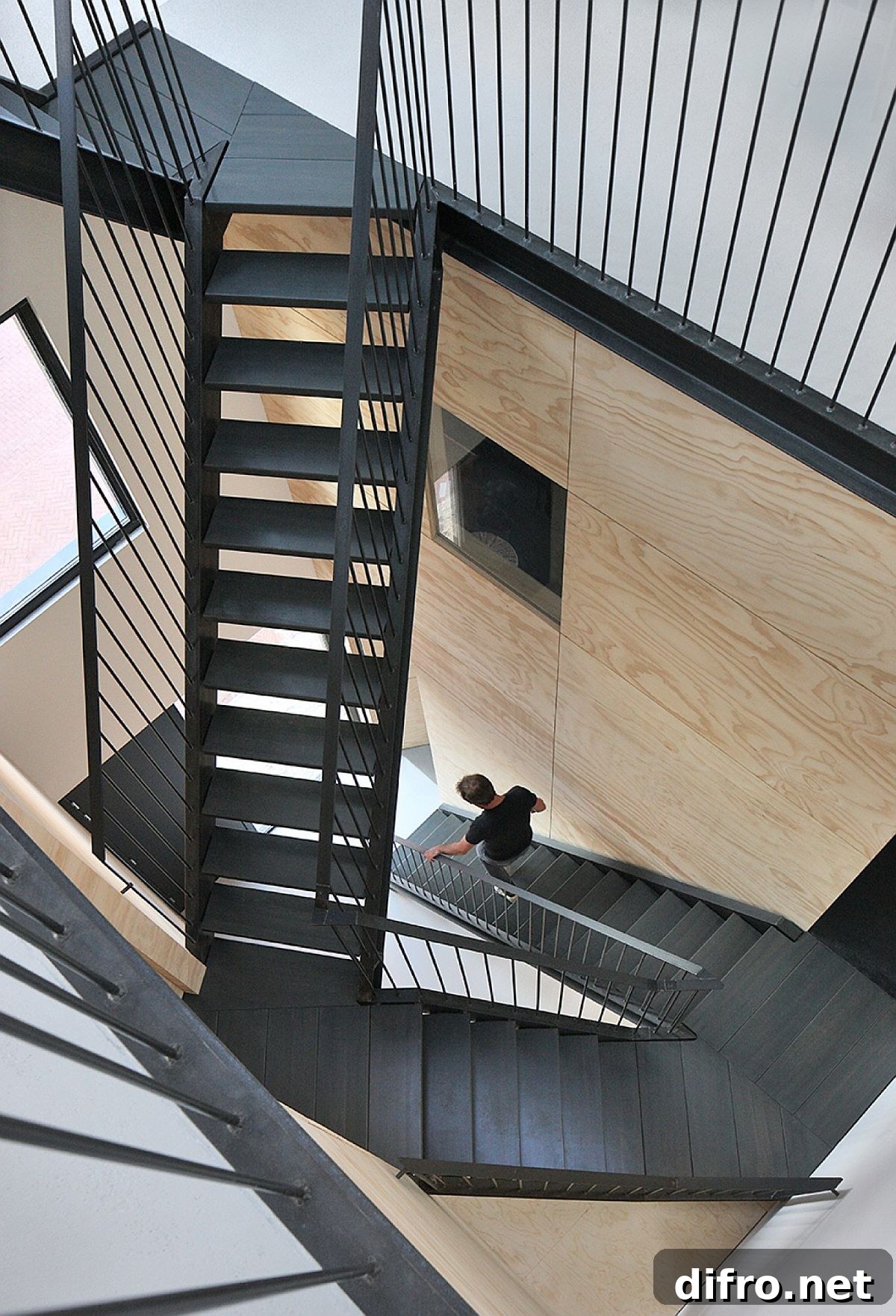
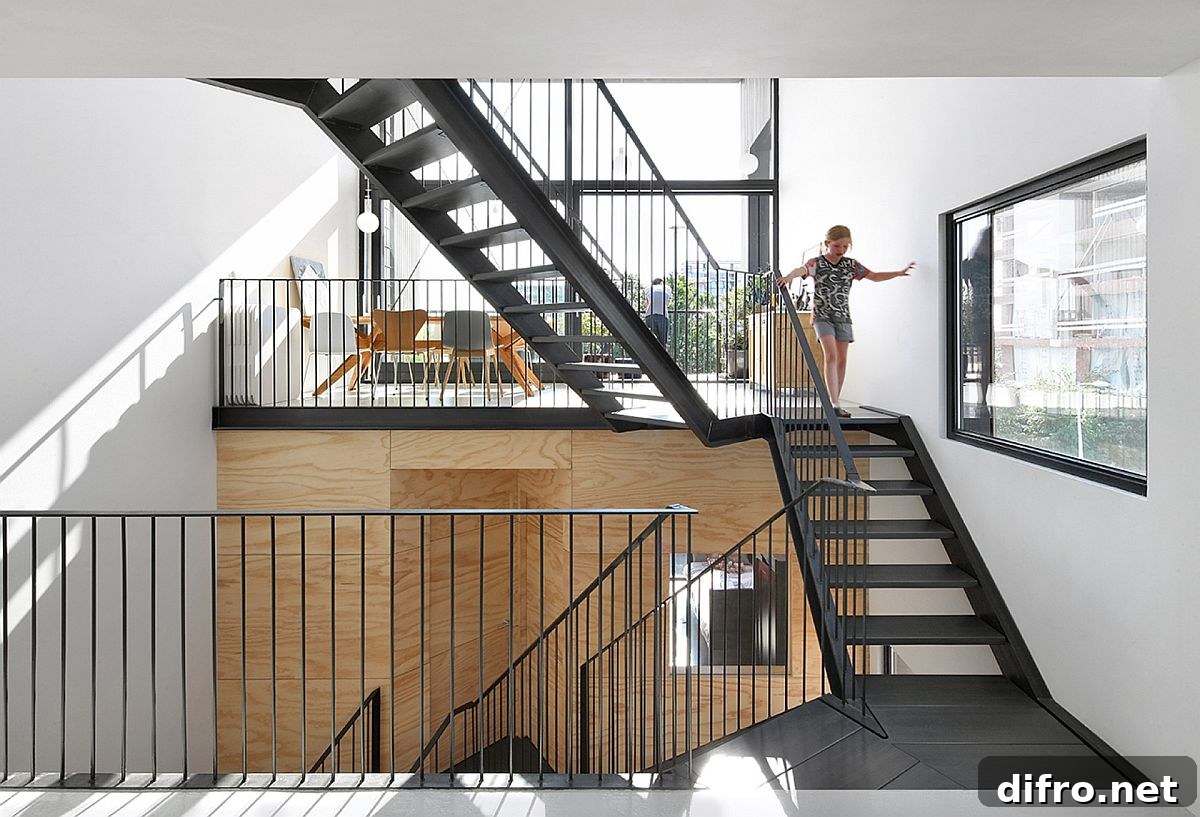
Photographs document how the sequence of stairways and glazed partitions produces shifting perspectives and varied levels of privacy. The glass walls and sliding doors both bring the exterior in and allow rooms to open up as required, offering flexibility for entertaining or quiet family life. The overall result is a compact, layered house that reads as both robust and refined—suitable for a dense urban context yet attentive to comfort and daylight.
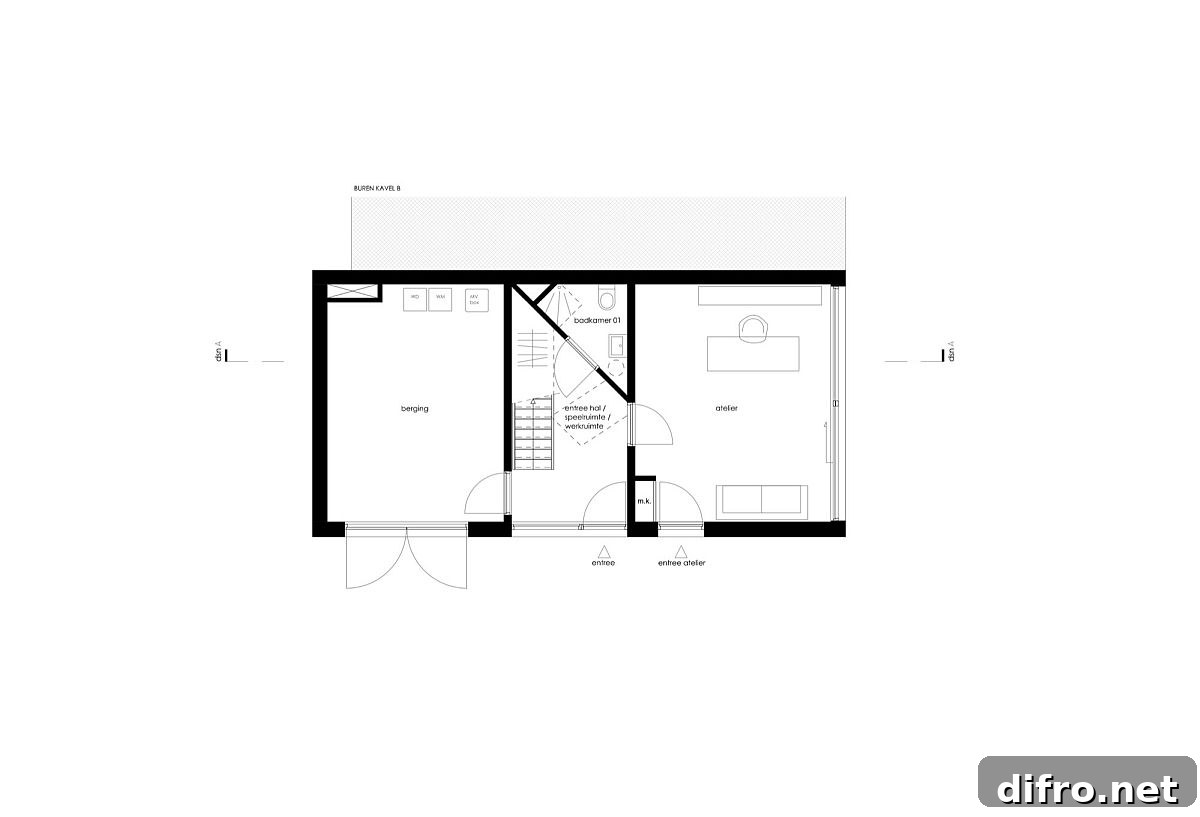
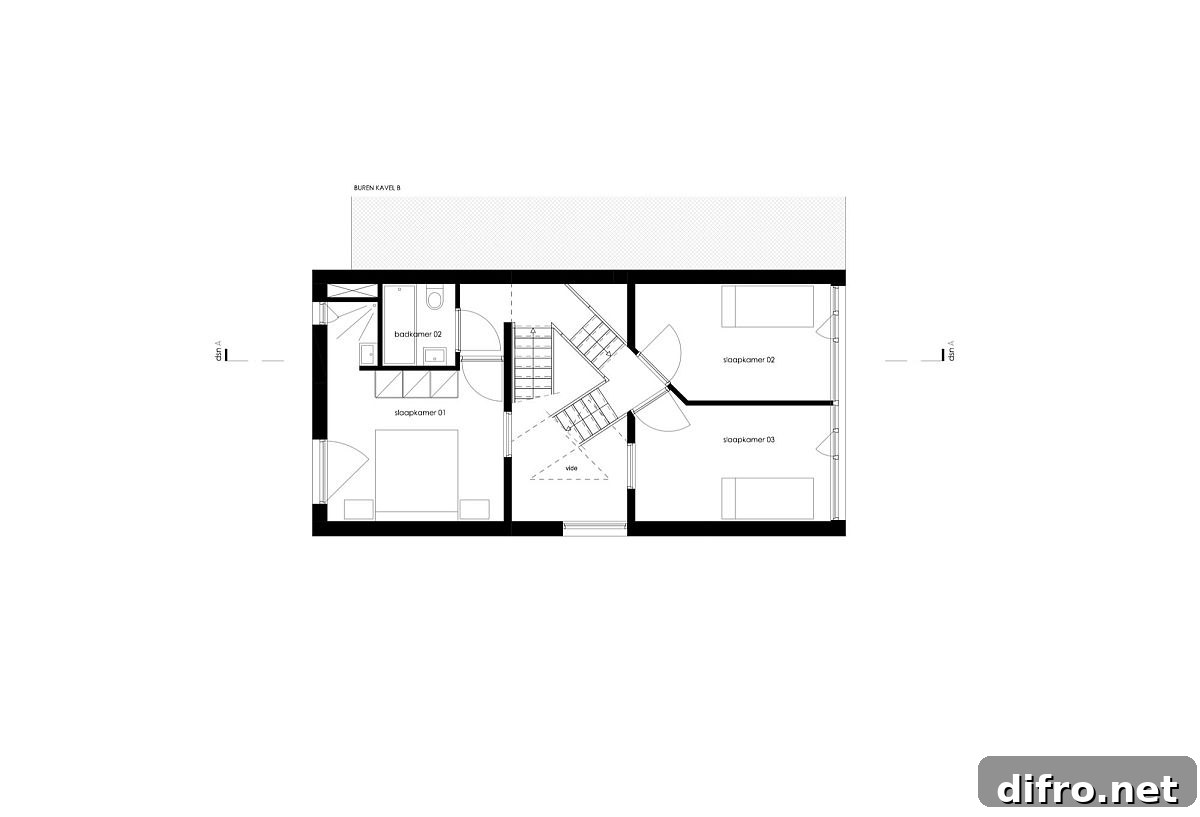
The project documentation also includes floor plans for the ground, first and second levels, which illustrate how the inverted layout, central atrium and prefabricated frame combine to maximize usable space and daylight access across floors. The ground floor concentrates private bedrooms and wet rooms, while the elevated levels accommodate the kitchen, dining and living areas that benefit most from the views and daylight. This arrangement supports an urban lifestyle where public and private functions are clearly defined yet spatially connected.
(Photography: Filip Dujardin)