Contemporary homes set against striking natural backdrops often feel more captivating than those placed in urban surroundings. The contrast between a minimal, modern structure and a rustic landscape highlights architectural lines and materials, creating a unique visual harmony. The L House in St. Martin, Gsies, Italy, designed by Plasma Studio, is a clear example: a restrained, elegant residence that responds directly to its protected site and the majestic silver fir tree at its center.
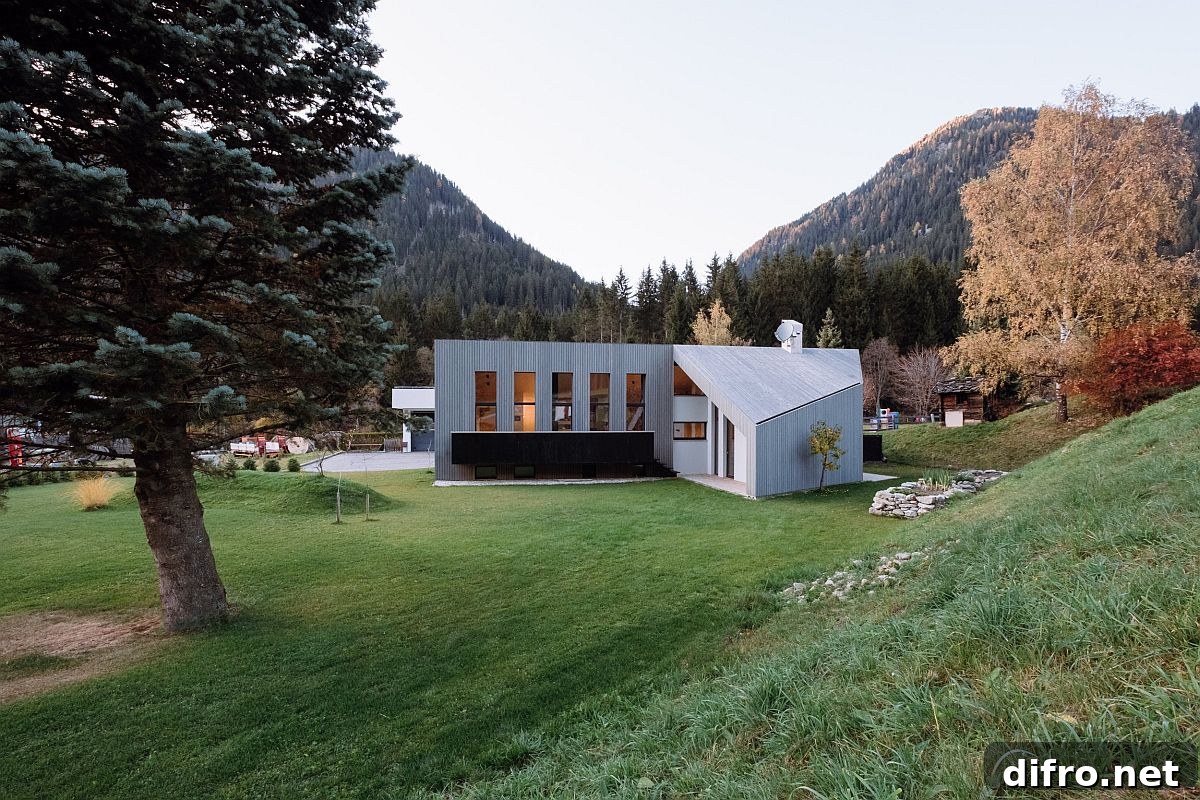
Sited on protected land, the L House is shaped around an existing silver fir, which becomes both the literal and symbolic heart of the project. The house’s silhouette—defined by gray wood, glass, and concrete—reads clearly against the dolomite range and the surrounding forests. These material choices strike a balance between privacy and openness: glass and double-height spaces invite the landscape in, while the textured wooden cladding and concrete walls provide shelter and a sense of intimacy.
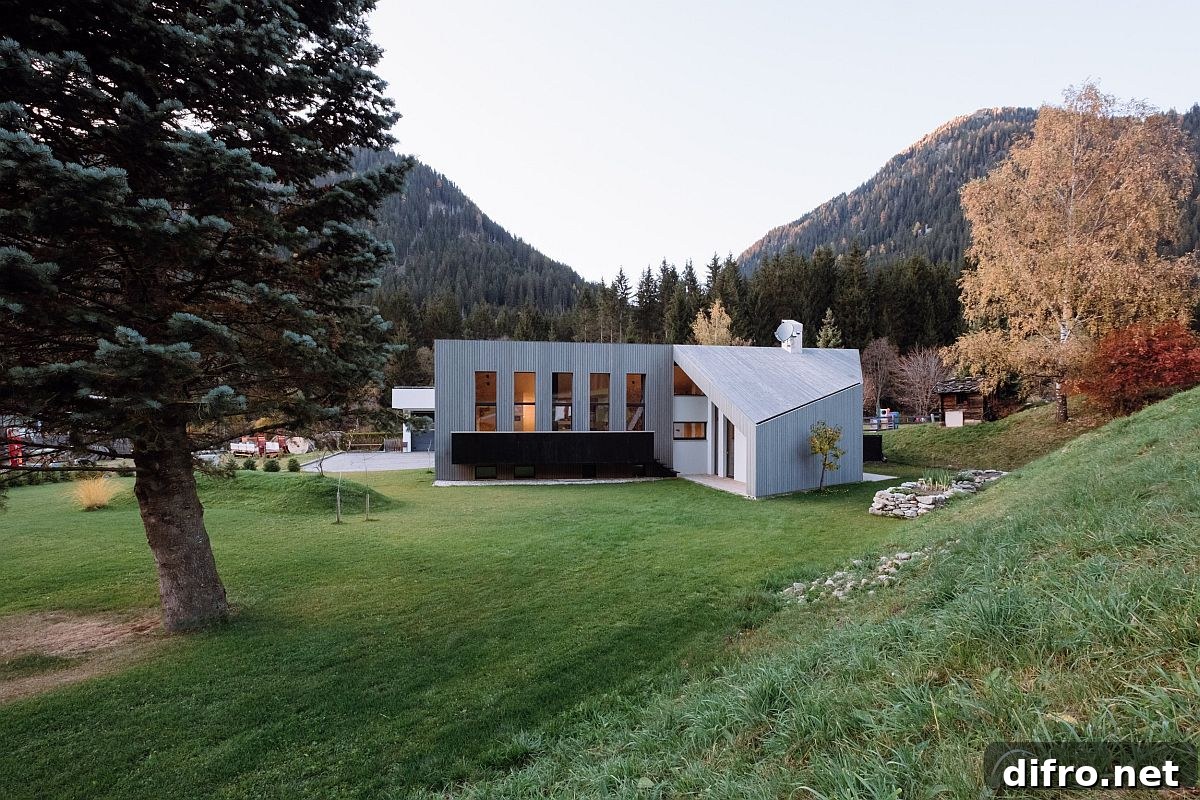
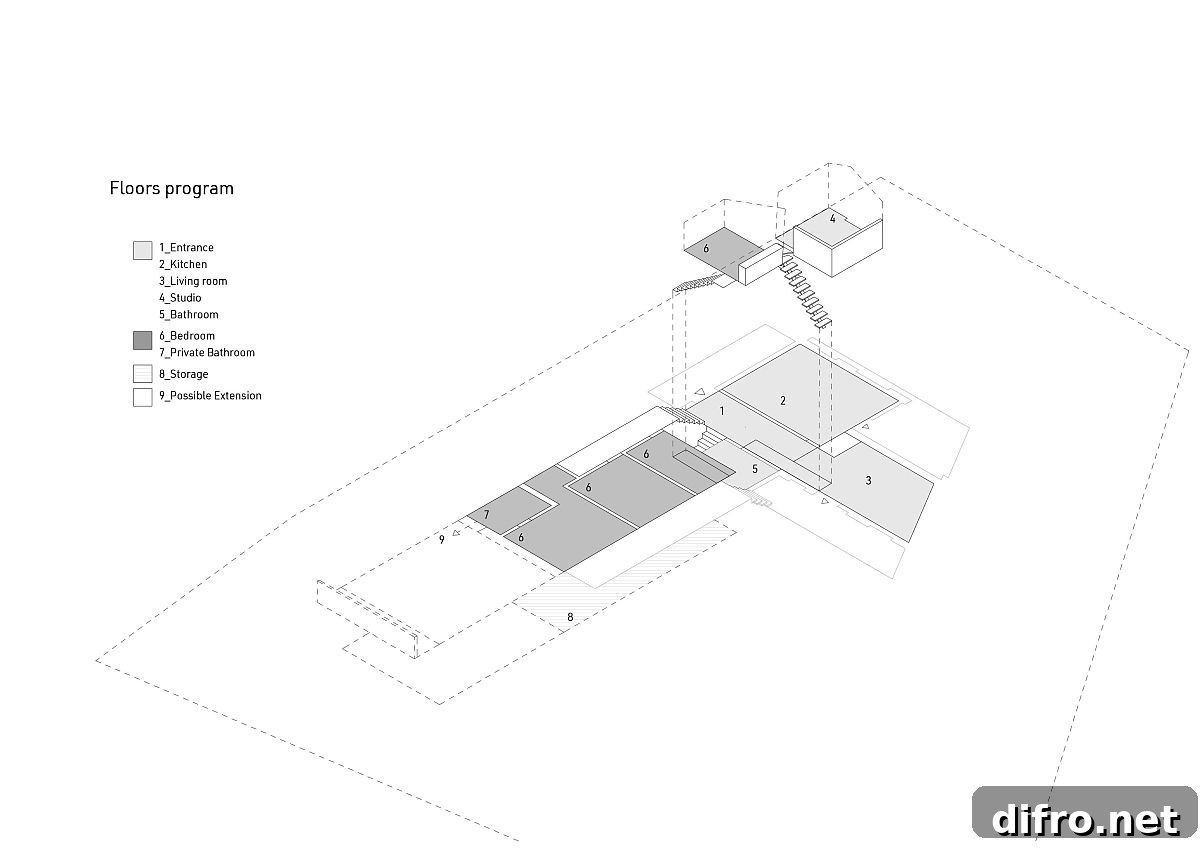
The home’s L-shaped plan organizes functions around outdoor views and the central tree, creating sheltered courtyards and framed vistas toward the mountains. Sloped roofs and angled walls give the building a distinct identity, while the geometric forms contrast the organic shapes of the woodland and mountain backdrop. From the street, the facade reads as a private, minimal composition; from the valley and surrounding slopes, it becomes part of the wider landscape composition.
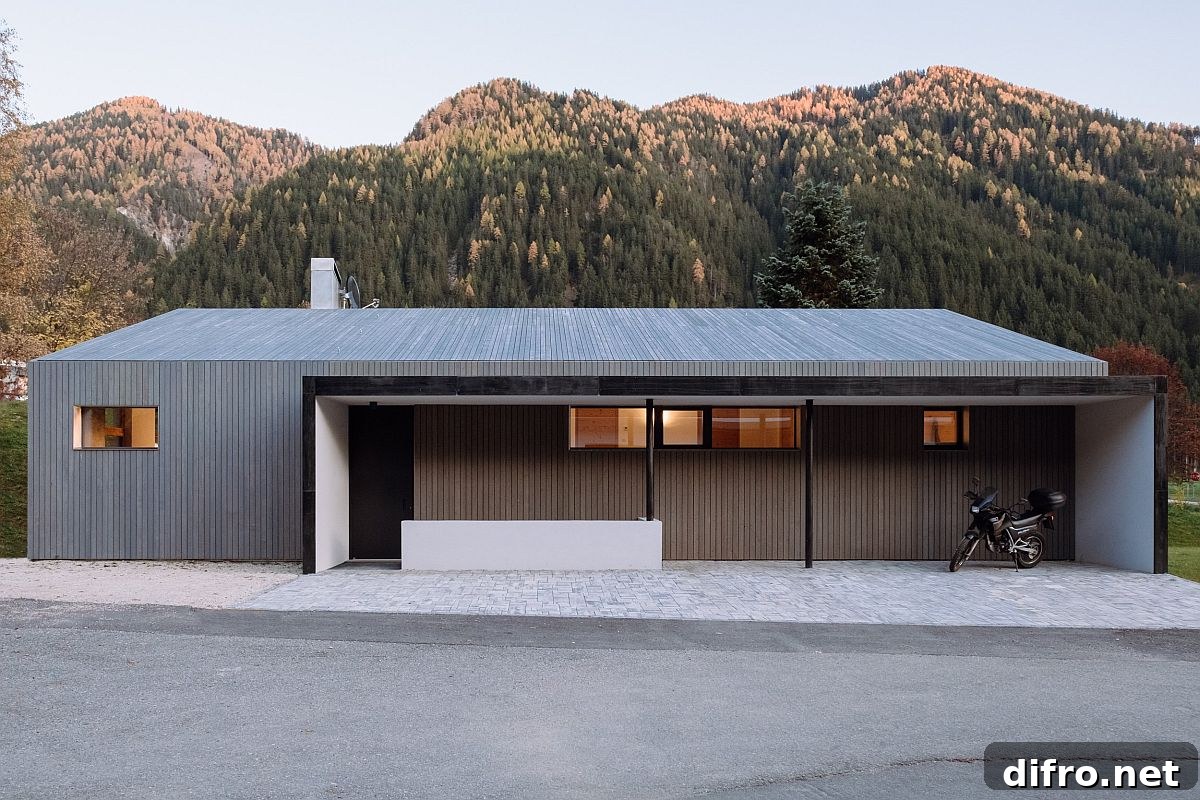
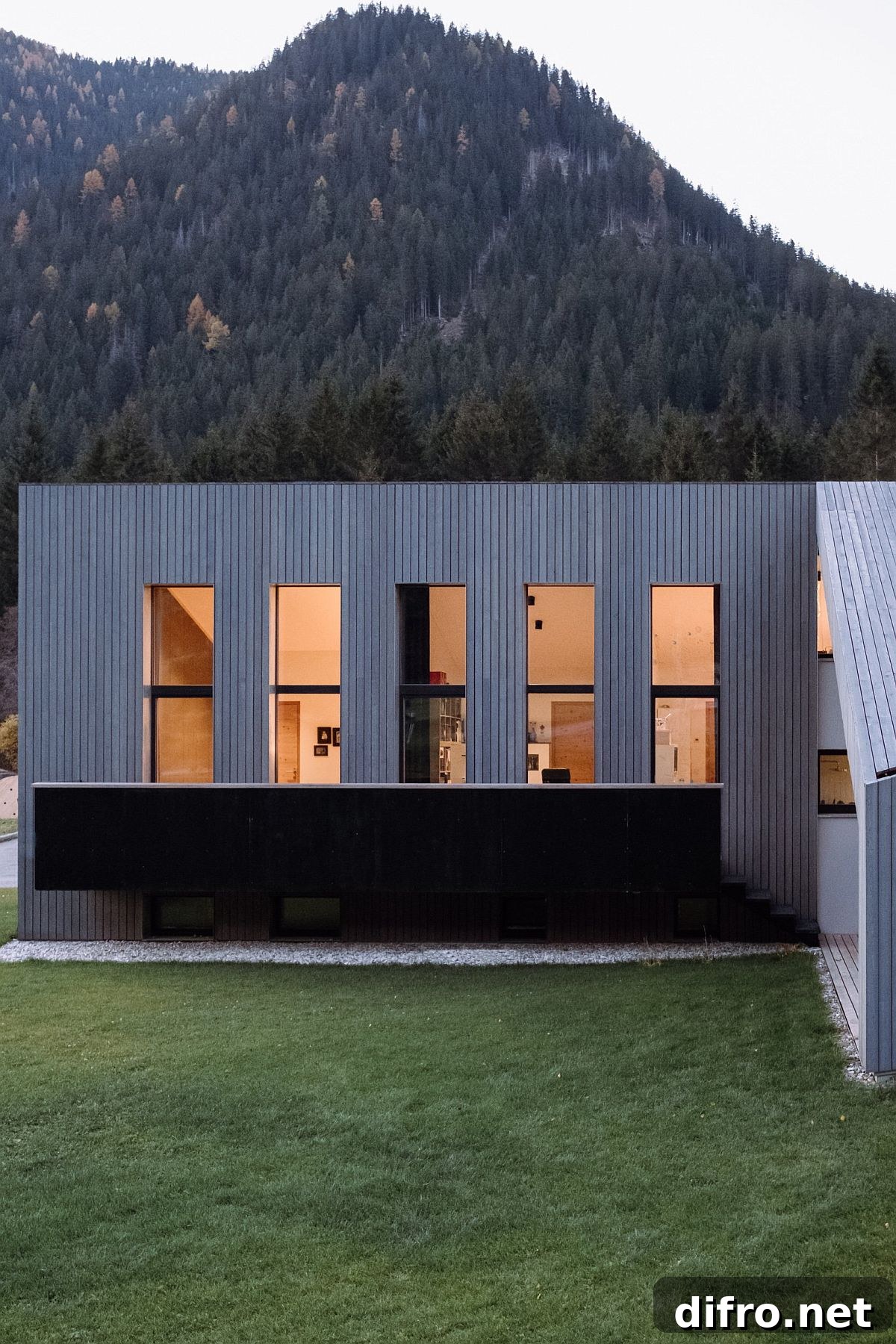
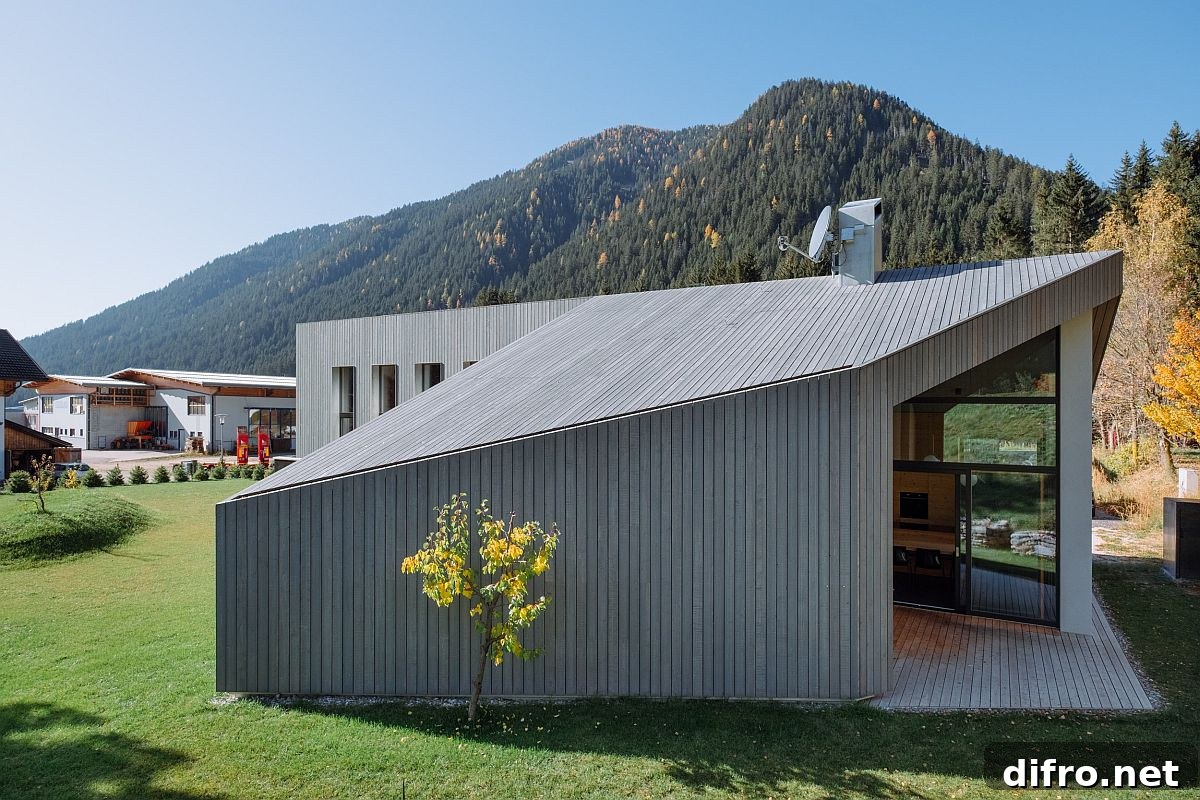
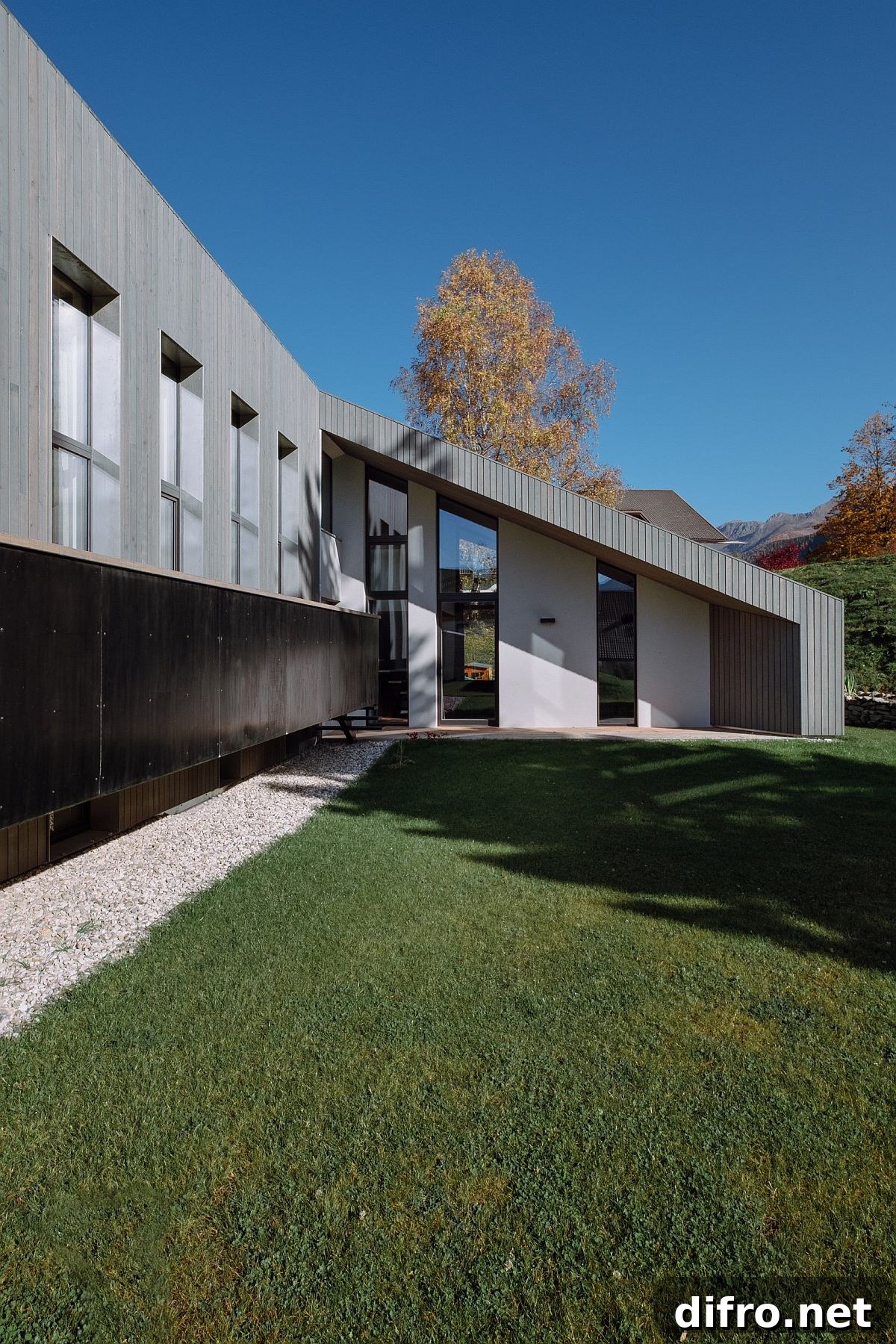
Exterior cladding on the east and west facades is composed of dark, vertical sawn-rough boards. This timber surface continues seamlessly over the inclined roof, producing an architecture that reads as a continuous skin. On the north and south elevations the roof is perceived as pitched, responding to local building traditions and the dramatic mountain context. Additive elements—such as a canopy and balcony—are crafted from galvanized and blackened steel, providing durable, subtle accents that complement the timber and concrete.
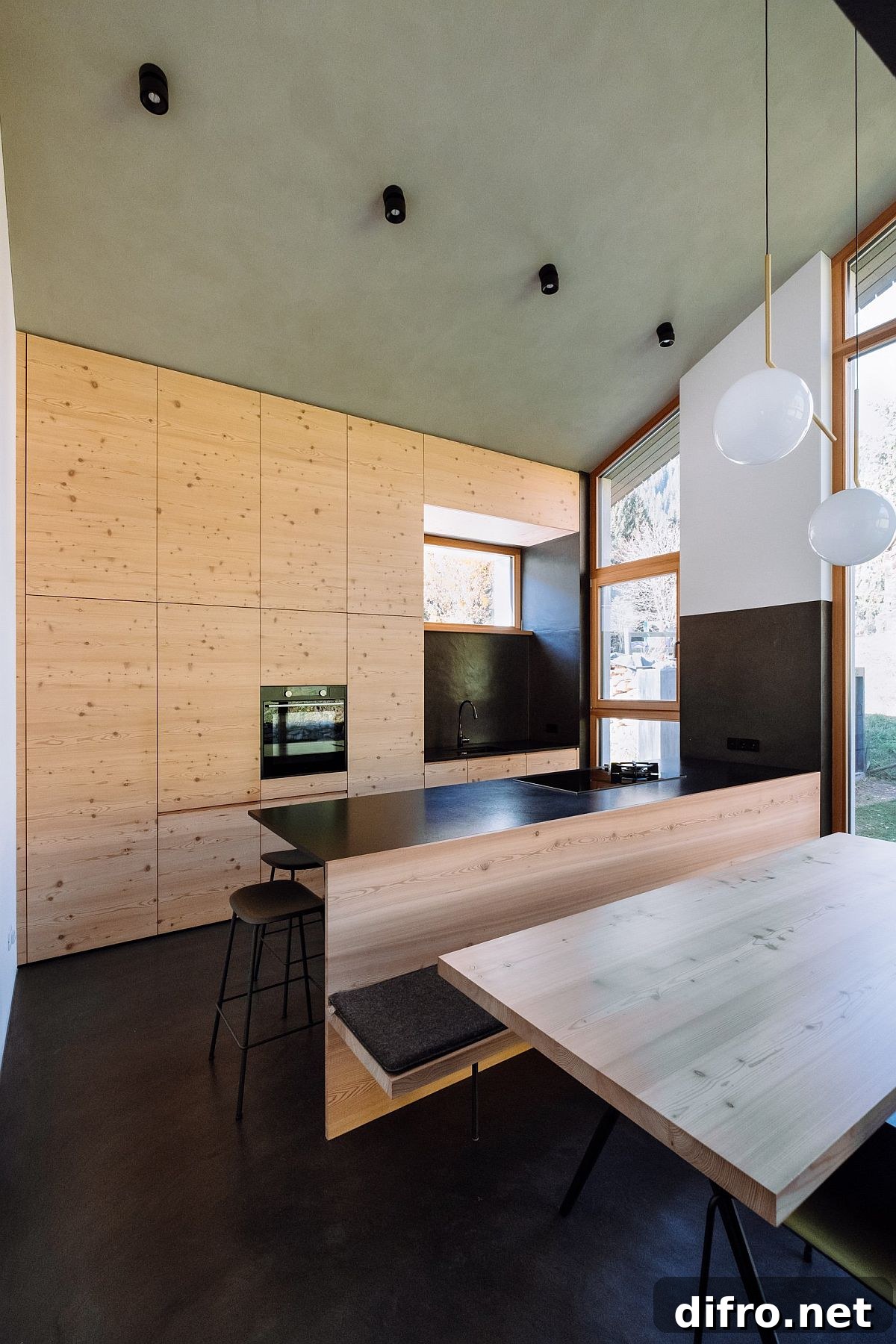
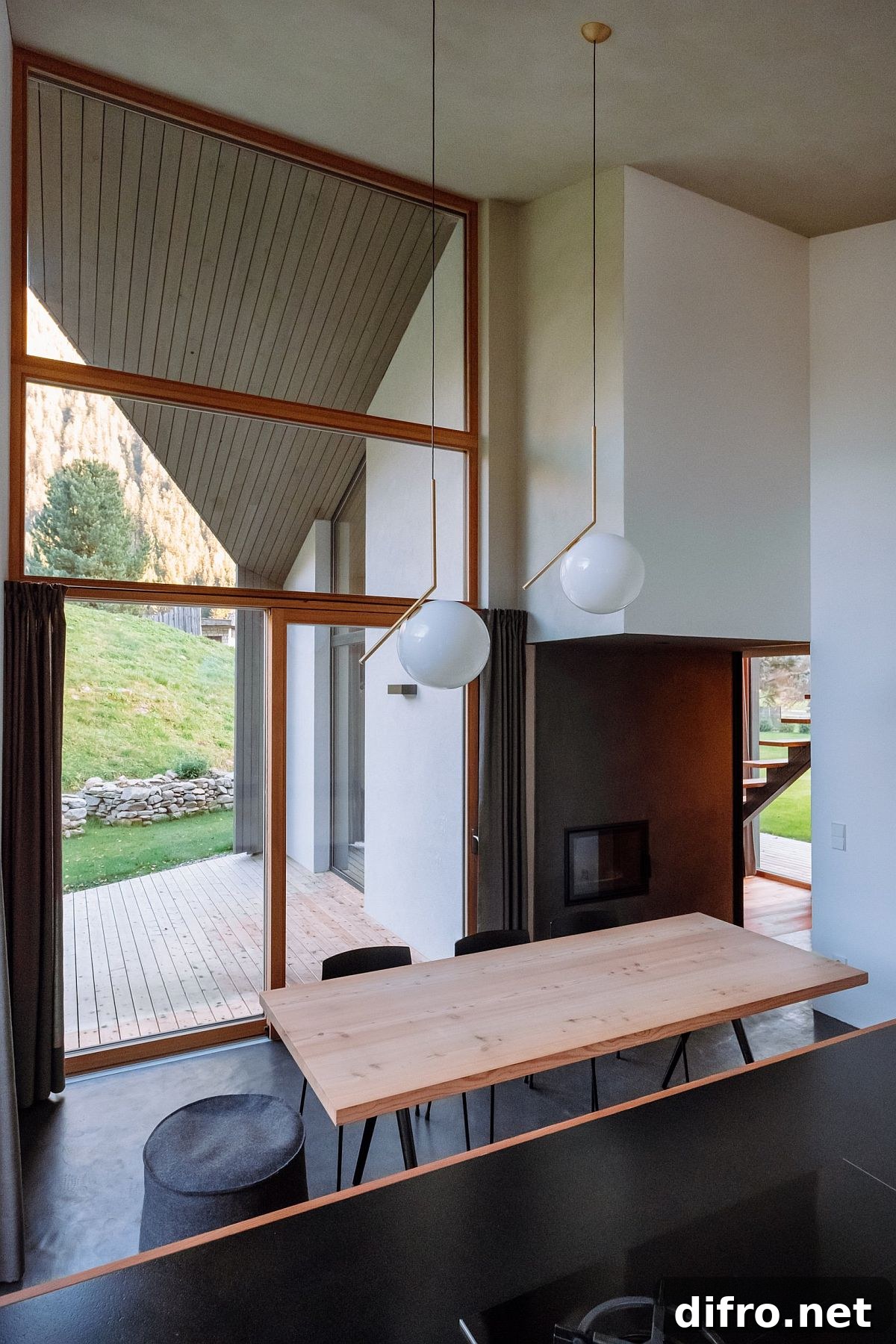
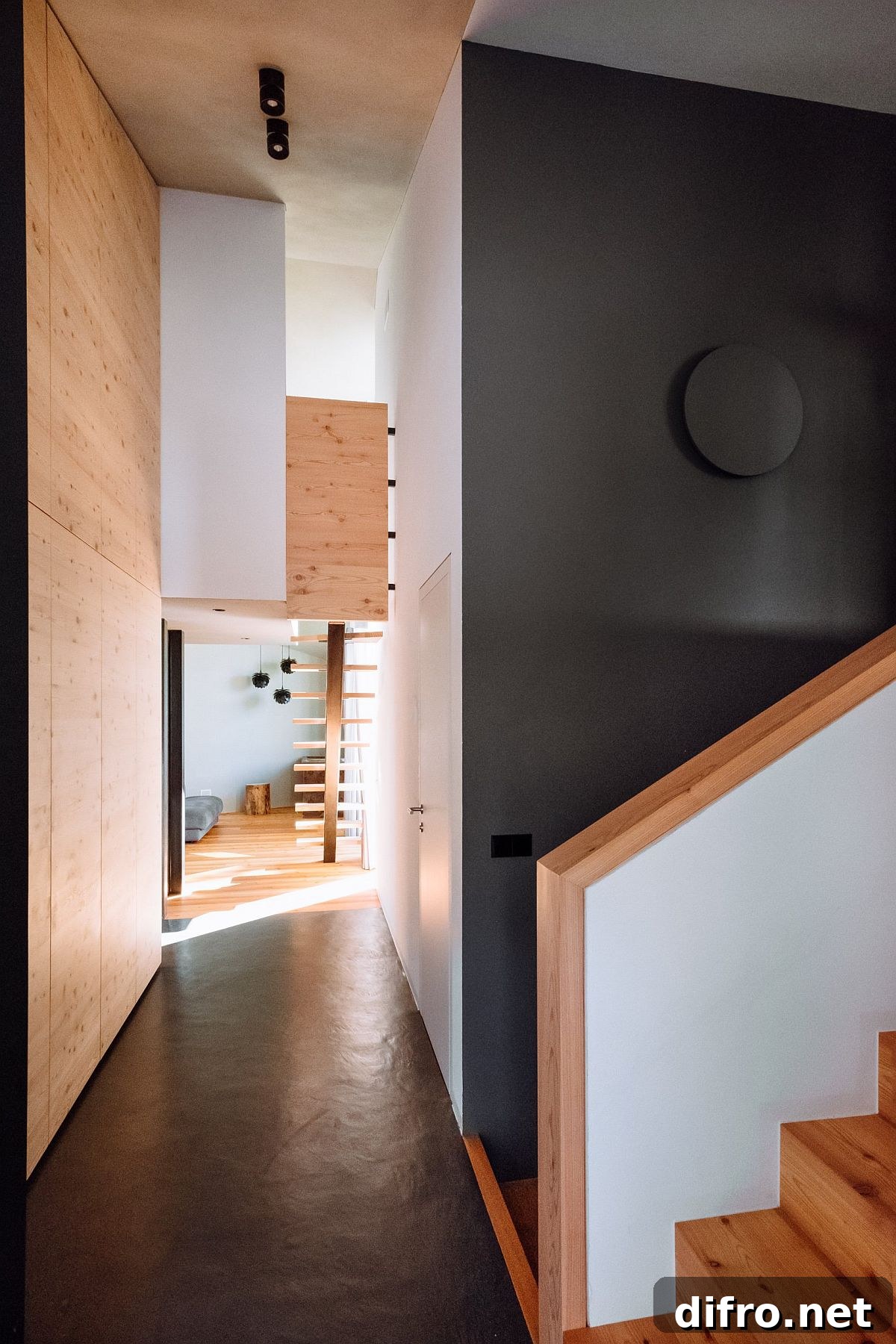
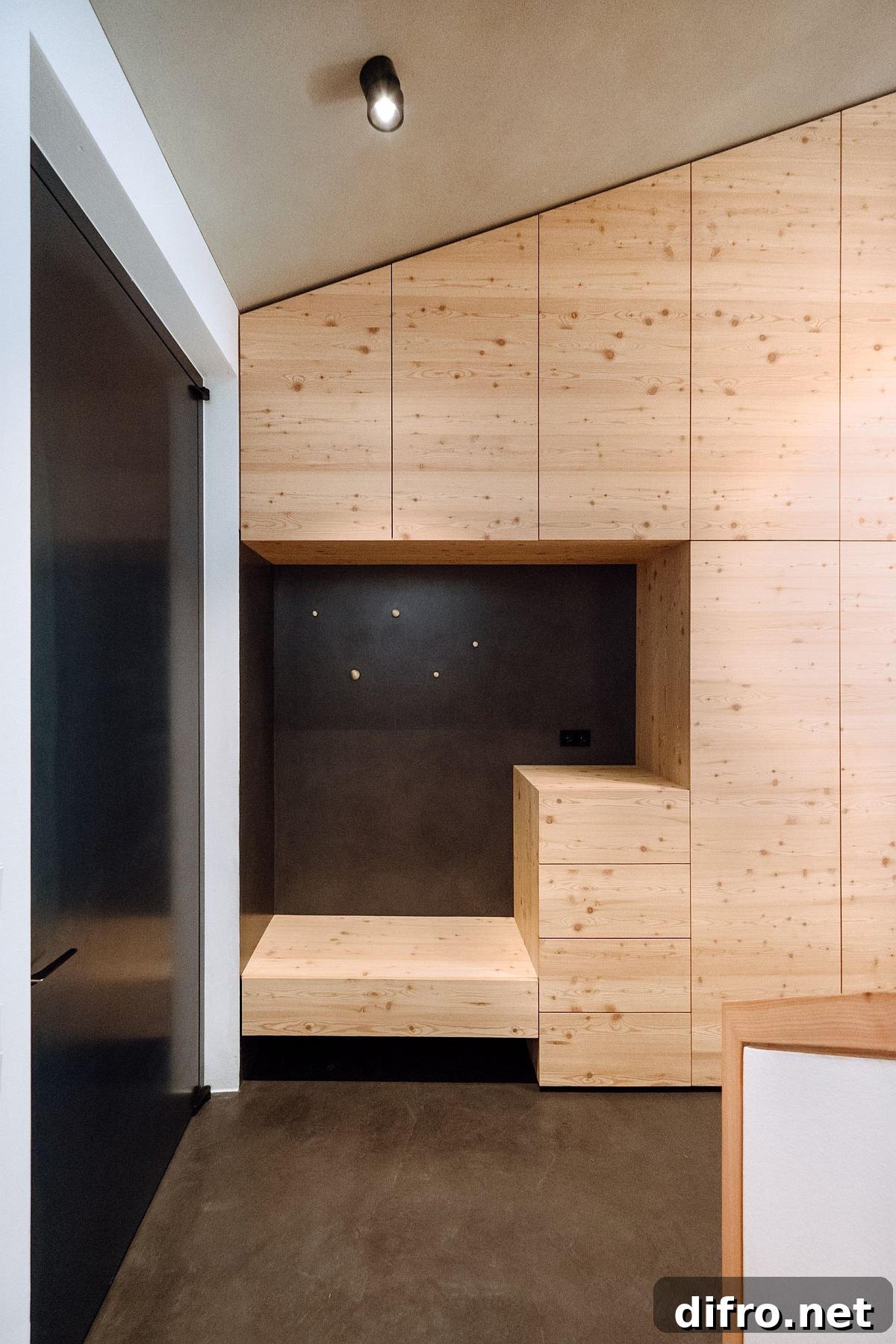
Inside, the palette is restrained and tactile: gray wood finishes, warm larch and pine joinery, and polished stone floors form an elegant backdrop for daily life. Large windows and a double-height living space amplify natural light and frame views, making the interior feel airy and connected to the outdoors. The open-plan living area flows naturally into the kitchen and dining zones, creating a flexible, sociable arrangement well suited to contemporary living.
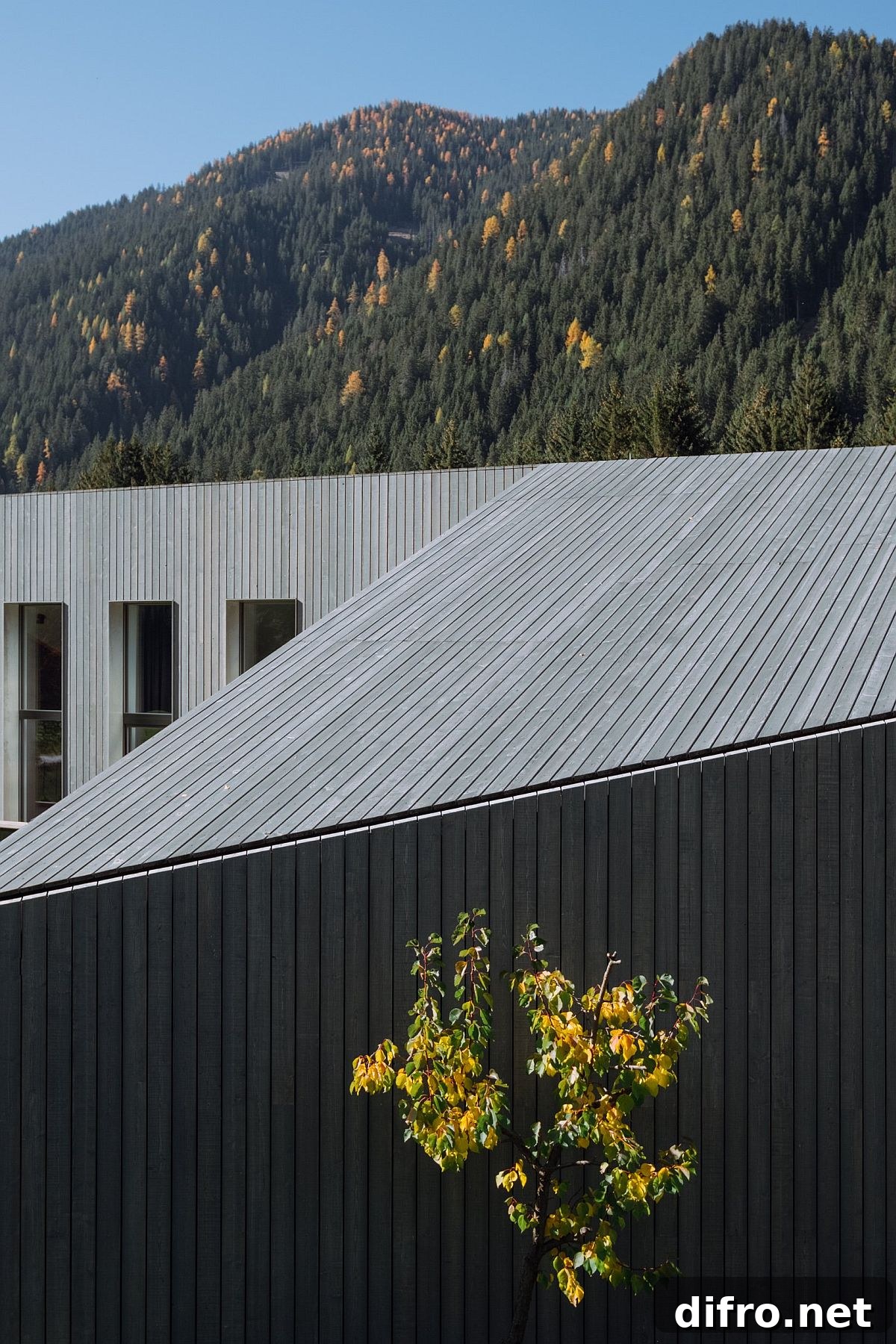
The west and east facades are cladded in dark, vertical sawn-rough boards. This covering extends as a continuum over the inclined roof, which from north and south is perceived as a pitched roof. Additive elements on the east and west sides, such as the canopy and the balcony, are made of galvanized and blackened steel.
Overall, the L House demonstrates how contemporary architecture can be sensitive to a protected landscape while offering modern comforts and strong visual character. Thoughtful material choices, a responsive L-shaped plan, and careful detailing result in a home that complements both the solitary silver fir and the broader mountain scenery. Photography by Michael Pezzei captures the house’s relationship with its setting and the refined materiality that defines the project.