Reading Room Extension by George King Architects in the Cotswolds
Extending a historic home requires sensitivity, skill and a clear design approach. The Reading Room by George King Architects, added to a seventeenth‑century cottage in the Cotswolds, is an example of how a contemporary space can be woven into a heritage setting without overwhelming it. Sited beside Uley Bury — an Iron Age hill fort — the new reading room reaches out into the garden while preserving views across the conservation area that surrounds this classic cottage.
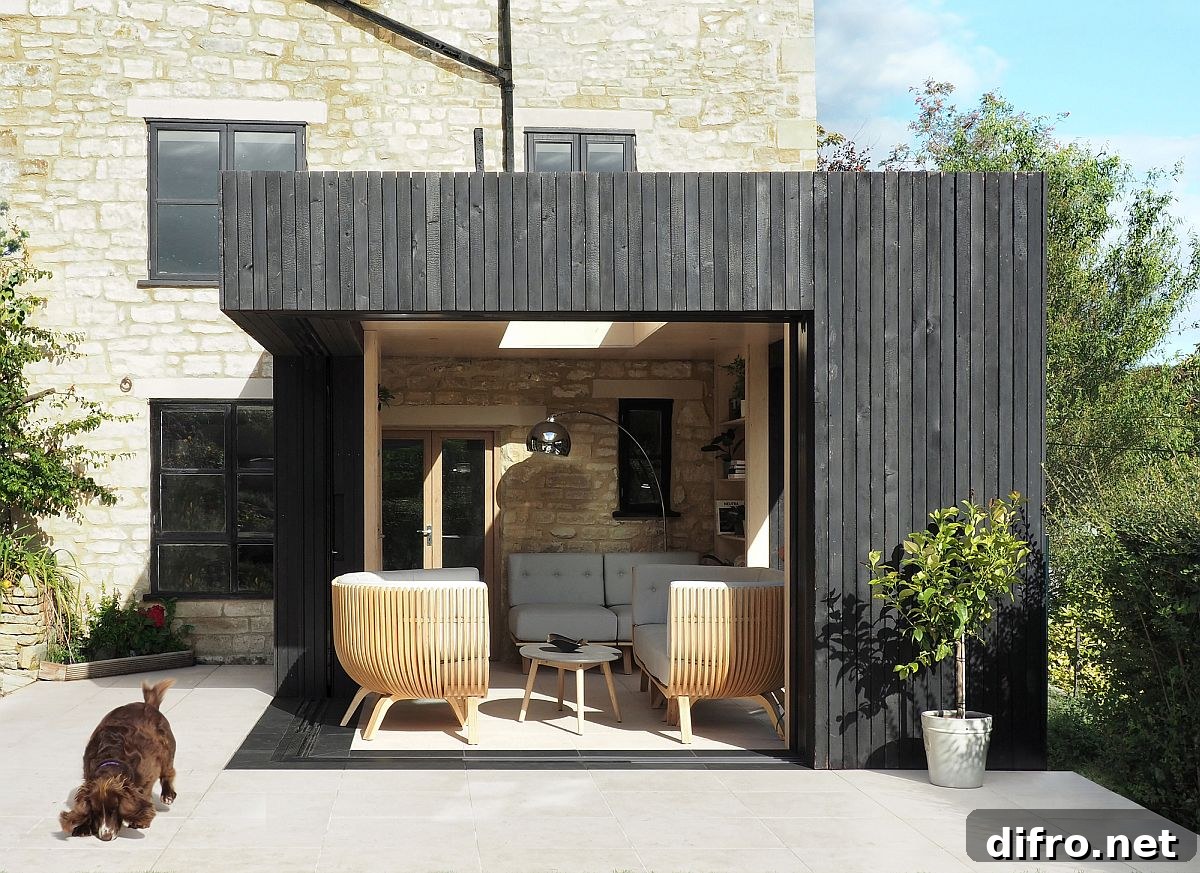
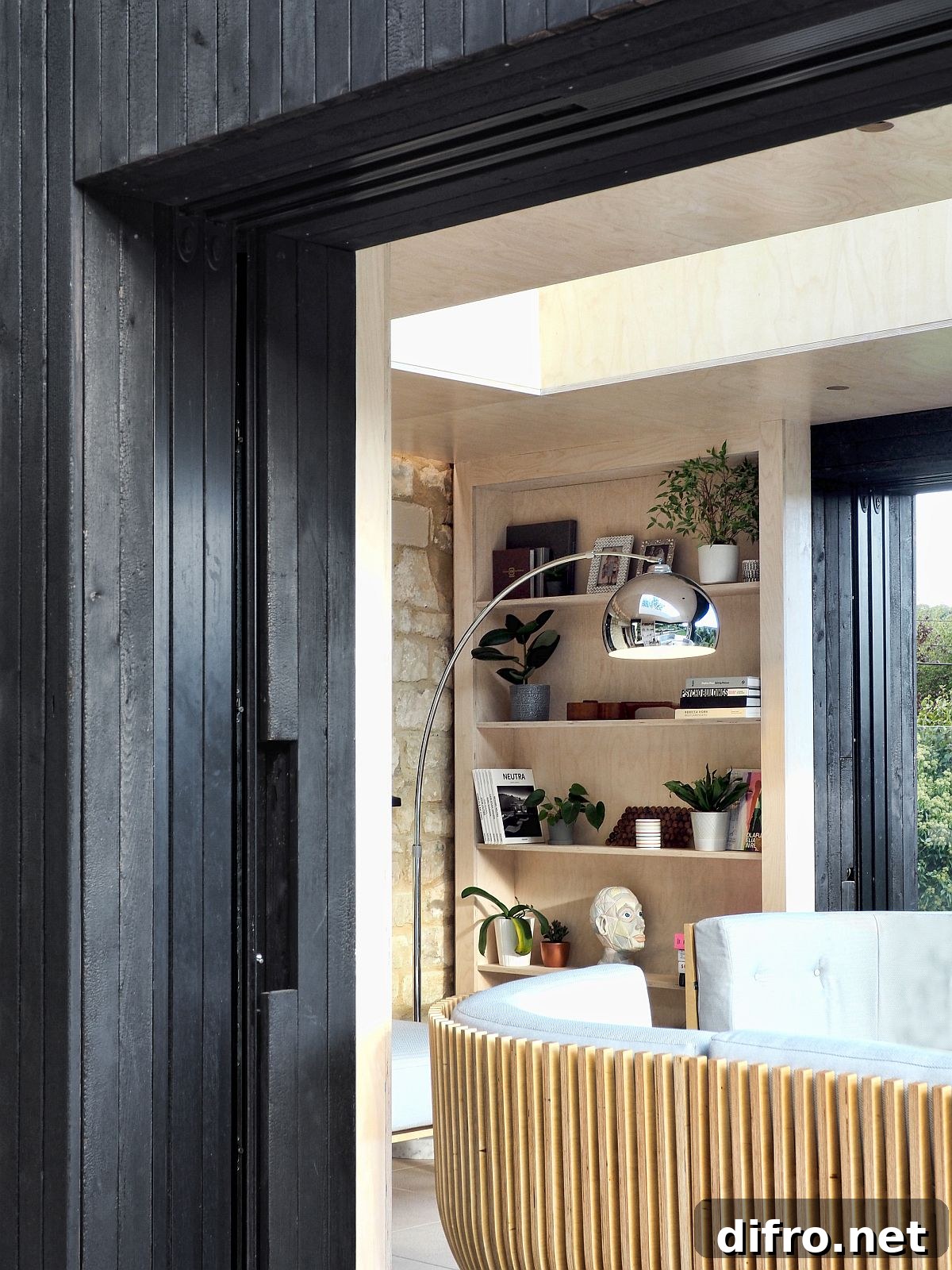
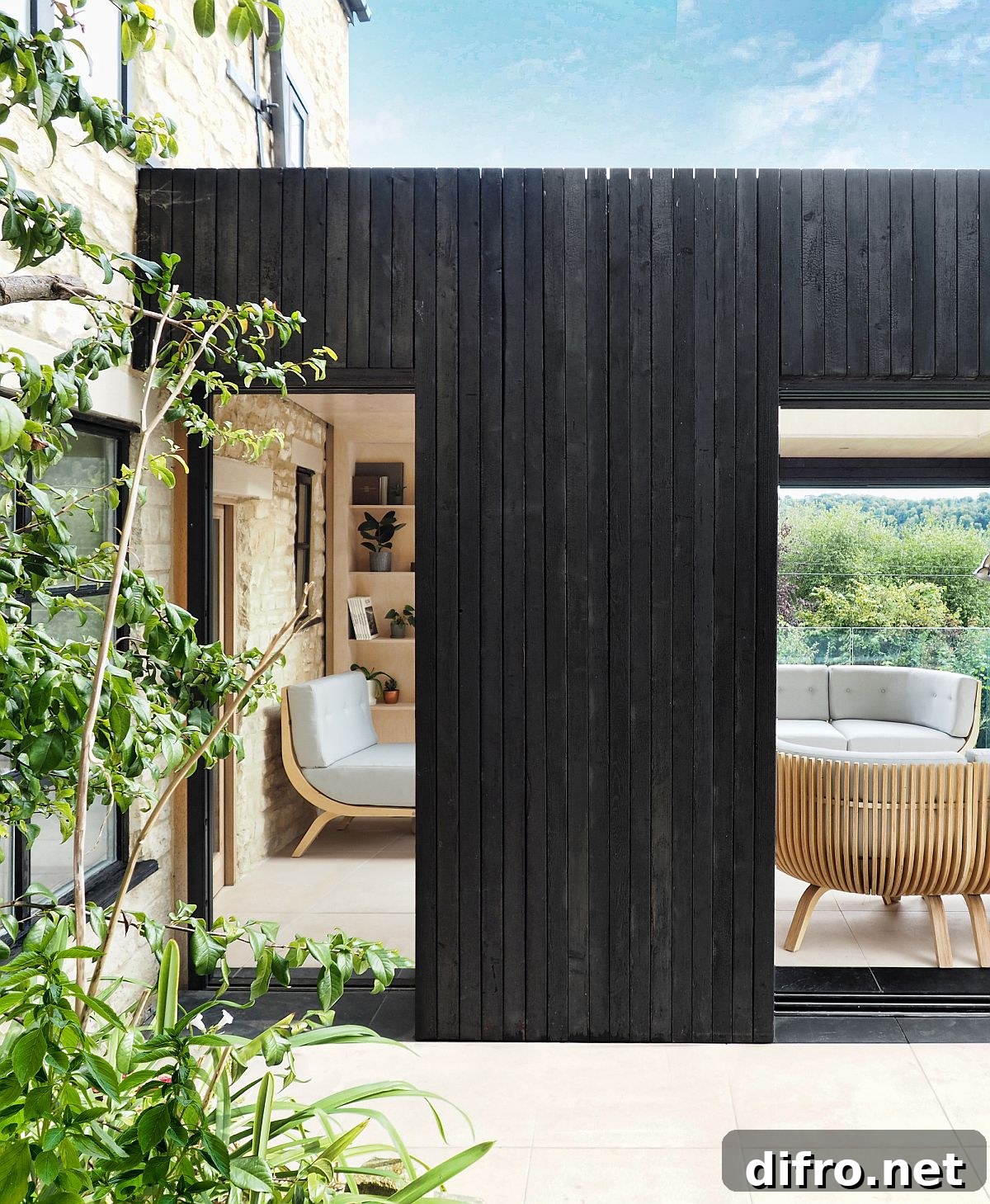
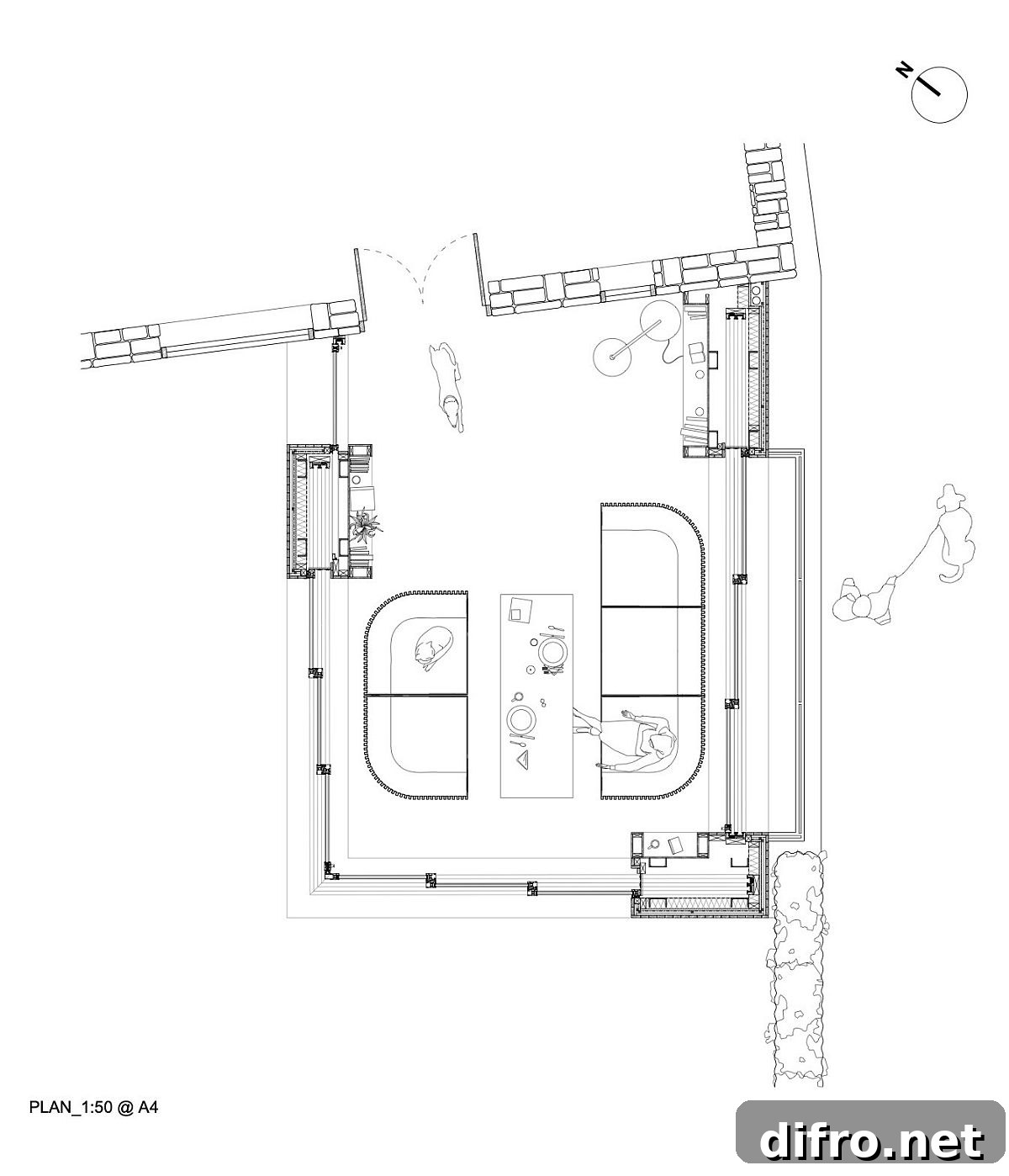
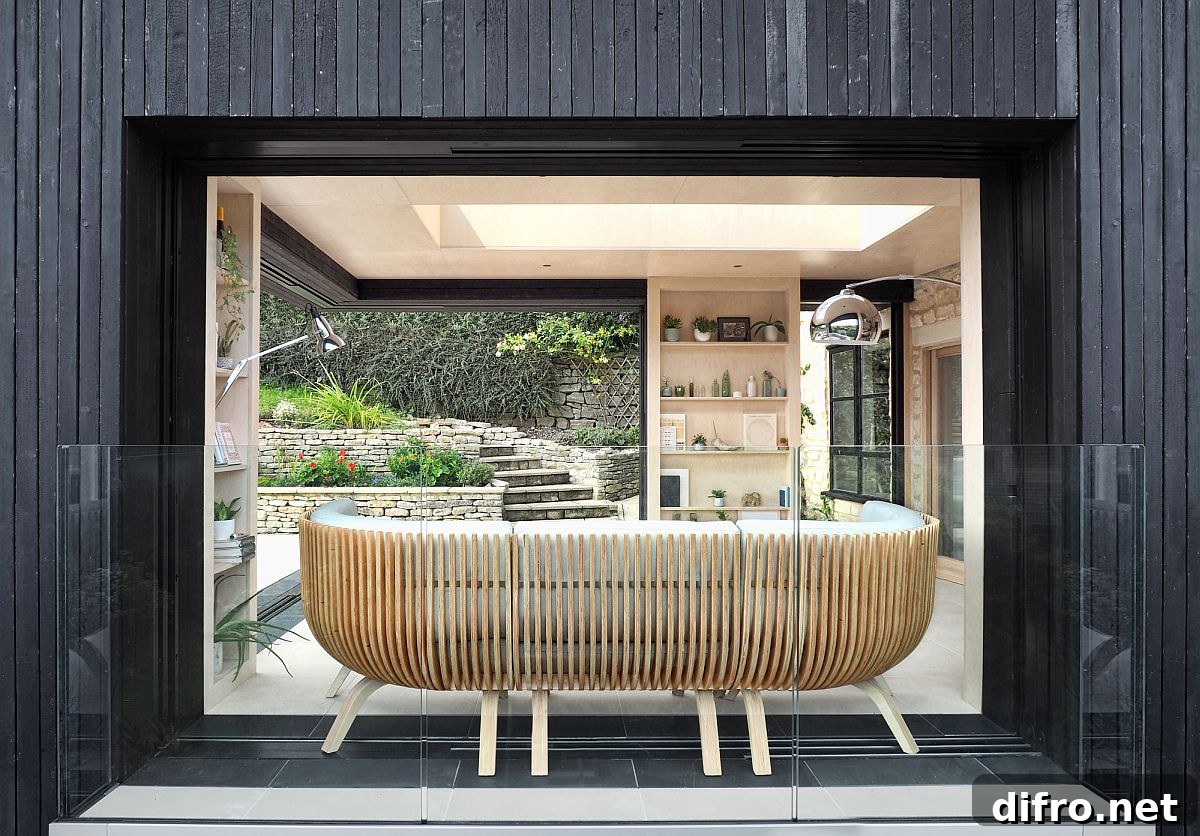
The design is intentionally modest, prioritizing calm and connection to landscape. Large sliding glass doors open the room to the outside and are designed to disappear when not required, creating an uninterrupted visual link between the interior and the garden. These glazed panels are cleverly concealed within dark timber walls that also incorporate open shelving, so structure and storage are integrated into a single refined sequence.
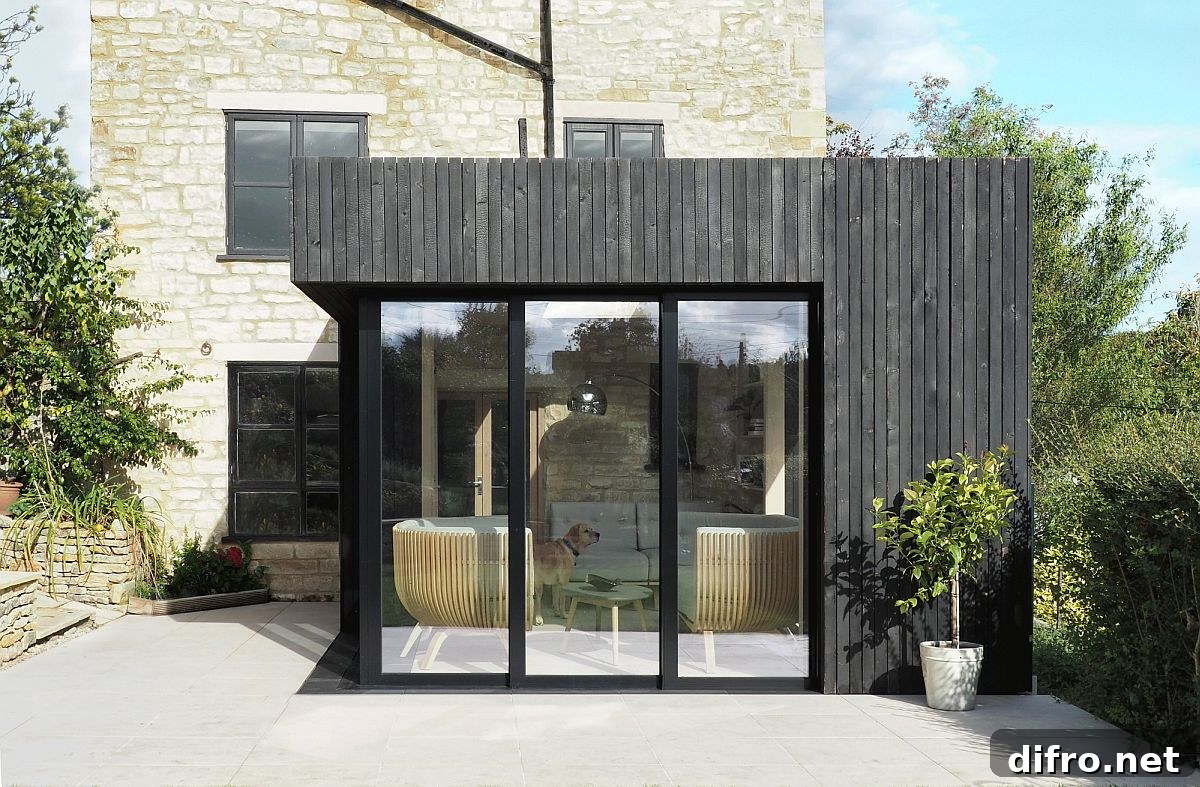
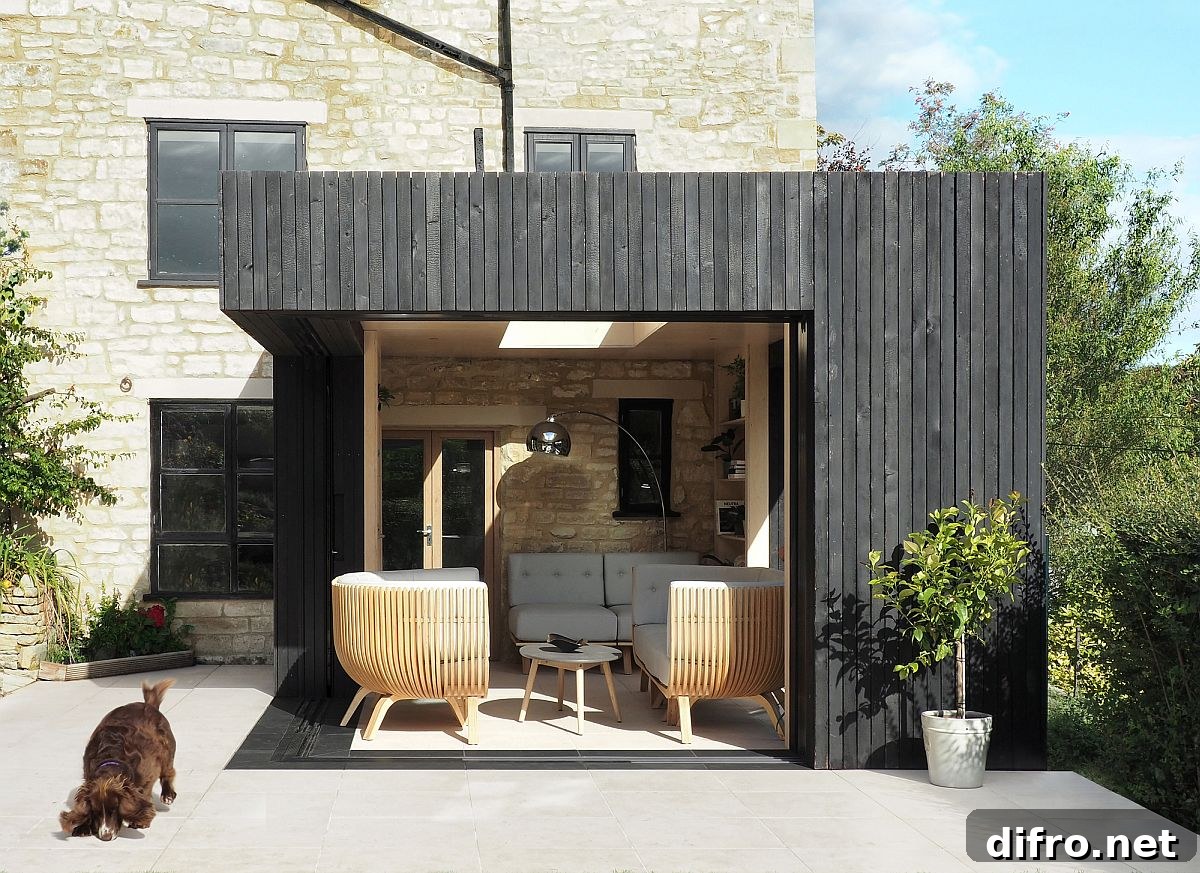
Locally sourced Cotswold stone and timber bookcases craft a dialogue between old and new. The existing stone walls were sensitively restored: paint was stripped away, repointing carried out and repairs made so the original stone could be revealed and celebrated. Inside, light birch plywood finishes complement the warm tones of the stone and provide a contemporary contrast to the cottage’s traditional fabric.
The extension is clad in charred timber, a deliberate reference to the cottage’s dark‑stained window frames, Victorian ironwork and exposed beams. This robust exterior treatment anchors the new volume against the garden while the lighter interior palette ensures the room feels bright and welcoming. A skylight further enhances the sense of openness by drawing natural daylight deep into the space.
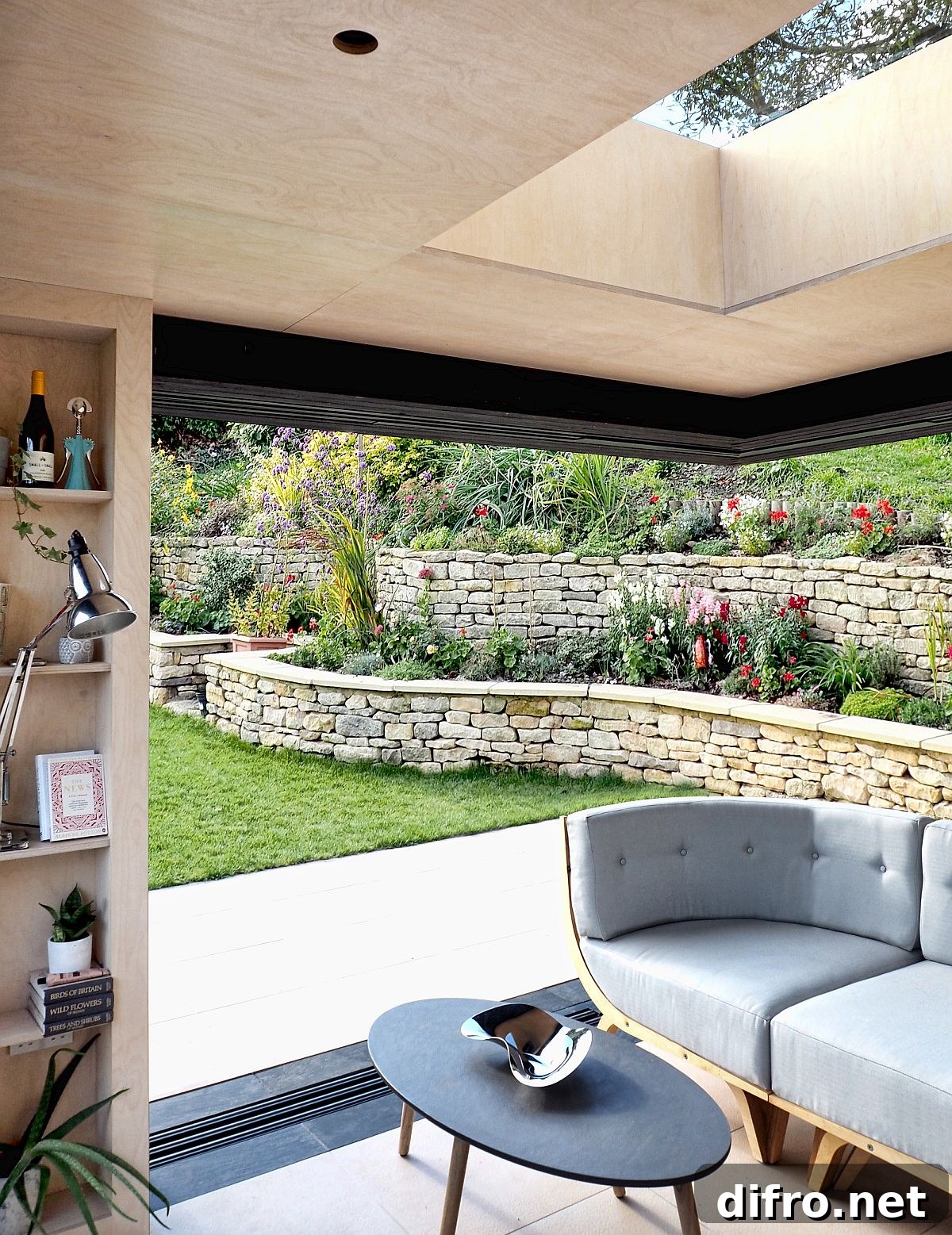
The reading room measures roughly 16 square metres and has been detailed to support relaxed, focused use. Timber bookcases and slender wooden columns double as architectural elements and storage, concealing the glazing when closed and framing views when open. This practical yet poetic approach allows the room to function as a quiet retreat that also feels part of the wider landscape.
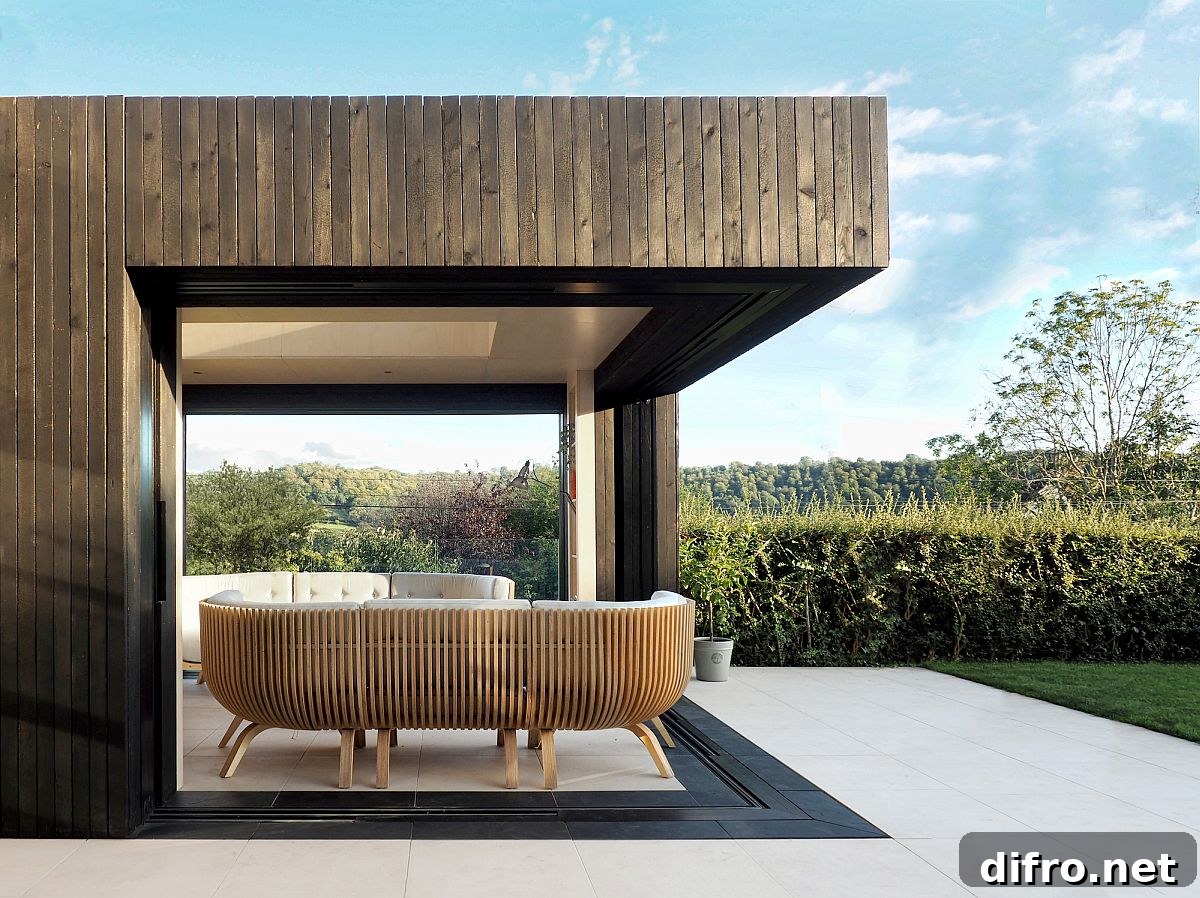
Custom joinery — including plywood seating and storage — gives the space a bespoke quality. The built elements are kept simple and durable, reinforcing the room’s purpose as a place to read, think and enjoy uninterrupted views. The material choices and detailing emphasize tactility and longevity, important considerations when working with a heritage building.
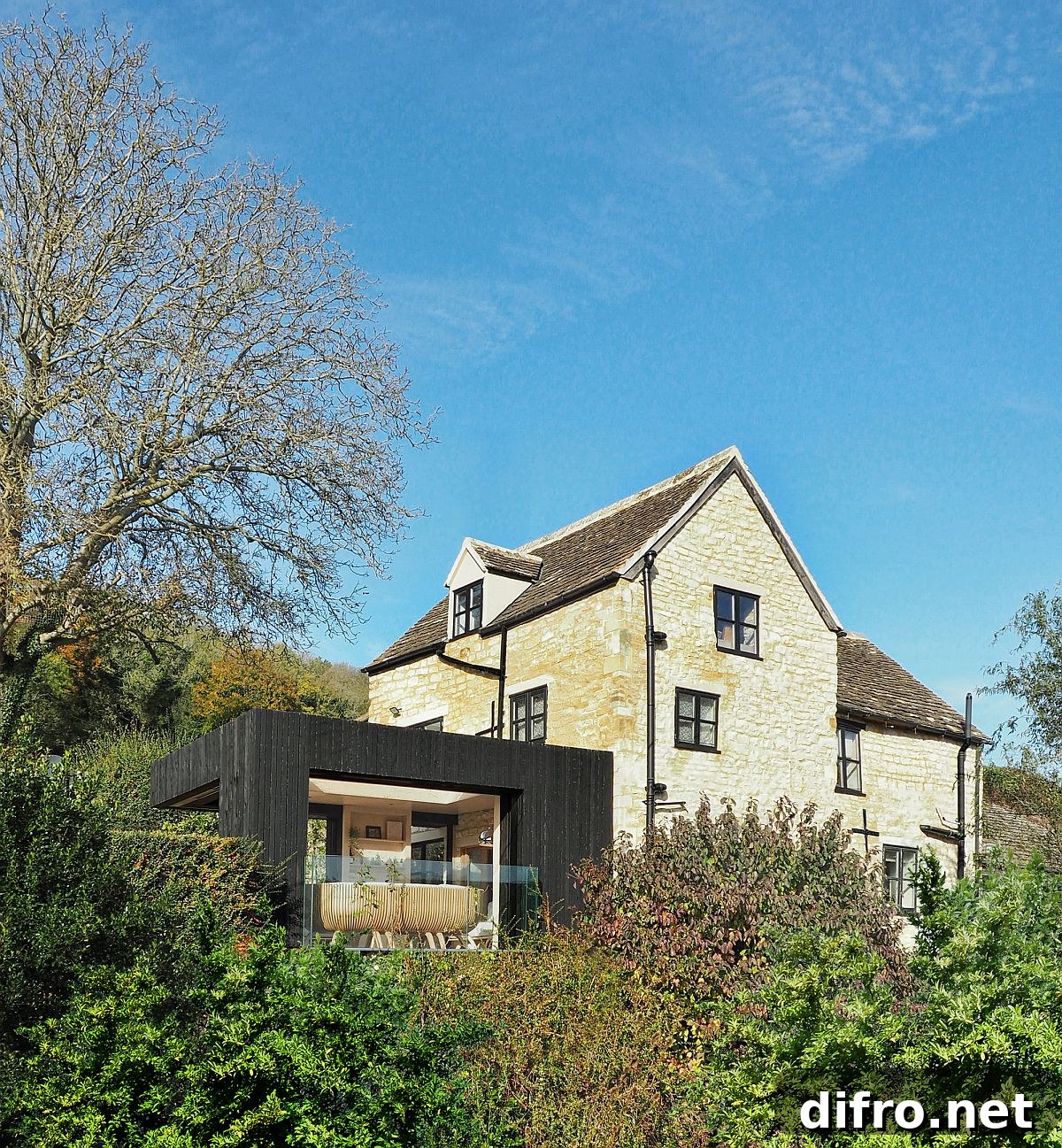
The new extension is clad in charred timber to reference the original dark stained windows, Victorian ironwork and wooden beams of the cottage while the interior finishes are light birch plywood to complement the existing Cotswold stone walls. These walls were in a poor condition having been painted previously and so were restored by stripping off the paint, repointing and repairing where necessary in order to expose the beautiful Cotswold stone.
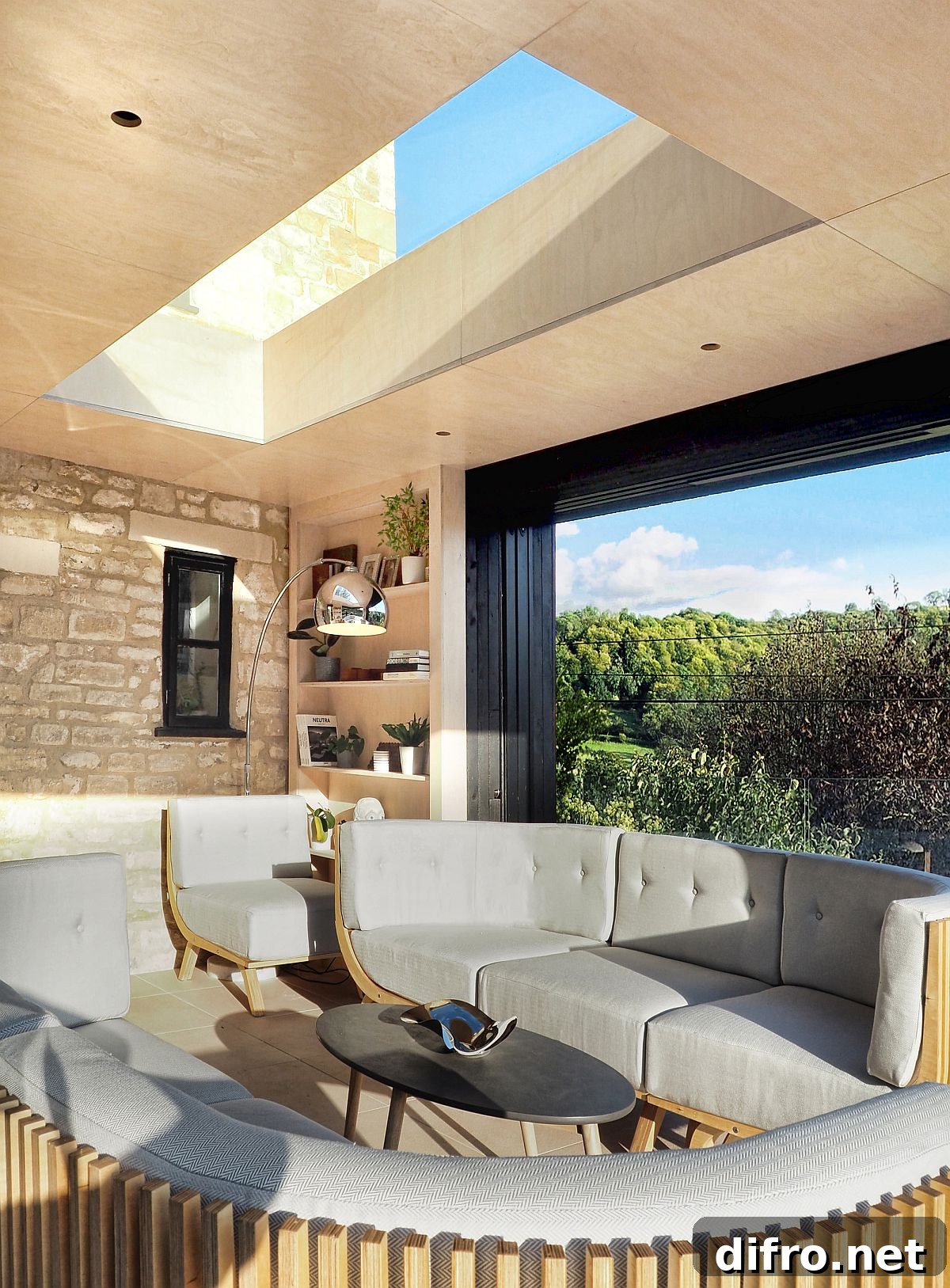
Overall, the Reading Room extension demonstrates how careful material selection and restrained detailing can create a contemporary insertion that respects and enhances a historic cottage. The result is a compact, light‑filled space that extends living outdoors, celebrates the original Cotswold stone and timber character, and offers a calm, beautifully crafted setting for reading and reflection.