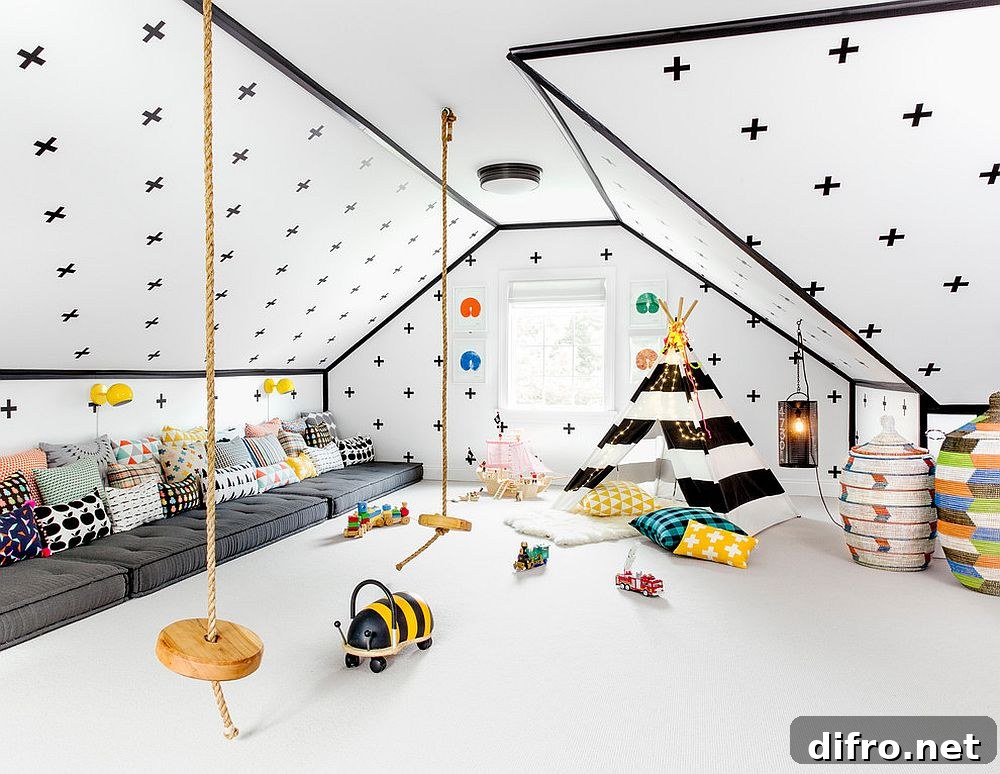
Staying indoors during the COVID-19 pandemic can be stressful, especially when you have children at home. Keeping them entertained and contained is a constant challenge, and soon enough they’ll be asking when they can visit a playground or the beach again. A dedicated playroom gives kids a safe place to be creative, play quietly, and enjoy a space that feels separate from the rest of the house. An attic playroom, in particular, provides a special retreat—a cozy, private hideaway that can transform how your family spends time at home.
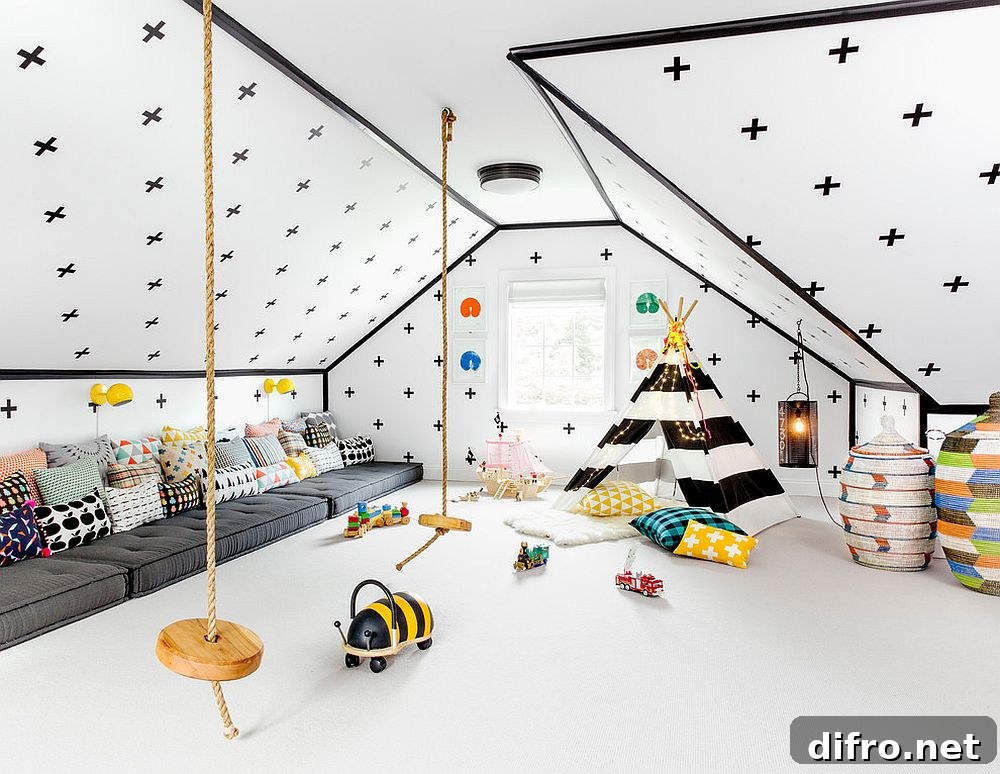
If your attic has been neglected, now is a great time to rethink that space. A quick cleanup, a little remodeling, and a few well-chosen furnishings—such as comfortable seating and modular storage—can convert an unused attic into a family favorite. Attic playrooms often feel magical even with minimal decoration simply because they provide a separate, intimate zone away from the main living areas. Whether the space is large and contemporary or compact and cleverly organized, the attic offers inspiring playroom possibilities.
Finding that Additional Space
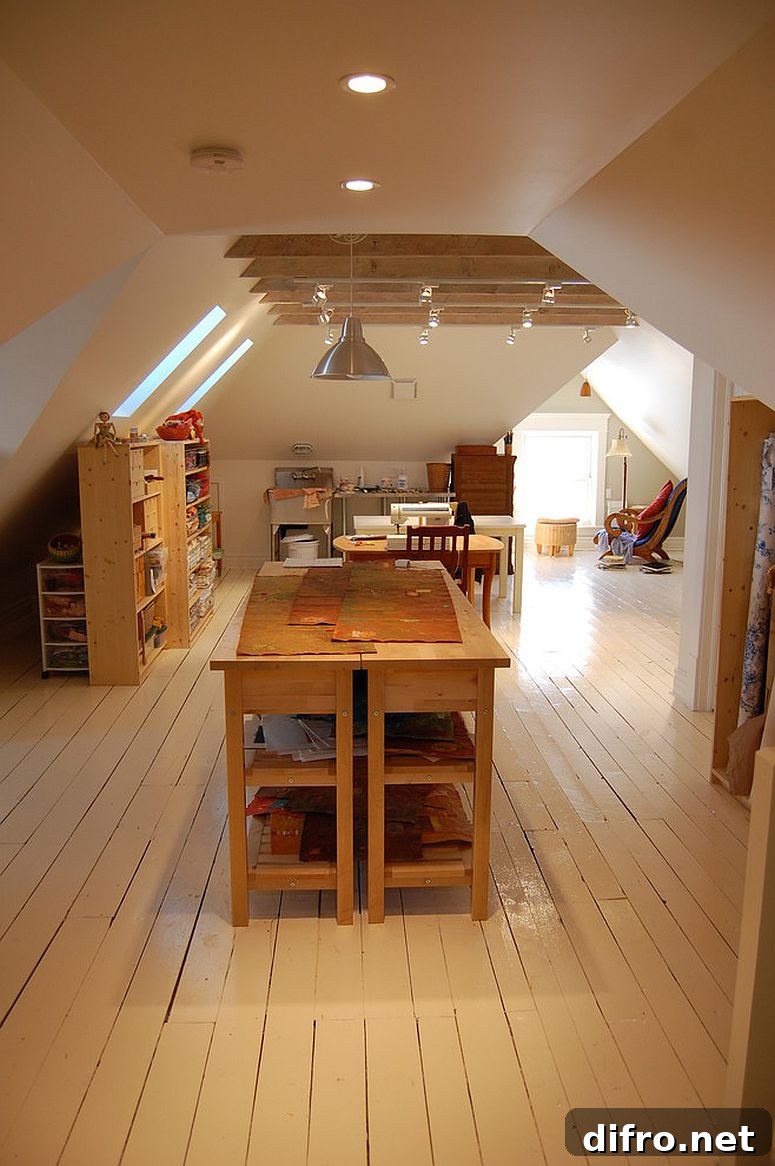
An attic playroom doesn’t have to be reserved for children only. With flexible planning it can function as a multipurpose area: a calm home office by day and a playroom at other times, a sleepover guest room with a sleeper sofa, or a family hangout that adapts to needs. Combining uses makes the most of limited square footage and keeps the household running smoothly. For parents working from home, an attic that doubles as a small office allows easier supervision of young children while staying productive. The key is to create balance—mix functional furniture with playful touches so the space feels both practical and fun.
Making it More Kid-Friendly
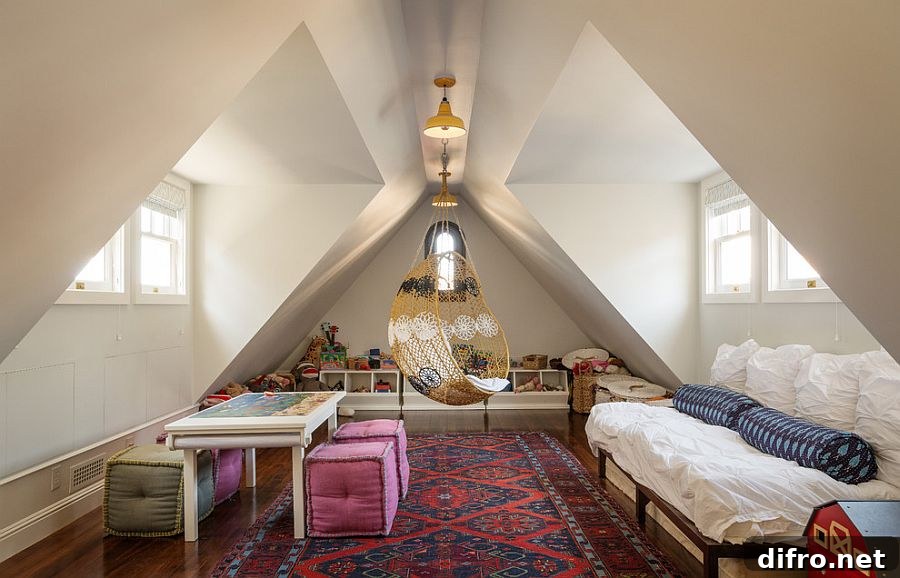
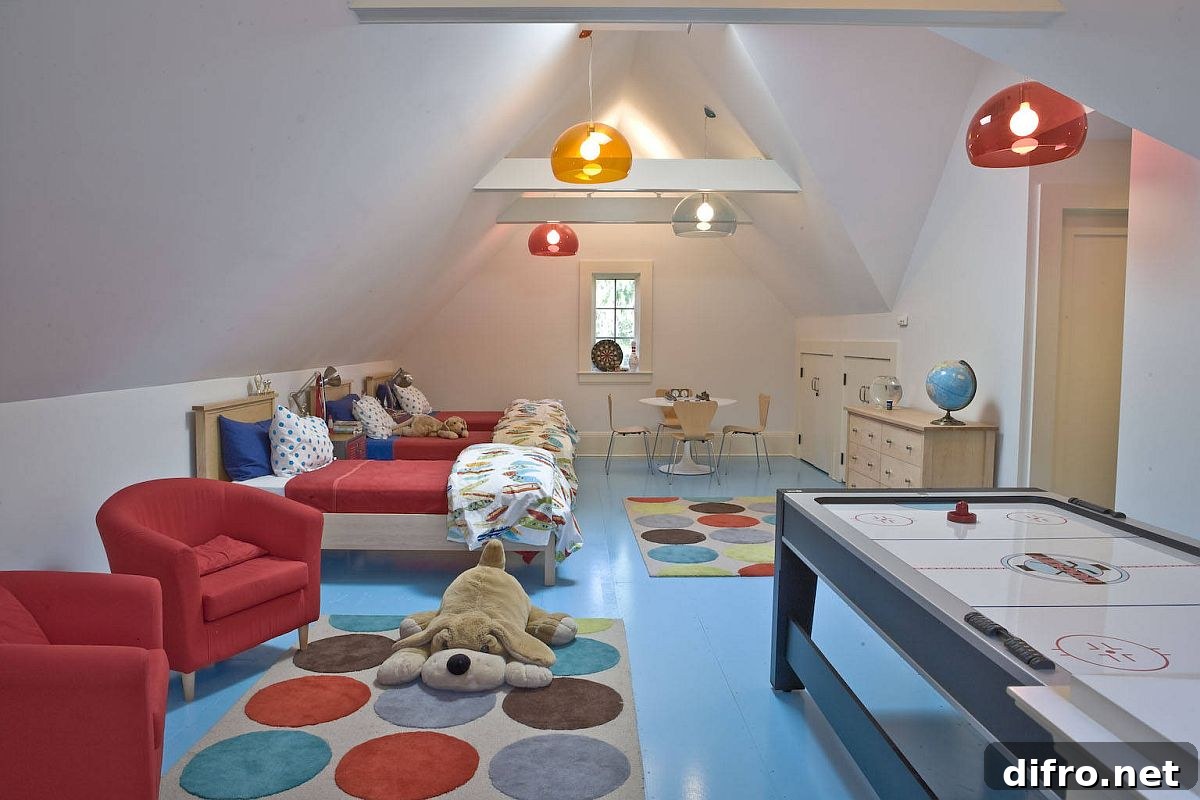
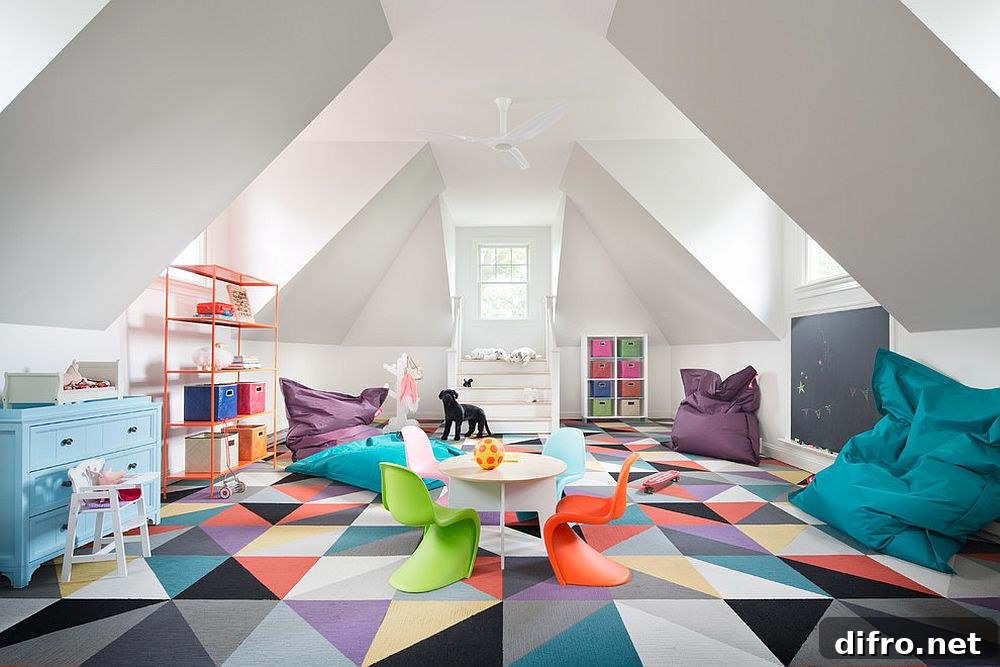
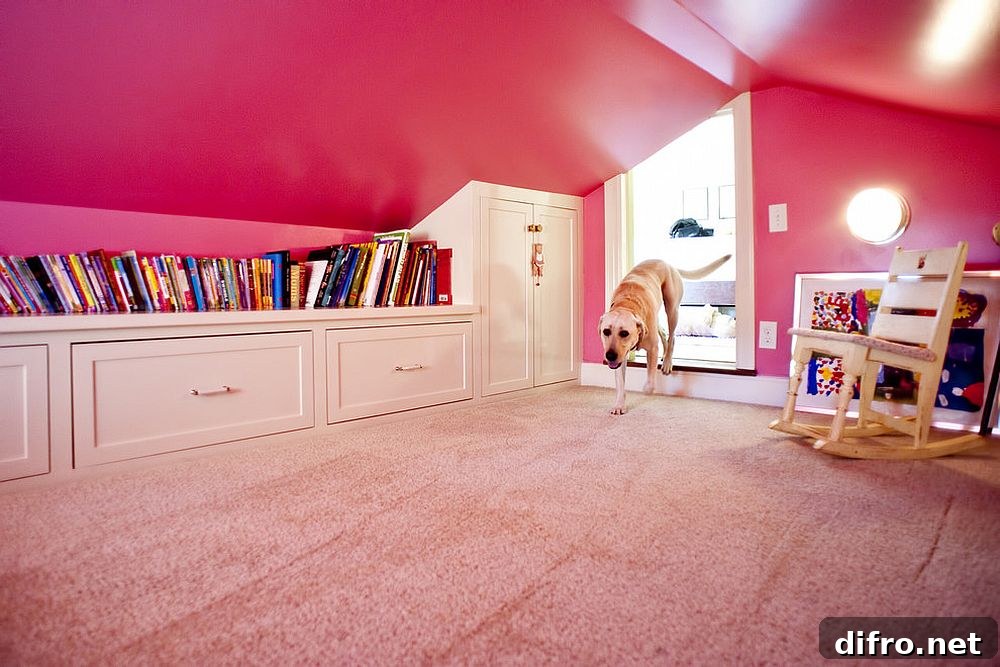
Not every attic is immediately ready to serve as a playroom, so a few practical upgrades are essential. Start by softening the floor: many attics have hard surfaces that can cause bumps and bruises. Installing wall-to-wall carpet or cushioned rug tiles improves safety and adds warmth and color. Next, plan storage carefully—shelves, cubbies, and built-in cabinets keep toys and books organized and help establish tidy habits. Window seats and built-in benches with storage are particularly effective in attics because they save floor space while offering comfortable places to read or nap.
Style, Décor and Lighting Choices
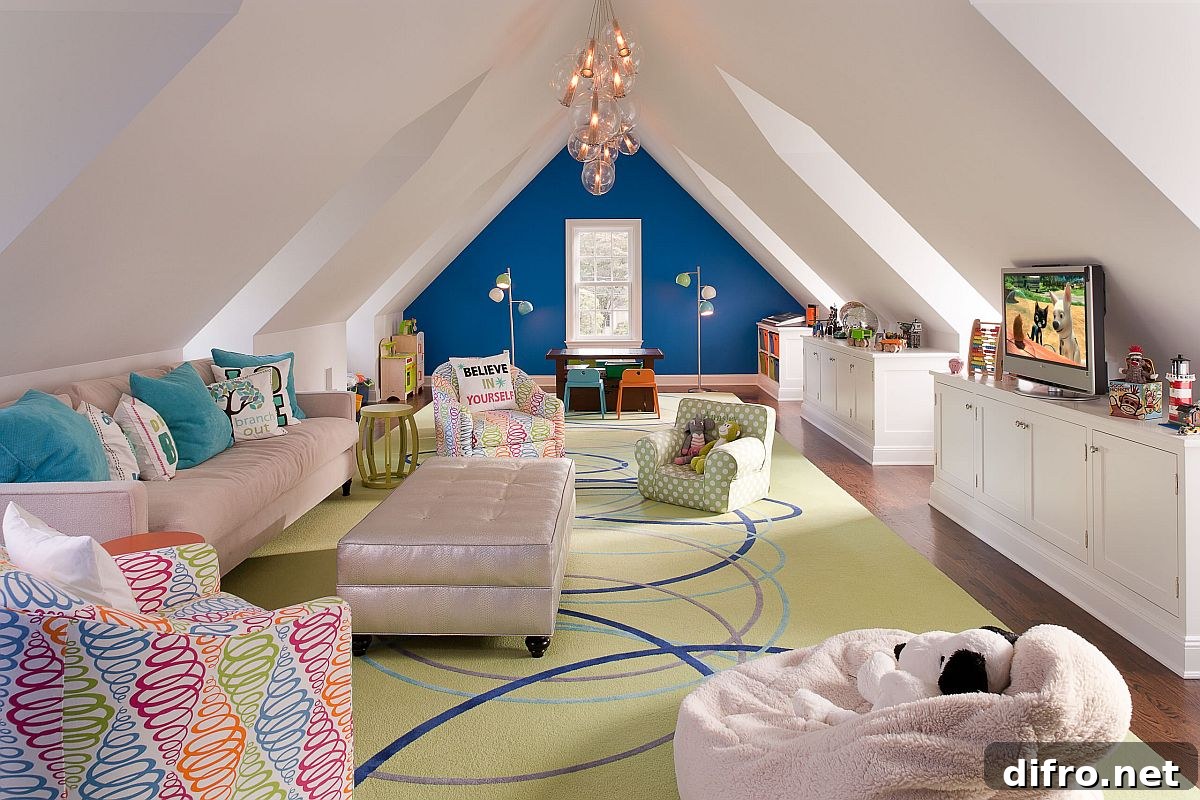
Lighting and décor are decisive for an attic playroom’s atmosphere. Whenever possible, add skylights to bring in abundant natural light; if skylights aren’t feasible, at least install a window to invite daylight and fresh air. Layer light sources—use recessed lighting, pendants, and task lamps—to ensure the room is evenly lit for art projects, reading, or play. For sloped ceilings, a single accent wall in a bright or contrasting color creates visual interest without overwhelming the space. Soft textiles, plenty of cushions, and durable finishes keep the room comfortable and resilient to everyday use.
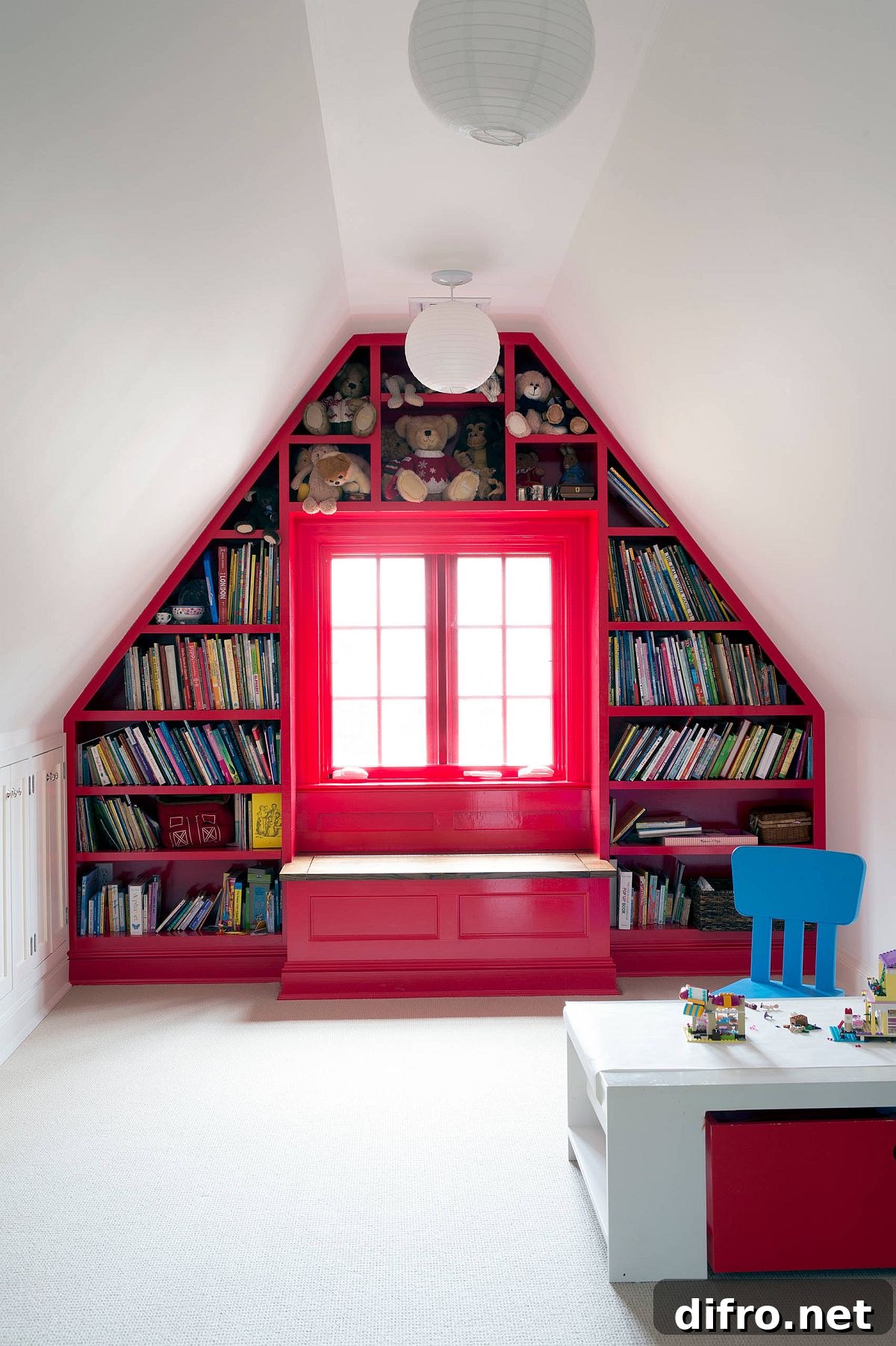
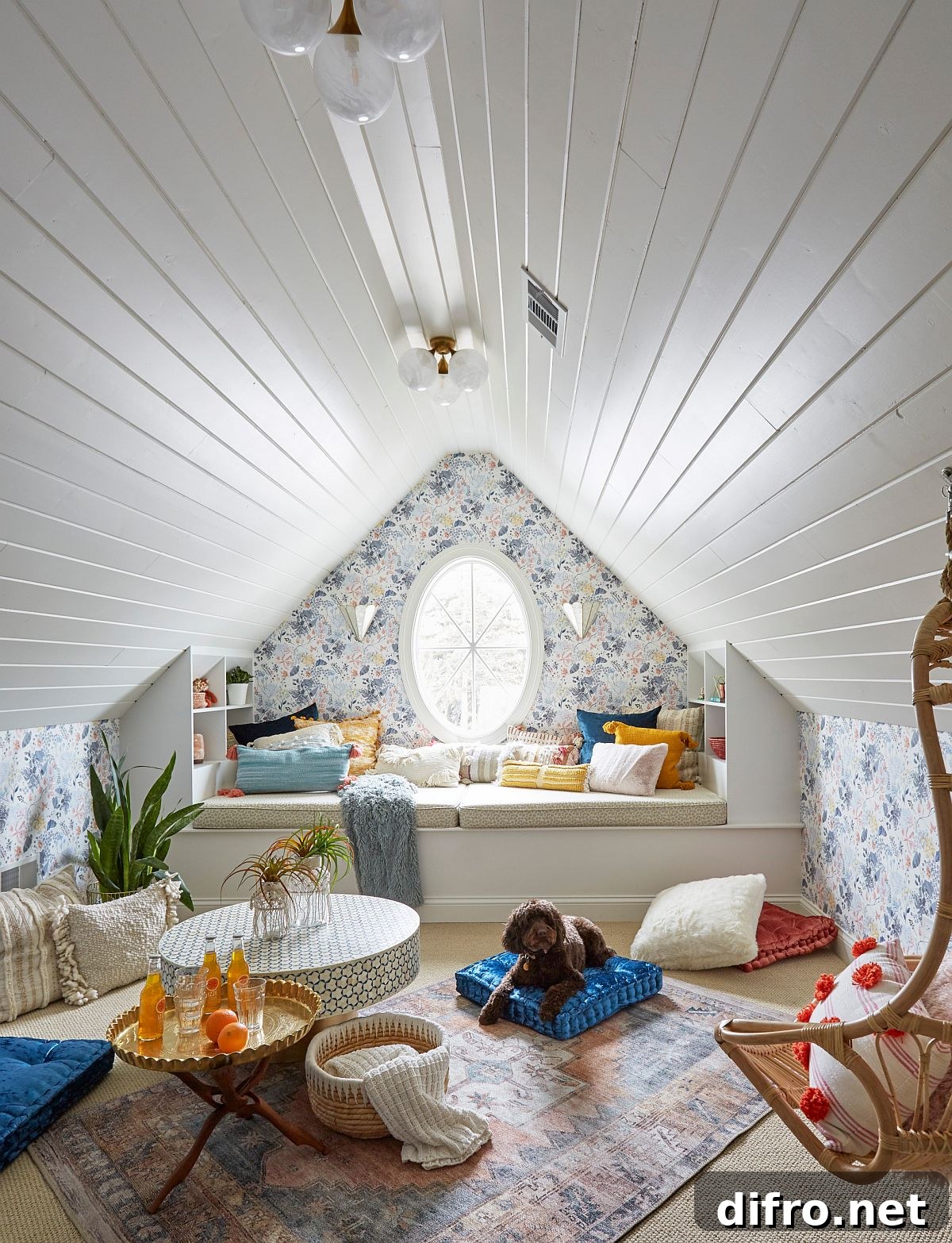
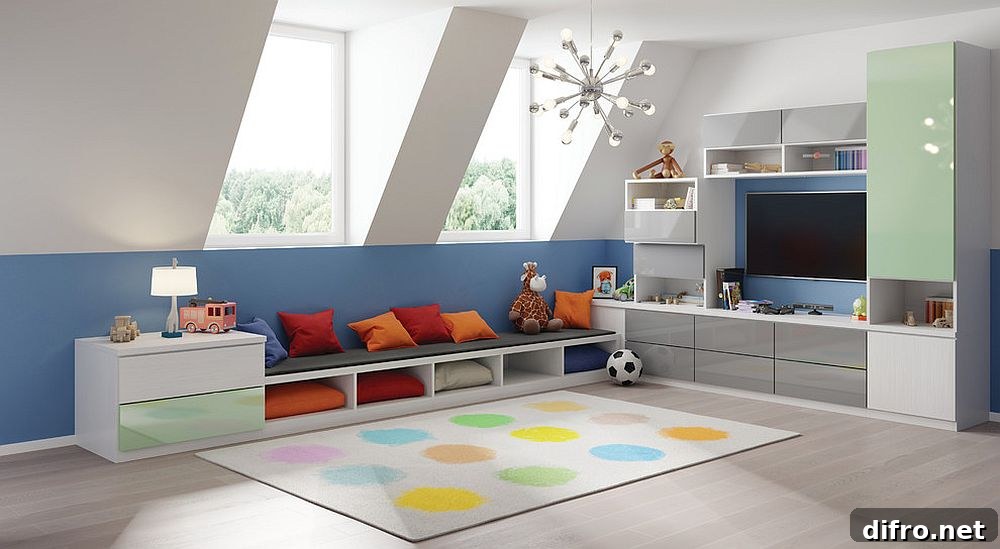
To summarize, turning an attic into a playroom is an efficient way to add usable square footage and create an inspiring place for children to play, learn, and relax. Focus on safety—soft flooring, adequate storage, and proper ventilation—then layer in lighting, a comfortable seating scheme, and playful décor. Keep the layout flexible so the room can grow with your children and serve other household functions when needed. With thoughtful planning, the attic can become one of the most beloved spaces in your home.