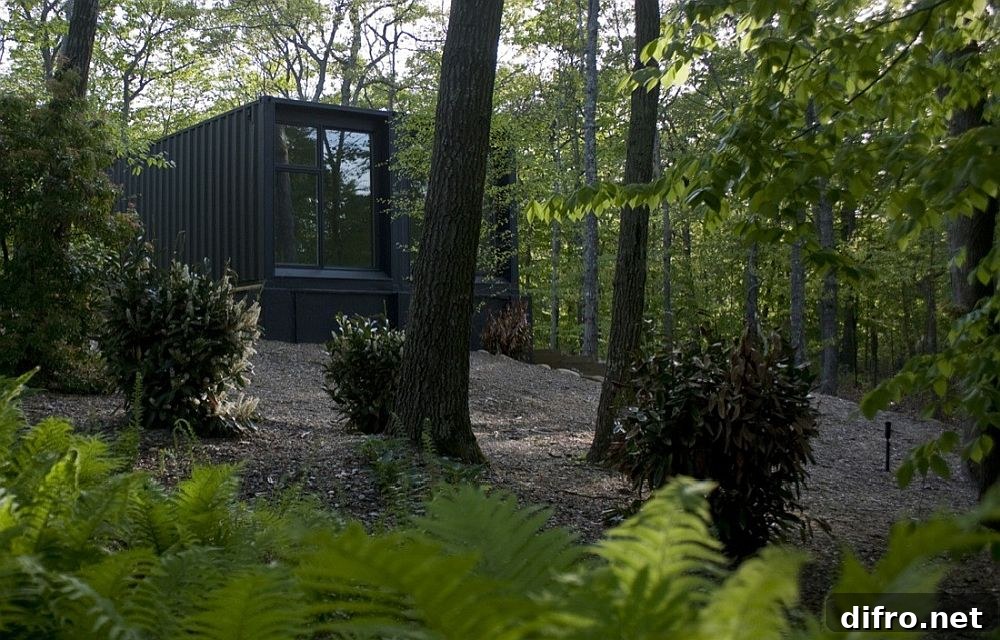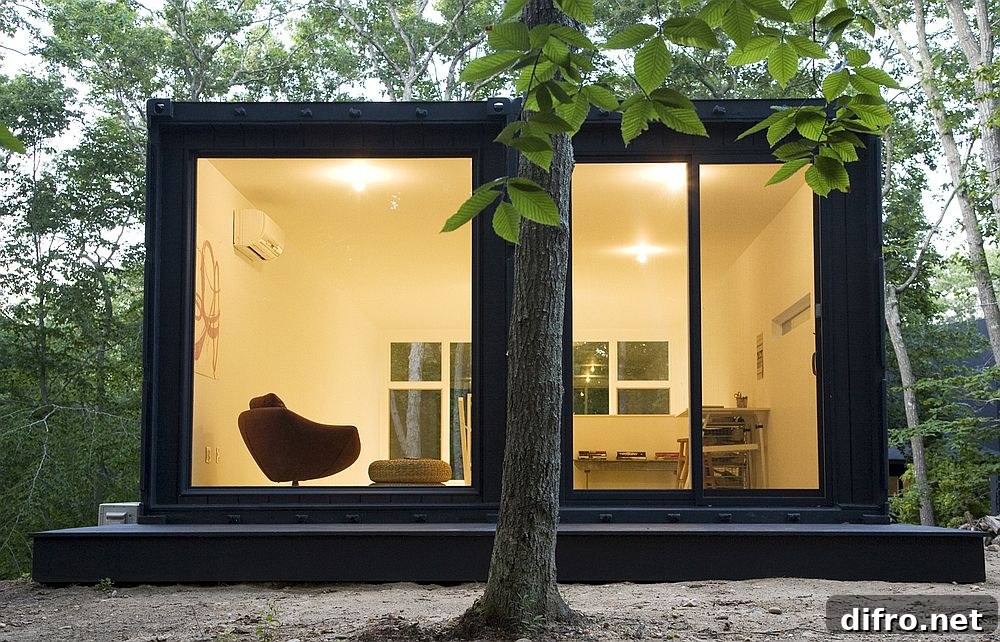
Many people around the world recently observed Earth Day while staying indoors and staying safe. The global pause in activity over recent weeks has revealed how quickly air and water quality can respond when human activity slows, and it has reminded us that living more sustainably remains essential. As movement resumes, adopting greener, more planet-friendly habits will be important. One compelling approach is to rethink how we build, using reclaimed materials and creative construction methods. A striking example is this compact, sustainable art studio in the Hamptons, New York, designed by MB Architecture and constructed from two reused shipping containers.
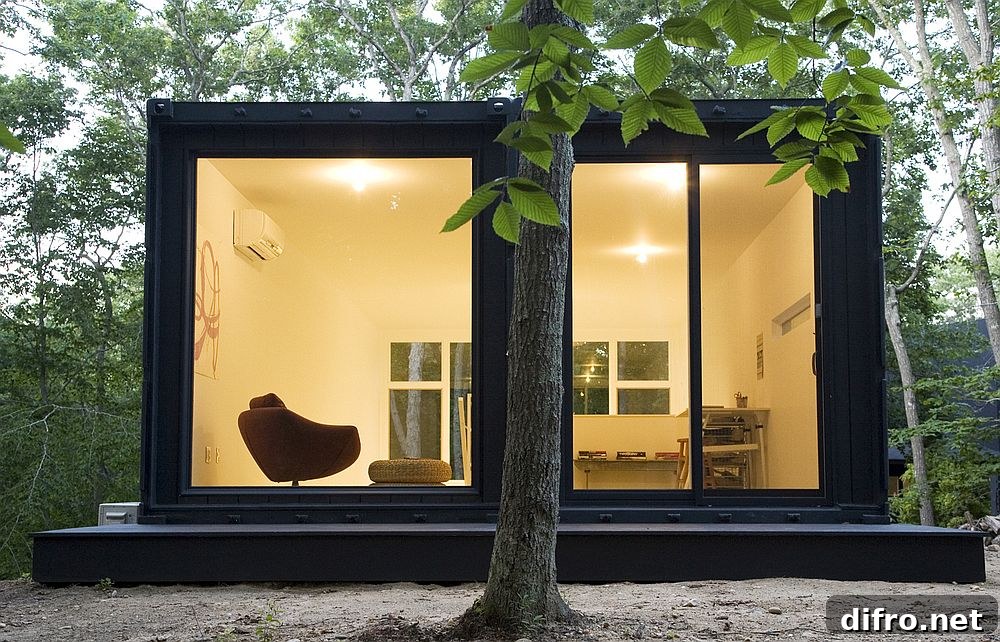
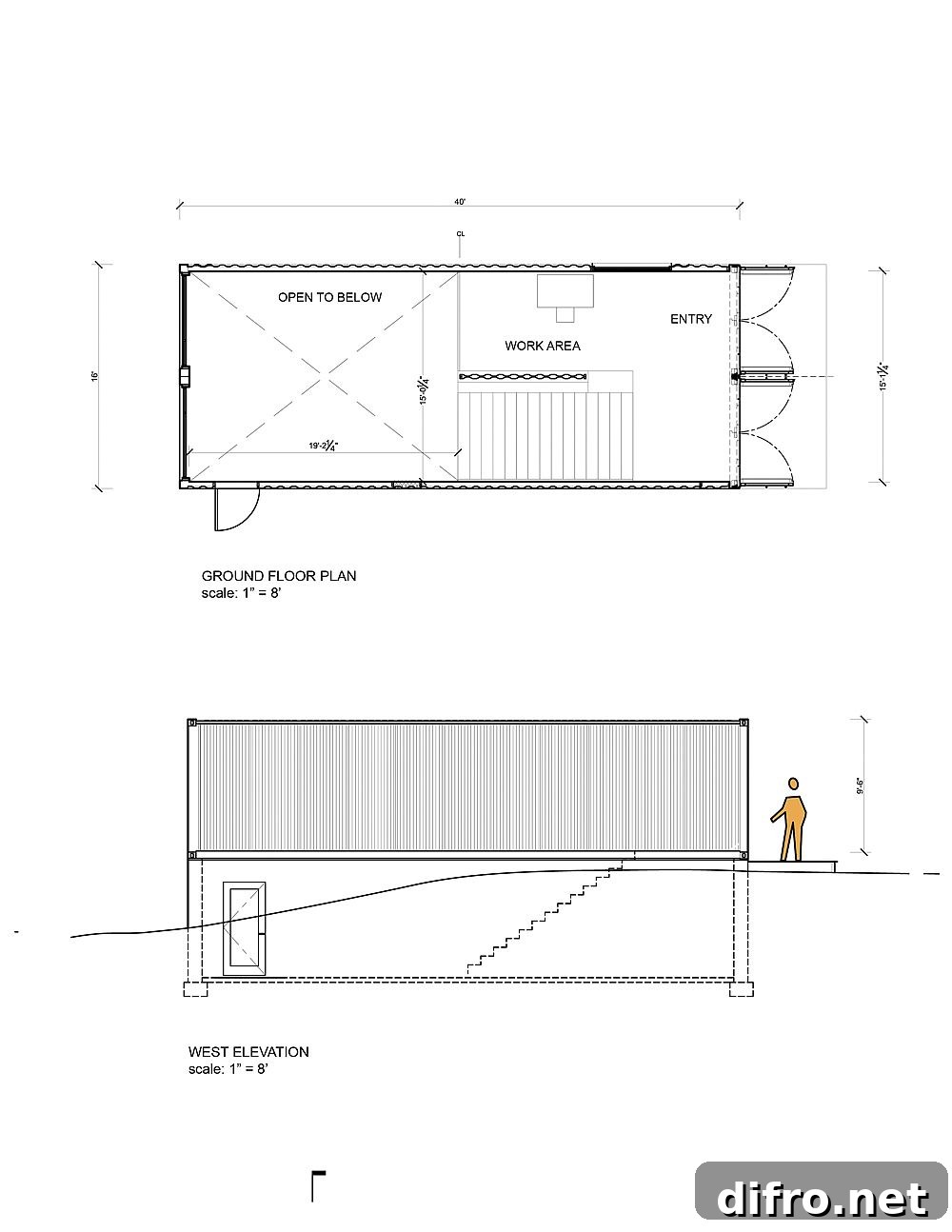
The studio was built from two secondhand shipping containers, purchased for a combined price of about $2,500 including delivery. They were set on a modest 9-foot foundation, then arranged to create a two-level creative space. The ground level serves as an open, double-height painting studio, while the upper container provides a small sitting area and an office or workspace. This layout maximizes usable area while keeping the footprint compact—an ideal solution for a backyard or a smaller property.
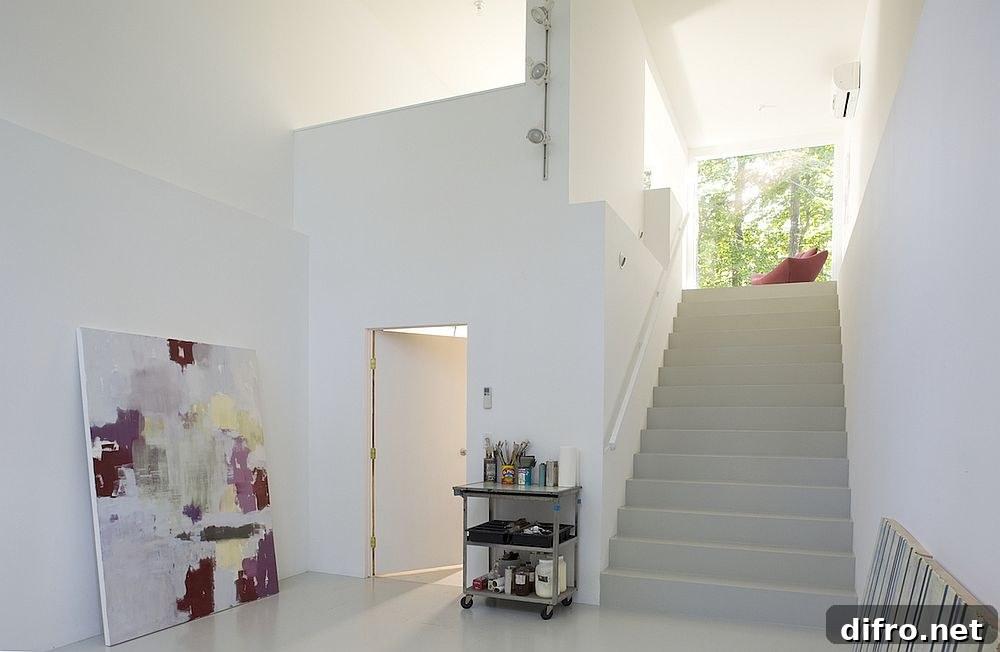
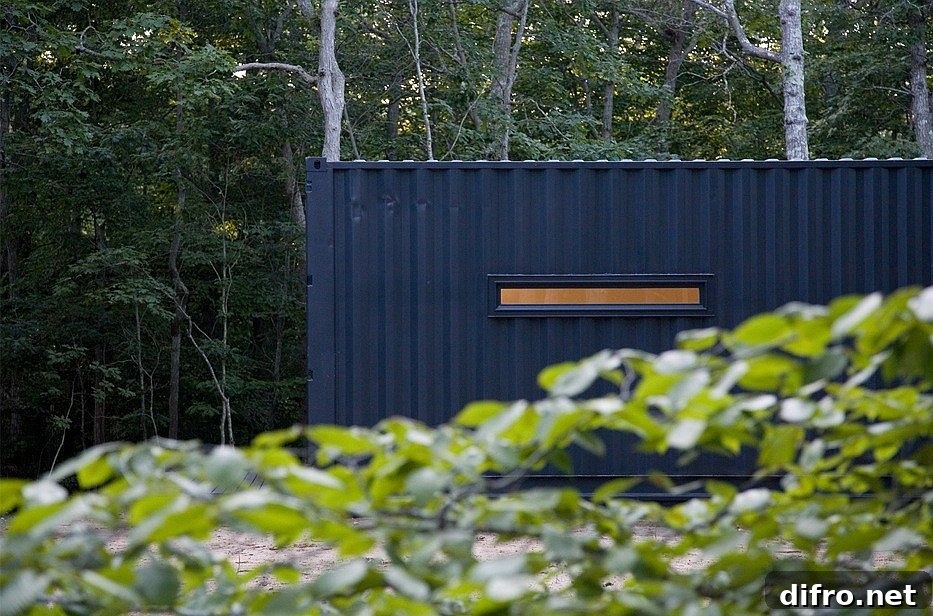
Externally, the studio is finished in a dark charcoal tone that allows the structure to recede into the landscape after dusk. Large glass walls and generous glazing visually connect the interior to the surrounding greenery, flooding the studio with natural light and offering an inspirational view for anyone working inside. Inside, the design embraces a monochrome white palette that amplifies daylight and provides a neutral backdrop for art, turning walls into a gallery-like display for finished pieces and works in progress.
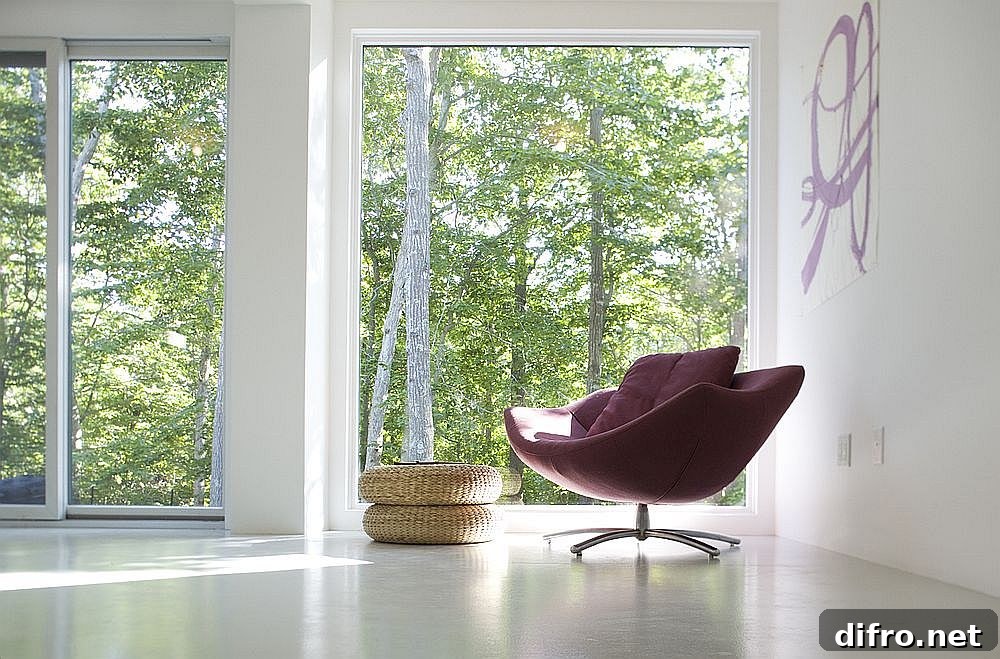
Functionality was a priority in the studio’s layout. The lower level’s double-height volume accommodates large canvases and easels, while the stairwell and upper level create a vantage point that turns the lower walls into an art-gallery-style display. The upper space serves as a quiet retreat and a practical office, offering a place to plan, sketch, or manage the business side of an art practice. The elevated position of the upper container also provides excellent sightlines over the site and surrounding treescape.
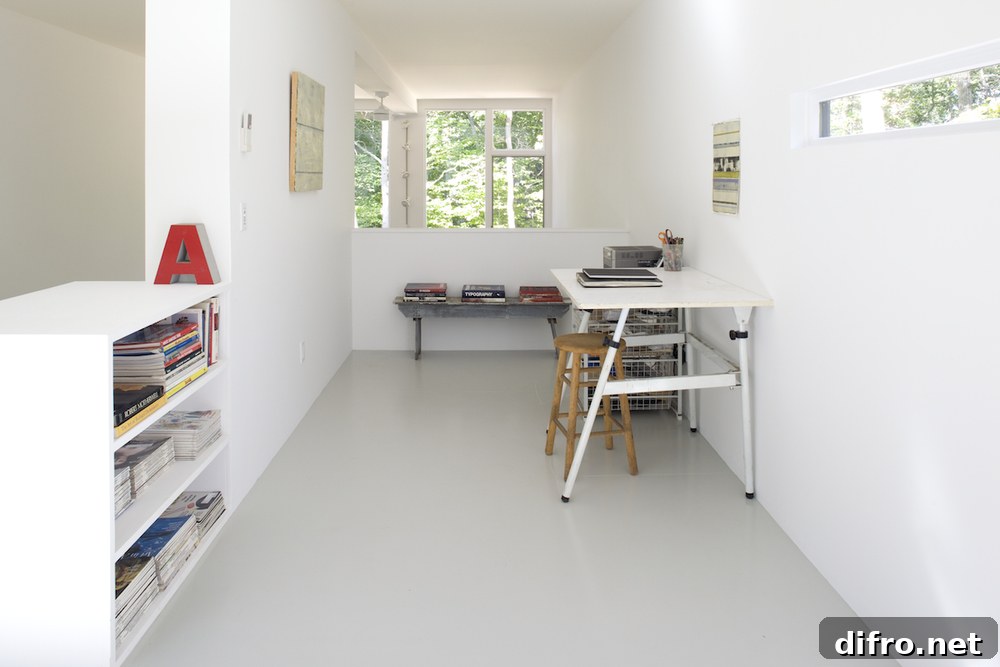
Using reclaimed shipping containers cuts material waste and reduces the embodied energy compared with building entirely from new materials. It also makes creative reuse affordable: in this project, the low cost of the containers helped keep the overall budget modest without compromising on quality or aesthetics. Thoughtful detailing—like the white interior finish, generous glazing, and an elevated foundation—ensures the space functions well as both a creative studio and a calm retreat.
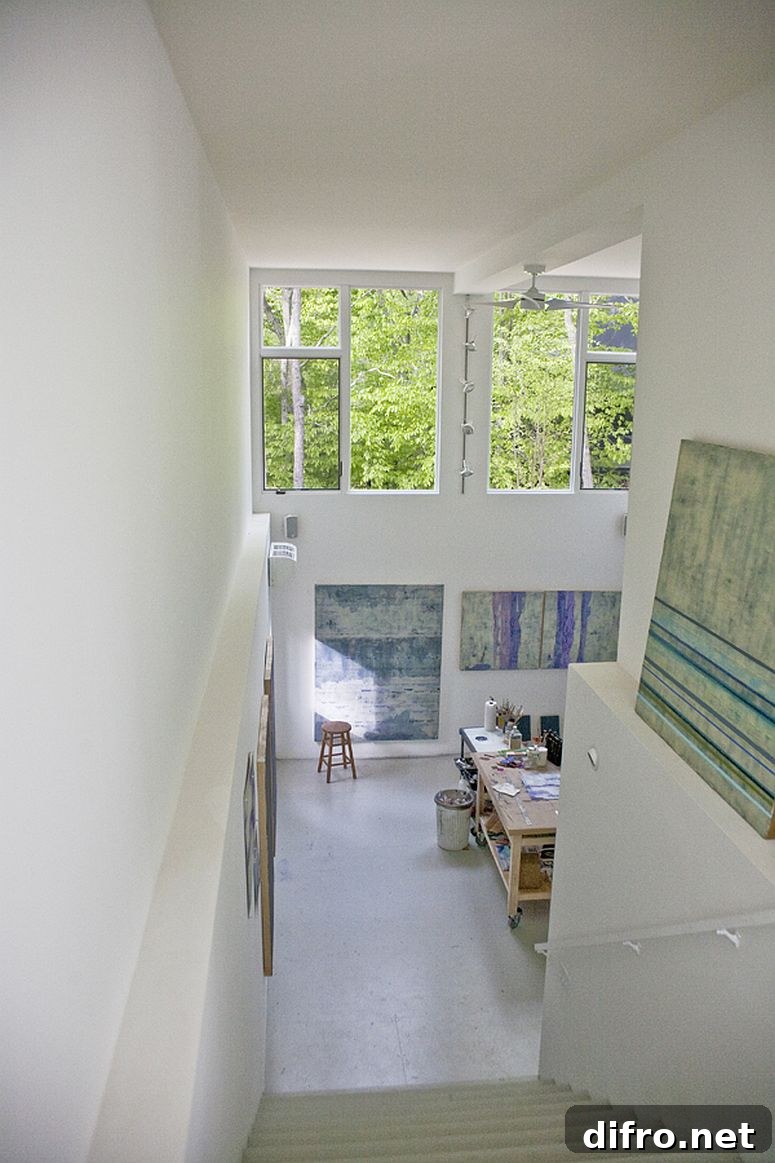
This shipping container art studio demonstrates how small, resourceful design choices can deliver a flexible, inspiring space while promoting sustainability. It offers a practical template for anyone considering a backyard studio, a compact guest space, or an auxiliary dwelling that respects both budget and environment. By reusing materials, embracing daylight, and focusing on efficient layouts, projects like this point toward greener ways to build, create, and live.
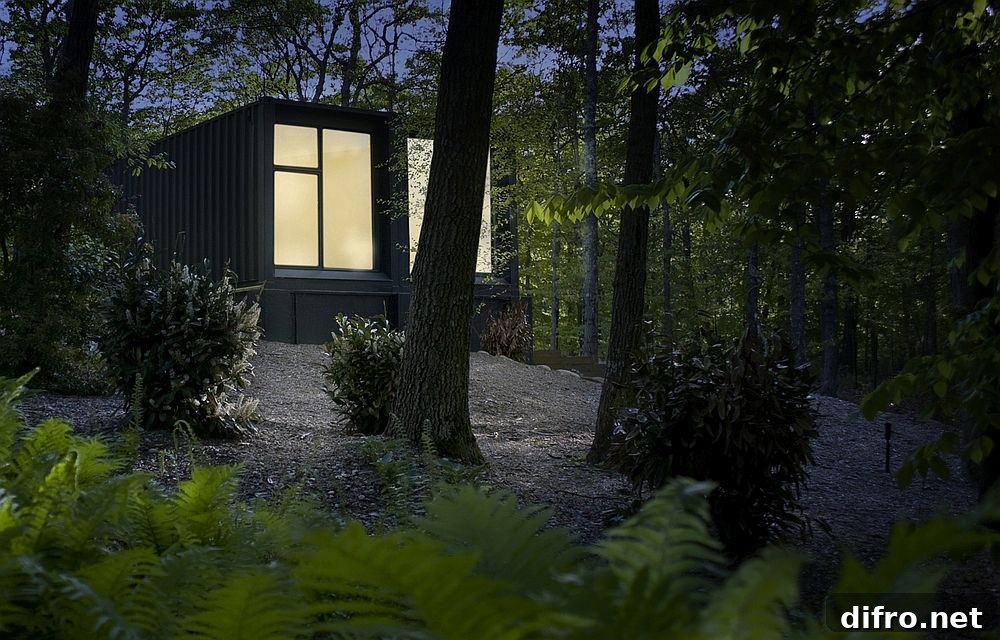
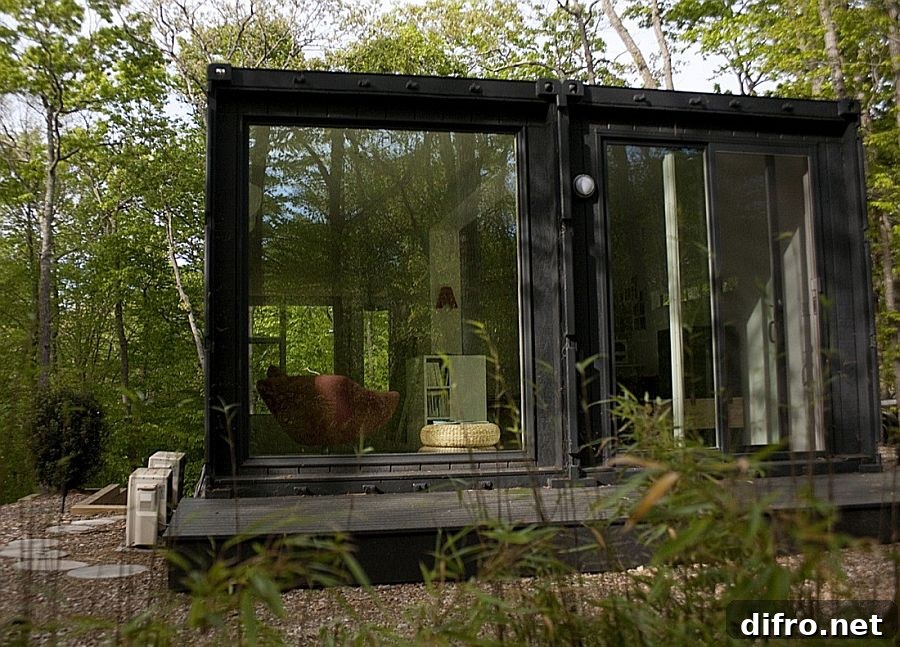
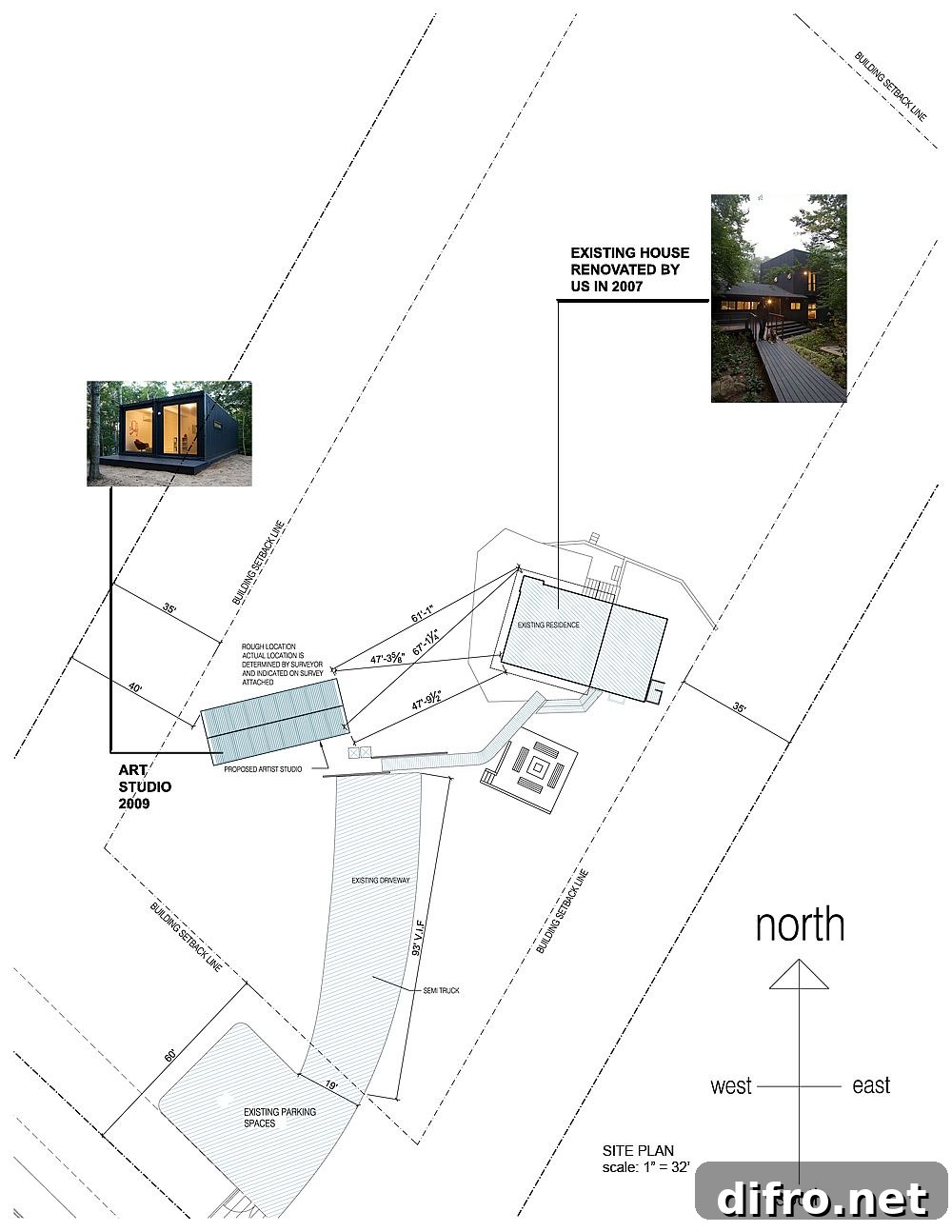
Architectural drawings and plans included with the project underline the thoughtful approach to site, circulation, and proportion. The result is an economical, inventive studio that balances form and function while minimizing new material use. For artists, makers, and anyone interested in compact, sustainable architecture, this recycled shipping container studio offers practical ideas worth adapting for future projects.