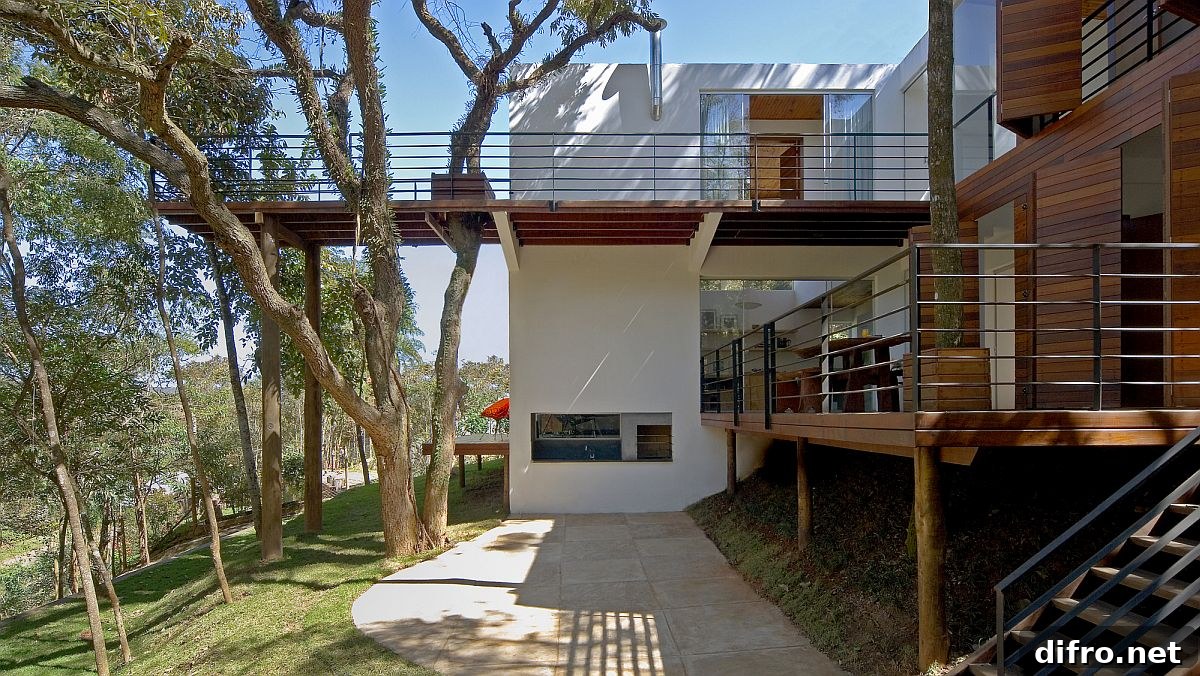
Walkway House — A Forest Home by TETRO Arquitetura in Brazil
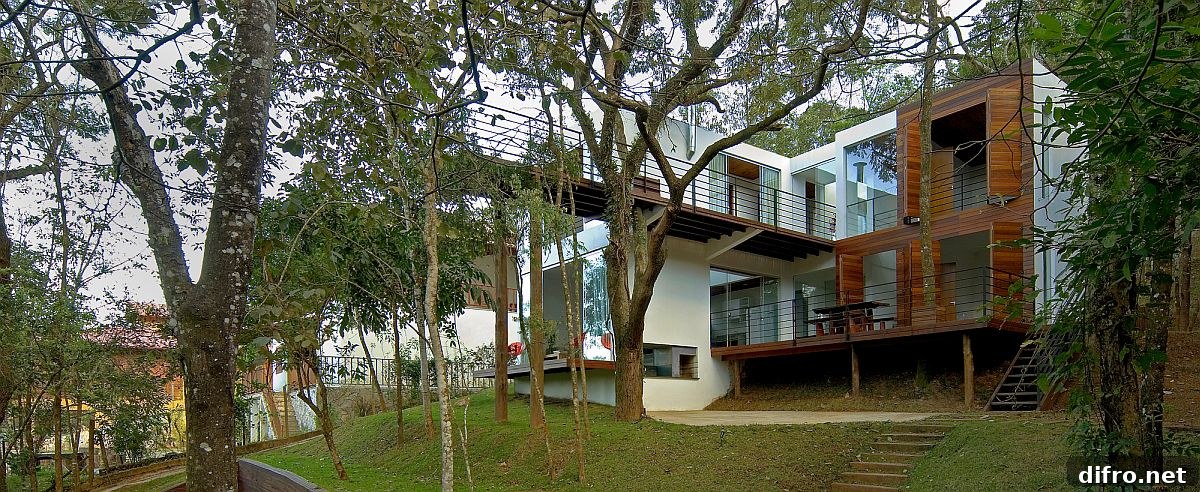
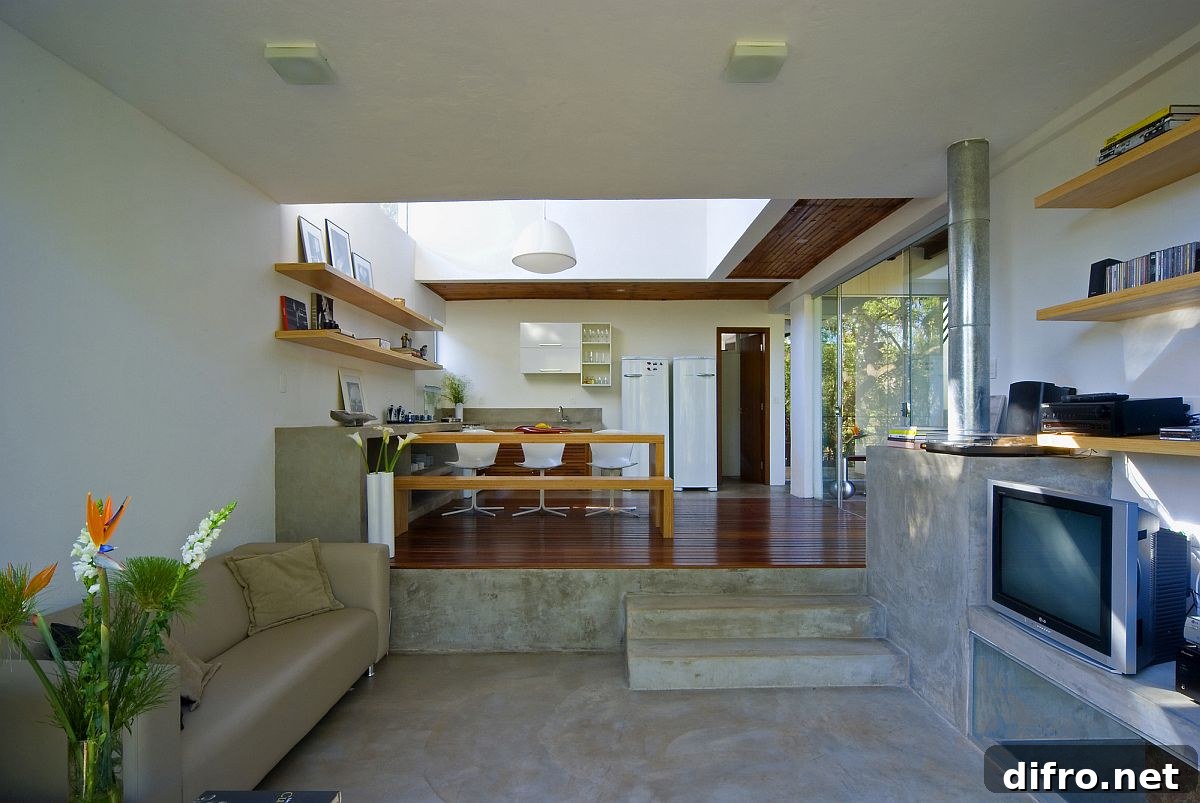
A healthy, contented life is one that harmonizes with its natural setting, allowing residents to enjoy the landscape while protecting it. The Walkway House in Brazil, designed by TETRO Arquitetura, embodies that balance. Organized as three distinct residential blocks, the home is connected by a network of sheltered walkways and wooden decks that link the different volumes while preserving the surrounding vegetation. The architecture encourages a continuous, fluid relationship between interior and exterior: rooms flow into one another across multi-level living spaces that include the kitchen, dining area and social zones, and large glass doors and windows keep the boundary between inside and outside deliberately blurred.
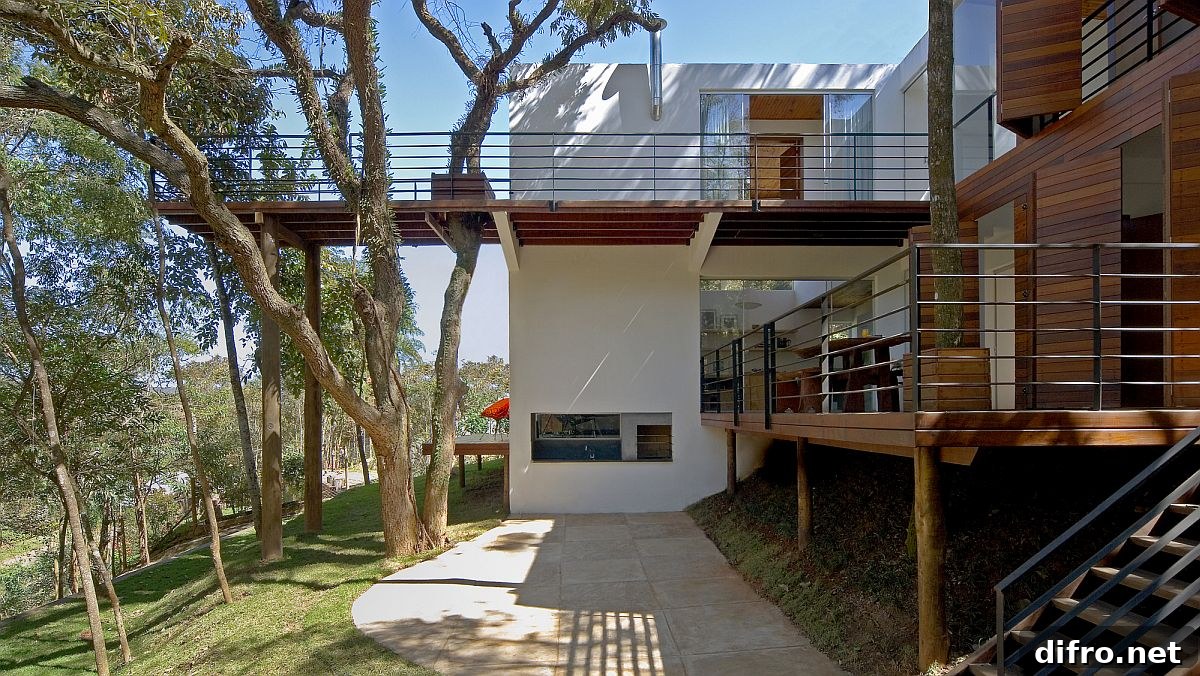
The decision to distribute the program across three blocks was intentional: it minimizes disruption to the site and helps preserve indigenous trees and vegetation. Rather than leveling the landscape, the architects worked with the existing terrain, situating the volumes and their connecting walkways to keep the canopy and natural greenery intact. Sustainable design principles were a priority throughout the project. Passive heating and cooling strategies are integrated into the layout and orientation of the house, while the surrounding canopy and open circulation paths help moderate temperature and ventilation naturally.
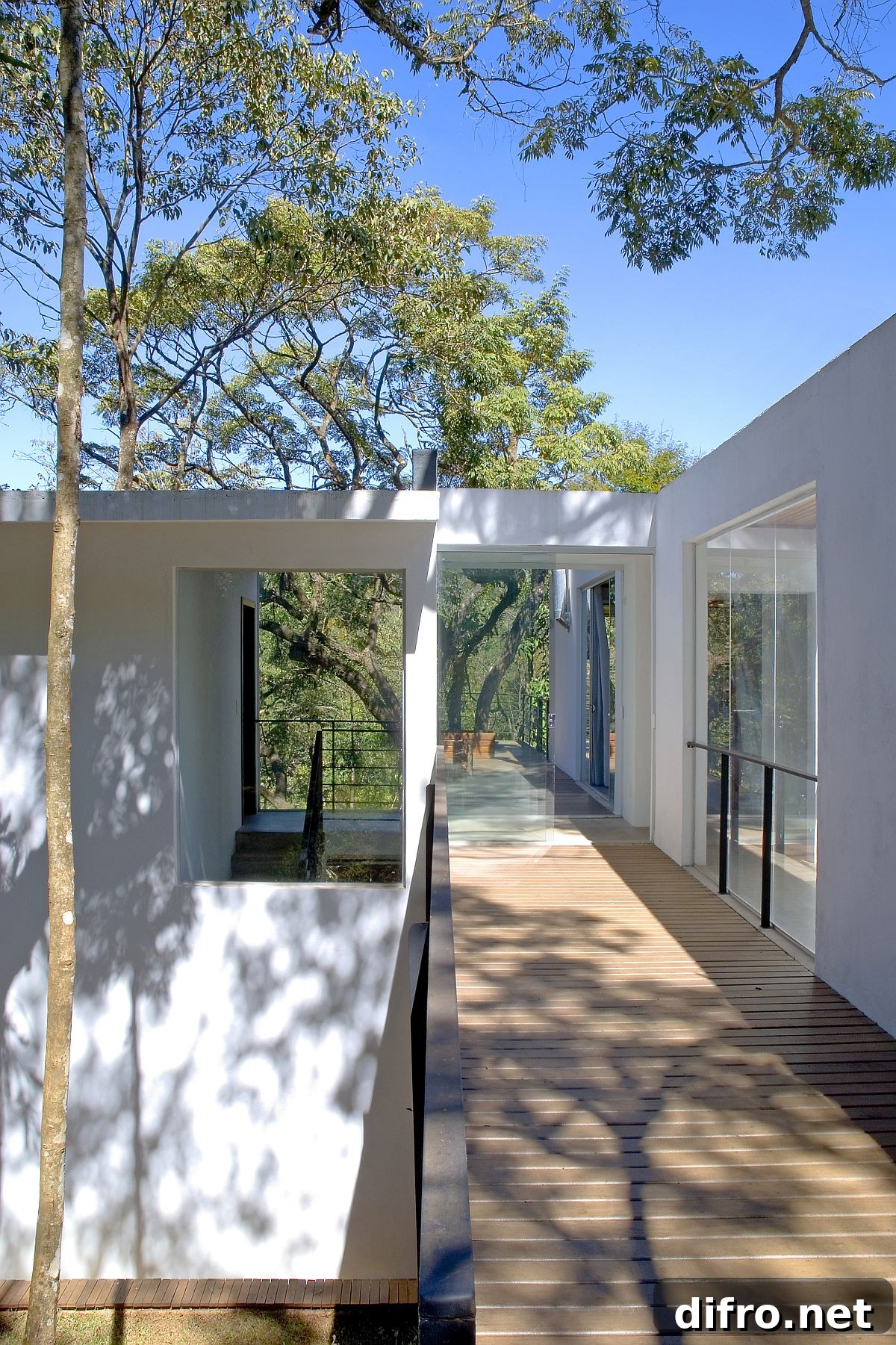
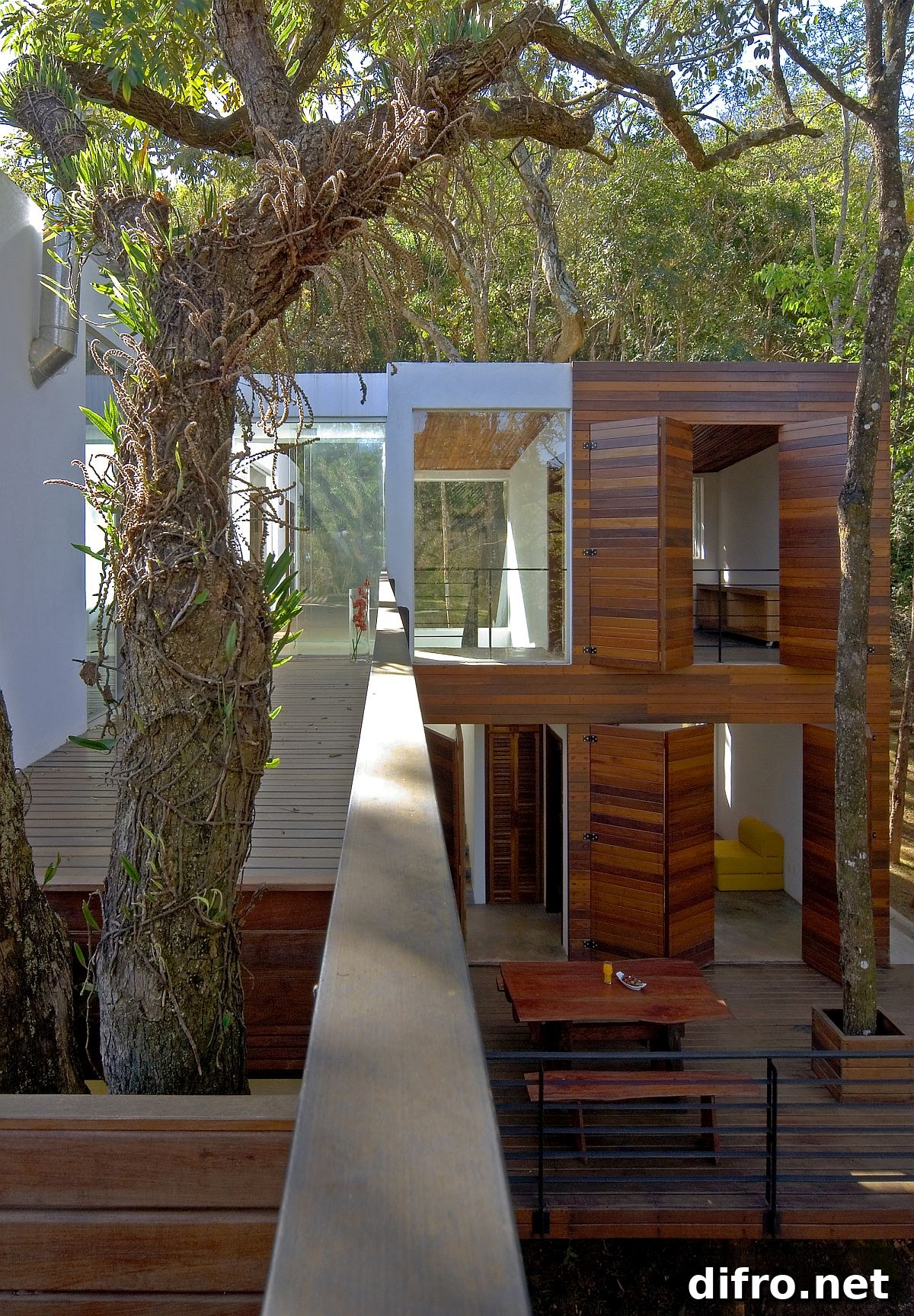
Although the property sits on a sloped plot, the interior experience feels level and calm. The house is a roughly 30-minute drive from Belo Horizonte, yet once inside, the angled site becomes an asset rather than an obstacle. Wooden decks and sheltered circulation spaces create outdoor living rooms and transitions that integrate the separate blocks into a coherent whole. One long deck reaches out into the forest and cantilevers approximately nine meters above the ground, offering uninterrupted views while minimizing the building footprint on the land below.
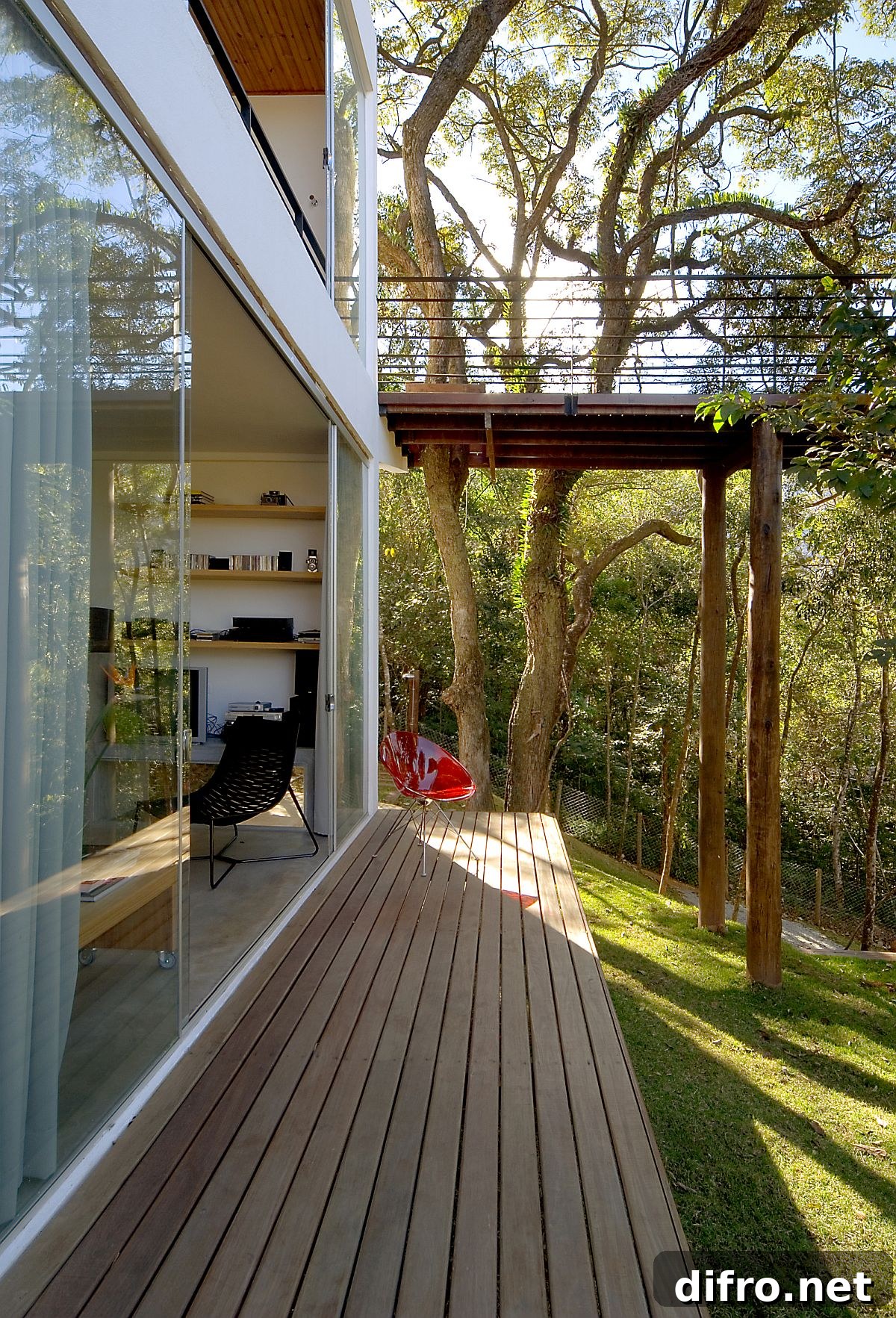
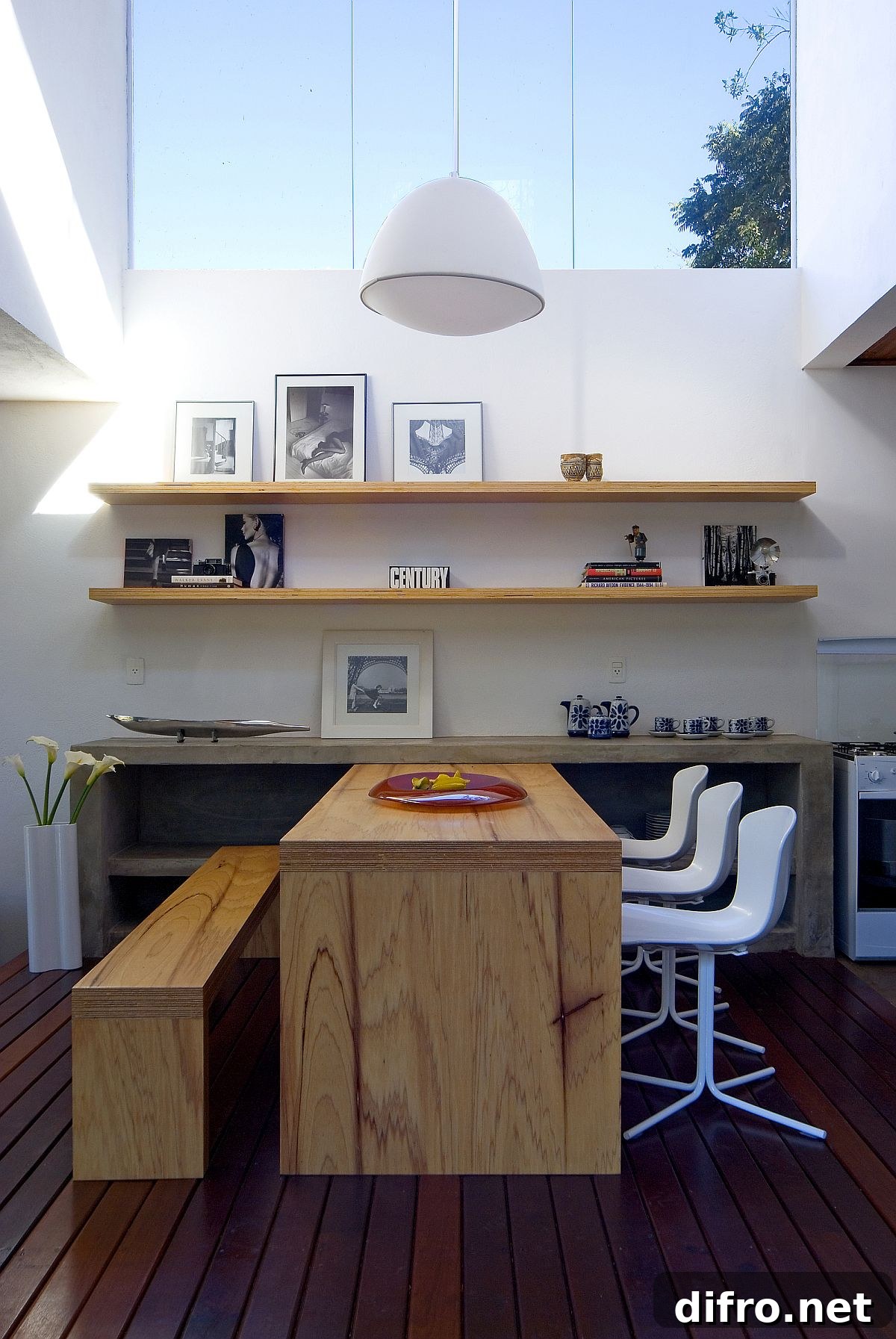
Inside, the home favors openness and natural light. The double-height living space is animated by skylights and pendant lighting, creating a luminous atmosphere that complements the forest views. Polished concrete, refined finishes and wooden detailing form a restrained material palette that reads as contemporary Brazilian architecture while remaining warm and welcoming. Large glazed openings frame the landscape from both living areas and bedrooms, so occupants can enjoy unobstructed views of the trees and sky.
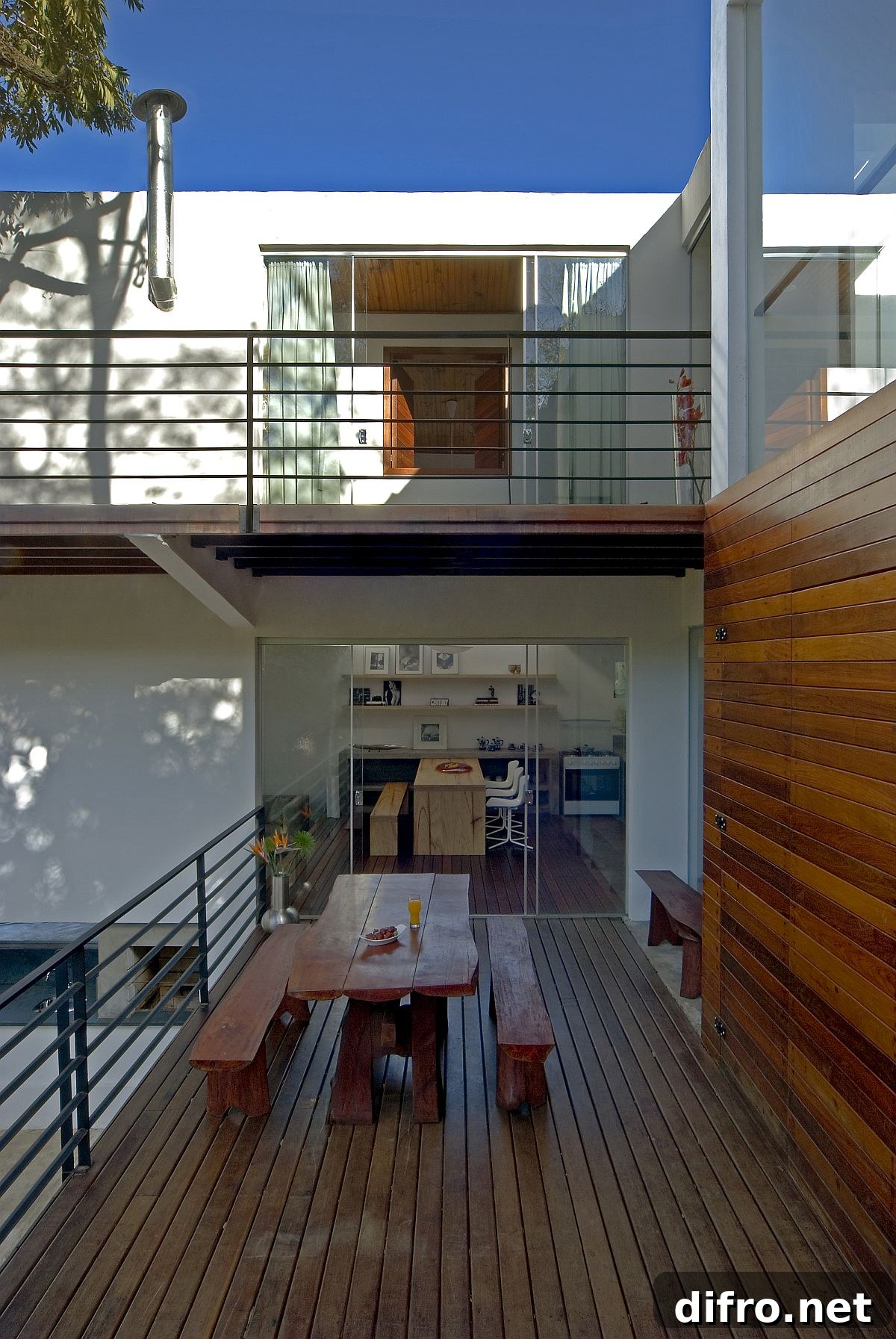
Views from both the living areas and bedrooms remain uninterrupted, reinforcing the connection to nature. The cantilevered deck becomes an extension of daily life: a place for quiet observation, relaxation and being immersed in the forest canopy without disturbing the ground below. Materials such as concrete and timber are used with restraint to emphasize both durability and warmth, while polished finishes help reflect daylight throughout the interiors.
The project also includes detailed floor and site plans that show how the volumes, walkways and outdoor decks relate to the terrain and the existing vegetation. These drawings clarify how the layout reduces the building’s footprint while preserving sightlines and natural features. Photography by Eduardo Eckenfels documents the house’s relationship to the forest, capturing the balance between built form and landscape.
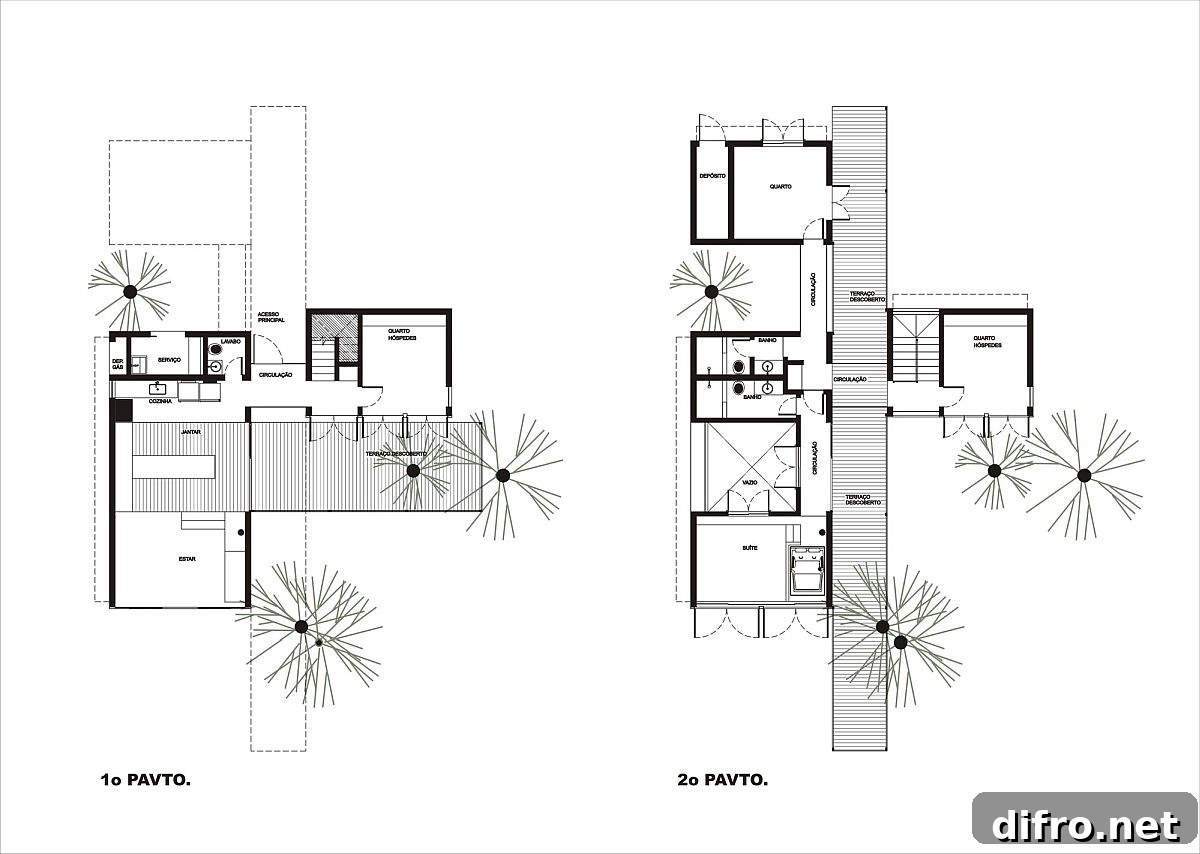
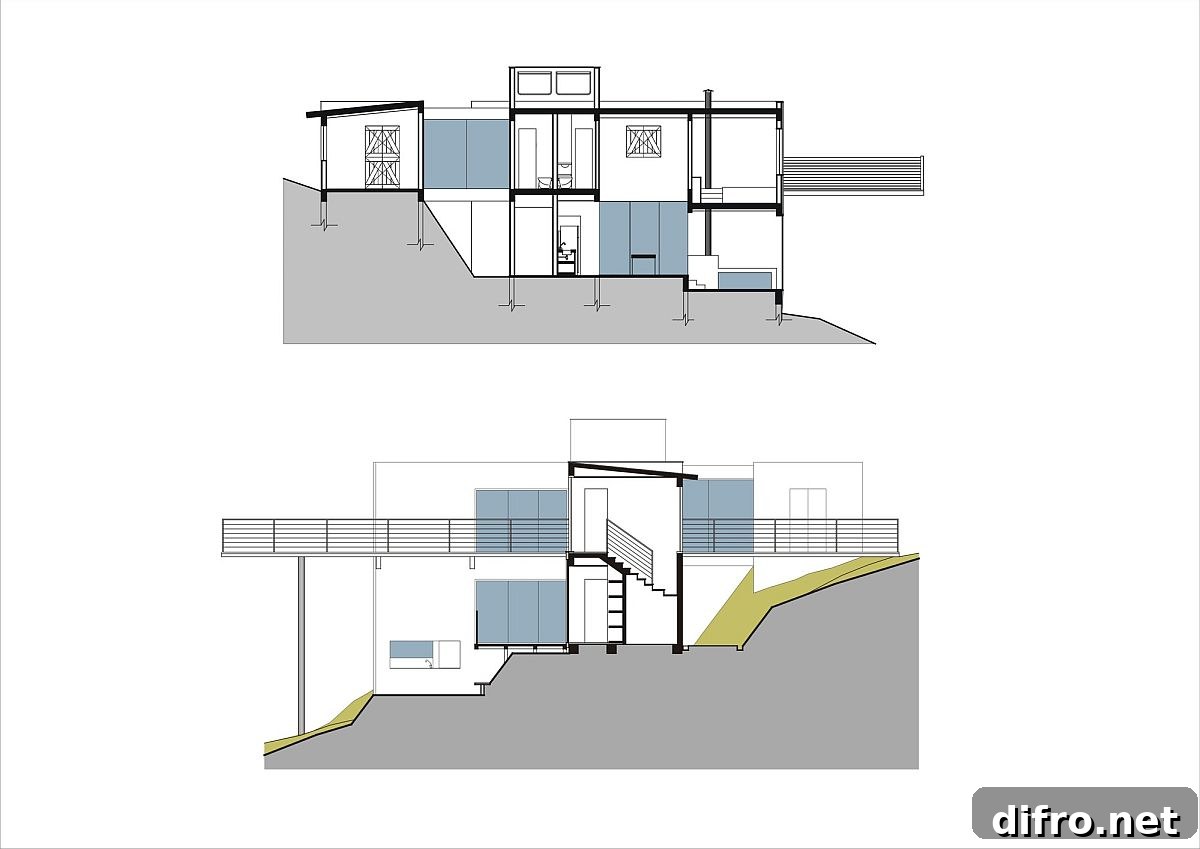
In sum, Walkway House is a study in thoughtful integration of architecture and nature. By splitting the program into linked blocks, using elevated walkways and decks, and prioritizing passive environmental strategies, the design protects the existing forest while creating generous, light-filled spaces for living. The result is a modern Brazilian residence that is at once elegant, restrained and intimately connected to its landscape.