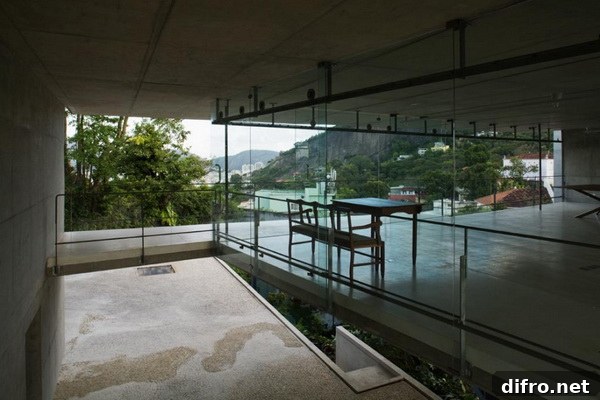
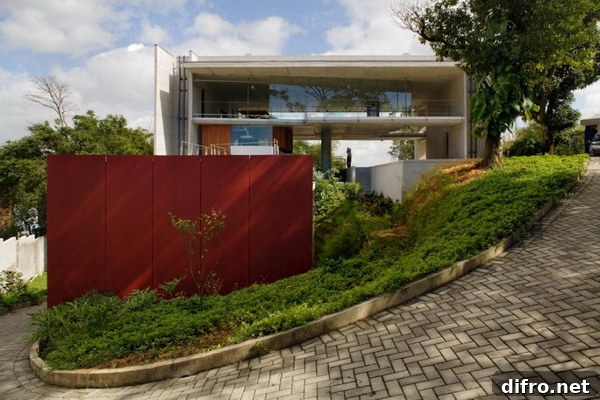
Perched on a prominent hill in the historic Santa Teresa neighborhood of Rio de Janeiro, this striking residence by SPBR Architects makes the most of a privileged site. The house is a contemporary interpretation of urban hillside living, combining raw concrete volumes and expansive glazing to frame spectacular panoramas. Its careful siting and material palette—exposed concrete, warm wooden screens and generous glass—create a bold sculptural presence that both anchors the building to the slope and opens it to the city and bay beyond.
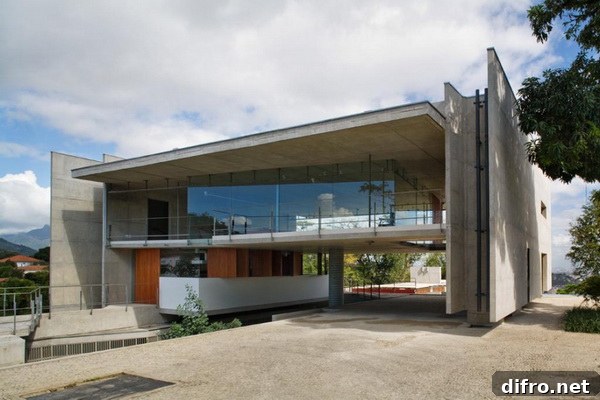
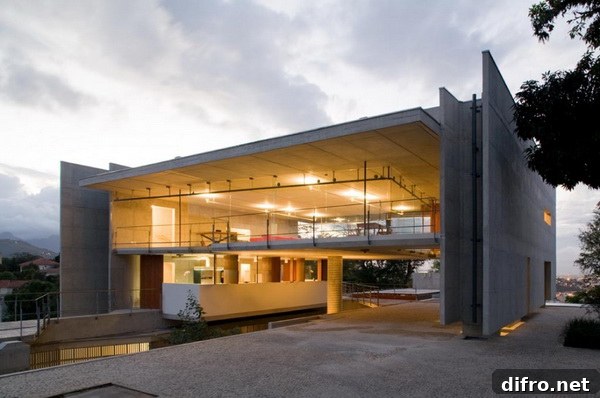
The composition reads as a suspended glass box set between two robust concrete walls, a deliberate contrast between transparency and weight. By elevating primary living areas above a central patio and employing sliding wood panels for enclosure and shade, the architects produced open, flowing interiors that emphasize continuity between inside and out. Exposed, textured concrete gives the project a raw, brutalist character while wood rod panels and joinery add warmth and tactility—softening the concrete and providing privacy where needed. The design strategy places communal spaces in the glazed middle volume to capture light and views, while carefully arranged screens and sliding elements allow occupants to modulate solar exposure and ventilation throughout the day.
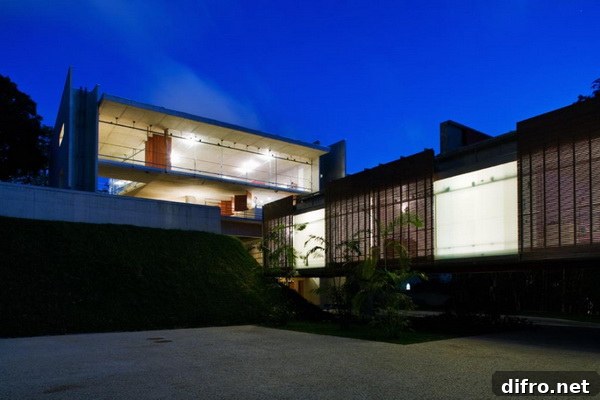
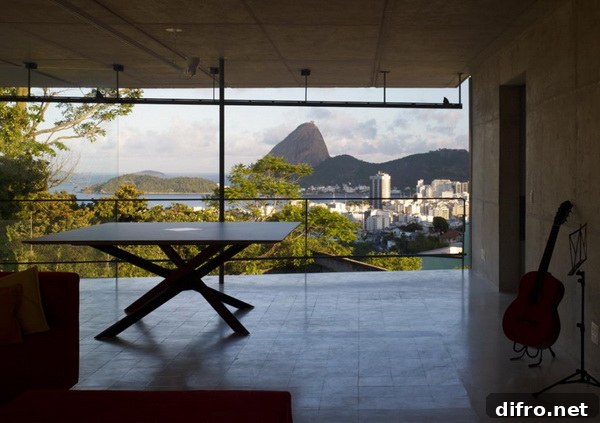
The house is carefully oriented to take advantage of the best viewpoints: the north-facing side looks toward the historic downtown, while the south-facing terraces open to sweeping views of Pão de Açúcar (Sugarloaf Mountain), Guanabara Bay and the surrounding cityscape. This orientation not only maximizes visual connection with iconic Rio landmarks but also enhances natural daylighting and cross-ventilation. The architects used the steep terrain to their advantage, stepping volumes down the slope so that private functions—bedrooms and study—occupy a lower, more secluded linear block, while shared spaces, including the kitchen and living areas, sit at the central level adjacent to the patio. The glazed living room caps the central courtyard, framed on its east and west sides by solid concrete walls that provide both structure and thermal mass.
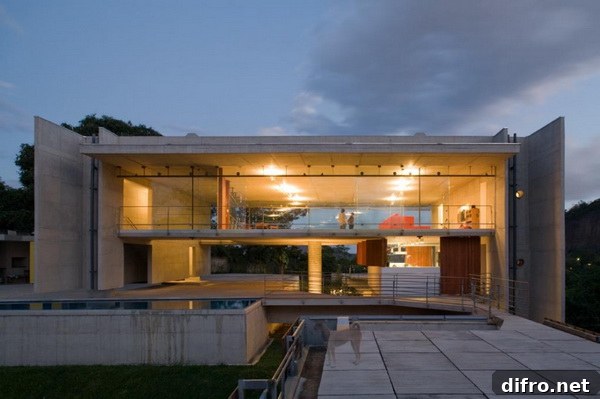
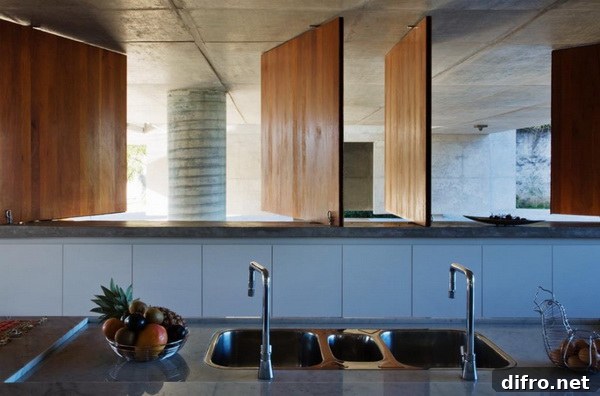
Responding directly to the difficult topography, the design creates dramatic spatial effects: terraces and cantilevered slabs extend toward the city, and the pool appears to pour over the terrace edge into the urban panorama below. This visual connection between water, terrace and skyline heightens the sensation of openness and ties the residence to its broader landscape. Functionally, the layout balances communal life and private retreat—service and circulation spaces are efficiently organized so that living, dining and outdoor areas flow seamlessly together. Materials are expressed honestly, celebrating the texture of board-formed concrete and the grain of timber elements, while glazing and operable panels allow the interior atmosphere to shift with changing light and weather.
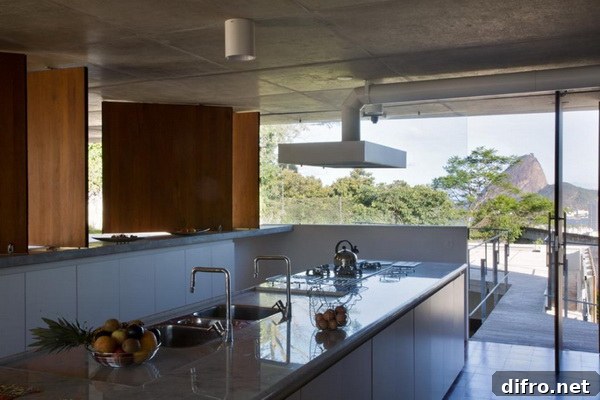
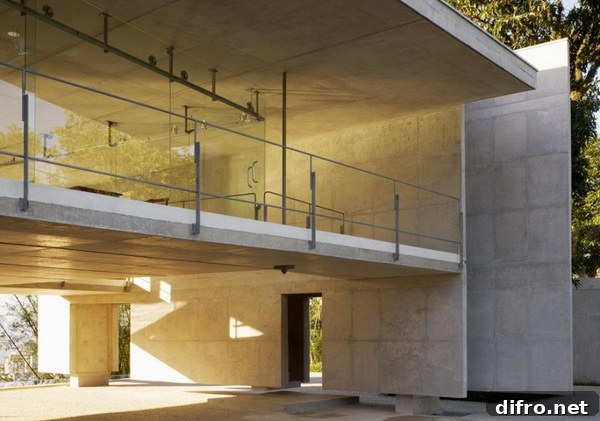
Overall, the project is a strong example of contemporary residential architecture responding to a challenging urban slope: it frames iconic views, negotiates privacy and openness with elegant devices like sliding wooden screens, and celebrates a raw material vocabulary that feels both honest and refined. The result is a sculptural, light-filled home that reads as a modern oasis in the heart of historic Santa Teresa, designed to make daily life intimate, comfortable and visually connected to Rio de Janeiro’s legendary landscape.