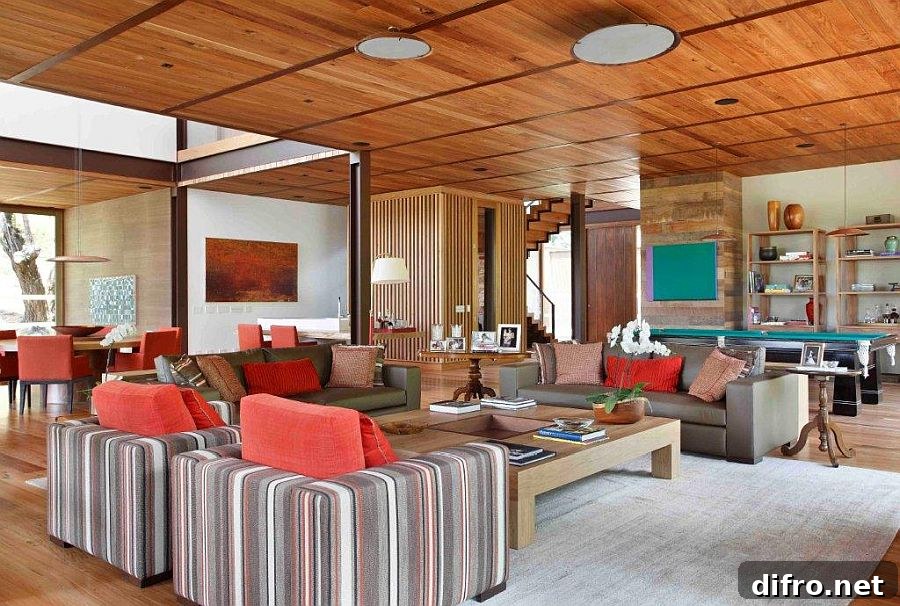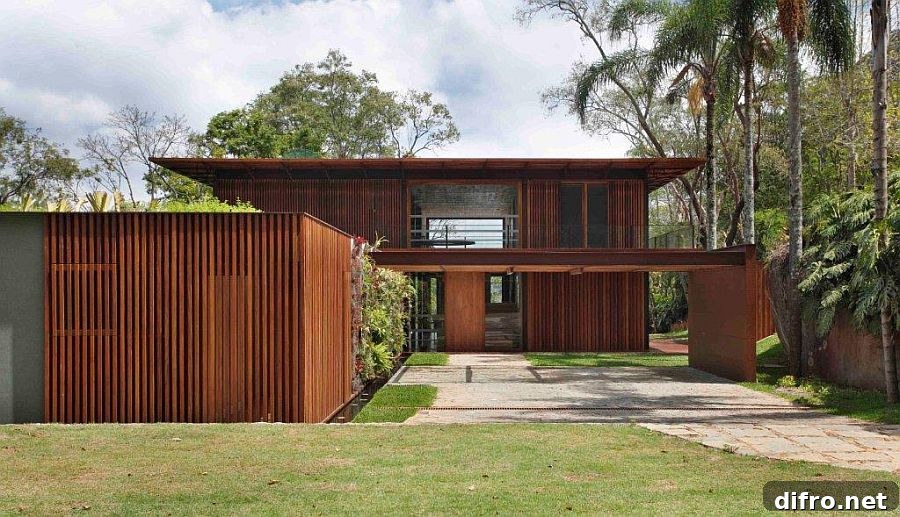
Over the past several years, designing homes that blur the line between interior spaces and the natural world has become a defining trend. The House in Itaipava, designed by Cadas Arquitetura, embraces that philosophy. Set in a forested area outside Rio de Janeiro, the house turns its attention outward, prioritizing views of the densely vegetated landscape and encouraging everyday life to flow into the surrounding greenery.
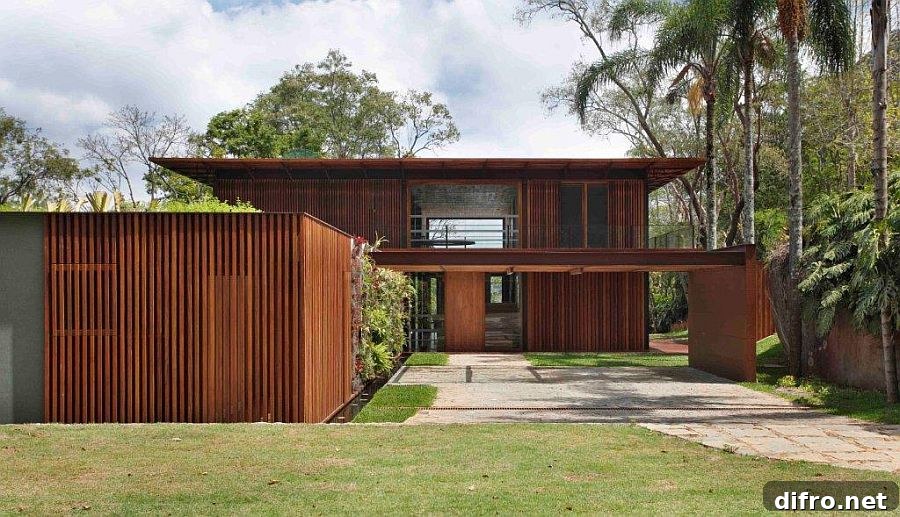
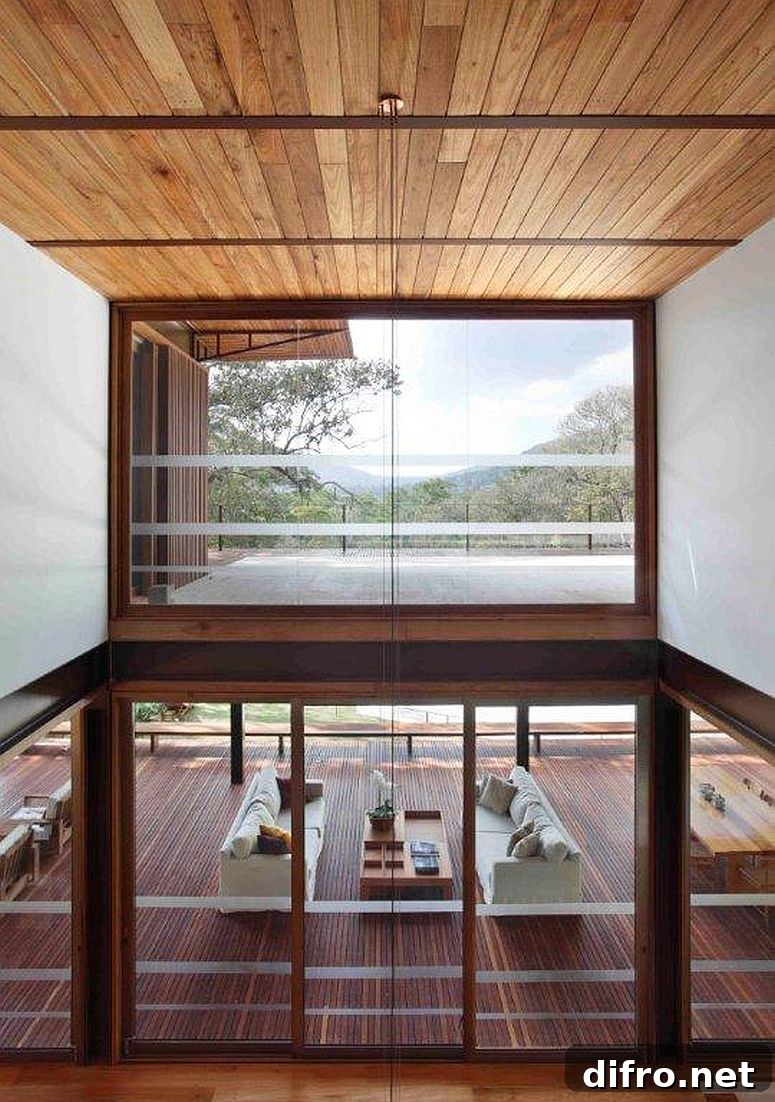
The architects inverted conventional domestic planning by using a series of open walkways, outdoor corridors and transitional structures to connect the different volumes of the house. These outdoor pathways act as extensions of the interior, creating a sense of permeability between rooms and the landscape. A generous glass façade floods the main living areas—the living room, dining space and kitchen—with daylight, while visually connecting these interiors to the garden and tree canopy beyond.
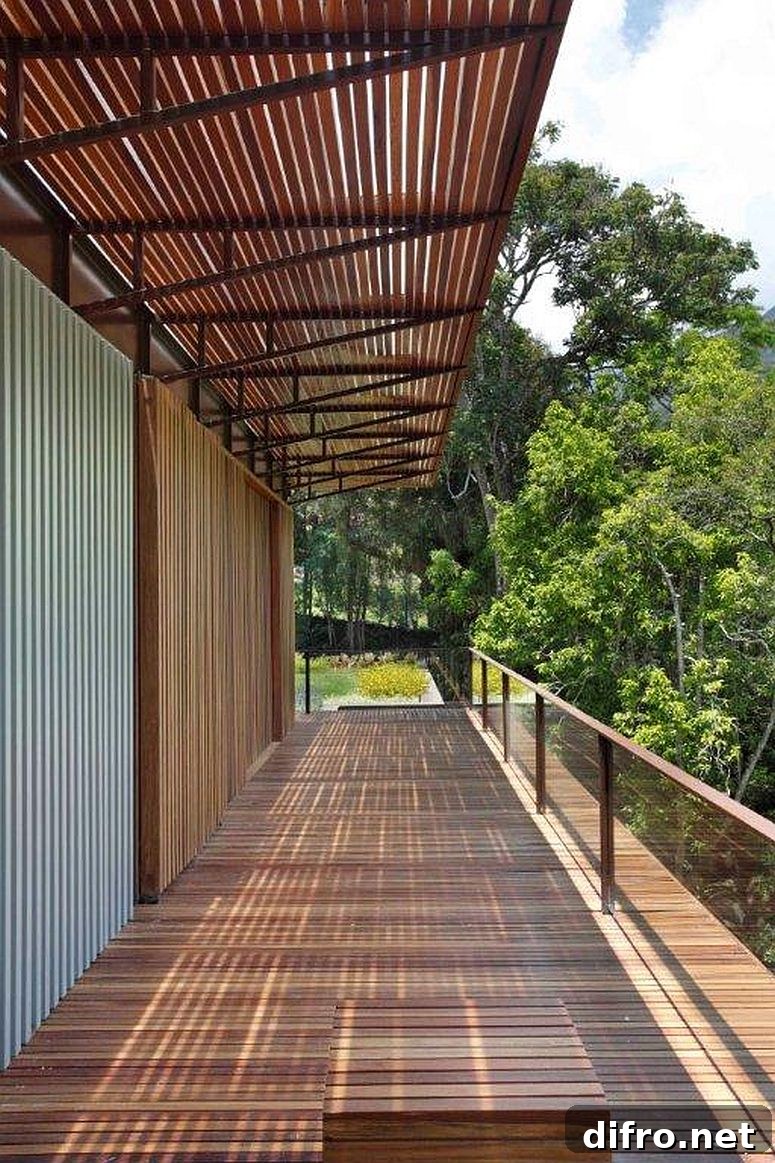
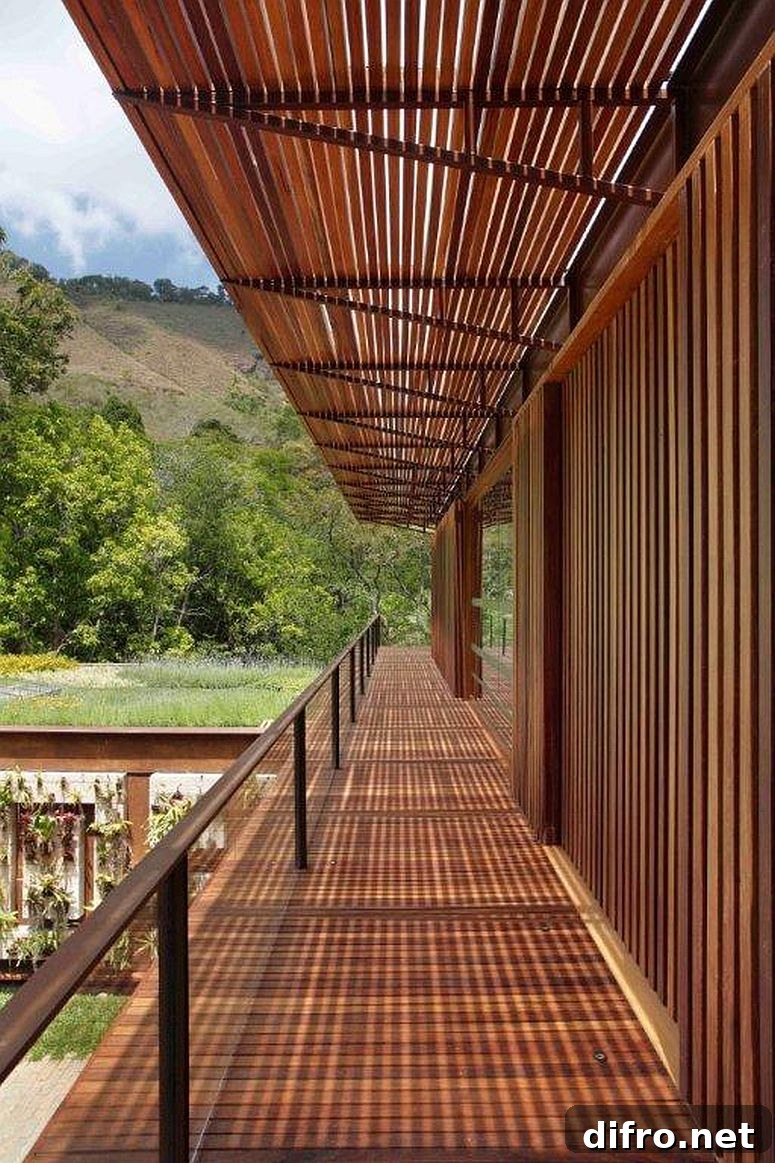
Shaded walkways and covered outdoor areas are more than aesthetic devices: they are passive climate strategies. By providing protection from Rio’s strong sun, these elements reduce direct solar gain and lessen dependence on artificial cooling. Wooden slats and screens are used throughout to filter light and create shifting patterns of shade, improving comfort while maintaining visual connection to the outdoors.
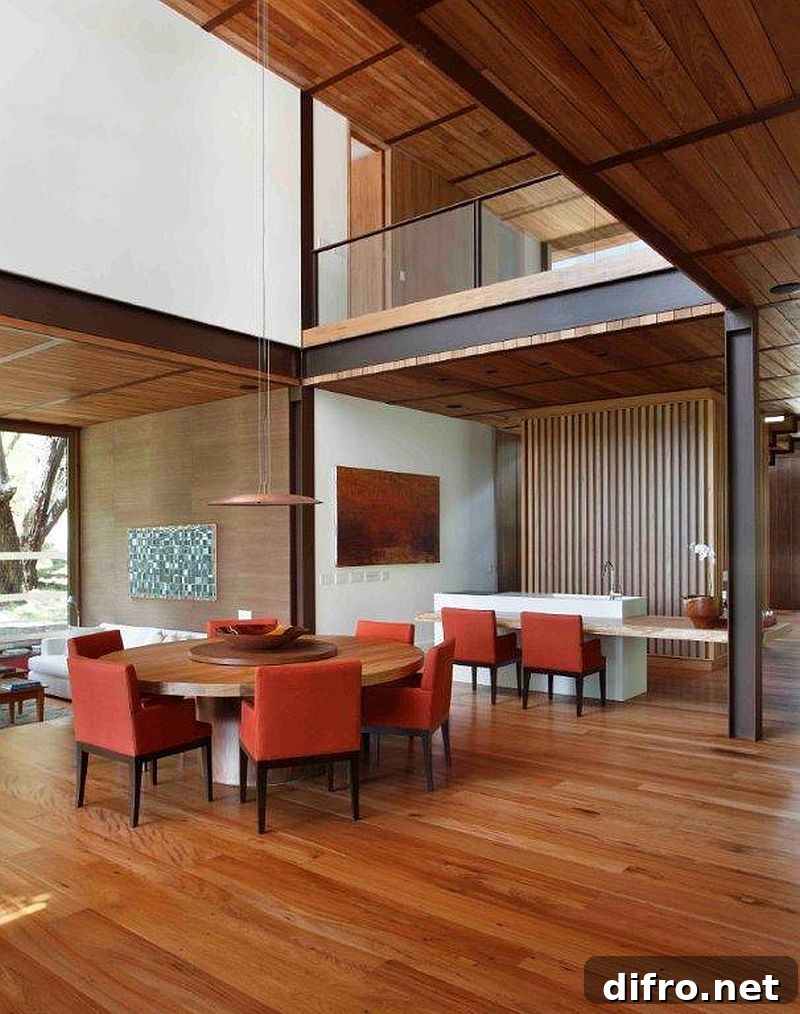
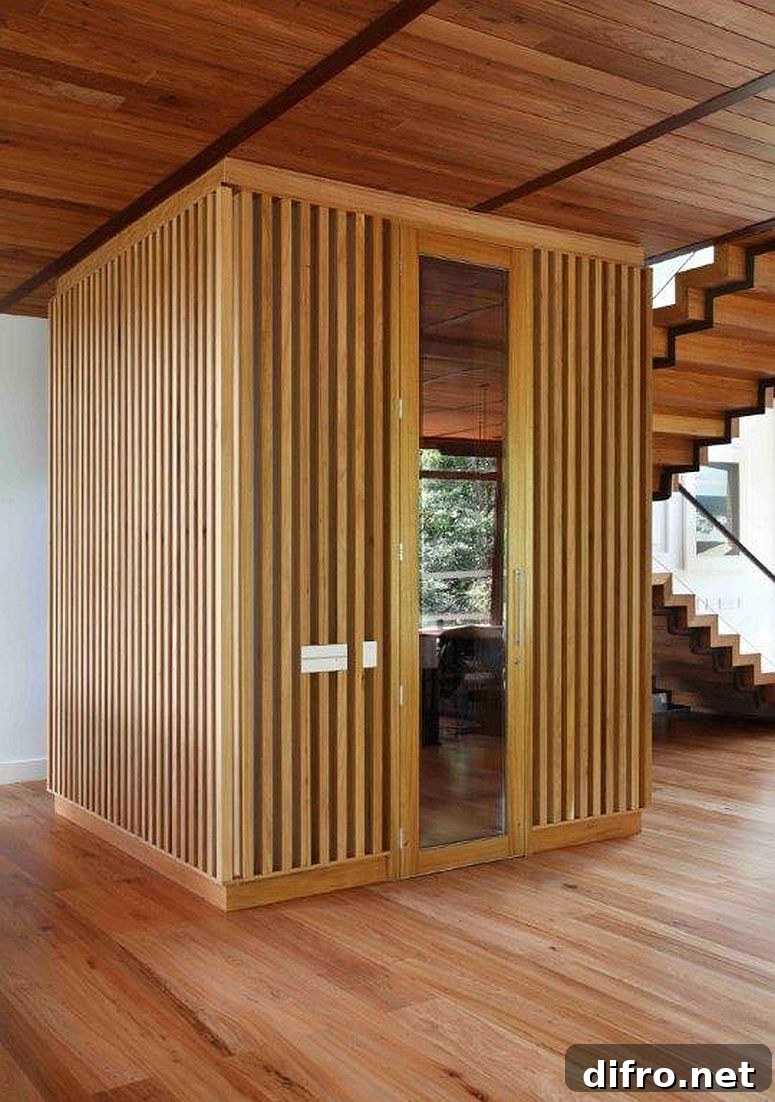
Wood is the dominant material throughout, shaping both exterior form and interior atmosphere. Warm timber accents define circulation paths, frame views and create intimate, room-within-a-room arrangements. Beyond aesthetics, timber slats also help manage acoustics inside the house, softening sound and creating a calmer atmosphere in open-plan areas. The material palette is deliberately restrained, with minimal use of bright colors, allowing natural textures and light to become the prominent features.
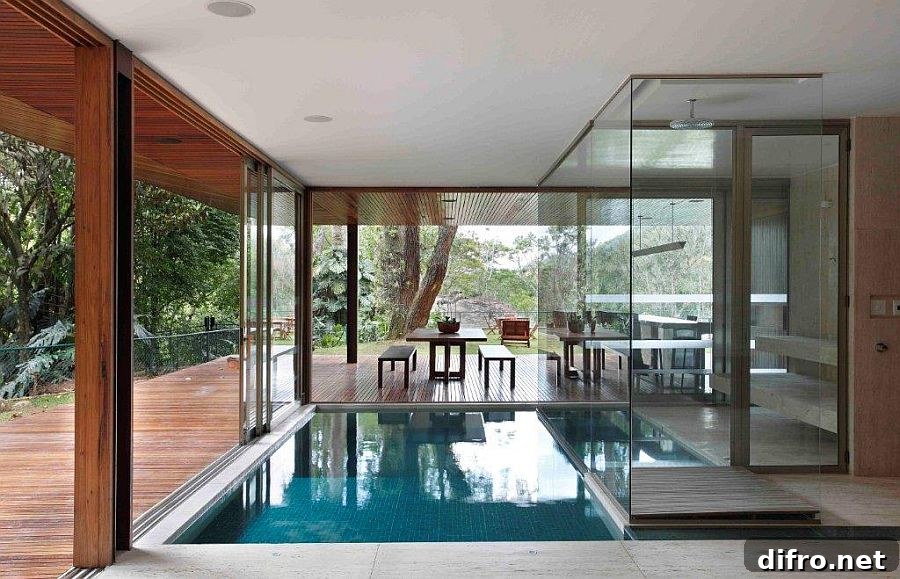
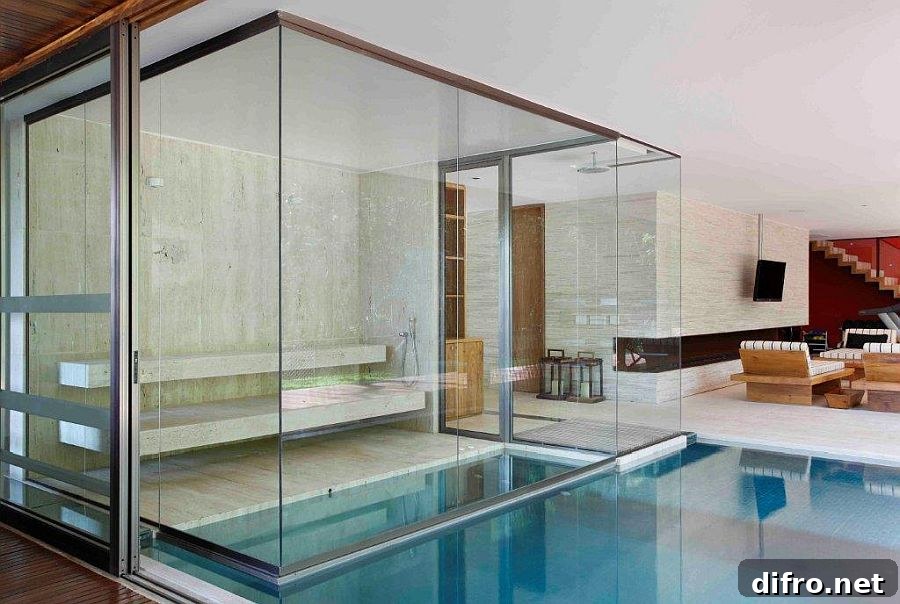
The program responds to both relaxation and social life: the ground floor contains an indoor pool and covered leisure areas that can be used year-round, while upper terraces and slim wooden decks establish lookout points over the surrounding forest. A sauna, library and additional guest rooms round out the living amenities, making the house equally suited for private family life and hosting visitors.
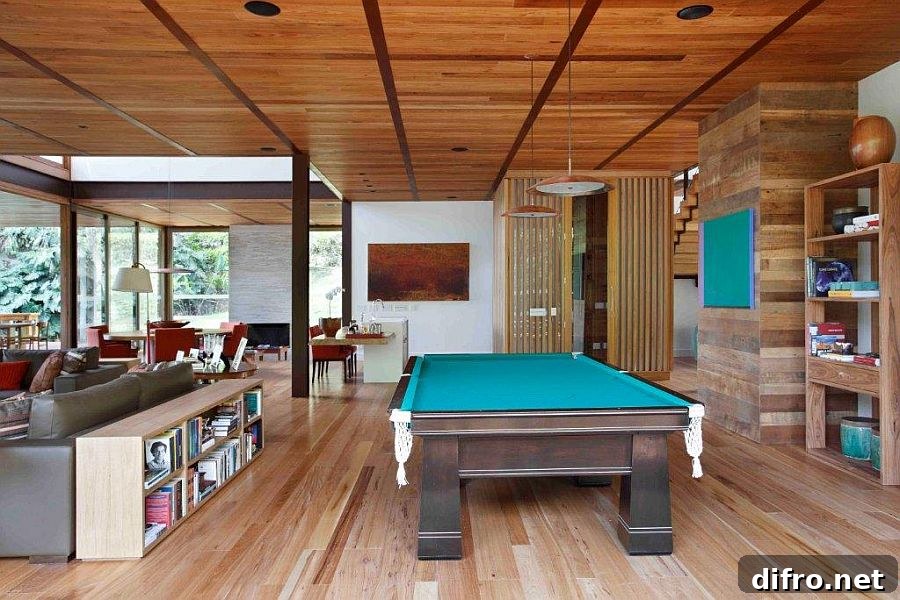
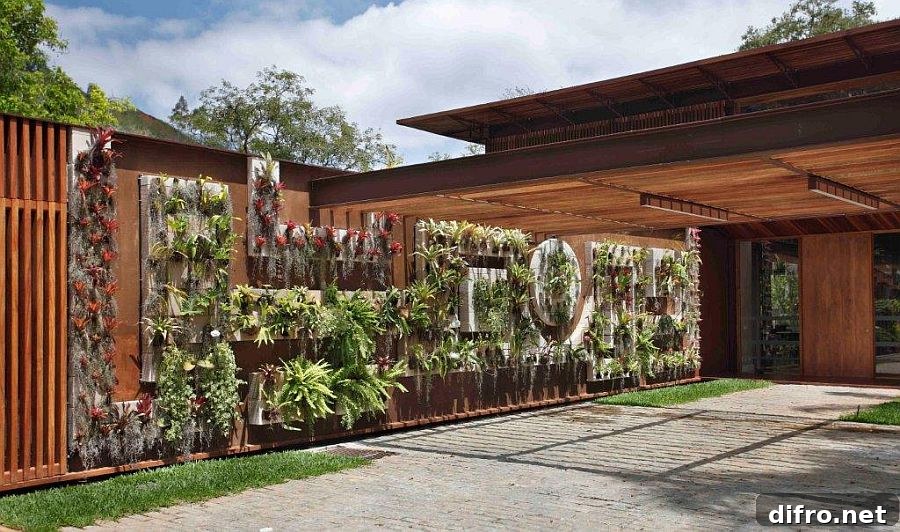
Several design choices enhance the relationship between inside and out. Floor-to-ceiling glazing visually expands rooms and frames views of the garden, while covered outdoor walkways make it easy to move between spaces without severing contact with nature. Vertical planting at the entrance and flowering vegetation around the decks extend the house’s palette of greens, reinforcing the feeling that the building sits within the landscape rather than above it.
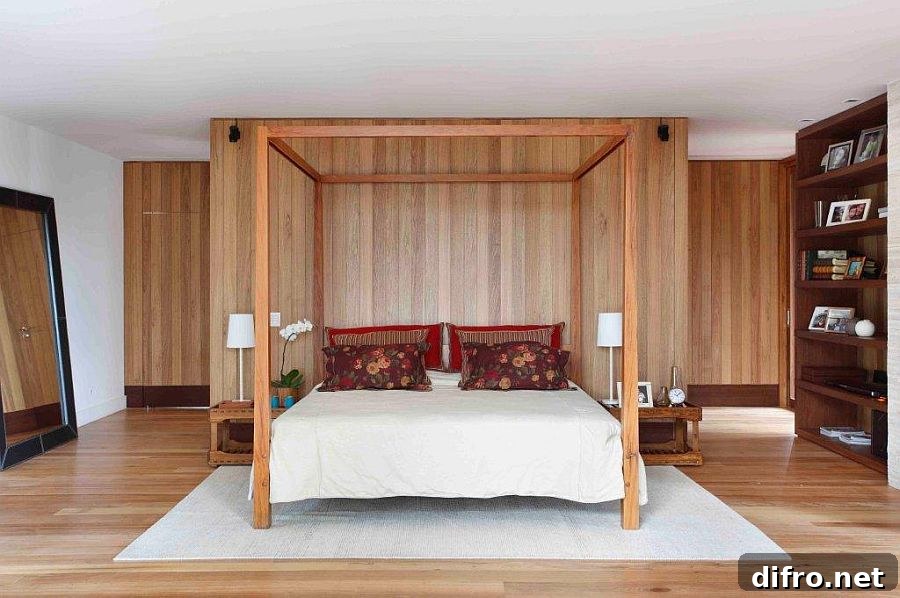
Interiors are composed to highlight volume and light: double-height spaces animate the social core, while quieter corners—like the library and bedrooms—offer refuge. A classic four-poster bed and wood-accented walls create a warm, modern bedroom setting. Soft furnishings such as cushions and subtle accent pillows introduce restrained color, balancing the wood-and-white backdrop without detracting from the house’s calm, natural aesthetic.
The House in Itaipava is a contemporary Brazilian residence that balances modern architecture with vernacular sensitivity: passive strategies for shade and ventilation, generous glazing to capture views, and an emphasis on timber to create warmth and acoustic comfort. Together these features form a home that celebrates connection to place and nature while offering modern comforts for daily life. [Photography: Denílson Machado]