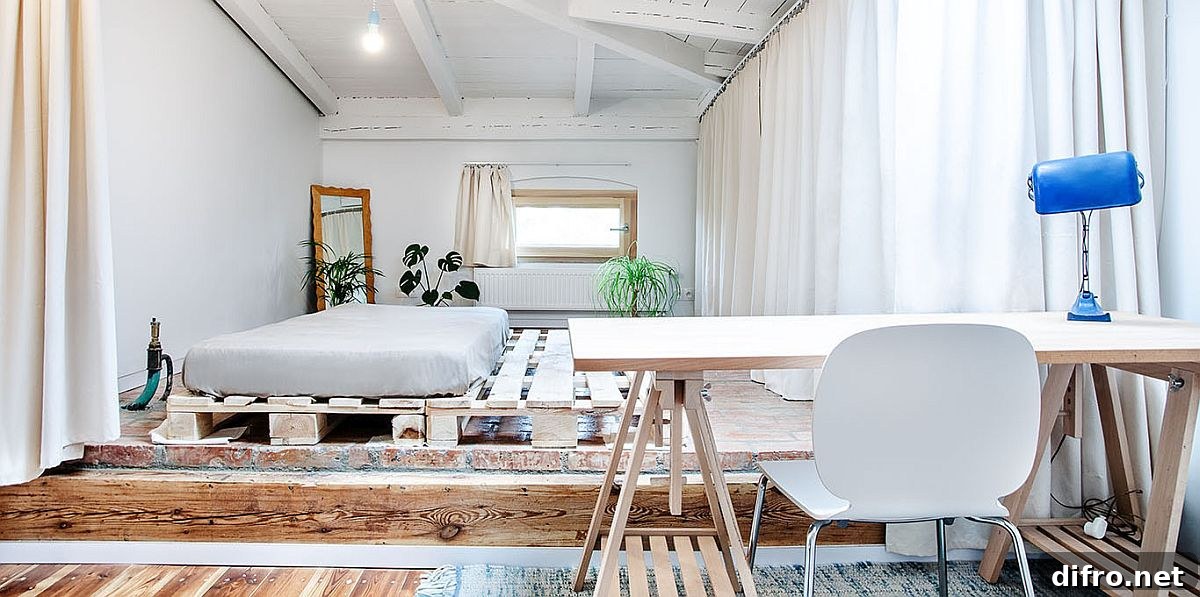
Revamped Attic Apartment in Poznań: Light, Wood and Smart Space Design
When most of us picture an attic, we imagine a dim, dusty storage area where holiday decorations and forgotten boxes gather dust. That image is quickly transformed by this beautifully renovated attic in Poznań. Located above a single-family house originally built in the 1930s, the project by Atelier Starzak Strebicki reimagines the attic as a bright, functional living space. The redesign relies on clever spatial organization, a restrained color palette, and generous natural light to turn what was once an underused area into a comfortable, independent apartment and studio.
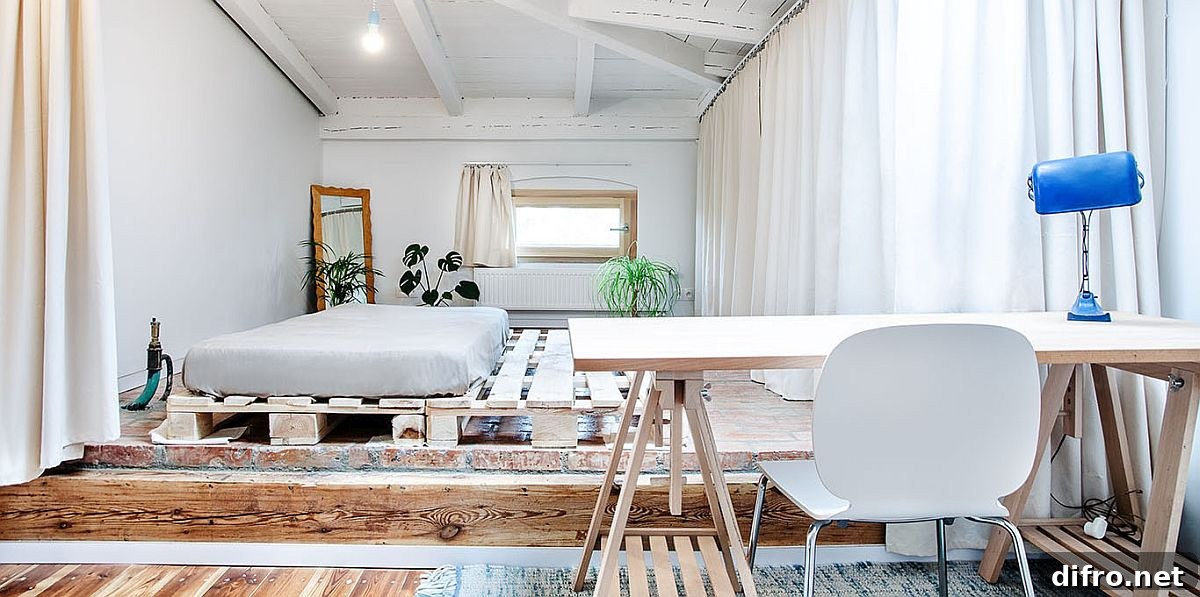
One of the most striking aspects of the renovation is the care taken to preserve original surfaces wherever possible. Exposed wooden beams and the original wooden ceiling remain visible, providing rich texture and a clear link to the building’s history. In places, the platform bed rests directly on a preserved section of brick flooring, while work areas retain wooden floorboards that reinforce the warmth and character of the space.
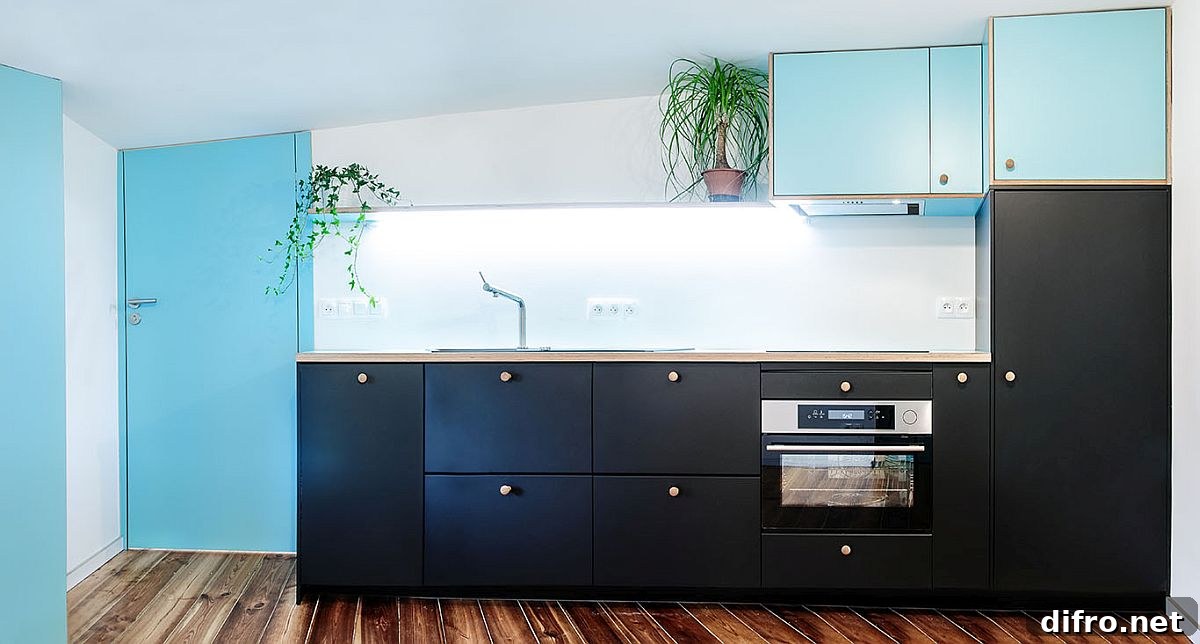
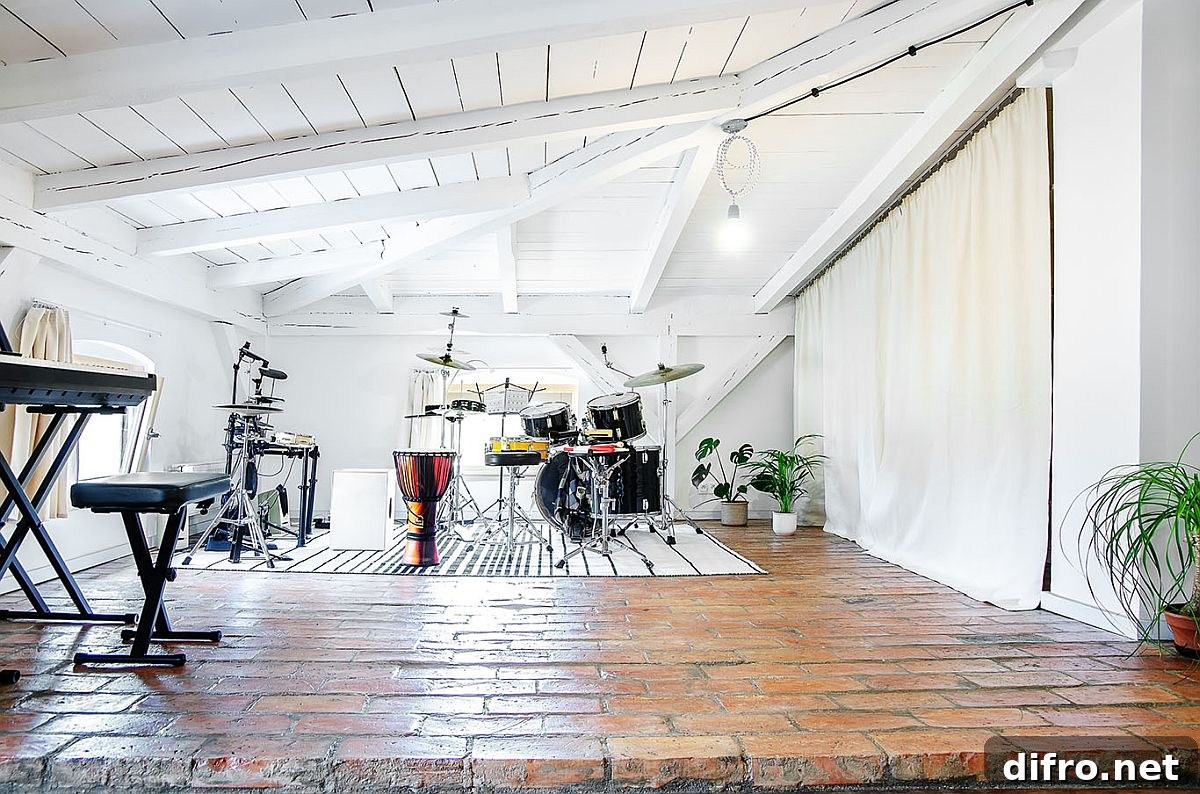
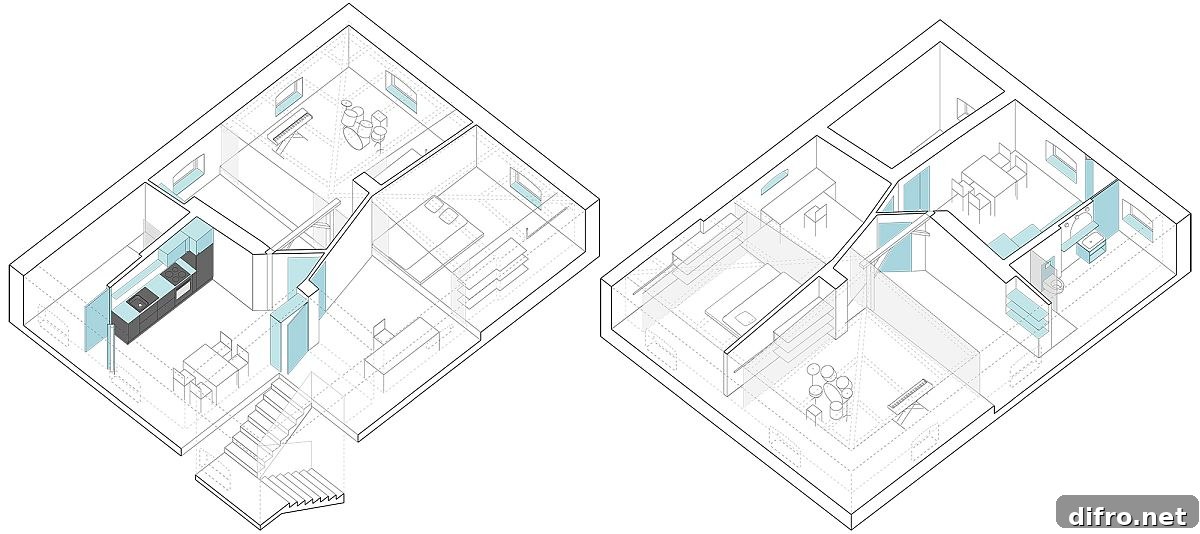
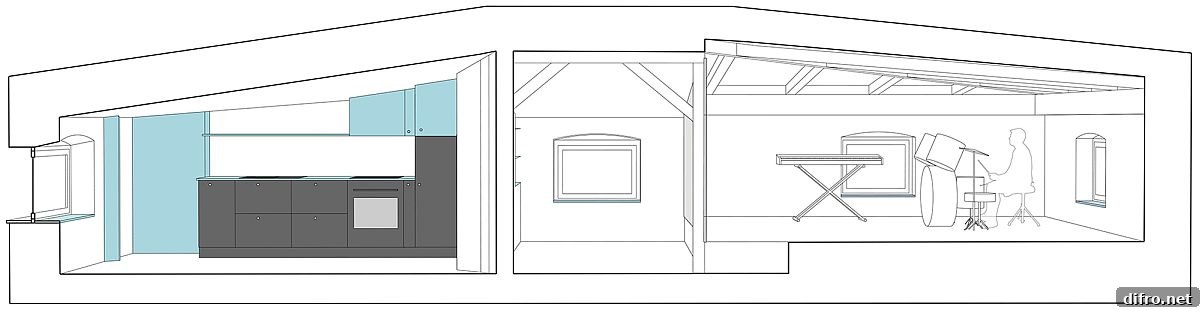
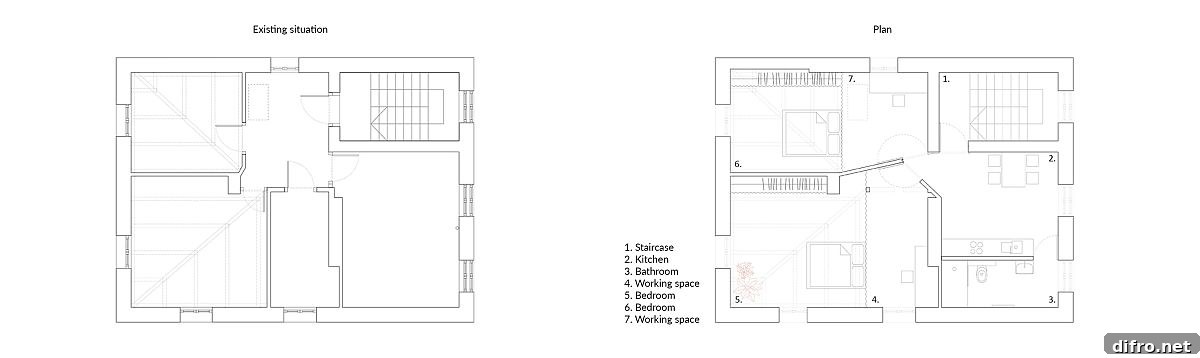
The designers used the slope of the roof to their advantage. Lower-ceiling zones accommodate the bedrooms, where a minimal platform bed fits the intimate scale. Areas with higher ceiling heights house the music studio, home workspace, kitchen, and bathroom—functions that benefit from more headroom and better acoustics or ventilation. This zoning strategy allows the attic to operate effectively as a self-contained apartment and studio, thanks to a thoughtful new floor plan that maximizes usability without sacrificing the building’s character.
Functionality is enhanced by discreet, space-saving elements. Custom doors and tailored joinery create smooth transitions between rooms while preserving sightlines and maintaining storage capacity. The kitchen balances dark cabinetry with touches of blue, providing contrast against the dominant palette of white walls and warm wood. These color accents bring visual interest without overwhelming the calm, cohesive material scheme.
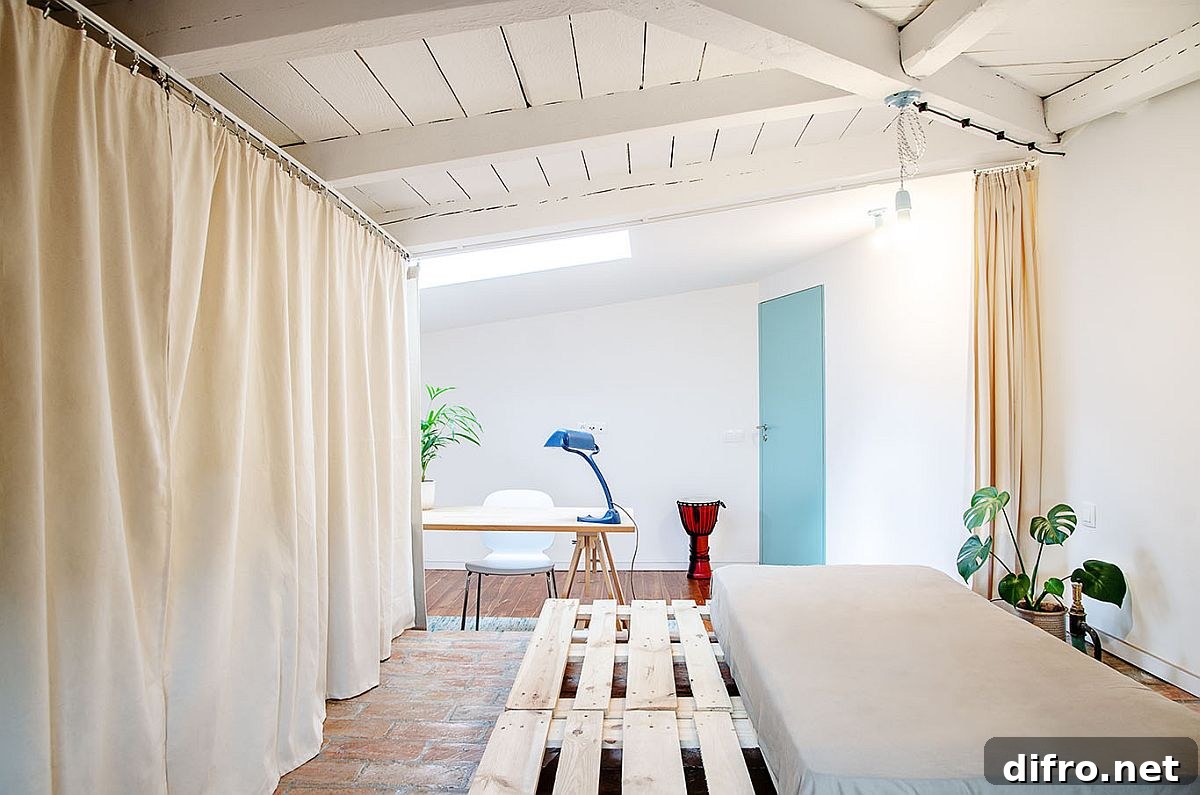
To add flexibility to the open plan, the architects introduced a system of curtains that allow the occupant to divide and reconfigure rooms quickly. These soft partitions can conceal storage or create private sleeping nooks, while also enabling the space to adapt to different daily needs—working, practicing music, cooking, or hosting guests. This adaptable approach increases the functional value of the attic and turns an underutilized area into a versatile, livable place.
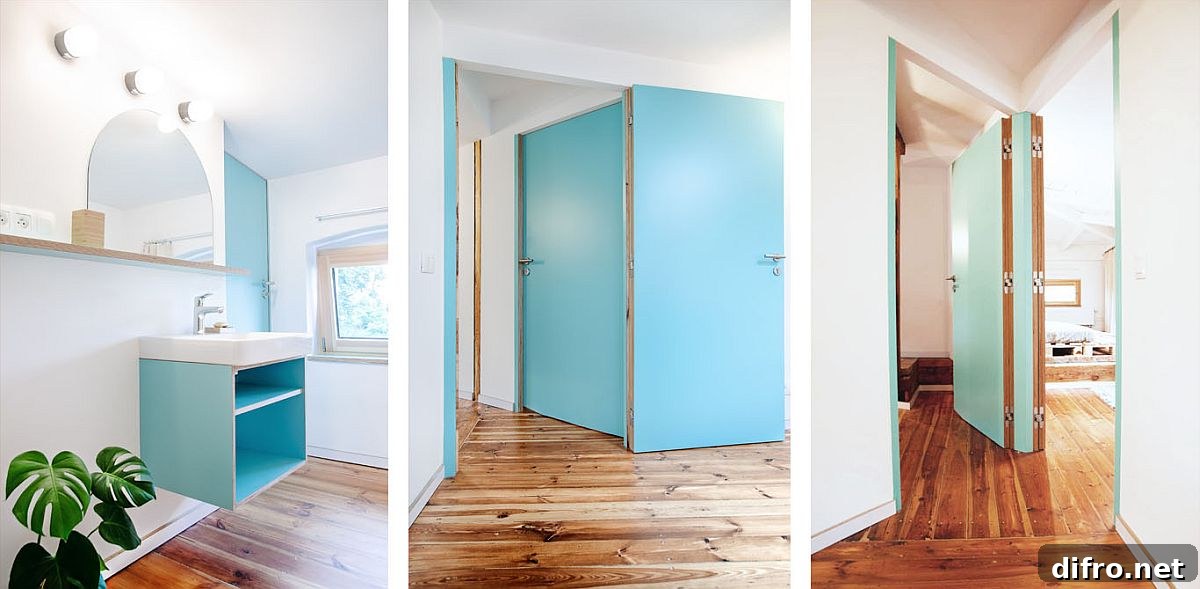
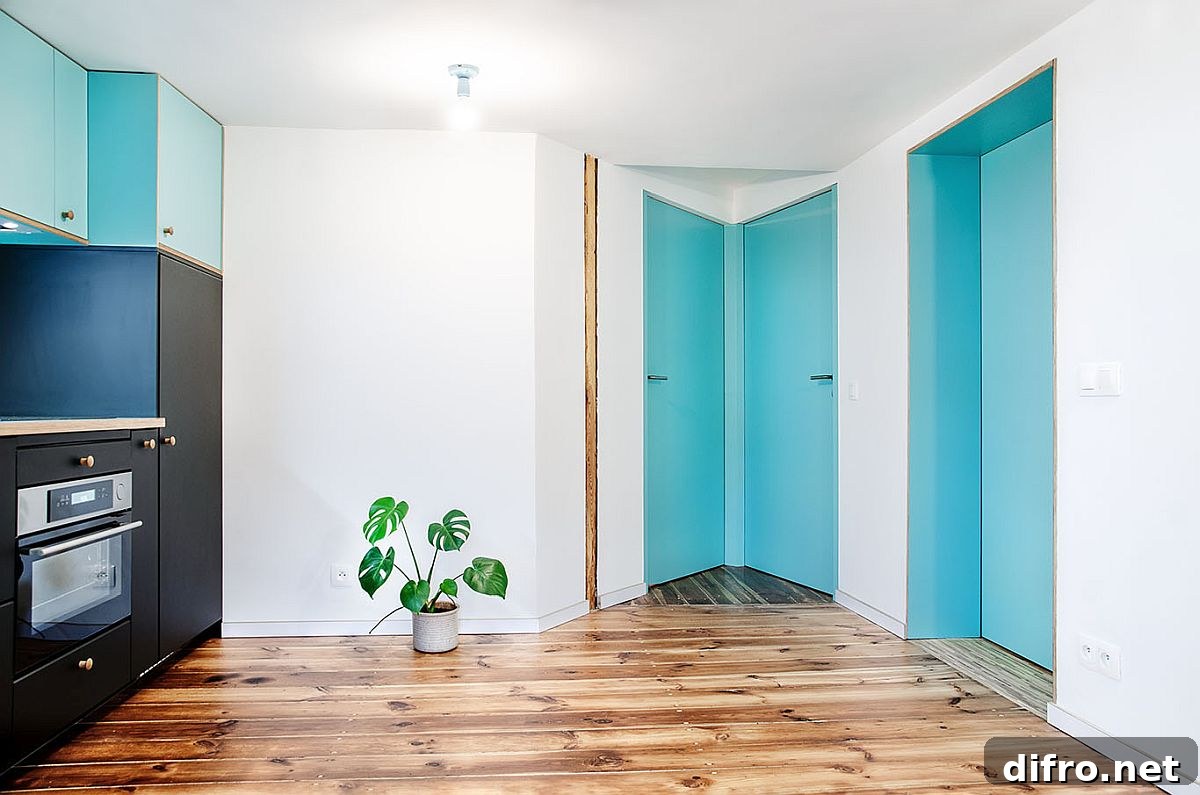
“To give users more freedom in organizing and dividing the space, we installed a set of curtains that can split rooms into smaller units or hide specific functions—such as storage or sleeping areas. Organizing the rooms more intelligently improved the overall functionality of the attic and created new spatial value from this previously unused part of the house.”
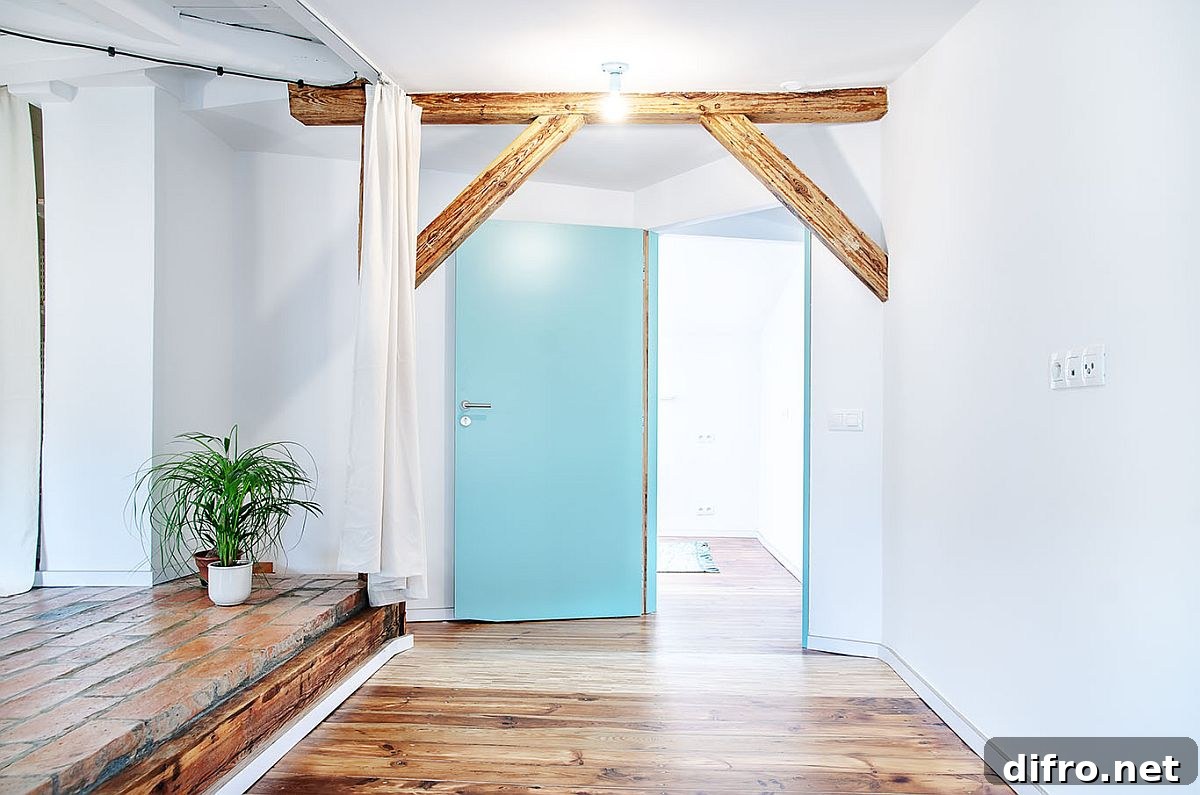
The included floor plans and sectional drawings make the design choices clear: careful zoning, integrated storage, and a compact layout that still feels open and airy. Light is prioritized through window placement and finishes that reflect and diffuse daylight, ensuring every corner feels inviting. Preserving original materials while adding minimal, modern interventions results in a balanced interior—one that honors the building’s past while offering contemporary comfort.
Photography: Mateusz Bieniaszczyk